.
.
Learning efforts, self-planned
learning (Tough, 1978),
self-regulated learning
(Zimmerman,1990).
 Last stage of learning-usually
reserved for the adult learner.
Learner takes the initiative in the
planning executing, and the
evaluation of their own learning.
views learners as responsible owners
and managers of their own learning
process. Self directed learning
integrates self management
(Management of context, including
the social setting, resources and
action) with self monitoring (the
process whereby the learners
monitor, evaluate and regulate their
cognitive learning strategies).
Bolhuis, 1996 & Garrison, 1997
 Enhance ability of adults to be
more self-directed in learning
(humanistic approach)
 Foster transformational
learning
 Promote social action
 I. Learning by Preparing
 II. Learning by Doing
 III. Learning by Reflecting on Doing
 IV. Learning by Moving Forward:
1-Linear Model
2- Interactive Model
3- Instructional model
1. Time management/Family
obligations
2. Cost of traditional learning
3. Transportation
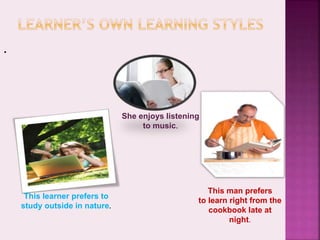
4. Learner’s own learning styles
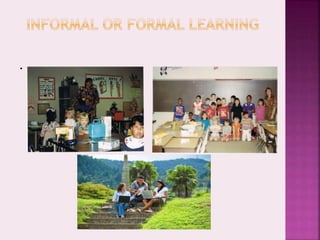
5. Prefer informal learning
structure.
6. Ability to plan programs to fit
the learner
Graduations
Birthdays
Studying!
What’s for dinner?
Fun in the sun!
Workshops
Instructional
Technology (IT)
computer classes
Cooking lessons
Jewelry lessons
 Hourly
 Daily
 weekend rates
 Course rate
.
Have you ever been late to class
because of a traffic jam that was
unexpected?
This accident occurred
on the way to an evening
class!
.
This learner prefers to
study outside in nature.
She enjoys listening
to music.
This man prefers
to learn right from the
cookbook late at
night.
.
Allows learners to be more
effective learners and social
beings
Curious and willing to try new
things.
They can view problems as
challenges, desire change, and
enjoy learning
Motivated and persistent,
independent, self-disciplined,
self-confident and goal-oriented.
A greater awareness of their
responsibility in making learning
meaningful and monitoring
themselves
Encourages students to develop
their own rules and leadership
patterns
Possible for frequent errors.
Quite time consuming.
It needs an organized
manner of planning; inquiring
skills, decision making and
self evaluation of work.
 How will the elementary school student use
SDL skills to their advantage?
 Car salesman?
 Small business owner?
 College student?
 Medical professional?
 Teachers/Professors?
 You?
 Do you consider yourself a self-directed
learner?
 Why do you think you are a self-directed
learner?
 Knowles, M.S. (1970). The modern practice of adult education, from pedagogy to andragogy revised and updated.
Retrieved from
http://74.125.155.132/scholar?q=cache:KbSfmR3rq7MJ:scholar.google.com/+experience+and+andragogy&h
l=en&as_sdt=100 00000000000
 Merriam, S. B. (2001). Andragogy and self-directed learning: pillars of adult learning theory. New Directions for Adult
and Continuing Education. 89.p. 3-13.
 Merriam, S.B., Caffarella, R.S., & Baumgartner, L.M. (2007). Learning in adulthood a comprehensive guide. San
Francisco, CA: Jossy- Bass
 Roberson, D.N., Merriam, S.B., (2005). The self-directed learning process of older, rural adults. Adult Education
Quarterly,55(4). 269- 287. doi: 10.1177/0741713605277372.
 Tough, A., (1978). Major learning efforts: recent research and future directions. Adult Education Quarterly, 28(4), 250-
263. doi:10.1177/074171367802800403.
Self directed learning theory presentation

Self directed learning theory presentation

  • 1.
  • 2.
    Learning efforts, self-planned learning(Tough, 1978), self-regulated learning (Zimmerman,1990).  Last stage of learning-usually reserved for the adult learner. Learner takes the initiative in the planning executing, and the evaluation of their own learning.
  • 3.
    views learners asresponsible owners and managers of their own learning process. Self directed learning integrates self management (Management of context, including the social setting, resources and action) with self monitoring (the process whereby the learners monitor, evaluate and regulate their cognitive learning strategies). Bolhuis, 1996 & Garrison, 1997
  • 4.
     Enhance abilityof adults to be more self-directed in learning (humanistic approach)  Foster transformational learning  Promote social action
  • 5.
     I. Learningby Preparing  II. Learning by Doing  III. Learning by Reflecting on Doing  IV. Learning by Moving Forward:
  • 6.
    1-Linear Model 2- InteractiveModel 3- Instructional model
  • 7.
    1. Time management/Family obligations 2.Cost of traditional learning 3. Transportation 4. Learner’s own learning styles 5. Prefer informal learning structure. 6. Ability to plan programs to fit the learner
  • 8.
  • 9.
    Workshops Instructional Technology (IT) computer classes Cookinglessons Jewelry lessons  Hourly  Daily  weekend rates  Course rate .
  • 10.
    Have you everbeen late to class because of a traffic jam that was unexpected? This accident occurred on the way to an evening class!
  • 11.
    . This learner prefersto study outside in nature. She enjoys listening to music. This man prefers to learn right from the cookbook late at night.
  • 12.
  • 13.
    Allows learners tobe more effective learners and social beings Curious and willing to try new things. They can view problems as challenges, desire change, and enjoy learning
  • 14.
    Motivated and persistent, independent,self-disciplined, self-confident and goal-oriented. A greater awareness of their responsibility in making learning meaningful and monitoring themselves Encourages students to develop their own rules and leadership patterns
  • 15.
    Possible for frequenterrors. Quite time consuming. It needs an organized manner of planning; inquiring skills, decision making and self evaluation of work.
  • 16.
     How willthe elementary school student use SDL skills to their advantage?  Car salesman?  Small business owner?  College student?  Medical professional?  Teachers/Professors?  You?
  • 17.
     Do youconsider yourself a self-directed learner?  Why do you think you are a self-directed learner?
  • 18.
     Knowles, M.S.(1970). The modern practice of adult education, from pedagogy to andragogy revised and updated. Retrieved from http://74.125.155.132/scholar?q=cache:KbSfmR3rq7MJ:scholar.google.com/+experience+and+andragogy&h l=en&as_sdt=100 00000000000  Merriam, S. B. (2001). Andragogy and self-directed learning: pillars of adult learning theory. New Directions for Adult and Continuing Education. 89.p. 3-13.  Merriam, S.B., Caffarella, R.S., & Baumgartner, L.M. (2007). Learning in adulthood a comprehensive guide. San Francisco, CA: Jossy- Bass  Roberson, D.N., Merriam, S.B., (2005). The self-directed learning process of older, rural adults. Adult Education Quarterly,55(4). 269- 287. doi: 10.1177/0741713605277372.  Tough, A., (1978). Major learning efforts: recent research and future directions. Adult Education Quarterly, 28(4), 250- 263. doi:10.1177/074171367802800403.

Editor's Notes

  • #2 Good evening, I’m Nancy and tonight we will be discussing Self-Directed Learning Theory. Before we begin, I would like to share a couple of experiences with you and ask you to relate to them.
  • #12 Some people do not want to share the learning styles of others.
  • #13 Given the opportunity or choice, would you opt for a more informal type learning environment such as outside, someone’s house, the café?
  • #17 Encourage dialogue among the participants to discuss how engaging in SDL will have on their learning.