Www.RCVetS.com

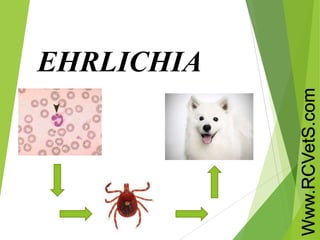
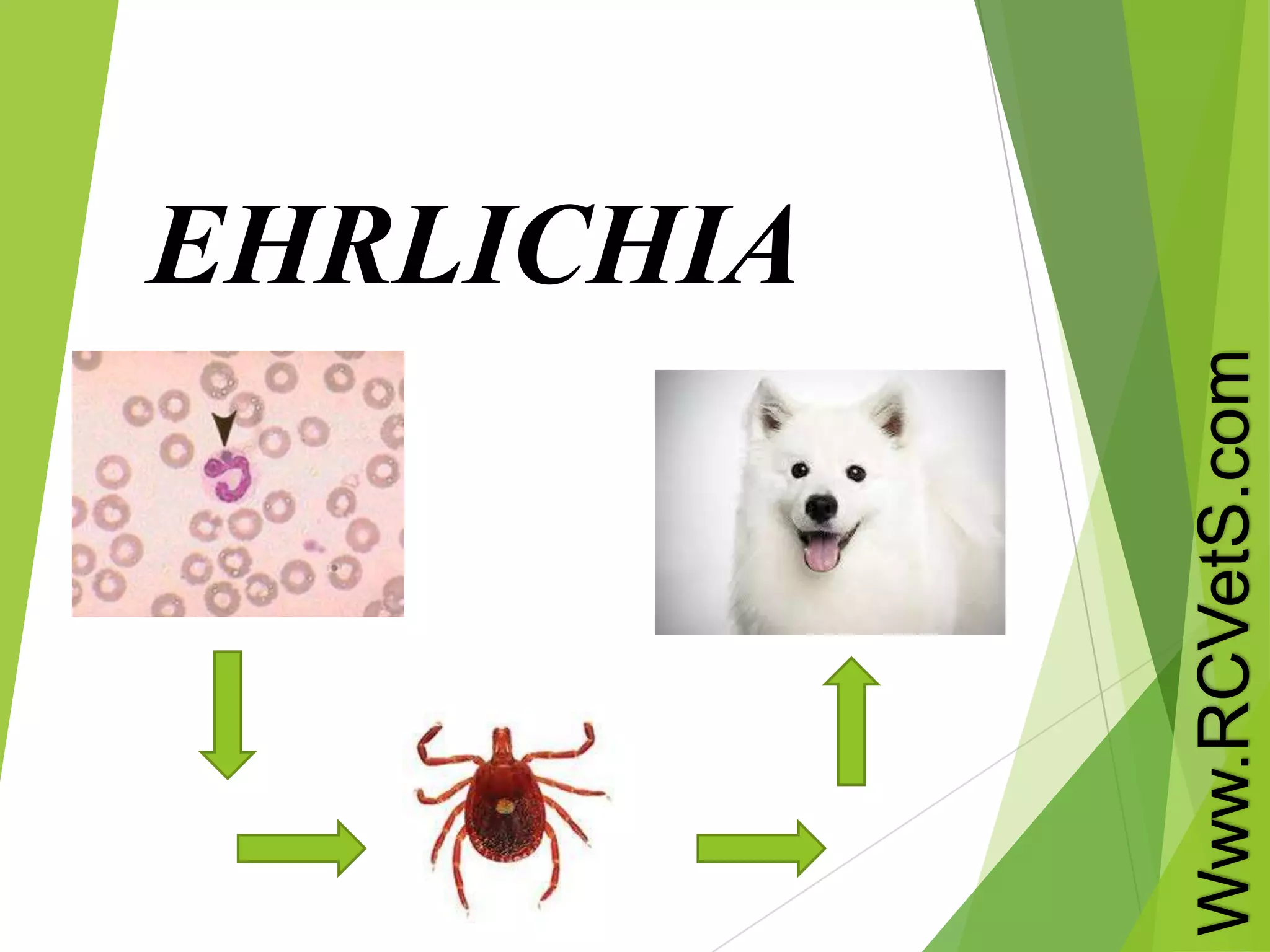
EHRLICHIA
Introduction


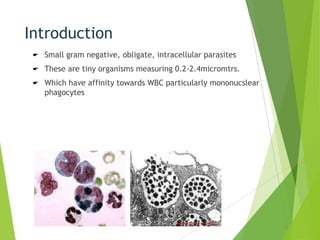
Small gram negative, obligate, intracellular parasites



These are tiny organisms measuring 0.2-2.4micromtrs.



Which have affinity towards WBC particularly mononucslear
phagocytes


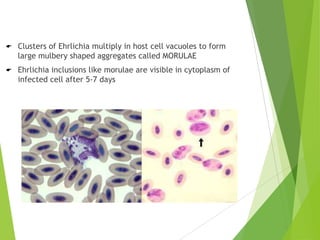
Clusters of Ehrlichia multiply in host cell vacuoles to form
large mulbery shaped aggregates called MORULAE



Ehrlichia inclusions like morulae are visible in cytoplasm of
infected cell after 5-7 days
Ehrlichia Species


Ehrlichia sennetsu



Ehrlichia caffeensis



Ehrlichia phagocytophila



Ehrlichia cannus
EHRLICHIA SENNETSU


Endemic in JAPAN and SOUTH EAST ASIA



It causes GLANDULAR FEVER



It shows lymphoid hyperplasia and atypical
lymphocytosis



No arthropod vector identified



Human infection is suspected to be caused by ingestion
of fish carrying infected flukes
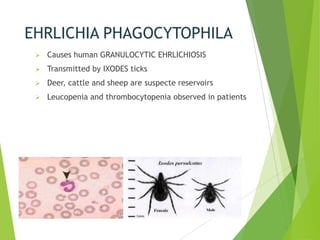
EHRLICHIA PHAGOCYTOPHILA


Causes human GRANULOCYTIC EHRLICHIOSIS



Transmitted by IXODES ticks



Deer, cattle and sheep are suspecte reservoirs



Leucopenia and thrombocytopenia observed in patients
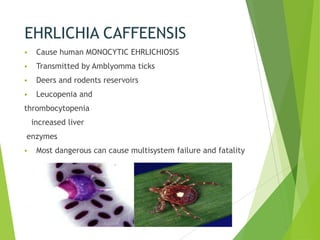
EHRLICHIA CAFFEENSIS


Cause human MONOCYTIC EHRLICHIOSIS



Transmitted by Amblyomma ticks



Deers and rodents reservoirs



Leucopenia and

thrombocytopenia
increased liver
enzymes


Most dangerous can cause multisystem failure and fatality
EHRLICHIOSIS


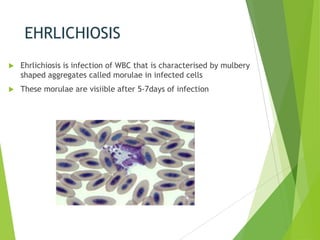
Ehrlichiosis is infection of WBC that is characterised by mulbery
shaped aggregates called morulae in infected cells



These morulae are visiible after 5-7days of infection
Pathophysiology


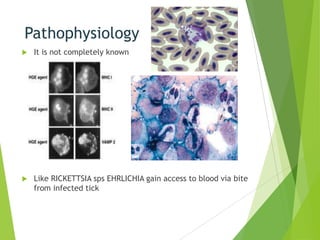
It is not completely known



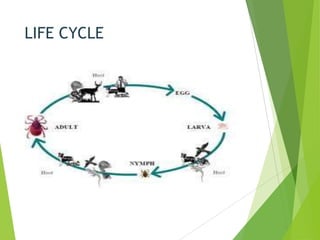
Like RICKETTSIA sps EHRLICHIA gain access to blood via bite
from infected tick


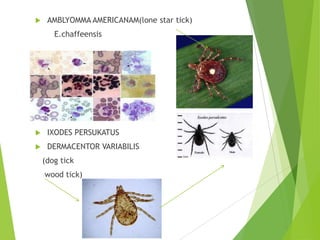
AMBLYOMMA AMERICANAM(lone star tick)

E.chaffeensis



IXODES PERSUKATUS



DERMACENTOR VARIABILIS
(dog tick
wood tick)


The major antigen determinants are surface membrane
protien



These are complexes consisting of :
1)thermolabile
2)thermostable



Key protien bands associated are:
E.phagocytophia - 27,29,44 KD bands
E.caffeensis

- 40,44,65 KD bands
LIFE CYCLE
Mortality and morbidity


Great majority of EHRLICHIOSIS are asymptomatic



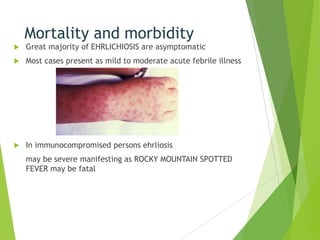
Most cases present as mild to moderate acute febrile illness



In immunocompromised persons ehrliosis
may be severe manifesting as ROCKY MOUNTAIN SPOTTED
FEVER may be fatal
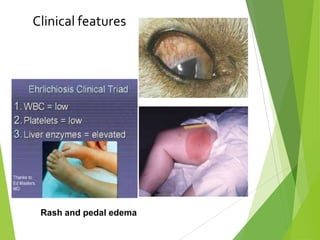
Clinical features

Rash and pedal edema


Patients with Ehrlichiosis usually present with
head ache,
myalgia,
fever,
shaking chills.



Nausea and vomiting are common



Abdominal pain is uncommon and is typically mild



Skin rash due to ehrlichiosis is rare. When present as
macculopapular rash rather than peticheal
Cont…


Some patients develop heptomegaly



Lymphadenopathy is observed in <25%



Splenomegaly is uncommon



Patients with severe ehrlichiosis develop
thrombocytopenia and disseminated intravascular
coaggulation(DIC) which can result in hemorrhage into
skin
Distribution


Ehrlichiosis occurs worldwide and frequensy parallels
distribution of appropriate tick vector for transmission
of ehrlichia and mammalian host



In USA it occurs in states of CALIFORNIA, TEXAS and
SOUTH EAST NORTHERN REGIONS OF CAENTRY



World wide it occurs in JAPAN, SOUTH EAST ASIA
Lab diagnosis


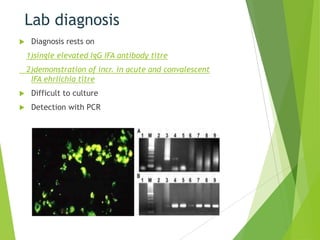
Diagnosis rests on
1)single elevated IgG IFA antibody titre
2)demonstration of incr. in acute and convalescent
IFA ehrlichia titre



Difficult to culture



Detection with PCR


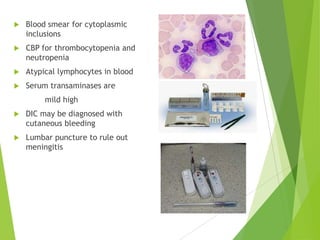
Blood smear for cytoplasmic
inclusions



CBP for thrombocytopenia and
neutropenia



Atypical lymphocytes in blood



Serum transaminases are
mild high



DIC may be diagnosed with
cutaneous bleeding



Lumbar puncture to rule out
meningitis
Treatment


Doxycyclin



Chloramphenicol



Rifampacin



fluoroquinolones
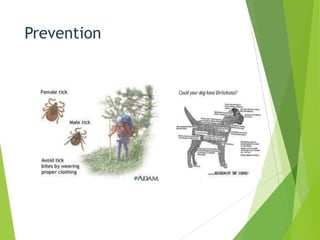
Prevention
THANKS
Www.RCVetS.com

Ehrlichia

  • 1.
  • 2.
    Introduction  Small gram negative,obligate, intracellular parasites  These are tiny organisms measuring 0.2-2.4micromtrs.  Which have affinity towards WBC particularly mononucslear phagocytes
  • 3.
     Clusters of Ehrlichiamultiply in host cell vacuoles to form large mulbery shaped aggregates called MORULAE  Ehrlichia inclusions like morulae are visible in cytoplasm of infected cell after 5-7 days
  • 4.
    Ehrlichia Species  Ehrlichia sennetsu  Ehrlichiacaffeensis  Ehrlichia phagocytophila  Ehrlichia cannus
  • 5.
    EHRLICHIA SENNETSU  Endemic inJAPAN and SOUTH EAST ASIA  It causes GLANDULAR FEVER  It shows lymphoid hyperplasia and atypical lymphocytosis  No arthropod vector identified  Human infection is suspected to be caused by ingestion of fish carrying infected flukes
  • 6.
    EHRLICHIA PHAGOCYTOPHILA  Causes humanGRANULOCYTIC EHRLICHIOSIS  Transmitted by IXODES ticks  Deer, cattle and sheep are suspecte reservoirs  Leucopenia and thrombocytopenia observed in patients
  • 7.
    EHRLICHIA CAFFEENSIS  Cause humanMONOCYTIC EHRLICHIOSIS  Transmitted by Amblyomma ticks  Deers and rodents reservoirs  Leucopenia and thrombocytopenia increased liver enzymes  Most dangerous can cause multisystem failure and fatality
  • 8.
    EHRLICHIOSIS  Ehrlichiosis is infectionof WBC that is characterised by mulbery shaped aggregates called morulae in infected cells  These morulae are visiible after 5-7days of infection
  • 9.
    Pathophysiology  It is notcompletely known  Like RICKETTSIA sps EHRLICHIA gain access to blood via bite from infected tick
  • 10.
     AMBLYOMMA AMERICANAM(lone startick) E.chaffeensis  IXODES PERSUKATUS  DERMACENTOR VARIABILIS (dog tick wood tick)
  • 11.
     The major antigendeterminants are surface membrane protien  These are complexes consisting of : 1)thermolabile 2)thermostable  Key protien bands associated are: E.phagocytophia - 27,29,44 KD bands E.caffeensis - 40,44,65 KD bands
  • 12.
  • 13.
    Mortality and morbidity  Greatmajority of EHRLICHIOSIS are asymptomatic  Most cases present as mild to moderate acute febrile illness  In immunocompromised persons ehrliosis may be severe manifesting as ROCKY MOUNTAIN SPOTTED FEVER may be fatal
  • 14.
  • 15.
     Patients with Ehrlichiosisusually present with head ache, myalgia, fever, shaking chills.  Nausea and vomiting are common  Abdominal pain is uncommon and is typically mild  Skin rash due to ehrlichiosis is rare. When present as macculopapular rash rather than peticheal
  • 16.
    Cont…  Some patients developheptomegaly  Lymphadenopathy is observed in <25%  Splenomegaly is uncommon  Patients with severe ehrlichiosis develop thrombocytopenia and disseminated intravascular coaggulation(DIC) which can result in hemorrhage into skin
  • 17.
    Distribution  Ehrlichiosis occurs worldwideand frequensy parallels distribution of appropriate tick vector for transmission of ehrlichia and mammalian host  In USA it occurs in states of CALIFORNIA, TEXAS and SOUTH EAST NORTHERN REGIONS OF CAENTRY  World wide it occurs in JAPAN, SOUTH EAST ASIA
  • 18.
    Lab diagnosis  Diagnosis restson 1)single elevated IgG IFA antibody titre 2)demonstration of incr. in acute and convalescent IFA ehrlichia titre  Difficult to culture  Detection with PCR
  • 19.
     Blood smear forcytoplasmic inclusions  CBP for thrombocytopenia and neutropenia  Atypical lymphocytes in blood  Serum transaminases are mild high  DIC may be diagnosed with cutaneous bleeding  Lumbar puncture to rule out meningitis
  • 20.
  • 21.
  • 22.