Faculty of Veterinary Science
Infectious Diseases II
(ProtozoalDiseases)
BABESSIOSIS
14th,May ,2016
Babesiosis
synonyms: Texas fever, red water, cattle tick
fever.
Babesiosis is a tick-born disease caused by
Babesia spp. that infect red blood cells.
disease is clinically characterized by high
temperature, loss of appetite and coffee
coloured urine.
Etiology
Babesia bovis and Babesia bigemine are
responsible for babesiosis in cattle. in horses it
is caused by Babesia aqui and in dogs by
Babesia canis.
Epidemiology
This disease is present in whole world., but is
prevalence is more in hot and humid areas.
ticks that acquire Babesia infections from
infected animals and then pass it to other
health animals as a subsequent blood meal
transmit the disease. the infection in ticks can
be passed onto the next generation through
the eggs. this disease can occur almost
everywhere around the world.
it is a major threat to cattle development in
many tropical and sub-tropical countries,
especially when exotic breeds are used .
disease mostly occurs sporadically and can be
treated easily so mortality is not so common.
Pathogenesis
animals are effected after an infected tick bites
and feeds on a susceptible host for a
minimum of three days. when the Babesia
organism is introduced into the host, it
attaches to erythrocyte membranes and
endocytosed. hemolytic anemia and
hypotensive shock are typical clinical
syndromes of infection.
hemolytic anemia results from direct
erythrocyte damage by the parasite, and both
intravascular and extravascular immune-
mediated destruction of red blood cells.
infection can produce thrombocytopenia, the
mechanism of which consists of immune-
mediated destruction and sequestration in the
spleen.
Clinical findings
fever is the first clinical sign one to three
weeks after an infective tick bite. following
the bite , the parasites invade red blood cells
where they multiply and invade more red
blood cells the destruction of increasing
number of red blood cells causes anemia,
shock and also release large quantities of
haemoglobin into the circulation
the sick animals are usually depressed, loss
appetite, and their ayes and gums are pale
from anemia and jaundiced due to bile
pigments in their circulation. red coloured
urine can usually be observed in these
animals. pregnant animals often abort. in
severe B. bovis infection cases, nervous signs
such as incoordination. paralysis and coma are
presented which often lead to death.
Babesia infections can range from in
appearance to acute severe diseases. in severe
cases, animals often die within one or two
days of the appearance of clinical signs.
however in less severe cases, animals can have
a fever for about a weak and it may remain
sick for about three weeks. after that , they
can have slow recovery, but will remain
infected carriers for the rest of their lives.
Necropsy findings
physical examination reveals splenomegaly,
lymphadenomagely, hematuria, and icterus.
hypotensive shock results from the release
and production of vasoactive amines and
cytokines which produce vasodilatation. there
will be enlarged kidney and red-brown colored
urine filled bladder. on the different layers of
heart muscle there will echymotic
hemorrhage. there will be intravascular
clotting
Diagnosis
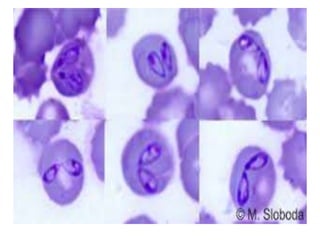
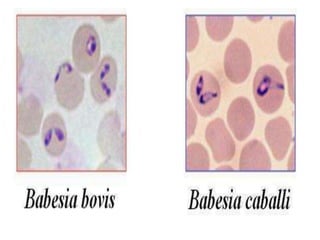
history of presence of tick and signs like
hematuria are diagnostic. infection with B.
canis or B. gibsoni is definitifely diagnosed by
demonstration of the parasites on red cells.
blood smears may be stained with diff-quik or
preferable wright's or giemsa stain. stained
smears demonstrate 2.4mm x 5.0mm,
piriform-shaped, intraerythrocytic parasites
which are usually paired.
serologic tests, include the indirect fluorescent
antibody test (IFA) which is used most frequently,
and a more recently developed dot ELISA test,
complement-fixation test , indirect
hemagglutination test, card aggulination test,
capillary aglutination test etc. are other
serological test being used for diagnosis. animal
transmission test and hematology also help in
diagnosis. the hemoglobin content goes blow
3g/dl and to erythrocyte count as low as 2
million/l of blood.
Treatment
Babesiosis can be treated with various drugs.
however, treatment should be administered as
early as possibly to make it effective. among
the currently available drugs, imidocarb and
diminazene aceturate are the most widely
used for treating Babesiosis. it should be
noted that some of the drugs are potentially
toxic and manufactures' recomendations must
be carefully followed. quinuronium derivatives
are being used with good results.
Control
the control processes usually involve a
combination of treatment, vaccination and tick
control. in endemic areas, many indigenous cattle
are naturally infected with Babesiosis in calf
hood, and are immuned as a results. strict control
programme aimed at the one-host Boophilus
ticks is better option. recently, a vaccine which
minimizes the severity of infection was
developed. the vaccine is reported to be effective
in diminishing the pathologic effects
Conclusion
it is important tick born hemoprotozoan
disease of domestic and pet animals
characterized by hematuria and other general
signs of illness. it can be confirmed by
identification of organisms in smear and
treated by any of the available medicines.
control is difficult due to non-availability of
effective tick control measures

Babesiosis

  • 1.
    Faculty of VeterinaryScience Infectious Diseases II (ProtozoalDiseases) BABESSIOSIS 14th,May ,2016
  • 2.
    Babesiosis synonyms: Texas fever,red water, cattle tick fever. Babesiosis is a tick-born disease caused by Babesia spp. that infect red blood cells. disease is clinically characterized by high temperature, loss of appetite and coffee coloured urine.
  • 3.
    Etiology Babesia bovis andBabesia bigemine are responsible for babesiosis in cattle. in horses it is caused by Babesia aqui and in dogs by Babesia canis.
  • 4.
    Epidemiology This disease ispresent in whole world., but is prevalence is more in hot and humid areas. ticks that acquire Babesia infections from infected animals and then pass it to other health animals as a subsequent blood meal transmit the disease. the infection in ticks can be passed onto the next generation through the eggs. this disease can occur almost everywhere around the world.
  • 5.
    it is amajor threat to cattle development in many tropical and sub-tropical countries, especially when exotic breeds are used . disease mostly occurs sporadically and can be treated easily so mortality is not so common.
  • 6.
    Pathogenesis animals are effectedafter an infected tick bites and feeds on a susceptible host for a minimum of three days. when the Babesia organism is introduced into the host, it attaches to erythrocyte membranes and endocytosed. hemolytic anemia and hypotensive shock are typical clinical syndromes of infection.
  • 7.
    hemolytic anemia resultsfrom direct erythrocyte damage by the parasite, and both intravascular and extravascular immune- mediated destruction of red blood cells. infection can produce thrombocytopenia, the mechanism of which consists of immune- mediated destruction and sequestration in the spleen.
  • 8.
    Clinical findings fever isthe first clinical sign one to three weeks after an infective tick bite. following the bite , the parasites invade red blood cells where they multiply and invade more red blood cells the destruction of increasing number of red blood cells causes anemia, shock and also release large quantities of haemoglobin into the circulation
  • 9.
    the sick animalsare usually depressed, loss appetite, and their ayes and gums are pale from anemia and jaundiced due to bile pigments in their circulation. red coloured urine can usually be observed in these animals. pregnant animals often abort. in severe B. bovis infection cases, nervous signs such as incoordination. paralysis and coma are presented which often lead to death.
  • 10.
    Babesia infections canrange from in appearance to acute severe diseases. in severe cases, animals often die within one or two days of the appearance of clinical signs. however in less severe cases, animals can have a fever for about a weak and it may remain sick for about three weeks. after that , they can have slow recovery, but will remain infected carriers for the rest of their lives.
  • 11.
    Necropsy findings physical examinationreveals splenomegaly, lymphadenomagely, hematuria, and icterus. hypotensive shock results from the release and production of vasoactive amines and cytokines which produce vasodilatation. there will be enlarged kidney and red-brown colored urine filled bladder. on the different layers of heart muscle there will echymotic hemorrhage. there will be intravascular clotting
  • 12.
    Diagnosis history of presenceof tick and signs like hematuria are diagnostic. infection with B. canis or B. gibsoni is definitifely diagnosed by demonstration of the parasites on red cells. blood smears may be stained with diff-quik or preferable wright's or giemsa stain. stained smears demonstrate 2.4mm x 5.0mm, piriform-shaped, intraerythrocytic parasites which are usually paired.
  • 13.
    serologic tests, includethe indirect fluorescent antibody test (IFA) which is used most frequently, and a more recently developed dot ELISA test, complement-fixation test , indirect hemagglutination test, card aggulination test, capillary aglutination test etc. are other serological test being used for diagnosis. animal transmission test and hematology also help in diagnosis. the hemoglobin content goes blow 3g/dl and to erythrocyte count as low as 2 million/l of blood.
  • 17.
    Treatment Babesiosis can betreated with various drugs. however, treatment should be administered as early as possibly to make it effective. among the currently available drugs, imidocarb and diminazene aceturate are the most widely used for treating Babesiosis. it should be noted that some of the drugs are potentially toxic and manufactures' recomendations must be carefully followed. quinuronium derivatives are being used with good results.
  • 18.
    Control the control processesusually involve a combination of treatment, vaccination and tick control. in endemic areas, many indigenous cattle are naturally infected with Babesiosis in calf hood, and are immuned as a results. strict control programme aimed at the one-host Boophilus ticks is better option. recently, a vaccine which minimizes the severity of infection was developed. the vaccine is reported to be effective in diminishing the pathologic effects
  • 19.
    Conclusion it is importanttick born hemoprotozoan disease of domestic and pet animals characterized by hematuria and other general signs of illness. it can be confirmed by identification of organisms in smear and treated by any of the available medicines. control is difficult due to non-availability of effective tick control measures