Assistaant Professor Abdullah
Alhatami
University of Kufa
Faculty of Veterinary Medicine
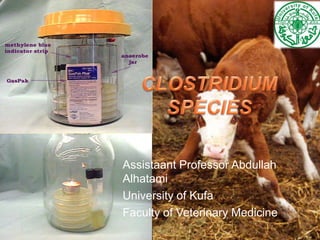
CLOSTRIDIUM SPECIES
Large gram-positive rods
Produces bulging spores, C. perfringens rarely produce
spores. Size, shape and location of endospores used for
species differentiation
Anaerobic/ some are aerotolerant
Catalase and oxidase negative
Motile by means of peritrichous falgella, except C. perfringens
Require enriched media for growth
They are toxigenic.
They are non-capsulated except C. perfrigens
fermentative
Colony forms
Colonial morphology is of limited value for
differentiating most clostridial species.
Colonies of C. perfringens are surrounded by
a characteristic double-zone of haemolysis.
Growth characteristics
ferment a variety of sugars
many can digest proteins. Milk is turned acid
by some and digested by others
Saccharolytic or proteolytic
Antigenic characteristics
clostridia share some antigens (somatic)
possess specific soluble antigens
(exotoxins)permit grouping by precipitin tests
Diseases
 Categorized into three major groups based on
toxin activity
Neurotoxic clostridium Histotoxic clostridia
C. tetani
C. botulinum
Enterotoxemic and Enteropathogenic
clostridia
C. perfringens type A-E
C. difficile
localized lesion in liver and
muscle
C. chauvoei
C. septicum
C.novyi type A
C. perfringens type
A
C. sordelli
C. haemolyticum
C. novyi type B
Detection and differentiation of
clostridia
 Blood agar enriched with yeast extract, vitamin K
and haemin is suitable for the culture of clostridia
under anaerobic condition
 Demonstration of histotoxic clostridia in tissues
- PCR-based techniques
- Fluorescent antibody techniques
 ELISA can be used for toxin detection.
Note: They are often derived from the normal flora.
oxygen sensitive, isolation takes several days or longer
Neurotoxic clostridia
Clostridium tetani- agent of tetanus
 Morphology
• long thin gram-positive
organism
• round terminal spore
gives drumstick
appearance or “tennis
racket”
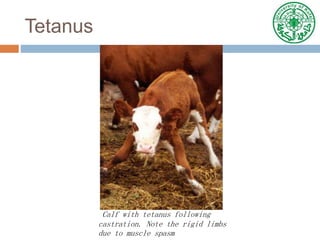
Tetanus
Calf with tetanus following
castration. Note the rigid limbs
due to muscle spasm
Morphology and physiology
• motile by peritrichous flagella
• grow on blood agar or cooked meat medium
with swarming
• beta-hemolysis exhibited on blood agar
• spores resist boiling for 20 minutes
• Strict anaerobe ( vegetative cell is extremely
O2 sensitive)
Clostridium tetani
 Antigenic Structure
 Depending uponFlagella (H), somatic (0), ten
serotypes .
 Single antigenic toxin characterizes all
strains (tetanospasmin)
 Abs to neurotoxin of any serotype can
neutralize neurotoxin produced by others
(cross-reaction)
Pathogenicity Determinants
• play a role in local infection only in conjunction with
other bacteria that create suitable environment for
their multiplication locally. Produce exotoxin that act
in sites faraway from site of infection
• Plasmid-mediated neurotoxin (tetanospasmin),
heat-labile, systemic-acting exotoxin
• Heat- stable hemolysin (tetanolysin) of unknown
significance
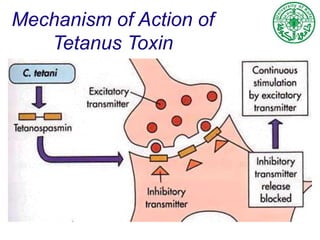
Mode of Action
toxin binds to peripheral nerve
endings, internalize, and travel via
retrograde intra-axonal transport
to the spinal cord
it interferes with the activity of the
inhibitory interneurons
blocks release of inhibitory
neurotransmitters
continuous stimulation by
excitatory transmitters
spastic paralysis
Mechanism of Action of
Tetanus Toxin
Notes
 locked jaw/tetanus
 muscle spasms (spastic paralysis) (lockjaw),
cardiac arrhythmias, fluctuations in blood pressure
 Infect wounds
 Toxin produced in wounds and act systemically
 Toxin production in regulated by genes encoded
in plasmids
 One antigenic type of toxin
 Toxin causes synaptic spasms
 Treated by antitoxin
 Prevented by toxoid
Lab Identification
Isolation of C. tetani must rest on
production of toxin production and its
neutralization by specific antitoxin.
C. botulinum: botulism- agent of botulism, a
rare, but severe (lethal) neuroparalytic disease
 Morphology and Physiology
• Fastidious, strictly anaerobic G+ bacilli
• Motile by peritrichous flagella
• Oval, Subterminal endospores
• proteolytic and non-proteolytic
• preformed toxin in canned foods, carcasses,
decaying vegetation etc
• most potent biological toxin known
Antigenic Structure
 Seven antigenically distinct botulinum
toxins (types A, B, C, D, E, F,and G)
 somatic antigens - heat stable and heat
labile
 spore antigens - more specific
Pathogenicity Determinants
• Phage-mediated (regulated by genomes),
systemic-acting, neurotoxin (botulinum toxin =
botulin) released at cell lysis
• Lethal foodborne intoxication with Toxins A
through G
(neurotoxins)
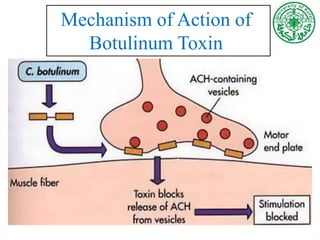
 Mode of Action of botulin toxins
- binds specific receptors on peripheral cholinergic
nerve endings(neuromuscular junctions), blocks
release of acetylcholine (excitatory
neurotransmitter), blocking muscle stimulation &
resulting in flaccid paralysis
Mechanism of Action of
Botulinum Toxin
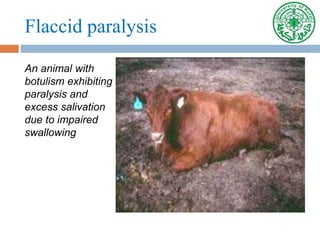
Flaccid paralysis
An animal with
botulism exhibiting
paralysis and
excess salivation
due to impaired
swallowing
Lab Identification
 microscopic detection or Cx (culture) are often
(few organisms and slow growing)
 toxin detected and typed in lab via toxicity and
antitoxin neutralization tests in mice or by
ELISA
Disease is treated by antitoxin, prevented by
toxoids
Enterotoxaemia clostridia: toxins
(α,β,ε,ι) C. perfrigens type A – E
 C. perfringens or
C. welchii
Morphology and
Physiology
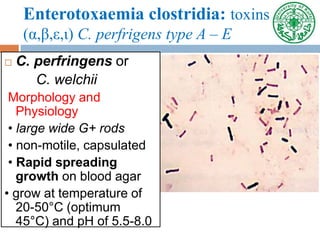
• large wide G+ rods
• non-motile, capsulated
• Rapid spreading
growth on blood agar
• grow at temperature of
20-50°C (optimum
45°C) and pH of 5.5-8.0
Clostridium perfringens
 Cultural and biochemical properties
 It grows on most ordinary media
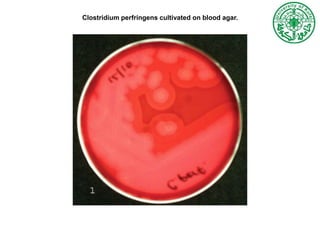
 Produces double zone of hemolysis on sheep
blood agar, inner narrow zone of complete
hemolysis caused by theta (θ) toxin, and wider
zone of incomplete hemolysis caused by alpha (α)
toxin
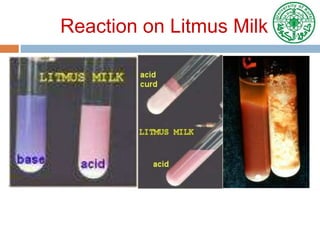
 In litmus milk, ferment lactose (acid
production),color changed from blue to red.
Coagulation of milk casein by acid, and the clotted
milk is disrupted by vigorous gas production
stormy reaction
Reaction on Litmus Milk
Pathogenicity Determinants
 C. perfringens produces 12 distinct exotoxins and
enterotoxin
• four major lethal toxins to lab animals
1) alpha () is common to all types of C.
perfringens,
is lecithinase C, phospholipase, split lecithin and
sphingomyelin; disrupt cell membrane
phospholipid, hemolysin, and necrotizing effect
1) beta ()
2) epsilon () have lethal and necrotizing
3) iota () properties
Minor toxins
 gamma (γ)
 eta ()
 delta(), lethal and hemolytic
 theta(), oxygen labile, lethal and hemolytic
( genetically related to streptolysin O)
 kappa(), collagenase
 lambda(), proteinase and gelatinase
 mu(), hyaluronidase
 nu(ν)toxin deoxyribonuclase (DNAse)
Have only minor
lethal actions
Types of C. perfringens
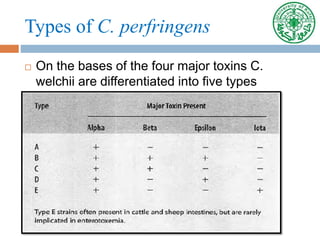
 On the bases of the four major toxins C.
welchii are differentiated into five types
Enterotoxaemia clostridia: toxins
(α,β,ε,ι) C. perfringens type A – E
 Type A (α toxin): necrotic enteritis in chicken, necrotizing
enterocolitis in pigs, canine haemorrhagic gastroenteritis
 Type B (α, β(major), ε): lamb dysentery; haemorrhagic
enteritis in calves and foals
 Type C (α, β (major)): struck in adult sheep, necrotic
enteritis in chickens, haemorrhagic enteritis in neonatal
piglets, sudden death in goats and feedlot cattle
 Type D (α, ε (major)): pulpy kidney in sheep,
enterotoxaemia in calves, adult goats and kids
 Type E (α and ι(major)): haemorrhagic infection in
calves, enteritis in rabbits
Pathogenesis of C.
perfringens
A- Enterotoxemia (types A-E)
 Transmitted by ingestion
 Type A found in human and animal GIT and in
soil
 Types B to E found mostly in animal GIT &
soil
Type A
 In human food poisoning, vegetation
occurs in cooked meat, ingested and
sporulation occur in GUT
 In dog & cat vegetation, and sporulation
and toxin production in intestine
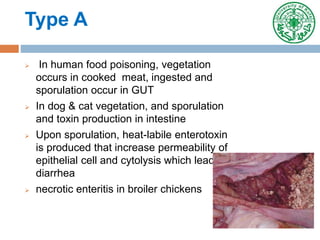
 Upon sporulation, heat-labile enterotoxin
is produced that increase permeability of
epithelial cell and cytolysis which lead to
diarrhea
 necrotic enteritis in broiler chickens
Type B
 - beta toxin cause hemorrhagic enteritis in
small intestine
- produce severe disease in newborn, because
β toxin is inactivated by trypsin
Type C
 - cause hemorrhagic enterotoxemia in neonate
animals
- cause fatal toxemia-bacteremia in adult
sheep “struck”
- beta toxin and other factors are involved
Type D
 Produce overeating disease, pulpy kidney in
older lambs
 ε toxin produced in intestine activated by
proteases ↑intestinal permeability→
enter blood → damage to vascular
endothelium→ edema
Laboratory diagnosis
1) Gram staining of content of small intestine→
large no. of G + rod
2) Culture → rapid growth property
→ stormy reaction
→ double zone of hemolysis
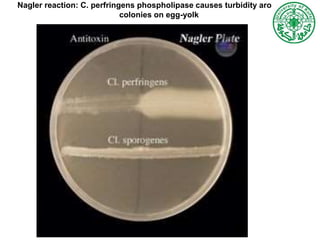
→ Nagler reaction
3) Animal inoculation for demonstration of toxins
in vivo from specimens or culture
4) PCR
Clostridium perfringens cultivated on blood agar.
Nagler reaction: C. perfringens phospholipase causes turbidity around the
colonies on egg-yolk
Copyright © by American Association of Veterinary Laboratory Diagnosticians
C. difficile
 It causes chronic diarrhoea in dogs and
haemorrhagic enterocolitis in newborn foals
 In human, cause antibiotic-associated
diarrhea,
pseudomembranous colitis following
administration of broad spectrum antibiotic
(like clindamycin or third generation
cephalosporin), chemotherapy, nonsteroidal
anti-inflammatory drug that alter gut normal
flora and allow C. difficile to grow
Determinant of pathogenicity
 Production of two exotoxins
 Exotoxin A which is enterotoxin cause fluid
loss
 Exotoxin B is cytotoxin
Lab diagnosis
 Culture on CCFA (cycloserine, cefoxitin,
fructose agar)
 Toxin detection using
-golden hamster ovary (CHO) cells
- Enzyme immuno assay (EIA)
 Toxin gene detection by PCR
histotoxic clostridia:
they produce toxins (α,β,γ,δ toxins)
 C. perfingens type A (α toxin): cause myonecrosis
& gas gangrene in human and domestic animals
 Pathogenesis: in human cause anaerobic
cellulitis, gas gangrene alone or with other
bacteria
 Alpha toxin cause cell and tissue damage(
membranolytic activity)
 Other toxins produced by C.perfringens also involved in
destruction process
 Lead to necrotizing cellulitis, myonecrosis with edema
and hemorrhage
 In animals, the disease is rare, but usually occurs in
injection sites deep in muscle (horses)
Summery
histotoxic clostridia
C. novyi
 General properties
- G+, motile, noncapsulated, spore forming
large, oval highly resistant spore
- strict anaerobe
- three distinct types A, B, & C
- C. haemolyticum may be added as type D
C. novyi type A
 Alpha toxin is the major toxin produced by type
A, it has lethal and necrotizing activity
 Disease: bighead in young rams, wound
infection
 Gas gangrene in human
 Found in soil and intestine
C. novyi type B (α, β)
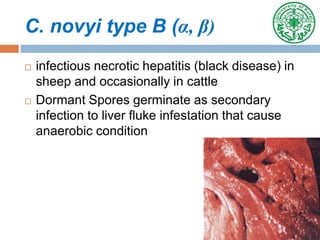
 infectious necrotic hepatitis (black disease) in
sheep and occasionally in cattle
 Dormant Spores germinate as secondary
infection to liver fluke infestation that cause
anaerobic condition
C. haemolyticum(β) toxin
 Resembles C.novyi type B, except it produce
no α toxin and much more β toxin (has
lecithinase activity)
 bacillary haemoglobinuria in cattle and
occasionally in sheep
 Liver fluke infection may induce germination of
spores in liver macrophages
C. chauvoei
 Produce typical subterminal
spores
 Strict anaerobe
 Inhabits intestine, liver and other
tissues
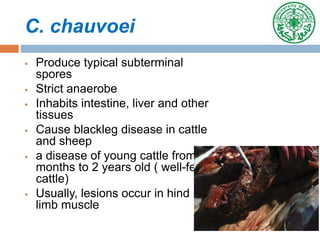
 Cause blackleg disease in cattle
and sheep
 a disease of young cattle from 6
months to 2 years old ( well-fed
cattle)
 Usually, lesions occur in hind
limb muscle
Pathogenesis
 Skeletal muscle is seeded with dormant
spores from intestine (ingestion), conditions
favoring spore germination include, trauma or
bruising
 The toxins α toxin (necrotizing), β,γ,δ produced
may involved in disease process that
characterized by emphysematous necrotizing
myositis
 The affected area is hot, swollen and painful.
Gas builds up in the muscle. There is rapid
progression to gangrene. Lameness is
C. septicum
 The leading clostridium in wound infections in
farm animals
 Short, stout, and pleomorphic G+ rod
 Colonies on blood agar are circular with
rhizoid or irregular margins
 Produce β-hemolysis on blood agar
 Found in soil, and intestine of human and
animal
 Acquired by wound infection or ingestion
pathogenesis
 The organism cause malignant edema in
domestic animal which is associated with
contaminated wound infection
 Production of toxins, especially α ( oxygen
stable hemolysin) toxin may be involved in
disease process
 Hemorrhage, edema and necrosis, spread
rapidly along facial planes from point of
infection
 The initial crepitant swelling is painful, then
become anesthetic and cold
pathogenesis
 Braxy (Scots) or bradsot (Danish) is a fatal
disease of sheep, associated with ingestion of
frozen or cold feed→ hemorrhagic necrotic
abomasitis
C. sordellii
 Cause myositis is cattle, sheep, horses
 Produce numerous toxins, including hemolytic
and lethal toxins
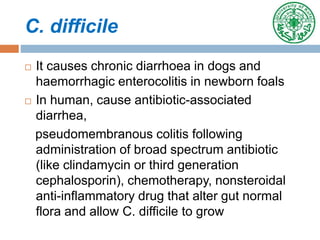
 A positive C. chauvoei
FAT smear
Lab Identification
1) Fluorescent antibody techniques
(microscopic examination)
2) Culture: double zoon of hemolysis, and
Nagler reaction for perfringens type A
3) PCR

Veterinary important Clostridium species

  • 1.
    Assistaant Professor Abdullah Alhatami Universityof Kufa Faculty of Veterinary Medicine
  • 2.
    CLOSTRIDIUM SPECIES Large gram-positiverods Produces bulging spores, C. perfringens rarely produce spores. Size, shape and location of endospores used for species differentiation Anaerobic/ some are aerotolerant Catalase and oxidase negative Motile by means of peritrichous falgella, except C. perfringens Require enriched media for growth They are toxigenic. They are non-capsulated except C. perfrigens fermentative
  • 3.
    Colony forms Colonial morphologyis of limited value for differentiating most clostridial species. Colonies of C. perfringens are surrounded by a characteristic double-zone of haemolysis.
  • 4.
    Growth characteristics ferment avariety of sugars many can digest proteins. Milk is turned acid by some and digested by others Saccharolytic or proteolytic
  • 5.
    Antigenic characteristics clostridia sharesome antigens (somatic) possess specific soluble antigens (exotoxins)permit grouping by precipitin tests
  • 6.
    Diseases  Categorized intothree major groups based on toxin activity Neurotoxic clostridium Histotoxic clostridia C. tetani C. botulinum Enterotoxemic and Enteropathogenic clostridia C. perfringens type A-E C. difficile localized lesion in liver and muscle C. chauvoei C. septicum C.novyi type A C. perfringens type A C. sordelli C. haemolyticum C. novyi type B
  • 7.
    Detection and differentiationof clostridia  Blood agar enriched with yeast extract, vitamin K and haemin is suitable for the culture of clostridia under anaerobic condition  Demonstration of histotoxic clostridia in tissues - PCR-based techniques - Fluorescent antibody techniques  ELISA can be used for toxin detection. Note: They are often derived from the normal flora. oxygen sensitive, isolation takes several days or longer
  • 8.
    Neurotoxic clostridia Clostridium tetani-agent of tetanus  Morphology • long thin gram-positive organism • round terminal spore gives drumstick appearance or “tennis racket”
  • 9.
    Tetanus Calf with tetanusfollowing castration. Note the rigid limbs due to muscle spasm
  • 10.
    Morphology and physiology •motile by peritrichous flagella • grow on blood agar or cooked meat medium with swarming • beta-hemolysis exhibited on blood agar • spores resist boiling for 20 minutes • Strict anaerobe ( vegetative cell is extremely O2 sensitive)
  • 11.
    Clostridium tetani  AntigenicStructure  Depending uponFlagella (H), somatic (0), ten serotypes .  Single antigenic toxin characterizes all strains (tetanospasmin)  Abs to neurotoxin of any serotype can neutralize neurotoxin produced by others (cross-reaction)
  • 12.
    Pathogenicity Determinants • playa role in local infection only in conjunction with other bacteria that create suitable environment for their multiplication locally. Produce exotoxin that act in sites faraway from site of infection • Plasmid-mediated neurotoxin (tetanospasmin), heat-labile, systemic-acting exotoxin • Heat- stable hemolysin (tetanolysin) of unknown significance
  • 13.
    Mode of Action toxinbinds to peripheral nerve endings, internalize, and travel via retrograde intra-axonal transport to the spinal cord it interferes with the activity of the inhibitory interneurons blocks release of inhibitory neurotransmitters continuous stimulation by excitatory transmitters spastic paralysis
  • 14.
    Mechanism of Actionof Tetanus Toxin
  • 15.
    Notes  locked jaw/tetanus muscle spasms (spastic paralysis) (lockjaw), cardiac arrhythmias, fluctuations in blood pressure  Infect wounds  Toxin produced in wounds and act systemically  Toxin production in regulated by genes encoded in plasmids  One antigenic type of toxin  Toxin causes synaptic spasms  Treated by antitoxin  Prevented by toxoid
  • 16.
    Lab Identification Isolation ofC. tetani must rest on production of toxin production and its neutralization by specific antitoxin.
  • 17.
    C. botulinum: botulism-agent of botulism, a rare, but severe (lethal) neuroparalytic disease  Morphology and Physiology • Fastidious, strictly anaerobic G+ bacilli • Motile by peritrichous flagella • Oval, Subterminal endospores • proteolytic and non-proteolytic • preformed toxin in canned foods, carcasses, decaying vegetation etc • most potent biological toxin known
  • 18.
    Antigenic Structure  Sevenantigenically distinct botulinum toxins (types A, B, C, D, E, F,and G)  somatic antigens - heat stable and heat labile  spore antigens - more specific
  • 19.
    Pathogenicity Determinants • Phage-mediated(regulated by genomes), systemic-acting, neurotoxin (botulinum toxin = botulin) released at cell lysis • Lethal foodborne intoxication with Toxins A through G (neurotoxins)  Mode of Action of botulin toxins - binds specific receptors on peripheral cholinergic nerve endings(neuromuscular junctions), blocks release of acetylcholine (excitatory neurotransmitter), blocking muscle stimulation & resulting in flaccid paralysis
  • 20.
    Mechanism of Actionof Botulinum Toxin
  • 21.
    Flaccid paralysis An animalwith botulism exhibiting paralysis and excess salivation due to impaired swallowing
  • 22.
    Lab Identification  microscopicdetection or Cx (culture) are often (few organisms and slow growing)  toxin detected and typed in lab via toxicity and antitoxin neutralization tests in mice or by ELISA Disease is treated by antitoxin, prevented by toxoids
  • 23.
    Enterotoxaemia clostridia: toxins (α,β,ε,ι)C. perfrigens type A – E  C. perfringens or C. welchii Morphology and Physiology • large wide G+ rods • non-motile, capsulated • Rapid spreading growth on blood agar • grow at temperature of 20-50°C (optimum 45°C) and pH of 5.5-8.0
  • 24.
    Clostridium perfringens  Culturaland biochemical properties  It grows on most ordinary media  Produces double zone of hemolysis on sheep blood agar, inner narrow zone of complete hemolysis caused by theta (θ) toxin, and wider zone of incomplete hemolysis caused by alpha (α) toxin  In litmus milk, ferment lactose (acid production),color changed from blue to red. Coagulation of milk casein by acid, and the clotted milk is disrupted by vigorous gas production stormy reaction
  • 25.
  • 26.
    Pathogenicity Determinants  C.perfringens produces 12 distinct exotoxins and enterotoxin • four major lethal toxins to lab animals 1) alpha () is common to all types of C. perfringens, is lecithinase C, phospholipase, split lecithin and sphingomyelin; disrupt cell membrane phospholipid, hemolysin, and necrotizing effect 1) beta () 2) epsilon () have lethal and necrotizing 3) iota () properties
  • 27.
    Minor toxins  gamma(γ)  eta ()  delta(), lethal and hemolytic  theta(), oxygen labile, lethal and hemolytic ( genetically related to streptolysin O)  kappa(), collagenase  lambda(), proteinase and gelatinase  mu(), hyaluronidase  nu(ν)toxin deoxyribonuclase (DNAse) Have only minor lethal actions
  • 28.
    Types of C.perfringens  On the bases of the four major toxins C. welchii are differentiated into five types
  • 29.
    Enterotoxaemia clostridia: toxins (α,β,ε,ι)C. perfringens type A – E  Type A (α toxin): necrotic enteritis in chicken, necrotizing enterocolitis in pigs, canine haemorrhagic gastroenteritis  Type B (α, β(major), ε): lamb dysentery; haemorrhagic enteritis in calves and foals  Type C (α, β (major)): struck in adult sheep, necrotic enteritis in chickens, haemorrhagic enteritis in neonatal piglets, sudden death in goats and feedlot cattle  Type D (α, ε (major)): pulpy kidney in sheep, enterotoxaemia in calves, adult goats and kids  Type E (α and ι(major)): haemorrhagic infection in calves, enteritis in rabbits
  • 30.
    Pathogenesis of C. perfringens A-Enterotoxemia (types A-E)  Transmitted by ingestion  Type A found in human and animal GIT and in soil  Types B to E found mostly in animal GIT & soil
  • 31.
    Type A  Inhuman food poisoning, vegetation occurs in cooked meat, ingested and sporulation occur in GUT  In dog & cat vegetation, and sporulation and toxin production in intestine  Upon sporulation, heat-labile enterotoxin is produced that increase permeability of epithelial cell and cytolysis which lead to diarrhea  necrotic enteritis in broiler chickens
  • 32.
    Type B  -beta toxin cause hemorrhagic enteritis in small intestine - produce severe disease in newborn, because β toxin is inactivated by trypsin
  • 33.
    Type C  -cause hemorrhagic enterotoxemia in neonate animals - cause fatal toxemia-bacteremia in adult sheep “struck” - beta toxin and other factors are involved
  • 34.
    Type D  Produceovereating disease, pulpy kidney in older lambs  ε toxin produced in intestine activated by proteases ↑intestinal permeability→ enter blood → damage to vascular endothelium→ edema
  • 35.
    Laboratory diagnosis 1) Gramstaining of content of small intestine→ large no. of G + rod 2) Culture → rapid growth property → stormy reaction → double zone of hemolysis → Nagler reaction 3) Animal inoculation for demonstration of toxins in vivo from specimens or culture 4) PCR
  • 36.
  • 37.
    Nagler reaction: C.perfringens phospholipase causes turbidity around the colonies on egg-yolk Copyright © by American Association of Veterinary Laboratory Diagnosticians
  • 38.
    C. difficile  Itcauses chronic diarrhoea in dogs and haemorrhagic enterocolitis in newborn foals  In human, cause antibiotic-associated diarrhea, pseudomembranous colitis following administration of broad spectrum antibiotic (like clindamycin or third generation cephalosporin), chemotherapy, nonsteroidal anti-inflammatory drug that alter gut normal flora and allow C. difficile to grow
  • 39.
    Determinant of pathogenicity Production of two exotoxins  Exotoxin A which is enterotoxin cause fluid loss  Exotoxin B is cytotoxin
  • 40.
    Lab diagnosis  Cultureon CCFA (cycloserine, cefoxitin, fructose agar)  Toxin detection using -golden hamster ovary (CHO) cells - Enzyme immuno assay (EIA)  Toxin gene detection by PCR
  • 41.
    histotoxic clostridia: they producetoxins (α,β,γ,δ toxins)  C. perfingens type A (α toxin): cause myonecrosis & gas gangrene in human and domestic animals  Pathogenesis: in human cause anaerobic cellulitis, gas gangrene alone or with other bacteria  Alpha toxin cause cell and tissue damage( membranolytic activity)  Other toxins produced by C.perfringens also involved in destruction process  Lead to necrotizing cellulitis, myonecrosis with edema and hemorrhage  In animals, the disease is rare, but usually occurs in injection sites deep in muscle (horses)
  • 42.
  • 43.
    histotoxic clostridia C. novyi General properties - G+, motile, noncapsulated, spore forming large, oval highly resistant spore - strict anaerobe - three distinct types A, B, & C - C. haemolyticum may be added as type D
  • 44.
    C. novyi typeA  Alpha toxin is the major toxin produced by type A, it has lethal and necrotizing activity  Disease: bighead in young rams, wound infection  Gas gangrene in human  Found in soil and intestine
  • 45.
    C. novyi typeB (α, β)  infectious necrotic hepatitis (black disease) in sheep and occasionally in cattle  Dormant Spores germinate as secondary infection to liver fluke infestation that cause anaerobic condition
  • 46.
    C. haemolyticum(β) toxin Resembles C.novyi type B, except it produce no α toxin and much more β toxin (has lecithinase activity)  bacillary haemoglobinuria in cattle and occasionally in sheep  Liver fluke infection may induce germination of spores in liver macrophages
  • 47.
    C. chauvoei  Producetypical subterminal spores  Strict anaerobe  Inhabits intestine, liver and other tissues  Cause blackleg disease in cattle and sheep  a disease of young cattle from 6 months to 2 years old ( well-fed cattle)  Usually, lesions occur in hind limb muscle
  • 48.
    Pathogenesis  Skeletal muscleis seeded with dormant spores from intestine (ingestion), conditions favoring spore germination include, trauma or bruising  The toxins α toxin (necrotizing), β,γ,δ produced may involved in disease process that characterized by emphysematous necrotizing myositis  The affected area is hot, swollen and painful. Gas builds up in the muscle. There is rapid progression to gangrene. Lameness is
  • 49.
    C. septicum  Theleading clostridium in wound infections in farm animals  Short, stout, and pleomorphic G+ rod  Colonies on blood agar are circular with rhizoid or irregular margins  Produce β-hemolysis on blood agar  Found in soil, and intestine of human and animal  Acquired by wound infection or ingestion
  • 50.
    pathogenesis  The organismcause malignant edema in domestic animal which is associated with contaminated wound infection  Production of toxins, especially α ( oxygen stable hemolysin) toxin may be involved in disease process  Hemorrhage, edema and necrosis, spread rapidly along facial planes from point of infection  The initial crepitant swelling is painful, then become anesthetic and cold
  • 51.
    pathogenesis  Braxy (Scots)or bradsot (Danish) is a fatal disease of sheep, associated with ingestion of frozen or cold feed→ hemorrhagic necrotic abomasitis
  • 52.
    C. sordellii  Causemyositis is cattle, sheep, horses  Produce numerous toxins, including hemolytic and lethal toxins
  • 53.
     A positiveC. chauvoei FAT smear
  • 54.
    Lab Identification 1) Fluorescentantibody techniques (microscopic examination) 2) Culture: double zoon of hemolysis, and Nagler reaction for perfringens type A 3) PCR

Editor's Notes

  • #3 Although more than 100 clostridial species are recognized, less than 20 are pathogenic.
  • #13 Docking
  • #16 To neutralize unbound toxin, antitoxin should be administered promptly, either intravenously or into the subarachnoid space on three consecutive days. Toxoid may be given subcutaneously to promote an active immune response even in those animals that have received antitoxin. Large doses of penicillin are administered intramuscularly or intravenously to kill toxin-producing vegetative cells of C. tetani in the lesion. Surgical debridement of wounds and removal of foreign bodies, followed by flushing with hydrogen peroxide, produces aerobic conditions which help to inhibit bacterial replication at the site of injury. This aspect of treatment is extremely important as studies in humans showed that, without debridement, it was possible to isolate C. tetani from patients after 16 days of treatment with intravenous penicillin (Campbell et al., 2009). Affected animals should be housed in a quiet dark environment. Fluid replacement therapy, sedatives, muscle relaxants and good nursing can minimize clinical discomfort and maintain vital functions.
  • #18 Heat resistant spore 100c for 4-5 hours
  • #20 one of most extremely potent neurotoxins known (1 ng of purified toxin contains about 200,000 minimal lethal doses (MLDs) for a 20g mouse seven antigenically distinct botulinum toxins (types A to G) Botox commertial preparation of exotoxin A used to remove wrinlkes on the face, also used for treatment specific spasmodic muscle disorders
  • #27 Enterotoxin (CPE) heat-labile secreted upon sporulation…… in human vegetation occurs in meat in animals like dog vegetation, and sporulation and toxin production in intestine CPE increase permeability of epithelial cells of intestine and cause cytolysis lead to diarrhea
  • #33 Rudimentary rumen cant destroy spores
  • #35 Fluid loss and edema especially in brain → cerebral edema that release catecholamine activate adenylcyclase →↑ cAMP lead to hyperglycemia and glucosuria
  • #36 When suspected bacteria is cultivated on egg-yolk agar, C.perfringens produce alpha toxin (lecithinase C) that hydrolysis lecithin and deposite lipid around bacterial colonies produce opacity or opalescence. The effect is inhibited by anti-alpha toxin antibodies
  • #37 Clostridium perfringens cultivated on blood agar. Surrounding the colonies, an inner, complete zone of hemolysis is caused by perfringolysin O and the less complete outer zone is caused by C. perfringens alpha toxin.
  • #38 Clostridium perfringens cultivated on egg yolk agar. The left area of the streak has been treated with C. perfringens alpha toxin (CPA) antibodies before inoculation with C. perfringens, hence inhibiting the lecithinase effect of CPA on the egg yolk. This effect can be observed on the right side of the streak, where no antibodies were applied.
  • #47 Beta toxin cause hepatic necrosis, intravascular hemolysis and hemorrhage…… hemoglobinuria ((redwater))
  • #49 α toxin (necrotizing, lethal and hemolytic), β DNAse,γ hyaluronidase,δ oxygen labile hemolysin
  • #51 Alpha oxygen stable hemolysin, beta DNAse, leukocidin, gamma hyaluronidase, delta oxygen labile hemolysin