by: Sam Vecchio
Causes/ Transmission
 Poliomyelitis also known as Polio is a
viral disease.
 Spread through direct person-to
person contact by means of mucus,
phlegm, or infected feces.
 Commonly found in developing
countries such as Africa, Asia and
places with poor sanitation/hygiene.
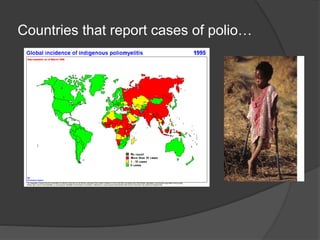
Countries that report cases of polio…
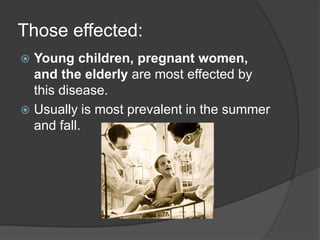
Those effected:
 Young children, pregnant women,
and the elderly are most effected by
this disease.
 Usually is most prevalent in the summer
and fall.
Signs and Symptoms:
 Subclinical infections- sore throat, slight
fever, headache, last for 72 hours. 95% of
polio infections are subclinical.
 Clinical infections: effects the central
nervous system (brain and spinal cord) and
is divided into non-paralytic and
paralytic. Non-paralytic symptoms include
stiff neck, fever, soreness which all last
about 1-2 weeks. Paralytic symptoms are
more sever with more sensitivity to areas of
the body and muscle spasms in the back of
the leg.
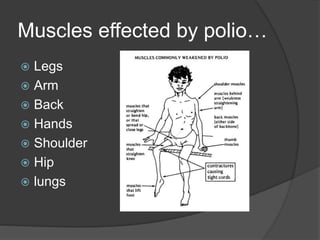
Muscles effected by polio…
 Legs
 Arm
 Back
 Hands
 Shoulder
 Hip
 lungs
How do you get it?
 The disease enters the environment
through feces and poor
sanitation/hygiene.
 Transmitted through person-to-person
and stays in the intestines. Only 1 in
every 200 people show signs of paralytic
symptoms.
 The incubation period is between 5-35
days with the average being around 7-
14 days.
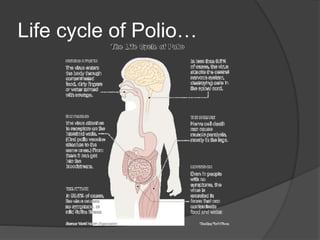
Life cycle of Polio…
Pathophysiology:
 The polio virus is detected through samples of
either the feces or from the mouth.
 Polio is preventable, the average person is
vaccinated for life after receiving multiple shots
as a small child and usually protect against the
disease 90% of the time.
 Those that don’t get vaccinated run the risk of
getting the virus which is often times chronic in
about 5% of the cases. The other 95% of
subclinical polio lead to future medical
problems such as high blood pressure, kidney
stones, weakness in legs/muscles, etc.
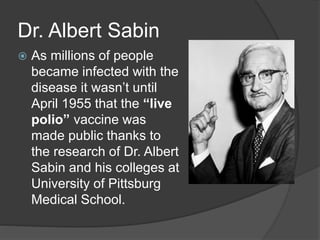
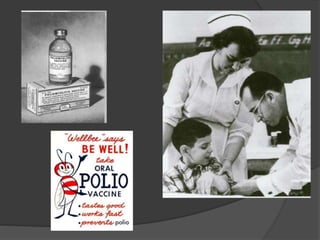
Dr. Albert Sabin
 As millions of people
became infected with the
disease it wasn’t until
April 1955 that the “live
polio” vaccine was
made public thanks to
the research of Dr. Albert
Sabin and his colleges at
University of Pittsburg
Medical School.
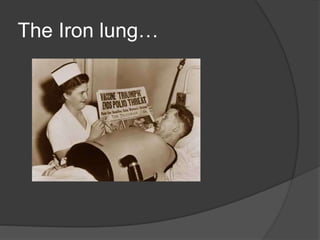
Iron Lung:
 In server cases of polio the respiratory
muscles can be damaged, this type of
polio is known as bulbar polio.
 Only found in extremely rare cases, the
motor neurons of the brain are attacked
by the poliovirus.
 Can reduce breathing and cause painful
swallowing and speaking.
The Iron lung…
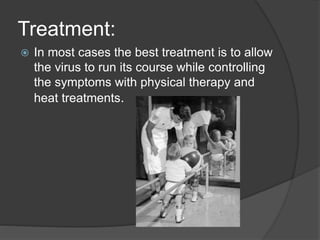
Treatment:
 In most cases the best treatment is to allow
the virus to run its course while controlling
the symptoms with physical therapy and
heat treatments.
More on Polio…
 YouTube - Jonas Salk and the Polio
Vaccine
 YouTube - Polio Vaccine - Vaccines and
Your Baby - The Children's Hospital of
Philadelphia (11 of 14)

Polio project

  • 1.
  • 2.
    Causes/ Transmission  Poliomyelitisalso known as Polio is a viral disease.  Spread through direct person-to person contact by means of mucus, phlegm, or infected feces.  Commonly found in developing countries such as Africa, Asia and places with poor sanitation/hygiene.
  • 3.
    Countries that reportcases of polio…
  • 4.
    Those effected:  Youngchildren, pregnant women, and the elderly are most effected by this disease.  Usually is most prevalent in the summer and fall.
  • 5.
    Signs and Symptoms: Subclinical infections- sore throat, slight fever, headache, last for 72 hours. 95% of polio infections are subclinical.  Clinical infections: effects the central nervous system (brain and spinal cord) and is divided into non-paralytic and paralytic. Non-paralytic symptoms include stiff neck, fever, soreness which all last about 1-2 weeks. Paralytic symptoms are more sever with more sensitivity to areas of the body and muscle spasms in the back of the leg.
  • 6.
    Muscles effected bypolio…  Legs  Arm  Back  Hands  Shoulder  Hip  lungs
  • 7.
    How do youget it?  The disease enters the environment through feces and poor sanitation/hygiene.  Transmitted through person-to-person and stays in the intestines. Only 1 in every 200 people show signs of paralytic symptoms.  The incubation period is between 5-35 days with the average being around 7- 14 days.
  • 8.
    Life cycle ofPolio…
  • 9.
    Pathophysiology:  The poliovirus is detected through samples of either the feces or from the mouth.  Polio is preventable, the average person is vaccinated for life after receiving multiple shots as a small child and usually protect against the disease 90% of the time.  Those that don’t get vaccinated run the risk of getting the virus which is often times chronic in about 5% of the cases. The other 95% of subclinical polio lead to future medical problems such as high blood pressure, kidney stones, weakness in legs/muscles, etc.
  • 10.
    Dr. Albert Sabin As millions of people became infected with the disease it wasn’t until April 1955 that the “live polio” vaccine was made public thanks to the research of Dr. Albert Sabin and his colleges at University of Pittsburg Medical School.
  • 12.
    Iron Lung:  Inserver cases of polio the respiratory muscles can be damaged, this type of polio is known as bulbar polio.  Only found in extremely rare cases, the motor neurons of the brain are attacked by the poliovirus.  Can reduce breathing and cause painful swallowing and speaking.
  • 13.
  • 14.
    Treatment:  In mostcases the best treatment is to allow the virus to run its course while controlling the symptoms with physical therapy and heat treatments.
  • 15.
    More on Polio… YouTube - Jonas Salk and the Polio Vaccine  YouTube - Polio Vaccine - Vaccines and Your Baby - The Children's Hospital of Philadelphia (11 of 14)