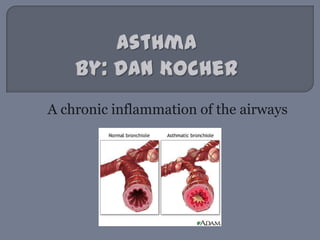
AsthmaBy: Dan KocherA chronic inflammation of the airways
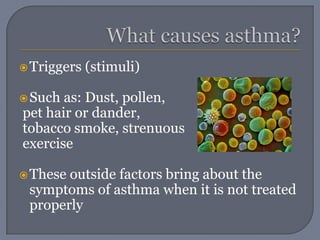
What causes asthma?Triggers (stimuli)Such as: Dust, pollen, pet hair or dander, tobacco smoke, strenuous  exerciseThese outside factors bring about the symptoms of asthma when it is not treated properly
TransmisssionAsthma affects the respiratory system of one individual, and it cannot be passed from one person to anotherAsthma may affect the transmission of other diseases/ilnesses due to chronic coughing caused by thick mucus
Who gets it?Millions of adults and  children living in the U.S  suffer from asthmaOccurrence not  affected by gender,  race, or ethnicity
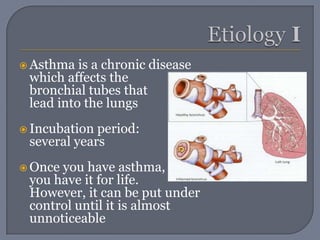
EtiologyIAsthma is a chronic disease which affects the 	bronchial tubes that lead into the lungs Incubation period: several yearsOnce you have asthma, 	you have it for life. 	However, it can be put under control until it is almost unnoticeable
Etiology IISymptoms are often worse early in the morning, or later at night as a response to cold air Common symptoms include: Wheezing, shortness of breath, chest tightening, and coughing Easiest method of detection is by the use of a stethoscope
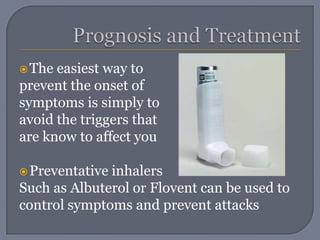
Prognosis and TreatmentThe easiest way to prevent the onset of symptoms is simply to avoid the triggers that are know to affect youPreventative inhalers Such as Albuterol or Flovent can be used tocontrol symptoms and prevent attacks
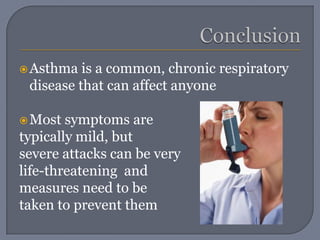
ConclusionAsthma is a common, chronic respiratory disease that can affect anyoneMost symptoms are typically mild, but severe attacks can be very life-threatening  and measures need to be taken to prevent them
Works Citedhttp://www.nhlbi.nih.gov/health/dci/Diseases/Asthma/Asthma_WhatIs.htmlhttp://www.mayoclinic.com/health/asthma/DS00021http://www.nlm.nih.gov/medlineplus/asthma.html

Asthma project