Poliomyelitis and Post Polio Syndrome Orla Hardiman Beaumont Hospital Dublin
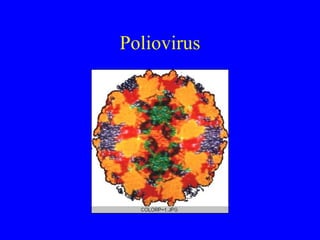
Poliovirus
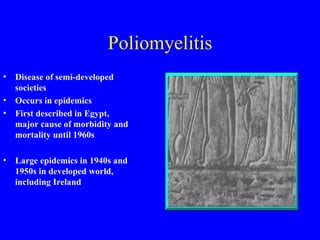
Poliomyelitis Disease of semi-developed societies Occurs in epidemics First described in Egypt,  major cause of morbidity and mortality until 1960s Large epidemics in 1940s and 1950s in developed world, including Ireland
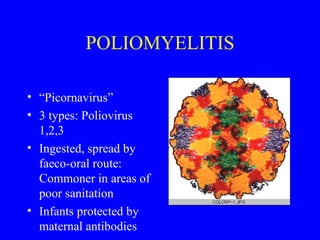
POLIOMYELITIS “ Picornavirus” 3 types: Poliovirus 1,2,3 Ingested, spread by faeco-oral route: Commoner in areas of poor sanitation Infants protected by maternal antibodies
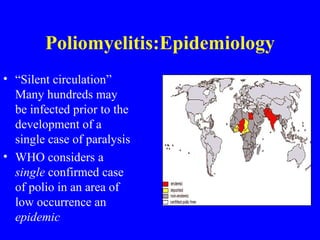
Poliomyelitis:Epidemiology “ Silent circulation” Many hundreds may be infected prior to the development of a single case of paralysis WHO considers a  single  confirmed case of polio in an area of low occurrence an  epidemic
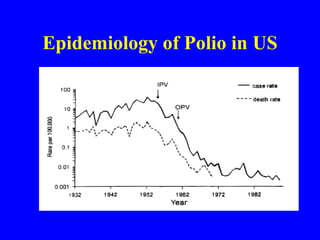
Epidemiology of Polio in US
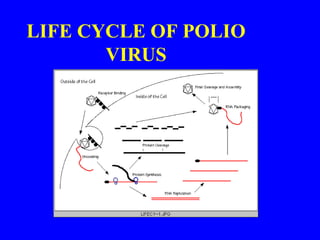
LIFE CYCLE OF POLIO VIRUS
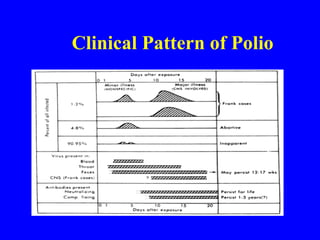
Clinical Pattern of Polio
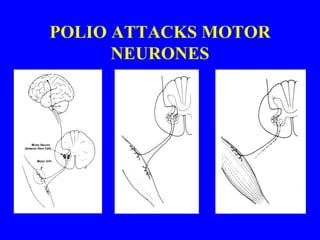
POLIO ATTACKS MOTOR NEURONES
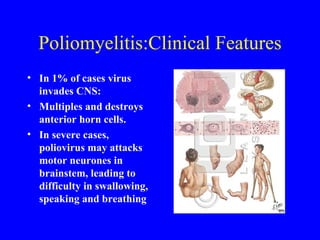
Poliomyelitis:Clinical Features In 1% of cases virus invades CNS:  Multiples and destroys anterior horn cells. In severe cases, poliovirus may attacks motor neurones in brainstem, leading to difficulty in swallowing, speaking and breathing
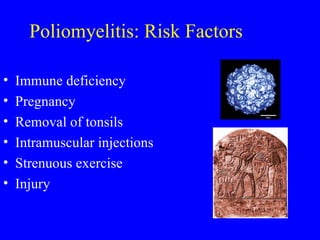
Poliomyelitis: Risk Factors Immune deficiency Pregnancy Removal of tonsils Intramuscular injections Strenuous exercise Injury
Measures to Prevent Infection Risk factor identification Quarantine Hygiene Vaccination:  “Herd” immunity Eradication
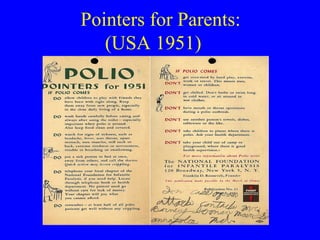
Pointers for Parents:    (USA 1951)
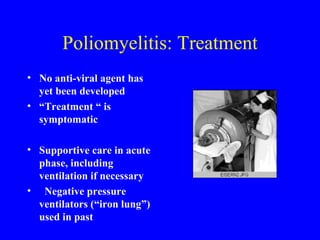
Poliomyelitis: Treatment No anti-viral agent has yet been developed “ Treatment “ is symptomatic Supportive care in acute phase, including ventilation if necessary  Negative pressure ventilators (“iron lung”) used in past
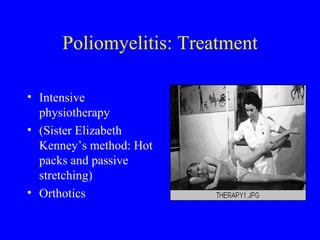
Poliomyelitis: Treatment Intensive physiotherapy (Sister Elizabeth Kenney’s method: Hot packs and passive stretching)  Orthotics
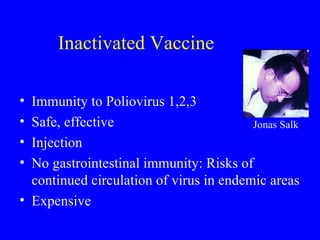
Poliovirus: Eradication Limit infection and dissemination Improve general hygiene: Clean water supply Polio Vaccines  Killed virus  injected  (Salk vaccine: 1955) Live attenuated virus (Sabin vaccine 1961)
Inactivated Vaccine Immunity to Poliovirus 1,2,3 Safe, effective Injection No gastrointestinal immunity: Risks of continued circulation of virus in endemic areas Expensive Jonas Salk
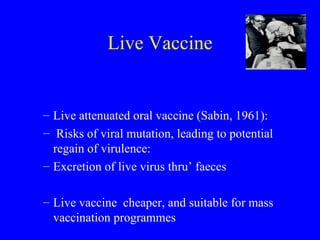
Live Vaccine Live attenuated oral vaccine (Sabin, 1961): Risks of viral mutation, leading to potential regain of virulence:  Excretion of live virus thru’ faeces Live vaccine  cheaper, and suitable for mass vaccination programmes
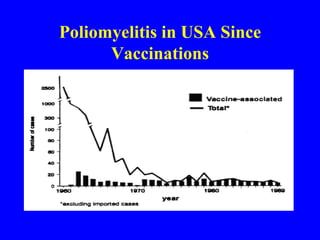
Poliomyelitis in USA Since Vaccinations
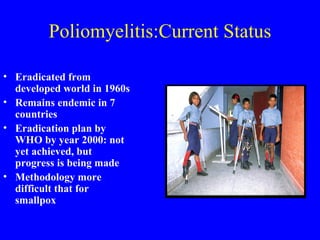
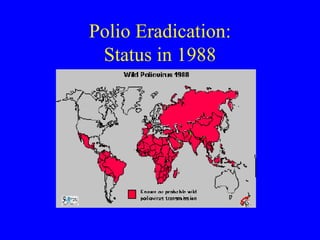
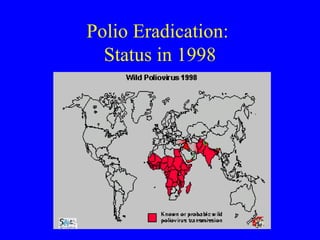
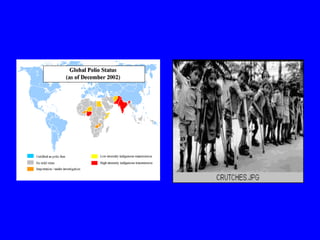
Poliomyelitis:Current Status Eradicated from developed world in 1960s Remains endemic in 7 countries Eradication plan by WHO by year 2000: not yet achieved, but progress is being made  Methodology more difficult that for smallpox
Polio Eradication: Status in 1988
Polio Eradication:  Status in 1998
 
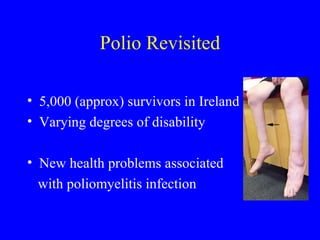
Polio Revisited 5,000 (approx) survivors in Ireland Varying degrees of disability New health problems associated  with poliomyelitis infection
THE POST POLIO SYNDROME: EXPERIENCE FROM A TERTIARY NEUROLOGY REFERRAL CENTRE IN IRELAND  Dr. Grainne Gorman,Catherine Lynch R.N.,Dr. Orla Hardiman Department of Neurology, Beaumont Hospital.
Details Collated Age Gender Occupation Age of onset, symptoms at onset weakness at onset residual weakness initial rehabilitation  Use of callipers/ mobility aids at initial diagnosis  Surgery Current status  New onset of symptoms  Concomitant disease
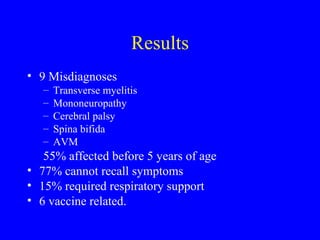
Results 9 Misdiagnoses Transverse myelitis Mononeuropathy Cerebral palsy Spina bifida AVM 55% affected before 5 years of age 77% cannot recall symptoms 15% required respiratory support 6 vaccine related.
 
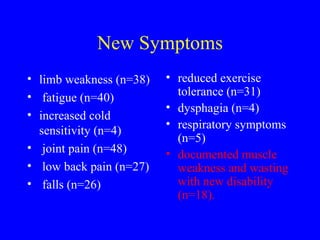
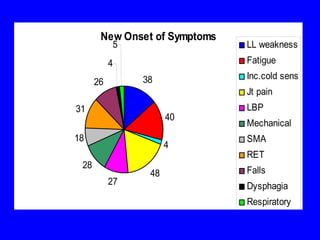
New Symptoms limb weakness (n=38) fatigue (n=40) increased cold sensitivity (n=4) joint pain (n=48) low back pain (n=27) falls (n=26)  reduced exercise tolerance (n=31) dysphagia (n=4) respiratory symptoms (n=5) documented muscle weakness and wasting with new disability (n=18).
 
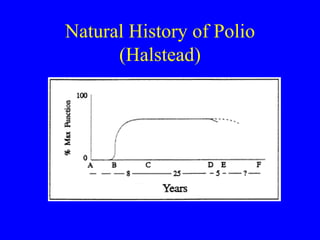
Natural History of Polio (Halstead)
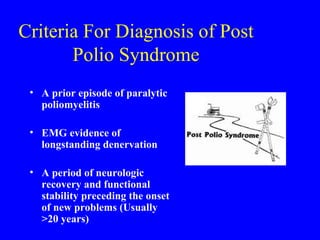
Criteria For Diagnosis of Post Polio Syndrome A prior episode of paralytic poliomyelitis EMG evidence of longstanding denervation A period of neurologic recovery and functional stability preceding the onset of new problems (Usually >20 years)
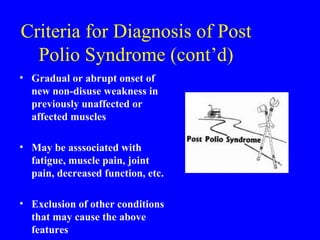
Criteria for Diagnosis of Post Polio Syndrome (cont’d) Gradual or abrupt onset of new non-disuse weakness in previously unaffected or affected muscles May be asssociated with fatigue, muscle pain, joint pain, decreased function, etc. Exclusion of other conditions that may cause the above features
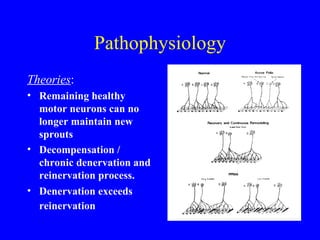
Pathophysiology Theories : Remaining healthy motor neurons can no longer maintain new sprouts Decompensation / chronic denervation and reinervation process. Denervation exceeds reinervation
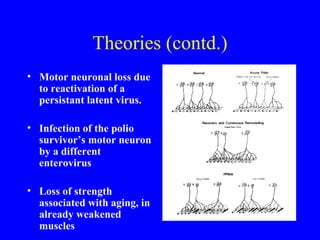
Theories (contd.) Motor neuronal loss due to reactivation of a persistant latent virus. Infection of the polio survivor’s motor neuron by a different enterovirus Loss of strength associated with aging, in already weakened muscles
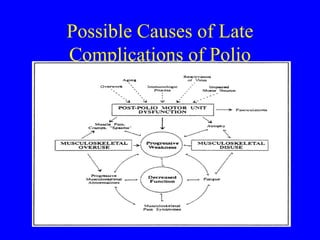
Possible Causes of Late Complications of Polio
Main Clinical Features of PPS Fatigue (Commonest) Weakness Muscle pain Gait disturbance Respiratory problems Swallowing problems Cold intolerance Sleep apnoea
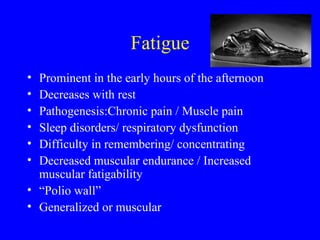
Fatigue Prominent in the early hours of the afternoon Decreases with rest Pathogenesis:Chronic pain / Muscle pain Sleep disorders/ respiratory dysfunction Difficulty in remembering/ concentrating Decreased muscular endurance / Increased muscular fatigability “ Polio wall” Generalized or muscular
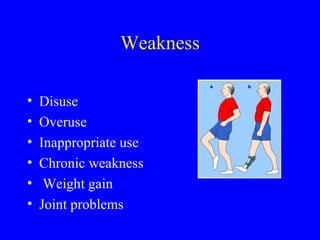
Weakness Disuse  Overuse  Inappropriate use Chronic weakness Weight gain Joint problems
Muscle Pain Extremely prevalent in PPS Deep aching pain Myofascial pain syndrome / Fibromyalgia Small number of patients have muscle tenderness on palpation
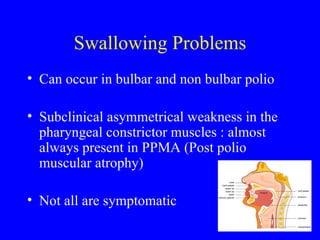
Swallowing Problems Can occur in bulbar and non bulbar polio Subclinical asymmetrical weakness in the pharyngeal constrictor muscles : almost always present in PPMA (Post polio muscular atrophy) Not all are symptomatic
Cold Intolerance Autonomic nervous system dysfunction? May relate to sympathetic intermediolateral column damage during acute poliomyelitis Peripheral component may include muscular atrophy leading to reduced heat production
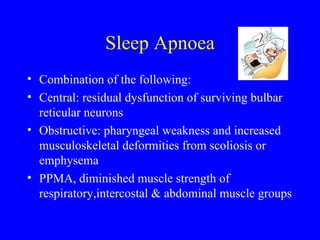
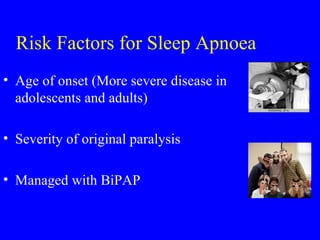
Sleep Apnoea Combination of the following: Central: residual dysfunction of surviving bulbar reticular neurons Obstructive: pharyngeal weakness and increased musculoskeletal deformities from scoliosis or emphysema PPMA, diminished muscle strength of respiratory,intercostal & abdominal muscle groups
Risk Factors for Sleep Apnoea Age of onset (More severe disease in adolescents and adults) Severity of original paralysis Managed with BiPAP
Management of Post Polio  Syndrome in Ireland Assessment Exclusion of other causes of disability Introduction to concept of interdisciplinary team Follow-up as necessary
Post Polio Syndrome  Multidisciplinary Team Neurologist Rehabilitation physician Rheumatologist Respiratory physician Voluntary organization Clinical Professional Services:  Physiotherapy Occupational Therapy Speech and Language Therapy Social Services
Management of Post Polio Syndrome in Ireland Evaluation: Neurologic Examination to define nature of new weakness (neurogenic v disuse) Neurophysiology Pulmonary Function studies, polysomnography if necessary Rheumatology /rehabilitation assessment Swallowing study: Aspiration risk
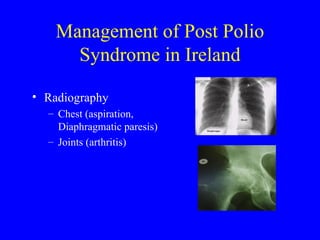
Management of Post Polio Syndrome in Ireland Radiography Chest (aspiration, Diaphragmatic paresis) Joints (arthritis)
Management of Post Polio Syndrome in Ireland Specialised Orthotics Community-based Services Access to free medical care and disability-based tax exemptions
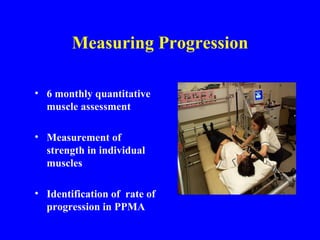
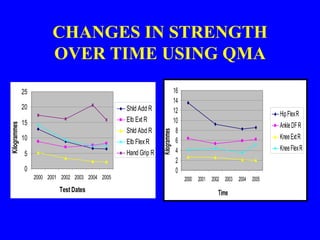
Measuring Progression 6 monthly quantitative muscle assessment Measurement of strength in individual muscles Identification of  rate of progression in PPMA
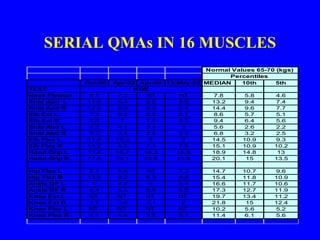
SERIAL QMAs IN 16 MUSCLES
CHANGES IN STRENGTH OVER TIME USING QMA
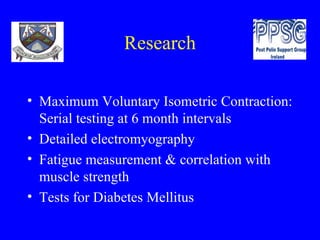
Research Maximum Voluntary Isometric Contraction: Serial testing at 6 month intervals Detailed electromyography Fatigue measurement & correlation with muscle strength Tests for Diabetes Mellitus
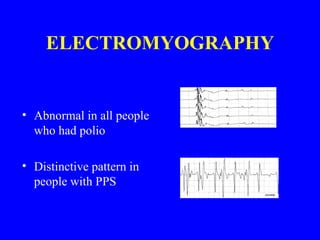
ELECTROMYOGRAPHY Abnormal in all people who had polio Distinctive pattern in people with PPS
Treatment /Management Recognition Symptomatic and supportive Occupational therapy:  orthotics etc Fatigue /sleepiness Look for features of sleep apnoea energy conservation
CONCLUSIONS Polio may have been over diagnosed in the past PPS is under-recognised Specialist clinic is beneficial Management is multidisciplinary Many research questions remain

Dr Orlapresentation8

  • 1.
    Poliomyelitis and PostPolio Syndrome Orla Hardiman Beaumont Hospital Dublin
  • 2.
  • 3.
    Poliomyelitis Disease ofsemi-developed societies Occurs in epidemics First described in Egypt, major cause of morbidity and mortality until 1960s Large epidemics in 1940s and 1950s in developed world, including Ireland
  • 4.
    POLIOMYELITIS “ Picornavirus”3 types: Poliovirus 1,2,3 Ingested, spread by faeco-oral route: Commoner in areas of poor sanitation Infants protected by maternal antibodies
  • 5.
    Poliomyelitis:Epidemiology “ Silentcirculation” Many hundreds may be infected prior to the development of a single case of paralysis WHO considers a single confirmed case of polio in an area of low occurrence an epidemic
  • 6.
  • 7.
    LIFE CYCLE OFPOLIO VIRUS
  • 8.
  • 9.
  • 10.
    Poliomyelitis:Clinical Features In1% of cases virus invades CNS: Multiples and destroys anterior horn cells. In severe cases, poliovirus may attacks motor neurones in brainstem, leading to difficulty in swallowing, speaking and breathing
  • 11.
    Poliomyelitis: Risk FactorsImmune deficiency Pregnancy Removal of tonsils Intramuscular injections Strenuous exercise Injury
  • 12.
    Measures to PreventInfection Risk factor identification Quarantine Hygiene Vaccination: “Herd” immunity Eradication
  • 13.
  • 14.
    Poliomyelitis: Treatment Noanti-viral agent has yet been developed “ Treatment “ is symptomatic Supportive care in acute phase, including ventilation if necessary Negative pressure ventilators (“iron lung”) used in past
  • 15.
    Poliomyelitis: Treatment Intensivephysiotherapy (Sister Elizabeth Kenney’s method: Hot packs and passive stretching) Orthotics
  • 16.
    Poliovirus: Eradication Limitinfection and dissemination Improve general hygiene: Clean water supply Polio Vaccines Killed virus injected (Salk vaccine: 1955) Live attenuated virus (Sabin vaccine 1961)
  • 17.
    Inactivated Vaccine Immunityto Poliovirus 1,2,3 Safe, effective Injection No gastrointestinal immunity: Risks of continued circulation of virus in endemic areas Expensive Jonas Salk
  • 18.
    Live Vaccine Liveattenuated oral vaccine (Sabin, 1961): Risks of viral mutation, leading to potential regain of virulence: Excretion of live virus thru’ faeces Live vaccine cheaper, and suitable for mass vaccination programmes
  • 19.
    Poliomyelitis in USASince Vaccinations
  • 20.
    Poliomyelitis:Current Status Eradicatedfrom developed world in 1960s Remains endemic in 7 countries Eradication plan by WHO by year 2000: not yet achieved, but progress is being made Methodology more difficult that for smallpox
  • 21.
  • 22.
    Polio Eradication: Status in 1998
  • 23.
  • 24.
    Polio Revisited 5,000(approx) survivors in Ireland Varying degrees of disability New health problems associated with poliomyelitis infection
  • 25.
    THE POST POLIOSYNDROME: EXPERIENCE FROM A TERTIARY NEUROLOGY REFERRAL CENTRE IN IRELAND Dr. Grainne Gorman,Catherine Lynch R.N.,Dr. Orla Hardiman Department of Neurology, Beaumont Hospital.
  • 26.
    Details Collated AgeGender Occupation Age of onset, symptoms at onset weakness at onset residual weakness initial rehabilitation Use of callipers/ mobility aids at initial diagnosis Surgery Current status New onset of symptoms Concomitant disease
  • 27.
    Results 9 MisdiagnosesTransverse myelitis Mononeuropathy Cerebral palsy Spina bifida AVM 55% affected before 5 years of age 77% cannot recall symptoms 15% required respiratory support 6 vaccine related.
  • 28.
  • 29.
    New Symptoms limbweakness (n=38) fatigue (n=40) increased cold sensitivity (n=4) joint pain (n=48) low back pain (n=27) falls (n=26) reduced exercise tolerance (n=31) dysphagia (n=4) respiratory symptoms (n=5) documented muscle weakness and wasting with new disability (n=18).
  • 30.
  • 31.
    Natural History ofPolio (Halstead)
  • 32.
    Criteria For Diagnosisof Post Polio Syndrome A prior episode of paralytic poliomyelitis EMG evidence of longstanding denervation A period of neurologic recovery and functional stability preceding the onset of new problems (Usually >20 years)
  • 33.
    Criteria for Diagnosisof Post Polio Syndrome (cont’d) Gradual or abrupt onset of new non-disuse weakness in previously unaffected or affected muscles May be asssociated with fatigue, muscle pain, joint pain, decreased function, etc. Exclusion of other conditions that may cause the above features
  • 34.
    Pathophysiology Theories :Remaining healthy motor neurons can no longer maintain new sprouts Decompensation / chronic denervation and reinervation process. Denervation exceeds reinervation
  • 35.
    Theories (contd.) Motorneuronal loss due to reactivation of a persistant latent virus. Infection of the polio survivor’s motor neuron by a different enterovirus Loss of strength associated with aging, in already weakened muscles
  • 36.
    Possible Causes ofLate Complications of Polio
  • 37.
    Main Clinical Featuresof PPS Fatigue (Commonest) Weakness Muscle pain Gait disturbance Respiratory problems Swallowing problems Cold intolerance Sleep apnoea
  • 38.
    Fatigue Prominent inthe early hours of the afternoon Decreases with rest Pathogenesis:Chronic pain / Muscle pain Sleep disorders/ respiratory dysfunction Difficulty in remembering/ concentrating Decreased muscular endurance / Increased muscular fatigability “ Polio wall” Generalized or muscular
  • 39.
    Weakness Disuse Overuse Inappropriate use Chronic weakness Weight gain Joint problems
  • 40.
    Muscle Pain Extremelyprevalent in PPS Deep aching pain Myofascial pain syndrome / Fibromyalgia Small number of patients have muscle tenderness on palpation
  • 41.
    Swallowing Problems Canoccur in bulbar and non bulbar polio Subclinical asymmetrical weakness in the pharyngeal constrictor muscles : almost always present in PPMA (Post polio muscular atrophy) Not all are symptomatic
  • 42.
    Cold Intolerance Autonomicnervous system dysfunction? May relate to sympathetic intermediolateral column damage during acute poliomyelitis Peripheral component may include muscular atrophy leading to reduced heat production
  • 43.
    Sleep Apnoea Combinationof the following: Central: residual dysfunction of surviving bulbar reticular neurons Obstructive: pharyngeal weakness and increased musculoskeletal deformities from scoliosis or emphysema PPMA, diminished muscle strength of respiratory,intercostal & abdominal muscle groups
  • 44.
    Risk Factors forSleep Apnoea Age of onset (More severe disease in adolescents and adults) Severity of original paralysis Managed with BiPAP
  • 45.
    Management of PostPolio Syndrome in Ireland Assessment Exclusion of other causes of disability Introduction to concept of interdisciplinary team Follow-up as necessary
  • 46.
    Post Polio Syndrome Multidisciplinary Team Neurologist Rehabilitation physician Rheumatologist Respiratory physician Voluntary organization Clinical Professional Services: Physiotherapy Occupational Therapy Speech and Language Therapy Social Services
  • 47.
    Management of PostPolio Syndrome in Ireland Evaluation: Neurologic Examination to define nature of new weakness (neurogenic v disuse) Neurophysiology Pulmonary Function studies, polysomnography if necessary Rheumatology /rehabilitation assessment Swallowing study: Aspiration risk
  • 48.
    Management of PostPolio Syndrome in Ireland Radiography Chest (aspiration, Diaphragmatic paresis) Joints (arthritis)
  • 49.
    Management of PostPolio Syndrome in Ireland Specialised Orthotics Community-based Services Access to free medical care and disability-based tax exemptions
  • 50.
    Measuring Progression 6monthly quantitative muscle assessment Measurement of strength in individual muscles Identification of rate of progression in PPMA
  • 51.
    SERIAL QMAs IN16 MUSCLES
  • 52.
    CHANGES IN STRENGTHOVER TIME USING QMA
  • 53.
    Research Maximum VoluntaryIsometric Contraction: Serial testing at 6 month intervals Detailed electromyography Fatigue measurement & correlation with muscle strength Tests for Diabetes Mellitus
  • 54.
    ELECTROMYOGRAPHY Abnormal inall people who had polio Distinctive pattern in people with PPS
  • 55.
    Treatment /Management RecognitionSymptomatic and supportive Occupational therapy: orthotics etc Fatigue /sleepiness Look for features of sleep apnoea energy conservation
  • 56.
    CONCLUSIONS Polio mayhave been over diagnosed in the past PPS is under-recognised Specialist clinic is beneficial Management is multidisciplinary Many research questions remain