OPTOM FASLU MUHAMMEDOPTOM FASLU MUHAMMED
 Filariasis is tropical diseases caused by
various thread-like parasitic round worms
(nematodes) and their larvae
 The larvae transmit the disease to
humans through a mosquito bite.
 Filariasis is characterized by fever, chills,
headache, and skin lesion in the early
stages
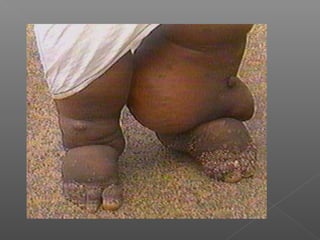
 if untreated, can progress to include
gross enlargement of the limbs and
genitalia in a condition called
elephantiasis
 The disease is caused by the adult
worms actually living in the lymphatic
vessels near the lymph nodes where
they distort the vessels and cause
local inflammation .
 In advanced stages, the worms can
actually obstruct the vessels, causing
the surrounding tissue to become
enlarged
 Repeated inflammation lead to
blockages of the lymphatic system,
especially in the genitals and legs.
 This causes the affected area to
become grossly enlarged, with
thickened, coarse skin, leading to a
condition called elephantiasis.
 In conjunctiva filariasis, the worms'
larvae migrate to the eye
 If untreated, this disease can cause a
type of blindness known as
onchocerciasis.
 Symptoms vary, depending on what
type of parasitic worm has caused the
infection .
 But all infections usually begin with chills,
headache
 Fever between three months
 Swelling, redness, and pain in the arms,
legs, or scrotum
 Areas of pus (abscesses) may appear as
a result of dying worms or a secondary
bacterial infection
 Symptoms caused by the death of the
parasites include fever, headache,
muscle pain, abdominal pain, nausea &
vomiting, weakness, dizziness, lethargy,
and asthma.
 patient history
 Physical examination
 screening blood specimens for specific
proteins produced by the immune
system in response to this infection.
 signs of lymphatic obstruction
 The larvae (microfilariae) can also be
found in the blood,
 Albendazole, or Diethylcarbamazine is
used to treat a filariasis (infection by
eliminating the larvae, impairing the
adult worms' ability to reproduce, and
by actually killing adult worms).
 The medication is started at low doses to
prevent reactions caused by large
numbers of dying parasites.
 The side effects can be controlled using
antihistamines and anti-inflammatory
drugs corticosteroids
 Other common drug reactions include
dizziness, weakness, and nausea.
 No treatment can reverse elephantiasis.
 Surgery may be used to remove surplus
tissue and provide a way to drain the
fluid around the damaged lymphatic
vessels
 to prevent being repeatedly bitten by
the mosquitoes
 limit outdoor activities at night,
particularly in rural
 wear long sleeves and pants and avoid
dark-coloured clothing that attracts
mosquitoes
• if sleeping in an open area or in a
room with poor screens, use a bed net
to avoid being bitten while asleep
• use air conditioning, the cooler air
makes insects less active.
Filariasis

Filariasis

  • 1.
  • 2.
     Filariasis istropical diseases caused by various thread-like parasitic round worms (nematodes) and their larvae  The larvae transmit the disease to humans through a mosquito bite.
  • 3.
     Filariasis ischaracterized by fever, chills, headache, and skin lesion in the early stages  if untreated, can progress to include gross enlargement of the limbs and genitalia in a condition called elephantiasis
  • 6.
     The diseaseis caused by the adult worms actually living in the lymphatic vessels near the lymph nodes where they distort the vessels and cause local inflammation .  In advanced stages, the worms can actually obstruct the vessels, causing the surrounding tissue to become enlarged
  • 7.
     Repeated inflammationlead to blockages of the lymphatic system, especially in the genitals and legs.  This causes the affected area to become grossly enlarged, with thickened, coarse skin, leading to a condition called elephantiasis.
  • 8.
     In conjunctivafilariasis, the worms' larvae migrate to the eye  If untreated, this disease can cause a type of blindness known as onchocerciasis.
  • 9.
     Symptoms vary,depending on what type of parasitic worm has caused the infection .  But all infections usually begin with chills, headache  Fever between three months
  • 10.
     Swelling, redness,and pain in the arms, legs, or scrotum  Areas of pus (abscesses) may appear as a result of dying worms or a secondary bacterial infection
  • 11.
     Symptoms causedby the death of the parasites include fever, headache, muscle pain, abdominal pain, nausea & vomiting, weakness, dizziness, lethargy, and asthma.
  • 12.
     patient history Physical examination  screening blood specimens for specific proteins produced by the immune system in response to this infection.
  • 13.
     signs oflymphatic obstruction  The larvae (microfilariae) can also be found in the blood,
  • 14.
     Albendazole, orDiethylcarbamazine is used to treat a filariasis (infection by eliminating the larvae, impairing the adult worms' ability to reproduce, and by actually killing adult worms).
  • 15.
     The medicationis started at low doses to prevent reactions caused by large numbers of dying parasites.  The side effects can be controlled using antihistamines and anti-inflammatory drugs corticosteroids
  • 16.
     Other commondrug reactions include dizziness, weakness, and nausea.
  • 17.
     No treatmentcan reverse elephantiasis.  Surgery may be used to remove surplus tissue and provide a way to drain the fluid around the damaged lymphatic vessels
  • 18.
     to preventbeing repeatedly bitten by the mosquitoes  limit outdoor activities at night, particularly in rural
  • 19.
     wear longsleeves and pants and avoid dark-coloured clothing that attracts mosquitoes
  • 20.
    • if sleepingin an open area or in a room with poor screens, use a bed net to avoid being bitten while asleep • use air conditioning, the cooler air makes insects less active.