OsteogenesisImperfecta (OI)By Jenn Levy
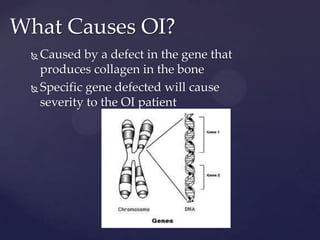
What Causes OI?Caused by a defect in the gene that produces collagen in the boneSpecific gene defected will cause severity to the OI patient
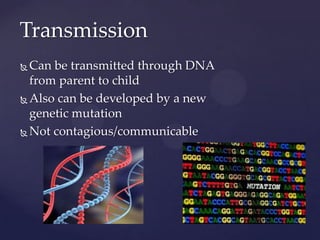
TransmissionCan be transmitted through DNA from parent to childAlso can be developed by a new genetic mutationNot contagious/communicable
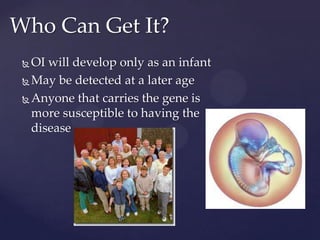
Who Can Get It?OI will develop only as an infantMay be detected at a later ageAnyone that carries the gene is more susceptible to having the disease
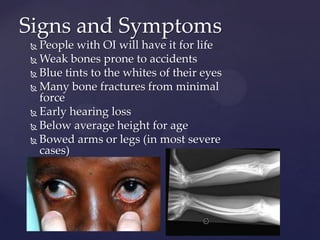
Signs and SymptomsPeople with OI will have it for lifeWeak bones prone to accidentsBlue tints to the whites of their eyesMany bone fractures from minimal forceEarly hearing lossBelow average height for ageBowed arms or legs (in most severe cases)
Types of OIChronic illnessFour Types of OIType I OI: normal life span, less severe bone breaks and fracturesType II OI: most severe, result in death within the first year of lifeType III OI: severe but have longer lifespans than type II, many fractures early in life, develop bone deformitiesType IV OI: moderately severe, need crutches/braces to walk
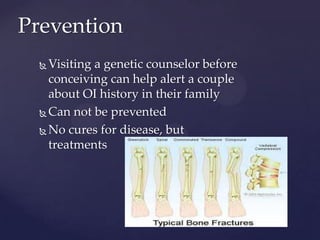
PreventionVisiting a genetic counselor before conceiving can help alert a couple about OI history in their familyCan not be preventedNo cures for disease, but treatments
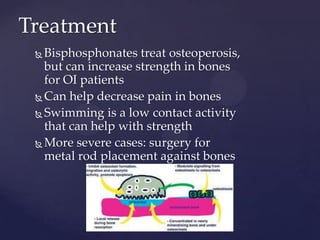
TreatmentBisphosphonates treat osteoperosis, but can increase strength in bones for OI patientsCan help decrease pain in bonesSwimming is a low contact activity that can help with strengthMore severe cases: surgery for metal rod placement against bones
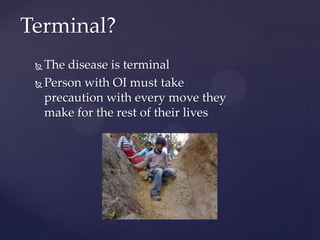
Terminal?The disease is terminal Person with OI must take precaution with every move they make for the rest of their lives

Jennlevydiseaseppt

  • 1.
  • 2.
    What Causes OI?Causedby a defect in the gene that produces collagen in the boneSpecific gene defected will cause severity to the OI patient
  • 3.
    TransmissionCan be transmittedthrough DNA from parent to childAlso can be developed by a new genetic mutationNot contagious/communicable
  • 4.
    Who Can GetIt?OI will develop only as an infantMay be detected at a later ageAnyone that carries the gene is more susceptible to having the disease
  • 5.
    Signs and SymptomsPeoplewith OI will have it for lifeWeak bones prone to accidentsBlue tints to the whites of their eyesMany bone fractures from minimal forceEarly hearing lossBelow average height for ageBowed arms or legs (in most severe cases)
  • 6.
    Types of OIChronicillnessFour Types of OIType I OI: normal life span, less severe bone breaks and fracturesType II OI: most severe, result in death within the first year of lifeType III OI: severe but have longer lifespans than type II, many fractures early in life, develop bone deformitiesType IV OI: moderately severe, need crutches/braces to walk
  • 7.
    PreventionVisiting a geneticcounselor before conceiving can help alert a couple about OI history in their familyCan not be preventedNo cures for disease, but treatments
  • 8.
    TreatmentBisphosphonates treat osteoperosis,but can increase strength in bones for OI patientsCan help decrease pain in bonesSwimming is a low contact activity that can help with strengthMore severe cases: surgery for metal rod placement against bones
  • 9.
    Terminal?The disease isterminal Person with OI must take precaution with every move they make for the rest of their lives