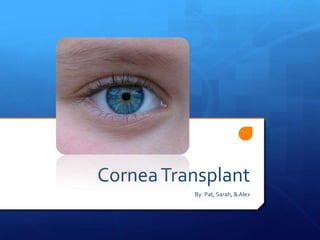
Cornea Transplant
          By: Pat, Sarah, & Alex
Location

 Located in the nervous system of the body

 On the most outer layer of the eye
Function

 Helps shield the eye from germs

 Functions like a window that controls and focuses the entry
  of light into the eye

 Contributes 65-75% of eyes total focusing power
Information

 About 40,000 transplants done each year
  in the U.S
 90% success rate of transplant

 At any given time there is 30-50 people
  waiting for a transplant
Information

  Life expectancy is not effected after a
   cornea transplant
  There are no deaths for those who are
   waiting for a cornea transplant
Reasons for transplant

 Cornea failure after an eye surgery

 Blindness

 Steep curving of the cornea

 Fuchs dystrophy

 Scarring after an infection
Disqualify

Candidates are screened for
 physical signs of infection disease
 or behavior that have put them at
 risk, such as drug use, or
 unknown cause of death of donor
Disqualify

 Some candidates might be disqualified
  from receiving a cornea transplant
  because of eye infection
 Sometime blindness can disqualify a
  candidate
 Low vision, risk might be too great
Hospitals

 Jefferson Hospital

 University Of Colorado Hospital

 Etc.
Information On Surgery

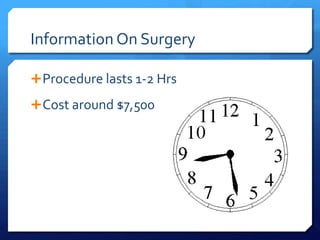
 Procedure lasts 1-2 Hrs

 Cost around $7,500
Cornea Transplant

 Both heart beating and non heart beating
 donors can donate their corneas
Therapy After

 Eye drops, and pills

 Restrictions:

 Use metal shield nightly

 Do not bend at waist

 No heavy exercise

 No swimming for 3 weeks
Heart Transplants
           Chloe & Shannon
Body System & Location


The heart is                 It is located
part of the                  in the
circulatory                  center- left
system                       portion of
                             your chest
Heart’s Function

 Pumps oxygen rich blood to every living cell in the body.

 Pumps 2,000 gallons of blood a day.
Statistics
 The U.S. performs more
  than 2,000 heart
  transplants each year.

 About 81% of all people
  who receive heart
  transplants survive for at
  least 1 year.

 About 75% survive 3 years,
  and 68% survive 5 years.
  About 50% survive 10
  years.
 There are approximately
  3,000 patients on the heart
  transplant waiting list.

 10% of those waiting will die.

 Wait times vary from days to
  several months and will
  depend on a recipient's blood
  type and condition
Medical Conditions
 Severe, spreading chest pain that can no
  longer be treated with medications or
  other surgery.

 Severe heart failure that medicine or
  surgery can’t fix.

 Heart defects that were present at birth.

 Abnormal heart beats that are life
  threatening and will not respond to
  other treatments.
Donor Requirements
              Donor must be brain dead and
               no older than 65 years old

              Donor can not have a history of
               heart disease or blood disease
               (HIV/hepatitis) and must be an
               organ donor.

              Recommend that the donor’s
               heart not be without blood
               circulation for more than 4
               hours.
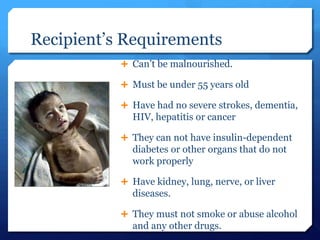
Recipient’s Requirements
            Can’t be malnourished.

            Must be under 55 years old

            Have had no severe strokes, dementia,
             HIV, hepatitis or cancer

            They can not have insulin-dependent
             diabetes or other organs that do not
             work properly

            Have kidney, lung, nerve, or liver
             diseases.

            They must not smoke or abuse alcohol
             and any other drugs.
Where to Go
 Hahnemann University Hospital

 Penn State Milton S. Hershey
   Medical Center

 University of Pennsylvania
   Medical Center And Health System

 Thomas Jefferson University
   Hospital

 Temple University Hospital

 Children’s Hospital of Pittsburgh
   of UPMC

 Allegheny General Hospital

 University of Pittsburgh Medical
   Center-Presbyterian
The Procedure
                 Usually 4-12 hours, or
                  longer.
                 Expect to stay in the
                  hospital for 7-21 days after
                  receiving a heart.
                 The cost is $50,000 to
                  $287,00
                 The average cost is
                  $148,000
                 Donor doesn’t pay, they’re
                  dead.
Anti-Rejection Meds


 Cyclosporin

 Prednisone

 Tacrolimus

 Cell-Cept
Post Surgery
                Biopsies are done every month
                  during the first 6 to 12 months
                  after transplant

                must take drugs that prevent
                  transplant rejection for the rest
                  of your life.

                Go back to normal activies when
                  they feel they are ok—Doctor
                  permitting

                Avoid vigorous physical activity.

                To make sure that you do not
                  develop coronary disease after a
                  transplant, you will have cardiac
                  catheterization every year.
Post Transplant Diet

 Avoid greasy,fatty foods

 No MacDonald’s

 No smoking

 Very restrictive with alcohol and caffeine

Cornea(1)

  • 1.
    Cornea Transplant By: Pat, Sarah, & Alex
  • 2.
    Location  Located inthe nervous system of the body  On the most outer layer of the eye
  • 3.
    Function  Helps shieldthe eye from germs  Functions like a window that controls and focuses the entry of light into the eye  Contributes 65-75% of eyes total focusing power
  • 4.
    Information  About 40,000transplants done each year in the U.S  90% success rate of transplant  At any given time there is 30-50 people waiting for a transplant
  • 5.
    Information  Lifeexpectancy is not effected after a cornea transplant  There are no deaths for those who are waiting for a cornea transplant
  • 6.
    Reasons for transplant Cornea failure after an eye surgery  Blindness  Steep curving of the cornea  Fuchs dystrophy  Scarring after an infection
  • 7.
    Disqualify Candidates are screenedfor physical signs of infection disease or behavior that have put them at risk, such as drug use, or unknown cause of death of donor
  • 8.
    Disqualify  Some candidatesmight be disqualified from receiving a cornea transplant because of eye infection  Sometime blindness can disqualify a candidate  Low vision, risk might be too great
  • 9.
    Hospitals  Jefferson Hospital University Of Colorado Hospital  Etc.
  • 10.
    Information On Surgery Procedure lasts 1-2 Hrs  Cost around $7,500
  • 11.
    Cornea Transplant  Bothheart beating and non heart beating donors can donate their corneas
  • 12.
    Therapy After  Eyedrops, and pills  Restrictions:  Use metal shield nightly  Do not bend at waist  No heavy exercise  No swimming for 3 weeks
  • 13.
    Heart Transplants Chloe & Shannon
  • 14.
    Body System &Location The heart is It is located part of the in the circulatory center- left system portion of your chest
  • 15.
    Heart’s Function  Pumpsoxygen rich blood to every living cell in the body.  Pumps 2,000 gallons of blood a day.
  • 16.
    Statistics  The U.S.performs more than 2,000 heart transplants each year.  About 81% of all people who receive heart transplants survive for at least 1 year.  About 75% survive 3 years, and 68% survive 5 years. About 50% survive 10 years.
  • 17.
     There areapproximately 3,000 patients on the heart transplant waiting list.  10% of those waiting will die.  Wait times vary from days to several months and will depend on a recipient's blood type and condition
  • 18.
    Medical Conditions  Severe,spreading chest pain that can no longer be treated with medications or other surgery.  Severe heart failure that medicine or surgery can’t fix.  Heart defects that were present at birth.  Abnormal heart beats that are life threatening and will not respond to other treatments.
  • 19.
    Donor Requirements  Donor must be brain dead and no older than 65 years old  Donor can not have a history of heart disease or blood disease (HIV/hepatitis) and must be an organ donor.  Recommend that the donor’s heart not be without blood circulation for more than 4 hours.
  • 20.
    Recipient’s Requirements  Can’t be malnourished.  Must be under 55 years old  Have had no severe strokes, dementia, HIV, hepatitis or cancer  They can not have insulin-dependent diabetes or other organs that do not work properly  Have kidney, lung, nerve, or liver diseases.  They must not smoke or abuse alcohol and any other drugs.
  • 21.
    Where to Go Hahnemann University Hospital  Penn State Milton S. Hershey Medical Center  University of Pennsylvania Medical Center And Health System  Thomas Jefferson University Hospital  Temple University Hospital  Children’s Hospital of Pittsburgh of UPMC  Allegheny General Hospital  University of Pittsburgh Medical Center-Presbyterian
  • 22.
    The Procedure  Usually 4-12 hours, or longer.  Expect to stay in the hospital for 7-21 days after receiving a heart.  The cost is $50,000 to $287,00  The average cost is $148,000  Donor doesn’t pay, they’re dead.
  • 23.
    Anti-Rejection Meds  Cyclosporin Prednisone  Tacrolimus  Cell-Cept
  • 24.
    Post Surgery  Biopsies are done every month during the first 6 to 12 months after transplant  must take drugs that prevent transplant rejection for the rest of your life.  Go back to normal activies when they feel they are ok—Doctor permitting  Avoid vigorous physical activity.  To make sure that you do not develop coronary disease after a transplant, you will have cardiac catheterization every year.
  • 25.
    Post Transplant Diet Avoid greasy,fatty foods  No MacDonald’s  No smoking  Very restrictive with alcohol and caffeine