Sickle Cell anemiaJess McClung
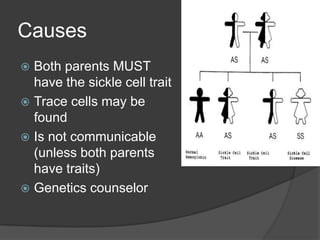
Causes Both parents MUST have the sickle cell traitTrace cells may be foundIs not communicable (unless both parents have traits)Genetics counselor
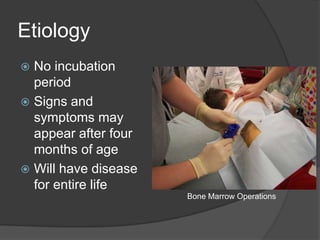
EtiologyNo incubation periodSigns and symptoms may appear after four months of ageWill have disease for entire lifeBone Marrow Operations
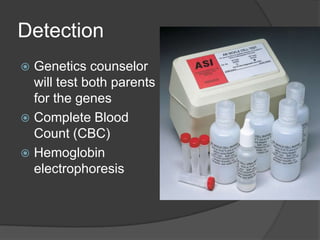
DetectionGenetics counselor will test both parents for the genesComplete Blood Count (CBC)Hemoglobin electrophoresis
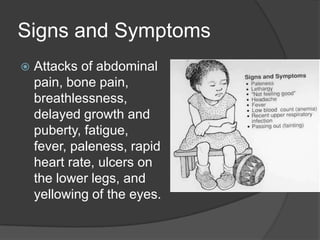
Signs and SymptomsAttacks of abdominal pain, bone pain, breathlessness, delayed growth and puberty, fatigue, fever, paleness, rapid heart rate, ulcers on the lower legs, and yellowing of the eyes.
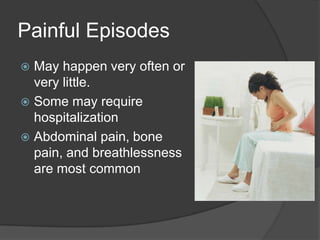
Painful EpisodesMay happen very often or very little.Some may require hospitalizationAbdominal pain, bone pain, and breathlessness are most common
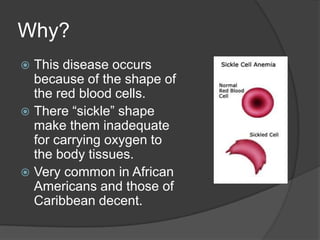
Why?This disease occurs because of the shape of the red blood cells. There “sickle” shape make them inadequate for carrying oxygen to the body tissues.Very common in African Americans and those of Caribbean decent.
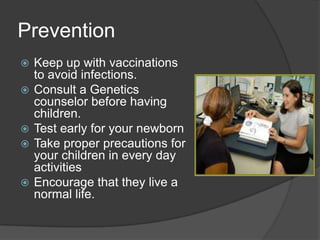
PreventionKeep up with vaccinations to avoid infections. Consult a Genetics counselor before having children.Test early for your newbornTake proper precautions for your children in every day activitiesEncourage that they live a normal life.
PrognosisNo known cure for this diseaseUsually, there is death between 20-40 years of age due to infection and your body’s inability to fight it off. Although, new treatments give hope to live through out your 50s.
Sitehttp://www.ornl.gov/sci/techresources/Human_Genome/posters/chromosome/sca.shtmlAll info in paper and slide are from his site

ssa

  • 1.
  • 2.
    Causes Both parentsMUST have the sickle cell traitTrace cells may be foundIs not communicable (unless both parents have traits)Genetics counselor
  • 3.
    EtiologyNo incubation periodSignsand symptoms may appear after four months of ageWill have disease for entire lifeBone Marrow Operations
  • 4.
    DetectionGenetics counselor willtest both parents for the genesComplete Blood Count (CBC)Hemoglobin electrophoresis
  • 5.
    Signs and SymptomsAttacksof abdominal pain, bone pain, breathlessness, delayed growth and puberty, fatigue, fever, paleness, rapid heart rate, ulcers on the lower legs, and yellowing of the eyes.
  • 6.
    Painful EpisodesMay happenvery often or very little.Some may require hospitalizationAbdominal pain, bone pain, and breathlessness are most common
  • 7.
    Why?This disease occursbecause of the shape of the red blood cells. There “sickle” shape make them inadequate for carrying oxygen to the body tissues.Very common in African Americans and those of Caribbean decent.
  • 8.
    PreventionKeep up withvaccinations to avoid infections. Consult a Genetics counselor before having children.Test early for your newbornTake proper precautions for your children in every day activitiesEncourage that they live a normal life.
  • 9.
    PrognosisNo known curefor this diseaseUsually, there is death between 20-40 years of age due to infection and your body’s inability to fight it off. Although, new treatments give hope to live through out your 50s.
  • 10.