Pediatrics
Respiratory Emergencies
 #1 cause of
Pediatric hospital admissions
Death during first year of life except for
congenital abnormalities
Respiratory Emergencies
Most pediatric cardiac arrest
begins as respiratory failure or
respiratory arrest
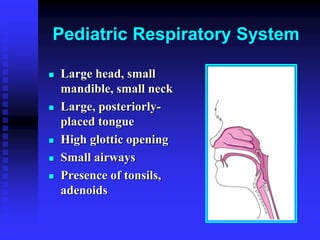
Pediatric Respiratory System
 Large head, small
mandible, small neck
 Large, posteriorly-
placed tongue
 High glottic opening
 Small airways
 Presence of tonsils,
adenoids
Pediatric Respiratory System
 Poor accessory muscle development
 Less rigid thoracic cage
 Horizontal ribs, primarily diaphragm
breathers
 Increased metabolic rate, increased O2
consumption
Pediatric Respiratory System
Decrease respiratory reserve +
Increased O2 demand =
Increased respiratory failure risk
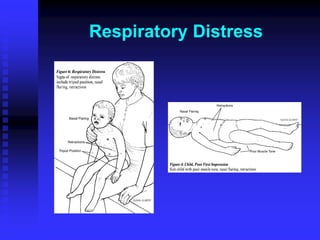
Respiratory Distress
 Tachycardia (May be bradycardia in neonate)
 Head bobbing, stridor, prolonged expiration
 Abdominal breathing
 Grunting--creates CPAP
Severity of Respiratory
Compromise
 Distress
 Failure
 Arrest
General Treatments
 Establish Airway
 Oxygen
 BVM
 ET
 NG tube
 Decompression
 Needle Cric
Respiratory Emergencies
 Croup
 Epiglottitis
 Asthma
 Bronchiolitis
 Foreign body aspiration
 Bronchopulmonary dysplasia
Laryngotracheobronchitis
Croup
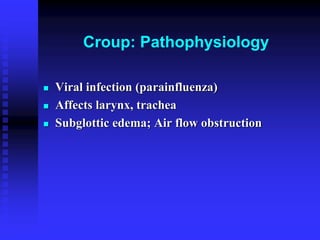
Croup: Pathophysiology
 Viral infection (parainfluenza)
 Affects larynx, trachea
 Subglottic edema; Air flow obstruction
Croup: Incidence
 6 months to 4 years
 Males > Females
 Fall, early winter
Croup: Signs/Symptoms
 “Cold” progressing to hoarseness, cough
 Low grade fever
 Night-time increase in edema with:
Stridor
“Seal bark” cough
Respiratory distress
Cyanosis
 Recurs on several nights
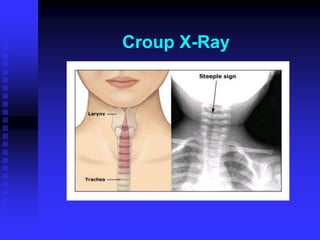
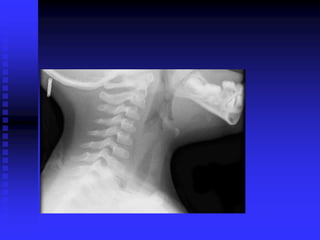
Croup X-Ray
Croup: Management
 Mild Croup
Reassurance
Moist, cool air
Croup: Management
 Severe Croup
Humidified high concentration oxygen
Monitor EKG
IV tko if tolerated
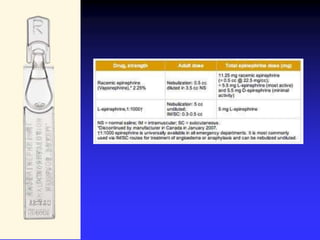
Nebulized racemic epinephrine
Anticipate need to intubate, assist
ventilations
 http://www.youtube.com/watch?v=Qbn1
Zw5CTbA&feature=related
 https://www.youtube.com/watch?v=1Enq
2BvX9aw
 http://www.
youtube.co
m/watch?v=
7xDM8vuV
EPo&featur
e=related
Epiglottitis
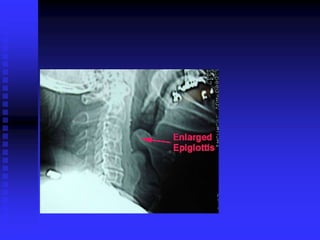
Epiglottitis: Pathophysiology
 Bacterial infection (Hemophilus influenza)
 Affects epiglottis, adjacent pharyngeal tissue
 Supraglottic edema
Complete Airway
Obstruction
Epiglottitis: Incidence
 Children > 4 years old
 Common in ages 4 - 7
 Pedi incidence falling due to HiB vaccination
 Can occur in adults, particularly elderly
 Incidence in adults is increasing
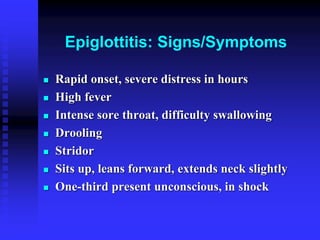
Epiglottitis: Signs/Symptoms
 Rapid onset, severe distress in hours
 High fever
 Intense sore throat, difficulty swallowing
 Drooling
 Stridor
 Sits up, leans forward, extends neck slightly
 One-third present unconscious, in shock
Epiglottitis
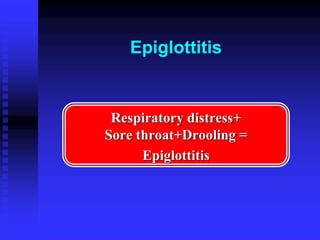
Respiratory distress+
Sore throat+Drooling =
Epiglottitis
Stridor
 http://www.youtube.com/watch?v=Zkau4
yHsLLM
Epiglottitis: Management
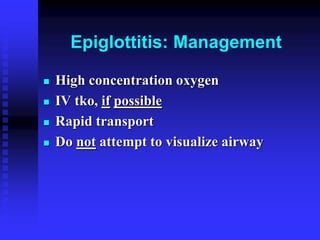
 High concentration oxygen
 IV tko, if possible
 Rapid transport
 Do not attempt to visualize airway
Epiglottitis
Immediate Life Threat
Possible Complete Airway
Obstruction
Venn Diagram
croup
epiglottitis
Asthma
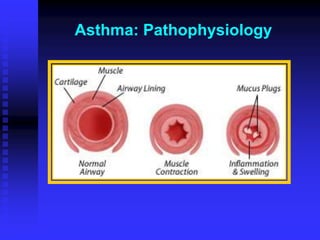
Asthma: Pathophysiology
 Lower airway hypersensitivity to:
Allergies
Infection
Irritants
Emotional stress
Cold
Exercise
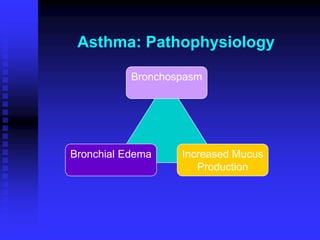
Asthma: Pathophysiology
Bronchospasm
Bronchial Edema Increased Mucus
Production
Asthma: Pathophysiology
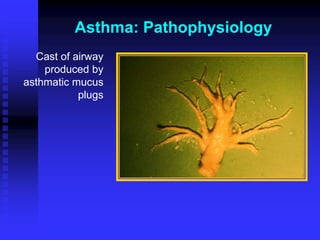
Cast of airway
produced by
asthmatic mucus
plugs
Asthma: Signs/Symptoms
 Dyspnea
 Signs of respiratory distress
Nasal flaring
Tracheal tugging
Accessory muscle use
Suprasternal, intercostal, epigastric
retractions
Asthma: Signs/Symptoms
 Coughing
 Expiratory wheezing
 Tachypnea
 Cyanosis
Asthma: Prolonged Attacks
 Increase in respiratory water loss
 Decreased fluid intake
 Dehydration
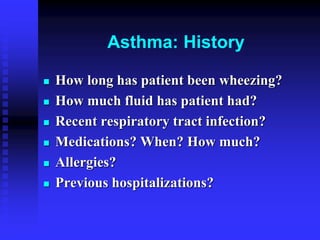
Asthma: History
 How long has patient been wheezing?
 How much fluid has patient had?
 Recent respiratory tract infection?
 Medications? When? How much?
 Allergies?
 Previous hospitalizations?
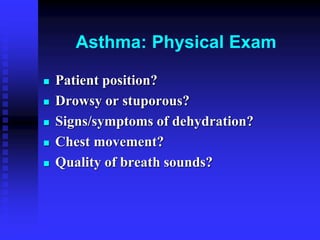
Asthma: Physical Exam
 Patient position?
 Drowsy or stuporous?
 Signs/symptoms of dehydration?
 Chest movement?
 Quality of breath sounds?
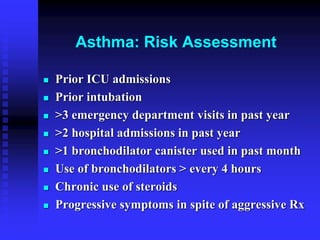
Asthma: Risk Assessment
 Prior ICU admissions
 Prior intubation
 >3 emergency department visits in past year
 >2 hospital admissions in past year
 >1 bronchodilator canister used in past month
 Use of bronchodilators > every 4 hours
 Chronic use of steroids
 Progressive symptoms in spite of aggressive Rx
Asthma
Silent Chest
equals
Danger
Wheezing
 http://www.youtube.com/watch?v=YG0-
ukhU1xE
RETRACTIONS
 https://www.youtube.com/watch?v=Hv68
EQ3tCBI
 https://www.youtube.com/watch?v=42jJ1
8fkZ0Y
Head Bobbing
 https://www.youtube.com/watch?v=q0bH
wMayCJY
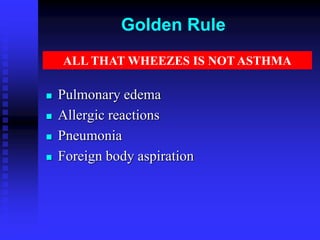
Golden Rule
 Pulmonary edema
 Allergic reactions
 Pneumonia
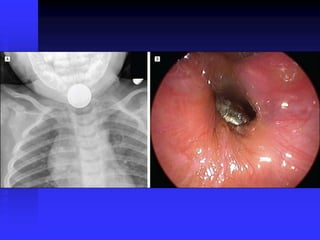
 Foreign body aspiration
ALL THAT WHEEZES IS NOT ASTHMA
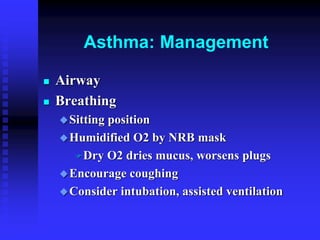
Asthma: Management
 Airway
 Breathing
Sitting position
Humidified O2 by NRB mask
Dry O2 dries mucus, worsens plugs
Encourage coughing
Consider intubation, assisted ventilation
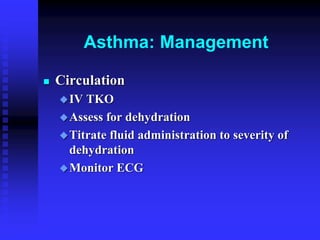
Asthma: Management
 Circulation
IV TKO
Assess for dehydration
Titrate fluid administration to severity of
dehydration
Monitor ECG
Asthma: Management
 Obtain medication history
Overdose
Arrhythmias
Asthma: Management
 Nebulized Beta-2 agents
Albuterol
Terbutaline
Metaproterenol
Isoetharine
Asthma: Management
 Nebulized anticholinergics
Atropine
Ipatropium
POSSIBLE BENEFIT IN PATIENTS
WITH VENTILATORY FAILURE
Asthma: Management
 Subcutaneous beta agents
Epinephrine 1:1000--0.1 to 0.3 mg SQ
Terbutaline--0.25 mg SQ
Asthma: Management
 Use EXTREME caution in giving two
sympathomimetics to same patient
 Monitor ECG
Asthma: Management
 Avoid
Sedatives
Depress respiratory drive
Antihistamines
Decrease LOC, dry secretions
Aspirin
High incidence of allergy
Status Asthmaticus
Asthma attack unresponsive to -2
adrenergic agents
Status Asthmaticus
 Humidified oxygen
 Rehydration
 Continuous nebulized beta-2 agents
 Atrovent
 Corticosteroids
 Aminophylline (controversial)
 Magnesium sulfate (controversial)
Magnesium Sulfate
 25-50 mg/kg over 20 minutes
Solu-Medrol
 1-2 mg/kg IV
Status Asthmaticus
 Intubation
 Mechanical ventilation
Large tidal volumes (18-24 ml/kg)
Long expiratory times
 Intravenous Terbutaline
Continuous infusion
3 to 6 mcg/kg/min
Bronchiolitis
Bronchiolitis: Pathophysiology
 Viral infection (RSV)
 Respiratory Syncytial Virus
 Inflammatory bronchiolar edema
 Air trapping
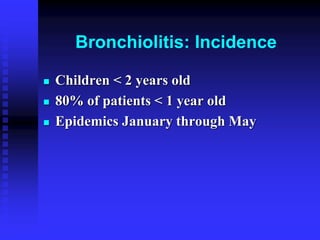
Bronchiolitis: Incidence
 Children < 2 years old
 80% of patients < 1 year old
 Epidemics January through May
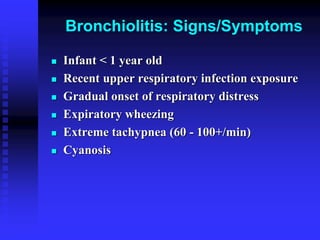
Bronchiolitis: Signs/Symptoms
 Infant < 1 year old
 Recent upper respiratory infection exposure
 Gradual onset of respiratory distress
 Expiratory wheezing
 Extreme tachypnea (60 - 100+/min)
 Cyanosis
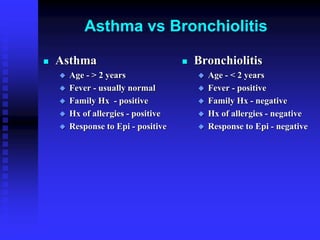
Asthma vs Bronchiolitis
 Asthma
 Age - > 2 years
 Fever - usually normal
 Family Hx - positive
 Hx of allergies - positive
 Response to Epi - positive
 Bronchiolitis
 Age - < 2 years
 Fever - positive
 Family Hx - negative
 Hx of allergies - negative
 Response to Epi - negative
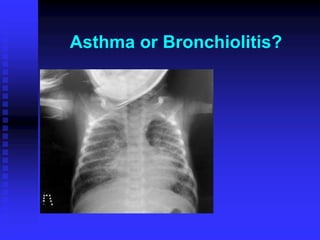
Asthma or Bronchiolitis?
Bronchiolitis: Management
 Humidified oxygen by NRB mask
 Monitor EKG
 IV tko
 Anticipate order for bronchodilators
 Anticipate need to intubate, assist
ventilations
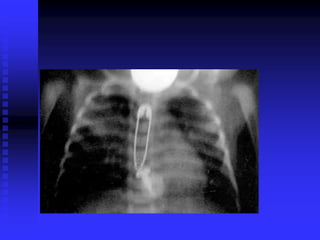
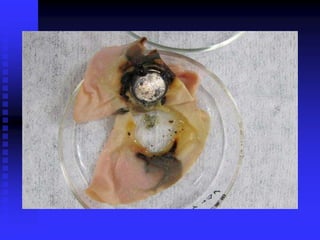
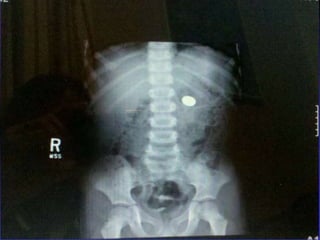
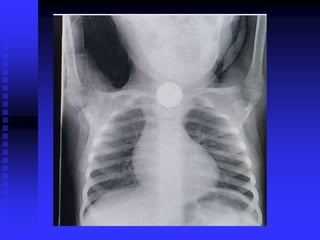
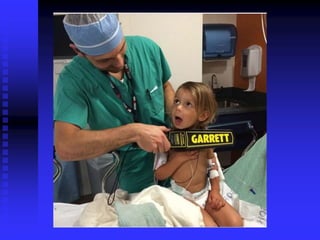
Foreign Body Airway Obstruction
FBAO
FBAO: High Risk Groups
 > 90% of deaths: children < 5 years old
 65% of deaths: infants
FBAO: Signs/Symptoms
 Suspect in any previously well, afebrile
child with sudden onset of:
Respiratory distress
Choking
Coughing
Stridor
Wheezing
FBAO: Management
 Minimize intervention if child conscious,
maintaining own airway
 100% oxygen as tolerated
 No blind sweeps of oral cavity
 Wheezing
Object in small airway
Avoid trying to dislodge in field
FBAO: Management
 Inadequate ventilation
Infant: 5 back blows/5 chest thrusts
Child: Abdominal thrusts
Bronchopulmonary Dysplasia
BPD
BPD: Pathophysiology
 Complication of infant respiratory distress
syndrome
 Seen in premature infants
 Results from prolonged exposure to high
concentration O2 , mechanical ventilation
BPD: Signs/Symptoms
 Require supplemental O2 to prevent cyanosis
 Chronic respiratory distress
 Retractions
 Rales
 Wheezing
 Possible cor pulmonale with peripheral edema
BPD: Prognosis
 Medically fragile, decompensate quickly
 Prone to recurrent respiratory infections
 About 2/3 gradually recover
BPD: Treatment
 Supplemental O2
 Assisted ventilations, as needed
 Diuretic therapy, as needed
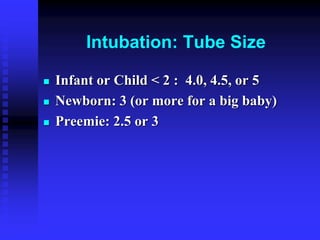
Intubation: Tube Size
 Infant or Child < 2 : 4.0, 4.5, or 5
 Newborn: 3 (or more for a big baby)
 Preemie: 2.5 or 3
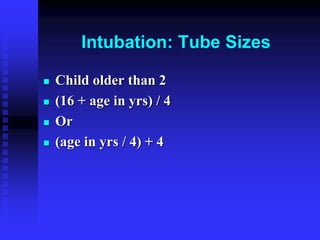
Intubation: Tube Sizes
 Child older than 2
 (16 + age in yrs) / 4
 Or
 (age in yrs / 4) + 4
Miscellaneous
Whooping Cough
 http://www.youtube.com/watch?v=wuvn-
vp5InE&feature=related
 https://www.youtube.com/watch?v=TIV4
60AQUWk
 http://reference.medscape.com/features/sl
ideshow/pediatric-respiratory
KIDS EAT EVERYTHING
Pedi respiratory
Pedi respiratory
Pedi respiratory
Pedi respiratory
Pedi respiratory

Pedi respiratory