WINTERTemplate
Acute upper airway obstruction
Prepared by :
Dr Lulwah AlThumali
Pediatric Resident
TCH
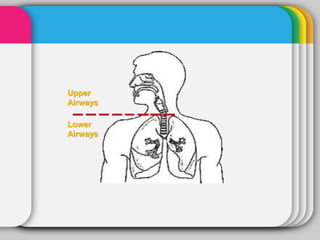
Upper
Airways
Lower
Airways
Obstruction of the portion of the
airways located above the thoracic
inlet.
•
Ranges from nasal obstruction till
larynx and upper trachea
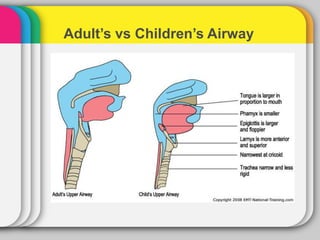
Adult’s vs Children’s Airway
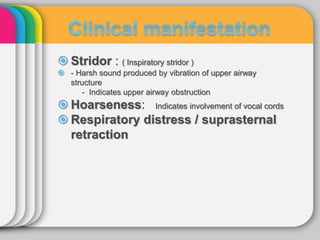
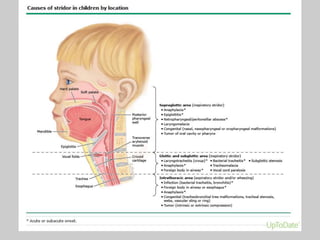
 Stridor : ( Inspiratory stridor )
 - Harsh sound produced by vibration of upper airway
structure
- Indicates upper airway obstruction
 Hoarseness: Indicates involvement of vocal cords
 Respiratory distress / suprasternal
retraction
WINTERTemplate
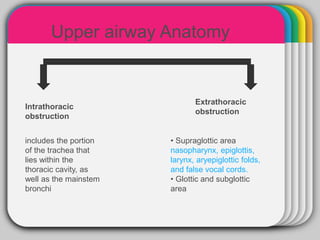
Upper airway Anatomy
Extrathoracic
obstruction
Intrathoracic
obstruction
• Supraglottic area
nasopharynx, epiglottis,
larynx, aryepiglottic folds,
and false vocal cords.
• Glottic and subglottic
area
includes the portion
of the trachea that
lies within the
thoracic cavity, as
well as the mainstem
bronchi
CROUP ( LARYNGOTRACHEOBRONCHITIS )
•Most patient with croup are between ages of 3 months &
5 years ( peak in 2nd year of life )
•The incidence is higher in boys
•Common in late fall & winter
 Usually viral in origin
- Parainfluenza virus (type 1)
- Influenza virus
- RSV , adenovirus , measles virus
Clinical Presentation
HISTORY :
•Rhinorrhea , sore throat , cough
• Fever
• Hoarseness , barking cough & inspiratory stridor
• Respiratory distress
Physical Examination :
• Hoarse cry
• Respiratory distress
• Respiratory failure
• Suprasternal , intercostal & subcostal retractions
• Lethargy , agitation
• Hypoxemia , Hypercarbia
•Tachypnea , Tachycardia
•Dehydration
•Cyanosis ( late )
Diagnosis
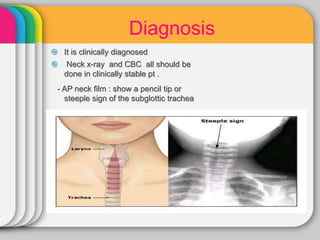
 It is clinically diagnosed
 Neck x-ray and CBC all should be
done in clinically stable pt .
- AP neck film : show a pencil tip or
steeple sign of the subglottic trachea
Treatment
•Cool mist administration
•Corticosteroids :
Used in moderate to severe croup
A child who needs admission in ICU for croup
management needs steroid.
Preparations
 Dexamethasone
 Nebulized Budesonide
○ Not as effective as dexamethasone
○ Much more expensive than dexamethasone
•Nebulized racemic epinephrine
•Heliox
Epiglottitis
Medical emergency (sudden )
Rare
Caused by : group A streptococcal or staphylococcus
aureus infections
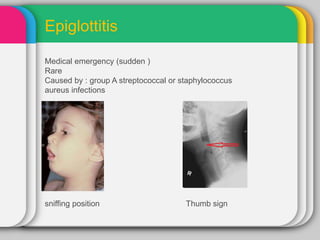
sniffing position Thumb sign
Signs and symptoms :
• Respiratory distress: stridor,
tachypnea, anxiety, refusal to lie down,
"sniffing" or "tripod" posture
Sore throat, dysphagia, drooling,
anterior neck pain (at the level of the
hyoid)
• Muffled "hot potato" voice
• Marked retractions and labored
breathing indicate impending
respiratory failure
Epiglottitis
Consider epiglottitis in ‼
Febrile, toxic-appearing children with rapid onset and
progression of dysphagia, drooling, and respiratory
distress, especially if unimmunized .
WINTERTemplate
Evaluation :
•Secure airway
•Communicate early with otolaryngologist, anesthesiologist, and intensivist
•Keep the patient in a setting where the airway can be rapidly managed if necessary (eg, the
emergency department, operating room, or intensive care unit)
Findings:
•Stridor, drooling
•Suprasternal and subcostal retractions
•Swollen, erythematous epiglottis, inflammation of the supraglottic structures
Imaging:
Soft-tissue radiograph of the lateral neck:
Enlarged epiglottis ("thumb" sign)
Management :
Airway
In patients with moderate to severe respiratory distress, secure the
airway in the operating room or similarly equipped setting
(endotracheal tube or surgically if necessary) with an anesthesiologist
and otolaryngologist present
If abrupt obstruction:
Attempt bag-valve mask ventilation first During laryngoscopy,
pressure on the chest by an assistant may produce bubbling and help
indicate the location of the glottis Perform needle cricothyrotomy or
surgical cricothyrotomy if unable to ventilate or intubate
Laboratory studies:
Epiglottal cultures
Blood cultures
Antimicrobial therapy :
Administer empiric antimicrobial therapy:
Cefotaxime OR ceftriaxone
PLUS
If community- or hospital-acquired Staphylococcus aureus is
suspected, add clindamycin OR vancomycin based upon local
antimicrobial susceptibility patterns
Monitor
Monitor patient in the intensive care unit
• Bacterial tracheitis is an invasive exudative bacterial
infection of the soft tissues of the trachea
Staphylococcus aureus, Streptococcus pneumoniae, gram-
negative enteric bacteria, Pseudomonas aeruginosa
• Aspiration of bacteria-laden secretions into the trachea
during bacterial infection of the upper respiratory tract
(eg, acute bacterial sinusitis, streptococcal pharyngitis)
or after tonsillectomy also may lead to bacterial
tracheitis
Bacterial tracheitis
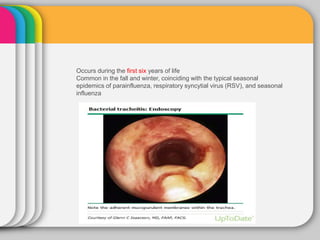
Occurs during the first six years of life
Common in the fall and winter, coinciding with the typical seasonal
epidemics of parainfluenza, respiratory syncytial virus (RSV), and seasonal
influenza
Symptoms and signs :
●Fever
●Stridor (inspiratory or expiratory)
●Cough (not painful; membranous exudates may
be expectorated)
●Respiratory distress
●Drooling is uncommon, but may be present
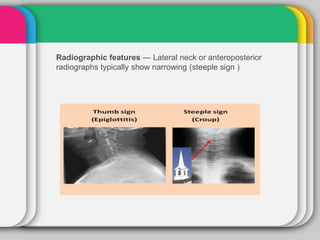
Radiographic features — Lateral neck or anteroposterior
radiographs typically show narrowing (steeple sign )
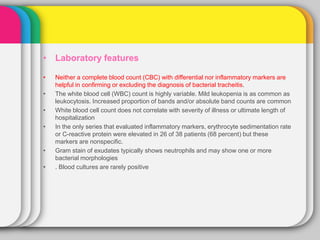
• Laboratory features
• Neither a complete blood count (CBC) with differential nor inflammatory markers are
helpful in confirming or excluding the diagnosis of bacterial tracheitis.
• The white blood cell (WBC) count is highly variable. Mild leukopenia is as common as
leukocytosis. Increased proportion of bands and/or absolute band counts are common
• White blood cell count does not correlate with severity of illness or ultimate length of
hospitalization
• In the only series that evaluated inflammatory markers, erythrocyte sedimentation rate
or C-reactive protein were elevated in 26 of 38 patients (68 percent) but these
markers are nonspecific.
• Gram stain of exudates typically shows neutrophils and may show one or more
bacterial morphologies
• . Blood cultures are rarely positive
DIAGNOSIS
Definitive diagnosis of bacterial tracheitis requires
direct visualization of an inflamed, exudate-covered
trachea
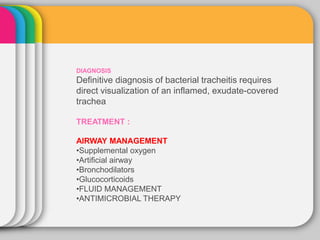
TREATMENT :
AIRWAY MANAGEMENT
•Supplemental oxygen
•Artificial airway
•Bronchodilators
•Glucocorticoids
•FLUID MANAGEMENT
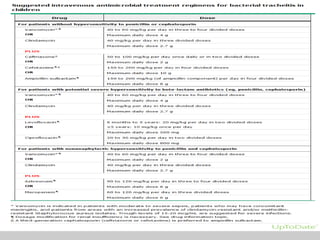
•ANTIMICROBIAL THERAPY
PREVENTION :
Vaccination against pneumococci and viruses
(eg, measles, influenza) that may predispose
children to bacterial tracheitis and other
secondary bacterial infections of the respiratory
tract is the primary means of prevention.
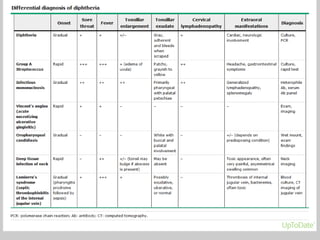
• infectious disease caused by the gram-positive
bacillus Corynebacterium diphtheriae.
• The word diphtheria comes from the Greek word for leather, which
refers to the tough pharyngeal membrane that is the clinical
hallmark of infection.
• There is :
Respiratory diphtheria
Systemic manifestations
Cutaneous diphtheria
Diphtheria
WINTERTemplate
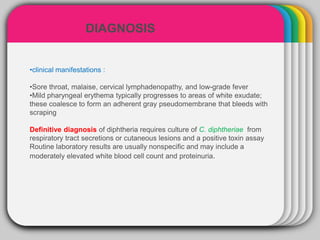
DIAGNOSIS
•clinical manifestations :
•Sore throat, malaise, cervical lymphadenopathy, and low-grade fever
•Mild pharyngeal erythema typically progresses to areas of white exudate;
these coalesce to form an adherent gray pseudomembrane that bleeds with
scraping
Definitive diagnosis of diphtheria requires culture of C. diphtheriae from
respiratory tract secretions or cutaneous lesions and a positive toxin assay
Routine laboratory results are usually nonspecific and may include a
moderately elevated white blood cell count and proteinuria.
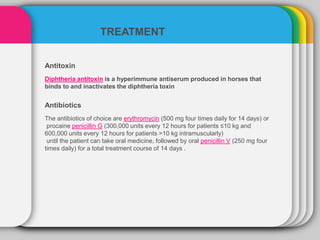
TREATMENT
Antitoxin
Diphtheria antitoxin is a hyperimmune antiserum produced in horses that
binds to and inactivates the diphtheria toxin
Antibiotics
The antibiotics of choice are erythromycin (500 mg four times daily for 14 days) or
procaine penicillin G (300,000 units every 12 hours for patients ≤10 kg and
600,000 units every 12 hours for patients >10 kg intramuscularly)
until the patient can take oral medicine, followed by oral penicillin V (250 mg four
times daily) for a total treatment course of 14 days .

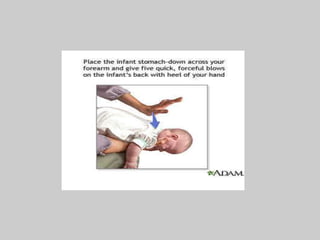
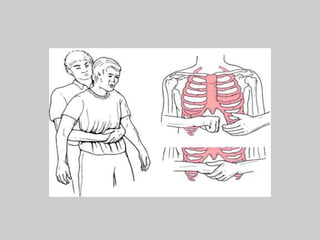
Airway Foreign Bodies
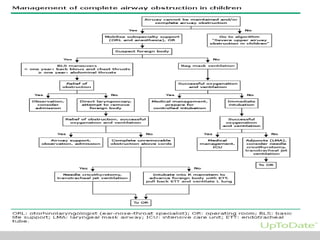
• Tracheobronchial foreign body aspiration (FBA) is a
potentially life-threatening event,
• It can block respiration by obstructing the airway,
thereby impairing oxygenation and ventilation
•Approximately 80 % of pediatric FBA episodes occur
in children younger than three years, with the peak
incidence between one and two years of age .
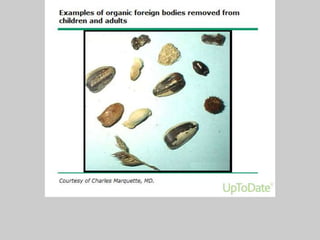
• The majority of aspirated FBs in children are located in the bronchi .
Laryngeal and tracheal FBs are less common.
In a review of 1160 suspected FBA aspirations in children, a FB was
successfully removed in 1068 children (92 percent) . The sites of the
FB were as follows:
●Larynx – 3 %
●Trachea/carina – 13 %
●Right lung – 60 %
●Left lung – 23 % (18 percent in the main bronchus and 5 percent in the
lower bronchus)
●Bilateral – 2 %
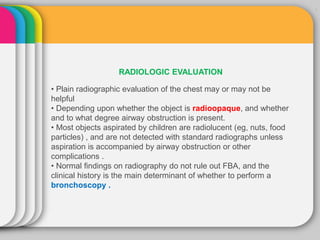
RADIOLOGIC EVALUATION
• Plain radiographic evaluation of the chest may or may not be
helpful
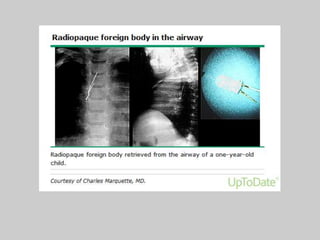
• Depending upon whether the object is radioopaque, and whether
and to what degree airway obstruction is present.
• Most objects aspirated by children are radiolucent (eg, nuts, food
particles) , and are not detected with standard radiographs unless
aspiration is accompanied by airway obstruction or other
complications .
• Normal findings on radiography do not rule out FBA, and the
clinical history is the main determinant of whether to perform a
bronchoscopy .
.
WINTERTemplate
References
Essential Nelson 6th Edition
Nelson text book 20th Edition
UpToDate
upper air way obstruction

upper air way obstruction

  • 1.
    WINTERTemplate Acute upper airwayobstruction Prepared by : Dr Lulwah AlThumali Pediatric Resident TCH
  • 2.
  • 3.
    Obstruction of theportion of the airways located above the thoracic inlet. • Ranges from nasal obstruction till larynx and upper trachea
  • 4.
  • 5.
     Stridor :( Inspiratory stridor )  - Harsh sound produced by vibration of upper airway structure - Indicates upper airway obstruction  Hoarseness: Indicates involvement of vocal cords  Respiratory distress / suprasternal retraction
  • 7.
    WINTERTemplate Upper airway Anatomy Extrathoracic obstruction Intrathoracic obstruction •Supraglottic area nasopharynx, epiglottis, larynx, aryepiglottic folds, and false vocal cords. • Glottic and subglottic area includes the portion of the trachea that lies within the thoracic cavity, as well as the mainstem bronchi
  • 8.
    CROUP ( LARYNGOTRACHEOBRONCHITIS) •Most patient with croup are between ages of 3 months & 5 years ( peak in 2nd year of life ) •The incidence is higher in boys •Common in late fall & winter  Usually viral in origin - Parainfluenza virus (type 1) - Influenza virus - RSV , adenovirus , measles virus
  • 9.
    Clinical Presentation HISTORY : •Rhinorrhea, sore throat , cough • Fever • Hoarseness , barking cough & inspiratory stridor • Respiratory distress Physical Examination : • Hoarse cry • Respiratory distress • Respiratory failure • Suprasternal , intercostal & subcostal retractions • Lethargy , agitation • Hypoxemia , Hypercarbia •Tachypnea , Tachycardia •Dehydration •Cyanosis ( late )
  • 11.
    Diagnosis  It isclinically diagnosed  Neck x-ray and CBC all should be done in clinically stable pt . - AP neck film : show a pencil tip or steeple sign of the subglottic trachea
  • 12.
    Treatment •Cool mist administration •Corticosteroids: Used in moderate to severe croup A child who needs admission in ICU for croup management needs steroid. Preparations  Dexamethasone  Nebulized Budesonide ○ Not as effective as dexamethasone ○ Much more expensive than dexamethasone •Nebulized racemic epinephrine •Heliox
  • 13.
    Epiglottitis Medical emergency (sudden) Rare Caused by : group A streptococcal or staphylococcus aureus infections sniffing position Thumb sign
  • 14.
    Signs and symptoms: • Respiratory distress: stridor, tachypnea, anxiety, refusal to lie down, "sniffing" or "tripod" posture Sore throat, dysphagia, drooling, anterior neck pain (at the level of the hyoid) • Muffled "hot potato" voice • Marked retractions and labored breathing indicate impending respiratory failure Epiglottitis
  • 15.
    Consider epiglottitis in‼ Febrile, toxic-appearing children with rapid onset and progression of dysphagia, drooling, and respiratory distress, especially if unimmunized .
  • 16.
    WINTERTemplate Evaluation : •Secure airway •Communicateearly with otolaryngologist, anesthesiologist, and intensivist •Keep the patient in a setting where the airway can be rapidly managed if necessary (eg, the emergency department, operating room, or intensive care unit) Findings: •Stridor, drooling •Suprasternal and subcostal retractions •Swollen, erythematous epiglottis, inflammation of the supraglottic structures
  • 17.
    Imaging: Soft-tissue radiograph ofthe lateral neck: Enlarged epiglottis ("thumb" sign) Management : Airway In patients with moderate to severe respiratory distress, secure the airway in the operating room or similarly equipped setting (endotracheal tube or surgically if necessary) with an anesthesiologist and otolaryngologist present If abrupt obstruction: Attempt bag-valve mask ventilation first During laryngoscopy, pressure on the chest by an assistant may produce bubbling and help indicate the location of the glottis Perform needle cricothyrotomy or surgical cricothyrotomy if unable to ventilate or intubate
  • 18.
    Laboratory studies: Epiglottal cultures Bloodcultures Antimicrobial therapy : Administer empiric antimicrobial therapy: Cefotaxime OR ceftriaxone PLUS If community- or hospital-acquired Staphylococcus aureus is suspected, add clindamycin OR vancomycin based upon local antimicrobial susceptibility patterns Monitor Monitor patient in the intensive care unit
  • 19.
    • Bacterial tracheitisis an invasive exudative bacterial infection of the soft tissues of the trachea Staphylococcus aureus, Streptococcus pneumoniae, gram- negative enteric bacteria, Pseudomonas aeruginosa • Aspiration of bacteria-laden secretions into the trachea during bacterial infection of the upper respiratory tract (eg, acute bacterial sinusitis, streptococcal pharyngitis) or after tonsillectomy also may lead to bacterial tracheitis Bacterial tracheitis
  • 20.
    Occurs during thefirst six years of life Common in the fall and winter, coinciding with the typical seasonal epidemics of parainfluenza, respiratory syncytial virus (RSV), and seasonal influenza
  • 21.
    Symptoms and signs: ●Fever ●Stridor (inspiratory or expiratory) ●Cough (not painful; membranous exudates may be expectorated) ●Respiratory distress ●Drooling is uncommon, but may be present
  • 22.
    Radiographic features —Lateral neck or anteroposterior radiographs typically show narrowing (steeple sign )
  • 23.
    • Laboratory features •Neither a complete blood count (CBC) with differential nor inflammatory markers are helpful in confirming or excluding the diagnosis of bacterial tracheitis. • The white blood cell (WBC) count is highly variable. Mild leukopenia is as common as leukocytosis. Increased proportion of bands and/or absolute band counts are common • White blood cell count does not correlate with severity of illness or ultimate length of hospitalization • In the only series that evaluated inflammatory markers, erythrocyte sedimentation rate or C-reactive protein were elevated in 26 of 38 patients (68 percent) but these markers are nonspecific. • Gram stain of exudates typically shows neutrophils and may show one or more bacterial morphologies • . Blood cultures are rarely positive
  • 24.
    DIAGNOSIS Definitive diagnosis ofbacterial tracheitis requires direct visualization of an inflamed, exudate-covered trachea TREATMENT : AIRWAY MANAGEMENT •Supplemental oxygen •Artificial airway •Bronchodilators •Glucocorticoids •FLUID MANAGEMENT •ANTIMICROBIAL THERAPY
  • 26.
    PREVENTION : Vaccination againstpneumococci and viruses (eg, measles, influenza) that may predispose children to bacterial tracheitis and other secondary bacterial infections of the respiratory tract is the primary means of prevention.
  • 27.
    • infectious diseasecaused by the gram-positive bacillus Corynebacterium diphtheriae. • The word diphtheria comes from the Greek word for leather, which refers to the tough pharyngeal membrane that is the clinical hallmark of infection. • There is : Respiratory diphtheria Systemic manifestations Cutaneous diphtheria Diphtheria
  • 28.
    WINTERTemplate DIAGNOSIS •clinical manifestations : •Sorethroat, malaise, cervical lymphadenopathy, and low-grade fever •Mild pharyngeal erythema typically progresses to areas of white exudate; these coalesce to form an adherent gray pseudomembrane that bleeds with scraping Definitive diagnosis of diphtheria requires culture of C. diphtheriae from respiratory tract secretions or cutaneous lesions and a positive toxin assay Routine laboratory results are usually nonspecific and may include a moderately elevated white blood cell count and proteinuria.
  • 30.
    TREATMENT Antitoxin Diphtheria antitoxin isa hyperimmune antiserum produced in horses that binds to and inactivates the diphtheria toxin Antibiotics The antibiotics of choice are erythromycin (500 mg four times daily for 14 days) or procaine penicillin G (300,000 units every 12 hours for patients ≤10 kg and 600,000 units every 12 hours for patients >10 kg intramuscularly) until the patient can take oral medicine, followed by oral penicillin V (250 mg four times daily) for a total treatment course of 14 days .
  • 32.
    Airway Foreign Bodies •Tracheobronchial foreign body aspiration (FBA) is a potentially life-threatening event, • It can block respiration by obstructing the airway, thereby impairing oxygenation and ventilation •Approximately 80 % of pediatric FBA episodes occur in children younger than three years, with the peak incidence between one and two years of age .
  • 35.
    • The majorityof aspirated FBs in children are located in the bronchi . Laryngeal and tracheal FBs are less common. In a review of 1160 suspected FBA aspirations in children, a FB was successfully removed in 1068 children (92 percent) . The sites of the FB were as follows: ●Larynx – 3 % ●Trachea/carina – 13 % ●Right lung – 60 % ●Left lung – 23 % (18 percent in the main bronchus and 5 percent in the lower bronchus) ●Bilateral – 2 %
  • 36.
    RADIOLOGIC EVALUATION • Plainradiographic evaluation of the chest may or may not be helpful • Depending upon whether the object is radioopaque, and whether and to what degree airway obstruction is present. • Most objects aspirated by children are radiolucent (eg, nuts, food particles) , and are not detected with standard radiographs unless aspiration is accompanied by airway obstruction or other complications . • Normal findings on radiography do not rule out FBA, and the clinical history is the main determinant of whether to perform a bronchoscopy . .
  • 41.
    WINTERTemplate References Essential Nelson 6thEdition Nelson text book 20th Edition UpToDate