
ATELECTASIS
Mr.Veerabhadra .B B
Asst Professor
Dept of Medical Surgical Nsg.
ATELECTASIS
 Atelectasis is a lung condition characterized by
collapsed, airless alveoli.
 Atelectasis may be acute or chronic
 Acute atelectasis due to general anesthesia.
 Chronic atelectasis due to obstructive disorders.
(pneumothorax, blocked airway)
 Range of pathophysiologic changes , from
 Microatelectasis (which is not detectable on chest
x-ray) to……..
 Macroatelectasis with loss of segmental, lobar, or
overall lung volume.
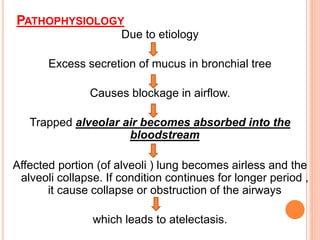
PATHOPHYSIOLOGY
Due to etiology
Excess secretion of mucus in bronchial tree
Causes blockage in airflow.
Trapped alveolar air becomes absorbed into the
bloodstream
Affected portion (of alveoli ) lung becomes airless and the
alveoli collapse. If condition continues for longer period ,
it cause collapse or obstruction of the airways
which leads to atelectasis.
CLINICAL MANISFESTATION
 Cough with chest pain.
 Sputum production
 low-grade fever.
 Dyspnea
 Tachycardia
 Tachypnea
 Pleural pain
 Central cyanosis (skin lips turn blue)
DIAGNOSTIC STUDIES.
 Complete health history.
 Physical examination: Decreased breath sounds
and crackles are heard over the affected area.
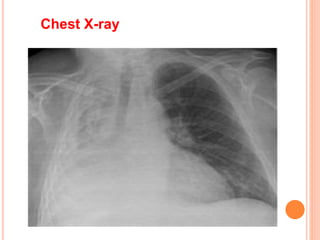
 chest x-ray: Patchy infiltrates or consolidated
areas.
 Arterial blood gas studies.
 Chest CT or Bronchoscopy.
Chest X-ray
CT SCAN CHEST
BRONCHOSCOPE
PREVENTION OF ATELECTASIS.
 Frequent ,early mobilization
 Preoperative breathing & coughing exercises.
 Deep-breathing maneuvers.
 use of incentive spirometry
 A metered-dose inhaler (MDI)
 Steam inhalation.
 Use of bronchodilator.
Incentive spirometry
CONTINUED….
 Secretion management techniques may include
 Directed cough,
 Suctioning,
 Aerosol nebulizer treatments
 Chest physical therapy
 Postural drainage and chest percussion
TRATMENT OF ATELECTASIS
(Along with above preventive points)
 Oxygen administration via continuous or
intermittent positive pressure-breathing (IPPB).
 Antibiotic therapy.
 Thoracentesis, removal of the fluid by needle
aspiration, or insertion of a chest tube.
 Bronchoscopy: To open an airway obstructed by
lung cancer or a nonmalignant lesion.
 Cryotherapy or Laser therapy
Laser therapy
Cryotherapy/
Cryosurgery
NURSING MANAGEMENT:
 Assess the respiratory status
 Monitor Spo2, Pao2 ,Paco2
 Administer oxygen if required.
 Administer medication as ordered.
 Check need for invasive oxygen therapy.
 Educate patient to cough & deep breathing
exercises.
 Steam inhalation.
 Perform chest physiotherapy
 Incentive spirometry.
NURSING DIAGNOSIS
 Ineffective airway clearence related to excess
mucus secretion.
 Ineffective breathing pattern related to obstruction
 Ineffective tissue perfusion
 Activity intolerance
 Knowledge deficit
Atelectasis & nursing care

Atelectasis & nursing care

  • 1.
    ATELECTASIS Mr.Veerabhadra .B B AsstProfessor Dept of Medical Surgical Nsg.
  • 2.
    ATELECTASIS  Atelectasis isa lung condition characterized by collapsed, airless alveoli.  Atelectasis may be acute or chronic  Acute atelectasis due to general anesthesia.  Chronic atelectasis due to obstructive disorders. (pneumothorax, blocked airway)
  • 3.
     Range ofpathophysiologic changes , from  Microatelectasis (which is not detectable on chest x-ray) to……..  Macroatelectasis with loss of segmental, lobar, or overall lung volume.
  • 4.
    PATHOPHYSIOLOGY Due to etiology Excesssecretion of mucus in bronchial tree Causes blockage in airflow. Trapped alveolar air becomes absorbed into the bloodstream Affected portion (of alveoli ) lung becomes airless and the alveoli collapse. If condition continues for longer period , it cause collapse or obstruction of the airways which leads to atelectasis.
  • 5.
    CLINICAL MANISFESTATION  Coughwith chest pain.  Sputum production  low-grade fever.  Dyspnea  Tachycardia  Tachypnea  Pleural pain  Central cyanosis (skin lips turn blue)
  • 6.
    DIAGNOSTIC STUDIES.  Completehealth history.  Physical examination: Decreased breath sounds and crackles are heard over the affected area.  chest x-ray: Patchy infiltrates or consolidated areas.  Arterial blood gas studies.  Chest CT or Bronchoscopy.
  • 7.
  • 8.
  • 9.
  • 10.
    PREVENTION OF ATELECTASIS. Frequent ,early mobilization  Preoperative breathing & coughing exercises.  Deep-breathing maneuvers.  use of incentive spirometry  A metered-dose inhaler (MDI)  Steam inhalation.  Use of bronchodilator.
  • 11.
  • 12.
    CONTINUED….  Secretion managementtechniques may include  Directed cough,  Suctioning,  Aerosol nebulizer treatments  Chest physical therapy  Postural drainage and chest percussion
  • 13.
    TRATMENT OF ATELECTASIS (Alongwith above preventive points)  Oxygen administration via continuous or intermittent positive pressure-breathing (IPPB).  Antibiotic therapy.  Thoracentesis, removal of the fluid by needle aspiration, or insertion of a chest tube.  Bronchoscopy: To open an airway obstructed by lung cancer or a nonmalignant lesion.  Cryotherapy or Laser therapy
  • 14.
  • 15.
    NURSING MANAGEMENT:  Assessthe respiratory status  Monitor Spo2, Pao2 ,Paco2  Administer oxygen if required.  Administer medication as ordered.  Check need for invasive oxygen therapy.  Educate patient to cough & deep breathing exercises.  Steam inhalation.  Perform chest physiotherapy  Incentive spirometry.
  • 16.
    NURSING DIAGNOSIS  Ineffectiveairway clearence related to excess mucus secretion.  Ineffective breathing pattern related to obstruction  Ineffective tissue perfusion  Activity intolerance  Knowledge deficit