#2 Lecture Outline
I. Pharmacology Formulary
A. The formulary provides a reference for paramedic students as they progress through their education.
1. “Tall man” lettering is sometimes used to avoid confusion of medications with similar spellings.
#3 Lecture Outline
2. The emergency medications commonly used by paramedics are broken down into the following components, listed in this order:
a. Generic Name (Trade Name[s])
b. Class
c. Mechanism of action
d. Indications
e. Contraindications
f. Adverse reactions/side effects
g. Drug interactions
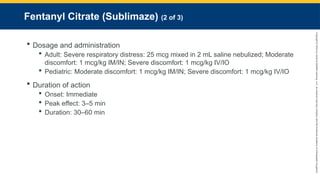
h. Dosage and administration
i. Adult
ii. Pediatric
i. Duration of action
i. Onset
ii. Peak effect
iii. Duration
j. Special considerations
#4 Lecture Outline
3. Medications that are often used in health care delivery but not typically administered by paramedics are presented using a similar but less detailed format.
4. State and regional EMS systems have the right to include other medications in their own formularies.
a. Always follow your local protocols.
#6 Lecture Outline
A. Acetaminophen (Tylenol)
1. Class: Nonopioid analgesic, antipyretic
2. Mechanism of action
a. May work peripherally to block pain impulse generation and inhibit prostaglandin synthesis in the CNS
3. Indications
a. Pain and fever control
4. Contraindications
a. Known hypersensitivity
b. Severe active liver disease
5. Adverse reactions/side effects include:
a. Nausea
b. Upper abdominal pain
c. Skin rash
d. Itching
e. Loss of appetite
6. Drug interactions
a. Increased effect with caffeine
b. Decreased effect with antacids, anticholinergics, carbamazepine, phenytoin
c. Alcohol may increase hepatotoxicity risk.
#7 Lecture Outline
7. Dosage and administration
a. Adult
i. Give 15 mg/kg orally.
ii. Maximum dose is 1 g
b. Pediatric
i. Give 15 mg/kg.
ii. Maximum dose is 650 mg
8. Duration of action
a. Onset: 10 to 30 minutes
b. Peak effect: 30 to 60 minutes
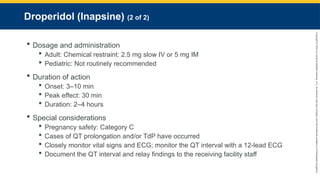
c. Duration: 4 to 6 hours
9. Special considerations include:
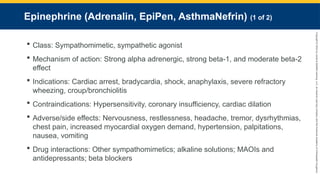
a. Pregnancy safety: Category B
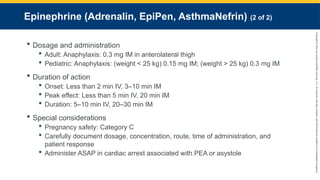
b. Limited dose of 325 mg when combined with other drugs
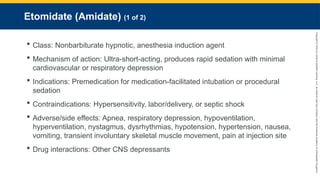
#8 Lecture Outline
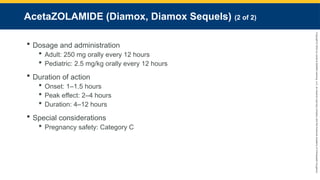
B. AcetaZOLAMIDE (Diamox, Diamox Sequels)
1. Class: Carbonic anhydrase inhibitor, diuretic
2. Mechanism of action
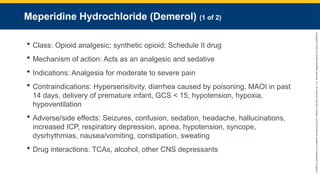
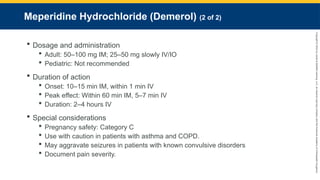
a. Inhibits hydrogen ion excretion in the renal tubules
3. Indications
a. AMS (treatment and prophylaxis)
b. Prevention of HACE
4. Contraindications
a. Hypersensitivity to acetaZOLAMIDE or sulfa
b. Known hypokalemia or hyponatremia
c. Renal or liver dysfunction
d. Should not be used for the treatment of HAPE
5. Adverse reactions/side effects include:
a. Fluid and electrolyte imbalance
b. Metabolic acidosis
c. Seizures
d. Nausea
e. Vomiting
6. Drug interactions
a. Increased risk of severe acidosis and CNS toxicity with high-dose aspirin
b. Use caution with diuretics, anticonvulsants.
c. May potentiate the effects of hypoglycemics
d. Increased risk of renal calculus formation with sodium bicarbonate administration
#9 Lecture Outline
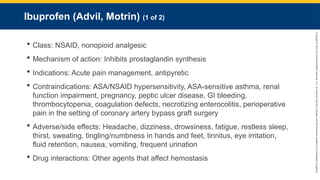
7. Dosage and administration
a. Adult
i. 250 mg orally every 12 hours
b. Pediatric
i. 2.5 mg/kg orally every 12 hours
ii. Maximum: 250 mg/dose
8. Duration of action
a. Onset: 1 to 1.5 hours
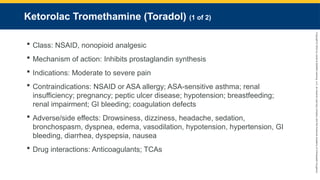
b. Peak effect: 2 to 4 hours
c. Duration: 4 to 12 hours
9. Special considerations
a. Pregnancy safety: Category C
#10 Lecture Outline
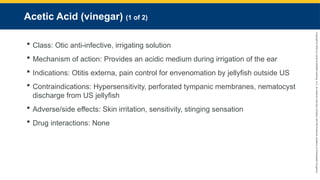
C. Acetic Acid (vinegar)
1. Class: Otic anti-infective, irrigating solution
2. Mechanism of action
a. Provides an acidic medium during irrigation of the ear that minimizes bacterial and fungal promulgation
b. Stabilizes nematocyst discharge in jellyfish found outside the United States
c. Decreases pain
3. Indications
a. Otitis externa
b. Pain control for envenomation by jellyfish from outside the United States
4. Contraindications
a. Hypersensitivity
b. Perforated tympanic membranes
c. May increase nematocyst discharge for US jellyfish and should be used only outside the United States
5. Adverse reactions/side effects
a. Skin irritation
b. Sensitivity
c. Stinging sensation
6. Drug interactions
a. None currently identified
#11 Lecture Outline
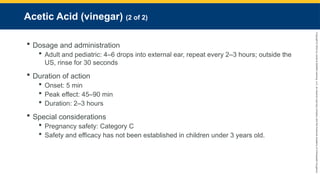
7. Dosage and administration
a. Adult and pediatric
i. Position the patient on the side with the affected ear uppermost.
ii. Instill 4 to 6 drops into the external ear, and repeat every 2 to 3 hours.
iii. For jellyfish stings outside the US, rinse the area with vinegar for 30 seconds to limit the discharge of unfired nematocysts remaining on the skin.
8. Duration of action
a. Onset: 5 minutes
b. Peak effect: 45 to 90 minutes
c. Duration: 2 to 3 hours
9. Special considerations
a. Pregnancy safety: Category C
b. Safety and efficacy have not been established in children younger than 3 years.
#12 Lecture Outline
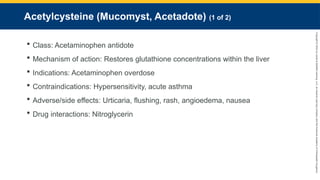
D. Acetylcysteine (Mucomyst, Acetadote)
1. Class: Acetaminophen antidote
2. Mechanism of action
a. Restores glutathione concentrations within the liver
b. Glutathione, an antioxidant, has many actions in the body, including detoxifying substances.
3. Indications
a. Acetaminophen overdose
4. Contraindications
a. Known hypersensitivity
b. Acute asthma
5. Adverse reactions/side effects include:
a. Urticaria
b. Flushing
c. Rash
d. Angioedema
e. Nausea
6. Drug interactions
a. Nitroglycerin
#13 Lecture Outline
7. Dosage and administration
a. Adult and pediatric
i. Loading dose 150 mg/kg IV, mix in 200 mL of D5W and infuse over 1 hour.
ii. 50 mg/kg IV in 500 mL of D5W and infuse over 4 hours.
iii. If IV access is not available, give 140 mg/kg orally
8. Duration of action
a. Onset: 1 minute
b. Peak effect: 5 to 15 minutes
c. Duration: 100 minutes
9. Special considerations include:
a. Pregnancy safety: Category B
b. Anaphylactoid-type reactions usually follow the first dose.
i. Can be minimized by ensuring that the medication is infused over 1 hour
#14 Lecture Outline
E. Activated Charcoal (Insta-Char, Actidose-Aqua, Liqui-Char)
1. Class: Adsorbent, antidote
2. Mechanism of action
a. Adsorbs ingested toxic substances from the GI tract
3. Indications
a. Most oral poisonings and medication overdoses in the alert patient
b. Can be used after evacuation of poisons
4. Contraindications
a. Known hypersensitivity
b. Unprotected airway
c. Absence of a gag reflex
d. Ileus
e. Intestinal obstruction
f. Do not use after ingestion of petroleum distillates, hydrocarbons, heavy metals, acids or alkalis (corrosives), alcohols, iron, lithium, solvents.
g. Use caution in patients experiencing abdominal pain of unknown origin.
5. Adverse reactions/side effects
a. Emesis
b. Constipation
c. Black stools
d. Diarrhea
e. Bowel obstruction
6. Drug interactions
a. Bonds with and inactivates whatever it is mixed with
b. Moderate interactions with acetylcysteine, citalopram, digoxin, dyphylline, methotrexate, and theophylline
#15 Lecture Outline
7. Dosage and administration
a. Adult and pediatric older than 1 year
i. 25 to 100 g orally or via NG tube
b. Pediatric younger than 1 year
i. 1 g/kg orally or via NG tube
8. Duration of action
a. Onset: Immediate
b. Peak effect: Depends on GI function
c. Duration: Will act until excreted
9. Special considerations
a. Pregnancy safety: Category C
b. Shake vigorously before use.
c. Contact medical direction before administering in cases of acetaminophen overdose.
#16 Lecture Outline
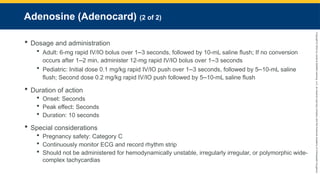
F. Adenosine (Adenocard)
1. Class
a. Antidysrhythmic
2. Mechanism of action
a. Short-acting drug that slows conduction through the AV node
b. Restore sinus rhythm in patients with SVT
c. Terminates regular tachycardias caused by reentrant AV nodal pathways
3. Indications
a. First-line drug for most forms of stable, regular, narrow-complex SVT
b. Considered for marrow-complex reentry tachycardia while preparing for cardioversion
c. Can be used diagnostically for stable, regular, monomorphic wide-complex tachycardia
4. Contraindications
a. Known hypersensitivity
b. Second- or third-degree AV block or sick sinus syndrome or other sinus node disease
c. Poison- or drug-induced tachycardia
d. Use with caution in patients with a history of seizure disorder.
e. May induce bronchospasm in a patient with bronchoconstrictive or bronchospastic lung disease
5. Adverse reactions/side effects
a. Generally transient and of short duration
b. Flushing, sweating, dizziness, nervousness, paresthesia, hypotension, feeling of impending doom, severe bronchospasm
c. A brief period of most any dysrhythmia
6. Drug interactions
a. Additive effects are possible if used in combination with beta blockers.
b. Methylxanthines block the actions.
c. Dipyridamole potentiates the effect.
d. Carbamazepine may potentiate the AV node blocking effect.
e. Nicotine can enhance cardiovascular effects.
f. An increase in angina-like chest discomfort or heart rate
g. A decrease in BP may be observed.
#17 Lecture Outline
7. Dosage and administration
a. Adult
i. 6-mg rapid IV/IO bolus over 1 to 3 second followed by a 10-mL saline flush
ii. Additional 12-mg dose if needed after 1 to 2 minutes
iii. Maximum total dosage is 30 mg.
b. Pediatric
i. Initial dose 0.1 mg/kg rapid IV/IO push over 1 to 3 seconds followed by a 5- to 10-mL saline flush
ii. Second dose 0.2 mg/kg rapid IV/IO push followed by a 5- to 10-mL saline flush
8. Duration of action
a. Onset
i. Seconds
b. Peak effect
i. Seconds
c. Duration
i. 10 seconds
9. Special considerations
a. Pregnancy safety: Category C
b. Monitor the ECG and record a rhythm, strip during administration.
c. Ineffective in converting AF, atrial flutter, or VT
d. Should not be administered for hemodynamically unstable, irregularly irregular, or polymorphic wide-complex tachycardias
#18 Lecture Outline
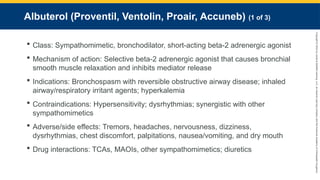
G. Albuterol (Proventil, Ventolin, Proair, Accuneb)
1. Class
a. Sympathomimetic, bronchodilator, short-acting beta-2 adrenergic agonist
2. Mechanism of action
a. Selective beta-2 adrenergic agonist that causes bronchia smooth muscle relaxation and inhibits mediator release from mast cells
3. Indications
a. Treatment and prevention of bronchospasm in patients with reversible obstructive airway disease
b. Treatment of inhaled airway/respiratory irritant agents
c. Hyperkalemia treatment
4. Contraindications
a. Known hypersensitivity
b. Dysrhythmias
c. Synergistic with other sympathomimetics
5. Adverse reactions/side effects
a. Often dose-related
i. Tremors, headaches, nervousness, dizziness, dysrhythmias, chest discomfort, palpitations, nausea/vomiting, and dry mouth
6. Drug interactions
a. Additive effects with TCAs, MAOIs, other sympathomimetics
b. Beta blockers may inhibit pulmonary effects.
c. May potentiate hypokalemia caused by diuretics
#19 Lecture Outline
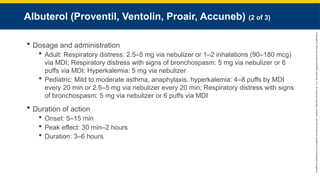
7. Dosage and administration
a. Adult
i. Respiratory distress: 2.5 to 5 mg via nebulizer or 1 to 2 inhalations (90 to 180 mcg) by MDI
ii. Respiratory distress with signs of bronchospasm: 5 mg via nebulizer or 6 puffs via MDI
ii. Hyperkalemia: 5 mg via nebulizer
b. Pediatric
i. 4 to 8 puffs with MDI every 20 minutes
ii. Weighs less than 20 kg (2.5 mg/dose via nebulizer) or more than 20 kg (5 mg/dose via nebulizer)
iii. Respiratory distress with signs of bronchospasm: 5 mg via nebulizer or 6 puffs via MDI
8. Duration of action
a. Onset
i. 5 to 15 minutes
b. Peak effect
i. 30 minutes to 2 hours
c. Duration
i. 3 to 6 hours
#20 Lecture Outline
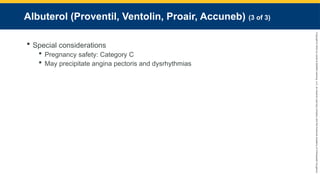
9. Special considerations
a. Pregnancy safety: Category C
b. May precipitate angina pectoris and dysrhythmias
c. Patients may need to be coached on proper use of the MDI.
#21 Lecture Outline
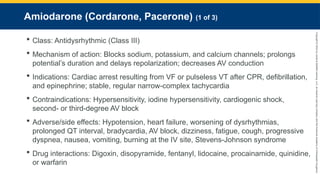
H. Amiodarone (Cordarone, Pacerone)
1. Class
a. Antidysrhythmic (Class III)
2. Mechanism of action
a. Blocks sodium, potassium, and calcium channels
b. Prolongs the action potential’s duration
c. Delays repolarization
d. Decreases AV conduction and sinoatrial (SA) node function
3. Indications
a. Cardiac arrest resulting from VF or pulseless VT after CPR, defibrillation, and epinephrine
b. Stable, regular narrow-complex tachycardia if the rhythm persists despite vagal maneuvers or adenosine or the tachycardia is recurrent
c. To control the ventricular rate in AF with a rapid ventricular response without preexcitation
d. Stable wide-complex tachycardia
e. Stable monomorphic VT
f. Polymorphic VT with a normal QT interval
4. Contraindications
a. Known hypersensitivity
b. Iodine hypersensitivity
c. Cardiogenic shock
d. Second- of third-degree AV block
e. Sick sinus syndrome
5. Adverse reactions/side effects
a. Hypotension
b. Heart failure
c. Worsening of dysrhythmias
d. Prolonged QT interval
e. Bradycardia
f. AV block
g. Dizziness
h. Fatigue
i. Cough
j. Progressive dyspnea
k. Nausea/vomiting
l. Burning at the IV site
m. Stevens-Johnson syndrome
6. Drug interactions
a. May increase the effects of digoxin, disopyramide, fentanyl, lidocaine, procainamide, quinidine, or warfarin
b. Cimetidine may increase amiodarone levels.
c. Use with beta blockers or calcium channel blockers may potentiate bradycardia, sinus arrest, and AV blocks.
d. Persistent use of echinacea can potentiate amiodarone’s hepatotoxic effects.
#22 Lecture Outline
7. Dosage and administration
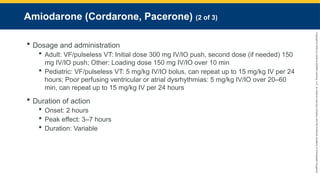
a. Adult
i. Initial dose 300 mg IV/IO push
ii. Second dose 150 mg IV/IO push
iii. Loading dose 150 mg IV/IO over 10 minutes
iv. Maximum cumulative dose: 2.2 g IV/IO per 24 hours
b. Pediatric
i. 5 mg/kg IV/IO bolus
ii. Maximum dose: 15 mg/kg IV per 24 hours
8. Duration of action
a. Onset
i. 2 hours
b. Peak effect
i. 3 to 7 hours
c. Duration
i. Variable
#23 Lecture Outline
9 Special considerations
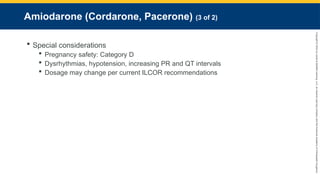
a. Pregnancy safety: Category D
b. Fetal risk
c. May worsen or precipitate new dysrhythmias
d. Monitor for hypotension and increasing PR and QT intervals
e. Dosage may change per the most current International Liaison Committee on Resuscitation (ILCOR) recommendations.
#24 Lecture Outline
I. Antibiotics
1. Kill bacteria or inhibit their growth and replication
2. Classified by their chemical structure or spectrum of activity
#25 Lecture Outline
J. Anticoagulants
1. Prevent the formation of new clots but do not dissolve existing clots
2. Coagulation monitoring prevents excessive anticoagulation.
3. Patients are typically advised to wear medical identification.
#26 Lecture Outline
K. Aspirin (Acetylsalicylic Acid)
1. Class
a. Platelet inhibitor, NSAID, anti-inflammatory agent
2. Mechanism of action
a. Prevents thromboxane A2 formation
b. Forms plugs
c. Has antipyretic and analgesic properties
3. Indications
a. New-onset chest discomfort suggestive of ACS
4. Contraindications
a. Hypersensitivity to ASA or NSAIDs
b. Bleeding disorders
c. Hemolytic anemia
d. Lactating mothers
5. Adverse reactions/side effects
a. Anaphylaxis
b. Bronchospasm/wheezing in allergic patients
c. GI bleeding
d. Epigastric distress
e. Nausea
f. Vomiting
g. Heartburn
h. Reye syndrome
6. Drug interactions
a. Increased risk of bleeding with anticoagulants and other NSAIDs
b. Diminished effects of ACE inhibitors and loop diuretics
c. Antacids reduce ASA absorption.
d. Increased risk of hypoglycemia occurs with administration of oral hypoglycemic drugs.
e. Effects are decreased by corticosteroids.
f. Increased bleeding can occur when ASA is taken with certain herbs.
#27 Lecture Outline
7. Dosage and administration
a. Adult
i. 162 mg to 325 mg orally
b. Pediatric
i. Not recommended
8. Duration of action
a. Onset
i. 15 to 30 minutes
b. Peak effect
i. 1 to 2 hours
c. Duration
i. 4 to 6 hours
9. Special considerations
a. Pregnancy safety: Category D
10. If there are no contraindications, non–enteric-coated, chewable aspirin should be given as soon as possible to all patients with a suspected ACS after symptom onset.
#28 Lecture Outline
L. Atropine Sulfate
1. Class
a. Anticholinergic agent
2. Mechanism of action
a. Inhibits acetylcholine at postganglionic parasympathetic neuroeffector sites
b. Increases heart rate in symptomatic bradydysrhythmias
c. Reverses muscarinic effects of cholinergic poisoning
3. Indications
a. Hemodynamically unstable bradycardia
b. Acetylcholinesterase inhibitor poisoning
c. RSI in pediatrics
d. Beta blocker or calcium channel blocker overdose
4. Contraindications
a. Known hypersensitivity
b. Narrow-angle glaucoma
c. GI obstruction
d. Severe ulcerative colitis
e. Toxic megacolon
f. Bladder outlet obstruction
g. Myasthenia gravis
h. Hemorrhage with cardiovascular instability
i. Thyrotoxicosis
5. Adverse reactions/side effects
a. Drowsiness
b. Confusion
c. Headache
d. Palpitations
e. Dysrhythmias
f. Nausea
g. Vomiting
h. Pupil dilation
i. Dry mouth/nose/skin
j. Blurred vision
k. Urinary retention
l. Constipation
m. Flushed, hot, dry skin
6. Drug interactions
a. Potential adverse effects when administered with digitalis, cholinergics, physostigmine
b. Effects enhanced by antihistamines, procainamide, quinidine, antipsychotics, benzodiazepines, and antidepressants.
#29 Lecture Outline
7. Dosage and administration
a. Adult
i. Symptomatic bradycardia: 0.5 to 1 mg IV/IO every 5 to 5 minutes (maximum of 3 mg)
ii. Acetylcholinesterase inhibitor poisoning: Extremely large doses
b. Pediatric
i. Symptomatic bradycardia: 0.02 mg/kg IV/IO
ii. Maximum single does: 0.5 mg
iii. Maximum total dose: 1 mg (child) and 3 mg (adolescent)
iv. Acetylcholinesterase inhibitor poisoning (child younger than 12): 0.05 mg/kg initially, then repeat and double the dose every 5 minutes.
v. Acetylcholinesterase inhibitor poisoning (child 12 or older): 1 mg IV/IO initially then repeat and double the dose every 5 minutes.
8. Duration of action
a. Onset
i. Immediate
b. Peak effect
i. 2 to 4 minutes
c. Duration
i. 2 to 4 hours
9. Special considerations
a. Pregnancy safety: Category C
b. Paradoxical bradycardia
c. Ineffective in hypothermic bradycardia
d. May be ineffective in patients who have undergone heart transplantation or in infranodal AV blocks
e. Use with caution in the presence of myocardial ischemia.
#30 Lecture Outline
M. Benzocaine Spray (Hurricane)
1. Class
a. Topical anesthetic
2. Mechanism of action
a. Prevents impulse transmission along sensory nerve fibers and at nerve endings
3. Indications
a. Topical anesthetic
b. Suppresses the pharyngeal and tracheal gag reflex
4. Contraindications
a. Hypersensitivity
5. Adverse reactions/side effects
a. Signs of methemoglobinemia
b. Headache, light-headedness, shortness of breath
c. Anxiety, fatigue, and tachycardia
6. Drug interactions
a. Rare and sometimes fatal cases of methemoglobinemia related to the topical or oromucosal benzocaine products
b. Nitrites and nitrates may induce methemoglobin formation.
#31 Lecture Outline
7. Dosage and administration
a. Adult
i. 0.5- to 1-second spray
ii. Repeat as needed.
b. Pediatric
i. 0.25- to 0.5-second spray
ii. Repeat as needed.
8. Duration of action
a. Onset
i. Immediate
b. Peak effect
i. Less than 5 minutes
c. Duration
i. 15 to 20 minutes
9. Special considerations
a. Pregnancy safety: Category C
b. Quantity in a single spray varies among different manufacturers.
c. Potentially dangerous to use in the mouth and throat
#32 Lecture Outline
N. Beta Blocking Agents
1. Antagonize the effects of epinephrine on beta adrenergic receptors
2. Beta-1 selective blockers
a. Cardioselective beta blockers
b. Slow the heart rate and force of contraction
c. Safer for use in patients with lung diseases
#33 Lecture Outline
3. Nonselective beta blockers
a. Antagonize beta-1 and beta-2 receptors.
b. Decrease heart rate and force of contraction.
c. Cause some degree of bronchoconstriction.
d. Contraindicated in patients with asthma and should be used with caution in patients with COPD
#34 Lecture Outline
O. Bumetanide (Bumex)
1. Class
a. Loop diuretic
2. Mechanism of action
a. A potent loop diuretic with a rapid onset and short duration of action
b. Inhibits the reabsorption of sodium and chloride in the ascending limb of the loop of Henle
3. Indications
a. Pulmonary edema, heart failure
4. Contraindications
a. Hypersensitivity to bumetanide, furosemide, or sulfonamides
b. Hypovolemia, anuria, acid-based imbalance, electrolyte imbalance, hepatic coma
c. Use with caution in patients with hepatic cirrhosis, ascites, or diabetes.
5. Adverse reactions/side effects
a. Dehydration
b. Dizziness
c. Headache
d. Hypotension
e. ECG changes due to electrolyte depletion
f. Nausea/vomiting
g. Itching (liver disease)
h. Fatigue
6. Drug interactions
a. NSAIDs reduce the effects of diuretics.
b. May increase risk of lithium poisoning
c. Antihypertensives can cause further hypotension.
#35 Lecture Outline
7. Dosage and administration
a. Adult
i. 0.5 to 1 mg IV slowly over 1 to 2 minutes or IM
b. Pediatric
i. Not recommended for children younger than 12 years.
8. Duration of action
a. Onset
i. Immediate
b. Peak effect
i. 15 to 30 minutes
c. Duration
i. 3 to 6 hours
9. Special considerations
a. Pregnancy safety: Category C
b. Bumetanide does not have the vasodilatory effects of furosemide.
c. Diuretic potency is about 40 times greater than furosemide.
#36 Lecture Outline
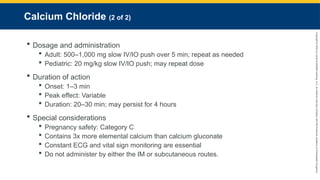
P. Calcium Chloride
1. Class
a. Electrolyte
2. Mechanism of action
a. Mineral component of bones and teeth
b. Cofactor in enzymatic reactions
c. Essential for neurotransmission, blood clotting, and contraction of cardiac, smooth, and skeletal muscles
3. Indications
a. Hypocalcemia
b. Hyperkalemia
c. Beta blocker and calcium channel blocker toxicity
d. Antidote for magnesium sulfate overdose
4. Contraindications
a. Known hypersensitivity
b. Digoxin toxicity
c. Hypercalcemia
d. Suspected severe hypokalemia
5. Adverse reactions/side effects
a. Syncope
b. Bradycardia
c. Asystole
d. Hypotension
e. Nausea/vomiting
f. Metallic taste with rapid injection
g. Tissue necrosis at injection site
h. Coronary and cerebral artery spasm
6. Drug interactions
a. May increase ventricular irritability and precipitate digitalis toxicity when taken with digoxin
b. Potentiated by thiazide diuretics
c. May antagonize the effects of calcium channel blockers
d. Incompatible with most all medications
e. Flush the IV/IO line before and after its administration.
#37 Lecture Outline
7. Dosage and administration
a. Adult
i. 500 to 1,000 mg slow IV/IO push over 5 minutes
ii. Repeat as needed.
b. Pediatric
i. 20 mg/kg slow IV/IO push
ii. Maximum dose: 1 g (10 mL)
iii. May repeat the dose if documented or suspected clinical indication persists
8. Duration of action
a. Onset
i. 1 to 3 minutes
b. Peak effect
i. Variable
c. Duration
i. 20 to 30 minutes but may persist for 4 hours (dose-dependent)
9. Special considerations
a. Pregnancy safety: Category C
b. Contains three times more elemental calcium than calcium gluconate, which is preferred in children
c. Essential for constant ECG and vital sign monitoring
d. Do not administer by either the IM or subcutaneous routes.
#38 Lecture Outline
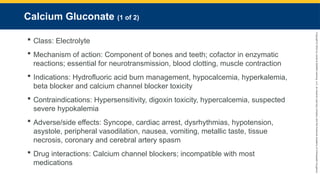
Q. Calcium Gluconate
1. Class
a. Electrolyte
2. Mechanism of action
a. Mineral component of bones and teeth
b. Cofactor in enzymatic reactions
c. Essential for neurotransmission, blood clotting, and contraction of cardiac, smooth, and skeletal muscles
3. Indications
a. Topical use in hydrofluoric acid burn management
b. Hypocalcemia
c. Hyperkalemia
d. Beta blocker and calcium channel blocker toxicity
4. Contraindications
a. Known hypersensitivity
b. Digoxin toxicity
c. Hypercalcemia
d. Suspected severe hypokalemia
5. Adverse reactions/side effects
a. Syncope
b. Cardiac arrest
c. Dysrhythmias
d. Hypotension
e. Asystole
f. Peripheral vasodilation
g. Hypotension
h. Nausea/vomiting
i. Metallic taste
j. Tissue necrosis at injection site
k. Coronary and cerebral artery spasm
6. Drug interactions
a. Severe bradycardia
b. May antagonize the effects of calcium channel blockers
c. Incompatible with most medications
d. Flush the IV/IO line before and after its administration.
#39 Lecture Outline
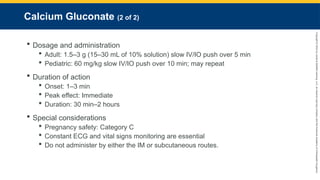
7. Dosage and administration
a. Adult
i. 1.5 to 3 g (15 to 30 mL of 10% solution) slow IV/IO push over 5 minutes
b. Pediatric
i. 60 mg/kg slow IV/IO push over 10 minutes
ii. May repeat if documented or suspected clinical indication persists
c. Adult and pediatric hydrofluoric acid burn management
i. Apply generous amounts of topical gel.
ii. Leave in place for at least 20 minutes.
8. Duration of action
a. Onset
i. 1 to 3 minutes
b. Peak effect
i. Immediate
c. Duration
i. 30 minutes to 2 hours
9. Special considerations
a. Pregnancy safety: Category C
b. Constant ECG and vital sign monitoring is essential.
c. Central venous administration is the preferred route in pediatrics.
d. Do not administer by either the IM or subcutaneous routes.
#40 Lecture Outline
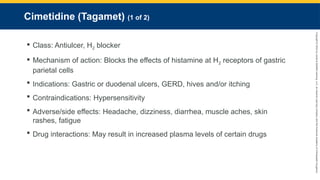
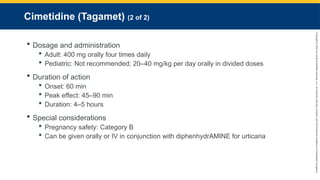
R. Cimetidine (Tagamet)
1. Class
a. Antiulcer, H2 blocker
2. Mechanism of action
a. Blocks the effects of histamine at H2 receptors of gastric parietal cells
3. Indications
a. Gastric or duodenal ulcers
b. GERD
c. Adjunct in treating hives and/or itching
4. Contraindications
a. Known hypersensitivity to cimetidine or other H2 blockers
5. Adverse reactions/side effects
a. Headache
b. Dizziness
c. Diarrhea
d. Muscle aches
e. Skin rashes
f. Fatigue
6. Drug interactions
a. Inhibition of specific liver enzymes may result in increased plasma levels of certain drugs.
#41 Lecture Outline
7. Dosage and administration
a. Adult
i. 400 mg orally four times daily
ii. Maximum is 1,200 mg/day
b. Pediatric
i. Use is not recommended.
ii. 20 to 40 mg/kg per day in divided doses
8. Duration of action
a. Onset
i. 60 minutes
b. Peak effect
i. 45 to 90 minutes
c. Duration
i. 4 to 5 hours
9. Special considerations
a. Pregnancy safety: Category B
b. Can be given orally or IV in conjunction with diphenhydrAMINE for urticaria
#42 Lecture Outline
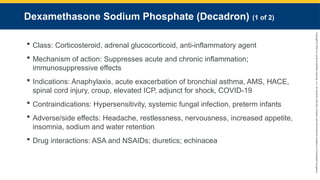
S. Dexamethasone Sodium Phosphate (Decadron)
1. Class
a. Corticosteroid, adrenal glucocorticoid, anti-inflammatory agent
2. Mechanism of action
a. Suppresses acute and chronic inflammation
b. Immunosuppressive effects
3. Indications
a. Anaphylaxis
b. Acute exacerbation of bronchial asthma
c. AMS
d. HACE
e. Spinal cord injury
f. Croup
g. Elevated ICP
h. Adjunct in treatment of shock
i. COVID-19
4. Contraindications
a. Documented hypersensitivity
b. Systemic fungal infection
c. Preterm infants
5. Adverse reactions/side effects
a. Headache
b. Restlessness
c. Nervousness
d. Increased appetite
e. Insomnia
f. Sodium and water retention
g. None from a single dose
6. Drug interactions
a. Simultaneous use with ASA and NSAIDs increases the risk of GI bleeding and ulceration.
b. Hypokalemia when used concurrently with diuretics
c. Echinacea may reduce its effectiveness.
#43 Lecture Outline
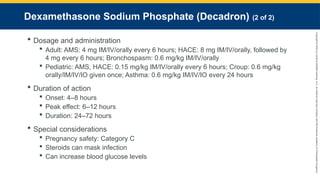
7. Dosage and administration
a. Adult
i. AMS treatment: Give 4 mg IM, IV, or orally every 6 hours
ii. HACE: 8 mg IM, IV, or orally, followed by 4 mg IM, IV, or orally every 6 hours
iii. Bronchospasm: 0.6 mg/kg IM, IV, or orally (16 mg maximum)
b. Pediatric
i. AMS, HACE treatment: 0.15 mg/kg IM, IV, or orally every 6 hours (4 mg/dose maximum)
ii. For croup: 0.6 mg/kg orally, IM, IV, or IO given once (16 mg maximum)
iii. For asthma: 0.6 mg/kg IM, IV, or IO every 24 hours (16 mg maximum)
8. Duration of action
a. Onset
i. 4 to 8 hours
b. Peak effect
i. 6 to 12 hours
c. Duration
i. 24 to 72 hours
9. Special considerations
a. Pregnancy safety: Category C
b. Administer IV/IO doses slowly.
c. Steroids can mask infection.
d. Can increase blood glucose levels
e. Hydrocortisone succinate is preferred over methylPREDNISolone and dexamethasone.
f. High doses of glucocorticoids or prolonged use can result in many adverse reactions and side effects.
g. It should not be used for AMS or HACE prevention in children.
#44 Lecture Outline
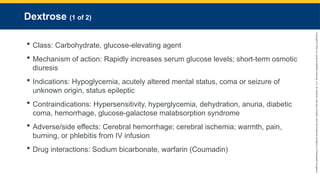
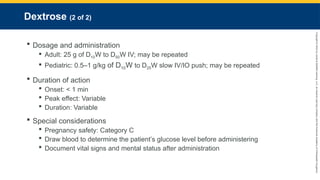
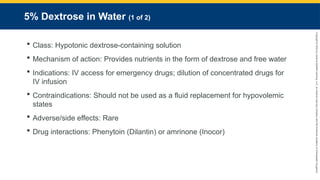
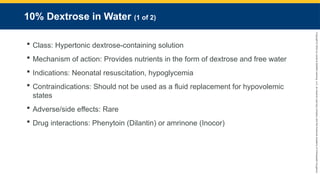
T. Dextrose
1. Class
a. Carbohydrate, glucose-elevating agent
2. Mechanism of action
a. Rapidly increases serum glucose levels
b. Short-term osmotic diuresis
3. Indications
a. Hypoglycemia
b. Acutely altered mental status
c. Coma or seizure of unknown origin
d. Status epilepticus
4. Contraindications
a. Documented hypersensitivity
b. Hyperglycemia
c. Severe dehydration
d. Anuria
e. Diabetic coma
f. Intracranial or intraspinal hemorrhage
g. Glucose-galactose malabsorption syndrome
5. Adverse reactions/side effects
a. Cerebral hemorrhage
b. Cerebral ischemia
c. Warmth, pain, burning, or phlebitis from IV infusion
6. Drug interactions
a. Sodium bicarbonate
b. Warfarin
#45 Lecture Outline
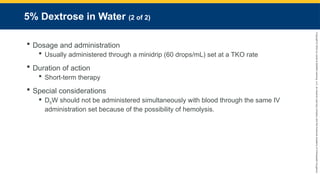
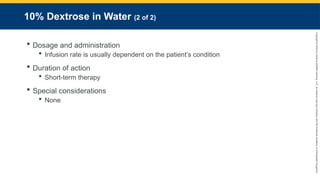
7. Dosage and administration
a. Adult
i. 25 g of D10W to D50W IV
ii. May be repeated as necessary until mental status improved or maximum field dosage is reached
b. Pediatric
i. 0.5 to 1 g/kg of D10W to D25W slow IV/IO push
ii. May be repeated as necessary mental status improved or maximum field dosage is reached
c. Neonates and infants
i. 0.2 g/kg, followed by 5 mL/kg/h D10W IV/IO infusion
8. Duration of action
a. Onset
i. Less than 1 minute
b. Peak effect
i. Variable
c. Duration
i. Variable
9. Special considerations
a. Pregnancy safety: Category C
b. Draw blood to determine the patient’s glucose level before administering.
c. Document reassessment of vital signs and mental status after administration.
d. May induce acute thiamine deficiency in malnourished patients and those with chronic alcoholism
e. Extravasation may lead to tissue necrosis.
f. Do not administer to patients with known stroke unless hypoglycemia is documented.
#46 Lecture Outline
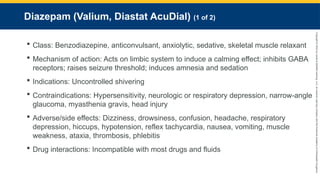
U. Diazepam (Valium, Diastat AcuDial)
1. Class
a. Benzodiazepine, anticonvulsant, anxiolytic, sedative, skeletal muscle relaxant
b. Schedule IV drug
2. Mechanism of action
a. Appears to act on part of the limbic system, as well as on the thalamus and hypothalamus
b. Inhibits GABA receptors in the CNS
c. Raises the seizure threshold
d. Induces amnesia and sedation
3. Indications
a. Uncontrolled shivering
4. Contraindications
a. Documented hypersensitivity
b. Neurologic or respiratory depression
c. Narrow-angle glaucoma
d. Myasthenia gravis
e. Head injury
5. Adverse reactions/side effects
a. Dizziness
b. Drowsiness
c. Confusion
d. Headache
e. Respiratory depression
f. Hiccups
g. Hypotension
h. Reflex tachycardia
i. Nausea/vomiting
j. Muscle weakness
k. Ataxia
l. Thrombosis
m. Phlebitis
6. Drug interactions
a. Incompatible with more drugs and fluids
b. Concomitant use with other CNS depressants
#47 Lecture Outline
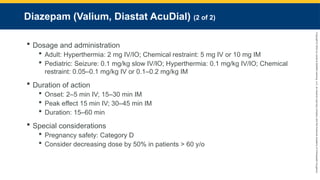
7. Dosage and administration
a. Adult
i. Shivering: 2 mg IV/IO; may repeat once in 5 minutes
ii. Chemical restrain: 5 mg IV or 10 mg IM
b. Pediatric
i. Seizure activity: 0.1 mg/kg slow IV or IO (4 mg maximum)
ii. Shivering: 0.1 mg/kg IV/IO (2.5 mg maximum dose)
iii. Chemical restrain: 0.05 to 0.1 mg/kg IV (5 mg maximum) or 0.1 to 0.2 mg/kg IM (10 mg maximum)
8. Duration of action
a. Onset
i. 2 to 5 minutes IV; 15 to 30 minutes IM
b. Peak effect
i. 15 minutes IV; 30 to 45 minutes IM
c. Duration
i. 15 to 60 minutes IV and IM
9. Special considerations
a. Pregnancy safety: Category D
b. Consider decreasing dose by 50% in patients older than 60 years.
c. Convulsive Antidote Nerve Agent (CANA) is a commercially available auto-injector.
#48 Lecture Outline
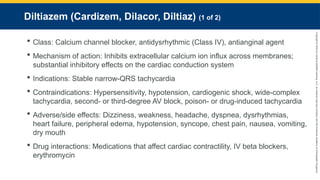
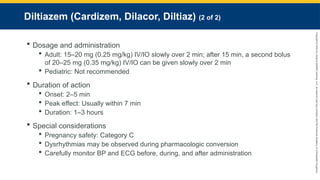
V. Diltiazem (Cardizem, Dilacor, Diltiaz)
1. Class
a. Calcium channel blocker, antidysrhythmic (Class IV), antianginal agent
2. Mechanism of action
a. Inhibits extracellular calcium ion influx across membranes of myocardial cells and vascular smooth muscle cells
b. No effect on serum calcium concentrations
c. Substantial inhibitory effects on the cardiac conduction system
d. Less-negative inotropic effects than verapamil
3. Indications
a. Stable narrow-QRS tachycardia
i. Rhythm persists despite vagal maneuvers or administration of adenosine.
ii. Recurrent
b. To control the ventricular rate in patients with AF or atrial flutter without preexcitation
4. Contraindications
a. Known hypersensitivity
b. Hypotension
c. Cardiogenic shock
d. Wide-complex tachycardia
e. Second- or third-degree AV block
f. Sick sinus syndrome or other sinus node disease
g. Poison- or drug-induced tachycardia
h. AF or atrial flutter associated with an accessory bypass tract
i. Avoid use in patients with left ventricular systolic dysfunction or decompensated heart failure.
j. Use with extreme caution in patients taking oral beta blockers.
5. Adverse reactions/side effects
a. Dizziness
b. Weakness
c. Headache
d. Dyspnea
e. Dysrhythmias including cardiac arrest
f. Heart failure
g. Peripheral edema
h. Hypotension
i. Syncope
j. Chest pain
k. Nausea/vomiting
l. Dry mouth
6. Drug interactions
a. Use with caution in patients taking medications that affect cardiac contractility.
b. Simultaneous use with IV beta blockers can result in decreased cardiac contractility, bradycardia, and hypotension.
c. Increased risk of sudden cardiac death when given concurrently with erythromycin
#49 Lecture Outline
7. Dosage and administration
a. Adult
i. Initial dose: 15 to 20 mg (0.25 mg/kg) IV/IO slowly over 2 minutes
ii. After 15 minutes, a second bolus of 20 to 25 mg (0.35 mg/kg) IV/IO can be given slowly over 2 minutes.
iii. Patients older than age 65 require a maximum initial dose of 10 mg IV/IO and second dose of 20 mg IV/IO.
iv. Maintenance infusion: 5 to 15 mg/h titrated to a physiologically appropriate heart rate.
b. Pediatric
i. Not recommended
8. Duration of action
a. Onset
i. 2 to 5 minutes
b. Peak effect
i. Usually within 7 minutes
c. Duration
i. 1 to 3 hours
9. Special considerations
a. Pregnancy safety: Category C
b. Dysrhythmias may be observed during pharmacologic conversion.
c. Carefully monitor BP and ECG before, during, and after administration.
#50 Lecture Outline
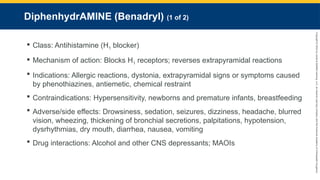
W. DiphenhydrAMINE (Benadryl)
1. Class
a. Antihistamine (H1 blocker)
2. Mechanism of action
a. Blocks H1 receptors in the respiratory tract, blood vessels, and GI smooth muscle
b. Reverses extrapyramidal reactions
3. Indications
a. Symptomatic allergic reactions
b. Symptomatic dystonia
c. Extrapyramidal signs or symptoms caused by phenothiazines
d. Antiemetic
e. Chemical restraint
4. Contraindications
a. Known hypersensitivity, newborns and premature infants, breastfeeding
b. Use with caution in patients with severe vomiting, asthma, narrow-angle glaucoma, benign prostatic hypertrophy, or alcohol intoxication.
c. Use is controversial in patients with lower respiratory tract disease.
5. Adverse reactions/side effects
a. Drowsiness
b. Sedation
c. Seizures
d. Dizziness
e. Headache
f. Blurred vision
g. Wheezing
h. Thickening of bronchial secretions
i. Palpitations
j. Hypotension
k. Dysrhythmias
l. Dry mouth
m. Diarrhea
n. Nausea/vomiting
o. Hallucinations, confusion, and paradoxical CNS excitation can occur in children.
6. Drug interactions
a. Potentiates the effects of alcohol and other CNS depressants
b. MAOIs prolong and intensify anticholinergic effects.
#51 Lecture Outline
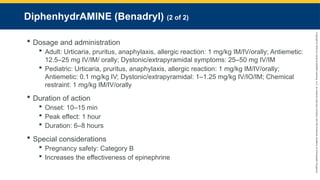
7. Dosage and administration
a. Adult
i. Urticaria or pruritus, anaphylaxis, or allergic reaction: 1 mg/kg up to maximum 50-mg dose IM, IV, or orally
ii. Antiemetic: 12.5 to 25 mg IV/IM or orally
iii. Dystonic/extrapyramidal symptoms: 25 to 50 mg IV/IM
b. Pediatric
i. Urticaria or pruritus, anaphylaxis, or allergic reaction: 1 mg/kg up to maximum 50-mg dose IM, IV, or orally
ii. Antiemetic: Older than age 2 and weight greater than 12 kg: 0.1 mg/kg IV (maximum: 25 mg)
iii. Dystonic/extrapyramidal symptoms: Give 1 to 1.25 mg/kg IV/IO or IM (25 mg maximum single dose)
iv. Chemical restraint: Give 1 mg/kg IM/IV or orally (25 mg maximum dose)
8. Duration of action
a. Onset
i. 10 to 15 minutes
b. Peak effect
i. 1 hour
c. Duration
i. 6 to 8 hours
9. Special considerations
a. Pregnancy safety: Category B
b. Increases the effectiveness of epinephrine
c. Can be given in conjunction with any H2-blocking antihistamine
#52 Lecture Outline
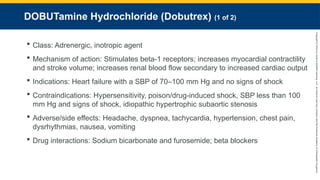
X. DOBUTamine Hydrochloride (Dobutrex)
1. Class
a. Adrenergic, inotropic agent
2. Mechanism of action
a. Synthetic catecholamine
i. Simulates beta-1 receptors with minor stimulation of beta-2 and alpha-1 receptors
b. Increases myocardial contractility and stroke volume
c. Increases renal blood flow secondary to increased cardiac output
3. Indications
a. Heart failure with a SBP of 70 to 100 mm Hg and no signs of shock
4. Contraindications
a. Known hypersensitivity
b. Suspected or known poison/drug-induced shock
c. SBP less than 100 mm Hg and signs of shock
d. Idiopathic hypertrophic subaortic stenosis
5. Adverse reactions/side effects
a. Headache
b. Dyspnea
c. Tachycardia
d. Hypertension
e. Chest pain
f. Dysrhythmias
g. Nausea/vomiting
6. Drug interactions
a. Incompatible with sodium bicarbonate and furosemide
b. Beta blockers may blunt the inotropic effects.
#53 Lecture Outline
7. Dosage and administration
a. Adult
i. IV infusion at 2 to 20 mcg/kg/min titrated to desired effect
b. Pediatric
i. IV infusion at 2 to 20 mcg/kg/min titrated to desired effect
8. Duration of action
a. Onset
i. 2 minutes
b. Peak effect
i. 10 minutes
c. Duration
i. 1 to 2 minutes after infusion discontinued
9. Special considerations
a. Pregnancy safety: Category B
b. BP and hemodynamic monitoring recommended.
c. Titrate dose to maintain a heart rate increase of no greater than 10% of baseline.
d. May increase infarct size in patients with MI
e. May precipitate or exacerbate ventricular ectopy
f. Older patients may have a significantly decreased response.
g. Patients may become hypotensive from the vasodilatory effect.
#54 Lecture Outline
Y. DOPamine Hydrochloride (Intropin)
1. Class
a. Endogenous catecholamine, adrenergic, vasopressor, inotropic agent
2. Mechanism of action
a. Immediate metabolic precursor to norepinephrine
b. Doses of 1 to 2 mcg/kg/min simulate dopamine receptors.
c. Doses of 2 to 10 mcg/kg/min simulate beta-1 receptors.
d. Doses of 10 to 20 mcg/kg/min simulate alpha receptors.
e. Doses greater than 20 mcg/kg/min, alpha stimulations predominate.
3. Indications
a. Refractory cardiogenic or distributive shock
b. Hypotension with low cardiac output states
c. Second-line drug from symptomatic bradycardia
4. Contraindications
a. Known hypersensitivity
b. Hypovolemia
c. Pheochromocytoma
d. Uncorrected tachydysrhythmias
e. VF
5. Adverse reactions/side effects
a. Headache
b. Anxiety
c. Dyspnea
d. Dysrhythmias
e. Hypotension
f. Hypertension
g. Palpitations
h. Chest pain
i. Nausea/vomiting
6. Drug interactions
a. Inactivated in alkaline solutions
b. MAOIs prolong and potentiate effects.
c. TCAs may potentiate cardiovascular effects.
d. Beta blockers antagonize cardiac effects.
e. When administered with phenytoin, may cause hypotension, bradycardia, and seizures.
f. Simultaneous use of vasopressor may result in severe hypertension.
#55 Lecture Outline
7. Dosage and administration
a. Adult
i. IV/IO infusion at 5 to 20 mcg/kg/min, slowly titrated to patient response
b. Pediatric
i. Safety and effectiveness in children have not been established.
8. Duration of action
a. Onset
i. Within 5 minutes
b. Peak effect
i. 5 to 10 minutes
c. Duration
i. Less than 10 minutes
9. Special considerations
a. Pregnancy safety: Category C
b. Correct hypovolemia before administering.
c. Should be administered by infusion pump.
d. Extravasation may cause necrosis and sloughing of surrounding tissue.
e. Slow or stop the infusion if tachydysrhythmias or increased ventricular ectopy is observed.
f. Sudden cessation of infusion can result in significant hypotension.
#56 Lecture Outline
Z. Droperidol (Inapsine)
1. Class
a. Antiemetic, antipsychotic
2. Mechanism of action
a. Produces marked tranquilization and sedation
b. Reduces motor activity and anxiety
c. Possesses adrenergic-blocking, antifibrillatory, antihistaminic, and anticonvulsive properties
3. Indications
a. Chemical restraint
b. Acute delirium or psychosis
4. Contraindications
a. Known hypersensitivity
b. Known or suspected prolonged QT interval
c. Use with extreme caution in patients with bradycardia, cardiac disease, concurrent MAOI therapy, or use of Class I and Class III antidysrhythmics or other drugs.
5. Adverse reactions/side effects
a. QT interval prolongation
b. VT
c. TdP
d. Cardiac arrest
e. Mild to moderate hypotension
f. Hypertension
g. Tachycardia
h. Dizziness
i. Drowsiness
j. Restlessness
k. Anxiety
l. Dysphoria
m. Hyperactivity
n. Hallucinations
o. Extrapyramidal symptoms
6. Drug interactions
a. Potentiates CNS depressants
b. Reduces pressor effect of epinephrine
#57 Lecture Outline
7. Dosage and administration
a. Adult
i. 2.5 mg slow IV or 5 mg IM
b. Pediatric
i. Not routinely recommended
8. Duration of action
a. Onset
i. 3 to 10 minutes IV/IM
b. Peak effect
i. 30 minutes IV/IM
c. Duration
i. 2 to 4 hours IV/IM
9. Special considerations
a. Pregnancy safety: Category C
b. Cases of QT prolongation and/or TdP
c. Closely monitor vital signs and ECG.
d. Monitor the QT interval with a 12-lead ECG if feasible.
e. Document the QT interval and relay findings to the receiving facility staff.
#58 Lecture Outline
AA. Epinephrine (Adrenalin, EpiPen, AsthmaNefrin)
1. Class
a. Sympathomimetic, sympathetic (alpha/beta adrenergic) agonist
2. Mechanism of action
a. Catecholamine with strong alpha adrenergic, strong beta-1, and moderate beta-2 effects
b. Secondary relaxation effect on the smooth muscle of the stomach, intestine, uterus, and urinary bladder
3. Indications
a. Cardiac arrest
b. Bradycardia
c. Shock
d. Anaphylaxis
e. Severe refractory wheezing (IM)
f. Croup/bronchiolitis (nebulized)
4. Contraindications
a. Known hypersensitivity, coronary insufficiency, cardiac dilation
b. Uncontrolled hypertension
c. Hypothermia
d. Pulmonary edema
e. Myocardial ischemia
f. Hypovolemic shock
5. Adverse reactions/side effects
a. Nervousness
b. Restlessness
c. Headache
d. Tremor
e. Dysrhythmias
f. Chest pain
g. Increased myocardial oxygen demand
h. Hypertension
i. Palpitations
j. Nausea/vomiting
6. Drug interactions
a. Potentiates other sympathomimetics
b. Deactivated by alkaline solutions
c. MAOIs and antidepressants may potentiate effects.
d. Beta blockers may blunt effects.
#59 Lecture Outline
7. Dosage and administration
a. Adult
i. Anaphylaxis: 0.3 mg IM in the anterolateral thigh
ii. Additional epinephrine can be administered every 5 to 15 minutes.
iii. If wheezing is present, give nebulized albuterol and/or 5 mL of 1 mg/mL epinephrine nebulized.
iv. If stridor is present, consider 5 mL of 1 mg/mL epinephrine nebulized.
v. An epinephrine IV infusion can be given when cardiovascular collapse is present.
vi. Severe bronchoconstriction with impending respiratory failure: 0.01 mg/kg of 1 mg/mL IM (0.3 maximum)
vii. Profound bradycardia with signs of hemodynamic instability: IV/IO infusion of 0.02 to 0.2 mcg/kg/min titrated to a mean arterial pressure greater than 65 mm Hg or IV/IO push dose 10 to 20 mcg boluses every 2 minutes titrated to a mean arterial pressure greater than 65 mm Hg
viii. Shock unresponsive to IV fluids, or cardiogenic shock with signs of fluid overload: IV/IO infusion 0.05 to 0.3 mcg/kg/min
ix. Cardiac arrest: Give 1 mg (0.1 mg/mL) IV/IO every 3 to 5 minutes during resuscitation. Follow each dose with a 20-mL flush and elevate arm for 10 to 20 seconds after dose.
x. ET: 2 to 2.5 mg diluted in 10 mL NS
b. Pediatric
i. Anaphylaxis: If weight is less than 25 kg, give 0.15 mg IM in the anterolateral thigh; if weight is 25 kg or more, give 0.3 mg IM in the anterolateral thigh.
ii. Additional epinephrine can be administered every 5 to 15 minutes.
iii. If wheezing is present, give nebulized albuterol and/or 5 mL of 1 mg/mL epinephrine nebulized.
iv. If stridor is present, consider 5 mL of 1 mg/mL epinephrine nebulized.
v. An epinephrine IV infusion can be given when cardiovascular collapse is present.
vi. Profound bradycardia with signs of hemodynamic instability: IV/IO infusion of 0.01 mg/kg every 3 to 5 minutes (10 mcg maximum)
vii. Cardiac arrest: Give 0.01 mg/kg (0.1 mg/mL) IV/IO every 3 to 5 minutes during arrest (1 mg maximum).
viii. ET: 0.1 mg/kg (1mg/mL) IV/IO every 3 to 5 minutes during arrest (1 mg maximum dose).
c. Neonates
i. Bradycardia: 0.01 to 0.03 mg/kg (0.1 mg/mL) IV/IO, followed by 0.5 mL to 1 mL NS
ii. Consider giving 0.05 to 0.1 mg/kg (0.1 mg/mL) ET until IV access can be obtained.
iii. Dosing may be repeated every 3 to 5 minutes if the heart rate remains less than 60 beats/min.
8. Duration of action
a. Onset
i. Less than 2 minutes IV
ii. 3 to 10 minutes IM
b. Peak effect
i. Less than 5 minutes IV
ii. 20 minutes IM
c. Duration
i. 5 to 10 minutes IV
ii. 20 to 30 minutes IM
9. Special considerations
a. Pregnancy safety: Category C
b. Carefully document the dosage, concentration, route, time of administration, and patient’s response to each dose.
c. Administer epinephrine as soon as possible in cardiac arrest associated with PEA or asystole.
d. Reduce the dose of epinephrine in patients taking MAOIs, per the local protocols.
#60 Lecture Outline
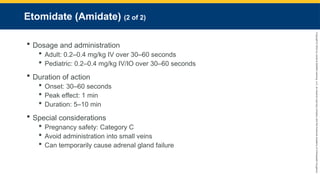
BB. Etomidate (Amidate)
1. Class
a. Nonbarbiturate hypnotic, anesthesia induction agent
2. Mechanism of action
a. Ultra-short-acting hypnotic that produces rapid sedation with minimal cardiovascular or respiratory depression
3. Indications
a. Premedication for medication-facilitated intubation or procedural sedation
4. Contraindications
a. Known hypersensitivity
b. Labor/delivery
c. Septic shock (particularly in children)
5. Adverse reactions/side effects
a. Apnea of short duration
b. Respiratory depression
c. Hypoventilation
d. Hyperventilation
e. Nystagmus
f. Dysrhythmias
g. Hypotension
h. Hypertension
i. Nausea/vomiting
j. Transient involuntary skeletal muscle movement
k. Pain at injection site
6. Drug interactions
a. Effects may be enhanced when given with other CNS depressants.
#61 Lecture Outline
7. Dosage and administration
a. Adult
i. Procedural sedation: 0.2 to 0.4 mg/kg IV over 30 to 60 seconds
b. Pediatric
i. Procedural sedation: 0.2 to 0.4 mg/kg IV/IO over 30 to 60 seconds (maximum 20 mg/dose)
8. Duration of action
a. Onset
i. 30 to 60 seconds
b. Peak effect
i. 1 minute
c. Duration
i. 5 to 10 minutes
9. Special considerations
a. Pregnancy safety: Category C
b. No analgesic properties
c. Avoid administration into small veins because the solution is highly irritating.
d. Carefully monitor vital signs.
e. Etomidate can suppress adrenal gland production of steroid hormones and cortisol after a single dose, temporarily causing gland failure.
f. Consider decreasing the dose in older patients and patients with cardiac conditions.
#62 Lecture Outline
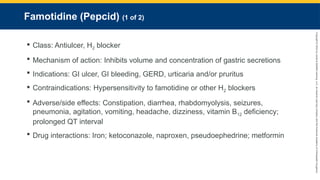
CC. Famotidine (Pepcid)
1. Class
a. Antiulcer, H2 blocker
2. Mechanism of action
a. Inhibits the volume and concentration of gastric secretions
3. Indications
a. GI ulcer
b. Suspected upper GI bleeding
c. GERD
d. As an adjunct in the treatment of urticaria and/or pruritus
4. Contraindications
a. Known hypersensitivity to famotidine or other H2 blockers
5. Adverse reactions/side effects
a. Constipation
b. Diarrhea
c. Rhabdomyolysis
d. Seizures
e. Pneumonia
f. Agitation
g. Vomiting
h. Headache
i. Dizziness
j. Vitamin B12 deficiency
k. Prolonged QT interval
l. Confusion, hallucinations, disorientation, agitation, and seizures in older adults
6. Drug interactions
a. Decreased absorption of iron
b. Decreased effects of ketoconazole, naproxen, pseudoephedrine
c. Increased action of metformin
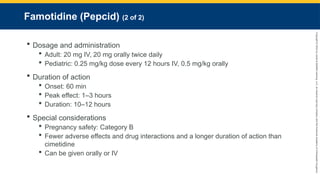
#63 Lecture Outline
7. Dosage and administration
a. Adult
i. 20 mg IV, 20 mg orally twice daily
b. Pediatric
i. 0.25 mg/kg/dose every 12 hours IV (20 mg/dose maximum)
ii. 0.5 mg/kg orally (40 mg/dose maximum)
8. Duration of action
a. Onset
i. 60 minutes
b. Peak effect
i. 1 to 3 hours
c. Duration
i. 10 to 12 hours
9. Special considerations
a. Pregnancy safety: Category B
b. Fewer adverse effects and drug interactions and a longer duration of action than cimetidine
c. Can be given orally or IV
#64 Lecture Outline
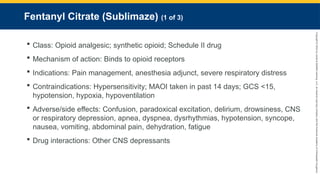
CC. Fentanyl Citrate (Sublimaze)
1. Class
a. Opioid analgesic
b. Synthetic opioid
c. Schedule II drug
2. Mechanism of action
a. Binds to opioid receptors
3. Indications
a. Pain management
b. Anesthesia adjunct
c. Severe respiratory distress (palliative care)
4. Contraindications
a. Known hypersensitivity
b. Patients who have taken an MAOI in the previous 14 days
c. Administer with caution to patients with a Glasgow Coma Scale (GCS) score less than 15.
d. Hypotension
e. Hypoxia after maximal supplemental oxygen therapy
f. Signs of hypoventilation
5. Adverse reactions/side effects
a. Confusion
b. Paradoxical excitation
c. Delirium
d. Drowsiness
e. CNS depression
f. Sedation
g. Respiratory depression
h. Apnea/dyspnea
i. Dysrhythmias
j. Hypotension
k. Syncope
l. Nausea/vomiting/abdominal pain
m. Dehydration/fatigue
6. Drug interactions
a. Increased respiratory depressant effects when paired with other CNS depressants
#65 Lecture Outline
7. Dosage and administration
a. Adult
i. Severe respiratory distress: 25 mcg mixed in 2 mL saline nebulized
ii. Moderate discomfort: 1 mcg/kg IM/IN
iii. Severe to excruciating discomfort: 1 mcg/kg IV/IO
iv. Maximum initial dose: 100 mcg; maximum total dose: 200 mcg
b. Pediatric
i. Moderate discomfort: 1 mcg/kg IM/IN
ii. Severe to excruciating discomfort: 1 mcg/kg IV/IO
iii. Maximum initial dose: 100 mcg; maximum total dose: 200 mcg
8. Duration of action
a. Onset
i. Immediate
b. Peak effect
i. 3 to 5 minutes
c. Duration
i. 30 to 60 minutes
#66 Lecture Outline
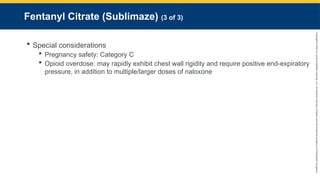
9. Special considerations
a. Pregnancy safety: Category C
b. Opioid overdose may lead to chest wall rigidity and require positive end-expiratory pressure with doses of naloxone.
c. Document pain severity on a scale of 0 to 10 before and after administration and on arrival.
#67 Lecture Outline
EE. Fibrinolytic Agents
1. Dissolve blood clots and restore blood flow.
2. Can be given with other agents to maintain vessel patency after the clot is dissolved
#68 Lecture Outline
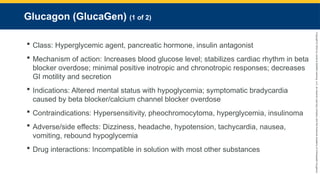
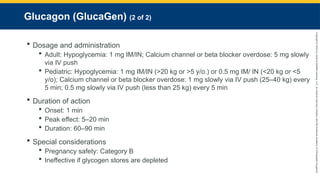
FF. Glucagon (GlucaGen)
1. Class
a. Hyperglycemic agent, pancreatic hormone, insulin antagonist
2. Mechanism of action
a. Increases blood glucose level
b. Unknown mechanism of stabilizing cardiac rhythm in beta blocker overdose
c. Minimal positive inotropic and chronotropic responses
d. Decreases GI motility and secretions
3. Indications
a. Altered mental status when hypoglycemia is suspected
b. Antidote for symptomatic bradycardia caused by beta blocker or calcium channel blocker overdoses
4. Contraindications
a. Known hypersensitivity, pheochromocytoma, hyperglycemia, insulinoma
5. Adverse reactions/side effects
a. Dizziness/headache
b. Hypotension
c. Tachycardia
d. Nausea/vomiting
e. Rebound hypoglycemia
6. Drug interactions
a. Incompatible in solution with most other substances
b. No significant drug interactions with other emergency medications
#69 Lecture Outline
7. Dosage and administration
a. Adult
i. Hypoglycemia: 1 mg IM/IN; repeat dose until symptoms have resolved.
ii. Calcium channel blocker or beta blocker overdose: 5 mg slowly via IV push; repeat in 5 to 10 minutes.
b. Pediatric
i. Hypoglycemia: 1 mg IM/IN (≥ 20 kg or 5 years) otherwise 0.5 mg
ii. Calcium channel blocker or beta blocker overdose: 1 mg (25 to 40 kg) or 0.5 mg (less than 25 kg) slowly via IV push every 5 minutes
8. Duration of action
a. Onset
i. 1 minute
b. Peak effect
i. 5 to 20 minutes
c. Duration
i. 60 to 90 minutes
9. Special considerations
a. Pregnancy safety: Category B
b. Ineffective if glycogen stores are depleted
c. Document reassessment of vital signs and mental status after administration.
#70 Lecture Outline
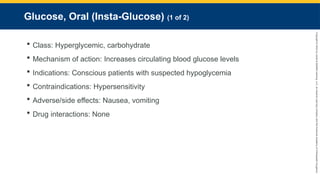
GG. Glucose, Oral (Insta-Glucose)
1. Class
a. Hyperglycemic, carbohydrate
2. Mechanism of action
a. Increases circulating blood glucose levels
3. Indications
a. Conscious patients with suspected hypoglycemia
4. Contraindications
a. Known hypersensitivity
b. Decreased level of consciousness
c. Nausea/vomiting
5. Adverse reactions/side effects
a. Nausea/vomiting
6. Drug interactions
a. None
#71 Lecture Outline
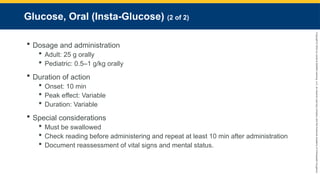
7. Dosage and administration
a. Adult
i. 25 g orally
b. Pediatric
i. 0.5 to 1 g/kg orally
ii. Maximum dose: 25 g
8. Duration of action
a. Onset
i. 10 minutes
b. Peak effect
i. Variable
c. Duration
i. Variable
9. Special considerations
a. Must be swallowed
b. Check a glucometer reading before administering and repeat 10 minutes after administration.
c. Document reassessment of vital signs and mental status after administration.
#72 Lecture Outline
HH. Glycoprotein IIb/IIIa Inhibitors
1. Block the bindings of fibrinogen to glycoprotein IIb/IIIa receptors, thereby inhibiting platelet aggregation
#73 Lecture Outline
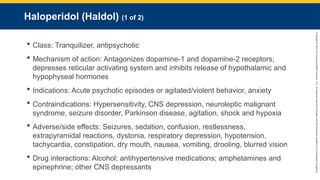
II. Haloperidol (Haldol)
1. Class
a. Tranquilizer
b. Antipsychotic
2. Mechanism of action
a. Antagonizes dopamine-1 and dopamine-2 receptors in the brain
b. Depresses the reticular activating system and inhibits release of hypothalamic and hypophyseal hormones
3. Indications
a. Acute psychotic episodes or agitated/violent behavior
b. Anxiety
4. Contraindications
a. Documented hypersensitivity
b. Severe CNS depression
c. Neuroleptic malignant syndrome
d. Poorly controlled seizure disorder
e. Parkinson disease
f. Agitation secondary to shock and hypoxia
5. Adverse reactions/side effects
a. Seizures
b. Sedation
c. Confusion
d. Restlessness
e. Extrapyramidal reactions
f Dystonia
g. Respiratory depression
h. Hypotension/orthostatic hypotension
i. Tachycardia
j. Constipation, dry mouth, nausea, vomiting, drooling, blurred vision
k. Risk of QT interval prolongation, TdP, and sudden death from off-label IV administration of higher than the recommended dose
6. Drug interactions
a. Enhanced CNS depression and hypotension in combination with alcohol
b. Additive effect with antihypertensive medications
c. Antagonizes amphetamines and epinephrine
d. Other CNS depressants may potentiate its effects.
#74 Lecture Outline
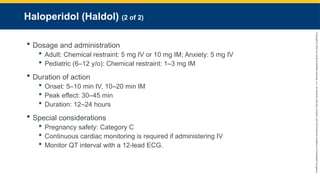
7. Dosage and administration
a. Adult
i. Chemical restraint: 5 mg IV or 10 mg IM
ii. Anxiety: 5 mg IV
b. Pediatric
i. Chemical restraint: Ages 6 to 12 years: 1 to 3 mg IM (0.15 mg/kg maximum)
8. Duration of action
a. Onset
i. 5 to 10 minutes IV
ii. 10 to 20 minutes IM
b. Peak effect
i. 30 to 45 minutes
c. Duration
i. Variable (generally 12 to 24 hours)
9. Special considerations
a. Pregnancy safety: Category C
b. Continuous cardiac monitory is required if administering IV.
c. Monitor the QT interval with a 12-lead ECG if feasible.
#75 Lecture Outline
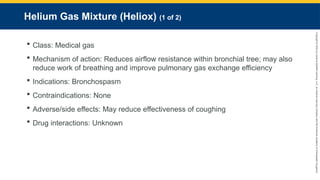
JJ. Helium Gas Mixture (Heliox)
1. Class
a. Medical gas
2. Mechanism of action
a. Reduces airflow resistance within the bronchial tree in patients with obstructive lung disease
b. May reduce the work of breathing and improve pulmonary gas exchange efficiency
3. Indications
a. Persistent or severe bronchospasm
4. Contraindications
a. None
5. Adverse reactions/side effects
a. May reduce the effectiveness of coughing
6. Drug interactions
a. Unknown
#76 Lecture Outline
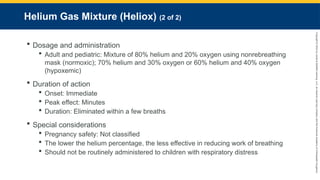
7. Dosage and administration
a. Adult and pediatric
i. Normoxic patients: 80% helium and 20% oxygen
ii. Hypoxemic patients: 70% helium and 30% oxygen or 60% helium and 40% oxygen
iii. Helium/oxygen mixture fills a reservoir bag attached to a nonrebreathing mask.
8. Duration of action
a. Onset
i. Immediate
b. Peak effect
i. Minutes
c. Duration
i. Eliminated within a few breaths
9. Special considerations
a. Pregnancy safety: Not classified
b. The lower the helium percentage, the less effective.
c. It should not be routinely administered to children with respiratory distress.
#77 Lecture Outline
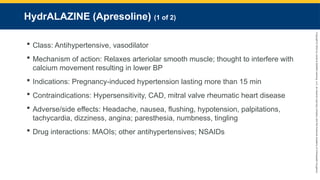
KK. HydrALAZINE (Apresoline)
1. Class
a. Antihypertensive, vasodilator
2. Mechanism of action
a. Relaxes arteriolar, but not venous, smooth muscle
b. Lowers BP
3. Indications
a. Pregnancy-induced hypertension lasting more than 15 minutes with associated preeclampsia symptoms
4. Contraindications
a. Known hypersensitivity, CAD, mitral valve rheumatic heart disease
b. Use with caution in patients with stroke, known renal disease, or hypotension.
5. Adverse reactions/side effects
a. Headache, nausea, flushing, hypotension, palpitations, tachycardia, dizziness, and angina
b. Paresthesia, numbness, and tingling
6. Drug interactions
a. MAOIs
b. Synergistic effects if given simultaneously with other antihypertensives
c. NSAIDs may diminish the antihypertensive effects.
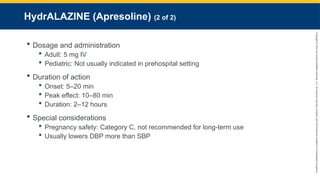
#78 Lecture Outline
7. Dosage and administration
a. Adult
i. 5 mg IV; may repeat 10 mg after 20 minutes
ii. Goal to reduce MAP by 20% to 25%
b. Pediatric
i. Not usually indicated in the prehospital setting
8. Duration of action
a. Onset
i. 5 to 20 minutes
b. Peak effect
i. 10 to 80 minutes
c. Duration
i. 2 to 12 hours
9. Special considerations
a. Pregnancy safety: Category C
b. Not recommended for long-term use during pregnancy
c. Usually lowers DBP more than SBP
#79 Lecture Outline
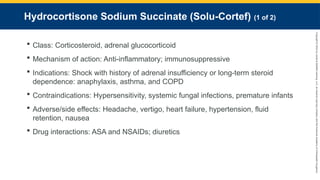
LL. Hydrocortisone Sodium Succinate (Solu-Cortef)
1. Class
a. Corticosteroid, adrenal glucocorticoid
2. Mechanism of action
a. Anti-inflammatory
b. Immunosuppressive with salt-retaining actions
3. Indications
a. Shock with history of adrenal insufficiency or long-term steroid dependence
i. Anaphylaxis, asthma, and COPD
4. Contraindications
a. Known hypersensitivity
b. Systemic fungal infections
c. Premature infants
5. Adverse reactions/side effects
a. Headache
b. Vertigo
c. Heart failure
d. Hypertension
e. Fluid retention
f. Nausea
6. Drug interactions
a. Simultaneous use with ASA and NSAIDs increases the risk of GI bleeding and ulceration.
b. Concurrent use with diuretics increases potassium loss and can result in hypokalemia.
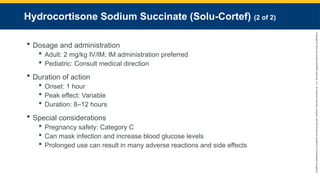
#80 Lecture Outline
7. Dosage and administration
a. Adult
i. 2 mg/kg IV/IM (100 mg maximum)
ii. IM administration preferred.
b. Pediatric
i. Consult medical direction
8. Duration of action
a. Onset
i. 1 hour
b. Peak effect
i. Variable
c. Duration
i. 8 to 12 hours
9. Special considerations
a. Pregnancy safety: Category C
b. Steroids can mask infection.
c. Can increase blood glucose levels
d. High doses of glucocorticoids or prolonged use can result in many adverse reactions and side effects.
e. Hydrocortisone succinate is preferred.
f. Patients with adrenal insufficiency may have an emergency dose of hydrocortisone.
#81 Lecture Outline
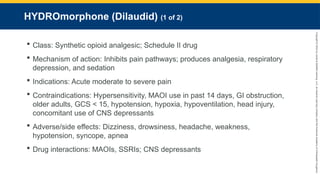
MM. HYDROmorphone (Dilaudid)
1. Class
a. Synthetic opioid analgesic
b. Schedule II drug
2. Mechanism of action
a. Opioid agonist-analgesic of opioid receptors
b. Inhibits ascending pain pathways
c. Increases the pain threshold
d. Produces analgesia, respiratory depression, and sedation
3. Indications
a. Management of acute moderate to severe pain
4. Contraindications
a. Known hypersensitivity
b. MAOI use during the previous 14 days
c. GI obstruction
d. Administer with caution in:
i. Older adults
ii. Patients with a GCS score less than 15
iii. Patients with hypotension, hypoxia, signs of hypoventilation, head injury, or concomitant use of CNS depressants
5. Adverse reactions/side effects
a. Dizziness/headache
b. Drowsiness/weakness
c. Hypotension
d. Syncope
e. Apnea
6. Drug interactions
a. MAOIs
b. SSRIs
c. Concurrent use with other CNS depressants can induce severe respiratory and/or CNS depression.
#82 Lecture Outline
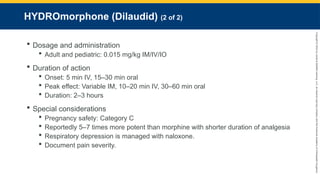
7. Dosage and administration
a. Adult and pediatric
i. 0.015 mg/kg IM, IV, or IO
ii. Maximum initial dose: 2 mg
iii. Maximum cumulative dose: 4 mg
8. Duration of action
a. Onset
i. Variable IM
ii. 5 minutes IV
iii. 15 to 30 minutes oral
b. Peak effect
i. Variable IM
ii. 10 to 20 minutes IV
iii. 30 to 60 minutes oral
c. Duration
i. 2 to 3 hours
9. Special considerations
a. Pregnancy safety: Category C
b. 5 to 7 times more potent than morphine, with a shorter duration of analgesia
c. Respiratory depression is managed with naloxone.
d. Document pain severity using a scare of 0 to 10 before and after administration and on arrival.
#83 Lecture Outline
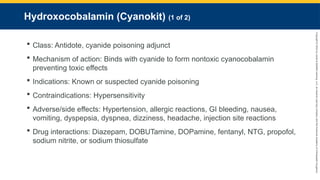
NN. Hydroxocobalamin (Cyanokit)
1. Class
a. Antidote, cyanide poisoning adjunct
2. Mechanism of action
a. A synthetic, injectable form of vitamin B12 (cobalamin) that binds with cyanide to form nontoxic cyanocobalamin
b. Excreted renally
3. Indications
a. Known or suspected cyanide poisoning
4. Contraindications
a. Documented hypersensitivity
5. Adverse reactions/side effects
a. Hypertension
b. Allergic reactions
c. GI bleeding
d. Nausea/vomiting
e. Dyspepsia
f. Dyspnea
g. Dizziness/headache
h. Injection site reactions
6. Drug interactions
a. Do not administer in the same IV line with diazepam, DOBUTamine, DOPamine, fentanyl, NTG, propofol, sodium nitrate, or sodium thiosulfate.
#84 Lecture Outline
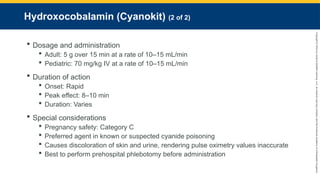
7. Dosage and administration
a. Each 5 g vial must be reconstituted with 200 mL of lactated Ringer solution, NS, or D5W.
b. Adult
i. Initial dose: 5 g administered over 15 minutes at a rate of 10 to 15 mL/min
ii. Maximum single dose: 5 g
c. Pediatric
i. 70 mg/kg IV at a rate of 10 to 15 mL/min
ii. Maximum single dose: 5 g
8. Duration of action
a. Onset
i. Rapid
b. Peak effect
i. 8 to 10 minutes
c. Duration
i. Varies
9. Special considerations
a. Pregnancy safety: Category C
b. Preferred agent in known or suspected cyanide poisoning
c. Reassess the patient’s airway, oxygenation, and hydration during administration.
d. Administration causes discoloration of the skin and urine, rendering pulse oximetry values inaccurate.
e. It is best to perform prehospital phlebotomy before administering this medication.
f. Replaces cyanide antidote kit.
#85 Lecture Outline
OO. Ibuprofen (Advil, Motrin)
1. Class
a. NSAID, nonopioid analgesic
2. Mechanism of action
a. Inhibits prostaglandin synthesis
b. Reduces swelling, pain, and fever
3. Indications
a. Acute pain management
b. Antipyretic
4. Contraindications
a. Known ASA/NSAID hypersensitivity
b. ASA-sensitive asthma
c. Significant renal function impairment
d. Pregnancy
e. Known peptic ulcer disease
f. Active intracranial hemorrhage or GI bleeding
g. Thrombocytopenia
h. Coagulation defects
i. Proven or suspected necrotizing enterocolitis
j. Perioperative pain in the setting of coronary artery bypass graft surgery
5. Adverse reactions/side effects
a. Headache, dizziness, drowsiness, fatigue, restless sleep
b. Thirst/sweating
c. Tingling or numbness in hands and feet
d. Tinnitus
e. Blurred vision and eye irritation
f. Fluid retention
g. Nausea/vomiting
h. Frequent urination
6. Drug interactions
a. Additive risk for bleeding if given in combination with other agents that affect hemostasis
b. Alfalfa, anise, and bilberry may enhance adverse effects.
c. May diminish the antihypertensive effect of HydrALAZINE
d. May diminish the diuretic effect of loop, thiazide, and thiazide-like diuretics
e. TCAs may enhance the NSAID antiplatelet effects.
f. May increase bleeding time in patients taking anticoagulants.
#86 Lecture Outline
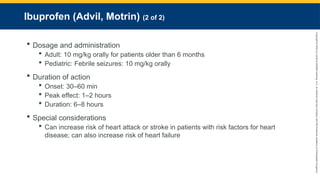
7. Dosage and administration
a. Adult
i. Give 10 mg/kg orally for patients older than 6 months.
ii. Maximum dose: 800 mg
b. Pediatric
i. Febrile seizures: 10 mg/kg orally, if able to swallow
ii. Maximum dose: 600 mg
8. Duration of action
a. Onset
i. 30 to 60 minutes
b. Peak effect
i. 1 to 2 hours
c. Duration
i. 6 to 8 hours
9. Special considerations
a. Increased risk of heart attack or stroke in patients with or without heart disease or risk factors for heart disease
b. Increased risk of heart failure
#87 Lecture Outline
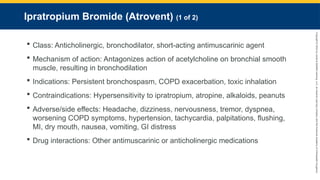
PP. Ipratropium Bromide (Atrovent)
1. Class
a. Anticholinergic, bronchodilator, short-acting antimuscarinic agent
2. Mechanism of action
a. Antagonizes the action of acetylcholine on bronchial smooth muscle
3. Indications
a. Persistent bronchospasm
b. COPD exacerbation
c. Toxic inhalation (in conjunction with albuterol)
4. Contraindications
a. Hypersensitivity to ipratropium, atropine, alkaloids, or peanuts
b. Use with caution in patients with urinary retention, narrow-angle glaucoma, cardiovascular disease, or hypertension.
5. Adverse reactions/side effects
a. Headache/dizziness
b. Nervousness
c. Tremor
d. Dyspnea
e. Worsening COPD symptoms
f. Hypertension
g. Tachycardia
h. Palpitations
i. Flushing
j. MI
k. Dry mouth, nausea, vomiting, GI distress
6. Drug interactions
a. Potential for additive anticholinergic effects when administered with other antimuscarinic or anticholinergic medications
#88 Lecture Outline
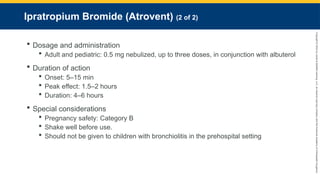
7. Dosage and administration
a. Adult and pediatric
i. 0.5 mg nebulized
ii. Up to three doses
iii. In conjunction with albuterol
8. Duration of action
a. Onset
i. 5 to 15 minutes
b. Peak effect
i. 1.5 to 2 hours
c. Duration
i. 4 to 6 hours
9. Special considerations
a. Pregnancy safety: Category B
b. Shake well before use.
c. It should not be given to children with bronchiolitis in the prehospital setting.
#89 Lecture Outline
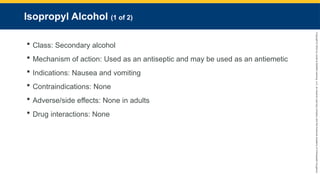
QQ. Isopropyl Alcohol
1. Class
a. Secondary alcohol
2. Mechanism of action
a. Antiseptic
b. Antiemetic
3. Indications
a. Nausea and vomiting
4. Contraindications
a. None
5. Adverse reactions/side effects
a. None in adults
6. Drug interactions
a. None
#90 Lecture Outline
7. Dosage and administration
a. Adult
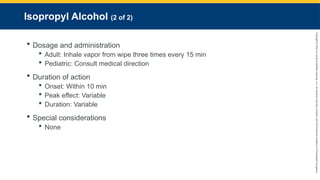
i. Allow the patient to inhale the vapor from an isopropyl alcohol wipe three times every 15 minutes as tolerated.
b. Pediatric
i. Consult medical direction regarding use in this patient population.
8. Duration of action
a. Onset
i. Within 10 minutes
b. Peak effect
i. Variable
c. Duration
i. Variable
9. Special considerations
a. None
#91 Lecture Outline
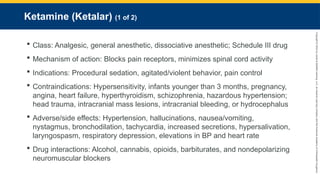
RR. Ketamine (Ketalar)
1. Class
a. Analgesic, general anesthetic, dissociative anesthetic
b. Schedule III drug
2. Mechanism of action
a. Blocks pain receptors and minimizes spinal cord activity
3. Indications
a. Procedural sedation
b. Management of agitated or violent behavior
c. Pain control
4. Contraindications
a. Known hypersensitivity
b. Infants younger than 3 months of age
c. Pregnancy
d. Angina
e. Heart failure
f. Symptomatic hyperthyroidism
g. Known or suspected schizophrenia
h. Conditions where hypertension would be hazardous to a patient’s care
i. Use with caution in any patient with the potential for increased ICP.
5. Adverse reactions/side effects
a. Hypertension
b. Hallucinations
c. Nausea/vomiting
d. Nystagmus
e. Bronchodilation
f. Tachycardia
g. Increased secretions
h. Hypersalivation
i. Laryngospasm
j. Respiratory depression
k. Mild to moderate elevations in BP and heart rate
6. Drug interactions
a. Ketamine may enhance the CNS depressant effects of alcohol, cannabis, opioids, barbiturates, and nondepolarizing neuromuscular blockers.
b. St. John’s wort can reduce its effectiveness.
#92 Lecture Outline
7. Dosage and administration
a. Adult
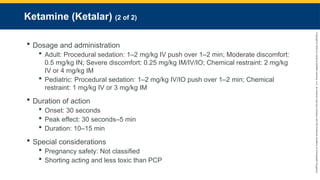
i. Procedural sedation: Give 1 to 2 mg/kg IV push over 1 to 2 minutes.
ii. Moderate pain control: 0.5 mg/kg IN (maximum initial dose: 55 mg; maximum total dose: 100 mg)
iii. Severe to excruciating pain control: 0.25 mg/kg IM/IV/IO (maximum initial dose: 25 mg; maximum total dose: 100 mg)
iv. Chemical restraint: 2 mg/kg IV or 4 mg/kg IM
b. Pediatric
i. Procedural sedation: 1 to 2 mg/kg IV/IO push over 1 to 2 minutes
ii. Chemical restraint: 1 mg/kg IV or 3 mg/kg IM
8. Duration of action
a. Onset
i. 30 seconds
b. Peak effect
i. 30 seconds to 5 minutes
c. Duration
i. 10 to 15 minutes
9. Special considerations
a. Pregnancy safety: Category N (not classified)
b. Dissociative anesthetic
c. Shorter acting and less toxic that PCP
d. Some patients may experience an emergence reaction after the full duration of the medication’s effect, which may last a few hours.
#93 Lecture Outline
SS. Ketorolac Tromethamine (Toradol)
1. Class
a. NSAID, nonopioid analgesic
2. Mechanism of action
a. Potent analgesic that inhibits prostaglandin synthesis
b. Does not have any sedative or anxiolytic properties
3. Indications
a. Acute management of moderate to severe pain
4. Contraindications
a. NSAID or ASA allergy
b. ASA-sensitive asthma
c. Renal insufficiency
d. Pregnancy
e. Known peptic ulcer disease
f. Hypotension
g. Women who are in active labor or breastfeeding
h. Significant renal impairment
i. Previous or current GI bleeding
j. Intracranial bleeding
k. Coagulation defects
l. Patients at high risk of bleeding
m. Use with caution in older patients due to a higher risk of renal and fatal GI adverse reactions.
5. Adverse reactions/side effects
a. Drowsiness
b. Dizziness/headache
c. Sedation
d. Bronchospasm
e. Dyspnea
f. Edema
g. Vasodilation
h. Hypotension/hypertension
i. GI bleeding
j. Diarrhea
k. Dyspepsia
l. Nausea
6. Drug interactions
a. May increase bleeding time in patients taking anticoagulants
b. TCAs may enhance the NSAID antiplatelet effects.
#94 Lecture Outline
7. Dosage and administration
a. Adult
i. Moderate discomfort: 30 mg IM in adults who are not pregnant
ii. Severe to excruciating discomfort: 15 mg IV in adults who are not pregnant
b. Geriatric
i. Moderate discomfort: 1 mg/kg IM (maximum dose: 30 mg)
c. Pediatric (2 to 16 years)
i. Moderate discomfort: 1 mg/kg IM (maximum dose: 30 mg)
ii. Severe to excruciating discomfort: 0.5 mg/kg IV (maximum dose: 15 mg)
iii. Febrile seizures: 1 mg/kg IV (maximum dose: 15 mg) if unable to swallow
8. Duration of action
a. Onset
i. 10 minutes
b. Peak effect
i. 1 to 2 hours
c. Duration
i. 2 to 6 hours
9. Special considerations
a. Pregnancy safety: Category C
b. Use caution if pain is possibly from a traumatic source.
c. Document pain severity using a scale of 0 to 10 before and after administration and on arrival at the receiving facility.
#95 Lecture Outline
TT. Levalbuterol (Xopenex)
1. Class
a. Sympathomimetic, bronchodilator, short-acting beta-2 adrenergic agonist
2. Mechanism of action
a. Stimulates beta-2 receptors
3. Indications
a. Treatment of acute bronchospasm in patients with reversible obstructive airway disease (COPD/asthma)
b. Bronchospasm prophylaxis in patients with asthma
4. Contraindications
a. Known hypersensitivity to the drug, other sympathomimetics, or peanuts
b. MAOI use within 14 days
c. Angioedema, tachydysrhythmias, and severe cardiac disease
d. Avoid administration with other drugs that prolong the QT interval.
e. Use with caution in patients with cardiac dysrhythmias and cardiovascular disorders.
5. Adverse reactions/side effects
a. Headache, anxiety, dizziness, restlessness
b. Hallucinations
c. Throat irritation
d. Tachycardia
e. Hypertension/hypotension
f. Dysrhythmias
g. Angina
h. Nausea/vomiting
i. Dyspepsia
j. Tremors
k. Hypokalemia
l. Hyperglycemia
6. Drug interactions
a. Increased actions of bronchodilators, TCAs, MAOIs, and other adrenergic drugs
b. Increased risk of QT prolongation when administered with other QT-prolonging drugs
#96 Lecture Outline
7. Dosage and administration
a. Adult
i. 1.25 mg in 3 mL NS administered by nebulizer over 5 to 15 minutes and repeated as necessary
b. Pediatric
i. 0.63 to 1.25 mg in 3 mL NS administered by nebulizer over 5 to 15 and repeated as necessary
8. Duration of action
a. Onset
i. 5 to 15 minutes
b. Peak effect
i. 60 to 90 minutes
c. Duration
i. 6 to 8 hours
9. Special considerations
a. Pregnancy safety: Category C
#97 Lecture Outline
UU. Lidocaine Hydrochloride (Xylocaine)
1. Class
a. Antidysrhythmic (Class Ib), anesthetic
2. Mechanism of action
a. Cardiac
i. Inhibits recovery after repolarization
ii. Decreases myocardial excitability and conduction velocity
b. Local anesthetic
c. May decrease ICP response during laryngoscopy
3. Indications
a. Alternative to amiodarone in patients with cardiac arrest from:
i. VT, VF
ii. Stable monomorphic VT
iii. Stable polymorphic VT with normal baseline QT interval when ischemia is treated with electrolyte balance is corrected
b. Can be used for stable polymorphic VT with baseline QT interval prolongation if TdP is suspected
c. Can be used as a local anesthetic for various procedures
4. Contraindications
a. Hypersensitivity to lidocaine or amide-type local anesthetics, second- or third-degree AV block
b. Prophylactic use in AMI is contraindicated.
5. Adverse reactions/side effects
a. Drowsiness
b. Confusion
c. Seizures
d. Slurred speech
e. Hypotension
f. Dysrhythmias
g. Cardiac arrest
h. Nausea/vomiting
6. Drug interactions
a. Apnea induced with succinylcholine may be prolonged by high doses of lidocaine.
b. Cardiac depression may occur in conjunction with administration of IV phenytoin.
c. Procainamide may exacerbate the CNS effects.
d. Metabolic clearance is decreased in patients with liver disease and patients taking beta blockers.
#98 Lecture Outline
7. Dosage and administration
a. Adult
i. Cardiac arrest: Initial does: 1 to 1.5 mg/kg IV/IO. Repeat dose: 0.5 to 0.75 mg/kg IV/IO repeated in 5 to 10 minutes. Maximum total dose: 3 mg/kg. Maintenance infusion: 1 to 4 mg/min
ii. Stable VT and stable regular wide-complex tachycardia: Initial does: 1 to 1.5 mg/kg IV/IO. Repeat dose: 0.5 to 0.75 mg/kg IV/IO repeated in 5 to 10 minutes. Maximum total dose: 3 mg/kg. Maintenance infusion: 1 to 4 mg/min
iii. Local anesthetic dose varies depending on the procedure and anatomic location.
b. Pediatric
i. IV/IO dose: 1 mg/kg IV/IO push
ii. Maintenance IV/IO infusion: 20 to 50 mcg/kg/mins. Repeat bolus dose if infusion started more than 15 minutes after initial bolus dose.
iii. ET dose: 2 to 3 mg/kg
iv. RSI: 1 to 2 mg/kg IV/IO
v. Local anesthetic dose varies depending on the procedure and anatomic location.
8. Duration of action
a. Onset
i. 1 to 5 minutes
b. Peak effect
i. 5 to 10 minutes
c. Duration
i. 10 to 20 minutes
9. Special considerations
a. Pregnancy safety: Category B
b. Reduce the maintenance infusion in the presence of impaired liver function or left ventricular dysfunction.
c. Discontinue the infusion immediately if signs of toxicity develop.
#99 Lecture Outline
VV. Lorazepam (Ativan)
1. Class
a. Benzodiazepine, sedative-hypnotic, anticonvulsant
b. Schedule IV drug
2. Mechanism of action
a. Anxiolytic, anticonvulsant, and sedative effect
b. Suppresses propagation of seizure activity produced by foci in the cortex, thalamus, and limbic areas
c. Inhibits GABA receptors in the CNS, reducing neuron excitability
3. Indications
a. Uncontrolled shivering associated with hyperthermia/heat exposure
b. Active seizures
c. Anxiety/sedation
d. Chemical restraint
4. Contraindications
a. Documented hypersensitivity
b. Neurologic or respiratory depression
c. Acute narrow-angle glaucoma
d. Sleep apnea
e. Shock
f. Suspected drug abuse
5. Adverse reactions/side effects
a. Dizziness
b. Drowsiness
c. CNS depression
d. Apnea
e. Hypotension
f. Bradycardia
6. Drug interactions
a. Concomitant use with other CNS depressants may cause respiratory depression, hypotension, profound sedation, and death.
b. Individuals taking passionflower or St. John’s wort may experience hand tremors, dizziness, and muscular fatigue.
c. Motherwort can potentiate the sedative effects and may result in coma.
#100 Lecture Outline
7. Dosage and administration
a. When given IV/IO, must be diluted with an equal volume of sterile water or sterile saline
b. Adult
i. Anxiety/sedation: 0.1 mg/kg IV slowly over 2 minutes (maximum single dose: 4 mg); 4 mg IM
ii. Shivering associated with hyperthermia/heat exposure: 1 mg IV/IO, may repeat once in 5 minutes; or 2 mg IM, may repeat once in 10 minutes
iii. Chemical restraint: 2 mg IV or 4 mg IM
c. Pediatric
i. Seizures: 0.1 mg/kg IV/IO slowly over 2 minutes (maximum single dose: 4 mg)
ii. Shivering associated with hypothermia/heat exposure: 0.1 mg/kg IV/IM/IO (maximum single dose: 1 mg)
Chemical restraint: 0.05 mg/kg IV (maximum dose: 2 mg) or 0.05 mg/kg IM (maximum dose: 4 mg)
8. Duration of action
a. Onset
i. 2 to 5 minutes IV
ii. 15 to 30 minutes IM
b. Peak effect
i. Less than 15 minutes IV
ii. 2 to 3 hours IM
c. Duration
i. 6 to 8 hours IV/IM
9. Special considerations
a. Pregnancy safety: Category D
b. Monitor respiratory rate and BP during administration.
c. Have advanced airway equipment readily available.
d. Consider decreasing the dose by 50% in patients older than 60 years.
#101 Lecture Outline
WW. Magnesium Sulfate
1. Class
a. Electrolyte, Class V antidysrhythmic
2. Mechanism of action
a. Depresses the CNS, blocks peripheral neuromuscular transmission, and produces anticonvulsant effects
b. Decreases the amount of acetylcholine released at the endplate by motor nerve impulses, slows the rate of SA node impulse formation in the myocardium, and prolongs conduction time
c. Promotes calcium, potassium, and sodium movement in and out of cells and stabilizes excitable membranes
d. Induces uterine relaxation
e. Can cause bronchodilation after beta agonists and anticholinergics have been administered
3. Indications
a. Management of TdP
b. Severe bronchoconstriction with impending respiratory failure
c. Seizure during the third trimester of pregnancy or in the postpartum patient
4. Contraindications
a. Known hypersensitivity, heart block, myocardial damage, diabetic coma, hypermagnesemia, hypercalcemia
b. Use with caution in patients with known renal insufficiency.
5. Adverse reactions/side effects
a. Drowsiness
b. CNS depression
c. Respiratory depression/tract paralysis
d. Vasodilation
e. Possible hypotension and bradycardia with rapid administration
f. Decreased deep tendon reflexes.
6. Drug interactions
a. May enhance the effects of other CNS depressants
b. Serious changes in overall cardiac function may occur with cardiac glycosides.
#102 Lecture Outline
7. Dosage and administration
a. Adult
i. Severe hypertension lasting more than 15 minutes with associated preeclampsia symptoms: Give 4 g of a 20% solution IV/IO over 20 minutes, followed by 1 g/h IV/IO, if available.
ii. Seizure activity associated with pregnancy greater than 20 weeks’ gestation: Give 4 g of a 50% solution IV/IO over 10 to 20 minutes, followed by 1 g/h IV/IO, if available.
iii. Cardiac arrest due to hypomagnesemia or TdP: Give 1 to 2 g IV/IO
iv. TdP with pulse or AMI with hypomagnesemia: Loading dose of 1 to 2 g in 50 to 100 mL of D5W or NS over 5 to 60 minutes IV. Follow with 0.5 to 1 g/h IV.
v. Status asthmaticus: 1 to 2 g IV over 15 to 30 minutes
vi. Severe bronchoconstriction/impending respiratory failure: 40 mg/kg IV over 10 to 15 minutes (2 g maximum)
b. Pediatric
i. Pulseless VT with TdP: 25 to 50 mg/kg IV/IO bolus of a 50% solution (2 g maximum)
ii. TdP with pulses or hypomagnesemia: 25 to 50 mg/kg IV/IO of a 50% solution over 10 to 20 minutes (2 g maximum)
iii. Status asthmaticus: 25 to 50 mg/kg IV/IO of a 50% solution over 15 to 30 minutes (2 g maximum)
8. Duration of action
a. Onset
i. Immediate
b. Peak effect
i. Variable
c. Duration
i. 30 minutes
9. Special considerations
a. Pregnancy safety: Category D
b. To treat magnesium toxicity:
i. Stop the infusion.
ii. Give calcium gluconate 1 g IV in cases of impending respiratory arrest.
iii. Support the patient’s ventilatory effort.
c. Do not abbreviate magnesium sulfate to avoid confusion with morphine sulfate.
#103 Lecture Outline
XX. Mannitol (Osmitrol)
1. Class
a. Osmotic diuretic
2. Mechanism of action
a. Promotes the movement of fluid from the intracellular space to the extracellular space
b. Decreases cerebral edema and ICP
c. Promotes urinary excretion of toxins
3. Indications
a. Reduction of ICP in managing neurologic emergencies
b. Promotes diuresis for excretion of toxic substances and metabolites
4. Contraindications
a. Known hypersensitivity, hypotension, pulmonary edema
b. Severe pulmonary congestion
c. Electrolyte abnormalities
d. Severe dehydration
e. Intracranial bleeding
f. Heart failure
g. Use with caution in patients with impaired renal function (fluid overload can result).
5. Adverse reactions/side effects
a. Headache, confusion, blurred vision
b. Tachycardia
c. Chest pain
d. Heart failure
e. Hypotension/hypertension
f. Hypokalemia/hyperkalemia
g. Hyponatremia/hypernatremia
h. Nausea/vomiting
i. Masking or worsening dehydration
j. Rebound increases in ICE.
k. Injection site reaction
6. Drug interactions
a. Many
b. May precipitate digitalism toxicity when given concurrently
c. Avoid use of other diuretics in combination, if possible.
d. Concomitant administration may potentiate renal toxicity.
e. Avoid use with salicylates and NSAIDs.
f. Use with nitrates can cause hypotension.
#104 Lecture Outline
7. Dosage and administration
a. Adult
i. Give 0.5 to 1 g/kg IV infusion over 5 to 10 minutes through an in-line filter.
ii. Additional doses of 0.25 to 2 g/kg can be given every 4 to 6 hours as needed.
b. Pediatric
i. Consult medical direction.
8. Duration of action
a. Onset
i. 1 to 3 hours for diuretic effect
ii. 15 minutes for reduction of ICP
b. Peak effect
i. Variable
c. Duration
i. 4 to 6 hours for diuretic effect
ii. 3 to 8 hours for reduction of ICP
9. Special considerations
a. Pregnancy safety: Category C
b. May crystallize at low temperatures
c. Usage and dosages in emergency care are controversial.
d. Be sure to have ventilatory support available.
#105 Lecture Outline
YY. Meperidine Hydrochloride (Demerol)
1. Class
a. Opioid analgesic
b. Synthetic opioid
c. Schedule II drug
2. Mechanism of action
a. Synthetic opioid analgesic
b. Primarily acts as an analgesic and a sedative
3. Indications
a. Analgesia for moderate to severe pain
4. Contraindications
a. Known hypersensitivity
b. Diarrhea caused by poisoning
c. Patients who have taken an MAOI during the previous 14 days
d. During labor or delivery for a premature infant.
e. Administer with caution to patients with:
i. A GCS score less than 15
ii. Hypotension
iii. Hypoxia after maximal supplemental oxygen therapy
iv. Signs of hypoventilation
f. Decrease the dose for patients with hepatic or renal insufficiency.
5. Adverse reactions/side effects
a. Seizures
b. Confusion
c. Sedation
d. Headache
e. Hallucinations
f. Increased ICP
g. Respiratory depression
h. Apnea
i. Hypotension/orthostatic hypotension
j. Syncope
k. Dysrhythmias
l. Nausea/vomiting
m. Constipation
n. Sweating
6. Drug interactions
a. Additive CNS depression with TCAs, alcohol, or other CNS depressants
#106 Lecture Outline
7. Dosage and administration
a. Adult
i. 50 to 100 mg IM
ii. 25 to 50 mg slowly IV/IO
b. Pediatric
i. Not recommended
8. Duration of action
a. Onset
i. 10 to 15 minutes IM
ii. Within 1 minute IV
b. Peak effect
i. Within 60 minutes IM
ii. 5 to 7 minutes IV
c. Duration
i. 2 to 4 hours IV
9. Special considerations
a. Pregnancy safety: Category C
b. Use with caution in patients with asthma and COPD.
c. May aggravate seizures in patients with known convulsive disorders
d. Has a shorter duration of action than morphine
e. Effects are reversible with naloxone.
f. Document pain severity using a scale of 0 to 10 before and after administration and on arrival.
#107 Lecture Outline
ZZ. MethyIPREDNISolone Sodium Succinate (Solu-Medrol)
1. Class
a. Corticosteroid, synthetic glucocorticoid, anti-inflammatory agent
2. Mechanism of action
a. Highly potent synthetic glucocorticoid that suppresses acute and chronic inflammation
b. Potentiates vascular smooth muscle relaxation by beta adrenergic agonists
c. Has few to no mineralocorticoid properties
3. Indications
a. Allergic reaction
b. Anaphylaxis
c. Acute bronchospastic disease management
d. Shock with a history of adrenal insufficiency or long-term steroid dependence
4. Contraindications
a. Known hypersensitivity
b. Serious untreated infections
c. Premature infants
d. Use with caution in patients with:
i. GI bleeding
ii. Heart failure
iii. Hypertension
iv. Recent AMI
v. Renal disease
vi. Seizure disorder
vii. Cushing disease
5. Adverse reactions/side effects
a. Depression
b. Euphoria
c. Headache
d. Restlessness
e. Seizure
f. Nausea/vomiting
g. Peptic ulcer
h. Fluid retention
i. Hypernatremia
j. Hyperkalemia
6. Drug interactions
a. Hypoglycemic responses to insulin and hypoglycemic agents may be blunted.
#108 Lecture Outline
7. Dosage and administration
a. Adult
i. Bronchospasm: 2 mg/kg IV/IO/IM (maximum dose: 125 mg)
ii. Shock with history of adrenal insufficiency or long-term steroid dependence: 2 mg/kg IV (maximum dose: 125 mg)
b. Pediatric
i. For status asthmaticus, anaphylaxis: 2 mg/kg IV/IO/IM loading dose (maximum dose: 60 mg)
ii. Maintenance dose: 0.5 mg/kg IV every 6 hours or 1 mg/kg IV every 12 hours up to 120 mg/day
8. Duration of action
a. Onset
i. 1 to 2 hours
b. Peak effect
i. Variable
c. Duration
i. 8 to 24 hours
9. Special considerations
a. Pregnancy safety: Category C
b. Steroids can mask infection.
c. Can increase blood glucose levels
d. Hydrocortisone succinate is preferred.
e. High doses or prolonged use can result in many adverse reactions and side effects.
#109 Lecture Outline
AAA. Metoclopramide (Reglan)
1. Class
a. Antiemetic, direct-acting cholinergic agonist, prokinetic agent
2. Mechanism of action
a. Blocks dopamine and serotonin receptors in the chemoreceptor trigger zones of the CNS
b. Sensitizes tissues to acetylcholine
c. Increases upper GO motility but not secretions
d. Increases lower esophageal sphincter tone
3. Indications
a. Nausea/vomiting
4. Contraindications
a. Known hypersensitivity to metoclopramide or procainamide
b. GI hemorrhage, mechanical obstruction, or perforation
c. History of seizures, tardive dyskinesia, or a dystonic reaction
d. Pheochromocytoma
e. Parkinson disease
f. Administration with other drugs that can cause extrapyramidal symptoms
5. Adverse reactions/side effects
a. Nausea/vomiting
b. Headache
c. Fatigue
d. Rash
e. Dystonic reaction
f. Confusion
g. AV block
h. Bradycardia
i. Hallucinations
j. Laryngospasm
6. Drug interactions
a. Increased sedation risk when used with CNS depressants, antihistamines, anticholinergics, MAOIs
b. May decrease the effects of dopamine agonists
c. Can increase the rate or extent of ASA absorption because of accelerated gastric emptying
#110 Lecture Outline
7. Dosage and administration
a. Adult
i. 10 mg IV/IM
b. Pediatric
i. Older than age 2 and weight greater than 12 kg: 0.1 mg/kg IM or 0.1 mg/kg
ii. May repeat once in 20 to 30 minutes if no relief
iii. Maximum 10 mg/dose IV
8. Duration of action
a. Onset
i. 1 to 3 minutes (IV), 30 to 60 minutes
b. Peak effect
i. Immediate (IV)
c. Duration
i. 1 to 2 hours
9. Special considerations
a. Pregnancy safety: Category B
b. Geriatric patients should receive the lowest dose that is effective.
i. They are at a greater risk for adverse effects.
#111 Lecture Outline
BBB. Midazolam Hydrochloride (Versed)
1. Class
a. Benzodiazepine, anticonvulsant, antianxiety agent, anxiolytic, sedative-hypnotic
b. Schedule IV drug
2. Mechanism of action
a. Inhibits GABA receptors in the CNS
b. Causes sedative, anxiolytic, amnesic, and hypnotic effects
3. Indications
a. Uncontrolled shivering associated with hyperthermia/heat exposure
b. Active seizures
c. Chemical restraint
d. Severe respiratory distress
e. Sedation for medical procedures
f. Poisoning/overdose care
4. Contraindications
a. Documented hypersensitivity
b. Neurologic or respiratory depression
c. Acute narrow-angle glaucoma
d. Sleep apnea
e. Shock
f. Alcohol intoxication
g. Overdose
h. Depressed vital signs
i. Concomitant use with barbiturates, alcohol, opioids, or other CNS depressants
5. Adverse reactions/side effects
a. Headache
b. Somnolence
c. Respiratory depression/arrest
d. Hypotension
e. Cardiac arrest
f. Nausea/vomiting
g. Pain at the injection site
6. Drug interactions
a. Concomitant use with other CNS depressant may cause respiratory depression, hypotension, profound sedation, and death.
b. Motherwort can potentiate midazolam’s sedative effects and may result in coma.
c. St. John’s wort and green tea can reduce its effectiveness.
d. Mango and grapefruit juice may potentiate its effects.
#112 Lecture Outline
7. Dosage and administration
a. Adult
i. Shivering associated with hyperthermia/heat exposure: 2.5 mg IV/IN/IO, may repeat once in 5 minutes; or 5 mg IM, may repeat once in 10 minutes
ii. Seizures: If vascular access is available, 0.1 mg/kg IV/IO slowly over 2 minutes (maximum single dose: 4 mg); if access is not available, 0.2 mg/kg (maximum: 10 mg) IM or IN
iii. Chemical restraint: 5 mg IV, IM, or IN
iv. Severe respiratory distress: 2 to 5 mg IV
v. Procedural sedation: 0.1 to 0.3 mg/kg IV (maximum single dose: 10 mg)
vi. Poisoning/overdose care: 0.1 mg/kg in 2-mg increments via slow IV push over 1 to 2 minutes (maximum single dose: 5 mg)
b. Pediatric
i. Shivering associated with hyperthermia/heat exposure: 0.1 mg/kg IV/IO or 0.2 mg/kg IN/IM (maximum single dose: 1 mg). A 5 mg/mL concentration is recommended for IN/IM administration.
ii. Seizures: If vascular access is available, 0.1 mg/kg IV/IO slowly over 2 minutes (maximum single dose: 4 mg); if access is not available, 0.2 mg/kg (maximum: 10 mg) IM or IN
iii. Chemical restraint: 0.05 to 0.1 mg/kg IV, or 0.1 to 0.15 mg/kg IM, or 0.3 mg/kg IN (maximum dose: 5 mg)
vi. Poisoning/overdose care: 0.1 mg/kg in 2-mg increments via slow IV push over 1 to 2 minutes (maximum single dose: 5 mg) or 0.2 mg/kg IN (maximum single dose: 4 mg)
#113 Lecture Outline
8. Duration of action
a. Onset
i. Immediate IV/IN
ii. 15 minute IM
b. Peak effect
i. 3 to 5 minutes IV/IN
ii. 30 to 60 minutes IM
c. Duration
i. Less than 2 hours IV/IN
ii. 1 to 6 hours IM
9. Special considerations
a. Pregnancy safety: Category D
b. Requires careful monitoring of respiratory and cardiac function
c. Reduce the dose by 50% in patients older than 60 years.
#114 Lecture Outline
CCC. Milrinone (Primacor)
1. Class
a. Inotrope
2. Mechanism of action
a. Increases myocardial contractility
b. Has a direct dilating effect on vascular smooth muscle
c. Does not possess beta adrenergic properties
3. Indications
a. Heart failure in postoperative cardiovascular surgical patients
b. Shock with high systemic vascular resistance
4. Contraindications
a. Known hypersensitivity
b. Reduce the dose in patients with renal dysfunction
5. Adverse reactions/side effects
a. Headache
b. Nausea/vomiting
c. Hypotension
d. Hypokalemia
e. Bronchospasm
f. SVT
g. Ventricular dysrhythmias
6. Drug interactions
a. Synergistic with catecholamines
#115 Lecture Outline
7. Dosage and administration
a. Consult medical direction or follow the dosing ordered by the sending physician.
8. Duration of action
a. Onset
i. 5 to 15 minutes
b. Peak effect
i. Unknown
c. Duration
i. 3 to 6 hours
9. Special considerations
a. Pregnancy safety: Category C
b. Hemodynamic monitoring is required.
c. Closely monitor BP and heart rate.
#116 Lecture Outline
DDD. Morphine Sulfate (Roxanol, MS Contin)
1. Class
a. Opioid analgesic
b. Schedule II drug
2. Mechanism of action
a. Alleviates pain through CNS action
b. Suppresses the fear and anxiety centers in the brain
c. Depresses brainstorm respiratory centers
d. Increases peripheral venous capacitance and decreases venous return
e. Decreases preload and afterload, which decreases myocardial oxygen demand
3. Indications
a. Management of acute pain
4. Contraindications
a. Known hypersensitivity
b. Patients who have taken an MAOI during the previous 14 days
c. Paralytic ileus
d. Toxin-mediated diarrhea
e. Heart failure due to chronic lung disease
f. Head injuries
g. Brain tumors
h. Delirium tremens
i. Seizure disorders
j. During labor when premature birth is anticipated
k. Acute or severe bronchial asthma
l. Upper airway obstruction
m. Administer with caution to patients with:
i. A GCS score less than 15
ii. Hypotension
iii. Hypoxia after maximal supplemental oxygen therapy
iv. Signs of hypoventilation
5. Adverse reactions/side effects
a. Confusion
b. Sedation
c. Headache
d. CNS depression
e. Respiratory depression
f. Apnea
g. Bronchospasm
h. Dyspnea
i. Hypotension/orthostatic hypotension
j. Syncope
k. Bradycardia
l. Tachycardia
m. Nausea/vomiting
n. Dry mouth
6. Drug interactions
a. Additive effects with other CNS depressants
b. MAOIs may cause paradoxical excitation.
#117 Lecture Outline
7. Dosage and administration
a. Adult
i. Moderate discomfort: 0.1 mg/kg IM (maximum dose: 15 mg)
ii. Severe to excruciating discomfort: 0.1 mg/kg slow IV/IO (maximum dose: 10 mg)
iii. STEMI: Initial dose: 2 to 4 mg slow IV (over 1 to 5 minutes) Repeat dose: 2 to 8 mg at 5- to 15-minute intervals
iv. NSTEMI/unstable angina: 1 to 5 mg slow IV push only if symptoms are not relieved by nitrates, provided additional therapy is used to manage the underlying ischemia.
b. Pediatric
i. 0.1 to 0.2 mg/kg per dose IV/IO/IM (maximum dose: 5 mg)
8. Duration of action
a. Onset
i. Immediate
b. Peak effect
i. 20 minutes
c. Duration
i. 2 to 4 hours
9. Special considerations
a. Pregnancy safety: Category C
b. Safety in neonates has not been established.
c. Use with caution in older patients, those with asthma, and those susceptible to CNS depression.
d. The effects are reversible with naloxone.
e. Document pain severity using a scale of 0 to 10 before and after administration and on arrival.
f. Do not abbreviate to avoid confusion with magnesium sulfate.
#118 Lecture Outline
EEE. Naloxone Hydrochloride (Narcan, EVZIO)
1. Class
a. Opioid antagonist, opioid reversal agent, antidote
2. Mechanism of action
a. Competitive inhibition at opioid receptor sites; reverses respiratory depression and sedation secondary to opioids
3. Indications
a. Complete or partial reversal of CNS and respiratory depression induced by opioids or synthetic opioids
4. Contraindications
a. Known hypersensitivity or allergy
b. Use with caution in opioid-dependent patients
c. Use with caution in neonates of opioid-addicted mothers
5. Adverse reactions/side effects
a. Restlessness
b. Seizures
c. Dyspnea
d. Pulmonary edema
e. Hypertension/hypotension with rapid administration
f. Dysrhythmias
g. Diaphoresis
h. Nausea/vomiting
i. Withdrawal symptoms in opioid-addicted patients
6. Drug interactions
a. Incompatible with bisulfite and alkaline solutions
#119 Lecture Outline
7. Dosage and administration
a. Adult
i. Initial dose 0.4 to 2 mg IV/IO/IM/ET tube or up to a dose of 4 mg IN
b. Pediatric
i. Initial dose 0.1 mg/kg IV/IO/IM/IN/ET tube
ii. Maximum dose: 2 mg IV/IM/ET tube or 4 mg IN
8. Duration of action
a. Onset
i. Less than 2 minutes, IV
ii. 2 to 10 minutes IM/IN
b. Peak effect
i. Less than 2 minutes, IV
ii. 2 to 10 minutes IM/IN
c. Duration
i. 20 to 120 minutes, IV/IM/IN
9. Special considerations
a. Pregnancy safety: Category C
b. Repeat dosing may be required.
c. It is generally not beneficial in patients with cardiac arrest.
d. Provide ongoing airway support as needed until the patient has adequate respiratory effort.
e. Administration can be titrated until adequate respiratory effort is achieved if given with a syringe IV, IM, IN, or ET tube.
i. When administered IN, divide doses equally to give a maximum of 1 mL per nostril.
f. Administration can result in onset opioid withdrawal.
g. Very high doses may be required when managing novel opioid overdoses.
h. If administered to the patient before EMS arrival, obtain information on the dose and route through which it was administered and bring the devices with the patient.
#120 Lecture Outline
FFF. NIFEdipine (Procardia, Adalat, Nifedical)
1. Class
a. Calcium channel blocker
2. Mechanism of action
a. Inhibits movement of calcium ions across cell membranes
b. Inhibits cardiac and vascular smooth muscle contraction
c. Does not prolong AV nodal conduction
3. Indications
a. HAPE prevention and treatment
b. Pregnancy-induced hypertension lasting more than 15 minutes with associated preeclampsia symptoms
4. Contraindications
a. Known hypersensitivity to calcium channel blockers
b. Cardiogenic shock
c. Immediate-release preparation for urgent or emergent hypertension
5. Adverse reactions/side effects
a. Headache/dizziness
b. Nervousness
c. Weakness
d. Mood changes
e. Dyspnea
f. Cough/wheezing
g. Heart failure
h. MI
i. Ventricular dysrhythmias
j. Hypotension
k. Syncope
l. Nausea, abdominal discomfort, diarrhea
6. Drug interactions
a. Beta blockers may potentiate NIFEdipine’s effects.
b. Effects of theophylline may be increased.
c. Antihypertensives may potentiate the hypotensive effects.
#121 Lecture Outline
7. Dosage and administration
a. Adult
i. HAPE prevention and treatment: 30 mg of the extended-release preparation orally every 12 hours or 20 mg of the extended-release preparation orally every 8 hours
ii. Pregnancy-induced hypertension: 10 mg orally and may repeat 10 to 20 mg orally every 20 minutes, twice, for persistent, severe hypertension with preeclampsia symptoms. Goal is to reduce MAP by 20% to 25%.
b. Pediatric
i. Data are unavailable.
8. Duration of action
a. Onset
i. 15 to 30 minutes
b. Peak effect
i. 1 to 3 hours
c. Duration
i. 6 to 8 hours
9. Special considerations
a. Pregnancy safety: Category C
b. Can be used for HAPE treatment when descent is impossible or delayed and reliable access to supplemental oxygen or portable hyperbaric therapy is unavailable
c. Hypotension is less common when the extended-release preparation is used but may develop when the medication is given to patients with intravascular volume depletion.
d. Reassess vital signs every 10 minutes during transport.
#122 Lecture Outline
GGG. Nitroglycerin (Nitrostat, Nitrolingual Pumpspray, NitroQuick, Nitro-Bid, Tridil)
1. Class
a. Vasodilator, nitrate, antianginal
2. Mechanism of action
a. Smooth muscle relaxant
b. Dilated peripheral arterioles and veins
c. Reduces peripheral vascular resistance, preload, and afterload, decreasing the heart’s workload and myocardial oxygen demand
3. Indications
a. Ischemic-type chest pain
b. Acute and symptomatic hypertension
c. Heart failure
d. Pulmonary edema
4. Contraindications
a. Known hypersensitivity
b. Hypotension
c. Hypovolemia
d. Intracranial bleeding or head injury
e. Pericardial tamponade
f. Severe bradycardia or tachycardia
g. RV infarction
h. Previous administration of sildenafil or vardenafil within 24 hours or tadalafil within 48 hours
i. Use with caution in patients with:
i. Hepatic disease
ii. Anemia
iii. Diabetes mellitus
iv. Pregnancy
v. Breastfeeding
5. Adverse reactions/side effects
a. Headache
b. Dizziness
c. Weakness
d. Reflex tachycardia
e. Syncope
f. Hypotension
g. Nausea/vomiting
h. Dry mouth
i. Muscle twitching
j. Diaphoresis
6. Drug interactions
a. Increased hypotensive effect with alcohol, beta blockers, calcium channel blockers, antihypertensives, benzodiazepines, phenothiazines, and other vasodilators
b. Incompatible with other drugs given IV
c. Hawthorn increases NTG levels.
#123 Lecture Outline
7. Dosage and administration
a. Adult
i. SL: 0.3 to 0.4 mg; may repeat in 3 to 5 minutes to a maximum of 3 doses
ii. Spray: 1 or 2 sprays; may repeat in 3 to 5 minutes to a maximum of 3 doses
iii. NTG IV: 12.5 to 25 mcg bolus (if no SL or spray is given), then begin 10 mcg/min infusion, increase by 10 mcg/min every 3 to 5 minutes until symptom response or desired effect (maximum dose: 200 mcg/min)
b. Pediatric
i. Not recommended
8. Duration of action
a. Onset
i. 1 to 3 minutes
b. Peak effect
i. 5 to 10 minutes
c. Duration
i. 20 to 30 minutes SL
ii. 1 to 10 minutes after discontinuation of IV infusion
9. Special considerations
a. Pregnancy safety: Category C
b. Hypotension is more common in older patients.
c. If a 12-lead ECG shows an inferior wall infarct, rule out RV infarction via right-side 12-lead ECG before administering NTG.
d. It must be kept in an airtight container.
e. IV NTG must be administered only with an infusion pump direct from the bottle with a vented IV set and non-polyvinyl chloride tubing.
f. The active ingredient may have stinging effect when administered.
#124 Lecture Outline
HHH. Nitroprusside (Nitropress)
1. Class
a. Antihypertensive, vasodilator
2. Mechanism of action
a. Arterial and venous vasodilator that reduces afterload
b. Decreases BP and increases cardiac output
3. Indications
a. Heart failure
b. Acute and symptomatic hypertension
4. Contraindications
a. Known hypersensitivity
b. Hypotension
c. Decreased cerebral perfusion
d. Heart failure with reduced peripheral vascular resistance
5. Adverse reactions/side effects
a. Confusion
b. Restlessness
c. Flushing
d. Dizziness
e. Headache
f. Palpitations
g. Dysrhythmias
h. Hypotension
i. Methemoglobinemia
j. Cerebrovasodilation leading to increased ICP
6. Drug interactions
a. Additive effects with ganglionic blocking agents
b. General anesthetics
c. Other antihypertensives
d. Sympathomimetics
#125 Lecture Outline
7. Dosage and administration
a. Consult medical direction or follow the dosing ordered by the sending physician.
8. Duration of action
a. Onset
i. Immediate
b. Peak effect
i. Rapid
c. Duration
i. 1 to 10 minutes
9. Special considerations
a. Pregnancy safety: Category C
b. Light sensitive
c. Keep the drug reservoir and tube covered with an opaque material.
d. Can cause cyanide toxicity
#126 Lecture Outline
III. Nitrous Oxide 50:50 (Nitronox)
1. Class
a. Gaseous analgesic and anesthetic
2. Mechanism of action
a. Exact mechanism is unknown.
3. Indications
a. Analgesia in the patient who can self-administer this medication
4. Contraindications
a. Known hypersensitivity
b. Impaired level of consciousness
c. Head injury
d. Inability to follow or comply with instructions
e. Decompression illness
f. Significant respiratory compromise
g. Suspected abnormal air-filled cavities
h. Maxillofacial trauma or facial burns.
i. Relative contraindications include: stroke history, hypotension, pregnancy, known cardiac conditions, and known vitamin B12 deficiency.
5. Adverse reactions/side effects
a. Light-headedness
b. Headache
c. Dizziness
d. Confusion
e. Nausea/vomiting
f. Hallucination
6. Drug interactions
a. Can potentiate the effects of CNS depressants
#127 Lecture Outline
7. Dosage and administration
a. Adult
i. Self-administered
ii. Assess the patient’s ability to self-administer after the initial dose.
b. Pediatric
i. Same as adult
8. Duration of action
a. Onset
i. 2 to 5 minutes
b. Peak effect
i. 2 to 5 minutes
c. Duration
i. 2 to 5 minutes
9. Special considerations
a. Pregnancy safety: Category C
b. Some EMS agencies prohibit use inside ambulances because of the risk of rescuer exposure.
c. It is nonflammable and nonexplosive.
d. It is ineffective in 20% of the population.
e. Document pain severity using a scale of 0 to 10 before and after administration and on arrival at the receiving facility.
#128 Lecture Outline
JJJ. Norepinephrine Bitartrate (Levophed, Levarterenol)
1. Class
a. Sympathomimetic, vasopressor
2. Mechanism of action
a. Produces constriction of resistance and capacitance vessels
b. Increases systemic BP and coronary artery blood flow
c. Acts on beta-1 receptors
d. In lower doses, the cardiac-stimulant effect predominates
e. In larger doses, the vasoconstrictor effect predominates
3. Indications
a. First-line vasopressor in neurogenic shock
b. Hypotension unresponsive to IV/IO fluid resuscitation
4. Contraindications
a. Known hypersensitivity
b. Hypotension caused by hypovolemia
c. Pregnancy (relative)
5. Adverse reactions/side effects
a. Headache
b. Anxiety, dizziness, restlessness, dyspnea
c. Hypertension, dysrhythmias, chest pain, peripheral cyanosis, cardiac arrest
d. Nausea/vomiting
e. Urinary retention, renal failure
f. Tissues necrosis from extravasation
g. Decreased blood flow to the GI tract, kidneys, skeletal muscle, and skin
6. Drug interactions
a. TCAs can markedly increase response to pressors.
b. Concomitant use of sympathomimetics may result in additive cardiovascular effects.
c. Alpha adrenergic effects can be blocked during concurrent administration of phenothiazines.
d. Inactivated by alkaline solutions
#129 Lecture Outline
7. Dosage and administration
a. Adult
i. 0.1 to 0.5 mcg/kg/min IV/IO infusion titrated to effect
b. Pediatric
i. Begin at 0.05 to 0.1 mcg/kg/min IV infusion.
ii. Adjust rate to achieve desired change in BP and systemic perfusion.
iii. Maximum infusion rate: 2 mcg/kg/min
8. Duration of action
a. Onset
i. Immediate
b. Peak effect
i. Less than 1 minute
c. Duration
i. 1 to 2 minutes
9. Special considerations
a. Pregnancy safety: Category C
b. Correct hypovolemia before administering.
c. Use an infusion pump and administer through a large, stable vein to avoid extravasation and tissue necrosis.
d. Close monitoring of the IV/IO site and vital signs is essential.
e. Drug or poison-induced hypotension may require higher doses to achieve adequate perfusion.
f. Lower mortality rate for patients in cardiogenic or septic shock than those treated with DOPamine.
#130 Lecture Outline
KKK. Octreotide (Sandostatin)
1. Class
a. Synthetic hormone, antidiarrheal
2. Mechanism of action
a. Decreases visceral blood flow
b. Inhibits the release of serotonin, gastrin, vasoactive intestinal peptide, secretin, motilin, and pancreatic polypeptide
3. Indications
a. Treatment of active GI bleeding during transport
4. Contraindications
a. Known hypersensitivity
5. Adverse reactions/side effects
a. Nausea/vomiting
b. Bloating
c. Dizziness
d. Headache
e. Dysrhythmias
f. Pain and irritation at the injection site
6. Drug interactions
a. Decreases cycloSPORINE levels
#131 Lecture Outline
7. Dosage and administration
a. Consult medical direction or follow the dosing ordered by the sending physician.
8. Duration of action
a. Onset
i. 30 minutes
b. Peak effect
i. 30 minutes
c. Duration
i. Up to 12 hours
9. Special considerations
a. Pregnancy safety: Category B
#132 Lecture Outline
LLL. Olanzapine (Zyprexa)
1. Class
a. Second-generation antipsychotic, antimanic agent
2. Mechanism of action
a. Exact mechanism has not been determined.
b. May act through a combination of dopamine and serotonin type 2 receptor site antagonism
3. Indications
a. Agitated or violent patients experiencing a behavioral emergency
b. Chemical restraint
4. Contraindications
a. Documented hypersensitivity
b. Use with caution in patients who:
i. Have dehydration or heat exposure
ii. Are taking medications with anticholinergic effects
c. Impaired core body temperature regulation may occur.
d. Use with caution in patients with a history of seizures or urinary retention.
5. Adverse reactions/side effects
a. Drowsiness
b. Dry mouth
c. Difficulty speaking
d. Slurred speech
e. Unsteady gait
f. Headache
g. Depression
h. Insomnia
i. Extrapyramidal symptoms (dose-dependent)
6. Drug interactions
a. Additive effects with alcohol and other CNS depressants.
b. Concurrent use of IM/IV benzodiazepines and olanzapine IM is not recommended.
c. Ginkgo may potentiate effects.
#133 Lecture Outline
7. Dosage and administration
a. Adult
i. Chemical restraint: 10 mg IM
b. Pediatric
i. Limited data are available for pediatric use.
ii. Chemical restraint: Ages 6 to 11 years: 5 mg IM; Ages 12 to 18 years: 10 mg IM
8. Duration of action
a. Onset
i. 15 to 30 minutes IM
b. Peak effect
i. 15 to 45 minutes IM
c. Duration
i. Variable
9. Special considerations
a. Pregnancy safety: Category C
b. Patients are at risk for severe sedation or delirium after each injection.
i. Must be observed for at least 3 hours with access to emergency response services.
ii. Risk is significant when administered concomitantly with benzodiazepines.
#134 Lecture Outline
MMM. Ondansetron Hydrochloride (Zofran, Zofran ODT, Zuplenz)
1. Class
a. Selective serotonin receptor (5-HT3) antagonist, antiemetic.
2. Mechanism of action
a. Blocks the action of serotonin.
b. Does not affect dopamine receptors.
3. Indications
a. Prevention and control or nausea or vomiting.
4. Contraindications
a. Known hypersensitivity to ondansetron or other 5-HT3 receptor antagonists
b. Known or suspected long QT syndrome
c. Coadministration with apomorphine
5. Adverse reactions/side effects
a. Headache
b. Malaise
c. Syncope
d. Wheezing
e. Bronchospasm
f. Dysrhythmias
g. ECG changes
h. Palpitations
i. Constipation
j. Diarrhea
k. Hives/skin rash
l. Serotonin syndrome
6. Drug interactions
a. Avoid administration with other drugs that prolong the QT interval.
b. Serotonin syndrome can occur with simultaneous use of several drugs.
#135 Lecture Outline
7. Dosage and administration
a. Adult
i. Antiemetic: 4 mg IV/SL or orally or 4 mg SL of the orally disintegrating tablet formulation
ii. Vomiting associated with AMS: 4 mg IV, SL, or orally every 6 hours
iii. Stimulant poisoning/overdose: 8 mg slow IV over 2 to 5 minutes or 4 to 8 mg IM or 8 mg orally disintegrating tablet
b. Pediatric
i. Ages 6 months to 14 years: Antiemetic: 0.15 mg/kg IV or orally
ii. Maximum dose: 4 mg
8. Duration of action
a. Onset
i. 30 minutes
b. Peak effect
i. 1.3 hours (oral)
ii. 10 minutes (IV)
c. Duration
i. 3 to 6 hours
9. Special considerations
a. Pregnancy safety: Category B
b. ECG monitoring is recommended for patients who have electrolyte abnormalities, heart failure, or bradydysrhythmias, or who are also receiving other medications that cause QT prolongation.
c. It can be sedating in very young children.
#136 Lecture Outline
NNN. Oxygen
1. Class
a. Naturally occurring atmospheric gas
2. Mechanism of action
a. Reverses hypoxemia
3. Indications
a. Any suspected cardiopulmonary emergency
b. Complaints of shortness of breath and ischemic chest discomfort
c. All other causes of decreased tissue oxygenation
4. Contraindications
a. Observe closely when using with patients who have pulmonary conditions that are known to be dependent on hypoxic respiratory drive.
5. Adverse reactions/side effects
a. Decreased level of consciousness
b. Decreased respiratory drive in patients with COPD
c. Dry mucous membranes
6. Drug interactions
a. None
#137 Lecture Outline
7. Dosage and administration
a. Adult
i. Respiratory and cardiac arrest and carbon monoxide poisoning: 100% and then target an Spo2 of 92% to 98%.
ii. If patient is not in respiratory or cardiac arrest: Target an Spo2 of 95% to 98%.
iii. ACS: Target an Spo2 of 90%.
iv. AMS, HACE, HAPE: Target an Spo2 higher than 90%.
b. Pediatric
i. Respiratory and cardiac arrect: 100% and then target an Spo2 of 94% to 99%.
8. Duration of action
a. Onset
i. Immediate
b. Peak effect
i. Not applicable
c. Duration
i. Less than 2 minutes
9. Special considerations
a. Be familiar with liter flow rates and each type of delivery device used.
#138 Lecture Outline
OOO. Oxymetazoline (Afrin, Dristan 12-Hour, Vicks Sinus-12 Hour)
1. Class
a. Intranasal decongestant, vasoconstrictor, topical sympathomimetic
2. Mechanism of action
a. Stimulates alpha adrenergic receptors in the arterioles of the nasal mucosa to produce vasoconstriction
3. Indications
a. Epistaxis in a patient experiencing facial trauma
4. Contraindications
a. Known hypersensitivity
b. Severe hypertension
5. Adverse reactions/side effects
a. Rebound nasal congestion
b. Nasal mucosa irritation
6. Drug interactions
a. May diminish the vasoconstricting effects of alpha-1 agonists
b. May enhance the hypertensive effects of sympathomimetics
#139 Lecture Outline
7. Dosage and administration
a. Adult
i. 2 to 3 sprays in each nare
b. Pediatric
i. 1 to 2 sprays in each nare
8. Duration of action
a. Onset
i. Immediate
b. Peak effect
i. 5 minutes
c. Duration
i. Up to 5 hours
9. Special considerations
a. Pregnancy safety: Category B
#140 Lecture Outline
PPP. Oxytocin (Pitocin)
1. Class
a. Pituitary hormone, uterine vasoconstrictor
2. Mechanism of action
a. Binds to oxytocin receptor sites on the surface of uterine smooth muscle
b. Increases the force and frequency of uterine contractions
c. Causes dilation of vascular smooth muscle, thereby increasing renal, coronary, and cerebral blood flow
3. Indications
a. Postpartum hemorrhage due to uterine atony after infant and placental delivery
4. Contraindications
a. Known hypersensitivity
b. Presence of a remaining fetus
c. Unfavorable fetal position
d. Anticipated nonvaginal delivery
e. Fetal distress when delivery is not imminent
f. Prolonged use in severe toxemia
5. Adverse reactions/side effects
a. Coma
b. Seizures
c. Anxiety
d. Hypotension
e. Dysrhythmias
f. Nausea/vomiting
g. Anaphylaxis
h. Painful uterine contractions
i. Electrolyte disturbances
j. Maternal intracranial hemorrhage
6. Drug interactions
a. Can cause severe, persistent hypertension if administered with vasopressors
b. Synergistic effect with black cohosh, cotton root, squaw vine, and cinnamon
#141 Lecture Outline
7. Dosage and administration
a. Adult
i. IM administration: 10 units IM after delivery of placenta
ii. IV/IO administration: Mix 10 to 40 units in 1,000 mL of a compatible IV solution infused at 10 to 15 drops/min, titrated to the severity of bleeding and uterine response.
b. Pediatric
i. Not appliable
8. Duration of action
a. Onset
i. 3 to 5 minutes IM
ii. Within 1 minute IV/IO
b. Peak effect
i. 40 minutes IM
ii. Unknown IV/IO
c. Duration
i. 2 to 3 hours IM
ii. 1 hour after IV/IO infusion is stopped
9. Special considerations
a. Pregnancy safety: Category C
b. Closely monitor vital signs, including fetal heart rate and uterine tone.
#142 Lecture Outline
QQQ. Pancuronium Bromide (Pavulon)
1. Class
a. Nondepolarizing neuromuscular blocking agent, cholinergic receptor antagonist
2. Mechanism of action
a. Binds to the receptor for acetylcholine at the neuromuscular junction
b. Relaxes skeletal muscle
3. Indications
a. Adjunct to provide skeletal muscle relaxation and facilitate tracheal intubation and ventilation
4. Contraindications
a. Known hypersensitivity to pancuronium or a bromide hypersensitivity
b. Inability to control the airway and/or support ventilation with oxygen and positive pressure
c. Neuromuscular disease
d. Hepatic or renal failure
e. Use with extreme caution in patients with pulmonary disease, such as COPD.
5. Adverse reactions/side effects
a. Bronchospasm
b. Angioedema
c. Hypotension
d. Edema
e. Tachycardia
f. Flushing
g. Weakness
h. Hypersalivation
i. Itching/hives
j. Prolonged neuromuscular block
k. Risk of respiratory depression due to relaxation of the intercostal muscles and diaphragm
6. Drug interactions
a. Calcium channel blockers may prolong neuromuscular blockade.
b. Positive chronotropic drugs may potentiate tachycardia.
c. Coadministration of opioids may enhance neuromuscular blockade and produce an increased degree of respiratory depression, hypotension, or sedation.
#143 Lecture Outline
7. Dosage and administration
a. Adult
i. 0.06 to 0.1 mg/kg via slow IV initially, followed by incremental doses of 0.01 mg/kg at 25- to 60-minute intervals as needed to maintain muscle relaxation
b. Pediatric
i. Consult medical direction.
8. Duration of action
a. Onset
i. 2 to 3 minutes
b. Peak effect
i. Paralysis in 4 minutes
c. Duration
i. 35 to 45 minutes
9. Special considerations
a. Pregnancy safety: Category C
b. Does not provide sedation of analgesia and will not stop neuronal seizure activity.
c. If the patient is conscious, explain the effect of the medication before administration.
d. Always sedate the patient before administration.
e. Intubation and ventilatory support must be readily available.
f. Doses should be calculated based on ideal body weight.
g. Anaphylactic and anaphylactoid-type adverse reactions, including fatalities, have been reported in association with neuromuscular blocker use.
#144 Lecture Outline
RRR. Phenylephrine (Neo-Synephrine)
1. Class
a. Adrenergic, alpha agonist, nasal vasoconstrictor
2. Mechanism of action
a. Stimulates alpha adrenergic receptors in the arterioles of the nasal mucosa to produce vasoconstriction
3. Indications
a. Epistaxis
b. To reduce bleeding during nasotracheal intubation
4. Contraindications
a. Known hypersensitivity
b. Use with extreme caution in geriatric patients with preexisting cardiovascular disease.
5. Adverse reactions/side effects
a. Tremors
b. Palpitations
c. Hypertension
6. Drug interactions
a. Exaggerated adrenergic effects if given with, or up to 21 days after, MAOI administration
b. Hypertensive effects may be potentiated by TCAs, guanethidine, methyldopa, and atropine-like drugs.
#145 Lecture Outline
7. Dosage and administration
a. Adult
i. Two sprays in the selected nare before nasotracheal tube insertion
8. Duration of action
a. Onset
i. Seconds
b. Peak effect
i. 30 minutes
c. Duration
i. 30 minutes to 4 hours
9. Special considerations
a. Pregnancy safety: Category C
b. Each bottle is for single-patient use
#146 Lecture Outline
SSS. Potassium Iodide (Pima Syrup, SSKI, ThyroSafe, ThyroShield)
1. Class
a. Antidote
2. Mechanism of action
a. Potassium iodide (KI) can help block radioactive iodine from being absorbed by the thyroid gland.
i. Reduces the risk of thyroid cancer
ii. Does not keep radioactive iodine from entering the body and cannot reverse health effects
3. Indications
a. Environmental radiation emergency to block uptake of radioactive iodine isotopes in the thyroid and reduce thyroid cancer risk
4. Contraindications
a. Known iodine hypersensitivity
b. Hyperthyroidism
c. Respiratory failure
5. Adverse reactions/side effects
a. Skin rash
b. Salivary gland swelling
c. Iodism
6. Drug interactions
a. Use with caution in patients taking drugs that may increase serum potassium levels, such as ACE inhibitors.
b. NSAIDs may cause potassium retention.
#147 Lecture Outline
7. Dosage and administration
a. Consult medical direction.
8. Duration of action
a. Onset
i. Data unavailable
b. Peak effect
i. Data unavailable
c. Duration
i. About 24 hours
9. Special considerations
a. Pregnancy safety: Category D
b. EMS providers may be asked to assist public health agencies in distribution and administration in a mass-casualty incident involving radiation release or exposure.
c. Adults older than 40 years should not take KI without public health or emergency management official acknowledgment.
d. Adults older than 40 years have the lowest chance of developing thyroid cancer or injury after contamination with radioactive iodine and are more likely to have allergic reactions or adverse effects.
#148 Lecture Outline
TTT. Pralidoxime (2-PAM, Protopam)
1. Class
a. Cholinesterase reactivator, antidote
2. Mechanism of action
a. Binds to organophosphates and breaks their alkyl phosphate-cholinesterase bonds
b. Restores the activity of acetylcholinesterase.
3. Indications
a. Antidote in treating poisoning by organophosphate pesticides and related nerve gases
4. Contraindications
a. Known hypersensitivity
b. Reduce the dose in:
i. Patients with impaired renal function
ii. Older adults with hypertension
iii. Patients with myasthenia gravis
5. Adverse reactions/side effects
a. Dizziness, drowsiness, headache, neuromuscular blockage, seizure, laryngospasm, hyperventilation, apnea, tachycardia, cardiac arrest, nausea, muscle rigidity/weakness, rash, pain at injection site
b. Especially in geriatric patients, excessive doses may cause severe systolic and diastolic hypertension, neuromuscular weakness, headache, tachycardia, and visual impairment.
c. An overdose may cause profound neuromuscular weakness and subsequent respiratory depression in children.
6. Drug interactions
a. Avoid using concurrently with succinylcholine, morphine, aminophylline, theophylline, and other respiratory depressants.
#149 Lecture Outline
7. Dosage and administration
a. Consult with medical direction.
b. Dosage recommendations vary depending on the degree of exposure and patient age and weight.
c. May be provided in a single-dose vial, prefilled syringes, or auto-injectors
i. Commercially available auto-injectors contain 600 mg.
8. Duration of action
a. Onset
i. Minutes
b. Peak effect
i. 10 to 20 minutes IM
ii. 5 to 15 minutes IV
c. Duration
i. Variable
9. Special considerations
a. Pregnancy safety: Category C
b. Slow IV infusion prevents tachycardia, laryngospasm, and muscle rigidity.
c. Consider drawing a blood sample before administration for the hospital to run pretreatment levels.
d. A dose should be administered shortly after the nerve agent or organophosphate poisoning exposure.
e. Cardiac monitoring should be considered in all cases of severe organophosphate poisoning.
#150 Lecture Outline
UUU. Procainamide Hydrochloride (Pronestyl)
1. Class
a. Class Ia antidysrhythmic
2. Mechanism of action
a. Inhibits recovery after repolarization
b. Direct membrane depressant that decreases conduction velocity, prolongs the refractory period, decreases automaticity, and reduces repolarization abnormalities
3. Indications
a. Stable monomorphic VT with normal QT interval
b. Reentry SVT uncontrolled by vagal maneuvers and adenosine if BP is stable
c. Stable wide-complex tachycardia of unknown origin
d. AF with a rapid ventricular rate in patients with Wolff-Parkinson-White syndrome
4. Contraindications
a. Known hypersensitivity to procainamide or other ingredients
b. TdP
c. Second- and third-degree heart AV block
d. Systemic lupus erythematosus
e. Preexisting QT prolongation
f. Digitalis toxicity
g. TCA overdose
h. Administer with caution to patients with:
i. Asthma or digitalis-induced dysrhythmias
ii. Myasthenia gravis
iii. Cardiac, hepatic, or renal insufficiency
5. Adverse reactions/side effects
a. Can induce or worsen cardiac dysrhythmias
b. Anorexia
c. Nausea/vomiting
d. Confusion
e. Seizures
f. Severe hypotension
g. Widening of PR, QRS, and QT intervals
6. Drug interactions
a. Additive effect with other antidysrhythmic agents
b. Use with beta agonists may be associated with adverse cardiovascular effects, including QT interval prolongation.
#151 Lecture Outline
7. Dosage and administration
a. Adult
i. Recurrent VF/pulseless VT: 20 mg/min slow IV infusion until the dysrhythmia is suppressed
ii. Maximum total dose: 17 mg/kg
iii. In urgent situations, up to 40 mg/min may be administered, up to a total dose of 17 mg/kg
iv. Other indications: 20 mg/min slow IV infusion unto dysrhythmia suppression, hypotension, QRS widens by more than 50% of its pretreatment width, or a total dose of 17 mg/kg has been given.
v. Maintenance infusion: 1 to 4 mg/min
vi. In the presence of cardiac, hepatic, or renal dysfunction, reduce the maximum total dose to 12 mg/kg and the maintenance infusion to 1 to 2 mg/min.
b. Pediatric
i. Not recommended in the prehospital setting
8. Duration of action
a. Onset
i. 10 to 30 minutes
b. Peak effect
i. Variable
c. Duration
i. 3 to 6 hours
9. Special considerations
a. Pregnancy safety: Category C
b. Hypotension may occur with rapid infusion.
#152 Lecture Outline
VVV. Prochlorperazine (Compazine)
1. Class
a. Antiemetic, first-generation (typical) anti-psychotic, phenothiazine
2. Mechanism of action
a. Depresses the brain’s chemoreceptor trigger zone
b. Moderate anticholinergic and alpha adrenergic receptor blocking effects
c. Alpha-1 adrenergic receptor blockade produces sedation, muscle relaxation, and cardiovascular effects.
3. Indications
a. Nausea and vomiting
4. Contraindications
a. Documented hypersensitivity to phenothiazines
b. Concurrent use of large amounts of CNS depressants leading to sedation
c. Concomitant use of anticholinergic medications
d. Preexisting cardiac conduction abnormalities
e. Poorly controlled seizure disorder
f. Narrow-angle glaucoma
g. Prostatic hypertrophy
h. Past or current history of tardive dyskinesia
i. Subcortical brain damage
j. Pediatric surgery
k. Children younger than age 2 years
5. Adverse reactions/side effects
a. Drowsiness
b. Dizziness
c. Headache
d. Blurred vision
e. Tachycardia
f. Hypotension
g. Prolonged QT interval
h. Extrapyramidal symptoms
6. Drug interactions
a. Increased risk of respiratory depression when used with other medications that cause respiratory depression.
#153 Lecture Outline
7. Dosage and administration
a. Adult
i. 5 to 10 mg IV/IM
b. Pediatric
i. Older than age 2 years and weight greater than 12 kg: 0.1 mg/kg slow IV or deep IM
ii. Maximum dose: 10 mg
8. Duration of action
a. Onset
i. 10 to 20 minutes IM
ii. Rapid IV
b. Peak effect
i. 30 to 60 minutes IV
c. Duration
i. 3 to 4 hours IM/IV
9. Special considerations
a. Pregnancy safety: Category C
b. Use during pregnancy only if the potential maternal benefit outweighs the fetal risk.
c. Contraindicated for use in breastfeeding women
d. The label carries an FDA black box warning for children younger than age 2 years.
#154 Lecture Outline
WWW. Promethazine Hydrochloride (Phenergan)
1. Class
a. Phenothiazine, antiemetic, antihistamine
2. Mechanism of action
a. H1 receptor antagonist
b. Blocks the action of histamine
c. Possesses sedative, antimotion, antiemetic, and anticholinergic activity
d. Potentiates the effects of opioids to induce analgesia
3. Indications
a. Nausea and vomiting
4. Contraindications
a. Known hypersensitivity to any phenothiazines
b. Concurrent use of large amounts of CNS depressants
c. Reye syndrome
d. Lower respiratory symptoms
e. Children younger than 2 years
f. Use with caution, if at all, in patients with a history of sleep apnea, acute or chronic respiratory impairment, or seizure disorders.
5. Adverse reactions/side effects
a. Headache
b. Dizziness
c. Drowsiness
d. Confusion
e. Restlessness
f. Wheezing
g. Chest tightness
h. Thickening of bronchial secretions
i. Palpitations
j. Bradycardia
k. Reflex tachycardia
l. QT prolongation
m. Postural hypotension
n. Diarrhea, nausea, vomiting
6. Drug interactions
a. Additive with other CNS depressants
b. Increased extrapyramidal effects with MAOIs
#155 Lecture Outline
7. Dosage and administration
a. Adult
i. 12.5 to 25 mg deep IM
b. Pediatric
i. Older than age 2 years: 0.25 to 0.5 mg/kg deep IM
8. Duration of action
a. Onset
i. 20 minutes
b. Peak effect
i. 30 to 60 minutes
c. Duration
i. 4 to 6 hours
9. Special considerations
a. Pregnancy safety: Category C
b. Convulsions and sudden death have been reported when used with children.
c. Do not administer if haloperidol or droperidol with be or has been given.
d. Monitor the QT interval with a 12-lead ECG if feasible.
e. Document the QT interval and relay the findings to the receiving facility staff.
f. Deep IM injection is the recommended route of administration.
#156 Lecture Outline
XXX. Proparacaine Ophthalmic (Alcaine, Ophthaine)
1. Class
a. Topical ophthalmic anesthetic
2. Mechanism of action
a. Produces local anesthesia by blocking sodium ion channels
3. Indications
a. Induction of topical anesthesia before eye irrigation in the management of a chemical injury to the eye
4. Contraindications
a. Known hypersensitivity
b. Known or suspected trauma that may have results in intraocular injury
c. Use with caution in patients with cardiac disease or hyperthyroidism.
5. Adverse reactions/side effects
a. Temporary stinging, burning, and conjunctival redness
6. Drug interactions
a. Data unavailable
#157 Lecture Outline
7. Dosage and administration
a. Adult and pediatric
i. 1 to 2 drops in the affected eye(s)
8. Duration of action
a. Onset
i. 15 to 60 seconds
b. Peak effect
i. 30 to 120 seconds
c. Duration
i. 10 to 20 minutes
9. Special considerations
a. Pregnancy safety: Category C
b. Each bottle is for single-patient use.
c. The corneal epithelium may become dry during use.
d. Instruct the patient not to rub, touch, or wipe the affected eye because the affected eye will be insensitive to touch for as long as 20 minutes after use.
#158 Lecture Outline
YYY. Propofol (Diprivan)
1. Class
a. Short-acting general anesthetic, sedative-hypnotic
2. Mechanism of action
a. Produces a rapid and brief state of general anesthesia
3. Indications
a. Maintenance of sedation in mechanically ventilated patients
4. Contraindications
a. Hypovolemia
b. Known sensitivities, including to soybean oil, peanuts, and eggs
5. Adverse reactions/side effects
a. Seizure
b. Apnea
c. Dysrhythmias
d. Hypotension/hypertension
e. Rash/itching
f. Injection site reactions
g. Involuntary muscle movement
6. Drug interactions
a. Increased anesthetic or sedative effects when combined with alcohol, antihistamines, opioids, and combinations of opioids and sedatives
b. Avoid mixing with medications that cannot pass through lipids.
c. Simultaneous use with fentanyl can cause profound bradycardia in pediatric patients.
#159 Lecture Outline
7. Dosage and administration
a. Consult medical direction or follow the dosing ordered by the sending physician.
8. Duration of action
a. Onset
i. Less than 1 minute
b. Peak effect
i. 1 minute
c. Duration
i. As long as the infusion is running
9. Special considerations
a. Pregnancy safety: Category B
b. It has no analgesic properties.
c. Use with caution in patients: with difficult airways.
d. Have emergency airway equipment readily available.
e. Avoid rapid administration in older patients to avoid hypotension and airway obstruction.
f. Carefully monitor vital signs and oxygenation.
g. Use a large, stable vein to avoid injection during transport because noxious stimuli may arouse patients.
h. Infusion may need to be increased during transport because noxious stimuli may arouse patients.
#160 Lecture Outline
ZZZ. Sildenafil (Revatio, Viagra)
1. Class
a. Phosphodiesterase-5 enzyme inhibitor
2. Mechanism of action
a. Inhibits phosphodiesterase enzyme 5 in lung tissue
3. Indications
a. HAPE prevention
4. Contraindications
a. Known hypersensitivity
b. Coadministration with nitrates
c. Significant cardiovascular disease
5. Adverse reactions/side effects
a. Headache
b. Nasal congestion
c. Flushing
d. Epistaxis
e. Erythema
f. Diarrhea
g. Skin rash
h. Tinnitus
6. Drug interactions
a. Can potentiate the hypotensive effects of nitrates, alpha blockers, antihypertensives, or alcohol
b. Increased risk of side effects when taken with grapefruit juice and grapefruit products
#161 Lecture Outline
7. Dosage and administration
a. Adult
i. HAPE prevention: Give 50 mg orally every 8 hours
b. Pediatric
i. Data unavailable
8. Duration of action
a. Onset
i. 20 minutes
b. Peak effect
i. 30 to 120 minutes
c. Duration
i. 4 hours
9. Special considerations
a. Pregnancy safety: Category B
#162 Lecture Outline
AAAA. Sodium Bicarbonate
1. Class
a. Systemic hydrogen ion buffer, alkalizing agent
2. Mechanism of action
a. Reacts with hydrogen ions to form water and carbon dioxide, correcting metabolic acidosis
b. Increases blood and urinary pH by releasing a bicarbonate ion, which in turn neutralizes hydrogen ion concentrations
3. Indications
a. Management of cardiac arrest in which either hyperkalemia or TCA overdose is suspected
b. QRS prolongation in known or suspected TCA overdose
c. Crush syndrome
4. Contraindications
a. Documented hypersensitivity
b. Known metabolic or respiratory alkalosis
c. Hypokalemia
d. Hypernatremia
e. Hypocalcemia
f. Use with caution in patients with heart failure and renal disease due to high sodium concentration it produces.
5. Adverse reactions/side effects
a. Electrolyte imbalance, heart failure, and pulmonary edema
b. Tremors, twitching, and seizures caused by alkalosis
6. Drug interactions
a. Increases the effects of amphetamines
b. Decreases the effects of benzodiazepines and TCAs
c. May deactivate sympathomimetics
#163 Lecture Outline
7. Dosage and administration
a. Adult
i. 1 mEq/kg slow IV/IO push
b. Pediatric
i. 1 mEq/kg slow IV/IO push (4.2% concentration recommended for infants younger than 1 month)
ii. Consult medical direction for repeat dosing orders.
8. Duration of action
a. Onset
i. Seconds
b. Peak effect
i. Less than 15 minutes
c. Duration
i. 1 to 2 hours
9. Special considerations
a. Pregnancy safety: Category C
b. Monitor the patient closely for signs and symptoms of fluid overload.
c. Ensure the patient has adequate airway and ventilatory support.
d. May precipitate or inactivate other medications
e. Flush the IV line well before and after injecting sodium bicarbonate.
f. Extravasation may lead to tissue sloughing, cellulitis, and necrosis at the injection site.
#164 Lecture Outline
BBBB. Sodium Thiosulfate (Nithiodote)
1. Class
a. Cyanide antidote
2. Mechanism of action
a. Converts cyanide to the less toxic thiocyanate, which is then excreted in the urine
3. Indications
a. Known or suspected cyanide poisoning
4. Contraindications
a. Documented hypersensitivity
5. Adverse reactions/side effects
a. Diarrhea
6. Drug interactions
a. None
#165 Lecture Outline
7. Dosage and administration
a. Adult
i. 12.5 g (50 mL of 25% solution) IV/IO slow push over 10 minutes
b. Pediatric
i. 0.5 g/kg slow IV/IO (2 mL/kg of 25% solution)
8. Duration of action
a. Onset
i. 2 to 10 minutes
b. Peak effect
i. Varies
c. Duration
i. 30 minutes to 2 hours
9. Special considerations
a. Pregnancy safety: Category C
b. Hydroxocobalamin is the only agent that is considered safe for treating cyanide poisoning in the pregnant patient.
#166 Lecture Outline
CCCC. Succinylcholine Chloride (Anectine)
1. Class
a. Depolarizing neuromuscular blocker
b. Skeletal muscle relaxant
2. Mechanism of action
a. Ultra-short-acting depolarizing skeletal muscle relaxant that mimics acetylcholine
3. Indications
a. Adjunct to provide skeletal muscle relaxation and facilitate tracheal intubation and ventilation
4. Contraindications
a. Known hypersensitivity
b. Inability to control the airway or support ventilation with oxygen and positive pressure
c. Renal failure
d. Muscular dystrophy and other neuromuscular diseases
e. Paraplegia/quadriplegia
f. Penetrating eye injuries
g. Prolonged immobilization
h. Stroke with residual motor dysfunction
i. History of malignant hyperthermia
j. Acute injury after multisystem trauma, major burns, known or suspected hyperkalemia, or extensive muscle injury that may result in hyperkalemia
k. Use with caution if a difficult airway is anticipated.
5. Adverse reactions/side effects
a. Apnea
b. Respiratory depression
c. Dysrhythmias
d. Cardiac arrest
e. Excessive salivation
f. Prolonged muscle rigidity
g. Rhabdomyolysis
h. Malignant hyperthermia
i. Hyperkalemia
j. Increased intracranial, intraocular, and intragastric pressure
6. Drug interactions
a. Coadministration with CNS depressants may cause profound sedation, coma, respiratory depression, hypotension, or death.
b. Oxytocin, beta blockers, and organophosphates may potentiate its effects.
c. Diazepam may reduce its duration of action.
#167 Lecture Outline
7. Dosage and administration
a. Adult
i. 1 to 1.5 mg/kg rapid IV
b. Pediatric
i. 1 to 1.5 mg/kg for children
ii. 2 mg/kg for infants
8. Duration of action
a. Onset
i. 45 to 60 seconds
b. Peak effect
i. 1 to 3 minutes
c. Duration
i. 4 to 6 minutes
9. Special considerations
a. Pregnancy safety: Category C
b. Doses should be calculated based on ideal body weight.
c. If the patient is conscious, explain the effects of the drug before administration.
d. Appropriate sedation and analgesia should be provided to any conscious patient before initiating neuromuscular blockade.
e. Time management is crucial.
f. Postintubation sedation and analgesia should be readily available.
#168 Lecture Outline
DDDD. Tadalafil (Cialis, Adcirca)
1. Class
a. Phosphodiesterase-5 enzyme inhibitor
2. Mechanism of action
a. Inhibits phosphodiesterase enzyme 5 in lung tissue
b. Relaxes pulmonary vascular smooth muscle cells
3. Indications
a. HAPE prevention
4. Contraindications
a. Known hypersensitivity
b. Coadministration with nitrates
c. Stevens-Johnson syndrome
d. Exfoliative dermatitis
5. Adverse reactions/side effects
a. Headache
b. Nasal congestion
c. Back pain
d. Flushing
e. Epistaxis
f. Erythema
g. Diarrhea
h. Skin rash
i. Tinnitus
6. Drug interactions
a. Can potentiate the hypotensive effects of nitrates, alpha blockers, antihypertensives, or alcohol
b. Increased risk of side effects when taken with grapefruit juice and grapefruit products
#169 Lecture Outline
7. Dosage and administration
a. Adult
i. HAPE prevention: Give 10 mg orally twice daily
b. Pediatric
i. Date unavailable
8. Duration of action
a. Onset
i. 30 to 45 minutes
b. Peak effect
i. 2 hours
c. Duration
i. Up to 36 hours
9. Special considerations
a. Pregnancy safety: Category B
#170 Lecture Outline
EEEE. Tetracaine Ophthalmic Solution (Pontocaine)
1. Class
a. Topical ophthalmic anesthetic
2. Mechanism of action
a. Produces local anesthesia by blocking sodium ion channels
b. Stops cellular depolarization and prevents the action potential development of nerve impulses at the ophthalmic pain nerve cell membrane
3. Indications
a. Induction of topical anesthesia before eye irrigation in the management of a chemical injury to the eye
4. Contraindications
a. Known hypersensitivity
b. Known or suspected trauma that may have resulted in intraocular injury
5. Adverse reactions/side effects
a. Blurry vision
b. Transient stinging, burning, and conjunctival redness
6. Drug interactions
a. Monitor closely for methemoglobinemia signs if coadministered with methemoglobin-inducing drugs.
#171 Lecture Outline
7. Dosage and administration
a. Adult and pediatric
i. 1 to 2 drops in the affected eye(s)
8. Duration of action
a. Onset
i. Immediate
b. Peak effect
i. 15 to 30 seconds
c. Duration
i. 10 to 20 minutes
9. Special considerations
a. Pregnancy safety: Not classified
b. Each bottle is for single-patient use.
c. Instruct the patient not to rub, touch, or wipe the affected eye for as long as 20 minutes after use.
#172 Lecture Outline
FFFF. Thiamine Hydrochloride (Vitamin B1)
1. Class
a. Vitamin
2. Mechanism of action
a. Combines with adenosine triphosphate to form thiamine pyrophosphate
3. Indications
a. Adjunctive therapy that should precede the administration of dextrose 50% or glucagon in an adult patient if alcoholism or malnourishment is suspected
4. Contraindications
a. Known hypersensitivity
5. Adverse reactions/side effects
a. Vasodilation
b. Hypotension
c. Weakness
d. Sweating
e. Itching
f. Hives
g. Nausea
h. Feeling of warmth
6. Drug interactions
a. Unstable in alkaline solutions
#173 Lecture Outline
7. Dosage and administration
a. Adult
i. 100 mg as a very slow IV/IO bolus over 5 minutes or 100 mg deep IM
b. Pediatric
i. Consult medical direction
8. Duration of action
a. Onset
i. Hours
b. Peak effect
i. 3 to 5 days
c. Duration
i. Data unavailable
9. Special considerations
a. Pregnancy safety: Category A
#174 Lecture Outline
GGGG. Tranexamic Acid (Cyklokapron, Lysteda)
1. Class
a. Hemostatic agent, antifibrinolytic agent, plasminogen inhibitor
2. Mechanism of action
a. Inhibits the activation of plasminogen
b. Reduces the conversion of plasminogen to plasmin
c. Clotting factors and circulating platelet plugs can form a seal and reduce bleeding.
3. Indications
a. Blunt or penetrating trauma less than 3 hours from onset with hemodynamic compromise, bleeding
4. Contraindications
a. Known hypersensitivity
b. Mechanism of injury more than 3 hours prior to EMS care
c. Subarachnoid hemorrhage
d. History of PE, DVT, or other thromboembolic disorder
e. Reduce the dose in patients with renal insufficiency
5. Adverse reactions/side effects
a. Fatigue
b. Headache
c. Dizziness
d. Abdominal and back pain
e. Joint pain
f. Musculoskeletal pain
g. Anemia
h. Rapid infusion may cause hypotension.
i. May increase the risk of thromboembolic disorders
6. Drug interactions
a. Hormonal contraceptives and clotting factor complexes increase the risk of thromboembolic disorders.
#175 Lecture Outline
7. Dosage and administration
a. Adult
i. 1 g IV infusion over 10 minutes
b. Pediatric
i. Not recommended.
8. Duration of action
a. Onset
i. Unknown
b. Peak effect
i. Unknown
c. Duration
i. 7 to 8 hours
9. Special considerations
a. Pregnancy safety: Category B
b. Must be mixed into an infusion bag, typically 100 mL of NS
#176 Lecture Outline
HHHH.Vecuronium Bromide (Norcuron)
1. Class
a. Nondepolarizing neuromuscular blocking agent, cholinergic receptor antagonist
2. Mechanism of action
a. Neuromuscular agent with an intermediate duration of action that competes with acetylcholine for receptors at the motor endplate, resulting in neuromuscular blockade
3. Indications
a. Adjunct to provide skeletal muscle relaxation and facilitate tracheal intubation and ventilation
4. Contraindications
a. Known hypersensitivity to vecuronium or bromide
b. Inability to control the airway or support ventilation with oxygen and positive pressure
c. Neuromuscular disease
d. Acute narrow-angle glaucoma
e. Penetrating eye injuries
f. Newborns
g. Hepatic or renal failure
5. Adverse reactions/side effects
a. Hypersensitivity reactions associated with histamine release
b. Itching
c. Weakness
d. Prolonged neuromuscular blockade
e. Excessive salivation
6. Drug interactions
a. Additive effects if administered with or following an opioid, sedative, or anesthetic agent
#177 Lecture Outline
7. Dosage and administration
a. Adult
i. 0.08 to 0.1 mg/kg IV push over 1 minute
ii. Maintenance dose within 20 to 45 minutes: 9.01 to 0.015 mg/kg IV push every 12 to 15 minutes as needed to maintain muscle relaxation
b. Pediatric
i. 0.1 to 0.3 mg/kg IV/IO
8. Duration of action
a. Onset
i. 3 to 5 minutes
b. Peak effect
i. Varies
c. Duration
i. 20 to 35 minutes
9. Special considerations
a. Pregnancy safety: Category C
b. Vecuronium does not provide sedation or analgesia and will not stop neuronal seizure activity.
c. If the patient is conscious, explain the effect of the medication before administering it.
d. Always sedate the patient before administration.
e. Intubation and ventilatory support must be readily available.
f. Doses should be calculated based on ideal body weight.
g. Anaphylactic and anaphylactoid-type adverse reactions, including fatalities, have been reported in association with neuromuscular blocker use.
#178 Lecture Outline
IIII. Verapamil Hydrochloride (Isoptin, Calan)
1. Class
a. Calcium channel blocker
2. Mechanism of action
a. Slows AV node conduction
b. Shortens the refractory period of accessory pathways
c. Acts as a negative inotrope and vasodilator
3. Indications
a. Stable narrow-QRS tachycardia if the rhythm persists despite vagal maneuvers or adenosine or if the tachycardia is recurrent
b. To control the ventricular rate in patients with AF or atrial flutter without preexcitation
4. Contraindications
a. Known hypersensitivity
b. Wolff-Parkinson-White syndrome, Lown-Ganong-Levine syndrome
c. Second- or third-degree AV block, sick sinus syndrome, or other sinus node disease without an artificial pacemaker present
d. Hypotension, cardiogenic shock, severe left ventricular dysfunction, wide-complex tachycardias
e. Children younger than age 12 months
f. Use with extreme caution in patients receiving oral beta blockers.
5. Adverse reactions/side effects
a. Dizziness, headache, dysrhythmias, nausea/vomiting
b. Can decrease myocardial contractility
6. Drug interactions
a. Increases the serum concentration of digoxin
b. Simultaneous administration with IV beta blockers can produce severe hypotension.
c. Antihypertensives may potentiate the hypotensive effects.
d. May potentiate the activity of depolarizing and nondepolarizing neuromuscular blocking agents
e. Increased risk of sudden cardiac death when given concurrently with erythromycin
f. St. John’s wort can reduce its effectiveness.
#179 Lecture Outline
7. Dosage and administration
a. Adult
i. 2.5 to 5 mg IV bolus over 2 minutes (3 minutes in older patients)
ii. Repeat dose of 5 to 10 mg may be given every 15 to 30 minutes to a maximum total dose of 20 mg.
iii. Alternative dosing: 5 mg IV bolus every 15 minutes to a total dose of 30 mg
b. Pediatric
i. Consult medical direction.
8. Duration of action
a. Onset
i. 2 to 5 minutes
b. Peak effect
i. Variable
c. Duration
i. 10 to 20 minutes
9. Special considerations
a. Pregnancy safety: Category C
b. Carefully monitor BP, heart rate, and ECG before, during, and after administration.
c. AV block or asystole may occur because of slowed AV conduction.
#180 Lecture Outline
JJJJ. Ziprasidone (Geodon)
1. Class
a. Second-generation antipsychotic
2. Mechanism of action
a. Blocks synaptic reabsorption of serotonin and norepinephrine
b. Binds to alpha adrenergic receptors, dopamine receptors, and serotonin receptors
3. Indications
a. For the management of agitated or violent patients experiencing a behavioral emergency
b. Anxiety (palliative care)
4. Contraindications
a. Known hypersensitivity
b. History of QT prolongation
c. Use of any drugs that prolong the QT interval
d. Recent AMI
e. Uncompensated heart failure
f. Use with caution in patients with impaired renal function
5. Adverse reactions/side effects
a. Dizziness
b. Headache
c. Extrapyramidal symptoms
d. Orthostatic hypotension
e. Suicide attempt
f. Bradycardia
g. Prolonged QT interval
6. Drug interactions
a. Avoid simultaneous administration with drugs that prolong the QT interval.
b. CNS depressants increase its effects.
#181 Lecture Outline
7. Dosage and administration
a. Adult
i. Chemical restraint: 10 mg IM
ii. Anxiety (palliative care): 20 mg IM
b. Pediatric
i. Limited data available for pediatric use
ii. Chemical restraint: Ages 6 to 11 years: 5 mg IM; Ages 12 to 18 years: 10 mg IM
8. Duration of action
a. Onset
i. 10 minutes IM
b. Peak effect
i. 60 minutes
c. Duration
i. Unknown
9. Special considerations
a. Pregnancy safety: Category C
b. Monitor the QT interval with a 12-lead ECG if feasible.
c. Document the QT interval and relay the findings to the receiving facility staff.
#182 Lecture Outline
III. IV Solutions (Colloids and Crystalloids)
#183 Lecture Outline
A. Colloids expand plasma volume by taking advantage of colloidal osmotic pressure.
1. Most often used in patients in hypovolemic shock states
#184 Lecture Outline
B. Crystalloids are substances in solution that can diffuse through the intravascular compartment.
1. Most often used for electrolyte replacement and short-term intravascular volume expansion
#185 Lecture Outline
C. Albumin (Albumarc, Albutein, Flexbumin)
1. Class
a. Colloid, blood modifier agent, volume expander
2. Mechanism of action
a. Oncotically similar to human plasma
b. Causes the body to shift approximately 3.5 times the amount administered into the intravascular space
3. Indications
a. Hypovolemia
4. Contraindications
a. Hypersensitivity
b. Patients at risk of hypervolemia
c. Use with caution in patients with renal insufficiency or anemia.
5. Adverse reactions/side effects
a. Nausea/vomiting
b. Itching/hives
c. Abdominal pain
d. Angioedema
e. Dysrhythmias
f. Bronchospasm
6. Drug interactions
a. None currently identified
#186 Lecture Outline
7. Dosage and administration
a. Infusion rate is adjusted to the patient’s requirements.
8. Duration of action
a. Onset
i. 15 to 30 minutes
b. Peak effect
i. Unknown
c. Duration
i. 24 hours
9. Special considerations
a. Pregnancy safety: Category C
b. Administered with 0.9% NS, D5W, or sodium lactate
#187 Lecture Outline
D. Bacteriostatic Water
1. Class
a. Diluent or solvent
2. Mechanism of action
a. Works as a solvent or dilutional agent
3. Indications
a. Used for diluting or dissolving drugs for IV, IM, or subcutaneous injections based on the drug manufacturer’s recommendations
4. Contraindications
a. Hypersensitivity to benzyl alcohol due to use as a preservative
5. Adverse reactions/side effects
a. None noted if used according to the manufacturer’s recommendations
6. Drug interactions
a. None noted
#188 Lecture Outline
7. Dosage and administration
a. According to the drug manufacturer’s recommendations
8. Duration of action
a. Not applicable
9. Special considerations
a. Pregnancy category: C
b. Due to the presence of a benzyl alcohol additive, other dilutional agents should be used if available.
c. Solution should be made approximately isotonic before use.
#189 Lecture Outline
E. Dextran
1. Class
a. Artificial colloid
2. Mechanism of action
a. A sugar-containing colloid used as an intravascular volume expander
b. Remains in the intravascular compartment for approximately 12 hours
3. Indications
a. Hypovolemic shock
4. Contraindications
a. Known hypersensitivity
b. Heart failure, renal failure, or known bleeding disorders
5. Adverse reactions/side effects
a. Rash, itching, dyspnea, chest tightness, mild hypotension
b. Incidence is very low, and reactions are generally mild.
c. Increased bleeding time has also been reported due to the interference of dextran with platelet function.
6. Drug interactions
a. Should not be administered to patients receiving anticoagulants because it significantly slows blood clotting.
#190 Lecture Outline
7. Dosage and administration
a. Titrate according to the patient’s physiologic response.
8. Duration of action
a. 8 to 12 hours
9. Special considerations
a. In the management of burn shock, it is essential to follow standard fluid resuscitation regimens to prevent possible circulatory overload.
#191 Lecture Outline
F. Hetastarch (Hespan)
1. Class
a. Artificial colloid
2. Mechanism of action
a. A starch-containing colloid used as an intravascular volume expander
b. Increases intravascular volume by virtue of its colloid osmotic pressure
3. Indications
a. Hypovolemic shock, especially burn shock
b. Septic shock
4. Contraindications
a. No significant contraindications when used in the management of life-threatening hypovolemic states
5. Adverse reactions/side effects
a. Nausea/vomiting
b. Mild febrile reactions
c. Chills, itching, urticaria
d. Rare severe anaphylactic reactions
6. Drug interactions
a. Should not be administered to patients who are receiving anticoagulants
b. Patients allergic to corn may be allergic to hetastarch
#192 Lecture Outline
7. Dosage and administration
a. Titrated according to the patient’s physiologic response
8. Duration of action
a. 24 to 36 hours
9. Special considerations
a. Pregnancy Safety: Category C
#193 Lecture Outline
G. Lactated Ringer (Hartmann) Solution
1. Class
a. Isotonic crystalloid solution
2. Mechanism of action
a. Replaces water and electrolytes
3. Indications
a. Hypovolemic shock
b. Keep open IV, hypoperfusion
4. Contraindications
a. Heart failure or renal failure
b. Avoid use in patients with crush injuries/compartment syndrome.
5. Adverse reactions/side effects
a. Rare with therapeutic dosages
6. Drug interactions
a. Few in the emergency setting
#194 Lecture Outline
7. Dosage and administration
a. Hypovolemic shock: titrate according to the patient’s physiologic response
b. Hypoperfusion: 20 mL/kg IV/IO over 15 minutes; repeat as needed.
8. Duration of action
a. Short-term therapy
9. Special considerations
a. None
#195 Lecture Outline
H. Plasma Protein Fraction (Plasmanate)
1. Class
a. Natural colloid
2. Mechanism of action
a. Protein-containing colloid that remains in the intravascular compartment
b. Increases intravascular volume by attracting water from other fluid compartments by virtue of its colloid osmotic pressure
3. Indications
a. Hypovolemic shock, especially burn shock
b. Hypoproteinemia (low-protein states)
4. Contraindications
a. No significant contraindications when used to treat life-threatening hypovolemic states
5. Adverse reactions/side effects
a. Chills, fever, hives, nausea, vomiting
6. Drug interactions
a. Solutions should not be mixed with or administered through the same administration sets as other IV fluids.
#196 Lecture Outline
7. Dosage and administration
a. Titrate according to the patient’s hemodynamic response.
b. In the management of shock secondary to bums, the physician’s orders regarding the administration rate must be closely followed.
c. The medical control physician uses standard formulas to determine the correct rate of IV administration.
8. Duration of action
a. 24 to 36 hours
9. Special considerations
a. Do not use if the solution is cloudy or if sedimentation is seen.
#197 Lecture Outline
I. Total Parenteral Nutrition (TPN; varies based on mixture)
1. Class
a. Electrolyte, nutrition
2. Mechanism of action
a. Replenishes electrolyte and nutrients
3. Indications
a. Ordered and customized to each patient based on needs identified from lab work
4. Contraindications
a. Vary based on the specific mixture
5. Adverse reactions/side effects
a. Vary based on the specific mixture
6. Drug interactions
Vary based on the specific mixture
7. Dosage and administration
a. Vary based on the specific mixture
#198 Lecture Outline
J. 5% Dextrose in Water
1. Class
a. Hypotonic dextrose-containing solution
2. Mechanism of action
a. Provides nutrients in the form of dextrose as well as free water
3. Indications
a. IV access for emergency drugs
b. Dilution of concentrated drugs for IV infusion
4. Contraindications
a. Should not be used as a fluid replacement for hypovolemic states
5. Adverse reactions/side effects
a. Rare with therapeutic doses
6. Drug interactions
a. Should not be used with phenytoin (Dilantin) or amrinone (Inocor)
#199 Lecture Outline
7. Dosage and administration
a. Usually administered through a minidrip (60 drops/mL) set at a TKO rate
8. Duration of action
a. Short-term therapy
9. Special considerations
a. D5W should not be administered simultaneously with blood through the same IV administration set because of the possibility of hemolysis.
#200 Lecture Outline
K. 10% Dextrose in Water
1. Class
a. Hypertonic dextrose-containing solution
2. Mechanism of action
a. Provides nutrients in the form of dextrose as well as free water
3. Indications
a. Neonatal resuscitation
b. Hypoglycemia
4. Contraindications
a. Should not be used as a fluid replacement for hypovolemic states
5. Adverse reactions/side effects
a. Rare with therapeutic dosages
6. Drug interactions
a. Should not be used with phenytoin (Dilantin) or amrinone (Inocor)
#201 Lecture Outline
7. Dosage and administration
a. Infusion rate is usually dependent on the patient’s condition.
8. Duration of action
a. Short-term therapy
9. Special considerations
a. None
#202 Lecture Outline
L. 0.9% Sodium Chloride (Normal Saline)
1. Class
a. Isotonic crystalloid solution
2. Mechanism of action
a. Replaces water and electrolytes
3. Indications
a. Heat-related problems (heat exhaustion, heatstroke)
b. Freshwater drowning
c. Hypovolemia
d. Diabetic ketoacidosis
e. Keep open IV
4. Contraindications
a. Avoid in patients with history of heart failure or renal failure because circulatory overload can be easily induced.
5. Adverse reactions/side effects
a. Rare with therapeutic dosages
6. Drug interactions
a. Few in the emergency setting
#203 Lecture Outline
7. Dosage and administration
a. Infusion rate will depend on the specific situation being treated.
8. Duration of action
a. Short-term therapy
9. Special considerations
a. None
#204 Lecture Outline
M. 0.45% Sodium Chloride
1. Class
a. Hypotonic crystalloid solution
2. Mechanism of action
a. Replaces free water and electrolytes
3. Indications
a. Patients with diminished renal or cardiovascular function for whom rapid rehydration is not indicated
4. Contraindications
a. Cases in which rapid rehydration is indicated
5. Adverse reactions/side effects
a. Rare with therapeutic dosages
6. Drug interactions
a. Few in the emergency setting
#205 Lecture Outline
7. Dosage and administration
a. The specific situation and patient condition will dictate the rate at which one-half normal saline is administered.
8. Duration of action
a. Short-term therapy
9. Special considerations
a. None
#206 Lecture Outline
N. 3% Sodium Chloride (Hypertonic Saline)
1. Class
a. Hypertonic crystalloid solution
2. Mechanism of action
a. Osmotic effect allows fluid to cross the blood-brain barrier, reducing the amount of fluid in the cranial cavity and decreasing the ICP.
3. Indications
a. Traumatic brain injuries
b. Fluid resuscitation in severe sepsis
c. Hyponatremia
4. Contraindications
a. Hypotension
b. Use with caution in pediatric patients because their sodium levels shift rapidly.
c. Rapid increases can cause significant neurologic complications.
5. Adverse reactions/side effects
a. Increases sodium levels
b. Seizures
c. Neurologic deficits
6. Drug interactions
a. None currently identified
#207 Lecture Outline
7. Dosage and administration
a. Infusion rate will depend on the specific situation being treated.
8. Duration of action
a. Onset
i. Rapid
b. Peak effect
i. Unknown
c. Duration
i. Unknown
9. Special considerations
a. Should be administered through a central line due to its high osmolarity and tonicity
#208 Lecture Outline
O. 5% Dextrose in 0.45% Sodium Chloride
1. Class
a. Hypertonic dextrose-containing crystalloid solution
2. Mechanism of action
a. Replaces free water and electrolytes and provides nutrients in the form of dextrose
3. Indications
a. Heat exhaustion, diabetic disorders
b. KVO solution in patients with impaired renal or cardiovascular function
4. Contraindications
a. Should not be used when rapid fluid resuscitation is indicated
5. Adverse reactions/side effects
a. Rare with therapeutic dosages
6. Drug interactions
a. Should not be used with phenytoin (Dilantin) or amrinone (Inocor)
#209 Lecture Outline
7. Dosage and administration
a. Infusion rate will depend on the specific situation being treated.
8. Duration of action
a. Short-term therapy
9. Special considerations
a. None
#210 Lecture Outline
P. 5% Dextrose in 0.9% Sodium Chloride
1. Class
a. Hypertonic dextrose-containing crystalloid solution
2. Mechanism of action
a. Replaces free water and electrolytes and provides nutrients in the form of dextrose
3. Indications
a. Heat-related disorders
b. Freshwater drowning
c. Hypovolemia
d. Peritonitis
4. Contraindications
a. Should not be administered to patients with impaired cardiac or renal function
5. Adverse reactions/side effects
a. Rare with therapeutic dosages
6. Drug interactions
a. Should not be used with phenytoin (Dilantin) or amrinone (Inocor)
#211 Lecture Outline
7. Dosage and administration
a. Infusion rate will depend on the specific situation being treated.
8. Duration of action
a. Short-term therapy
9. Special considerations
a. None
#212 Lecture Outline
Q. 5% Dextrose in Lactated Ringer Solution
1. Class
a. Hypertonic dextrose-containing crystalloid solution
2. Mechanism of action
a. Replaces water and electrolytes and provides nutrients in the form of dextrose
3. Indications
a. Hypovolemic shock
b. Hemorrhagic shock
c. Some instances of acidosis
4. Contraindications
a. Should not be administered to patients with decreased renal or cardiovascular function
5. Adverse reactions/side effects
a. Rare with therapeutic dosages
6. Drug interactions
a. Should not be used with phenytoin (Dilantin) or amrinone (Inocor)
#213 Lecture Outline
7. Dosage and administration
a. Infusion rate will depend on the specific situation being treated.
8. Duration of action
a. Short-term therapy
9. Special considerations
a. None
![Copyright
©
2023
by
Jones
&
Bartlett
Learning,
LLC,
an
Ascend
Learning
Company
and
the
American
Academy
of
Orthopaedic
Surgeons.
Pharmacology Formulary (2 of 3)
Emergency medication are broken down into the following components:
Generic name (Trade Name[s])
Class
Mechanism of action
Indications
Contraindications
Adverse/side effects
Drug interactions
Dosage and administration
Adult and pediatric
Duration of action
Onset, peak effect, duration
Special considerations](https://image.slidesharecdn.com/9781284262506slidch15-250815201829-ebf24791/85/Nancy-Caroline-Emergency-Paramedic-Chapter-15-3-320.jpg)