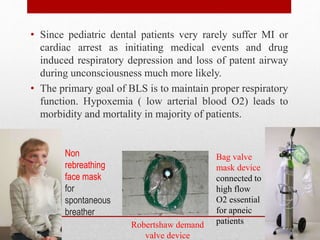
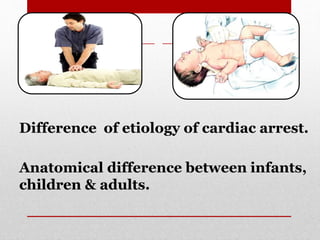
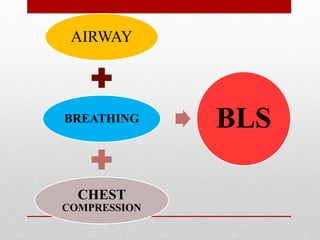
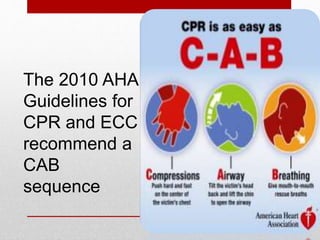
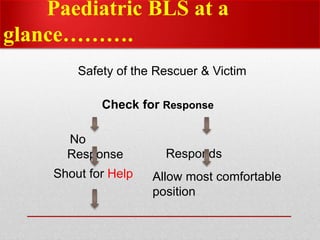
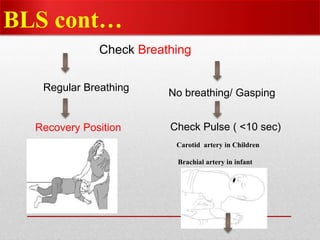
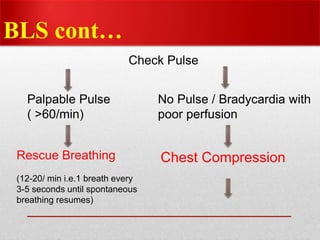
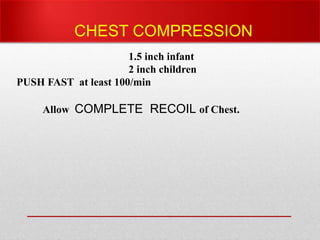
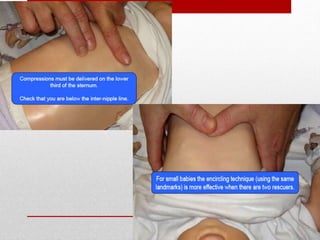
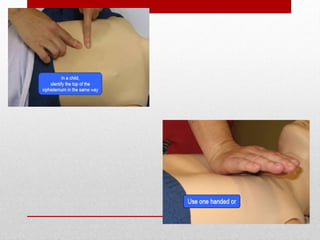
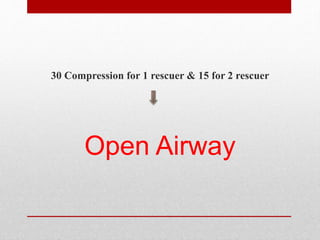
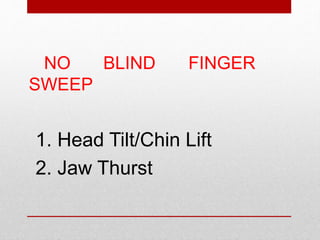
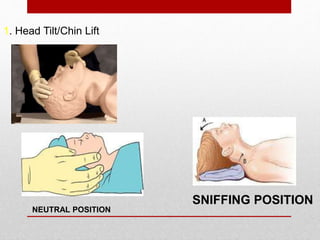
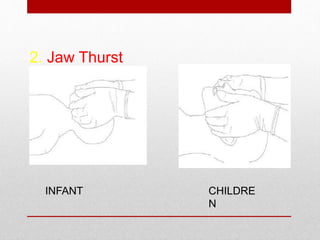
Paediatric basic life support (PBLS) involves procedures to prevent anoxic brain damage by promoting return of spontaneous circulation and breathing in children. It entails checking response and breathing, then pulse, and performing cycles of chest compressions and rescue breaths in a ratio of 30:2 for one rescuer or 15:2 for multiple rescuers. Key considerations include maintaining an open airway with head tilt and jaw thrust maneuvers rather than finger sweeps, and compressing 1/3 the depth of the chest's anterior-posterior diameter at a fast rate of 100/min until signs of life return, help arrives, or exhaustion occurs.





![MEDICAL EMERGENCIESinpd [Autosaved].pptx](https://cdn.slidesharecdn.com/ss_thumbnails/medicalemergenciesautosaved-241228041041-66b7393f-thumbnail.jpg?width=640&height=640&fit=bounds)


![CPR AND EMERGENCY MEDICATIONS [Autosaved].pptx](https://cdn.slidesharecdn.com/ss_thumbnails/cprandemergencymedicationsautosaved-250204082316-1c1ad7d9-thumbnail.jpg?width=640&height=640&fit=bounds)


