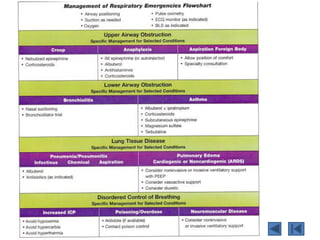
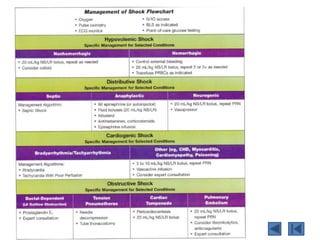
PEDIATRIC ADVANCED LIFE SUPPORT
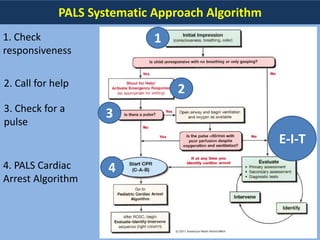
PALS Systematic Approach Algorithm
1. Check
responsiveness
2. Call for help
3. Check for a
pulse
4. PALS Cardiac
Arrest Algorithm
1
2
3
4
E-I-T
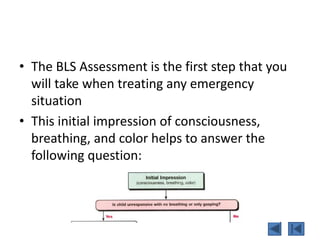
• The BLS Assessment is the first step that you
will take when treating any emergency
situation
• This initial impression of consciousness,
breathing, and color helps to answer the
following question:
“Is the child unresponsive with no
breathing or only gasping?”
• Consciousness:
– Unresponsive
– Irritable
– Alert
• Breathing
– Abnormal breath sounds
– Abnormal breathing patterns
– Accessory muscle use
• Color
– Cyanosis
– Pallor
– Mottling
Phone First vs Phone Fast
• Infants and Children < 8 years:
– CPR first, then
– Phone fast
– Exeption: apparent sudden cardiac collapse
• Children > 8 years and Adults:
– Phone first, then
– Provide CPR
– Exception: unresponsiveness w/t respiratory
compromise (submersion, trauma, drug overdose)
Check for a pulse
• Check the pulse in the infant using the
brachial artery on the inside of the upper arm
between the infant’s elbow and shoulder
• Check for pulse in child using the carotid
artery on the side of the neck or femoral pulse
on the inner thigh in the crease between the
leg and groin.
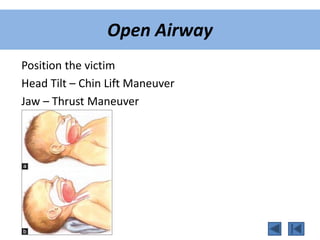
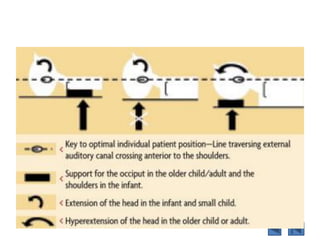
Position the victim
Head Tilt – Chin Lift Maneuver
Jaw – Thrust Maneuver
Open Airway
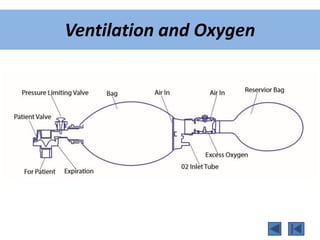
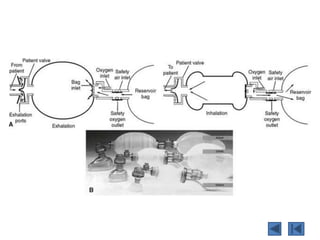
Ventilation and Oxygen
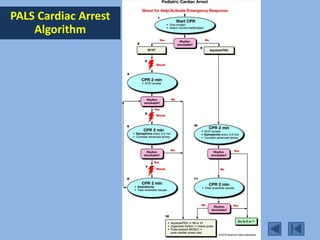
PALS Cardiac Arrest
Algorithm
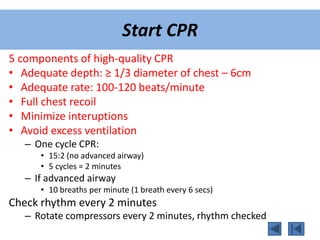
Start CPR
5 components of high-quality CPR
• Adequate depth: ≥ 1/3 diameter of chest – 6cm
• Adequate rate: 100-120 beats/minute
• Full chest recoil
• Minimize interuptions
• Avoid excess ventilation
– One cycle CPR:
• 15:2 (no advanced airway)
• 5 cycles = 2 minutes
– If advanced airway
• 10 breaths per minute (1 breath every 6 secs)
Check rhythm every 2 minutes
– Rotate compressors every 2 minutes, rhythm checked
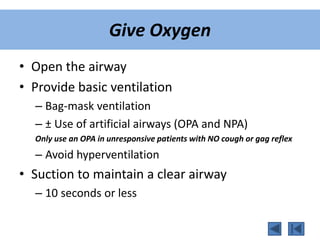
Give Oxygen
• Open the airway
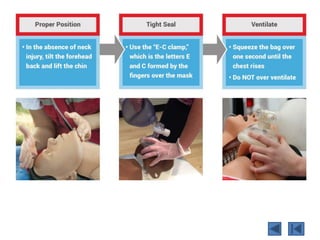
• Provide basic ventilation
– Bag-mask ventilation
– ± Use of artificial airways (OPA and NPA)
Only use an OPA in unresponsive patients with NO cough or gag reflex
– Avoid hyperventilation
• Suction to maintain a clear airway
– 10 seconds or less
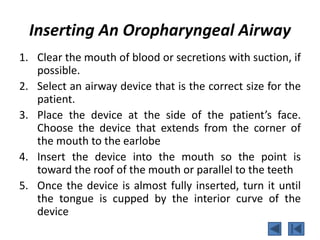
Inserting An Oropharyngeal Airway
1. Clear the mouth of blood or secretions with suction, if
possible.
2. Select an airway device that is the correct size for the
patient.
3. Place the device at the side of the patient’s face.
Choose the device that extends from the corner of
the mouth to the earlobe
4. Insert the device into the mouth so the point is
toward the roof of the mouth or parallel to the teeth
5. Once the device is almost fully inserted, turn it until
the tongue is cupped by the interior curve of the
device
Monitor
IV/IO access
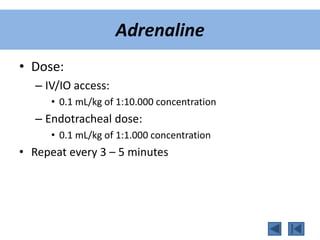
Adrenaline
• Dose:
– IV/IO access:
• 0.1 mL/kg of 1:10.000 concentration
– Endotracheal dose:
• 0.1 mL/kg of 1:1.000 concentration
• Repeat every 3 – 5 minutes
Advanced Airway
Reversible Causes
• 5 H’s:
– Hypoxia
– Hypovolemia
– Hyper/Hypokalemia
– Hypothermia
– Hypoglycemia
• 5 T’s:
– Thrombosis
– Tension pneumothorax
– Tamponade
– Toxic
– Trauma
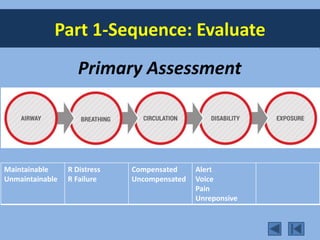
Part 1-Sequence: Evaluate
Primary Assessment
Maintainable
Unmaintainable
R Distress
R Failure
Compensated
Uncompensated
Alert
Voice
Pain
Unreponsive
A - Airway
• Is the airway open?
– This means open and unobstructed
– If yes, proceed to B (Breathing)
• Can the airway be kept open manually?
– Jaw Lift/ Chin Thrust
– Nasopharygeal or oropharygeal airway
• In an advanced airway required?
– Endotracheal intubation
– Cricothyrotomy, if necessary
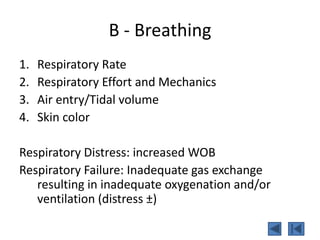
B - Breathing
1. Respiratory Rate
2. Respiratory Effort and Mechanics
3. Air entry/Tidal volume
4. Skin color
Respiratory Distress: increased WOB
Respiratory Failure: Inadequate gas exchange
resulting in inadequate oxygenation and/or
ventilation (distress ±)
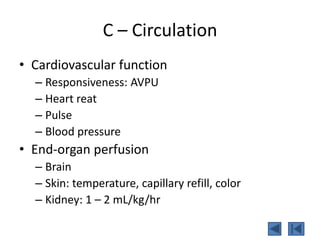
C – Circulation
• Cardiovascular function
– Responsiveness: AVPU
– Heart reat
– Pulse
– Blood pressure
• End-organ perfusion
– Brain
– Skin: temperature, capillary refill, color
– Kidney: 1 – 2 mL/kg/hr
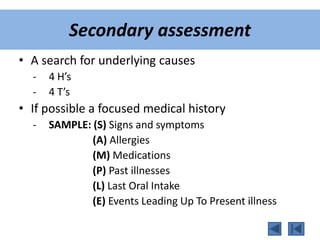
Secondary assessment
• A search for underlying causes
- 4 H’s
- 4 T’s
• If possible a focused medical history
- SAMPLE: (S) Signs and symptoms
(A) Allergies
(M) Medications
(P) Past illnesses
(L) Last Oral Intake
(E) Events Leading Up To Present illness
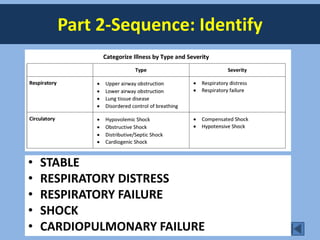
Part 2-Sequence: Identify
• STABLE
• RESPIRATORY DISTRESS
• RESPIRATORY FAILURE
• SHOCK
• CARDIOPULMONARY FAILURE
PEDIATRIC ADVANDCED LIFE SUPPORT

PEDIATRIC ADVANDCED LIFE SUPPORT

  • 1.
  • 2.
    PALS Systematic ApproachAlgorithm 1. Check responsiveness 2. Call for help 3. Check for a pulse 4. PALS Cardiac Arrest Algorithm 1 2 3 4 E-I-T
  • 3.
    • The BLSAssessment is the first step that you will take when treating any emergency situation • This initial impression of consciousness, breathing, and color helps to answer the following question:
  • 4.
    “Is the childunresponsive with no breathing or only gasping?” • Consciousness: – Unresponsive – Irritable – Alert • Breathing – Abnormal breath sounds – Abnormal breathing patterns – Accessory muscle use • Color – Cyanosis – Pallor – Mottling
  • 5.
    Phone First vsPhone Fast • Infants and Children < 8 years: – CPR first, then – Phone fast – Exeption: apparent sudden cardiac collapse • Children > 8 years and Adults: – Phone first, then – Provide CPR – Exception: unresponsiveness w/t respiratory compromise (submersion, trauma, drug overdose)
  • 6.
    Check for apulse • Check the pulse in the infant using the brachial artery on the inside of the upper arm between the infant’s elbow and shoulder • Check for pulse in child using the carotid artery on the side of the neck or femoral pulse on the inner thigh in the crease between the leg and groin.
  • 7.
    Position the victim HeadTilt – Chin Lift Maneuver Jaw – Thrust Maneuver Open Airway
  • 9.
  • 11.
  • 12.
    Start CPR 5 componentsof high-quality CPR • Adequate depth: ≥ 1/3 diameter of chest – 6cm • Adequate rate: 100-120 beats/minute • Full chest recoil • Minimize interuptions • Avoid excess ventilation – One cycle CPR: • 15:2 (no advanced airway) • 5 cycles = 2 minutes – If advanced airway • 10 breaths per minute (1 breath every 6 secs) Check rhythm every 2 minutes – Rotate compressors every 2 minutes, rhythm checked
  • 13.
    Give Oxygen • Openthe airway • Provide basic ventilation – Bag-mask ventilation – ± Use of artificial airways (OPA and NPA) Only use an OPA in unresponsive patients with NO cough or gag reflex – Avoid hyperventilation • Suction to maintain a clear airway – 10 seconds or less
  • 15.
    Inserting An OropharyngealAirway 1. Clear the mouth of blood or secretions with suction, if possible. 2. Select an airway device that is the correct size for the patient. 3. Place the device at the side of the patient’s face. Choose the device that extends from the corner of the mouth to the earlobe 4. Insert the device into the mouth so the point is toward the roof of the mouth or parallel to the teeth 5. Once the device is almost fully inserted, turn it until the tongue is cupped by the interior curve of the device
  • 16.
  • 17.
  • 18.
    Adrenaline • Dose: – IV/IOaccess: • 0.1 mL/kg of 1:10.000 concentration – Endotracheal dose: • 0.1 mL/kg of 1:1.000 concentration • Repeat every 3 – 5 minutes
  • 19.
  • 20.
    Reversible Causes • 5H’s: – Hypoxia – Hypovolemia – Hyper/Hypokalemia – Hypothermia – Hypoglycemia • 5 T’s: – Thrombosis – Tension pneumothorax – Tamponade – Toxic – Trauma
  • 21.
    Part 1-Sequence: Evaluate PrimaryAssessment Maintainable Unmaintainable R Distress R Failure Compensated Uncompensated Alert Voice Pain Unreponsive
  • 22.
    A - Airway •Is the airway open? – This means open and unobstructed – If yes, proceed to B (Breathing) • Can the airway be kept open manually? – Jaw Lift/ Chin Thrust – Nasopharygeal or oropharygeal airway • In an advanced airway required? – Endotracheal intubation – Cricothyrotomy, if necessary
  • 23.
    B - Breathing 1.Respiratory Rate 2. Respiratory Effort and Mechanics 3. Air entry/Tidal volume 4. Skin color Respiratory Distress: increased WOB Respiratory Failure: Inadequate gas exchange resulting in inadequate oxygenation and/or ventilation (distress ±)
  • 24.
    C – Circulation •Cardiovascular function – Responsiveness: AVPU – Heart reat – Pulse – Blood pressure • End-organ perfusion – Brain – Skin: temperature, capillary refill, color – Kidney: 1 – 2 mL/kg/hr
  • 25.
    Secondary assessment • Asearch for underlying causes - 4 H’s - 4 T’s • If possible a focused medical history - SAMPLE: (S) Signs and symptoms (A) Allergies (M) Medications (P) Past illnesses (L) Last Oral Intake (E) Events Leading Up To Present illness
  • 26.
    Part 2-Sequence: Identify •STABLE • RESPIRATORY DISTRESS • RESPIRATORY FAILURE • SHOCK • CARDIOPULMONARY FAILURE