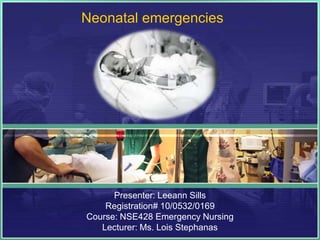
Neonatal emergencies


      Presenter: Leeann Sills
    Registration# 10/0532/0169
Course: NSE428 Emergency Nursing
   Lecturer: Ms. Lois Stephanas
Introduction

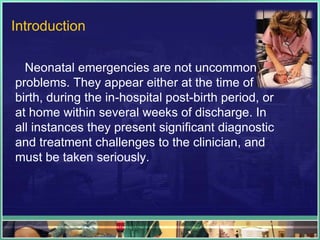
  Neonatal emergencies are not uncommon
problems. They appear either at the time of
birth, during the in-hospital post-birth period, or
at home within several weeks of discharge. In
all instances they present significant diagnostic
and treatment challenges to the clinician, and
must be taken seriously.
Definition
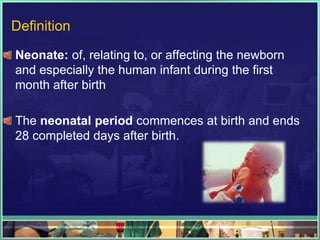
Neonate: of, relating to, or affecting the newborn
and especially the human infant during the first
month after birth

The neonatal period commences at birth and ends
28 completed days after birth.
Etiology - Retrospective analysis of neonatal deaths and stillbirths in
five hospitals in Guyana, December 2007

  “This study was conducted in five hospitals:
  Georgetown Public Hospital Corporation(GPHC) and
  the four Regional Hospitals: New Amsterdam, West
  Demerara, Suddie and Linden
  McKenzie.”

  “These health facilities offer basic and comprehensive
  obstetric care to mothers. The results of this study
  served to inform the Maternal and Child Health
  Department on the issues related to the causative
  factors on neonatal deaths and the implications of
  service recommendations for the health sector.”
Etiology
 The five leading causes of neonatal deaths from the
 hospitals were:

 •Acute respiratory distress,
 •Bacterial sepsis of the newborn,
 •Birth asphyxia,
 •Prematurity and
 •Brain haemorrhage: subarachnoid haemorrhage due to the
 injuries of the head of the fetus.

 Birth injuries to the liver and brain damage occurred in
 eleven cases. These issues point to quality of care during
 intranatal care.
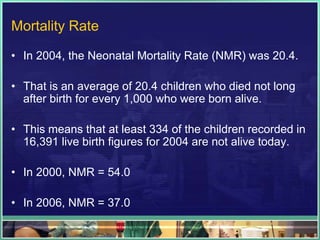
Mortality Rate

• In 2004, the Neonatal Mortality Rate (NMR) was 20.4.

• That is an average of 20.4 children who died not long
  after birth for every 1,000 who were born alive.

• This means that at least 334 of the children recorded in
  16,391 live birth figures for 2004 are not alive today.

• In 2000, NMR = 54.0

• In 2006, NMR = 37.0
Assesssment of Newborn

•   Apgar scoring
•   Birth weight and measurements
•   Physical examination
•   Gestational assessment
•   Physical maturity
•   Neuromuscular maturity
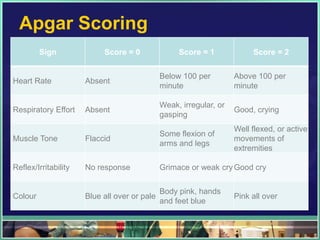
Apgar Scoring
         Sign              Score = 0               Score = 1             Score = 2


                                              Below 100 per         Above 100 per
Heart Rate            Absent
                                              minute                minute

                                              Weak, irregular, or
Respiratory Effort    Absent                                        Good, crying
                                              gasping
                                                                    Well flexed, or active
                                              Some flexion of
Muscle Tone           Flaccid                                       movements of
                                              arms and legs
                                                                    extremities

Reflex/Irritability   No response             Grimace or weak cry Good cry


                                              Body pink, hands
Colour                Blue all over or pale                         Pink all over
                                              and feet blue
Birth Weight and Measurement
Physical Examination of the New Born???
Signs & symptoms

• The clinical symptoms may be nonspecific.

• The history may reveal only a change in
  feeding pattern or subtle behavioral changes.
Differential Diagnosis

• A useful mnemonic to recall the broad differential diagnosis
  of a neonate with altered mental status:


                ‘‘THE MISFITS’’
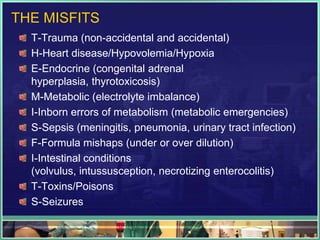
THE MISFITS
  T-Trauma (non-accidental and accidental)
  H-Heart disease/Hypovolemia/Hypoxia
  E-Endocrine (congenital adrenal
  hyperplasia, thyrotoxicosis)
  M-Metabolic (electrolyte imbalance)
  I-Inborn errors of metabolism (metabolic emergencies)
  S-Sepsis (meningitis, pneumonia, urinary tract infection)
  F-Formula mishaps (under or over dilution)
  I-Intestinal conditions
  (volvulus, intussusception, necrotizing enterocolitis)
  T-Toxins/Poisons
  S-Seizures
Trauma

• Classified as Accidental or Non-accidental

• Non-accidental head trauma may only have subtle
  historical findings and no physical exam findings

• Presenting symptoms may be nonspecific

• Early diagnosis of an occult head injury may
  prevent significant long-term morbidity
Trauma -Accidental
• Most head injuries occur secondary to motor vehicle
  accidents, falls, assaults, recreational activities, and child
  abuse.

• Mechanical or anoxic trauma incurred by the neonate during
  labor or delivery include:

•   Head and scalp injuries
•   Cephalhematoma
•   Subgaleal Hematoma
•   Caput Succedameum
•   Vacuum Caput
Trauma- Accidental

 Orthopedic Injuries and Fractures
 Clavile Fracture from Birth Trauma
 Skull Fracture from Birth Trauma
 Sternocleidomastoid Hematoma (Torticollis)

 Peripheral Nerve Injuries
 Facial Nerve Injury from Birth Trauma
 Brachial Plexus from Birth Trauma
 Duchenne-Erb Paralysis
 Klumpke‟s Paralysis
 Phrenic Nerve Injury from Birth Trauma
 Recurrent Laryngeal Nerve Injury from trauma
Shaken Baby Syndrome-Nonaccidental
• Shaken baby syndrome is a severe form of child abuse
  caused by violently shaking an infant or child.

• The brain bounces back and forth against the skull.
• Causes bruising of the brain (cerebral contusion),
  swelling, pressure, and bleeding in the brain.

• The large veins along the outside of the brain may tear,
  leading to further bleeding, swelling, and increased
  pressure.

• This can easily cause permanent brain damage or death.
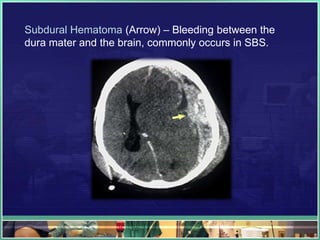
Subdural Hematoma (Arrow) – Bleeding between the
dura mater and the brain, commonly occurs in SBS.
Signs & Symptoms
Vary from mild to severe:

•   Convulsions (seizures)
•   Decreased alertness
•   Extreme irritability or other changes in behavior
•   Lethargy, sleepiness, not smiling
•   Loss of consciousness
•   Loss of vision
•   No breathing
•   Pale or bluish skin
•   Poor feeding, lack of appetite
•   Vomiting
Treatment

Treatment involves:

• Monitoring of intracranial pressure (the pressure
  within the skull),

• Draining of fluid from the cerebral ventricles,

• Draining of intracranial hematoma if present.
Role of the Nurse in the prevention of SBS??
Prevention
 •NEVER shake a baby or child in play or in anger. Even gentle
 shaking can become violent shaking when you are angry.
 •Do not hold your baby during an argument.
 •If you find yourself becoming annoyed or angry with your
 baby, put him in the crib and leave the room. Try to calm down.
 Call someone for support.
 •Call a friend or relative to come and stay with the child if you feel
 out of control.
 •Contact a local crisis hotline or child abuse hotline for help and
 guidance.
 •Seek the help of a counselor and attend parenting classes.
 •Do not ignore the signs if you suspect child abuse in your home
 or in the home of someone you know.
Heart Disease

• Congenital heart diseases (CHD) encompass a
  spectrum of structural abnormalities of the heart or
  intra-thoracic vessels.

• Commonly presents in the newborn with central
  cyanosis, heart failure, sudden collapse or heart
  murmur.

• Classified as Cyanotic or Acyanotic
Cyanotic Heart Disease

• Cyanosis is a pathologic process caused by
  deoxygenated blood in the capillary vessels.

• Cyanotic heart defects are not detected in the
  newborn nursery, presents during the first 2 to 3
  weeks of life when the Ductus Arteriosus closes .

• There is still adequate oxygenated blood to the
  systemic circulation through a patent DA.
Terrible T‟s

The congenital heart defects that classically present
with cyanosis, commonly referred to as the „„Terrible
Ts”

1. Transposition of the great vessels
2. Total anomalous pulmonary venous return
3. Tetralogy of Fallot
4. Truncus arteriosus
5. Tricuspid atresia
Acyanotic Heart Disease

• Acyanotic heart diseases may also be a result of closure of
  the ductus arteriosus (DA).

• The onset of symptoms typically is gradual, with the onset of
  congestive heart failure.

• Different degrees of obstruction to the left ventricular outflow
  tract are present that result in an increase in pulmonary
  blood flow and a gradual development of heart failure.
Signs & Symptoms

•Tachypnea
• Tachycardia
•Hepatomegaly
•History of poor feeding
•Sweating or color change with feedings
•Poor weight gain
• Lower extremity edema and jugular venous
distention are unlikely findings at this age
Common Causes

•Anemia                       •Endocardial cushion defect
•Aortic atresia               •Hypoplastic left heart
•Aortic stenosis              •Interrupted aortic arch
•Arteriovenous malformation   •Mitral valve atresia
•Coarctation of the Aorta     •Patent ductus arteriosus
•Complete arteriovenous       •Truncus arteriosus
canal
•Cor pulmonale caused by      •Ventricular septal defect
bronchopulmonary dysplasia
Management - Classic Hyperoxia Test

•Differentiate between cardiac and noncardiac causes

•Provide 100% oxygen

•Observe the oxygen saturation on pulse oximetry for
an increase of 10% in pulmonary causes (PaO2
should increase by 30 mm Hg)

•If the neonate‟s oxygen saturation or PaO2 fail to
improve, cyanotic heart disease is suspected.
Management

• Administration of prostaglandin E1 (PGE1) as a bolus of
  0.05 mcg/kg IV

• Success is less likely because the development of heart
  failure is gradual and the DA may already have been closed
  for several days to weeks.

• First line -Furosemide, 1 mg/kg IV
Other adjuvants include dopamine, dobutamine, and digoxin.

• Pediatric cardiology consultation
Endocrine

• Congenital adrenal hyperplasia - Congenital
  adrenal hyperplasia refers to a group of inherited
  disorders of the adrenal gland.

• Thyrotoxicosis (Hyperthyroidism) - Thyroid gland
  makes too much thyroid hormone. The condition is
  often referred to as an "overactive thyroid."
Congenital adrenal hyperplasia

Caused by a deficiency in the 21-hydroxylase
enzyme - needed for biosynthesis of the steroid
hormones aldosterone and cortisol.

Patient may present in the first few weeks of life with
symptoms:
•Vomiting
• hypoglycemia
• or even shock.
Thyrotoxicosis
Infants born to mothers with Graves‟ disease may develop
thyrotoxicosis and present with delayed symptoms to the ED.

Symptoms may include:
•Poor feeding, irritability, tachycardia, respiratory distress,
hyperthermia, or congestive heart failure.

Treatment:
•Propranolol,0.25 mg/kg IV- to control tachycardia.
•In addition, propylthiouracil, 1.25 mg/kg IV,
•followed by Lugol‟s solution (1–5 drops orally)- to control the
hypermetabolic state and hormone release
Metabolic

• Genetic disorders in which the body cannot
  properly turn food into energy.

• Usually caused by defects in specific proteins
  (enzymes) that help break down (metabolize) parts
  of food.

• Problems arise due to accumulation of substances
  which are toxic or interfere with normal function.
Inborn Errors of metabolism

• Nonspecific symptoms: poor feeding, vomiting,
  failure to thrive, tachycardia, tachypnea, or
  irritability.

• Occasionally the diagnosis may be more apparent
  and include symptoms of seizures, lethargy,
  hypoglycemia, apnea, temperature instability, and
  acidosis.

• Physical exam findings are usually normal.
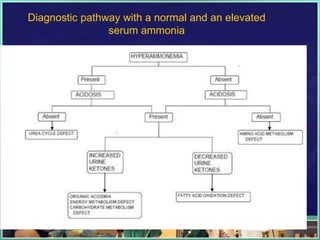
Diagnostic pathway with a normal and an elevated
                serum ammonia
Sepsis

• Neonatal sepsis is a blood infection that occurs in
  an infant younger than 90 days old.

• Early-onset sepsis is seen in the first week of life.

• Late-onset sepsis occurs between days 8 and 89.
Causes

A number of different bacteria, including :
• Escherichia coli ( E. coli),
• Listeria
• Certain strains of streptococcus

• Early-onset neonatal sepsis-appears within 24
  hours of birth.
Causes

The following increases an infant's risk of early-onset
sepsis:

•Group B streptococcus infection during pregnancy
•Preterm delivery
•Water breaking (rupture of membranes) that lasts
longer than 24 hours before birth
•Infection of the placenta tissues and amniotic fluid
(chorioamnionitis)
Signs & Symptoms

•Body temperature changes
•Breathing problems
•Diarrhea
•Low blood sugar
•Reduced movements
•Reduced sucking
•Seizures
•Slow heart rate
•Swollen belly area
•Vomiting
•Yellow skin and whites of the eyes (jaundice)
Treatment

Recommended Antibiotics and Dosages for Neonatal
 Sepsis:

•   Ampicillin 50-100 mg/kg IV
•   Gentamicin 2 mg/kg IV
•   Cefotaxime 50-100 mg/kg IV
•   Acyclovir 20 mg/kg IV
Nursing actions for Prevention of Sepsis???
Formula Mishaps

• The inappropriate mixing of water, powdered
  formula or overdilution of concentrated liquid or
  premixed formula may result in life-threatening
  electrolyte disturbances or failure to thrive.

• Hyponatremia may present as seizures and
  requires recognition of an electrolyte abnormality
  and immediate correction to stop the seizure
Intestinal Conditions

• Volvulus,
• Intussusception,
• Necrotizing enterocolitis
Toxins/ Poisons

• Toxic ingestions are uncommon in this age group,
  but occasionally result from a maternal ingestion in
  a breastfeeding mother, homeopathic remedies, or
  overuse of accepted medications.
Seizures

•Seizures occurring during the neonatal period are
often difficult to recognize.

•The cortical development is not complete, and as a
result, generalized motor activity is less common.

•Subtle seizures in the term neonate can include
abnormal eye movements (usually
horizontal, sustained eye deviation), lip
smacking, abnormal
tongue movements, pedaling, or apnea.
Classifications

Clonic seizures

These movements most commonly are associated
with electrographic seizures.
They often involve 1 extremity or 1 side of the body.
The rhythm of the clonic movements is usually
slow, at 1-3 movements per second.
Classification
•Tonic seizures

•These may involve 1 extremity or the whole body. Focal tonic
seizures involving 1 extremity often are associated with
electrographic seizures.

•Generalized tonic seizures often manifest with tonic extension
of the upper and lower limbs and also may involve the axial
musculature in an opisthotonic fashion.

•Generalized tonic seizures mimic decorticate posturing; the
majority are not associated with electrographic seizures.
Classification

Myoclonic seizures

•These may occur focally in 1 extremity or in several
body parts (in which case they are described as
multifocal myoclonic seizures).

•Focal and multifocal myoclonic seizures typically are
not associated with electrographic correlates.

•Generalized myoclonic jerks are possibly the clinical
equivalent of infantile spasms.
Acute Management of Neonatal Seizures
After each step, evaluate the infant for ongoing seizures. If seizures persist,
advance to next step

Step 1. Stabilize vital functions

Step 2. Correct transient metabolic disturbances

A. Hypoglycemia (target blood sugar 70-120 mg/dL)
10% dextrose water IV bolus dose 2 mL/kg followed by a continuous
infusion at 8 mg/kg/min
B. Hypocalcemia 5% calcium gluconate IV at 4 mL/kg (need cardiac
monitoring)
C. Hypomagnesemia 50% magnesium sulfate IM at 0.2 mL/kg
Acute Management of Neonatal Seizures

Step 3. Phenobarbital 20 mg/kg IV load
Cardiorespiratory monitoring
5 mg/kg IV (may repeat to total dose of 40 mg/kg)
Consider continuous EEG monitoring
Consider intubation/ventilation

Step 4. Lorazepam 0.05 mg/kg IV (may repeat to
total dose of 0.1 mg/kg)
Acute Management of Neonatal Seizures

Step 5. Phenytoin (fosphenytoin)
20 mg/kg slow IV load
5 mg/kg slow IV (may repeat to total dose of 30
mg/kg)

Step 6. Pyridoxine 50-100 mg/kg IV (with *EEG
monitoring)

*EEG = electroencephalogram.
Nursing considerations for Management of
         Neonatal Seizures???
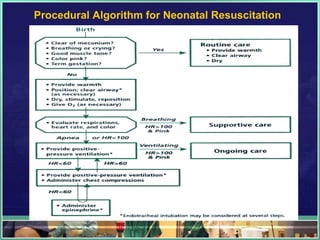
Procedural Algorithm for Neonatal Resuscitation
Recommendations-Postnatal and New Born care
Essential newborn care for all newborns should ensure:

• Birth in a safe environment with access to complete obstetric and neonatal care.

• Avoid unjustified separation from the mother.

• Early and exclusive breastfeeding: early suckling, positioning and attaching the

baby to the breast; rooming-in and unrestricted feeding; ten steps to successful

breastfeeding; safe human milk banking.

• Warmth provision and avoidance of bathing during first 24 hours.

• Infection control, including cord care and hygiene.

• Postpartum vitamin A provided to mother.

• Eye prophylaxis to prevent gonococcal opthalmia.

• Information and counseling for home care and emergency preparedness.
Recommendations
Extra care for small babies
• Extra home visits; support for breastfeeding, thermal care, and hygienic
cord care.
• Extra attention to warmth, feeding support, and early identification and
management of complications.
• Skin to skin thermal care (kangaroo mother care).
• Vitamin K administration at birth.
• Facility-based clinical care of ill newborn babies, particularly those with
infections, prematurity, and birth asphyxia. Short and long term follow up.
• Early neurodevelopment stimulation.
Recommendations
Pre-discharge package (at facility level or before birth attendant leaves the

mother in the case of a home delivery)


• Careful assessment of high risk factors/danger signs (for both mother and

newborn).

• Counseling for mother and family in preventive care, recognition of danger signs,

provision of care (what to do and where to go).

• Promotion and referral for early postnatal care.

• Follow-up care for birth spacing, immunization, nutrition (breastfeeding), growth

monitoring and development of baby.
Recommendations

Assure appropriate care in the home for the mother and newborn
• Effective empowerment, participation and communication strategies
including community involvement in planning MNCH programs.


• Community mobilization and engagement, and antenatal and post natal
domiciliary behaviour change communications to promote:
1.   evidence-based care practices (breastfeeding, thermal care, and clean
     cord care),
2.   care seeking, and
3.   demand for quality clinical care.
References
•Merriam-Webster‟s Learner‟s Dictionary
http://www.learnersdictionary.com/search/neonatal

•The Maternal and Child Health Department
Ministry of Health, Brickdam, Georgetown
Retrospective analysis of neonatal deaths and stillbirths in five hospitals in
Guyana,December 2007

•Bureau of Statistics
57 High Street, Kingston, Georgetown - Multiple Indicator Cluster Survey
Summary Report 2006
http://www.statisticsguyana.gov.gy/pubs/Guyana_MICS_Summary_Report
_2006.pdf

Neonatal Emergencies

  • 1.
    Neonatal emergencies Presenter: Leeann Sills Registration# 10/0532/0169 Course: NSE428 Emergency Nursing Lecturer: Ms. Lois Stephanas
  • 2.
    Introduction Neonatalemergencies are not uncommon problems. They appear either at the time of birth, during the in-hospital post-birth period, or at home within several weeks of discharge. In all instances they present significant diagnostic and treatment challenges to the clinician, and must be taken seriously.
  • 3.
    Definition Neonate: of, relatingto, or affecting the newborn and especially the human infant during the first month after birth The neonatal period commences at birth and ends 28 completed days after birth.
  • 4.
    Etiology - Retrospectiveanalysis of neonatal deaths and stillbirths in five hospitals in Guyana, December 2007 “This study was conducted in five hospitals: Georgetown Public Hospital Corporation(GPHC) and the four Regional Hospitals: New Amsterdam, West Demerara, Suddie and Linden McKenzie.” “These health facilities offer basic and comprehensive obstetric care to mothers. The results of this study served to inform the Maternal and Child Health Department on the issues related to the causative factors on neonatal deaths and the implications of service recommendations for the health sector.”
  • 5.
    Etiology The fiveleading causes of neonatal deaths from the hospitals were: •Acute respiratory distress, •Bacterial sepsis of the newborn, •Birth asphyxia, •Prematurity and •Brain haemorrhage: subarachnoid haemorrhage due to the injuries of the head of the fetus. Birth injuries to the liver and brain damage occurred in eleven cases. These issues point to quality of care during intranatal care.
  • 6.
    Mortality Rate • In2004, the Neonatal Mortality Rate (NMR) was 20.4. • That is an average of 20.4 children who died not long after birth for every 1,000 who were born alive. • This means that at least 334 of the children recorded in 16,391 live birth figures for 2004 are not alive today. • In 2000, NMR = 54.0 • In 2006, NMR = 37.0
  • 7.
    Assesssment of Newborn • Apgar scoring • Birth weight and measurements • Physical examination • Gestational assessment • Physical maturity • Neuromuscular maturity
  • 8.
    Apgar Scoring Sign Score = 0 Score = 1 Score = 2 Below 100 per Above 100 per Heart Rate Absent minute minute Weak, irregular, or Respiratory Effort Absent Good, crying gasping Well flexed, or active Some flexion of Muscle Tone Flaccid movements of arms and legs extremities Reflex/Irritability No response Grimace or weak cry Good cry Body pink, hands Colour Blue all over or pale Pink all over and feet blue
  • 9.
    Birth Weight andMeasurement
  • 10.
    Physical Examination ofthe New Born???
  • 11.
    Signs & symptoms •The clinical symptoms may be nonspecific. • The history may reveal only a change in feeding pattern or subtle behavioral changes.
  • 12.
    Differential Diagnosis • Auseful mnemonic to recall the broad differential diagnosis of a neonate with altered mental status: ‘‘THE MISFITS’’
  • 13.
    THE MISFITS T-Trauma (non-accidental and accidental) H-Heart disease/Hypovolemia/Hypoxia E-Endocrine (congenital adrenal hyperplasia, thyrotoxicosis) M-Metabolic (electrolyte imbalance) I-Inborn errors of metabolism (metabolic emergencies) S-Sepsis (meningitis, pneumonia, urinary tract infection) F-Formula mishaps (under or over dilution) I-Intestinal conditions (volvulus, intussusception, necrotizing enterocolitis) T-Toxins/Poisons S-Seizures
  • 14.
    Trauma • Classified asAccidental or Non-accidental • Non-accidental head trauma may only have subtle historical findings and no physical exam findings • Presenting symptoms may be nonspecific • Early diagnosis of an occult head injury may prevent significant long-term morbidity
  • 15.
    Trauma -Accidental • Mosthead injuries occur secondary to motor vehicle accidents, falls, assaults, recreational activities, and child abuse. • Mechanical or anoxic trauma incurred by the neonate during labor or delivery include: • Head and scalp injuries • Cephalhematoma • Subgaleal Hematoma • Caput Succedameum • Vacuum Caput
  • 16.
    Trauma- Accidental OrthopedicInjuries and Fractures Clavile Fracture from Birth Trauma Skull Fracture from Birth Trauma Sternocleidomastoid Hematoma (Torticollis) Peripheral Nerve Injuries Facial Nerve Injury from Birth Trauma Brachial Plexus from Birth Trauma Duchenne-Erb Paralysis Klumpke‟s Paralysis Phrenic Nerve Injury from Birth Trauma Recurrent Laryngeal Nerve Injury from trauma
  • 17.
    Shaken Baby Syndrome-Nonaccidental •Shaken baby syndrome is a severe form of child abuse caused by violently shaking an infant or child. • The brain bounces back and forth against the skull. • Causes bruising of the brain (cerebral contusion), swelling, pressure, and bleeding in the brain. • The large veins along the outside of the brain may tear, leading to further bleeding, swelling, and increased pressure. • This can easily cause permanent brain damage or death.
  • 18.
    Subdural Hematoma (Arrow)– Bleeding between the dura mater and the brain, commonly occurs in SBS.
  • 19.
    Signs & Symptoms Varyfrom mild to severe: • Convulsions (seizures) • Decreased alertness • Extreme irritability or other changes in behavior • Lethargy, sleepiness, not smiling • Loss of consciousness • Loss of vision • No breathing • Pale or bluish skin • Poor feeding, lack of appetite • Vomiting
  • 20.
    Treatment Treatment involves: • Monitoringof intracranial pressure (the pressure within the skull), • Draining of fluid from the cerebral ventricles, • Draining of intracranial hematoma if present.
  • 21.
    Role of theNurse in the prevention of SBS??
  • 22.
    Prevention •NEVER shakea baby or child in play or in anger. Even gentle shaking can become violent shaking when you are angry. •Do not hold your baby during an argument. •If you find yourself becoming annoyed or angry with your baby, put him in the crib and leave the room. Try to calm down. Call someone for support. •Call a friend or relative to come and stay with the child if you feel out of control. •Contact a local crisis hotline or child abuse hotline for help and guidance. •Seek the help of a counselor and attend parenting classes. •Do not ignore the signs if you suspect child abuse in your home or in the home of someone you know.
  • 23.
    Heart Disease • Congenitalheart diseases (CHD) encompass a spectrum of structural abnormalities of the heart or intra-thoracic vessels. • Commonly presents in the newborn with central cyanosis, heart failure, sudden collapse or heart murmur. • Classified as Cyanotic or Acyanotic
  • 24.
    Cyanotic Heart Disease •Cyanosis is a pathologic process caused by deoxygenated blood in the capillary vessels. • Cyanotic heart defects are not detected in the newborn nursery, presents during the first 2 to 3 weeks of life when the Ductus Arteriosus closes . • There is still adequate oxygenated blood to the systemic circulation through a patent DA.
  • 25.
    Terrible T‟s The congenitalheart defects that classically present with cyanosis, commonly referred to as the „„Terrible Ts” 1. Transposition of the great vessels 2. Total anomalous pulmonary venous return 3. Tetralogy of Fallot 4. Truncus arteriosus 5. Tricuspid atresia
  • 26.
    Acyanotic Heart Disease •Acyanotic heart diseases may also be a result of closure of the ductus arteriosus (DA). • The onset of symptoms typically is gradual, with the onset of congestive heart failure. • Different degrees of obstruction to the left ventricular outflow tract are present that result in an increase in pulmonary blood flow and a gradual development of heart failure.
  • 27.
    Signs & Symptoms •Tachypnea •Tachycardia •Hepatomegaly •History of poor feeding •Sweating or color change with feedings •Poor weight gain • Lower extremity edema and jugular venous distention are unlikely findings at this age
  • 28.
    Common Causes •Anemia •Endocardial cushion defect •Aortic atresia •Hypoplastic left heart •Aortic stenosis •Interrupted aortic arch •Arteriovenous malformation •Mitral valve atresia •Coarctation of the Aorta •Patent ductus arteriosus •Complete arteriovenous •Truncus arteriosus canal •Cor pulmonale caused by •Ventricular septal defect bronchopulmonary dysplasia
  • 29.
    Management - ClassicHyperoxia Test •Differentiate between cardiac and noncardiac causes •Provide 100% oxygen •Observe the oxygen saturation on pulse oximetry for an increase of 10% in pulmonary causes (PaO2 should increase by 30 mm Hg) •If the neonate‟s oxygen saturation or PaO2 fail to improve, cyanotic heart disease is suspected.
  • 30.
    Management • Administration ofprostaglandin E1 (PGE1) as a bolus of 0.05 mcg/kg IV • Success is less likely because the development of heart failure is gradual and the DA may already have been closed for several days to weeks. • First line -Furosemide, 1 mg/kg IV Other adjuvants include dopamine, dobutamine, and digoxin. • Pediatric cardiology consultation
  • 31.
    Endocrine • Congenital adrenalhyperplasia - Congenital adrenal hyperplasia refers to a group of inherited disorders of the adrenal gland. • Thyrotoxicosis (Hyperthyroidism) - Thyroid gland makes too much thyroid hormone. The condition is often referred to as an "overactive thyroid."
  • 32.
    Congenital adrenal hyperplasia Causedby a deficiency in the 21-hydroxylase enzyme - needed for biosynthesis of the steroid hormones aldosterone and cortisol. Patient may present in the first few weeks of life with symptoms: •Vomiting • hypoglycemia • or even shock.
  • 33.
    Thyrotoxicosis Infants born tomothers with Graves‟ disease may develop thyrotoxicosis and present with delayed symptoms to the ED. Symptoms may include: •Poor feeding, irritability, tachycardia, respiratory distress, hyperthermia, or congestive heart failure. Treatment: •Propranolol,0.25 mg/kg IV- to control tachycardia. •In addition, propylthiouracil, 1.25 mg/kg IV, •followed by Lugol‟s solution (1–5 drops orally)- to control the hypermetabolic state and hormone release
  • 34.
    Metabolic • Genetic disordersin which the body cannot properly turn food into energy. • Usually caused by defects in specific proteins (enzymes) that help break down (metabolize) parts of food. • Problems arise due to accumulation of substances which are toxic or interfere with normal function.
  • 35.
    Inborn Errors ofmetabolism • Nonspecific symptoms: poor feeding, vomiting, failure to thrive, tachycardia, tachypnea, or irritability. • Occasionally the diagnosis may be more apparent and include symptoms of seizures, lethargy, hypoglycemia, apnea, temperature instability, and acidosis. • Physical exam findings are usually normal.
  • 36.
    Diagnostic pathway witha normal and an elevated serum ammonia
  • 37.
    Sepsis • Neonatal sepsisis a blood infection that occurs in an infant younger than 90 days old. • Early-onset sepsis is seen in the first week of life. • Late-onset sepsis occurs between days 8 and 89.
  • 38.
    Causes A number ofdifferent bacteria, including : • Escherichia coli ( E. coli), • Listeria • Certain strains of streptococcus • Early-onset neonatal sepsis-appears within 24 hours of birth.
  • 39.
    Causes The following increasesan infant's risk of early-onset sepsis: •Group B streptococcus infection during pregnancy •Preterm delivery •Water breaking (rupture of membranes) that lasts longer than 24 hours before birth •Infection of the placenta tissues and amniotic fluid (chorioamnionitis)
  • 40.
    Signs & Symptoms •Bodytemperature changes •Breathing problems •Diarrhea •Low blood sugar •Reduced movements •Reduced sucking •Seizures •Slow heart rate •Swollen belly area •Vomiting •Yellow skin and whites of the eyes (jaundice)
  • 41.
    Treatment Recommended Antibiotics andDosages for Neonatal Sepsis: • Ampicillin 50-100 mg/kg IV • Gentamicin 2 mg/kg IV • Cefotaxime 50-100 mg/kg IV • Acyclovir 20 mg/kg IV
  • 42.
    Nursing actions forPrevention of Sepsis???
  • 43.
    Formula Mishaps • Theinappropriate mixing of water, powdered formula or overdilution of concentrated liquid or premixed formula may result in life-threatening electrolyte disturbances or failure to thrive. • Hyponatremia may present as seizures and requires recognition of an electrolyte abnormality and immediate correction to stop the seizure
  • 44.
    Intestinal Conditions • Volvulus, •Intussusception, • Necrotizing enterocolitis
  • 45.
    Toxins/ Poisons • Toxicingestions are uncommon in this age group, but occasionally result from a maternal ingestion in a breastfeeding mother, homeopathic remedies, or overuse of accepted medications.
  • 46.
    Seizures •Seizures occurring duringthe neonatal period are often difficult to recognize. •The cortical development is not complete, and as a result, generalized motor activity is less common. •Subtle seizures in the term neonate can include abnormal eye movements (usually horizontal, sustained eye deviation), lip smacking, abnormal tongue movements, pedaling, or apnea.
  • 47.
    Classifications Clonic seizures These movementsmost commonly are associated with electrographic seizures. They often involve 1 extremity or 1 side of the body. The rhythm of the clonic movements is usually slow, at 1-3 movements per second.
  • 48.
    Classification •Tonic seizures •These mayinvolve 1 extremity or the whole body. Focal tonic seizures involving 1 extremity often are associated with electrographic seizures. •Generalized tonic seizures often manifest with tonic extension of the upper and lower limbs and also may involve the axial musculature in an opisthotonic fashion. •Generalized tonic seizures mimic decorticate posturing; the majority are not associated with electrographic seizures.
  • 49.
    Classification Myoclonic seizures •These mayoccur focally in 1 extremity or in several body parts (in which case they are described as multifocal myoclonic seizures). •Focal and multifocal myoclonic seizures typically are not associated with electrographic correlates. •Generalized myoclonic jerks are possibly the clinical equivalent of infantile spasms.
  • 50.
    Acute Management ofNeonatal Seizures After each step, evaluate the infant for ongoing seizures. If seizures persist, advance to next step Step 1. Stabilize vital functions Step 2. Correct transient metabolic disturbances A. Hypoglycemia (target blood sugar 70-120 mg/dL) 10% dextrose water IV bolus dose 2 mL/kg followed by a continuous infusion at 8 mg/kg/min B. Hypocalcemia 5% calcium gluconate IV at 4 mL/kg (need cardiac monitoring) C. Hypomagnesemia 50% magnesium sulfate IM at 0.2 mL/kg
  • 51.
    Acute Management ofNeonatal Seizures Step 3. Phenobarbital 20 mg/kg IV load Cardiorespiratory monitoring 5 mg/kg IV (may repeat to total dose of 40 mg/kg) Consider continuous EEG monitoring Consider intubation/ventilation Step 4. Lorazepam 0.05 mg/kg IV (may repeat to total dose of 0.1 mg/kg)
  • 52.
    Acute Management ofNeonatal Seizures Step 5. Phenytoin (fosphenytoin) 20 mg/kg slow IV load 5 mg/kg slow IV (may repeat to total dose of 30 mg/kg) Step 6. Pyridoxine 50-100 mg/kg IV (with *EEG monitoring) *EEG = electroencephalogram.
  • 53.
    Nursing considerations forManagement of Neonatal Seizures???
  • 54.
    Procedural Algorithm forNeonatal Resuscitation
  • 55.
    Recommendations-Postnatal and NewBorn care Essential newborn care for all newborns should ensure: • Birth in a safe environment with access to complete obstetric and neonatal care. • Avoid unjustified separation from the mother. • Early and exclusive breastfeeding: early suckling, positioning and attaching the baby to the breast; rooming-in and unrestricted feeding; ten steps to successful breastfeeding; safe human milk banking. • Warmth provision and avoidance of bathing during first 24 hours. • Infection control, including cord care and hygiene. • Postpartum vitamin A provided to mother. • Eye prophylaxis to prevent gonococcal opthalmia. • Information and counseling for home care and emergency preparedness.
  • 56.
    Recommendations Extra care forsmall babies • Extra home visits; support for breastfeeding, thermal care, and hygienic cord care. • Extra attention to warmth, feeding support, and early identification and management of complications. • Skin to skin thermal care (kangaroo mother care). • Vitamin K administration at birth. • Facility-based clinical care of ill newborn babies, particularly those with infections, prematurity, and birth asphyxia. Short and long term follow up. • Early neurodevelopment stimulation.
  • 57.
    Recommendations Pre-discharge package (atfacility level or before birth attendant leaves the mother in the case of a home delivery) • Careful assessment of high risk factors/danger signs (for both mother and newborn). • Counseling for mother and family in preventive care, recognition of danger signs, provision of care (what to do and where to go). • Promotion and referral for early postnatal care. • Follow-up care for birth spacing, immunization, nutrition (breastfeeding), growth monitoring and development of baby.
  • 58.
    Recommendations Assure appropriate carein the home for the mother and newborn • Effective empowerment, participation and communication strategies including community involvement in planning MNCH programs. • Community mobilization and engagement, and antenatal and post natal domiciliary behaviour change communications to promote: 1. evidence-based care practices (breastfeeding, thermal care, and clean cord care), 2. care seeking, and 3. demand for quality clinical care.
  • 59.
    References •Merriam-Webster‟s Learner‟s Dictionary http://www.learnersdictionary.com/search/neonatal •TheMaternal and Child Health Department Ministry of Health, Brickdam, Georgetown Retrospective analysis of neonatal deaths and stillbirths in five hospitals in Guyana,December 2007 •Bureau of Statistics 57 High Street, Kingston, Georgetown - Multiple Indicator Cluster Survey Summary Report 2006 http://www.statisticsguyana.gov.gy/pubs/Guyana_MICS_Summary_Report _2006.pdf

Editor's Notes

  • #14 A classic pneumonic used by Neonatologists and Pediatric Emergency Physicians.