PCR BASED MOLECULAR
MARKERS
Presented by
DIVYA S
I Ph.D. (GPB)
2019608004
Polymerase Chain Reaction
• Karry Mullis - 1983 - Discovered PCR
• PCR procedure produces microgram (μg) quantities of DNA
copies (up to billion copies) from even a single copy of the
desired DNA.
• The DNA segment amplified by PCR is often referred to as
amplicon.
• The PCR process has been completely automated and compact
thermal cyclers are commercially available.
Procedure for PCR
Reagents:
• A target DNA
• A thermostable DNA polymerase
• A pair of ~20 nt long oligodeoxynucleotide primers
that are complementary to the target DNA fragment
• The four deoxynucleotide triphosphates - dATP,
dCTP, dGTP, and dTTP
Denaturation
• The reaction mixture is first heated most often to 94
degree Celsius to ensure denaturation of the template
DNA.
• The duration of the denaturation step is usually 2 min
in the first PCR cycle, but it is only 1 min in the
subsequent cycles.
Annealing
• The above mixture is then cooled to a temperature
that would allow the primers to anneal to their
complementary sequences located at the 3’ ends of
the target DNA segment, i.e., the template DNA.
• Generally the annealing temperature is between 40
and 60 degree Celsius, and the duration of this step is
1 min.
Extension
• In the third and final step, the primers are extended due to
the progressive addition of nucleotides to the free 3’-OH
groups of the primers and, subsequently, the new strands
being synthesized.
• The temperature during primer extension step is generally
maintained at 72 degree Celsius, and the duration of this step
is usually 2 min.
• Taq DNA polymerase is generally able to amplify DNA
segments of up to 2 kb.
Separation of PCR Amplification Products
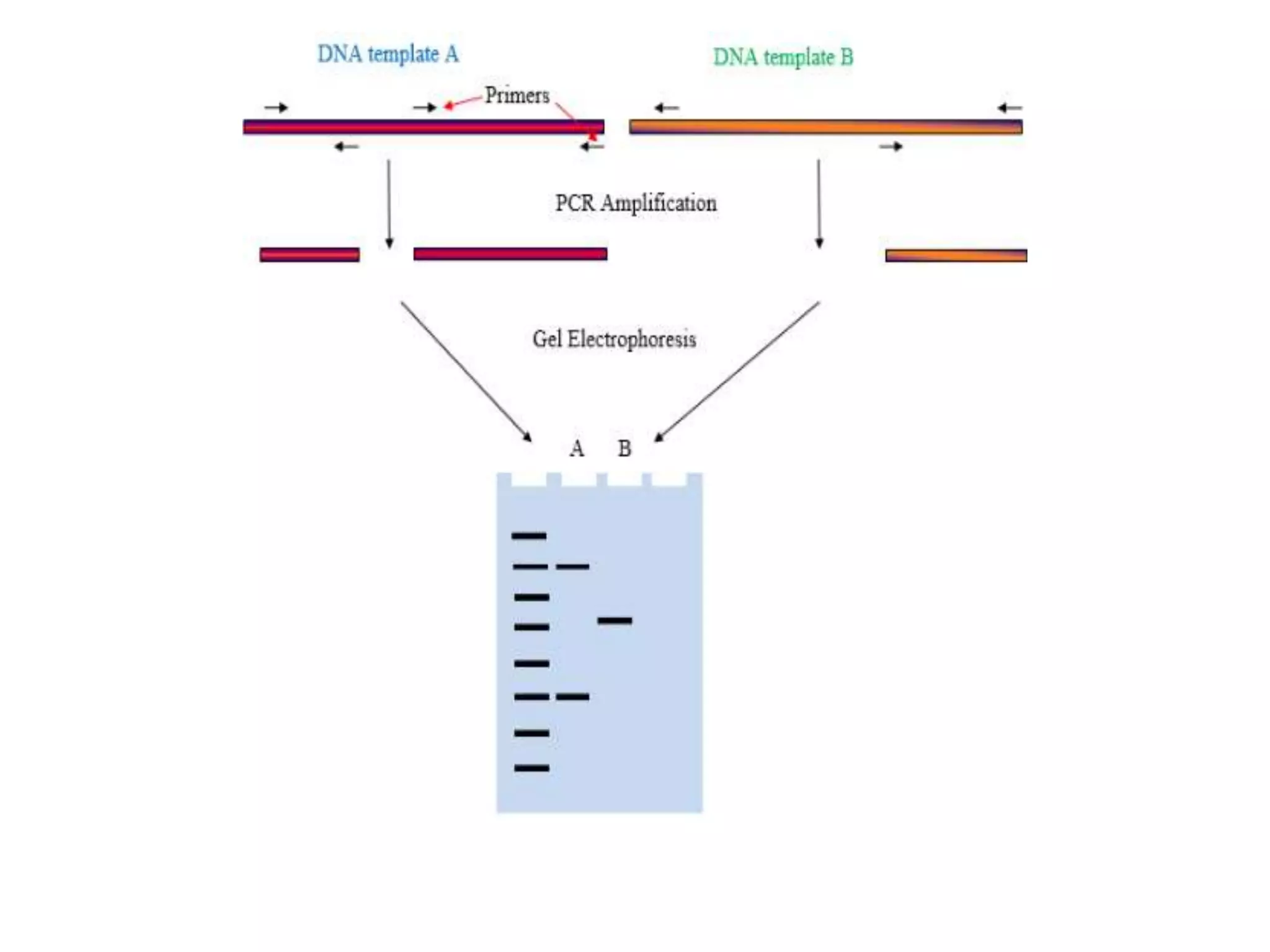
• DNA fragments/amplicons generated by PCR can be separated by
electrophoresis in agarose or acrylamide gels.
• An agarose gel of about 1 % can separate fragment of ~300–1,500 bp.
• Polyacrylamide gels contain a much more uniform pore size than agarose
gels and allow separation of DNA fragments with a higher resolution.
• A gel containing 6 % acrylamide has a fine network formed by
polyacrylamide and can separate DNA fragments differing in length by
even one or two base pairs.
• Polyacrylamide gels are suitable for detection of SSR, AFLP, DNA
amplification fingerprinting (DAF), and sequence-tagged sites (STS)
markers, while agarose gels are well suited for RFLP and RAPD markers.
Types of PCR
• Reverse Transcription PCR-The enzyme reverse transcriptase
is used along with DNA polymerase (reverse transcription
PCR) to generate DNA copies of RNA.
• Realtime reverse transcription PCR - used to estimate the
initial quantity of the template RNA.
• Inverse PCR for amplification of sequences flanking the target
sequence.
• Anchored PCR use for amplification of a target segment when
the sequence of only one of its ends is known.
Multiplex PCR
• For amplification of different segments from the same DNA sample different
primers may be required and these different primers are added into a single
PCR tube.
• In such cases, a separate PCR reaction will have to be set up for every primer
pair because of the difficulties in correct identification of their PCR products.
• For that different primers may be labeled with different fluorophores, and their
PCR products can be distinguished on the basis of color differences in their
fluorescence emissions.
• The PCR products from different primers can be reliably separated by gel
electrophoresis if their lengths do not overlap.
Advantages and Limitations of PCR
• It can amplify even a single copy of the target sequence present in a DNA
sample and generate millions of copies of this sequence.
• Further, even partially degraded DNA can be successfully used for PCR.
• Sequence information for the two ends of the target segment must be
known for designing of the primers.
• Segments of only up to 3 kb are amplified
• The PCR procedure can often generate “hybrid amplicons” and primer
dimers, and it may produce erroneous results due to contaminating DNA.
• Primer dimers are frequently produced when the two PCR primers have
partially complementary 3’ termini.
RAPD (Random Amplified
Polymorphic DNA)
• PCR based marker
• A single short (10 nt long) oligonucleotide
with an arbitrary base sequence – primer
(forward and reverse primer)
• Segments of DNA are amplified at random
• No knowledge of DNA Sequence is required
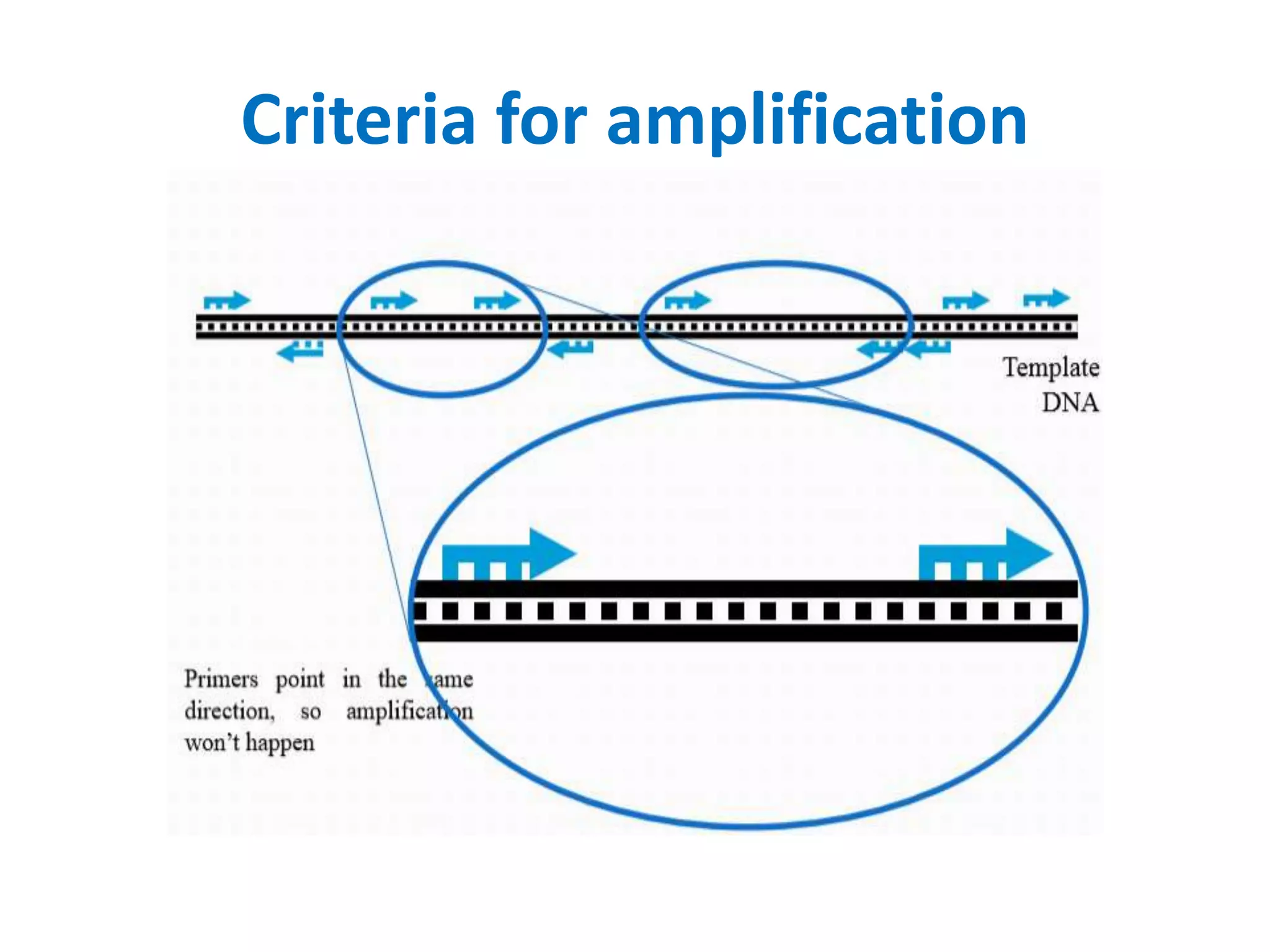
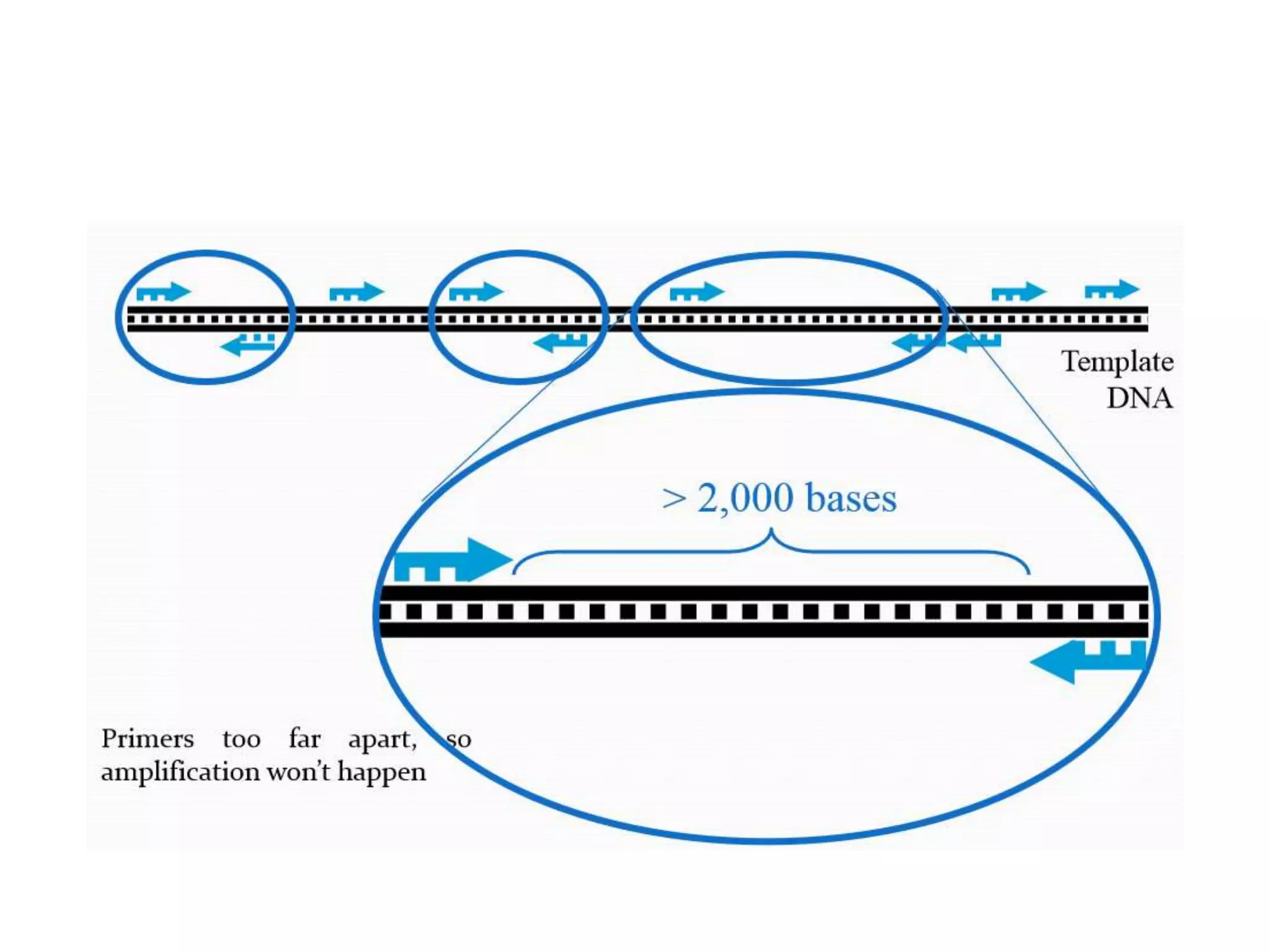
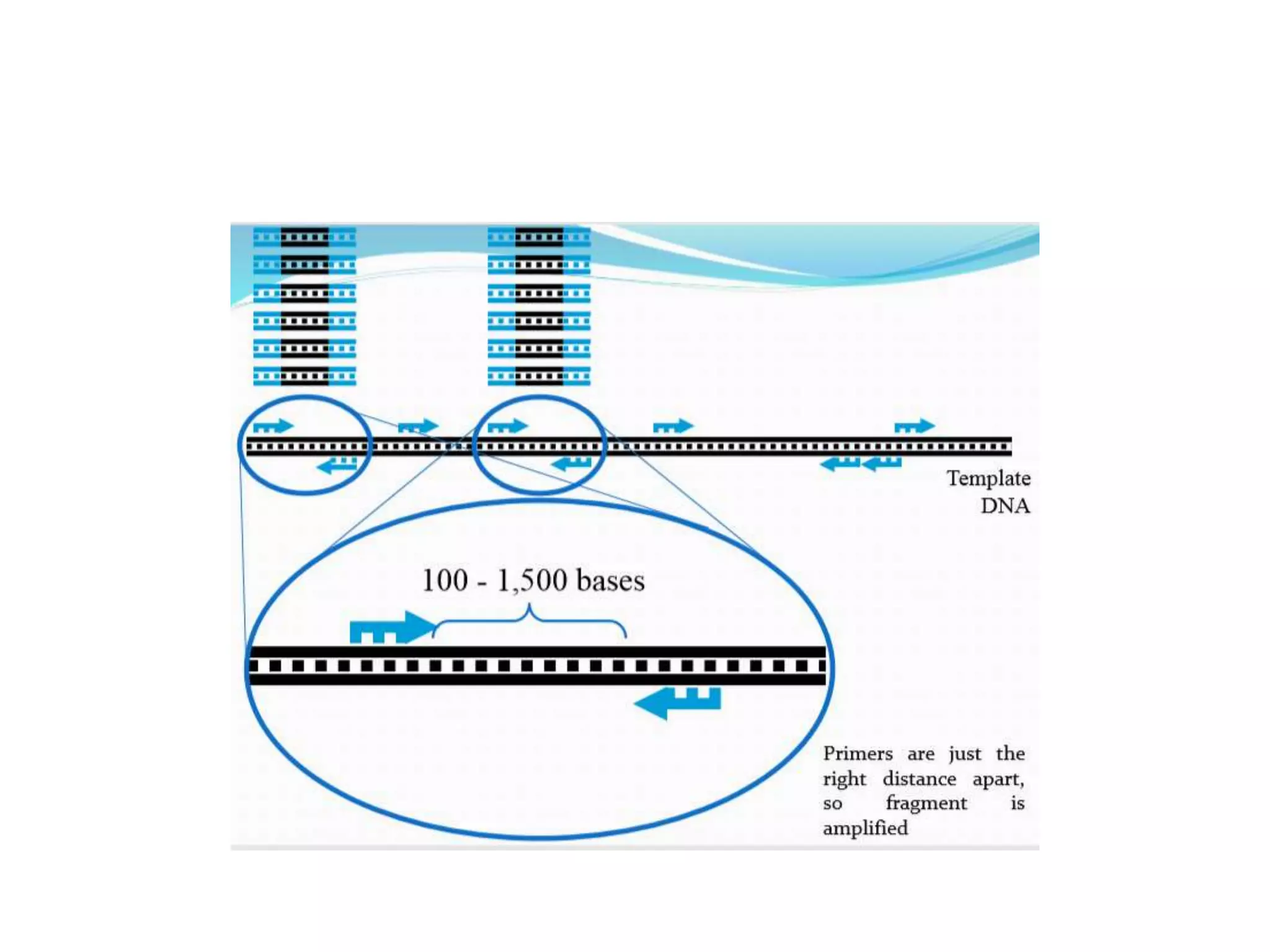
Criteria for amplification
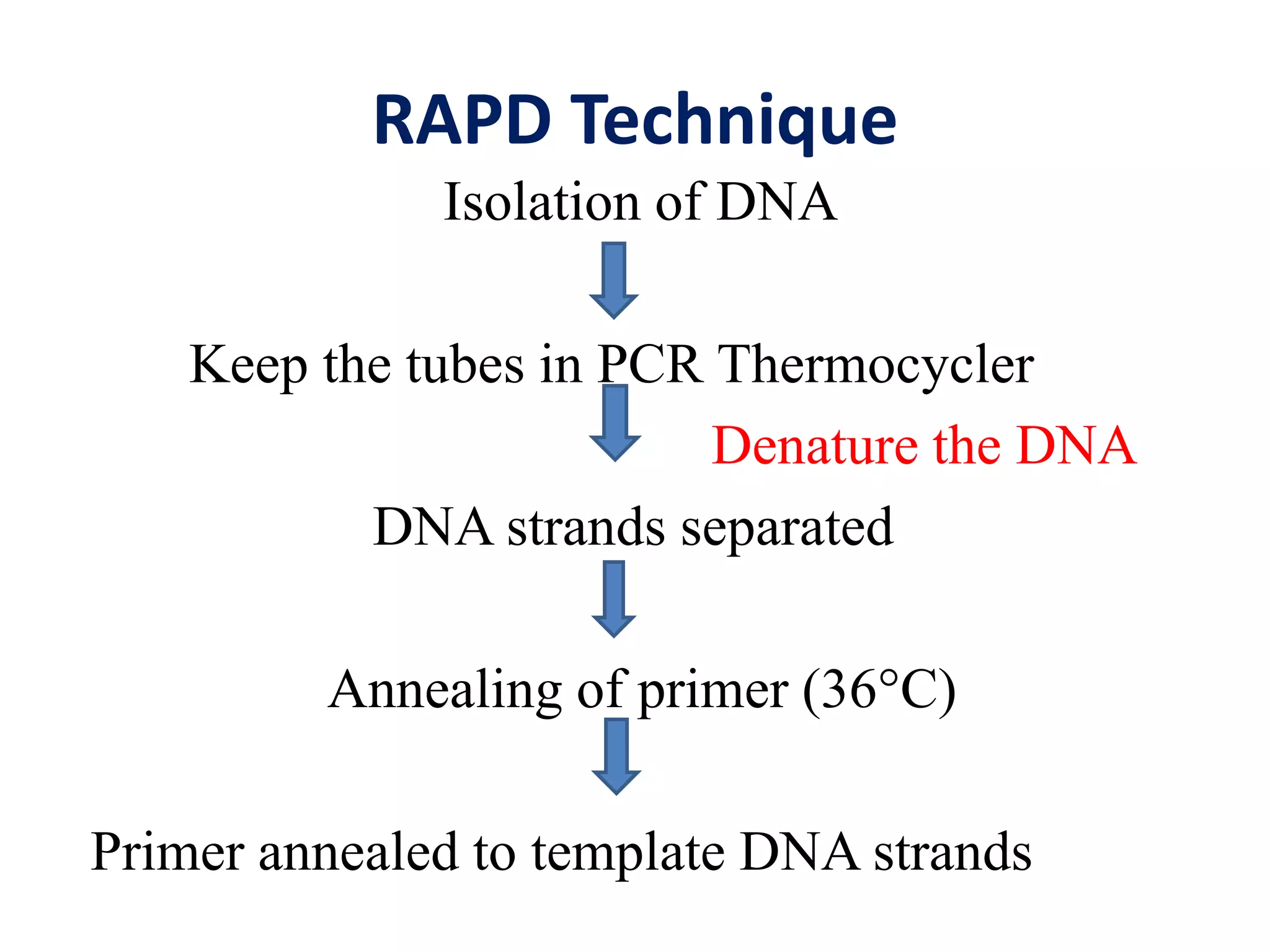
RAPD Technique
Isolation of DNA
Keep the tubes in PCR Thermocycler
Denature the DNA
DNA strands separated
Annealing of primer (36°C)
Primer annealed to template DNA strands
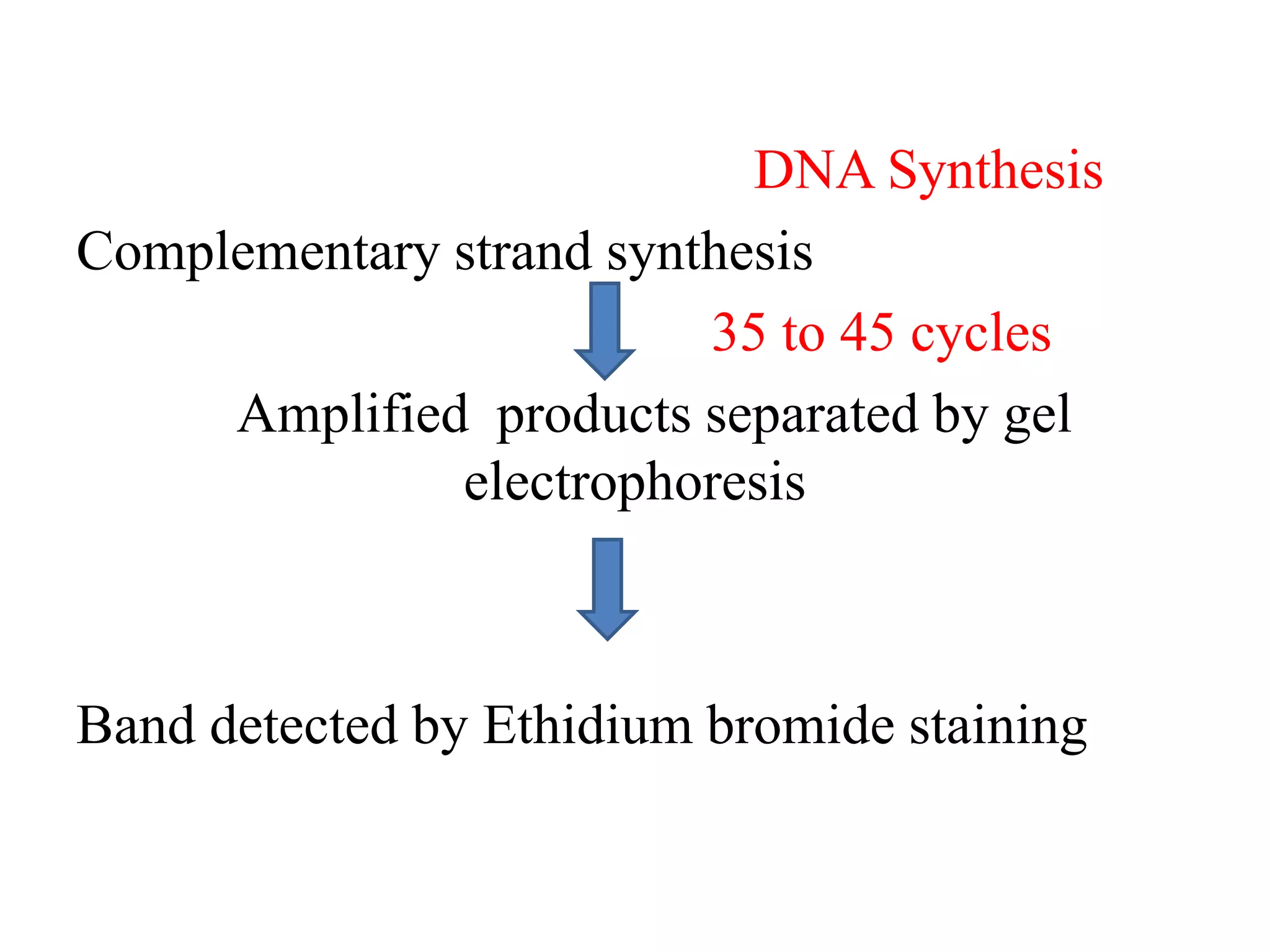
DNA Synthesis
Complementary strand synthesis
35 to 45 cycles
Amplified products separated by gel
electrophoresis
Band detected by Ethidium bromide staining
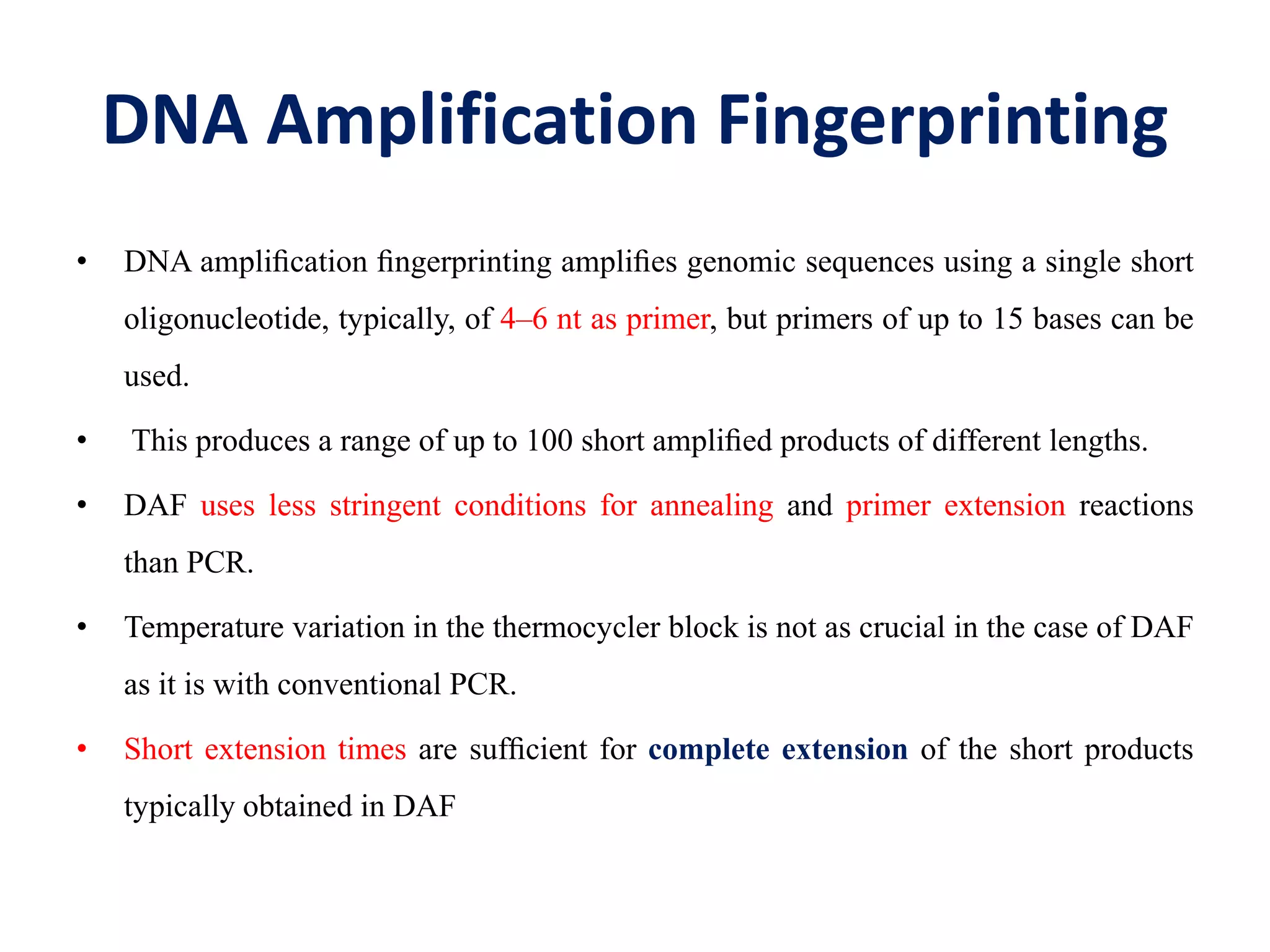
DNA Amplification Fingerprinting
• DNA amplification fingerprinting amplifies genomic sequences using a single short
oligonucleotide, typically, of 4–6 nt as primer, but primers of up to 15 bases can be
used.
• This produces a range of up to 100 short amplified products of different lengths.
• DAF uses less stringent conditions for annealing and primer extension reactions
than PCR.
• Temperature variation in the thermocycler block is not as crucial in the case of DAF
as it is with conventional PCR.
• Short extension times are sufficient for complete extension of the short products
typically obtained in DAF
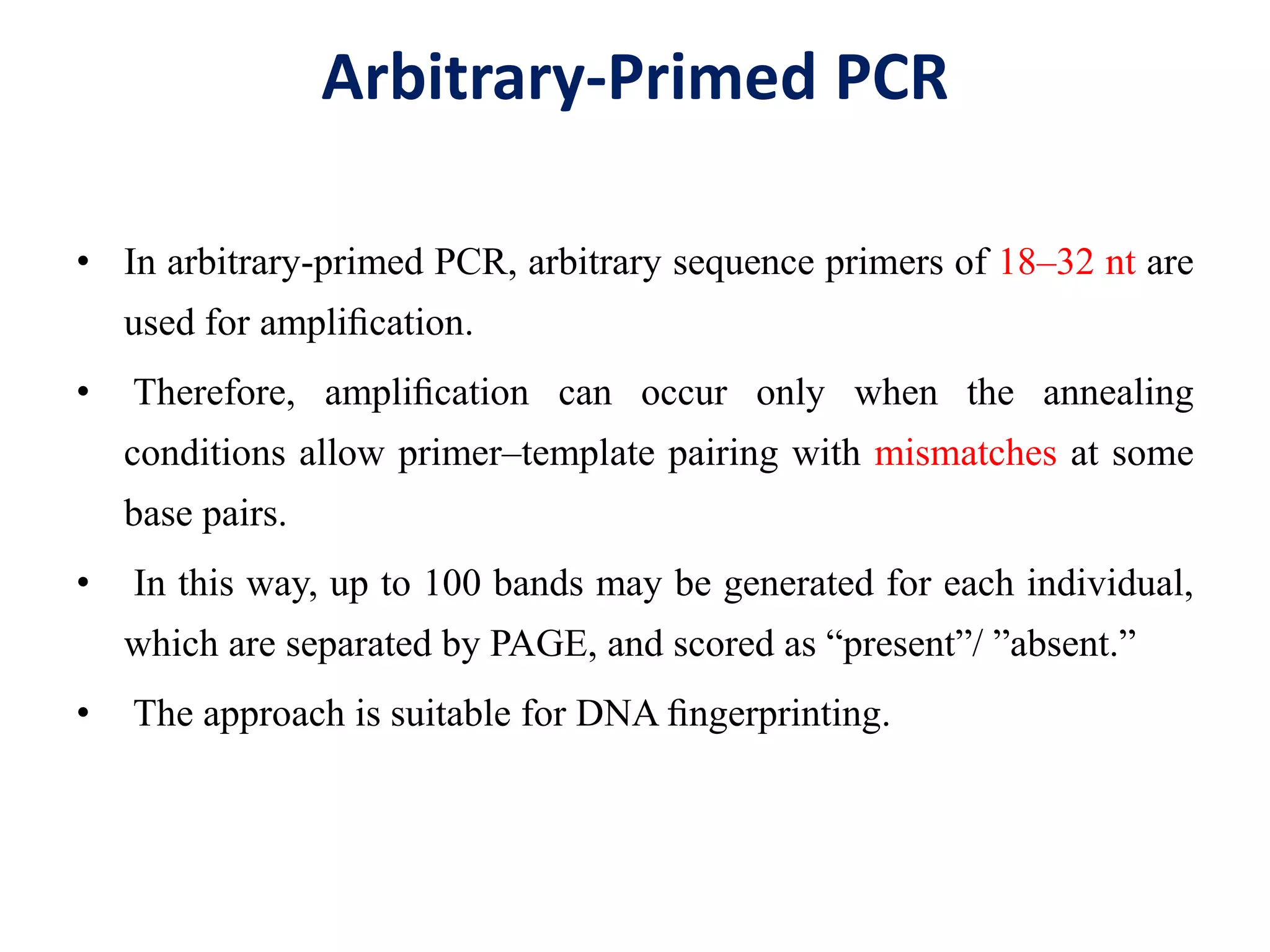
Arbitrary-Primed PCR
• In arbitrary-primed PCR, arbitrary sequence primers of 18–32 nt are
used for amplification.
• Therefore, amplification can occur only when the annealing
conditions allow primer–template pairing with mismatches at some
base pairs.
• In this way, up to 100 bands may be generated for each individual,
which are separated by PAGE, and scored as “present”/ ”absent.”
• The approach is suitable for DNA fingerprinting.
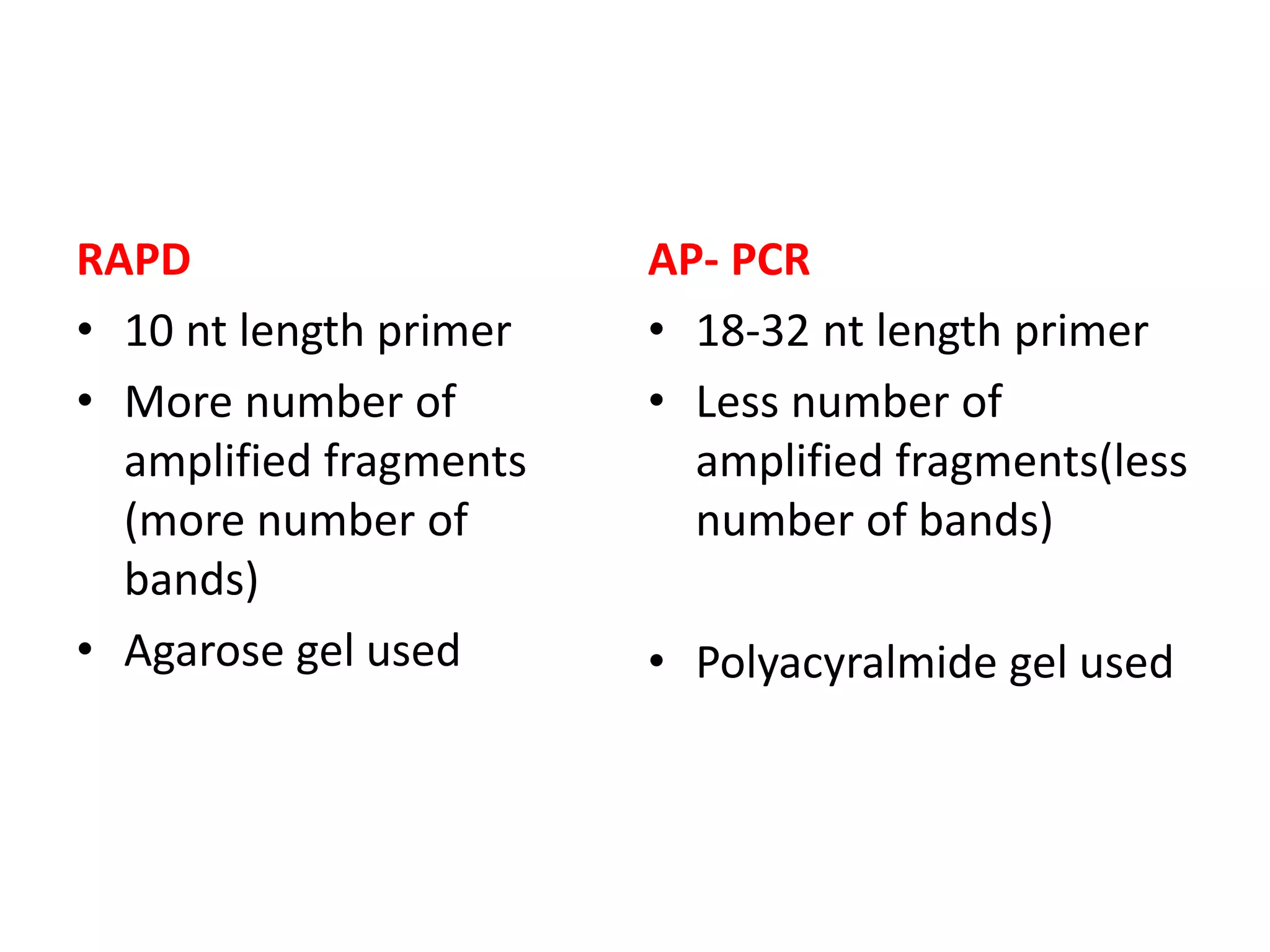
RAPD
• 10 nt length primer
• More number of
amplified fragments
(more number of
bands)
• Agarose gel used
AP- PCR
• 18-32 nt length primer
• Less number of
amplified fragments(less
number of bands)
• Polyacyralmide gel used
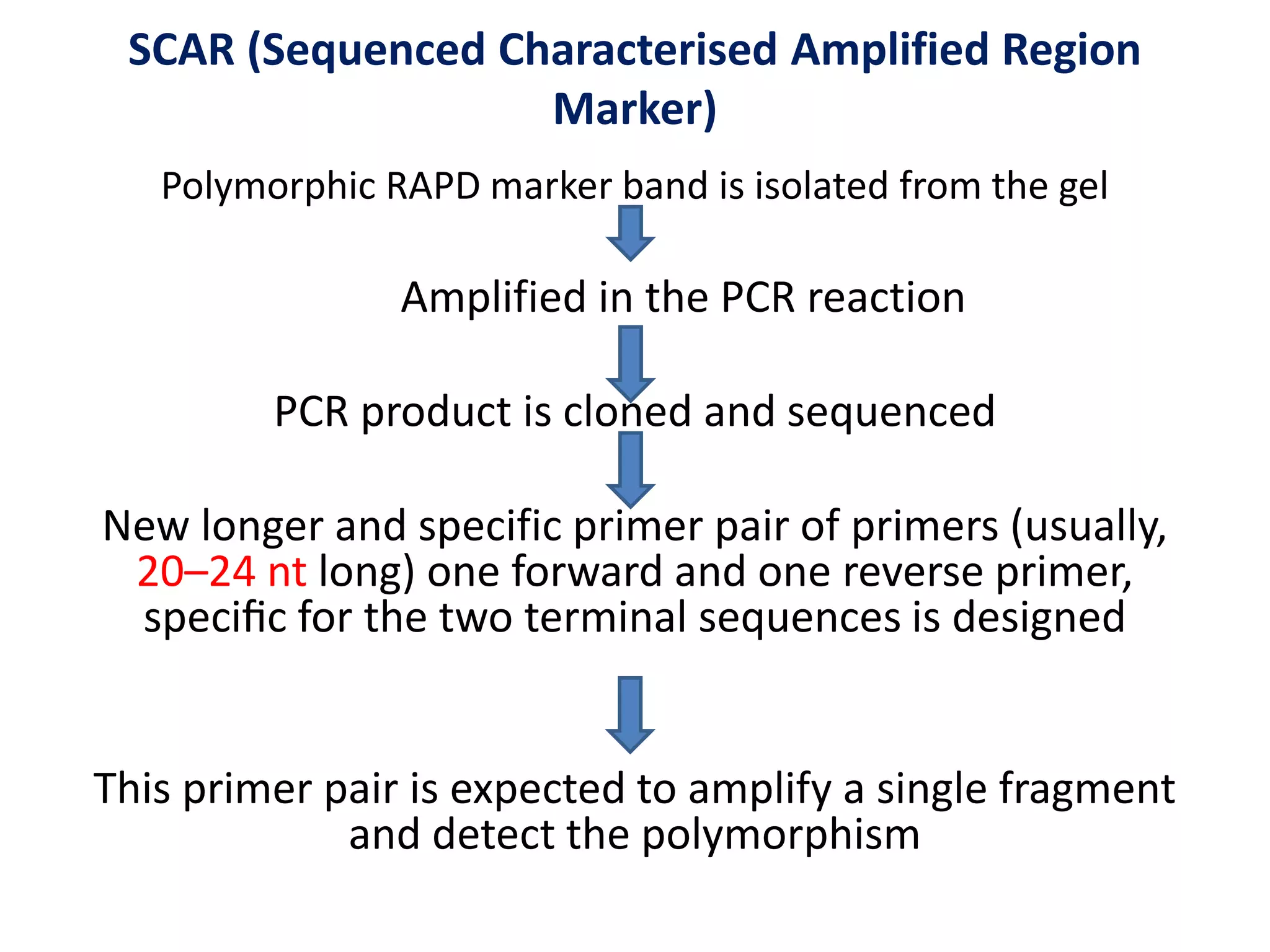
SCAR (Sequenced Characterised Amplified Region
Marker)
Polymorphic RAPD marker band is isolated from the gel
Amplified in the PCR reaction
PCR product is cloned and sequenced
New longer and specific primer pair of primers (usually,
20–24 nt long) one forward and one reverse primer,
specific for the two terminal sequences is designed
This primer pair is expected to amplify a single fragment
and detect the polymorphism
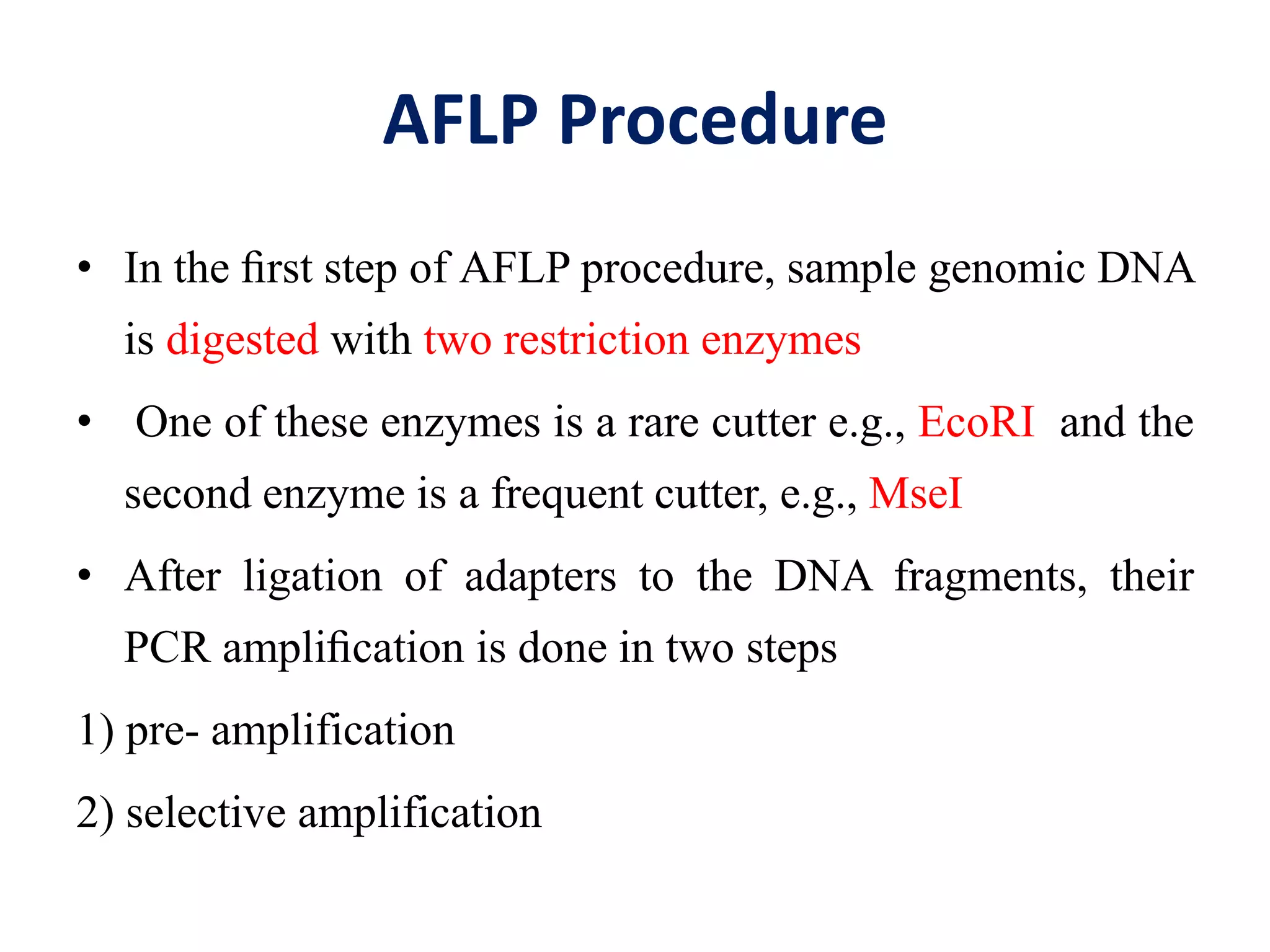
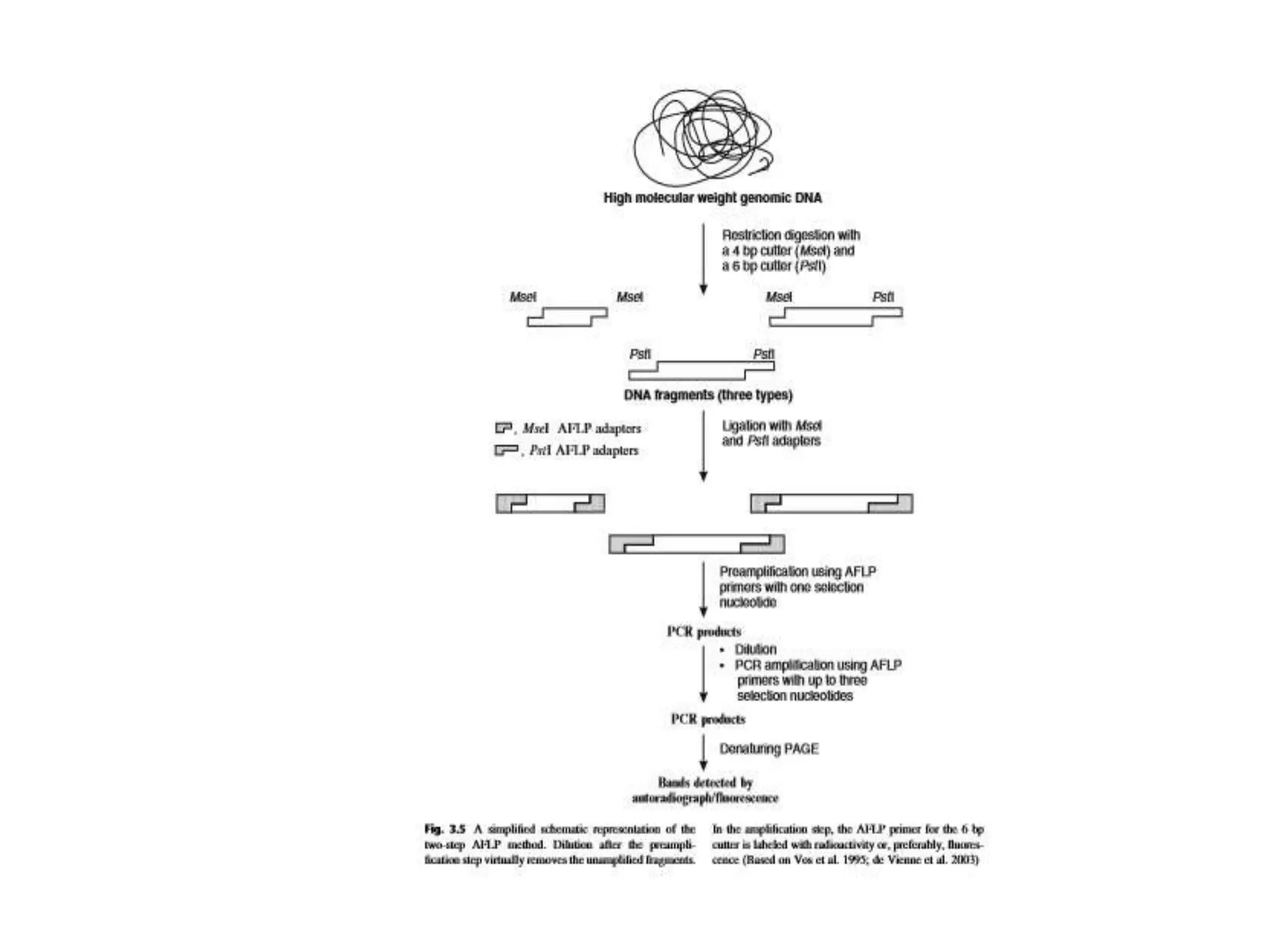
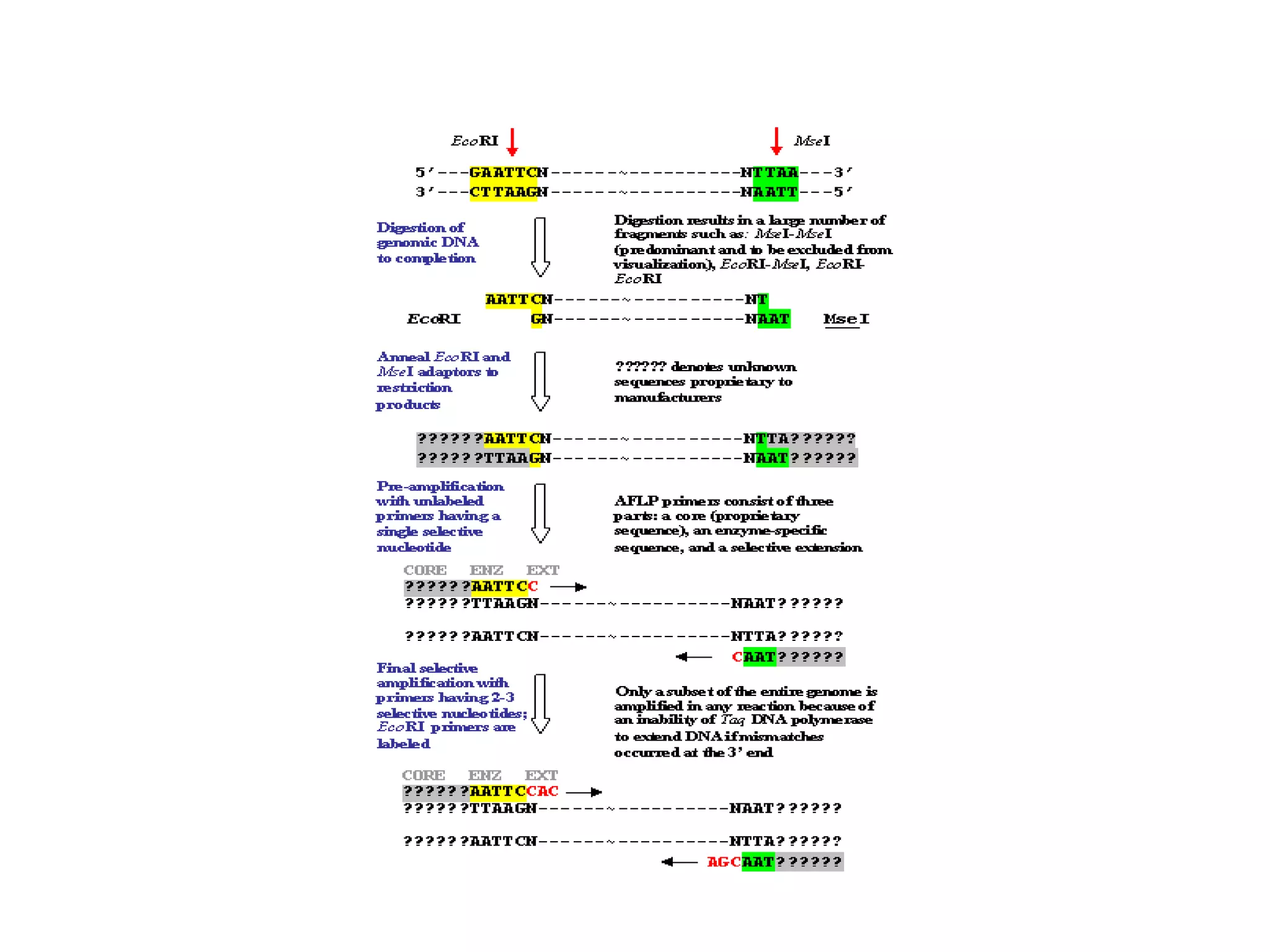
AFLP Procedure
• In the first step of AFLP procedure, sample genomic DNA
is digested with two restriction enzymes
• One of these enzymes is a rare cutter e.g., EcoRI and the
second enzyme is a frequent cutter, e.g., MseI
• After ligation of adapters to the DNA fragments, their
PCR amplification is done in two steps
1) pre- amplification
2) selective amplification
SSR (Simple Sequence Repeats)
• SSRs consist of tandemly repeated sequences of 1–6 bp, of
which the dinucleotide repeats (CA)n, (GA)n, and (AT)n are
the most frequent and highly polymorphic in eukaryotic
genomes.
• In case of plants, (AT)n and (GA)n repeats appear to be more
numerous, while (CA)n repeats constitute one of the most
abundant microsatellites in mammals.
• The simple sequence repeat (SSR) markers are codominant markers in
which a microsatellite locus is amplified using a specific primer pair
derived from the unique sequences flanking the SSR locus.
• The unique sequences flanking the SSR loci seem to be conserved within
species and even across species within a given genus, but rarely across
related genera.
• Therefore, SSR primers designed on the basis of genome sequence
information from one species can be used in a related species as well.
Contd.,
• Microsatellites can be amplified for identification by the polymerase chain
reaction (PCR) process, using the unique sequences of flanking regions as
primers
• DNA is repeatedly denatured at a high temperature to separate the double
strand, then cooled to allow annealing of primers and the extension of
nucleotide sequences through the microsatellite.
• This process results in production of enough DNA to be visible on agarose
or polyacrylamide gels.
• With the abundance of PCR technology, primers that flank microsatellite
loci are simple and quick to use, but the development of correctly
functioning primers is often a tedious and costly process
THANK YOU

PCR based molecular markers

  • 1.
    PCR BASED MOLECULAR MARKERS Presentedby DIVYA S I Ph.D. (GPB) 2019608004
  • 2.
    Polymerase Chain Reaction •Karry Mullis - 1983 - Discovered PCR • PCR procedure produces microgram (μg) quantities of DNA copies (up to billion copies) from even a single copy of the desired DNA. • The DNA segment amplified by PCR is often referred to as amplicon. • The PCR process has been completely automated and compact thermal cyclers are commercially available.
  • 3.
    Procedure for PCR Reagents: •A target DNA • A thermostable DNA polymerase • A pair of ~20 nt long oligodeoxynucleotide primers that are complementary to the target DNA fragment • The four deoxynucleotide triphosphates - dATP, dCTP, dGTP, and dTTP
  • 4.
    Denaturation • The reactionmixture is first heated most often to 94 degree Celsius to ensure denaturation of the template DNA. • The duration of the denaturation step is usually 2 min in the first PCR cycle, but it is only 1 min in the subsequent cycles.
  • 5.
    Annealing • The abovemixture is then cooled to a temperature that would allow the primers to anneal to their complementary sequences located at the 3’ ends of the target DNA segment, i.e., the template DNA. • Generally the annealing temperature is between 40 and 60 degree Celsius, and the duration of this step is 1 min.
  • 6.
    Extension • In thethird and final step, the primers are extended due to the progressive addition of nucleotides to the free 3’-OH groups of the primers and, subsequently, the new strands being synthesized. • The temperature during primer extension step is generally maintained at 72 degree Celsius, and the duration of this step is usually 2 min. • Taq DNA polymerase is generally able to amplify DNA segments of up to 2 kb.
  • 8.
    Separation of PCRAmplification Products • DNA fragments/amplicons generated by PCR can be separated by electrophoresis in agarose or acrylamide gels. • An agarose gel of about 1 % can separate fragment of ~300–1,500 bp. • Polyacrylamide gels contain a much more uniform pore size than agarose gels and allow separation of DNA fragments with a higher resolution. • A gel containing 6 % acrylamide has a fine network formed by polyacrylamide and can separate DNA fragments differing in length by even one or two base pairs. • Polyacrylamide gels are suitable for detection of SSR, AFLP, DNA amplification fingerprinting (DAF), and sequence-tagged sites (STS) markers, while agarose gels are well suited for RFLP and RAPD markers.
  • 9.
    Types of PCR •Reverse Transcription PCR-The enzyme reverse transcriptase is used along with DNA polymerase (reverse transcription PCR) to generate DNA copies of RNA. • Realtime reverse transcription PCR - used to estimate the initial quantity of the template RNA. • Inverse PCR for amplification of sequences flanking the target sequence. • Anchored PCR use for amplification of a target segment when the sequence of only one of its ends is known.
  • 10.
    Multiplex PCR • Foramplification of different segments from the same DNA sample different primers may be required and these different primers are added into a single PCR tube. • In such cases, a separate PCR reaction will have to be set up for every primer pair because of the difficulties in correct identification of their PCR products. • For that different primers may be labeled with different fluorophores, and their PCR products can be distinguished on the basis of color differences in their fluorescence emissions. • The PCR products from different primers can be reliably separated by gel electrophoresis if their lengths do not overlap.
  • 11.
    Advantages and Limitationsof PCR • It can amplify even a single copy of the target sequence present in a DNA sample and generate millions of copies of this sequence. • Further, even partially degraded DNA can be successfully used for PCR. • Sequence information for the two ends of the target segment must be known for designing of the primers. • Segments of only up to 3 kb are amplified • The PCR procedure can often generate “hybrid amplicons” and primer dimers, and it may produce erroneous results due to contaminating DNA. • Primer dimers are frequently produced when the two PCR primers have partially complementary 3’ termini.
  • 12.
    RAPD (Random Amplified PolymorphicDNA) • PCR based marker • A single short (10 nt long) oligonucleotide with an arbitrary base sequence – primer (forward and reverse primer) • Segments of DNA are amplified at random • No knowledge of DNA Sequence is required
  • 13.
  • 17.
    RAPD Technique Isolation ofDNA Keep the tubes in PCR Thermocycler Denature the DNA DNA strands separated Annealing of primer (36°C) Primer annealed to template DNA strands
  • 18.
    DNA Synthesis Complementary strandsynthesis 35 to 45 cycles Amplified products separated by gel electrophoresis Band detected by Ethidium bromide staining
  • 19.
    DNA Amplification Fingerprinting •DNA amplification fingerprinting amplifies genomic sequences using a single short oligonucleotide, typically, of 4–6 nt as primer, but primers of up to 15 bases can be used. • This produces a range of up to 100 short amplified products of different lengths. • DAF uses less stringent conditions for annealing and primer extension reactions than PCR. • Temperature variation in the thermocycler block is not as crucial in the case of DAF as it is with conventional PCR. • Short extension times are sufficient for complete extension of the short products typically obtained in DAF
  • 20.
    Arbitrary-Primed PCR • Inarbitrary-primed PCR, arbitrary sequence primers of 18–32 nt are used for amplification. • Therefore, amplification can occur only when the annealing conditions allow primer–template pairing with mismatches at some base pairs. • In this way, up to 100 bands may be generated for each individual, which are separated by PAGE, and scored as “present”/ ”absent.” • The approach is suitable for DNA fingerprinting.
  • 21.
    RAPD • 10 ntlength primer • More number of amplified fragments (more number of bands) • Agarose gel used AP- PCR • 18-32 nt length primer • Less number of amplified fragments(less number of bands) • Polyacyralmide gel used
  • 22.
    SCAR (Sequenced CharacterisedAmplified Region Marker) Polymorphic RAPD marker band is isolated from the gel Amplified in the PCR reaction PCR product is cloned and sequenced New longer and specific primer pair of primers (usually, 20–24 nt long) one forward and one reverse primer, specific for the two terminal sequences is designed This primer pair is expected to amplify a single fragment and detect the polymorphism
  • 23.
    AFLP Procedure • Inthe first step of AFLP procedure, sample genomic DNA is digested with two restriction enzymes • One of these enzymes is a rare cutter e.g., EcoRI and the second enzyme is a frequent cutter, e.g., MseI • After ligation of adapters to the DNA fragments, their PCR amplification is done in two steps 1) pre- amplification 2) selective amplification
  • 26.
    SSR (Simple SequenceRepeats) • SSRs consist of tandemly repeated sequences of 1–6 bp, of which the dinucleotide repeats (CA)n, (GA)n, and (AT)n are the most frequent and highly polymorphic in eukaryotic genomes. • In case of plants, (AT)n and (GA)n repeats appear to be more numerous, while (CA)n repeats constitute one of the most abundant microsatellites in mammals.
  • 27.
    • The simplesequence repeat (SSR) markers are codominant markers in which a microsatellite locus is amplified using a specific primer pair derived from the unique sequences flanking the SSR locus. • The unique sequences flanking the SSR loci seem to be conserved within species and even across species within a given genus, but rarely across related genera. • Therefore, SSR primers designed on the basis of genome sequence information from one species can be used in a related species as well.
  • 28.
    Contd., • Microsatellites canbe amplified for identification by the polymerase chain reaction (PCR) process, using the unique sequences of flanking regions as primers • DNA is repeatedly denatured at a high temperature to separate the double strand, then cooled to allow annealing of primers and the extension of nucleotide sequences through the microsatellite. • This process results in production of enough DNA to be visible on agarose or polyacrylamide gels. • With the abundance of PCR technology, primers that flank microsatellite loci are simple and quick to use, but the development of correctly functioning primers is often a tedious and costly process
  • 30.