






Challenge….! Jan 2009: 4 th  Year Students at  JCU School of Medicine  set new record.…!!! 100% Pass & Class Average of over 70% 99%  Pass  &  Class Average of 68% Highest  Are you ready for the Challenge….? Yes We Can…!
CPC06-4.3.1 Mina Gupta, 48 year old woman, lives in Mt Isa, presents to her GP with a  swelling in her neck & fatigue. Duration of swelling:  2/12 Painful, some discomfort lower neck (rate 2/10) Site:  central, mid- neck Voice change: No Weight loss/gain? put a bit of weight on  as her clothes feel a bit tight. Fatigue?  Worsening fatigue  last few months.  Sleeping well but always feels tired.
CPC06-4.3.1 – Physical Exam Vitals:  T 36.8C  rr 12/min  BP : 110/64 mmHg  pulse : 64 bpm  reg good volume  BMI : 32 Peripheries:  ?  pale palmar creases ,  cool hands   mild bilateral pitting oedema   nil else abnormal Head + neck  conjunctival  pallor +;   xanthelasma  bilaterally;  diffuse firm slightly  tender central neck mass  which moves on swallowing; no bruit; no periorbital oedema; no LN. Pemberton’s sign negative CVS + Resp:  nil abnormal GI + Renal: nil abnormal CNS:  K10 score 32 ;  depressed ankle reflexes  bilaterally (delayed return) ? ? ?
CPC06-4.3.1- Differential Thyroid: Goitre – what ? type? Hyper/Hypo/Euthyroid? Thyroid nodule - cyst, adenoma, Cancer Autoimmune thyroiditis – Graves?  Hashimoto? Thyroid cancer - ? Papillary ? Follicular ? Other What other differentials? Lymphadenitis, salivary gland tumors, Lymphoma, thymoma, secondary deposits. Psychological, Diet, DM, Hypertension, Obesity.
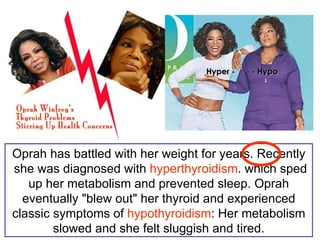
Oprah has battled with her weight for years. Recently  she was diagnosed with  hyperthyroidism . which sped up her metabolism and prevented sleep. Oprah eventually "blew out" her thyroid and experienced classic symptoms of  hypothyroidism : Her metabolism slowed and she felt sluggish and tired. Hyper -   - Hypo
Sir William Osler, M.D. said…   As is our pathology  so is our practice... what the pathologist thinks today, the physician does tomorrow.   Pathology,   The science of Medicine
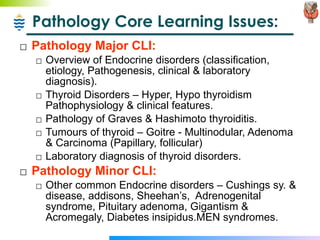
Pathology Core Learning Issues: Pathology Major CLI: Overview of Endocrine disorders (classification, etiology, Pathogenesis, clinical & laboratory diagnosis). Thyroid Disorders – Hyper, Hypo thyroidism Pathophysiology & clinical features. Pathology of Graves & Hashimoto thyroiditis. Tumours of thyroid – Goitre - Multinodular, Adenoma & Carcinoma (Papillary, follicular) Laboratory diagnosis of thyroid disorders. Pathology Minor CLI: Other common Endocrine disorders – Cushings sy. & disease, addisons, Sheehan’s,  Adrenogenital syndrome, Pituitary adenoma, Gigantism & Acromegaly, Diabetes insipidus.MEN syndromes.
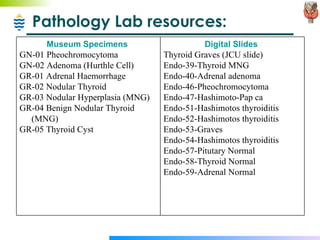
Pathology Lab resources: Muse um Specimens   GN-01 Pheochromocytoma  GN-02 Adenoma (Hurthle Cell)  GR-01 Adrenal Haemorrhage  GR-02 Nodular Thyroid  GR-03 Nodular Hyperplasia (MNG) GR-04 Benign Nodular Thyroid (MNG)  GR-05 Thyroid Cyst  Digital Slides  Thyroid Graves (JCU slide) Endo-39-Thyroid MNG Endo-40-Adrenal adenoma Endo-46-Pheochromocytoma Endo-47-Hashimoto-Pap ca Endo-51-Hashimotos thyroiditis Endo-52-Hashimotos thyroiditis Endo-53-Graves Endo-54-Hashimotos thyroiditis Endo-57-Pitutary Normal Endo-58-Thyroid Normal Endo-59-Adrenal Normal
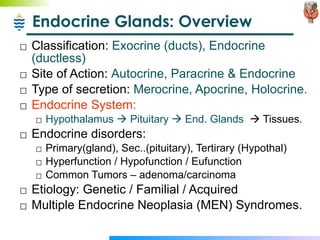
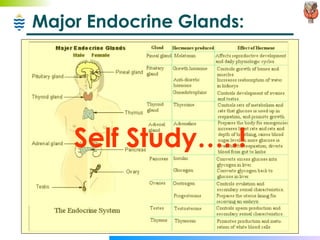
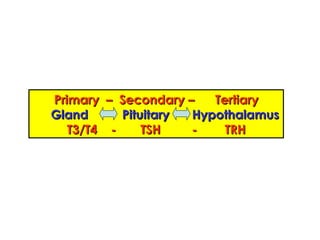
Endocrine Glands: Overview Classification:  Exocrine (ducts), Endocrine (ductless) Site of Action:  Autocrine, Paracrine & Endocrine Type of secretion:  Merocrine, Apocrine, Holocrine. Endocrine System:  Hypothalamus    Pituitary    End. Glands     Tissues.  Endocrine disorders: Primary(gland), Sec..(pituitary), Tertirary (Hypothal) Hyperfunction / Hypofunction / Eufunction Common Tumors – adenoma/carcinoma Etiology: Genetic / Familial / Acquired Multiple Endocrine Neoplasia (MEN) Syndromes.
Major Endocrine Glands: Self Study…..!
8. A PLEASING PERSONALITY WITH PMA Assembling an attractive personality is a must. Your personality is your greatest asset or your greatest liability, for it embraces everything that you control: mind, body, soul and spirit. Learn to be pleasant even when others are being unpleasant to you. Positive Mental Attitude: 17 Success Principles… Some bring happiness where ever they go,  & some whenever….!
Pathology of  Thyroid Disorders Dr. Venkatesh M. Shashidhar Associate Prof. & Head of Pathology
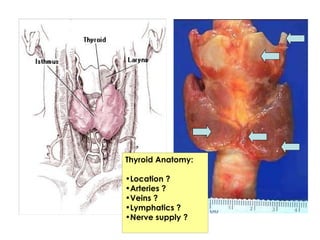
Thyroid Anatomy: Location ? Arteries ? Veins ? Lymphatics ? Nerve supply ?
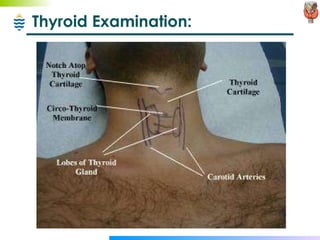
Thyroid Examination:
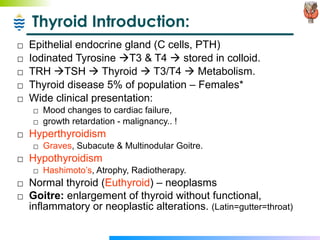
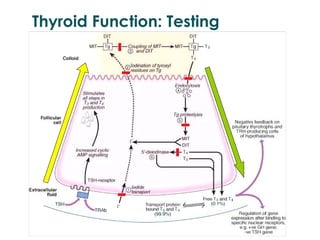
Thyroid Introduction: Epithelial endocrine gland (C cells, PTH) Iodinated Tyrosine   T3 & T4    stored in colloid. TRH   TSH    Thyroid    T3/T4    Metabolism. Thyroid disease 5% of population – Females* Wide clinical presentation:  Mood changes to cardiac failure,  growth retardation - malignancy.. ! Hyperthyroidism Graves , Subacute & Multinodular Goitre. Hypothyroidism Hashimoto’s , Atrophy, Radiotherapy. Normal thyroid ( Euthyroid ) – neoplasms Goitre:  enlargement of thyroid without functional, inflammatory or neoplastic alterations.  (Latin=gutter=throat)
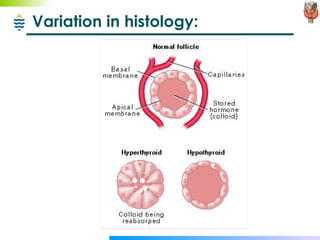
Variation in histology:
Thyroid Function: Testing
Primary  –  Secondary –  Tertiary Gland  –  Pituitary  -  Hypothalamus T3/T4  -  TSH  -  TRH
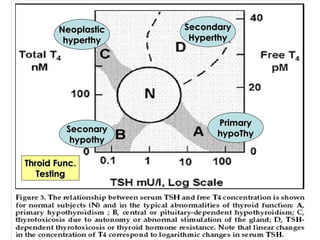
Primary hypoThy Seconary hypothy Neoplastic hyperthy Secondary Hyperthy Throid Func. Testing
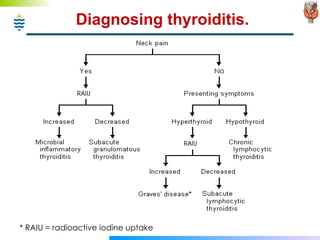
Diagnosing thyroiditis. * RAIU = radioactive iodine uptake
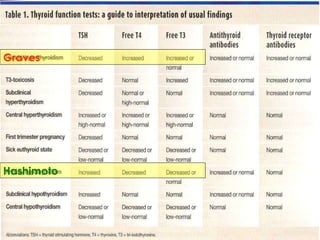
Graves Hashimoto
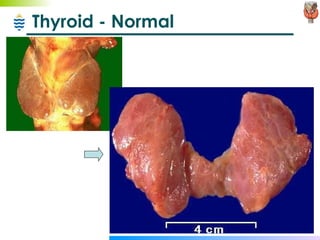
Thyroid - Normal
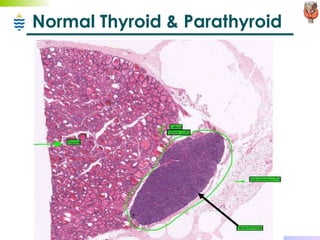
Normal Thyroid & Parathyroid
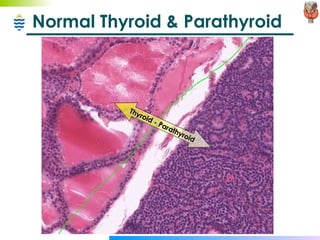
Normal Thyroid & Parathyroid Thyroid - Parathyroid
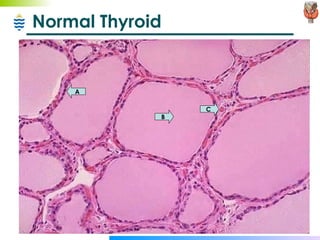
Normal Thyroid B A C
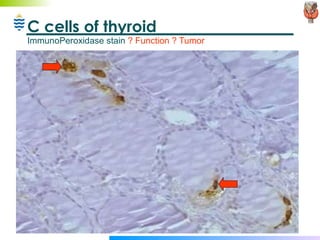
C cells of thyroid  ImmunoPeroxidase stain  ? Function ? Tumor
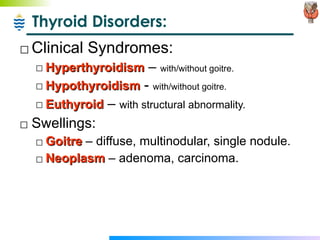
Thyroid Disorders:  Clinical Syndromes: Hyperthyroidism  –  with/without goitre. Hypothyroidism  -  with/without goitre. Euthyroid  –  with structural abnormality. Swellings: Goitre  – diffuse, multinodular, single nodule. Neoplasm  – adenoma, carcinoma.
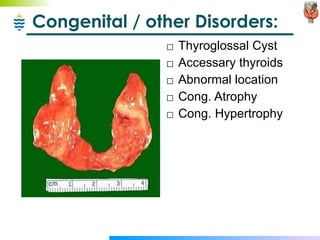
Congenital / other Disorders: Thyroglossal Cyst Accessary thyroids Abnormal location Cong. Atrophy Cong. Hypertrophy
Hypothyroidism Cretinism - children Myxedema - adults Causes: Developmental – Atrophy, hypoplasia Radiation/Surgery Hashimoto’s thyroiditis Iodine deficiency Drugs – PAS, iodides, lithium Pituitary disorders
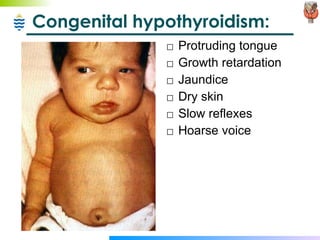
Congenital hypothyroidism: Protruding tongue Growth retardation Jaundice Dry skin Slow reflexes Hoarse voice
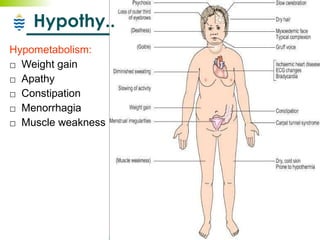
Hypothy.. Hypometabolism: Weight gain Apathy Constipation Menorrhagia Muscle weakness
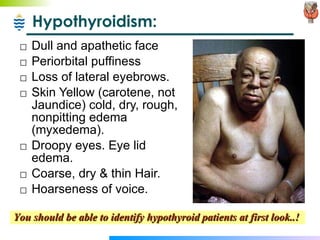
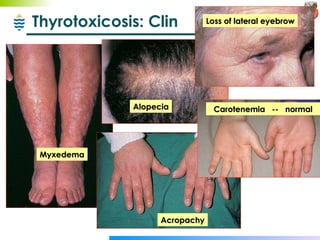
Hypothyroidism: Dull and apathetic face Periorbital puffiness  Loss of lateral eyebrows.  Skin Yellow (carotene, not Jaundice) cold, dry, rough, nonpitting edema (myxedema).  Droopy eyes. Eye lid edema. Coarse, dry & thin Hair. Hoarseness of voice. You should be able to identify hypothyroid patients at first look..!
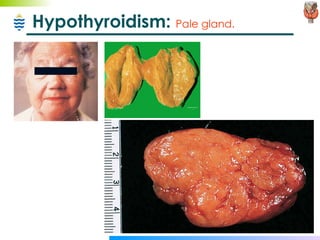
Hypothyroidism:  Pale gland.
Hyperthyroidism Thyrotoxicosis Causes Graves  – autoimmune, toxic Toxic multinodular goitre Functioning adenoma Solid, grey hyperemic gland. Microscopy: Epithelial hyperplasia, hypertrophy, scanty colloid (Scalloping). Lymphocyte infiltration.
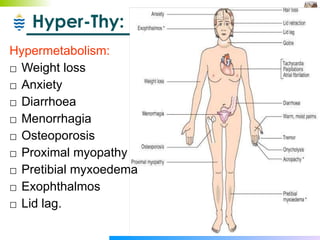
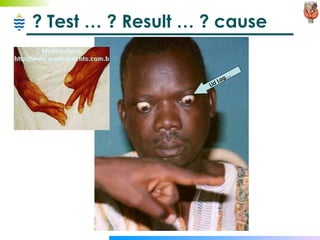
Hyper-Thy: Hypermetabolism: Weight loss Anxiety Diarrhoea Menorrhagia Osteoporosis Proximal myopathy Pretibial myxoedema Exophthalmos Lid lag.
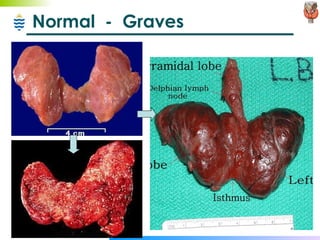
Normal  -  Graves
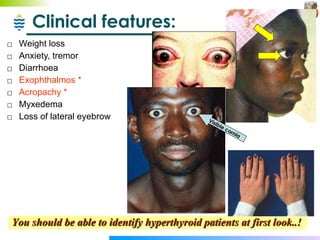
Clinical features: Weight loss Anxiety, tremor Diarrhoea Exophthalmos * Acropachy * Myxedema Loss of lateral eyebrow You should be able to identify hyperthyroid patients at first look..!  Visible cornia
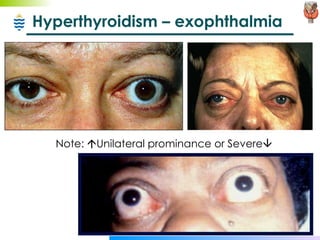
Hyperthyroidism – exophthalmia Note:   Unilateral prominance or Severe 
Thyrotoxicosis: Clin Myxedema Alopecia Acropachy Loss of lateral eyebrow Carotenemia  --  normal
? Test … ? Result … ? cause Lid Lag…
3. GOING THE EXTRA MILE Very simply, this principle means: Render or give more and better service than you are paid for, and sooner or later you  will  receive compound interest from your investment of going the extra mile. Positive Mental Attitude: 17 Success Principles…
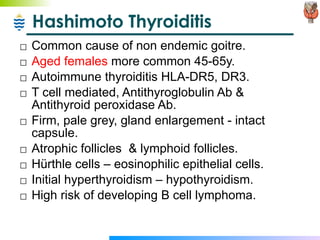
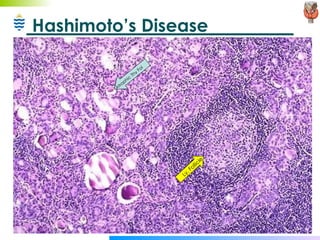
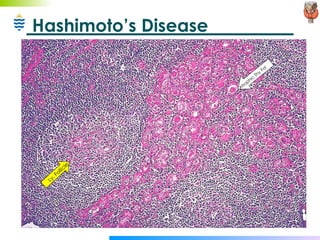
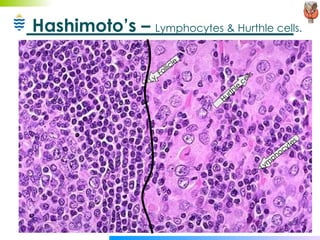
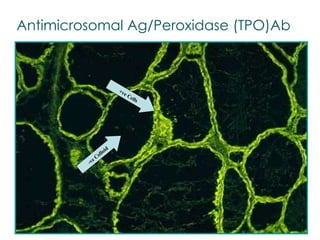
Hashimoto Thyroiditis Common cause of non endemic goitre. Aged females  more common 45-65y. Autoimmune thyroiditis HLA-DR5, DR3. T cell mediated, Antithyroglobulin Ab & Antithyroid peroxidase Ab. Firm, pale grey, gland enlargement - intact capsule. Atrophic follicles  & lymphoid follicles. H ü rthle cells – eosinophilic epithelial cells. Initial hyperthyroidism – hypothyroidism. High risk of developing B cell lymphoma.
Hashimoto’s Disease Atrophic Thy Fol Ly. Follicle
Hashimoto’s –  Lymphocytes & Hurthle cells. Lymphocytes Hurthle cells Ly. Follicle
Antimicrosomal Ag/Peroxidase (TPO)Ab -ve Colloid +ve Cells
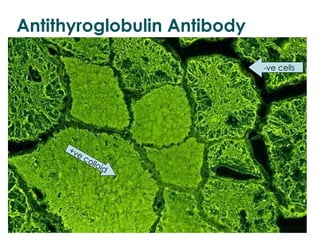
Antithyroglobulin Antibody +ve colloid -ve cells
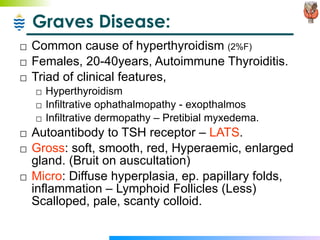
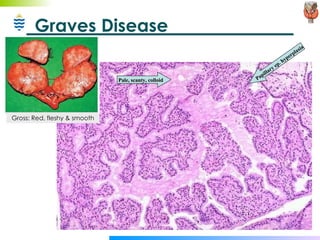
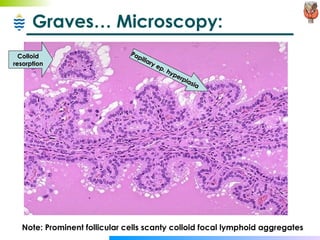
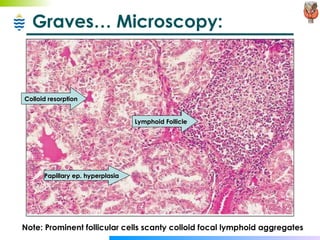
Graves Disease: Common cause of hyperthyroidism  (2%F) Females, 20-40years, Autoimmune Thyroiditis.  Triad of clinical features, Hyperthyroidism Infiltrative ophathalmopathy - exopthalmos Infiltrative dermopathy – Pretibial myxedema. Autoantibody to TSH receptor –  LATS . Gross : soft, smooth, red, Hyperaemic, enlarged gland. (Bruit on auscultation) Micro : Diffuse hyperplasia, ep. papillary folds,  inflammation – Lymphoid Follicles (Less)  Scalloped, pale, scanty colloid.
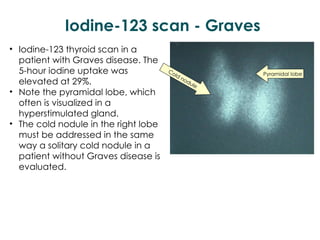
Iodine-123 scan - Graves Cold nodule Pyramidal lobe Iodine-123 thyroid scan in a patient with Graves disease. The 5-hour iodine uptake was elevated at 29%.  Note the pyramidal lobe, which often is visualized in a hyperstimulated gland.  The cold nodule in the right lobe must be addressed in the same way a solitary cold nodule in a patient without Graves disease is evaluated.
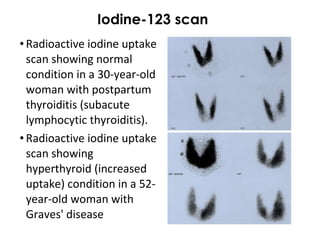
Iodine-123 scan Radioactive iodine uptake scan showing normal condition in a 30-year-old woman with postpartum thyroiditis (subacute lymphocytic thyroiditis). Radioactive iodine uptake scan showing hyperthyroid (increased uptake) condition in a 52-year-old woman with Graves' disease
Graves Disease Pale, scanty, colloid Papillary ep. hyperplasia Gross: Red, fleshy & smooth
Graves… Microscopy: Note: Prominent follicular cells scanty colloid focal lymphoid aggregates Colloid  resorption Papillary ep. hyperplasia
Graves… Microscopy: Note: Prominent follicular cells scanty colloid focal lymphoid aggregates Lymphoid Follicle Colloid resorption Papillary ep. hyperplasia
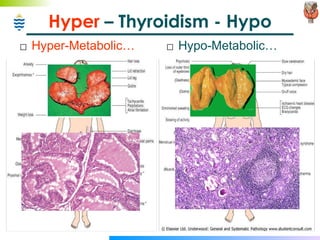
Hyper  – Thyroidism - Hypo  Hyper-Metabolic… Hypo-Metabolic…
14. CREATIVE VISION Creative vision requires you to stimulate your imagination to work towards your goal, your target and your major purpose, and to put the result of that imagination to work. Positive Mental Attitude: 17 Success Principles…
GOITRE (Enlargement of Thyroid) Hyperplasia ( MNG ), Inflammation, tumours
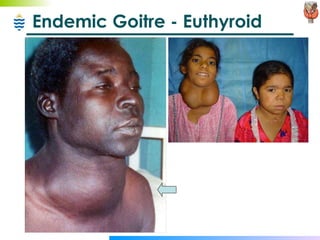
Diffuse & Multinodular goitre Iodide deficiency / transport disorder Iodine, Cassava, thiocyanate…  Endemic (common) & sporadic types Toxic or non toxic types. Sporadic – rare, females, young. Hyperplastic  (smooth) &  Colloid  (nodular) stage. Repeated attacks diffuse    multinodular. Changes: Infl., fibrosis, Ca+, cysts, necrosis etc. Mass effect, dysphagia, airway obstruction Toxic nodule    hyperthyroidism - Plummer syndrome (rare).
Goitre Non-neoplastic Common (95%) Multiple/diffuse Hyperplasia – MNG Inflammations Infections Cysts Neoplastic Uncommon (<5%) Solitary nodule Young, males Hot are benign..! Follicular adenoma Carcinoma
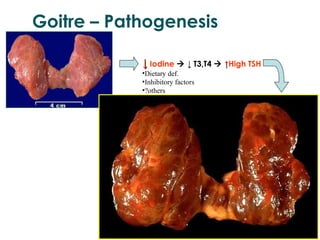
Goitre – Pathogenesis ↓   Iodine      ↓   T3,T4     ↑ High TSH Dietary def. Inhibitory factors ?others
Endemic Goitre - Euthyroid
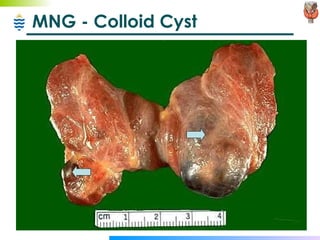
MNG - Colloid Cyst
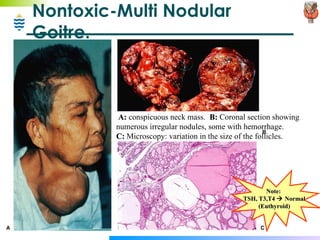
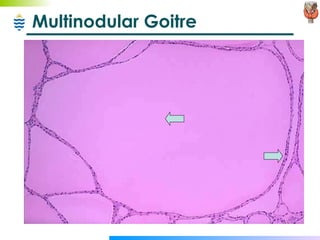
Nontoxic-Multi Nodular Goitre. A:  conspicuous neck mass.  B:  Coronal section showing numerous irregular nodules, some with hemorrhage.  C:  Microscopy: variation in the size of the follicles. Note:  TSH, T3,T4    Normal (Euthyroid)
Multinodular Goitre
5. SELF DISCIPLINE Self discipline is doing what you are supposed to be doing for the moment. It is employing the &quot;DO IT NOW“ philosophy Positive Mental Attitude: 17 Success Principles…
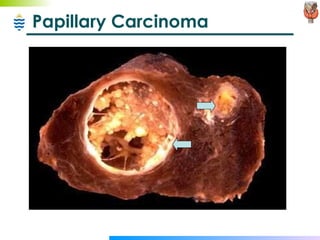
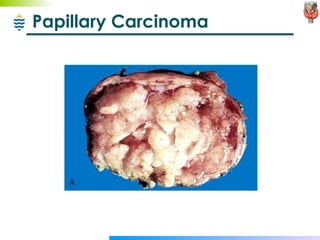
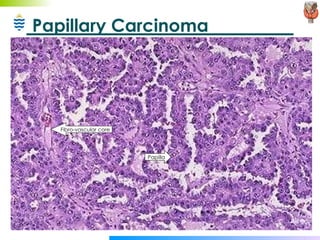
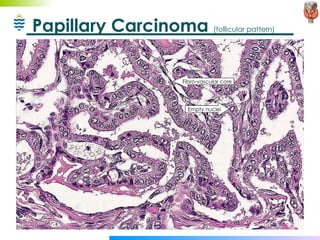
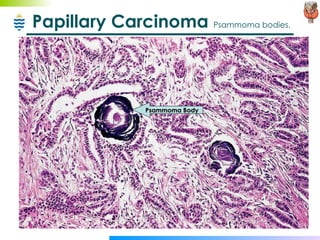
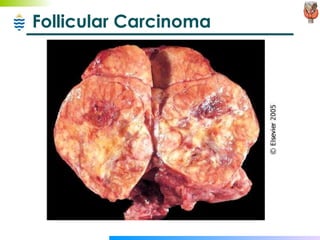
Neoplasms of Thyroid Adenoma – Follicular adenoma - hot Papillary Carcinoma – 75-80% (young) Radiation, Gardner & Cowden syndromes Papillary folds, Psammoma bodies, Nuclear.. 98% 10year survival rate when localised. Follicular carcinoma -  10-20% (Aged) Medullary carcinoma – 5% Anaplastic carcinoma - <5%
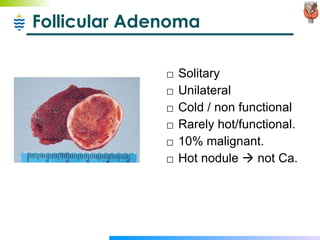
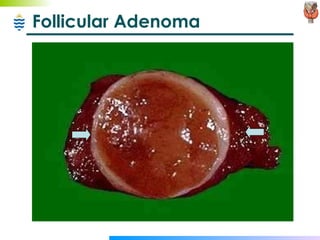
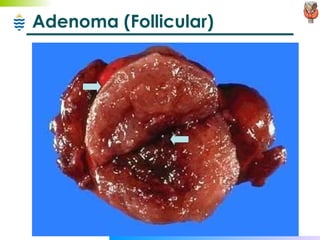
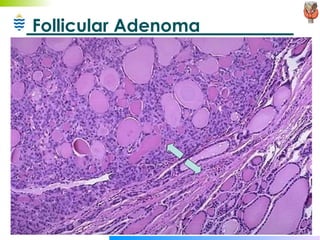
Follicular Adenoma Solitary Unilateral Cold / non functional Rarely hot/functional.  10% malignant. Hot nodule    not Ca.
Follicular Adenoma
Adenoma (Follicular)
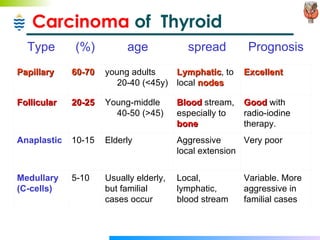
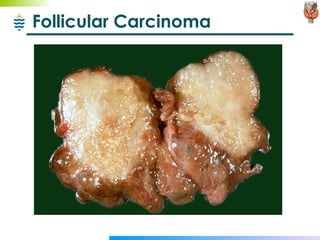
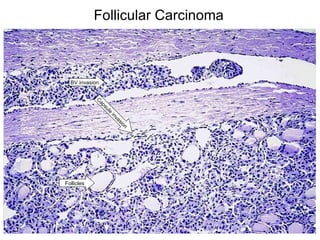
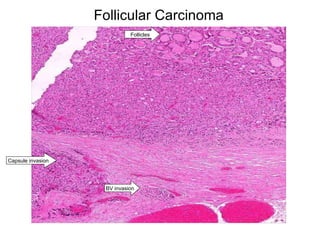
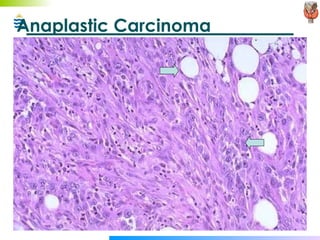
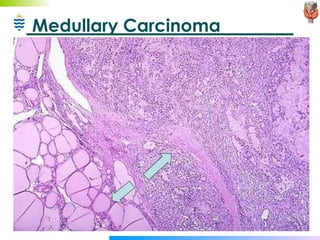
Carcinoma  of  Thyroid Type (%) age spread Prognosis Papillary 60-70 young adults 20-40 (<45y) Lymphatic , to local  nodes Excellent Follicular 20-25 Young-middle 40-50 (>45) Blood  stream, especially to  bone Good  with radio-iodine therapy. Anaplastic 10-15 Elderly Aggressive local extension Very poor Medullary (C-cells) 5-10 Usually elderly, but familial cases occur Local, lymphatic, blood stream Variable. More aggressive in familial cases
Papillary Carcinoma
Papillary Carcinoma
Papillary Carcinoma Papilla Fibro-vascular core
Papillary Carcinoma  (follicular pattern) Empty nuclei Fibro-vascular core
Papillary Carcinoma  Psammoma bodies. Psammoma Body
Follicular Carcinoma
Follicular Carcinoma BV invasion Capsule invasion Follicles
Follicular Adenoma
Anaplastic Carcinoma
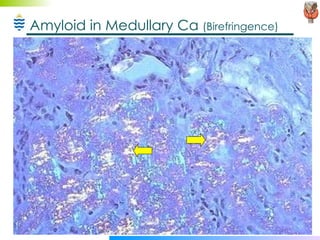
Medullary Carcinoma
Amyloid in Medullary Ca  (Birefringence)
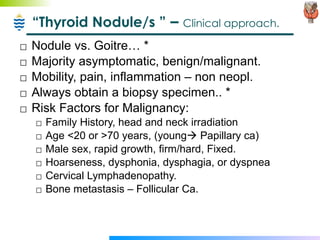
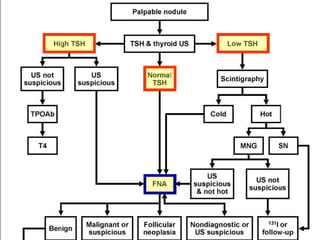
“ Thyroid Nodule/s ”  –  Clinical approach. Nodule vs. Goitre… *  Majority asymptomatic, benign/malignant. Mobility, pain, inflammation – non neopl. Always obtain a biopsy specimen.. * Risk Factors for Malignancy: Family History, head and neck irradiation Age <20 or >70 years, (young   Papillary ca) Male sex, rapid growth, firm/hard, Fixed. Hoarseness, dysphonia, dysphagia, or dyspnea Cervical Lymphadenopathy. Bone metastasis – Follicular Ca.
Carcinoma Thyroid - tips Papillary ca. occurs in younger age, rarely extends outside the thyroid capsule by local invasion or rarely infiltrates local structures.  Anaplastic Ca. Occurs in elderly, Rapid local growth, with extension out of the thyroid capsule and invasion of adjacent structures such as trachea and jugular vein is typical causing mortality.  Follicular carcinoma spreads early by blood. sometimes first presents with pathological fracture due to bone metastasis.
11. CONTROLLED ATTENTION WITH PMA Controlled attention is organised mind power. It is the highest form of self discipline.  Keep your mind on the things you want   and  off the things you don't want. Positive Mental Attitude: 17 Success Principles…
Challenge….! Jan 2009: 4 th  Year Students at  JCU School of Medicine  set new record.…!!! 100% Pass & Class Average of over 70% 99%  Pass  &  Class Average of 68% Highest  Are you ready for the Challenge….? Yes We Can…!
Pathology of Endocrine System  Overview Dr. Shashidhar V. Murthy Senior Lecturer & Head of Pathology James Cook University School of Medicine
Endocrine Disorders: Common Pituitary  Hypofunction, tumor adenoma, carcinoma. Functioning adenoma – prolactinoma. Sheehan’s syndrome – infarction. D.insipidus, SIADH (post pituitary) Thyroid: Hypo, Hyper, Euthyroid (Hashimotos, Graves, ‘itis.. ) Multinodular Goitre, Adenoma, Carcinoma. C cells – Calcitonin - Medullary Ca  Parathyroid Hyperplasia (Pri/Sec/ter), Hypoplasia, Tumors Gonads  (covered later) Thymus Myasthenia gravis, Thymoma
Endocrine Disorders: Overview Adrenal Cortex: Cushings syndrome – hyperfunction Addison’s disease – hypofunction Waterhouse-Friderichsen syndrome (acute) Conn’s syndrome, Cong. Adrenal hyperplasia. Tumor – adenoma Adrenal Medulla: Pheochromocytoma – adenoma. Pineal gland Pinealoma. Endocrine Pancreas DM, Adenoma & Ca.
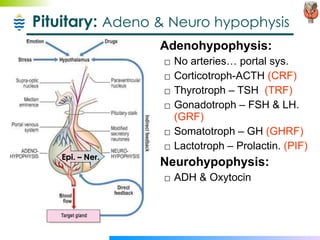
Pituitary:  Adeno & Neuro hypophysis Adenohypophysis: No arteries… portal sys. Corticotroph-ACTH  (CRF) Thyrotroph – TSH  (TRF) Gonadotroph – FSH & LH.  (GRF) Somatotroph – GH  (GHRF) Lactotroph – Prolactin.  (PIF) Neurohypophysis: ADH & Oxytocin Epi. – Ner.
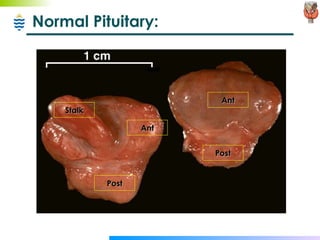
Normal Pituitary: Post Ant Stalk Post Ant
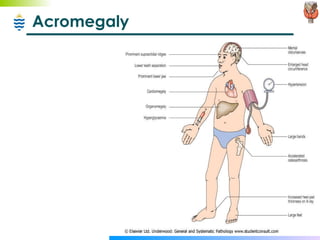
Acromegaly
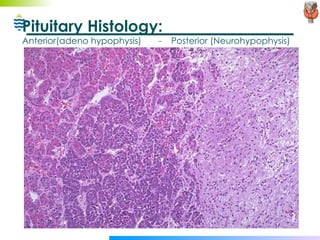
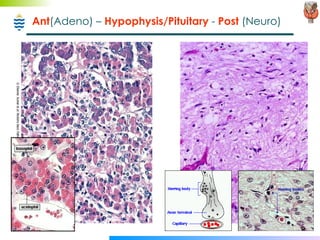
Pituitary Histology: Anterior(adeno hypophysis)  -  Posterior (Neurohypophysis)
Ant (Adeno) –  Hypophysis/Pituitary  -  Post  (Neuro)
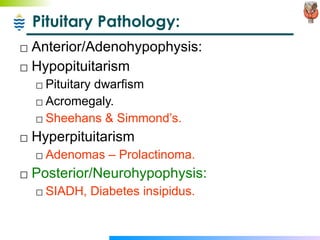
Pituitary Pathology: Anterior/Adenohypophysis: Hypopituitarism Pituitary dwarfism Acromegaly. Sheehans & Simmond’s. Hyperpituitarism Adenomas – Prolactinoma. Posterior/Neurohypophysis: SIADH, Diabetes insipidus.
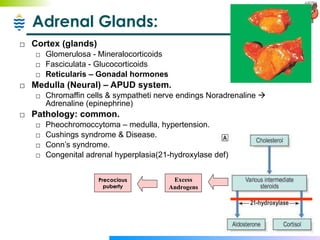
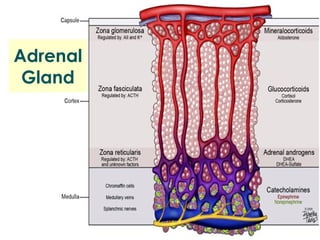
Adrenal Glands: Cortex (glands) Glomerulosa - Mineralocorticoids Fasciculata - Glucocorticoids Reticularis – Gonadal hormones Medulla (Neural) – APUD system. Chromaffin cells & sympatheti nerve endings Noradrenaline    Adrenaline (epinephrine) Pathology: common. Pheochromoccytoma – medulla, hypertension. Cushings syndrome & Disease. Conn’s syndrome. Congenital adrenal hyperplasia(21-hydroxylase def) Excess Androgens Precocious puberty
Adrenal Gland
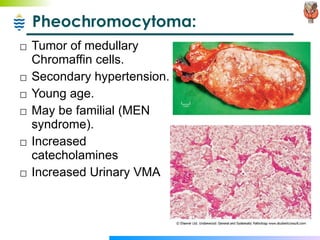
Pheochromocytoma: Tumor of medullary Chromaffin cells. Secondary hypertension. Young age. May be familial (MEN syndrome). Increased catecholamines Increased Urinary VMA
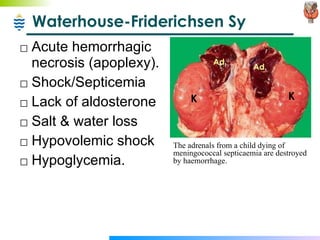
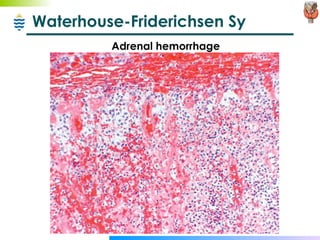
Waterhouse-Friderichsen Sy Acute hemorrhagic necrosis (apoplexy). Shock/Septicemia Lack of aldosterone Salt & water loss Hypovolemic shock Hypoglycemia. The adrenals from a child dying of meningococcal septicaemia are destroyed by haemorrhage. K K Ad. Ad.
Waterhouse-Friderichsen Sy Adrenal hemorrhage
Addison’s Disease: Chronic adrenal insufficiency. anorexia, weight loss, vomiting  weakness  lethargy  hypotension  skin pigmentation  hyponatraemia with hyperkalaemia  chronic dehydration  sexual dysfunction. Low plasma cortisol. ACTH high (primary) or low (secondary)
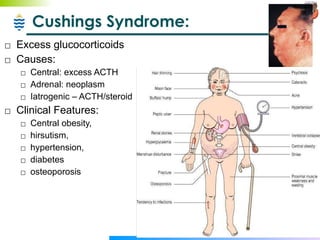
Cushings Syndrome: Excess glucocorticoids  Causes: Central: excess ACTH  Adrenal: neoplasm Iatrogenic – ACTH/steroid  Clinical Features: Central obesity,  hirsutism,  hypertension,  diabetes  osteoporosis
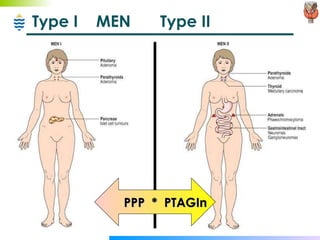
Type I  MEN Type II PPP  *  PTAGIn
“ One's philosophy is not best expressed in words; it's expressed in the choices one makes.  Eleanor Roosevelt1884-1962,  U.S. diplomat, author, and political figure.  Wife of Franklin D. Roosevelt
 
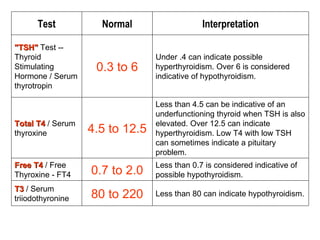
Test Normal Interpretation &quot;TSH&quot;  Test -- Thyroid Stimulating Hormone / Serum thyrotropin  0.3 to 6 Under .4 can indicate possible hyperthyroidism. Over 6 is considered indicative of hypothyroidism.  Total T4  / Serum thyroxine  4.5 to 12.5 Less than 4.5 can be indicative of an underfunctioning thyroid when TSH is also elevated. Over 12.5 can indicate hyperthyroidism. Low T4 with low TSH can sometimes indicate a pituitary problem.  Free T4  / Free Thyroxine - FT4  0.7 to 2.0 Less than 0.7 is considered indicative of possible hypothyroidism.  T3  / Serum triiodothyronine  80 to 220 Less than 80 can indicate hypothyroidism.
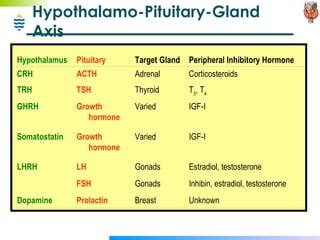
Hypothalamo-Pituitary-Gland Axis Hypothalamus Pituitary Target Gland Peripheral Inhibitory Hormone CRH ACTH Adrenal Corticosteroids TRH TSH Thyroid T 3 , T 4 GHRH Growth hormone Varied IGF-I Somatostatin Growth hormone Varied IGF-I LHRH LH Gonads Estradiol, testosterone   FSH Gonads Inhibin, estradiol, testosterone Dopamine Prolactin Breast Unknown
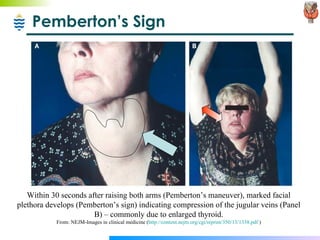
Pemberton’s Sign Within 30 seconds after raising both arms (Pemberton’s maneuver), marked facial plethora develops (Pemberton’s sign) indicating compression of the jugular veins (Panel B) – commonly due to enlarged thyroid. From: NEJM-Images in clinical medicine ( http://content.nejm.org/cgi/reprint/350/13/1338.pdf  )
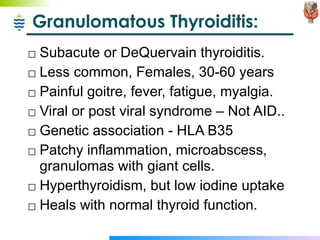
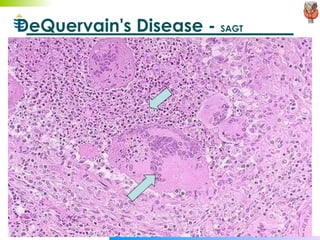
Granulomatous Thyroiditis: Subacute or DeQuervain thyroiditis. Less common, Females, 30-60 years Painful goitre, fever, fatigue, myalgia. Viral or post viral syndrome – Not AID.. Genetic association - HLA B35 Patchy inflammation, microabscess, granulomas with giant cells. Hyperthyroidism, but low iodine uptake Heals with normal thyroid function.
DeQuervain's Disease -  SAGT
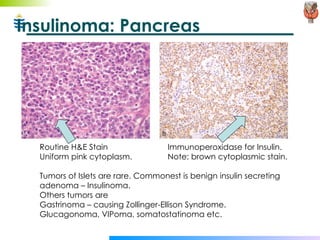
Insulinoma: Pancreas Routine H&E Stain Immunoperoxidase for Insulin. Uniform pink cytoplasm. Note: brown cytoplasmic stain. Tumors of Islets are rare. Commonest is benign insulin secreting adenoma – Insulinoma. Others tumors are  Gastrinoma – causing Zollinger-Ellison Syndrome. Glucagonoma, VIPoma, somatostatinoma etc.
David Thomas   You can do what you want to do.  You can be what you want to be…!

Pathology of Thyroid & Endocrine Disorders

  • 1.
    Challenge….! Jan 2009:4 th Year Students at JCU School of Medicine set new record.…!!! 100% Pass & Class Average of over 70% 99% Pass & Class Average of 68% Highest Are you ready for the Challenge….? Yes We Can…!
  • 2.
    CPC06-4.3.1 Mina Gupta,48 year old woman, lives in Mt Isa, presents to her GP with a swelling in her neck & fatigue. Duration of swelling: 2/12 Painful, some discomfort lower neck (rate 2/10) Site: central, mid- neck Voice change: No Weight loss/gain? put a bit of weight on as her clothes feel a bit tight. Fatigue? Worsening fatigue last few months. Sleeping well but always feels tired.
  • 3.
    CPC06-4.3.1 – PhysicalExam Vitals: T 36.8C rr 12/min BP : 110/64 mmHg pulse : 64 bpm reg good volume BMI : 32 Peripheries: ? pale palmar creases , cool hands mild bilateral pitting oedema nil else abnormal Head + neck conjunctival pallor +; xanthelasma bilaterally; diffuse firm slightly tender central neck mass which moves on swallowing; no bruit; no periorbital oedema; no LN. Pemberton’s sign negative CVS + Resp: nil abnormal GI + Renal: nil abnormal CNS: K10 score 32 ; depressed ankle reflexes bilaterally (delayed return) ? ? ?
  • 4.
    CPC06-4.3.1- Differential Thyroid:Goitre – what ? type? Hyper/Hypo/Euthyroid? Thyroid nodule - cyst, adenoma, Cancer Autoimmune thyroiditis – Graves? Hashimoto? Thyroid cancer - ? Papillary ? Follicular ? Other What other differentials? Lymphadenitis, salivary gland tumors, Lymphoma, thymoma, secondary deposits. Psychological, Diet, DM, Hypertension, Obesity.
  • 5.
    Oprah has battledwith her weight for years. Recently  she was diagnosed with hyperthyroidism . which sped up her metabolism and prevented sleep. Oprah eventually &quot;blew out&quot; her thyroid and experienced classic symptoms of hypothyroidism : Her metabolism slowed and she felt sluggish and tired. Hyper - - Hypo
  • 6.
    Sir William Osler,M.D. said… As is our pathology so is our practice... what the pathologist thinks today, the physician does tomorrow. Pathology, The science of Medicine
  • 7.
    Pathology Core LearningIssues: Pathology Major CLI: Overview of Endocrine disorders (classification, etiology, Pathogenesis, clinical & laboratory diagnosis). Thyroid Disorders – Hyper, Hypo thyroidism Pathophysiology & clinical features. Pathology of Graves & Hashimoto thyroiditis. Tumours of thyroid – Goitre - Multinodular, Adenoma & Carcinoma (Papillary, follicular) Laboratory diagnosis of thyroid disorders. Pathology Minor CLI: Other common Endocrine disorders – Cushings sy. & disease, addisons, Sheehan’s, Adrenogenital syndrome, Pituitary adenoma, Gigantism & Acromegaly, Diabetes insipidus.MEN syndromes.
  • 8.
    Pathology Lab resources:Muse um Specimens GN-01 Pheochromocytoma GN-02 Adenoma (Hurthle Cell) GR-01 Adrenal Haemorrhage GR-02 Nodular Thyroid GR-03 Nodular Hyperplasia (MNG) GR-04 Benign Nodular Thyroid (MNG) GR-05 Thyroid Cyst Digital Slides Thyroid Graves (JCU slide) Endo-39-Thyroid MNG Endo-40-Adrenal adenoma Endo-46-Pheochromocytoma Endo-47-Hashimoto-Pap ca Endo-51-Hashimotos thyroiditis Endo-52-Hashimotos thyroiditis Endo-53-Graves Endo-54-Hashimotos thyroiditis Endo-57-Pitutary Normal Endo-58-Thyroid Normal Endo-59-Adrenal Normal
  • 9.
    Endocrine Glands: OverviewClassification: Exocrine (ducts), Endocrine (ductless) Site of Action: Autocrine, Paracrine & Endocrine Type of secretion: Merocrine, Apocrine, Holocrine. Endocrine System: Hypothalamus  Pituitary  End. Glands  Tissues. Endocrine disorders: Primary(gland), Sec..(pituitary), Tertirary (Hypothal) Hyperfunction / Hypofunction / Eufunction Common Tumors – adenoma/carcinoma Etiology: Genetic / Familial / Acquired Multiple Endocrine Neoplasia (MEN) Syndromes.
  • 10.
    Major Endocrine Glands:Self Study…..!
  • 11.
    8. A PLEASINGPERSONALITY WITH PMA Assembling an attractive personality is a must. Your personality is your greatest asset or your greatest liability, for it embraces everything that you control: mind, body, soul and spirit. Learn to be pleasant even when others are being unpleasant to you. Positive Mental Attitude: 17 Success Principles… Some bring happiness where ever they go, & some whenever….!
  • 12.
    Pathology of Thyroid Disorders Dr. Venkatesh M. Shashidhar Associate Prof. & Head of Pathology
  • 13.
    Thyroid Anatomy: Location? Arteries ? Veins ? Lymphatics ? Nerve supply ?
  • 14.
  • 15.
    Thyroid Introduction: Epithelialendocrine gland (C cells, PTH) Iodinated Tyrosine  T3 & T4  stored in colloid. TRH  TSH  Thyroid  T3/T4  Metabolism. Thyroid disease 5% of population – Females* Wide clinical presentation: Mood changes to cardiac failure, growth retardation - malignancy.. ! Hyperthyroidism Graves , Subacute & Multinodular Goitre. Hypothyroidism Hashimoto’s , Atrophy, Radiotherapy. Normal thyroid ( Euthyroid ) – neoplasms Goitre: enlargement of thyroid without functional, inflammatory or neoplastic alterations. (Latin=gutter=throat)
  • 16.
  • 17.
  • 18.
    Primary – Secondary – Tertiary Gland – Pituitary - Hypothalamus T3/T4 - TSH - TRH
  • 19.
    Primary hypoThy Seconaryhypothy Neoplastic hyperthy Secondary Hyperthy Throid Func. Testing
  • 20.
    Diagnosing thyroiditis. *RAIU = radioactive iodine uptake
  • 21.
  • 22.
  • 23.
    Normal Thyroid &Parathyroid
  • 24.
    Normal Thyroid &Parathyroid Thyroid - Parathyroid
  • 25.
  • 26.
    C cells ofthyroid ImmunoPeroxidase stain ? Function ? Tumor
  • 27.
    Thyroid Disorders: Clinical Syndromes: Hyperthyroidism – with/without goitre. Hypothyroidism - with/without goitre. Euthyroid – with structural abnormality. Swellings: Goitre – diffuse, multinodular, single nodule. Neoplasm – adenoma, carcinoma.
  • 28.
    Congenital / otherDisorders: Thyroglossal Cyst Accessary thyroids Abnormal location Cong. Atrophy Cong. Hypertrophy
  • 29.
    Hypothyroidism Cretinism -children Myxedema - adults Causes: Developmental – Atrophy, hypoplasia Radiation/Surgery Hashimoto’s thyroiditis Iodine deficiency Drugs – PAS, iodides, lithium Pituitary disorders
  • 30.
    Congenital hypothyroidism: Protrudingtongue Growth retardation Jaundice Dry skin Slow reflexes Hoarse voice
  • 31.
    Hypothy.. Hypometabolism: Weightgain Apathy Constipation Menorrhagia Muscle weakness
  • 32.
    Hypothyroidism: Dull andapathetic face Periorbital puffiness Loss of lateral eyebrows. Skin Yellow (carotene, not Jaundice) cold, dry, rough, nonpitting edema (myxedema). Droopy eyes. Eye lid edema. Coarse, dry & thin Hair. Hoarseness of voice. You should be able to identify hypothyroid patients at first look..!
  • 33.
  • 34.
    Hyperthyroidism Thyrotoxicosis CausesGraves – autoimmune, toxic Toxic multinodular goitre Functioning adenoma Solid, grey hyperemic gland. Microscopy: Epithelial hyperplasia, hypertrophy, scanty colloid (Scalloping). Lymphocyte infiltration.
  • 35.
    Hyper-Thy: Hypermetabolism: Weightloss Anxiety Diarrhoea Menorrhagia Osteoporosis Proximal myopathy Pretibial myxoedema Exophthalmos Lid lag.
  • 36.
    Normal - Graves
  • 37.
    Clinical features: Weightloss Anxiety, tremor Diarrhoea Exophthalmos * Acropachy * Myxedema Loss of lateral eyebrow You should be able to identify hyperthyroid patients at first look..! Visible cornia
  • 38.
    Hyperthyroidism – exophthalmiaNote:  Unilateral prominance or Severe 
  • 39.
    Thyrotoxicosis: Clin MyxedemaAlopecia Acropachy Loss of lateral eyebrow Carotenemia -- normal
  • 40.
    ? Test …? Result … ? cause Lid Lag…
  • 41.
    3. GOING THEEXTRA MILE Very simply, this principle means: Render or give more and better service than you are paid for, and sooner or later you will receive compound interest from your investment of going the extra mile. Positive Mental Attitude: 17 Success Principles…
  • 42.
    Hashimoto Thyroiditis Commoncause of non endemic goitre. Aged females more common 45-65y. Autoimmune thyroiditis HLA-DR5, DR3. T cell mediated, Antithyroglobulin Ab & Antithyroid peroxidase Ab. Firm, pale grey, gland enlargement - intact capsule. Atrophic follicles & lymphoid follicles. H ü rthle cells – eosinophilic epithelial cells. Initial hyperthyroidism – hypothyroidism. High risk of developing B cell lymphoma.
  • 43.
    Hashimoto’s Disease AtrophicThy Fol Ly. Follicle
  • 44.
    Hashimoto’s Disease AtrophicThy Fol Ly. Follicle
  • 45.
    Hashimoto’s – Lymphocytes & Hurthle cells. Lymphocytes Hurthle cells Ly. Follicle
  • 46.
  • 47.
  • 48.
    Graves Disease: Commoncause of hyperthyroidism (2%F) Females, 20-40years, Autoimmune Thyroiditis. Triad of clinical features, Hyperthyroidism Infiltrative ophathalmopathy - exopthalmos Infiltrative dermopathy – Pretibial myxedema. Autoantibody to TSH receptor – LATS . Gross : soft, smooth, red, Hyperaemic, enlarged gland. (Bruit on auscultation) Micro : Diffuse hyperplasia, ep. papillary folds, inflammation – Lymphoid Follicles (Less) Scalloped, pale, scanty colloid.
  • 49.
    Iodine-123 scan -Graves Cold nodule Pyramidal lobe Iodine-123 thyroid scan in a patient with Graves disease. The 5-hour iodine uptake was elevated at 29%. Note the pyramidal lobe, which often is visualized in a hyperstimulated gland. The cold nodule in the right lobe must be addressed in the same way a solitary cold nodule in a patient without Graves disease is evaluated.
  • 50.
    Iodine-123 scan Radioactiveiodine uptake scan showing normal condition in a 30-year-old woman with postpartum thyroiditis (subacute lymphocytic thyroiditis). Radioactive iodine uptake scan showing hyperthyroid (increased uptake) condition in a 52-year-old woman with Graves' disease
  • 51.
    Graves Disease Pale,scanty, colloid Papillary ep. hyperplasia Gross: Red, fleshy & smooth
  • 52.
    Graves… Microscopy: Note:Prominent follicular cells scanty colloid focal lymphoid aggregates Colloid resorption Papillary ep. hyperplasia
  • 53.
    Graves… Microscopy: Note:Prominent follicular cells scanty colloid focal lymphoid aggregates Lymphoid Follicle Colloid resorption Papillary ep. hyperplasia
  • 54.
    Hyper –Thyroidism - Hypo Hyper-Metabolic… Hypo-Metabolic…
  • 55.
    14. CREATIVE VISIONCreative vision requires you to stimulate your imagination to work towards your goal, your target and your major purpose, and to put the result of that imagination to work. Positive Mental Attitude: 17 Success Principles…
  • 56.
    GOITRE (Enlargement ofThyroid) Hyperplasia ( MNG ), Inflammation, tumours
  • 57.
    Diffuse & Multinodulargoitre Iodide deficiency / transport disorder Iodine, Cassava, thiocyanate… Endemic (common) & sporadic types Toxic or non toxic types. Sporadic – rare, females, young. Hyperplastic (smooth) & Colloid (nodular) stage. Repeated attacks diffuse  multinodular. Changes: Infl., fibrosis, Ca+, cysts, necrosis etc. Mass effect, dysphagia, airway obstruction Toxic nodule  hyperthyroidism - Plummer syndrome (rare).
  • 58.
    Goitre Non-neoplastic Common(95%) Multiple/diffuse Hyperplasia – MNG Inflammations Infections Cysts Neoplastic Uncommon (<5%) Solitary nodule Young, males Hot are benign..! Follicular adenoma Carcinoma
  • 59.
    Goitre – Pathogenesis↓ Iodine  ↓ T3,T4  ↑ High TSH Dietary def. Inhibitory factors ?others
  • 60.
  • 61.
  • 62.
    Nontoxic-Multi Nodular Goitre.A: conspicuous neck mass. B: Coronal section showing numerous irregular nodules, some with hemorrhage. C: Microscopy: variation in the size of the follicles. Note: TSH, T3,T4  Normal (Euthyroid)
  • 63.
  • 64.
    5. SELF DISCIPLINESelf discipline is doing what you are supposed to be doing for the moment. It is employing the &quot;DO IT NOW“ philosophy Positive Mental Attitude: 17 Success Principles…
  • 65.
    Neoplasms of ThyroidAdenoma – Follicular adenoma - hot Papillary Carcinoma – 75-80% (young) Radiation, Gardner & Cowden syndromes Papillary folds, Psammoma bodies, Nuclear.. 98% 10year survival rate when localised. Follicular carcinoma - 10-20% (Aged) Medullary carcinoma – 5% Anaplastic carcinoma - <5%
  • 66.
    Follicular Adenoma SolitaryUnilateral Cold / non functional Rarely hot/functional. 10% malignant. Hot nodule  not Ca.
  • 67.
  • 68.
  • 69.
    Carcinoma of Thyroid Type (%) age spread Prognosis Papillary 60-70 young adults 20-40 (<45y) Lymphatic , to local nodes Excellent Follicular 20-25 Young-middle 40-50 (>45) Blood stream, especially to bone Good with radio-iodine therapy. Anaplastic 10-15 Elderly Aggressive local extension Very poor Medullary (C-cells) 5-10 Usually elderly, but familial cases occur Local, lymphatic, blood stream Variable. More aggressive in familial cases
  • 70.
  • 71.
  • 72.
    Papillary Carcinoma PapillaFibro-vascular core
  • 73.
    Papillary Carcinoma (follicular pattern) Empty nuclei Fibro-vascular core
  • 74.
    Papillary Carcinoma Psammoma bodies. Psammoma Body
  • 75.
  • 76.
  • 77.
    Follicular Carcinoma BVinvasion Capsule invasion Follicles
  • 78.
    Follicular Carcinoma BVinvasion Capsule invasion Follicles
  • 79.
  • 80.
  • 81.
  • 82.
    Amyloid in MedullaryCa (Birefringence)
  • 83.
    “ Thyroid Nodule/s” – Clinical approach. Nodule vs. Goitre… * Majority asymptomatic, benign/malignant. Mobility, pain, inflammation – non neopl. Always obtain a biopsy specimen.. * Risk Factors for Malignancy: Family History, head and neck irradiation Age <20 or >70 years, (young  Papillary ca) Male sex, rapid growth, firm/hard, Fixed. Hoarseness, dysphonia, dysphagia, or dyspnea Cervical Lymphadenopathy. Bone metastasis – Follicular Ca.
  • 84.
    Carcinoma Thyroid -tips Papillary ca. occurs in younger age, rarely extends outside the thyroid capsule by local invasion or rarely infiltrates local structures. Anaplastic Ca. Occurs in elderly, Rapid local growth, with extension out of the thyroid capsule and invasion of adjacent structures such as trachea and jugular vein is typical causing mortality. Follicular carcinoma spreads early by blood. sometimes first presents with pathological fracture due to bone metastasis.
  • 85.
    11. CONTROLLED ATTENTIONWITH PMA Controlled attention is organised mind power. It is the highest form of self discipline. Keep your mind on the things you want and off the things you don't want. Positive Mental Attitude: 17 Success Principles…
  • 86.
    Challenge….! Jan 2009:4 th Year Students at JCU School of Medicine set new record.…!!! 100% Pass & Class Average of over 70% 99% Pass & Class Average of 68% Highest Are you ready for the Challenge….? Yes We Can…!
  • 87.
    Pathology of EndocrineSystem Overview Dr. Shashidhar V. Murthy Senior Lecturer & Head of Pathology James Cook University School of Medicine
  • 88.
    Endocrine Disorders: CommonPituitary Hypofunction, tumor adenoma, carcinoma. Functioning adenoma – prolactinoma. Sheehan’s syndrome – infarction. D.insipidus, SIADH (post pituitary) Thyroid: Hypo, Hyper, Euthyroid (Hashimotos, Graves, ‘itis.. ) Multinodular Goitre, Adenoma, Carcinoma. C cells – Calcitonin - Medullary Ca Parathyroid Hyperplasia (Pri/Sec/ter), Hypoplasia, Tumors Gonads (covered later) Thymus Myasthenia gravis, Thymoma
  • 89.
    Endocrine Disorders: OverviewAdrenal Cortex: Cushings syndrome – hyperfunction Addison’s disease – hypofunction Waterhouse-Friderichsen syndrome (acute) Conn’s syndrome, Cong. Adrenal hyperplasia. Tumor – adenoma Adrenal Medulla: Pheochromocytoma – adenoma. Pineal gland Pinealoma. Endocrine Pancreas DM, Adenoma & Ca.
  • 90.
    Pituitary: Adeno& Neuro hypophysis Adenohypophysis: No arteries… portal sys. Corticotroph-ACTH (CRF) Thyrotroph – TSH (TRF) Gonadotroph – FSH & LH. (GRF) Somatotroph – GH (GHRF) Lactotroph – Prolactin. (PIF) Neurohypophysis: ADH & Oxytocin Epi. – Ner.
  • 91.
    Normal Pituitary: PostAnt Stalk Post Ant
  • 92.
  • 93.
    Pituitary Histology: Anterior(adenohypophysis) - Posterior (Neurohypophysis)
  • 94.
    Ant (Adeno) – Hypophysis/Pituitary - Post (Neuro)
  • 95.
    Pituitary Pathology: Anterior/Adenohypophysis:Hypopituitarism Pituitary dwarfism Acromegaly. Sheehans & Simmond’s. Hyperpituitarism Adenomas – Prolactinoma. Posterior/Neurohypophysis: SIADH, Diabetes insipidus.
  • 96.
    Adrenal Glands: Cortex(glands) Glomerulosa - Mineralocorticoids Fasciculata - Glucocorticoids Reticularis – Gonadal hormones Medulla (Neural) – APUD system. Chromaffin cells & sympatheti nerve endings Noradrenaline  Adrenaline (epinephrine) Pathology: common. Pheochromoccytoma – medulla, hypertension. Cushings syndrome & Disease. Conn’s syndrome. Congenital adrenal hyperplasia(21-hydroxylase def) Excess Androgens Precocious puberty
  • 97.
  • 98.
    Pheochromocytoma: Tumor ofmedullary Chromaffin cells. Secondary hypertension. Young age. May be familial (MEN syndrome). Increased catecholamines Increased Urinary VMA
  • 99.
    Waterhouse-Friderichsen Sy Acutehemorrhagic necrosis (apoplexy). Shock/Septicemia Lack of aldosterone Salt & water loss Hypovolemic shock Hypoglycemia. The adrenals from a child dying of meningococcal septicaemia are destroyed by haemorrhage. K K Ad. Ad.
  • 100.
  • 101.
    Addison’s Disease: Chronicadrenal insufficiency. anorexia, weight loss, vomiting weakness lethargy hypotension skin pigmentation hyponatraemia with hyperkalaemia chronic dehydration sexual dysfunction. Low plasma cortisol. ACTH high (primary) or low (secondary)
  • 102.
    Cushings Syndrome: Excessglucocorticoids Causes: Central: excess ACTH Adrenal: neoplasm Iatrogenic – ACTH/steroid Clinical Features: Central obesity, hirsutism, hypertension, diabetes osteoporosis
  • 103.
    Type I MEN Type II PPP * PTAGIn
  • 104.
    “ One's philosophyis not best expressed in words; it's expressed in the choices one makes. Eleanor Roosevelt1884-1962, U.S. diplomat, author, and political figure. Wife of Franklin D. Roosevelt
  • 105.
  • 106.
    Test Normal Interpretation&quot;TSH&quot; Test -- Thyroid Stimulating Hormone / Serum thyrotropin 0.3 to 6 Under .4 can indicate possible hyperthyroidism. Over 6 is considered indicative of hypothyroidism. Total T4 / Serum thyroxine 4.5 to 12.5 Less than 4.5 can be indicative of an underfunctioning thyroid when TSH is also elevated. Over 12.5 can indicate hyperthyroidism. Low T4 with low TSH can sometimes indicate a pituitary problem. Free T4 / Free Thyroxine - FT4 0.7 to 2.0 Less than 0.7 is considered indicative of possible hypothyroidism. T3 / Serum triiodothyronine 80 to 220 Less than 80 can indicate hypothyroidism.
  • 107.
    Hypothalamo-Pituitary-Gland Axis HypothalamusPituitary Target Gland Peripheral Inhibitory Hormone CRH ACTH Adrenal Corticosteroids TRH TSH Thyroid T 3 , T 4 GHRH Growth hormone Varied IGF-I Somatostatin Growth hormone Varied IGF-I LHRH LH Gonads Estradiol, testosterone   FSH Gonads Inhibin, estradiol, testosterone Dopamine Prolactin Breast Unknown
  • 108.
    Pemberton’s Sign Within30 seconds after raising both arms (Pemberton’s maneuver), marked facial plethora develops (Pemberton’s sign) indicating compression of the jugular veins (Panel B) – commonly due to enlarged thyroid. From: NEJM-Images in clinical medicine ( http://content.nejm.org/cgi/reprint/350/13/1338.pdf )
  • 109.
    Granulomatous Thyroiditis: Subacuteor DeQuervain thyroiditis. Less common, Females, 30-60 years Painful goitre, fever, fatigue, myalgia. Viral or post viral syndrome – Not AID.. Genetic association - HLA B35 Patchy inflammation, microabscess, granulomas with giant cells. Hyperthyroidism, but low iodine uptake Heals with normal thyroid function.
  • 110.
  • 111.
    Insulinoma: Pancreas RoutineH&E Stain Immunoperoxidase for Insulin. Uniform pink cytoplasm. Note: brown cytoplasmic stain. Tumors of Islets are rare. Commonest is benign insulin secreting adenoma – Insulinoma. Others tumors are Gastrinoma – causing Zollinger-Ellison Syndrome. Glucagonoma, VIPoma, somatostatinoma etc.
  • 112.
    David Thomas You can do what you want to do. You can be what you want to be…!