PREPARED BY: JEGAN. S. NADAR
GRAVES DISEASE
GRAVES DISEASE
 Graves' disease, also known as toxic diffuse goiter, is an autoimmune
disease that affects the thyroid
 Graves’ disease is a type of autoimmune problem that causes the thyroid
gland to produce too much thyroid hormone
 It is the most common cause of hyperthyroidism
 It also often results in an enlarged thyroid
Jegan
 Graves' disease will develop in about 0.5% of males and 3% of females.
 It occurs about 7.5 times more often in women than men
 The exact cause is unclear; however, it is believed to involve a combination
of genetic and environmental factors
Jegan
 Genetics
 A genetic predisposition for Graves' disease is seen, with some people
more prone to develop TSH receptor activating antibodies due to a
genetic cause
 Infectious trigger
 Graves' disease is an autoimmune disease which appears suddenly, often
later in life, a viral or bacterial infection may trigger antibodies which
cross-react with the human TSH receptor, a phenomenon known as antigenic
mimicry
Jegan
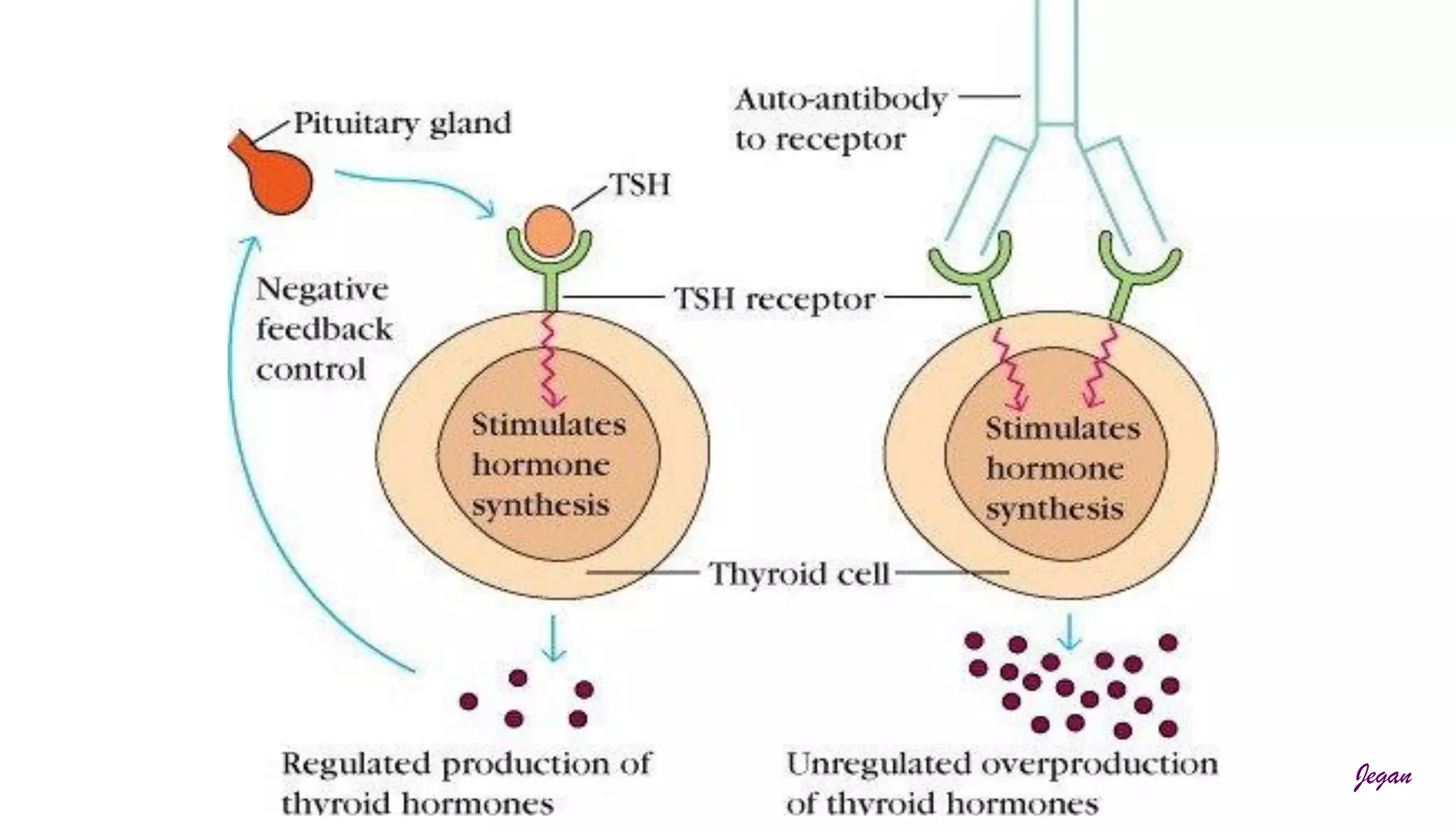
 It is an autoimmune disease
 There is trigger in production of antibodies
 These antibodies has structural similarities to the thyroid stimulating hormone (TSH)
 These antibody will bind to the thyroid stimulating hormone receptor (TSHR)
instead of TSH
 Binding of these antibody leads to activation of this receptor
 Once this receptor is activated there is excess production of the hormone T3 and T4
 This, in turn, causes the clinical symptoms of hyperthyroidism, and the enlargement of
the thyroid gland visible as goiter
Jegan
Jegan
AUTOANTIBODIES TO THE TSH RECEPTOR
 The three types of autoantibodies to the TSH receptor currently recognized
are:
 Thyroid stimulating immunoglobulins
 Thyroid growth immunoglobulins
 Thyrotrophin binding-inhibiting immunoglobulins
Jegan
SYMPTOMS
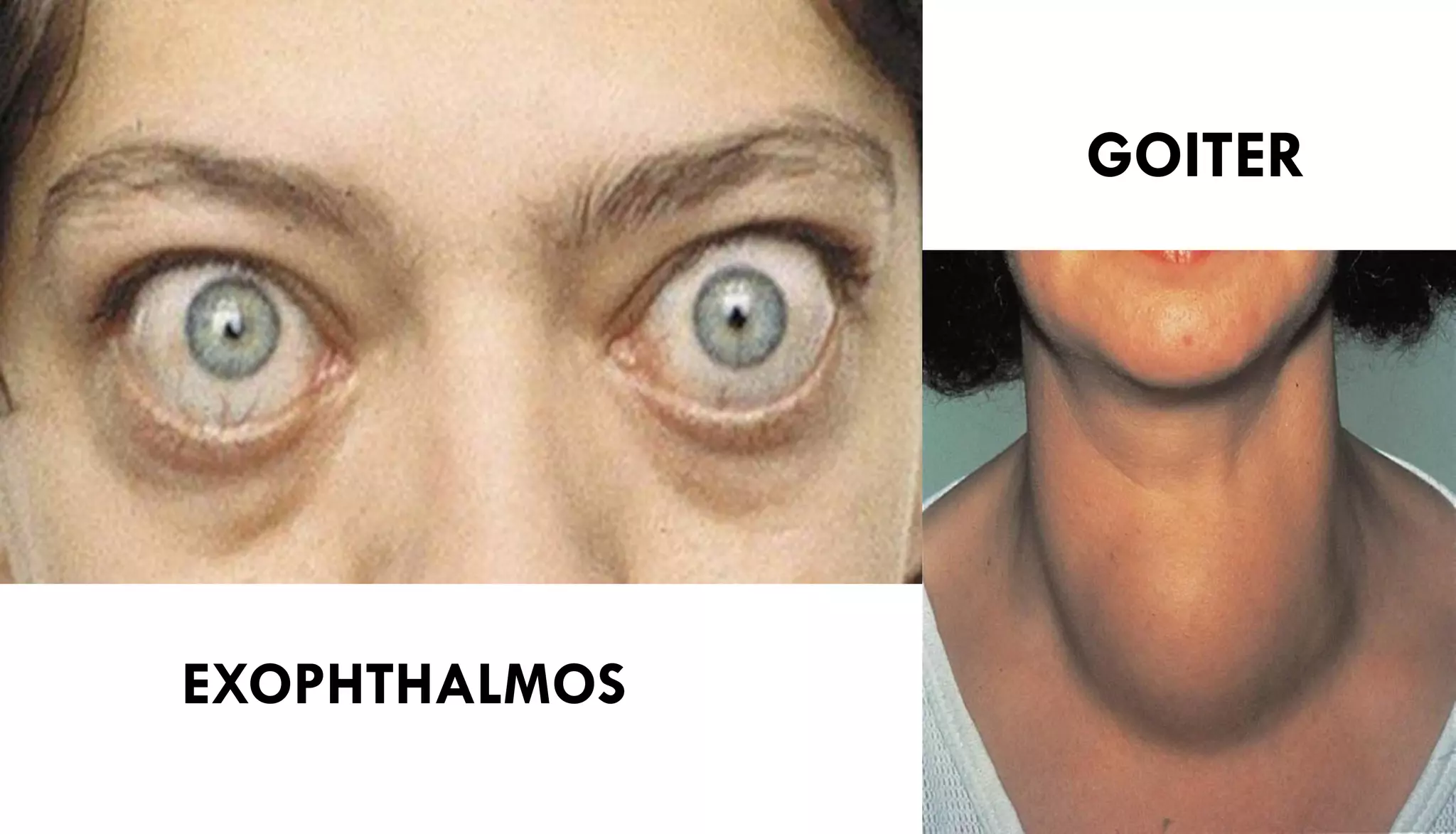
 Exophthalmos
 Goiter
 Insomnia
 Hand tremor
 Hair loss, excessive sweating
 Itching, heat intolerance,
 Weight loss despite increased appetite
 Diarrhea, frequent defecation
Jegan
GOITER
EXOPHTHALMOS
DIAGNOSIS
 Physical exam
 Blood test (TSH level)
 Iodine uptake test
 MRI
 CT scan
TREATMENT
 Radioactive iodine therapy
 Anti-thyroid medications- Propylthiouracil and Methimazole
 Beta blockers
 Surgery
Jegan
Thank You
Jegan

Pathophysiology of Graves disease

  • 1.
    PREPARED BY: JEGAN.S. NADAR GRAVES DISEASE
  • 2.
    GRAVES DISEASE  Graves'disease, also known as toxic diffuse goiter, is an autoimmune disease that affects the thyroid  Graves’ disease is a type of autoimmune problem that causes the thyroid gland to produce too much thyroid hormone  It is the most common cause of hyperthyroidism  It also often results in an enlarged thyroid Jegan
  • 3.
     Graves' diseasewill develop in about 0.5% of males and 3% of females.  It occurs about 7.5 times more often in women than men  The exact cause is unclear; however, it is believed to involve a combination of genetic and environmental factors Jegan
  • 4.
     Genetics  Agenetic predisposition for Graves' disease is seen, with some people more prone to develop TSH receptor activating antibodies due to a genetic cause  Infectious trigger  Graves' disease is an autoimmune disease which appears suddenly, often later in life, a viral or bacterial infection may trigger antibodies which cross-react with the human TSH receptor, a phenomenon known as antigenic mimicry Jegan
  • 5.
     It isan autoimmune disease  There is trigger in production of antibodies  These antibodies has structural similarities to the thyroid stimulating hormone (TSH)  These antibody will bind to the thyroid stimulating hormone receptor (TSHR) instead of TSH  Binding of these antibody leads to activation of this receptor  Once this receptor is activated there is excess production of the hormone T3 and T4  This, in turn, causes the clinical symptoms of hyperthyroidism, and the enlargement of the thyroid gland visible as goiter Jegan
  • 6.
  • 7.
    AUTOANTIBODIES TO THETSH RECEPTOR  The three types of autoantibodies to the TSH receptor currently recognized are:  Thyroid stimulating immunoglobulins  Thyroid growth immunoglobulins  Thyrotrophin binding-inhibiting immunoglobulins Jegan
  • 8.
    SYMPTOMS  Exophthalmos  Goiter Insomnia  Hand tremor  Hair loss, excessive sweating  Itching, heat intolerance,  Weight loss despite increased appetite  Diarrhea, frequent defecation Jegan
  • 9.
  • 10.
    DIAGNOSIS  Physical exam Blood test (TSH level)  Iodine uptake test  MRI  CT scan
  • 11.
    TREATMENT  Radioactive iodinetherapy  Anti-thyroid medications- Propylthiouracil and Methimazole  Beta blockers  Surgery Jegan
  • 12.