“The weak can never forgive.
forgiveness is the attribute of
the strong.”
– MK Gandhi
CLINICAL PATHOLOGY
The foundation of clinical medicine.
Shashidhar Venkatesh Murthy
A/Prof & Head of Pathology
College of Medicine & Dentistry
BPH3: Urinary Tract Dis: Prostate, BPH
3
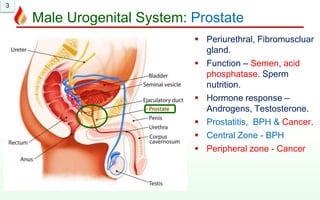
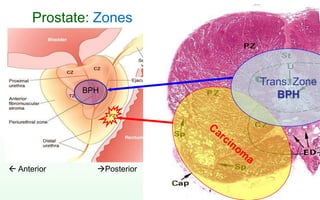
Male Urogenital System: Prostate
 Periurethral, Fibromuscluar
gland.
 Function – Semen, acid
phosphatase. Sperm
nutrition.
 Hormone response –
Androgens, Testosterone.
 Prostatitis, BPH & Cancer.
 Central Zone - BPH
 Peripheral zone - Cancer
Prostate: Zones
Trans. Zone
BPHBPH
Posterior Anterior
5
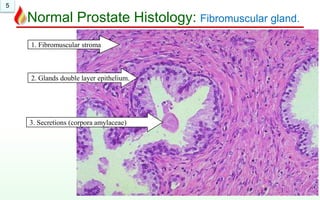
Normal Prostate Histology: Fibromuscular gland.
2. Glands double layer epithelium.
1. Fibromuscular stroma
3. Secretions (corpora amylaceae)
6
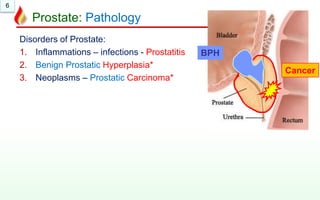
Prostate: Pathology
Disorders of Prostate:
1. Inflammations – infections - Prostatitis
2. Benign Prostatic Hyperplasia*
3. Neoplasms – Prostatic Carcinoma*
BPH
Cancer
7
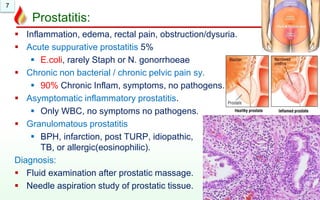
Prostatitis:
 Inflammation, edema, rectal pain, obstruction/dysuria.
 Acute suppurative prostatitis 5%
 E.coli, rarely Staph or N. gonorrhoeae
 Chronic non bacterial / chronic pelvic pain sy.
 90% Chronic Inflam, symptoms, no pathogens.
 Asymptomatic inflammatory prostatitis.
 Only WBC, no symptoms no pathogens.
 Granulomatous prostatitis
 BPH, infarction, post TURP, idiopathic,
TB, or allergic(eosinophilic).
Diagnosis:
 Fluid examination after prostatic massage.
 Needle aspiration study of prostatic tissue.
One single grateful thought raised to
heaven is the most perfect prayer.
G. E. Lessing
German critic & dramatist (1729 - 1781)
9
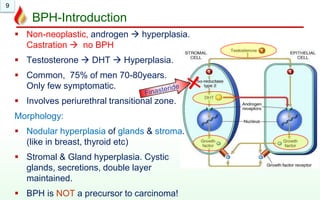
BPH-Introduction
 Non-neoplastic, androgen  hyperplasia.
Castration  no BPH
 Testosterone  DHT  Hyperplasia.
 Common, 75% of men 70-80years.
Only few symptomatic.
 Involves periurethral transitional zone.
Morphology:
 Nodular hyperplasia of glands & stroma.
(like in breast, thyroid etc)
 Stromal & Gland hyperplasia. Cystic
glands, secretions, double layer
maintained.
 BPH is NOT a precursor to carcinoma!
10
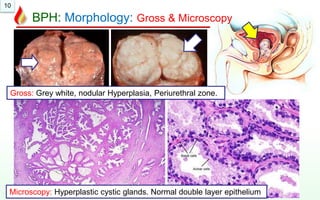
BPH: Morphology: Gross & Microscopy
Gross: Grey white, nodular Hyperplasia, Periurethral zone.
Microscopy: Hyperplastic cystic glands. Normal double layer epithelium
11
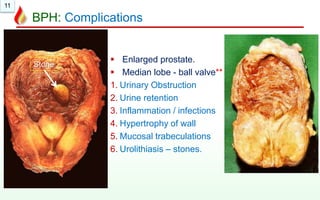
BPH: Complications
 Enlarged prostate.
 Median lobe - ball valve**
1. Urinary Obstruction
2. Urine retention
3. Inflammation / infections
4. Hypertrophy of wall
5. Mucosal trabeculations
6. Urolithiasis – stones.
Stone
12
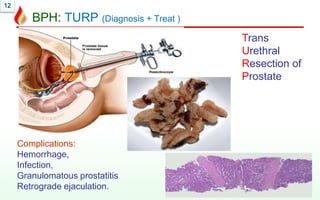
BPH: TURP (Diagnosis + Treat )
Trans
Urethral
Resection of
Prostate
Complications:
Hemorrhage,
Infection,
Granulomatous prostatitis
Retrograde ejaculation.
13
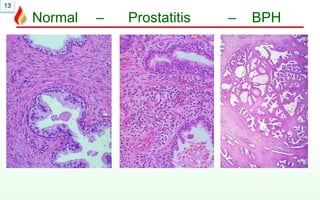
Normal – Prostatitis – BPH
“The only gracious way to accept an
insult is to ignore it. If you can’t ignore
it, top it. If you can’t top it, laugh at it.
If you can’t laugh at it, it’s probably
deserved...!”
- - Joseph Russell Lynes

Pathology of Prostate - Benign

  • 1.
    “The weak cannever forgive. forgiveness is the attribute of the strong.” – MK Gandhi
  • 2.
    CLINICAL PATHOLOGY The foundationof clinical medicine. Shashidhar Venkatesh Murthy A/Prof & Head of Pathology College of Medicine & Dentistry BPH3: Urinary Tract Dis: Prostate, BPH
  • 3.
    3 Male Urogenital System:Prostate  Periurethral, Fibromuscluar gland.  Function – Semen, acid phosphatase. Sperm nutrition.  Hormone response – Androgens, Testosterone.  Prostatitis, BPH & Cancer.  Central Zone - BPH  Peripheral zone - Cancer
  • 4.
  • 5.
    5 Normal Prostate Histology:Fibromuscular gland. 2. Glands double layer epithelium. 1. Fibromuscular stroma 3. Secretions (corpora amylaceae)
  • 6.
    6 Prostate: Pathology Disorders ofProstate: 1. Inflammations – infections - Prostatitis 2. Benign Prostatic Hyperplasia* 3. Neoplasms – Prostatic Carcinoma* BPH Cancer
  • 7.
    7 Prostatitis:  Inflammation, edema,rectal pain, obstruction/dysuria.  Acute suppurative prostatitis 5%  E.coli, rarely Staph or N. gonorrhoeae  Chronic non bacterial / chronic pelvic pain sy.  90% Chronic Inflam, symptoms, no pathogens.  Asymptomatic inflammatory prostatitis.  Only WBC, no symptoms no pathogens.  Granulomatous prostatitis  BPH, infarction, post TURP, idiopathic, TB, or allergic(eosinophilic). Diagnosis:  Fluid examination after prostatic massage.  Needle aspiration study of prostatic tissue.
  • 8.
    One single gratefulthought raised to heaven is the most perfect prayer. G. E. Lessing German critic & dramatist (1729 - 1781)
  • 9.
    9 BPH-Introduction  Non-neoplastic, androgen hyperplasia. Castration  no BPH  Testosterone  DHT  Hyperplasia.  Common, 75% of men 70-80years. Only few symptomatic.  Involves periurethral transitional zone. Morphology:  Nodular hyperplasia of glands & stroma. (like in breast, thyroid etc)  Stromal & Gland hyperplasia. Cystic glands, secretions, double layer maintained.  BPH is NOT a precursor to carcinoma!
  • 10.
    10 BPH: Morphology: Gross& Microscopy Gross: Grey white, nodular Hyperplasia, Periurethral zone. Microscopy: Hyperplastic cystic glands. Normal double layer epithelium
  • 11.
    11 BPH: Complications  Enlargedprostate.  Median lobe - ball valve** 1. Urinary Obstruction 2. Urine retention 3. Inflammation / infections 4. Hypertrophy of wall 5. Mucosal trabeculations 6. Urolithiasis – stones. Stone
  • 12.
    12 BPH: TURP (Diagnosis+ Treat ) Trans Urethral Resection of Prostate Complications: Hemorrhage, Infection, Granulomatous prostatitis Retrograde ejaculation.
  • 13.
  • 14.
    “The only graciousway to accept an insult is to ignore it. If you can’t ignore it, top it. If you can’t top it, laugh at it. If you can’t laugh at it, it’s probably deserved...!” - - Joseph Russell Lynes