“No doubt knowledge is valuable,
but above it is Character”
Knowledge without character is dangerous!
….. foundation of clinical medicine
Shashidhar Venkatesh Murthy
A/Prof & Head of Pathology
College of Medicine & Dentistry
Clinical Pathology:
RBC Disorders: Deficiency Anemia
CPC : Term2 Week1 - Haem 1/2.
System : Haematology - RBC Disorders.
Topic : 1: Anemia Intro 2: IDA & ACD 3: MBA 4: Haemolytic 5: Others.
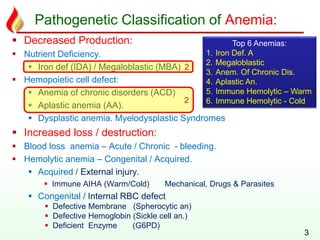
Pathogenetic Classification of Anemia:
 Decreased Production:
 Nutrient Deficiency.
 Iron def (IDA) / Megaloblastic (MBA)
 Hemopoietic cell defect:
 Anemia of chronic disorders (ACD)
 Aplastic anemia (AA).
 Dysplastic anemia. Myelodysplastic Syndromes
 Increased loss / destruction:
 Blood loss anemia – Acute / Chronic - bleeding.
 Hemolytic anemia – Congenital / Acquired.
 Acquired / External injury.
 Immune AIHA (Warm/Cold) Mechanical, Drugs & Parasites
 Congenital / Internal RBC defect
 Defective Membrane (Spherocytic an)
 Defective Hemoglobin (Sickle cell an.)
 Deficient Enzyme (G6PD)
3
2
Top 6 Anemias:
1. Iron Def. A
2. Megaloblastic
3. Anem. Of Chronic Dis.
4. Aplastic An.
5. Immune Hemolytic – Warm
6. Immune Hemolytic - Cold2
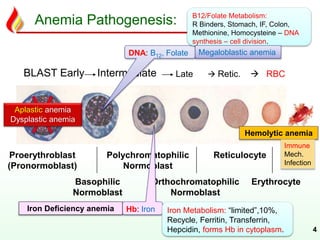
Proerythroblast
(Pronormoblast)
Basophilic
Normoblast
Polychromatophilic
Normoblast
Orthochromatophilic
Normoblast
Reticulocyte
Erythrocyte
BLAST Early Intermediate Late  Retic.  RBC
Anemia Pathogenesis:
4
DNA: B12, Folate
B12/Folate Metabolism:
R Binders, Stomach, IF, Colon,
Methionine, Homocysteine – DNA
synthesis – cell division.
Megaloblastic anemia
Hb: Iron Iron Metabolism: “limited”,10%,
Recycle, Ferritin, Transferrin,
Hepcidin, forms Hb in cytoplasm.
Iron Deficiency anemia
Hemolytic anemia
Immune
Mech.
Infection
Aplastic anemia
Dysplastic anemia
Our destiny is in our hands,
What we think and do in the present
determines what shall happen to us in the
future.
-- Christian D. Larson
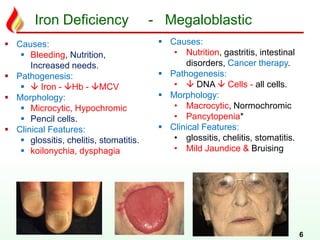
Iron Deficiency - Megaloblastic
6
 Causes:
 Bleeding, Nutrition,
Increased needs.
 Pathogenesis:
  Iron - Hb - MCV
 Morphology:
 Microcytic, Hypochromic
 Pencil cells.
 Clinical Features:
 glossitis, chelitis, stomatitis.
 koilonychia, dysphagia
 Causes:
• Nutrition, gastritis, intestinal
disorders, Cancer therapy.
 Pathogenesis:
•  DNA  Cells - all cells.
 Morphology:
• Macrocytic, Normochromic
• Pancytopenia*
 Clinical Features:
• glossitis, chelitis, stomatitis.
• Mild Jaundice & Bruising
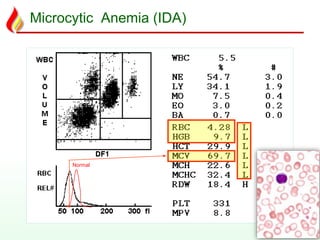
Microcytic Anemia (IDA)
7
Normal
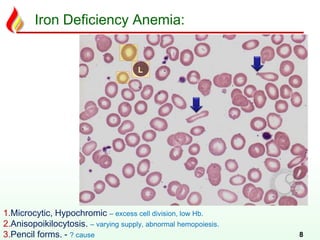
Iron Deficiency Anemia:
8
1.Microcytic, Hypochromic – excess cell division, low Hb.
2.Anisopoikilocytosis. – varying supply, abnormal hemopoiesis.
3.Pencil forms. - ? cause
L
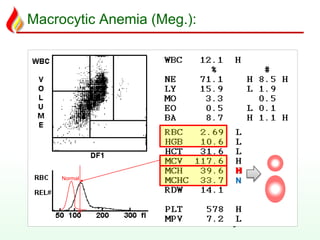
Macrocytic Anemia (Meg.):
9
Normal
H
N
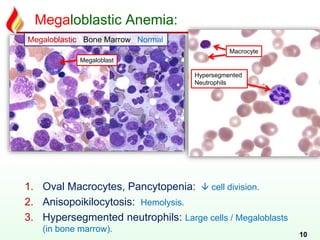
Megaloblastic Anemia:
10
1. Oval Macrocytes, Pancytopenia:  cell division.
2. Anisopoikilocytosis: Hemolysis.
3. Hypersegmented neutrophils: Large cells / Megaloblasts
(in bone marrow).
Megaloblastic Bone Marrow Normal
Hypersegmented
Neutrophils
Macrocyte
Megaloblast
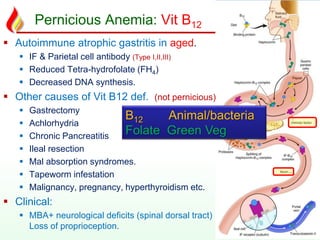
Pernicious Anemia: Vit B12
 Autoimmune atrophic gastritis in aged.
 IF & Parietal cell antibody (Type I,II,III)
 Reduced Tetra-hydrofolate (FH4)
 Decreased DNA synthesis.
 Other causes of Vit B12 def. (not pernicious)
 Gastrectomy
 Achlorhydria
 Chronic Pancreatitis
 Ileal resection
 Mal absorption syndromes.
 Tapeworm infestation
 Malignancy, pregnancy, hyperthyroidism etc.
 Clinical:
 MBA+ neurological deficits (spinal dorsal tract)
Loss of proprioception.
B12 Animal/bacteria
Folate Green Veg
Nothing can stop the man with the right
mental attitude from achieving his goal;
nothing on earth can help the man with the
wrong mental attitude!
-- Thomas Jefferson
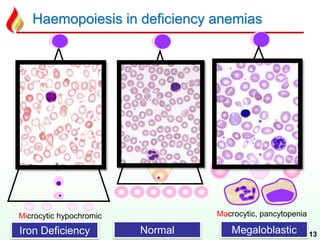
Haemopoiesis in deficiency anemias
13
Macrocytic, pancytopeniaMicrocytic hypochromic
Iron Deficiency Normal Megaloblastic
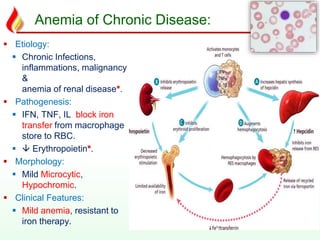
Anemia of Chronic Disease:
 Etiology:
 Chronic Infections,
inflammations, malignancy
&
anemia of renal disease*.
 Pathogenesis:
 IFN, TNF, IL block iron
transfer from macrophage
store to RBC.
  Erythropoietin*.
 Morphology:
 Mild Microcytic,
Hypochromic.
 Clinical Features:
 Mild anemia, resistant to
iron therapy.
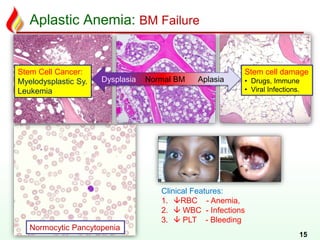
Aplastic Anemia: BM Failure
15
Dysplasia Normal BM Aplasia
Clinical Features:
1. RBC - Anemia,
2.  WBC - Infections
3.  PLT - Bleeding
Stem cell damage
• Drugs, Immune
• Viral Infections.
Stem Cell Cancer:
Myelodysplastic Sy.
Leukemia
Normocytic Pancytopenia
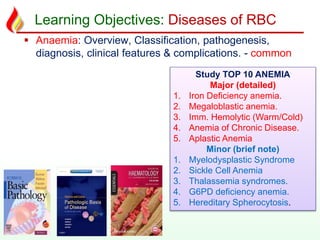
Learning Objectives: Diseases of RBC
 Anaemia: Overview, Classification, pathogenesis,
diagnosis, clinical features & complications. - common
Study TOP 10 ANEMIA
Major (detailed)
1. Iron Deficiency anemia.
2. Megaloblastic anemia.
3. Imm. Hemolytic (Warm/Cold)
4. Anemia of Chronic Disease.
5. Aplastic Anemia
Minor (brief note)
1. Myelodysplastic Syndrome
2. Sickle Cell Anemia
3. Thalassemia syndromes.
4. G6PD deficiency anemia.
5. Hereditary Spherocytosis.
Haem12: Deficiency anemias

Haem12: Deficiency anemias

  • 1.
    “No doubt knowledgeis valuable, but above it is Character” Knowledge without character is dangerous!
  • 2.
    ….. foundation ofclinical medicine Shashidhar Venkatesh Murthy A/Prof & Head of Pathology College of Medicine & Dentistry Clinical Pathology: RBC Disorders: Deficiency Anemia CPC : Term2 Week1 - Haem 1/2. System : Haematology - RBC Disorders. Topic : 1: Anemia Intro 2: IDA & ACD 3: MBA 4: Haemolytic 5: Others.
  • 3.
    Pathogenetic Classification ofAnemia:  Decreased Production:  Nutrient Deficiency.  Iron def (IDA) / Megaloblastic (MBA)  Hemopoietic cell defect:  Anemia of chronic disorders (ACD)  Aplastic anemia (AA).  Dysplastic anemia. Myelodysplastic Syndromes  Increased loss / destruction:  Blood loss anemia – Acute / Chronic - bleeding.  Hemolytic anemia – Congenital / Acquired.  Acquired / External injury.  Immune AIHA (Warm/Cold) Mechanical, Drugs & Parasites  Congenital / Internal RBC defect  Defective Membrane (Spherocytic an)  Defective Hemoglobin (Sickle cell an.)  Deficient Enzyme (G6PD) 3 2 Top 6 Anemias: 1. Iron Def. A 2. Megaloblastic 3. Anem. Of Chronic Dis. 4. Aplastic An. 5. Immune Hemolytic – Warm 6. Immune Hemolytic - Cold2
  • 4.
    Proerythroblast (Pronormoblast) Basophilic Normoblast Polychromatophilic Normoblast Orthochromatophilic Normoblast Reticulocyte Erythrocyte BLAST Early IntermediateLate  Retic.  RBC Anemia Pathogenesis: 4 DNA: B12, Folate B12/Folate Metabolism: R Binders, Stomach, IF, Colon, Methionine, Homocysteine – DNA synthesis – cell division. Megaloblastic anemia Hb: Iron Iron Metabolism: “limited”,10%, Recycle, Ferritin, Transferrin, Hepcidin, forms Hb in cytoplasm. Iron Deficiency anemia Hemolytic anemia Immune Mech. Infection Aplastic anemia Dysplastic anemia
  • 5.
    Our destiny isin our hands, What we think and do in the present determines what shall happen to us in the future. -- Christian D. Larson
  • 6.
    Iron Deficiency -Megaloblastic 6  Causes:  Bleeding, Nutrition, Increased needs.  Pathogenesis:   Iron - Hb - MCV  Morphology:  Microcytic, Hypochromic  Pencil cells.  Clinical Features:  glossitis, chelitis, stomatitis.  koilonychia, dysphagia  Causes: • Nutrition, gastritis, intestinal disorders, Cancer therapy.  Pathogenesis: •  DNA  Cells - all cells.  Morphology: • Macrocytic, Normochromic • Pancytopenia*  Clinical Features: • glossitis, chelitis, stomatitis. • Mild Jaundice & Bruising
  • 7.
  • 8.
    Iron Deficiency Anemia: 8 1.Microcytic,Hypochromic – excess cell division, low Hb. 2.Anisopoikilocytosis. – varying supply, abnormal hemopoiesis. 3.Pencil forms. - ? cause L
  • 9.
  • 10.
    Megaloblastic Anemia: 10 1. OvalMacrocytes, Pancytopenia:  cell division. 2. Anisopoikilocytosis: Hemolysis. 3. Hypersegmented neutrophils: Large cells / Megaloblasts (in bone marrow). Megaloblastic Bone Marrow Normal Hypersegmented Neutrophils Macrocyte Megaloblast
  • 11.
    Pernicious Anemia: VitB12  Autoimmune atrophic gastritis in aged.  IF & Parietal cell antibody (Type I,II,III)  Reduced Tetra-hydrofolate (FH4)  Decreased DNA synthesis.  Other causes of Vit B12 def. (not pernicious)  Gastrectomy  Achlorhydria  Chronic Pancreatitis  Ileal resection  Mal absorption syndromes.  Tapeworm infestation  Malignancy, pregnancy, hyperthyroidism etc.  Clinical:  MBA+ neurological deficits (spinal dorsal tract) Loss of proprioception. B12 Animal/bacteria Folate Green Veg
  • 12.
    Nothing can stopthe man with the right mental attitude from achieving his goal; nothing on earth can help the man with the wrong mental attitude! -- Thomas Jefferson
  • 13.
    Haemopoiesis in deficiencyanemias 13 Macrocytic, pancytopeniaMicrocytic hypochromic Iron Deficiency Normal Megaloblastic
  • 14.
    Anemia of ChronicDisease:  Etiology:  Chronic Infections, inflammations, malignancy & anemia of renal disease*.  Pathogenesis:  IFN, TNF, IL block iron transfer from macrophage store to RBC.   Erythropoietin*.  Morphology:  Mild Microcytic, Hypochromic.  Clinical Features:  Mild anemia, resistant to iron therapy.
  • 15.
    Aplastic Anemia: BMFailure 15 Dysplasia Normal BM Aplasia Clinical Features: 1. RBC - Anemia, 2.  WBC - Infections 3.  PLT - Bleeding Stem cell damage • Drugs, Immune • Viral Infections. Stem Cell Cancer: Myelodysplastic Sy. Leukemia Normocytic Pancytopenia
  • 16.
    Learning Objectives: Diseasesof RBC  Anaemia: Overview, Classification, pathogenesis, diagnosis, clinical features & complications. - common Study TOP 10 ANEMIA Major (detailed) 1. Iron Deficiency anemia. 2. Megaloblastic anemia. 3. Imm. Hemolytic (Warm/Cold) 4. Anemia of Chronic Disease. 5. Aplastic Anemia Minor (brief note) 1. Myelodysplastic Syndrome 2. Sickle Cell Anemia 3. Thalassemia syndromes. 4. G6PD deficiency anemia. 5. Hereditary Spherocytosis.