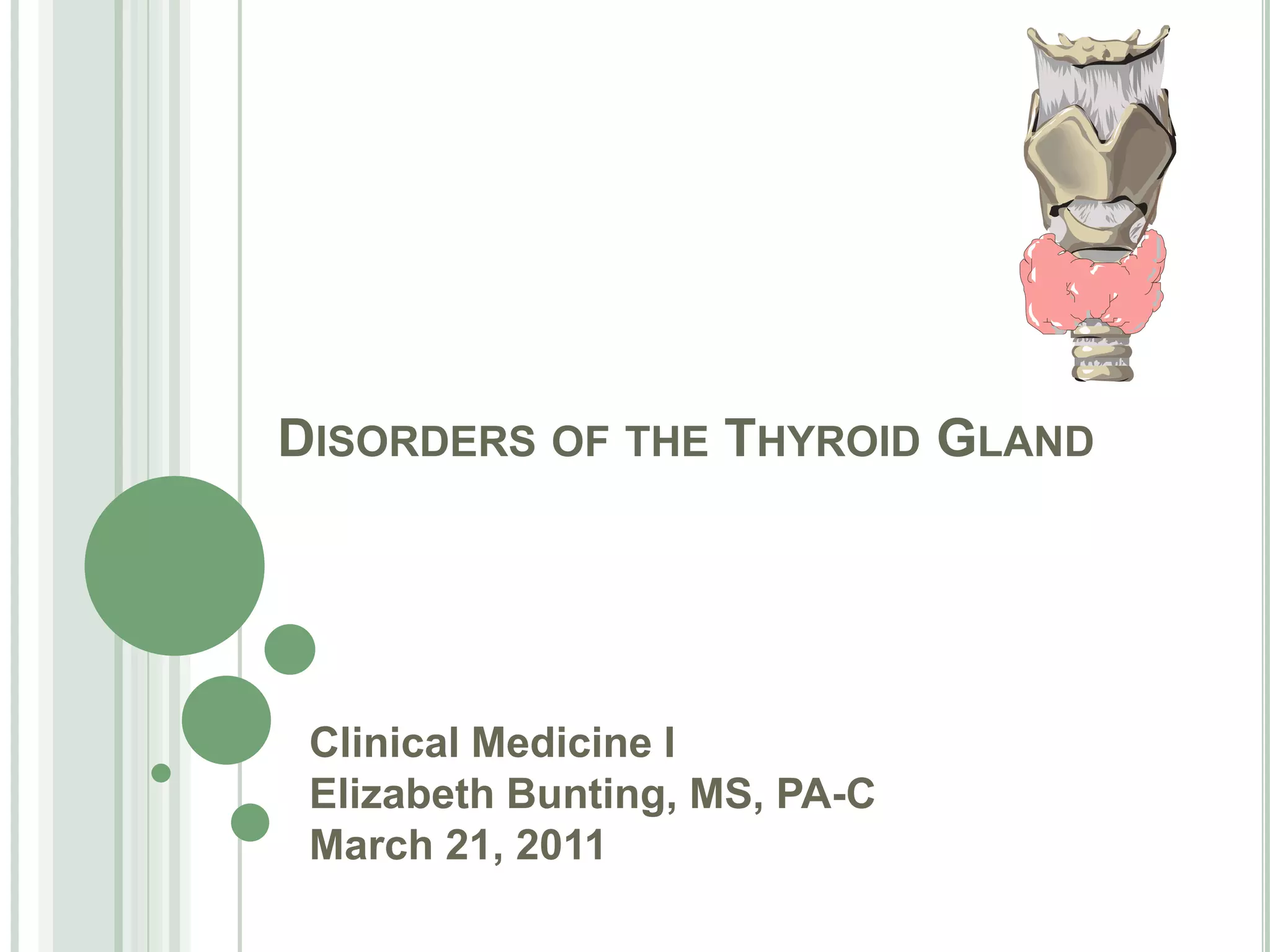
Disorders of the Thyroid GlandClinical Medicine IElizabeth Bunting, MS, PA-CMarch 21, 2011
ObjectivesDescribe the anatomy of the thyroid gland, with regard to its relationship to:Other structures in the neckThe parathyroid glandsThe major vesselsEmbryologic developmentDescribe the regulation of thyroid metabolism, particularly:The role of the thyroid gland in the hypothalamus-anterior pituitary-thyroid axisThe role of iodine within the gland in controlling thyroid function
ObjectivesDiscuss the synthesis and secretion of thyroid hormone, describing:The two principal thyroid hormones secretedTheir relative utilization within the bodyHow they are chemically relatedDescribe the action of the hormones, particularly:The location of the receptors for thyroxine and triiodothyronine and their functionThe hormonal effect on cellular metabolism and developmentDefine hyperthyroidism, list and describe the:Associated pathophysiologyCommon clinical presentationsSignificant historical and physical exam findingsDiagnostic testsManagement
ObjectivesDefine thyrotoxicosis, and describe its pathophysiology, clinical presentation, diagnostic work-up and management.Define hypothyroidism, list and describe the:Associated pathophysiologyCommon presentationsSignificant historical and physical exam findingsDiagnostic testsManagementDefine myxedema and myxedema coma, and describe their pathologic process, clinical presentation, diagnostic work-up and management.Identify the different forms of thyroiditis and their distinguishing features and management
ObjectivesDescribe the various therapies, such as:Use of surgery, radioactive iodine, or anti-thyroid drugs for hyperfunctionUse of thyroid hormone for hypofunctionList and describe the types of thyroid cancer.Explain the signs and symptoms, pathophysiology and epidemiology of thyroid cancer.Discuss the diagnostic work-up and management of thyroid cancer.Discuss the prognosis for each of the major types of thyroid cancer.
Thyroid Anatomy
Parathyroid Glands
Embryonic Development of the Thyroid Gland and hormones
Thyroid Physiology
Thyroid PhysiologyMakes Thyrotropin Releasing Horomone(TRH)HypothalmusAnteriorPituitaryMakes Thyroid Stimulating Hormone   (TSH) MakesT3(Triiodothyronine)& T4 (Thyroxine)Thyroid Gland
Thyroid Produces two related hormonesT3 – triiodothyronineT4 – thyroxineThese hormones play a critical role inThermogenic homeostasis in adultsMetabolic homeostasis in adultsCell differentiation during development
Regulation of the Thyroid AxisTSH is the most useful physiologic marker of thyroid hormone actionT3 and T4 are the dominant regulators of TSH productionTSH is released in a pulsatile manner and exhibits a diurnal rhythmHighest levels at night
Thyroid hormones T4 and T3 feed back to inhibit hypothalamic production of thyrotropin-releasing hormone (TRH) and pituitary production of thyroid-stimulating hormone (TSH).
TSH stimulates thyroid gland production of T4 and T3Thyroid hormone synthesis, metabolism, and actionIodide uptake is a critical first step in synthesis
Deficiency is prevalent in many mountainous regions globally and if present, may lead to goiter
If severe deficiency – hypothyroidism and cretinism
Recommended daily intake
150 μg/d adults
90-120 μg/d childrenGoiter
Thyroid hormone synthesis, metabolism, and actionIodide enters the thyroid and is used in production of both T3 and T4
T4 contains 4 iodine atoms
Removal of one of the iodine atoms leads to production of the potent hormone triiodothyronine (T3)T4 may be thought of as a precursor for the more potent T3T4 is converted to T3 in the peripheral tissues
Thyroid hormone synthesis, metabolism, and actionHormones are released from the thyroid and the vast majority are protein bound and deposited in peripheral cells
Once in cells, hormones act as nuclear receptors
T3   99.7%
T4   99.98%
The unbound hormone is available to tissues
Serum concentrations
T3    0.14 μg/dL
T4    8 μg/dLThyroid hormone synthesis, metabolism, and actionLaboratory evaluation of thyroid hormonesTSH – first thing you assessNormal range 0.5-5 μU/mlNormal result excludes a primary abnormality of functionSuppression = hyperthyroidElevated=hypothyroidIf abnormal TSH getFree T4 Normal 0.8-2.8 ng/dLElevated=hyperthyroidSuppression=hypothyroid
Thyroid hormone synthesis, metabolism, and actionTests to determine the etiology of thyroid dysfunction
Anti-TPO – antithyroidperoxidase antibody
Used to detect autoimmune thyroid disease
Up to 80% of those with Graves’ disease  have TPO antibodies
90% of those with Hashimoto’s thyroiditis have TPO antibodies
Thyroid scanning and ultrasound
Nuclear imaging
Radioisotopes of iodine are selectively transported into the thyroid allowing for imaging
Ultrasound
Used in nodular thyroid disease
Can detect nodules >3mm
Also useful in eval of recurrent thyroid cancerHypothyroid Disorders
HypothyroidismInsufficiency in the amount of thyroid hormone in the bodyPRIMARY HYPOTHYROIDISM:  thyroid gland failure  despite proper stimulation from the pituitarySECONDARY HYPOTHYROIDISM:  failure of the pituitary to produce TSH to stimulate the thyroid glandTERTIARY HYPOTHYROIDISM:  failure of the hypothalamus
Primary HypothyroidismGeneral ConsiderationsCommon: affects 1% of the general population and 5% over the age of 60Women > men   4:1 ratioMean age at diagnosis is 60 yearsPrevalence increases with ageThyroid hormone deficiency affects almost all body functions
Primary HypothyroidismCauses
Iodine deficiency
most common cause worldwide
Autoimmune disease
Hashimoto’s thyroiditis
Iatrogenic
treatment of hyperthyroidismTrauma to thyroid/pituitary/hypothalamusRadiation exposureSevere infectionNeoplasia (pituitary tumor)Drugs – glucocorticoids, phenobarbital, phenytoin, salicylates (large doses), fluorouracil, androgens, amiodarone, interferon
Primary HypothyroidismSymptomsCommon manifestationsWeight gainFatigue, lethargyDepressionWeaknessDyspnea on ExertionArthralgias/myalgiasMuscle crampsParesthesiasCold intoleranceConstipationDry skin, brittle hair and nailsHeadacheCarpal Tunnel SyndromeMenorrhagia
Primary HypothyroidismSymptomsLess commonDecreased appetite and weight losshoarsenessDecreased sense of taste and smellDeminished auditory acuitySigns	BradycardiaDiastolic hypertensionThin, brittle nails, hairPeripheral edemaPuffy face and eyelids (myxedema)Skin pallor or yellowing (carotenemia)Delayed DTRGoiter
Primary HypothyroidismDiagnostic findings    TSH    Free T4TreatmentTreat the underlying cause if possibleThyroid replacement with T4Levothyroxine (Synthroid) Adults <60 years without evidence of heart diseaseStart with 25-75 μg qdRepeat TSH in 6 weeksAdjust dosage by 25 μg every 1-3 weeks based on TSHGoal – symptom relief and TSH in lower half of reference range
Primary HypothyroidismTreatmentAdults >60 years or patients with known cardiac diseaseStart with 25-50 μg qdMedication increases cardiac contractility and oxygen demand and don’t want to precipitate an  MIRepeat TSH in 6 weeksAdjust dosage by 25 μg every 1-3 weeks based on TSHGoal – symptom relief and TSH in lower half of reference range
Primary HypothyroidismTreatmentAverage daily replacement dose is usually 1.7μg/kg body weight (typically 100-150 μg)Once full replacement is achieved and TSH levels are stable you can extend f/u visits to 6 months and then yearlyTake Levothyroxine (Synthroid) at least 4 hours between antacids, vitamins, seizure meds, food, lovastatin, sertraline – these medications affect T4 absorption or clearance
MyxedemaSevere hypothyroidism
Signs and symptoms
Severe Fatigue
Weakness
Cardiac enlargement (myxedema heart)
Pericardial effusions
Psychosis (myxedema madness)
Hypothermia
Stupor or myxedema coma
Hypoventilation, leading to hypoxia and hypercapnia
Pituitary enlargement due to hyperplasia of TSH secreting cellsMyxedemaDiagnostic studiesT4 lowTSH is increasedHyponatremiaHypoglycemiaAnemiaHypotension
MyxedemaTreatmentHigh mortality rate even with treatmentThyroid hormone replacement (initially IV then switch to oral)Levothyroxine  500μg IV bolusContinue orally at 50-100 μg/day
Myxedema ComaMedical emergencyOften induced by underlying infection: cardiac, respiratory, or CNS system illness, cold exposure or drug useMultiple organ abnormalities and progressive mental deteriorationVery rare, but has high mortality rateMost commonly results from stressful situations   (e.g. trauma, surgery, burns, infection)Can occur because of coexisting disease states (e.g. diabetes, MI, fluid and electrolyte abnormalities)Can be precipitated by certain medications
Myxedema ComaTreatmentIV thyroid hormone replacementTreat underlying infection, if presentMonitor TSHMonitor glucose and sodium levelsWarming if hypothermia (blankets only)PrognosisMortality rate of 30 – 60%Poor prognosis if advanced age, bradycardia and persistent hypothermia
CretinismCongenital hypothyroidismEtiology1 in 4000 live birthsPathologyHypoplasia or aplasia of the thyroid glandOR failure of the gland to migrate into normal anatomic locationOR ineffective hormone due to enzyme deficiency
CretinismClinical featuresSluggishnessPale, gray, cool or mottled skinNonpitting myxedemaConstipationLarge tonguePoor muscle toneMental retardationDry, brittle hair
CretinismDiagnostic studiesLow T4Elevated TSHDelayed skeletal maturation on x-raysTreatment – thyroid hormone replacementPreventionNeonatal screening within 60 days of birthImproved prognosis with therapy started in first 2 months of life
Hyperthyroid Disorders
HyperthyroidismEtiologyGrave’s disease – most commonToxic multinodular goiter and thyroid adenomasSubacute (de Quervain) ThyroiditisExogenous thyroid hormoneStruma Ovarii (ovarian teratoma)No goiterPituitary tumor secreting TSHSecondary hyperthyroidismNormal or increased TSH with diffuse goiter and elevated T4Medication induced Amioderone
Grave’s diseaseEpidemiology Accounts for 60-80% of thyrotoxicosisFemales > males at 8:1Typically occurs between ages 20-40PathologyGrave’s disease is an autoimmune disorderInvolves the formation of autoantibodies that bind to the TSH receptors in the thyroid and stimulate gland hyperfunctionCharacterized by an increase synthesis and release of thyroid hormonesGland is typically enlargedFamilial tendency (HLA-B8 and HLA-DR3)
Grave’s diseaseSymptomsDescending order of frequencyHyperactivity, irritability, dysphoriaHeat intolerance, increased sweatingPalpitationsFatigue, weaknessWeight loss (increased appetite)DiarrheaPolyuriaOligomenorrhea, loss of libido

Disorders of the Thyroid Gland

  • 1.
    Disorders of theThyroid GlandClinical Medicine IElizabeth Bunting, MS, PA-CMarch 21, 2011
  • 2.
    ObjectivesDescribe the anatomyof the thyroid gland, with regard to its relationship to:Other structures in the neckThe parathyroid glandsThe major vesselsEmbryologic developmentDescribe the regulation of thyroid metabolism, particularly:The role of the thyroid gland in the hypothalamus-anterior pituitary-thyroid axisThe role of iodine within the gland in controlling thyroid function
  • 3.
    ObjectivesDiscuss the synthesisand secretion of thyroid hormone, describing:The two principal thyroid hormones secretedTheir relative utilization within the bodyHow they are chemically relatedDescribe the action of the hormones, particularly:The location of the receptors for thyroxine and triiodothyronine and their functionThe hormonal effect on cellular metabolism and developmentDefine hyperthyroidism, list and describe the:Associated pathophysiologyCommon clinical presentationsSignificant historical and physical exam findingsDiagnostic testsManagement
  • 4.
    ObjectivesDefine thyrotoxicosis, anddescribe its pathophysiology, clinical presentation, diagnostic work-up and management.Define hypothyroidism, list and describe the:Associated pathophysiologyCommon presentationsSignificant historical and physical exam findingsDiagnostic testsManagementDefine myxedema and myxedema coma, and describe their pathologic process, clinical presentation, diagnostic work-up and management.Identify the different forms of thyroiditis and their distinguishing features and management
  • 5.
    ObjectivesDescribe the varioustherapies, such as:Use of surgery, radioactive iodine, or anti-thyroid drugs for hyperfunctionUse of thyroid hormone for hypofunctionList and describe the types of thyroid cancer.Explain the signs and symptoms, pathophysiology and epidemiology of thyroid cancer.Discuss the diagnostic work-up and management of thyroid cancer.Discuss the prognosis for each of the major types of thyroid cancer.
  • 6.
  • 7.
  • 8.
    Embryonic Development ofthe Thyroid Gland and hormones
  • 9.
  • 10.
    Thyroid PhysiologyMakes ThyrotropinReleasing Horomone(TRH)HypothalmusAnteriorPituitaryMakes Thyroid Stimulating Hormone (TSH) MakesT3(Triiodothyronine)& T4 (Thyroxine)Thyroid Gland
  • 11.
    Thyroid Produces tworelated hormonesT3 – triiodothyronineT4 – thyroxineThese hormones play a critical role inThermogenic homeostasis in adultsMetabolic homeostasis in adultsCell differentiation during development
  • 12.
    Regulation of theThyroid AxisTSH is the most useful physiologic marker of thyroid hormone actionT3 and T4 are the dominant regulators of TSH productionTSH is released in a pulsatile manner and exhibits a diurnal rhythmHighest levels at night
  • 13.
    Thyroid hormones T4and T3 feed back to inhibit hypothalamic production of thyrotropin-releasing hormone (TRH) and pituitary production of thyroid-stimulating hormone (TSH).
  • 14.
    TSH stimulates thyroidgland production of T4 and T3Thyroid hormone synthesis, metabolism, and actionIodide uptake is a critical first step in synthesis
  • 15.
    Deficiency is prevalentin many mountainous regions globally and if present, may lead to goiter
  • 16.
    If severe deficiency– hypothyroidism and cretinism
  • 17.
  • 18.
  • 19.
  • 20.
    Thyroid hormone synthesis,metabolism, and actionIodide enters the thyroid and is used in production of both T3 and T4
  • 21.
    T4 contains 4iodine atoms
  • 22.
    Removal of oneof the iodine atoms leads to production of the potent hormone triiodothyronine (T3)T4 may be thought of as a precursor for the more potent T3T4 is converted to T3 in the peripheral tissues
  • 23.
    Thyroid hormone synthesis,metabolism, and actionHormones are released from the thyroid and the vast majority are protein bound and deposited in peripheral cells
  • 24.
    Once in cells,hormones act as nuclear receptors
  • 25.
    T3 99.7%
  • 26.
    T4 99.98%
  • 27.
    The unbound hormoneis available to tissues
  • 28.
  • 29.
    T3 0.14 μg/dL
  • 30.
    T4 8 μg/dLThyroid hormone synthesis, metabolism, and actionLaboratory evaluation of thyroid hormonesTSH – first thing you assessNormal range 0.5-5 μU/mlNormal result excludes a primary abnormality of functionSuppression = hyperthyroidElevated=hypothyroidIf abnormal TSH getFree T4 Normal 0.8-2.8 ng/dLElevated=hyperthyroidSuppression=hypothyroid
  • 31.
    Thyroid hormone synthesis,metabolism, and actionTests to determine the etiology of thyroid dysfunction
  • 32.
  • 33.
    Used to detectautoimmune thyroid disease
  • 34.
    Up to 80%of those with Graves’ disease have TPO antibodies
  • 35.
    90% of thosewith Hashimoto’s thyroiditis have TPO antibodies
  • 36.
  • 37.
  • 38.
    Radioisotopes of iodineare selectively transported into the thyroid allowing for imaging
  • 39.
  • 40.
    Used in nodularthyroid disease
  • 41.
  • 42.
    Also useful ineval of recurrent thyroid cancerHypothyroid Disorders
  • 43.
    HypothyroidismInsufficiency in theamount of thyroid hormone in the bodyPRIMARY HYPOTHYROIDISM: thyroid gland failure despite proper stimulation from the pituitarySECONDARY HYPOTHYROIDISM: failure of the pituitary to produce TSH to stimulate the thyroid glandTERTIARY HYPOTHYROIDISM: failure of the hypothalamus
  • 44.
    Primary HypothyroidismGeneral ConsiderationsCommon:affects 1% of the general population and 5% over the age of 60Women > men 4:1 ratioMean age at diagnosis is 60 yearsPrevalence increases with ageThyroid hormone deficiency affects almost all body functions
  • 45.
  • 46.
  • 47.
  • 48.
  • 49.
  • 50.
  • 51.
    treatment of hyperthyroidismTraumato thyroid/pituitary/hypothalamusRadiation exposureSevere infectionNeoplasia (pituitary tumor)Drugs – glucocorticoids, phenobarbital, phenytoin, salicylates (large doses), fluorouracil, androgens, amiodarone, interferon
  • 52.
    Primary HypothyroidismSymptomsCommon manifestationsWeightgainFatigue, lethargyDepressionWeaknessDyspnea on ExertionArthralgias/myalgiasMuscle crampsParesthesiasCold intoleranceConstipationDry skin, brittle hair and nailsHeadacheCarpal Tunnel SyndromeMenorrhagia
  • 53.
    Primary HypothyroidismSymptomsLess commonDecreasedappetite and weight losshoarsenessDecreased sense of taste and smellDeminished auditory acuitySigns BradycardiaDiastolic hypertensionThin, brittle nails, hairPeripheral edemaPuffy face and eyelids (myxedema)Skin pallor or yellowing (carotenemia)Delayed DTRGoiter
  • 54.
    Primary HypothyroidismDiagnostic findings TSH Free T4TreatmentTreat the underlying cause if possibleThyroid replacement with T4Levothyroxine (Synthroid) Adults <60 years without evidence of heart diseaseStart with 25-75 μg qdRepeat TSH in 6 weeksAdjust dosage by 25 μg every 1-3 weeks based on TSHGoal – symptom relief and TSH in lower half of reference range
  • 55.
    Primary HypothyroidismTreatmentAdults >60years or patients with known cardiac diseaseStart with 25-50 μg qdMedication increases cardiac contractility and oxygen demand and don’t want to precipitate an MIRepeat TSH in 6 weeksAdjust dosage by 25 μg every 1-3 weeks based on TSHGoal – symptom relief and TSH in lower half of reference range
  • 56.
    Primary HypothyroidismTreatmentAverage dailyreplacement dose is usually 1.7μg/kg body weight (typically 100-150 μg)Once full replacement is achieved and TSH levels are stable you can extend f/u visits to 6 months and then yearlyTake Levothyroxine (Synthroid) at least 4 hours between antacids, vitamins, seizure meds, food, lovastatin, sertraline – these medications affect T4 absorption or clearance
  • 57.
  • 58.
  • 59.
  • 60.
  • 61.
  • 62.
  • 63.
  • 64.
  • 65.
  • 66.
    Hypoventilation, leading tohypoxia and hypercapnia
  • 67.
    Pituitary enlargement dueto hyperplasia of TSH secreting cellsMyxedemaDiagnostic studiesT4 lowTSH is increasedHyponatremiaHypoglycemiaAnemiaHypotension
  • 68.
    MyxedemaTreatmentHigh mortality rateeven with treatmentThyroid hormone replacement (initially IV then switch to oral)Levothyroxine 500μg IV bolusContinue orally at 50-100 μg/day
  • 69.
    Myxedema ComaMedical emergencyOfteninduced by underlying infection: cardiac, respiratory, or CNS system illness, cold exposure or drug useMultiple organ abnormalities and progressive mental deteriorationVery rare, but has high mortality rateMost commonly results from stressful situations (e.g. trauma, surgery, burns, infection)Can occur because of coexisting disease states (e.g. diabetes, MI, fluid and electrolyte abnormalities)Can be precipitated by certain medications
  • 70.
    Myxedema ComaTreatmentIV thyroidhormone replacementTreat underlying infection, if presentMonitor TSHMonitor glucose and sodium levelsWarming if hypothermia (blankets only)PrognosisMortality rate of 30 – 60%Poor prognosis if advanced age, bradycardia and persistent hypothermia
  • 71.
    CretinismCongenital hypothyroidismEtiology1 in4000 live birthsPathologyHypoplasia or aplasia of the thyroid glandOR failure of the gland to migrate into normal anatomic locationOR ineffective hormone due to enzyme deficiency
  • 72.
    CretinismClinical featuresSluggishnessPale, gray,cool or mottled skinNonpitting myxedemaConstipationLarge tonguePoor muscle toneMental retardationDry, brittle hair
  • 73.
    CretinismDiagnostic studiesLow T4ElevatedTSHDelayed skeletal maturation on x-raysTreatment – thyroid hormone replacementPreventionNeonatal screening within 60 days of birthImproved prognosis with therapy started in first 2 months of life
  • 74.
  • 75.
    HyperthyroidismEtiologyGrave’s disease –most commonToxic multinodular goiter and thyroid adenomasSubacute (de Quervain) ThyroiditisExogenous thyroid hormoneStruma Ovarii (ovarian teratoma)No goiterPituitary tumor secreting TSHSecondary hyperthyroidismNormal or increased TSH with diffuse goiter and elevated T4Medication induced Amioderone
  • 76.
    Grave’s diseaseEpidemiology Accountsfor 60-80% of thyrotoxicosisFemales > males at 8:1Typically occurs between ages 20-40PathologyGrave’s disease is an autoimmune disorderInvolves the formation of autoantibodies that bind to the TSH receptors in the thyroid and stimulate gland hyperfunctionCharacterized by an increase synthesis and release of thyroid hormonesGland is typically enlargedFamilial tendency (HLA-B8 and HLA-DR3)
  • 77.
    Grave’s diseaseSymptomsDescending orderof frequencyHyperactivity, irritability, dysphoriaHeat intolerance, increased sweatingPalpitationsFatigue, weaknessWeight loss (increased appetite)DiarrheaPolyuriaOligomenorrhea, loss of libido
  • 78.
    Grave’s diseaseSignsDescending orderof frequencyTachycardia; A fib in the elderly, PACsTremorGoiter may be present (absence of goiter does not rule out hyperthyroidism)Skin warm, moistMuscle weakness, proximal myopathyExophthalmos, proptosis, lid lag with downward gaze (von Graefe sign) or retraction (Dalrymaple sign), staring appearance (Kicher sign)Thyroid dermopathy – pretibialmyxedemaHyperreflexiaThyroid acropachy (digital clubbing) rareHypokalemic periodic paralysis
  • 79.
    Grave’s diseaseDiagnostic studies TSH T3 and T4 both total and freeAnti-TPO positive in up to 80%TSH receptor antibody (TRaB) positive in 65%ImagingThyroid RAI uptake and scanHigh in Grave’s Disease and toxic nodular goiterMRI of orbits if eye concerns
  • 80.
    Grave’s diseaseManagementClinical featuresgenerally worsen without treatmentTreat by reducing thyroid hormone synthesis, using antithyroid drugs –propylthiouracil (PTU), methimazoleReducing the amount of thyroid tissue with radioiodine treatment (RAI)Causes progressive destruction of thyroid cellsReducing the amount of thyroid tissue with thyroidectomyIf not responding to medical treatmentLarge goitersBeta-blockers (propanolol) for symptoms during early treatment with antithyroid drugs and radioiodine tx
  • 81.
    Thyroid StormRare Life-threateningemergencyExacerbation of hyperthyroidism/ thyrotoxicosisUsually precipitated by stress (surgery, infection, delivery, trauma)High mortality rate 30% even with treatment – cardiac failure, arrhythmia, or hyperthermiaPathology – same as hyperthyroidism with addition of stressor as above
  • 82.
    DefinitionsHypothyroidism: hypoactive thyroidglandHyperthyroidism: hyperactive thyroid glandThyrotoxicosis: excessive thyroid hormoneThyroid storm: the life threatening result of excessive thyroid hormone and physical stressMyxedema: Severe result of lack of thyroid hormone
  • 83.
    Thyroid StormClinical featuresExaggeratedsigns and symptoms of hyperthyroidismHigh feverMarked deliriumSevere tachycardiaSeizuresNausea, vomiting and diarrheaDehydrationComaJaundice Death
  • 84.
    Thyroid StormDiagnostic studiesHighlyelevated T3 and T4EKG may show sinus tachycardia, a-fib or flutterManagementAggressive use of and large dose of propylthiouracil (PTU)Oral or IV Ipodate Sodium(decreases thyroid hormone production) with Iodide given 1 hour later as Lugol solutionPropranolol given (cautiously if heart failure)Glucocorticoids (inhibits peripheral conversion of T4 to T3
  • 85.
    Toxic Multinodular GoiterMultiplethyroid nodules that range in morphology from hypercellular regions to cystic areas filled with colloidWomen > menClinical presentationSubclinical hyperthyroidism or mild thyrotoxicosisUsually elderlyA fib, tachycardiaNervousness, tremorWeight lossRecent exposure to iodine, from contrast dyes or other sources, may precipitate or exacerbate thyrotoxicosis
  • 86.
    Toxic Multinodular GoiterDiagnostictestingT3 and T4 with T3 elevated to a higher degree TSHThyroid scan shows heterogeneous uptake with multiple regions of increased and decreased uptakeTreatmentManagement is challengingAntithyroid drugs in combination with beta blockersHowever this treatment often stimulates the growth of the goiterRadioiodine can be used to treat areas of autonomySurgery provides definitive treatment
  • 87.
    ThyroiditisClassificationsAcute thyroiditis (Suppurativethyroiditis)SubacutethyroiditisPainlessor silent thyroiditisHashimoto’s thyroiditis (Chronic lymphocytic thyroiditis)Riedel thyroiditis
  • 88.
    ThyroiditisAcute thyroiditisRareDue tosuppurative infection of the thyroidTypically occurs in children or young adultsSigns and symptomsThyroid pain often referred to throat or earsSmall, tender goiter that may be asymmetricFever, dysphagia and erythema over the thyroidLaboratory ESR WBCNormal thyroid function
  • 89.
    ThyroiditisDiagnostic testingFNA biopsyshows infiltration by PMN leukocytesCulture of the sample can identify the organismTreatmentAntibiotics guided by cultureSurgery may be needed to drain abscess
  • 90.
    De Quervain’sThyroiditisAKA SubacuteThyroiditis,granulomatousthyroiditis, giant cell thyroiditisEtiology – probably viral, may be preceded by viral URISymptoms can mimic pharyngitisPeak incidence occurs between 30-50Women>men 3:1 ratio
  • 91.
    De Quervain’sThyroiditisPathologyEnlargement andpatchy inflammatory infiltrate of thyroidDuring initial phase of follicular destruction, there is release of thyroid hormones, leading to increased circulating T3 and T4 and suppression of TSHAfter several weeks, the thyroid is depleted of stored thyroid hormone and a phase of hypothyroidism typically occurs, with low free T3 and T4 and moderately increased TSH levelsFinally thyroid hormone and TSH levels return to normal as disease subsidesThyrotoxicosis hypothyroidism NL thyroid function lasts several weeks lasts 4-6 months returns within 12 months (develops in 50%)
  • 92.
    De Quervain’sThyroiditisClinical featuresOftencomplain of sore throatExquisitely tender thyroid with small goiter (one or both lobes may be affected)Pain is often referred to jaw or earSometimes feverMalaise and URI symptoms may precede the thyroid-related featuresThere may be signs of thyrotoxicosis or hypothyroidism, depending on the phase of the illness
  • 93.
    De Quervain’sThyroiditisDiagnostic studiesLymphocytosison CBC Elevated ESRThyroid function tests evolve through 3 distinct phases over about 6 monthsThyrotoxic phase - T3 and T4 elevated, TSH suppressedHypothyroid phaseRecovery phaseNegative antibody testsLow thyroid radioiodine uptake (RAIU)
  • 94.
    De Quervain’sThyroiditisTreatmentASA orNSAIDS typically sufficient to control symptomsMay use beta blockers for symptoms during thyrotoxicosis phaseThyroid hormone during hypothyroid stage may be neededRAI can be used to cause prompt fall of T3 and improve thyrotoxic symptomsMonitor thyroid function every 2-4 weeks using TSH and free T4
  • 95.
    Painless ThyroiditisAutoimmune thyroiditisCategoriesSporadicOccursin patients with underlying autoimmune thyroid diseasePostpartumOccurs in 7.2% of women 3-6 months after pregnancy3 times more common in women with type 1 diabetes70% chance of recurrence with subsequent pregnancies
  • 96.
    Painless ThyroiditisClinical featuresClinicalcourse similar to subacute thyroiditis except there is little to no thyroid tendernessThyrotoxicosis stage lasting 2-4 weeks followed by hypothyroid stage for 4-12 weeks, and then resolutionLabsPositive anti-TPONormal ESRManagementInitial stage usually mildCan use propranolol for symptoms if neededSecond stage – thyroxine replacement – use only for 6-9 months as recovery is the rule
  • 97.
    Hashimoto’s ThyroiditisChronic lymphocyticthyroiditis due to autoimmunityEpidemiologyWomen > men 6:1 ratio14.3% of Caucasians10.9% of Hispanics5.3% of BlacksMean age at diagnosis is 60 yearsPrevalence increases with ageTends to be familial
  • 98.
    Hashimoto’s ThyroiditisMost commontype of thyroid disorder in the USPathologyImmune mediated destruction of thyroid parenchymaB-lymphocytes invade the thyroid gland which leads to follicular atrophy and then fibrosisInitially may have hyperthyroidism due to passive release of stored thyroid hormoneDetectable levels of anithyroid antibodies – anti-TPO or antithyroglobulin antibodies or bothOnly a small subset of individuals with elevated antithyroid antibody levels ever develop thyroid dysfunctionFound in 3% of men and 13% of women
  • 99.
    Hashimoto’s ThyroiditisMay beassociated with other autoimmune diseasesType I diabetes, Addison’s disease, pernicious anemiaSigns and symptomsMay be hyperthyroid, euthyroid or hypothyroidThyroid gland may be diffusely enlarged (goiter), firm or rubbery, usually nontenderSurface of thyroid may be irregular or nodularSlow progression to hypothyroidism over yearsPatients often present with signs and symptoms of hypothyroidismDry skin, decreased sweating, thinning of skin, myxedema, puffy face and eyelids, nonpittingpretibial edema, dry/brittle hair, depressionThyroid is diffusely enlarged, firm, and finely nodular
  • 100.
    Hashimoto’s ThyroiditisDiagnostic studiesThyroidfunction testsHyperthyroid phase Free T4 levels higher than T3 due to it being the greater stored hormoneBecause T4 is less active than T3 the hyperthyroid symptoms are less severe than in other thyroiditis conditionsTSHHypothyroid stateFree T4 TSHPositive antithyroid antibodiesAnti-TPO in 90%Antithyroglobulin antibodies in 40%
  • 101.
    Hashimoto’s ThyroiditisImagingUltrasound showsdiffuse heterogeneous density and hyperechogenicityFNA for nodulesDoppler may be needed to distinguish between Graves Disease and Hashimoto’sTreatment Thyroxine hormone replacement If hypothyroidOr if euthyroid with goiter presentWill shrink the goiter by 30% in most cases over 6 months
  • 102.
    Riedel ThyroiditisAKA Invasivefibrous thyroiditis, Riedel struma, woody thyroiditis, ligneous thyroiditis, invasive thyroiditisGenerally a manifestation of multifocal systemic fibrosis syndromeCauses hypothyroidism and sometimes hypoparathyroidismRAREGenerally found in middle-aged or elderly womenSigns and symptoms:Thyroid enlargement is asymmetrical and stony, hard and adherent to neck structures
  • 103.
    Riedel ThyroiditisSigns andsymptoms cont’d:Compression of the thyroid causes dysphagia, dyspnea, pain and hoarsenessFibrosis happens in other areas of the body as wellTreatmentTamoxifen can provide remission in 3-6 monthsShort term corticosteroids can help with compressionSurgical decompression may be needed
  • 104.
    Thyroid NodulesMust considercancerPathologyAdenomas, cysts, colloid nodules (most common nodules), localized thyroiditis, and cancer (mostly papillary and follicular)Clinical featuresMost are asymptomaticMay have hyper- or hypothyroidism
  • 105.
    Thyroid NodulesClinical featuresSuspectcancer if rapid growth, fixed in place with no movement on swallowing, hx of neck radiation, male sex, extremes of ageDiagnostic studiesTSH and free T4Fine needle aspiration and cytologyUltrasound
  • 106.
    Thyroid NodulesManagementMUST excludemalignancyTreatment according to specific diagnosisIf malignant, surgery followed by thyroid radioiodine ablation
  • 107.
    Thyroid CancersEpidemiologyMost commonmalignancy of the endocrine systemUncommon, diagnosed in less than 1% of the populationWomen > men 3:1 ratio Male sex associated with worse prognosisIncidence increases with ageClassificationPapillary carcinoma (most common)FollicularMedullaryAnaplastic (most aggressive)
  • 108.
    Thyroid CancersRisk Factorsof thyroid cancer in pt with a thyroid noduleHistory of head and neck irradiationAge <20 or >45Bilateral diseaseLarge nodule size, >4cmNew or enlarging neck massMale sexNodule fixed to adjacent surfacesGenetic factors, especially medullary which has familial predisposition
  • 109.
    Thyroid CancersSigns andsymptomsPalpable, firm, nontender nodule in the thyroidMost are asymptomaticPossible hoarsenessPossible neck painPossible cervical LADOnly 5% of palpable thyroid nodules are malignantThyroid function tests are usually normal
  • 110.
    Thyroid CancersDiagnostic studiesSerumcalcitonin and CEA levels may be elevated in medullary cancerUsually seen as a “cold” nodule on radioactive iodine thyroid scanUltrasound shows solid, well-formed nodule/s and can detect metastases in the neckFNA neededCT scan – used to detect metastasesMRI and PET scans- distant mets
  • 111.
    Thyroid CancersTreatmentSurgical excisionwith near-total thyroidectomy with post-surgical radioablation of the remnant thyroid tissueMost tumors are still TSH responsive, TSH suppression is a mainstay of treatmentGoal is TSH range 01.-0.5 IU/LChemo used if mets are present
  • 112.
    Thyroid CancersPapillaryFollicularMedullaryAnaplasticIncidence MOST 2nd MOST Uncommon LEAST COMMON COMMON COMMONAv. Age 42 50 50 57Females 70% 72% 56% 2%Deaths 6% 24% 33% 98%I uptake + ++++ 0 0Degree of + ++-+++ +-++++ ++++++++Malignancy
  • 113.
  • 114.
    ReferencesJennifer Forbes, MHS,PA-C: many slides are hers from last yearCMDTHarrison’s Principles of Internal MedicineImages:www.riversideonline.com/.../DS00396.cfmehp.niehs.nih.gov/.../howdeshell-full.htmlhealthfiles.net/disease/toxic-nodular-goiter/www.missionfoto.com/images/fall03/goiter.html

Editor's Notes

  • #9 Develops from the floor of the primitive pharynx during the 3rd week of gestation. The developing gland migrates along the thyroglossal duct to reach its final destination in the neck. This accounts for rare ectopic location of thyroid tissue at the base of the tongue. Also allows for thyroglossal duct cysts. Thyroid hormone synthesis begins around 11 weeks gestation.
  • #15 Congenital hypothyroidism occurs in 1 in 4000 newborns and now a part of newborn screening in developed countries. Supplementation can prevent severe developmental abnormalities.
  • #27 I disagree with dosing adjustments. I keep them on meds for 8 weeks, then recheck and titrate up from there every 6-8 weeks.
  • #43 RAI= radioactive iodine
  • #45 Hyperthyroidism-