Chapter 8: Ocean Circulation
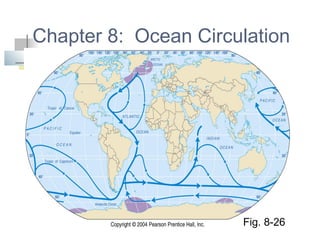
Fig. 8-26
Ocean currents move large
amounts of water and heat
 Wind-driven
surface ocean
circulation
 Density-driven
deep-ocean
circulation
 Both redistribute
heat from warmer
regions to cooler
Fig. 8-16
Measuring ocean currents
 Direct measurement
 Floating objects/instruments
 Fixed instruments
 Indirect measurement
 Distribution of density
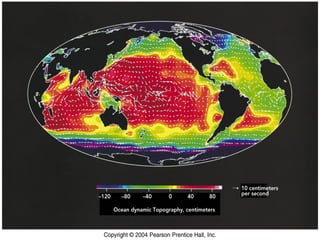
 Satellite data
 Doppler flow meter
 Chemical tracers
 Distinctive water masses
Surface currents
 Frictional drag due to winds
 Surface currents similar to global winds
 Continents affect surface current
patterns
 Other factors:

Gravity

Friction

Coriolis Effect
Subtropical gyres
 Large circular flow
 Clockwise in northern oceans,
e.g., North Atlantic
 Counterclockwise in southern
oceans, e.g., South Atlantic
 4 main currents in each gyre
Ekman spiral and Ekman
transport  Ekman transport
moves surface
seawater about
90o
to the right of
the wind in the
Northern
Hemisphere
 90o
left in
Southern
Hemisphere
Fig. 8-6a
Western intensification
 “Hill” of seawater is steeper on western side
 Western currents are fast, narrow, deep
Subtropical gyres
 Ekman transport
piles up “hill” of
seawater at about
30o
N and S
 Water flows downhill
under gravity and
veers right (Northern
hemisphere) due to
Coriolis Effect
 Circular flow Fig. 8-7
Upwelling
 Ekman transport
moves seawater
offshore
 Ekman transport
moves seawater
away from
another water
mass
Fig. 8-11a
 Cooler, nutrient-
rich water rises
vertically toward
sea surface
 High biologic
productivity
 Downwelling
opposite
Fig. 8-11b
Surface currents
 Pattern similar in major ocean
basins
 Northern ocean gyre moves
clockwise
 Southern ocean gyre moves
counter-clockwise
Antarctic circulation
 Antarctic Circumpolar Current (or
West Wind Drift)
 Greatest volume
 Connects main oceans
 East Wind Drift
 Antarctic Divergence (upwelling)
North Atlantic Circulation
 North Equatorial Current
 Gulf Stream
 North Atlantic Current
 Gulf Stream and North Atlantic
Currents warm Europe
 Canary Current
North Equatorial Current
Gulf Stream
North Atlantic Current
Canary Current
South Atlantic Ocean
 South Equatorial Current
 Brazil Current
 Antarctic Circumpolar Current
 Greatest volume
 Connects three main oceans
 Benguela Current
South Equatorial current
Brazil Current
Benguela Current
North Pacific Ocean
 North Equatorial Current
 Kuroshio Current
 North Pacific Current
 California Current
 Strong Equatorial Counter Current
South Pacific Ocean
 South Equatorial Current
 East Australian Current
 Antarctic Circumpolar Current
 Peru Current
 Strong Equatorial Counter Current
ENSO El Niño-Southern
Oscillation
 Irregular shift in ocean and
atmosphere characteristics every 2-
10 years
 Affects global climate
 Harmful and beneficial
consequences
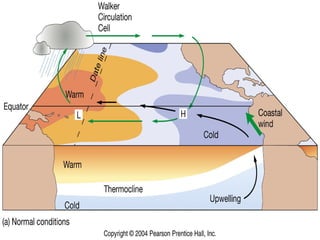
El Niño ENSO Warm Phase
 Most obvious in Equatorial Pacific
 Pacific Warm Pool moves eastward across
Equatorial Pacific
 Changes in pattern of upwelling/downwelling
in eastern Pacific Ocean
Fig. 8-2
ENSO warm phase effects
 Warmer seawater higher sea level
 Warmer seawater less upwelling in
eastern Pacific
 Lower biologic productivity
 Warmer seawater kills some marine life
 Shift in atmosphere pressure
 Shift in areas of precipitation
La Niña ENSO Cool Phase
 Stronger tradewinds
 Warm pool stays in western Pacific
 Increased upwelling in eastern Pacific
 Shift in precipitation patterns
 Shift in atmospheric pressure
ENSO data collection
 TOGA Tropical Ocean Global
Atmosphere
 TAO Tropical Atmosphere Ocean
 Monitor ocean and atmosphere
 Data indicate what phase ENSO
 Pacific Decadal Oscillation
 Decades-long cycles of warming
and cooling in Pacific Ocean
Indian Ocean Circulation
 North and South Equatorial Currents
 Equatorial Counter Current
 Agulhas Current
 Antarctic Circumpolar Current
 West Australian
 Seasonal shifts (monsoons) of winds
and currents
Thermohaline circulation
 90% of world ocean
 Below pycnocline
 Large volumes of
seawater
 Extremely slow
speed
 Each ocean basin is
similar in deep-
ocean circulation
Sources of deep water
 Densest seawater is cold
 Most deep water masses from
polar oceans
 Sink to density level and move
horizontally
Antarctic Bottom Water
 Densest deep water
(coldest)
 Sinks around
Antarctica
 Most widespread
deep-water mass
 Found as far as
40o
N
 Carries O2 into deep
ocean Fig. 8-25
North Atlantic Deep Water
 Complex mixture
of cold seawater
from Norwegian
sea mixing with
 Gulf Stream
 Mediterranean
Intermediate
Water
 Other NA water
masses
 Extends from
North Atlantic to
about 40o
south
Intermediate Water Masses
 Antarctic Intermediate Water
 Sinks at Antarctic Convergence
 Cold
 Salinity less than average
 Mediterranean Intermediate Water
 Warm
 Very salty
Conveyor Belt Circulation
 Mixture of surface
ocean circulation
and deep-ocean
circulation
 Mixes surface
and deep
 Mixes waters in
different oceans Fig. 8-26
Langmuir Circulation
 Alternately converging and diverging
convection cells
 Wind blowing over calm ocean
 Alternate rows of upwelling and downwelling
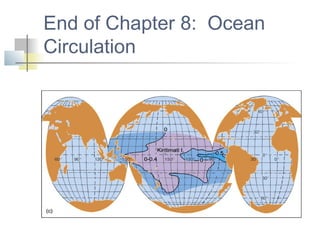
End of Chapter 8: Ocean
Circulation

Ocean Circulation

  • 1.
    Chapter 8: OceanCirculation Fig. 8-26
  • 2.
    Ocean currents movelarge amounts of water and heat  Wind-driven surface ocean circulation  Density-driven deep-ocean circulation  Both redistribute heat from warmer regions to cooler Fig. 8-16
  • 3.
    Measuring ocean currents Direct measurement  Floating objects/instruments  Fixed instruments  Indirect measurement  Distribution of density  Satellite data  Doppler flow meter  Chemical tracers  Distinctive water masses
  • 7.
    Surface currents  Frictionaldrag due to winds  Surface currents similar to global winds  Continents affect surface current patterns  Other factors:  Gravity  Friction  Coriolis Effect
  • 9.
    Subtropical gyres  Largecircular flow  Clockwise in northern oceans, e.g., North Atlantic  Counterclockwise in southern oceans, e.g., South Atlantic  4 main currents in each gyre
  • 11.
    Ekman spiral andEkman transport  Ekman transport moves surface seawater about 90o to the right of the wind in the Northern Hemisphere  90o left in Southern Hemisphere Fig. 8-6a
  • 13.
    Western intensification  “Hill”of seawater is steeper on western side  Western currents are fast, narrow, deep
  • 14.
    Subtropical gyres  Ekmantransport piles up “hill” of seawater at about 30o N and S  Water flows downhill under gravity and veers right (Northern hemisphere) due to Coriolis Effect  Circular flow Fig. 8-7
  • 15.
    Upwelling  Ekman transport movesseawater offshore  Ekman transport moves seawater away from another water mass Fig. 8-11a
  • 16.
     Cooler, nutrient- richwater rises vertically toward sea surface  High biologic productivity  Downwelling opposite Fig. 8-11b
  • 18.
    Surface currents  Patternsimilar in major ocean basins  Northern ocean gyre moves clockwise  Southern ocean gyre moves counter-clockwise
  • 19.
    Antarctic circulation  AntarcticCircumpolar Current (or West Wind Drift)  Greatest volume  Connects main oceans  East Wind Drift  Antarctic Divergence (upwelling)
  • 20.
    North Atlantic Circulation North Equatorial Current  Gulf Stream  North Atlantic Current  Gulf Stream and North Atlantic Currents warm Europe  Canary Current
  • 21.
  • 22.
  • 23.
  • 24.
  • 25.
    South Atlantic Ocean South Equatorial Current  Brazil Current  Antarctic Circumpolar Current  Greatest volume  Connects three main oceans  Benguela Current
  • 26.
  • 27.
  • 28.
  • 29.
    North Pacific Ocean North Equatorial Current  Kuroshio Current  North Pacific Current  California Current  Strong Equatorial Counter Current
  • 30.
    South Pacific Ocean South Equatorial Current  East Australian Current  Antarctic Circumpolar Current  Peru Current  Strong Equatorial Counter Current
  • 31.
    ENSO El Niño-Southern Oscillation Irregular shift in ocean and atmosphere characteristics every 2- 10 years  Affects global climate  Harmful and beneficial consequences
  • 32.
    El Niño ENSOWarm Phase  Most obvious in Equatorial Pacific  Pacific Warm Pool moves eastward across Equatorial Pacific  Changes in pattern of upwelling/downwelling in eastern Pacific Ocean Fig. 8-2
  • 33.
    ENSO warm phaseeffects  Warmer seawater higher sea level  Warmer seawater less upwelling in eastern Pacific  Lower biologic productivity  Warmer seawater kills some marine life  Shift in atmosphere pressure  Shift in areas of precipitation
  • 37.
    La Niña ENSOCool Phase  Stronger tradewinds  Warm pool stays in western Pacific  Increased upwelling in eastern Pacific  Shift in precipitation patterns  Shift in atmospheric pressure
  • 38.
    ENSO data collection TOGA Tropical Ocean Global Atmosphere  TAO Tropical Atmosphere Ocean  Monitor ocean and atmosphere  Data indicate what phase ENSO  Pacific Decadal Oscillation  Decades-long cycles of warming and cooling in Pacific Ocean
  • 39.
    Indian Ocean Circulation North and South Equatorial Currents  Equatorial Counter Current  Agulhas Current  Antarctic Circumpolar Current  West Australian  Seasonal shifts (monsoons) of winds and currents
  • 42.
    Thermohaline circulation  90%of world ocean  Below pycnocline  Large volumes of seawater  Extremely slow speed  Each ocean basin is similar in deep- ocean circulation
  • 43.
    Sources of deepwater  Densest seawater is cold  Most deep water masses from polar oceans  Sink to density level and move horizontally
  • 44.
    Antarctic Bottom Water Densest deep water (coldest)  Sinks around Antarctica  Most widespread deep-water mass  Found as far as 40o N  Carries O2 into deep ocean Fig. 8-25
  • 45.
    North Atlantic DeepWater  Complex mixture of cold seawater from Norwegian sea mixing with  Gulf Stream  Mediterranean Intermediate Water  Other NA water masses  Extends from North Atlantic to about 40o south
  • 46.
    Intermediate Water Masses Antarctic Intermediate Water  Sinks at Antarctic Convergence  Cold  Salinity less than average  Mediterranean Intermediate Water  Warm  Very salty
  • 47.
    Conveyor Belt Circulation Mixture of surface ocean circulation and deep-ocean circulation  Mixes surface and deep  Mixes waters in different oceans Fig. 8-26
  • 48.
    Langmuir Circulation  Alternatelyconverging and diverging convection cells  Wind blowing over calm ocean  Alternate rows of upwelling and downwelling
  • 49.
    End of Chapter8: Ocean Circulation