

Intro to
Oceanography
How does it differ from Marine Biology?
Study of the ocean, its surroundings, and life
within it.
Marine bio studies marine organisms’
anatomy, physiology, behavior; more
individualistic.
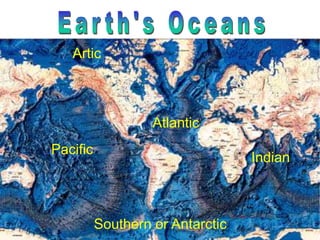
1.Pacific
2.Atlantic
3.Indian
4.Arctic
5.Southern or
Antarctic Ocean
The five principal oceans
Indian
Southern or Antarctic
Artic
Pacific
Atlantic
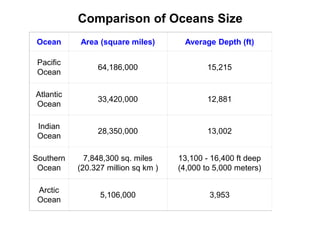
Ocean Area (square miles) Average Depth (ft) D
Pacific
Ocean
64,186,000 15,215 Marian
Atlantic
Ocean
33,420,000 12,881 Puerto R
Indian
Ocean
28,350,000 13,002 Java
Southern
Ocean
7,848,300 sq. miles
(20.327 million sq km )
13,100 - 16,400 ft deep
(4,000 to 5,000 meters)
the souther
Trench,
Arctic
Ocean
5,106,000 3,953 Euras
Comparison of Oceans Size
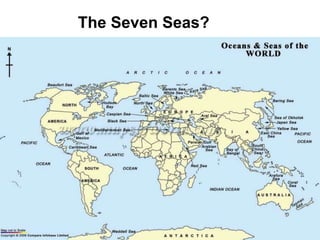
The Seven Seas?
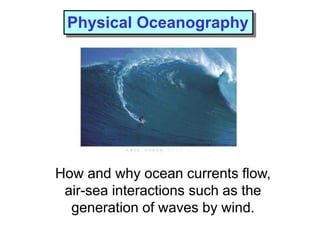
Physical Oceanography
How and why ocean currents flow,
air-sea interactions such as the
generation of waves by wind.
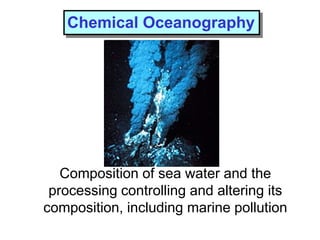
Chemical Oceanography
Composition of sea water and the
processing controlling and altering its
composition, including marine pollution
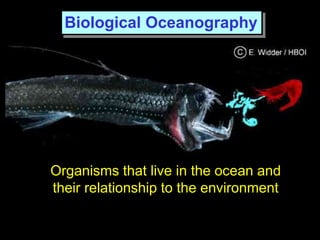
Organisms that live in the ocean and
their relationship to the environment
Biological Oceanography
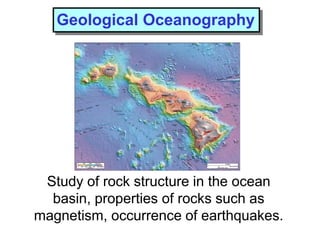
Study of rock structure in the ocean
basin, properties of rocks such as
magnetism, occurrence of earthquakes.
Geological Oceanography
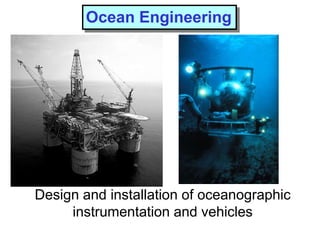
Design and installation of oceanographic
instrumentation and vehicles
Ocean Engineering
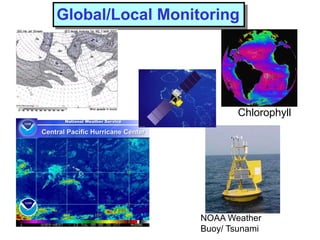
NOAA Weather
Buoy/ Tsunami
Global/Local Monitoring
Chlorophyll
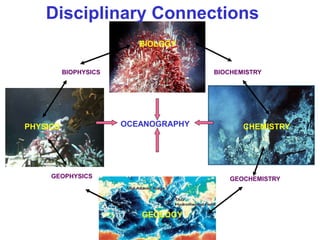
Disciplinary Connections
BIOLOGY
BIOCHEMISTRY
OCEANOGRAPHYPHYSICS
GEOLOGY
CHEMISTRY
GEOPHYSICS
BIOPHYSICS
GEOCHEMISTRY
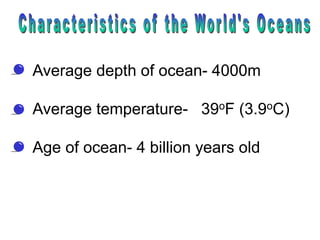
Average depth of ocean- 4000m
Average temperature- 39oF (3.9oC)
Age of ocean- 4 billion years old
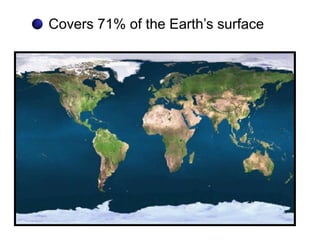
Covers 71% of the Earth’s surface
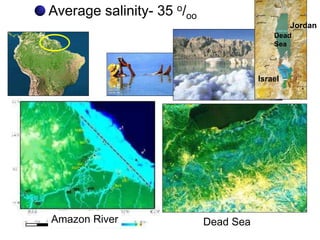
Amazon River
Average salinity- 35 o/oo
Dead Sea
Jordan
Israel
Dead
Sea
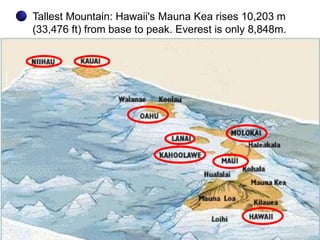
Tallest Mountain: Hawaii's Mauna Kea rises 10,203 m
(33,476 ft) from base to peak. Everest is only 8,848m.
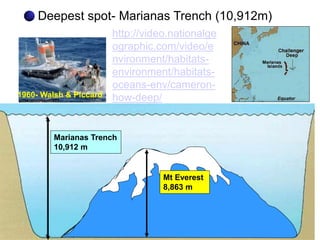
Deepest spot- Marianas Trench (10,912m)
1960- Walsh & Piccard
Marianas Trench
10,912 m
Mt Everest
8,863 m
http://video.nationalge
ographic.com/video/e
nvironment/habitats-
environment/habitats-
oceans-env/cameron-
how-deep/
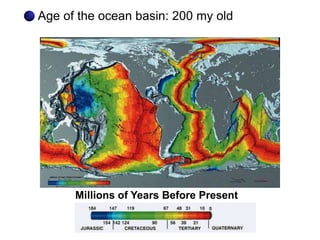
Millions of Years Before Present
Age of the ocean basin: 200 my old
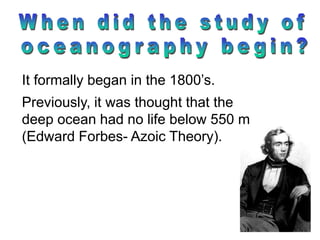
It formally began in the 1800’s.
Previously, it was thought that the
deep ocean had no life below 550 m
(Edward Forbes- Azoic Theory).
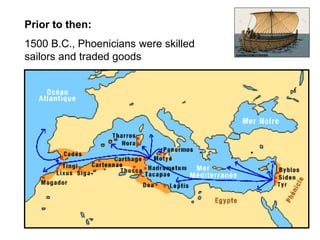
Prior to then:
1500 B.C., Phoenicians were skilled
sailors and traded goods
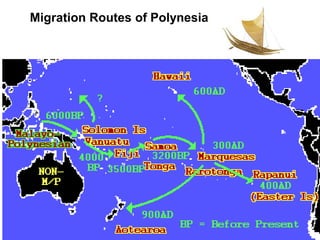
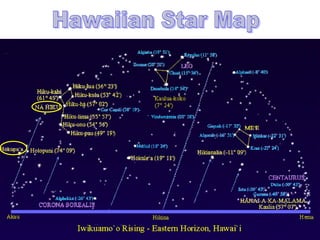
Migration Routes of Polynesia
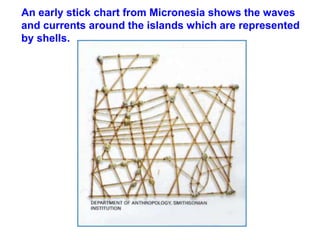
An early stick chart from Micronesia shows the waves
and currents around the islands which are represented
by shells.
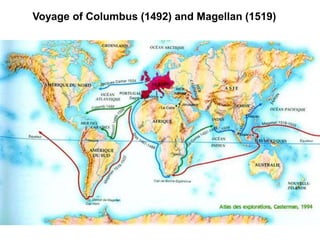
Voyage of Columbus (1492) and Magellan (1519)
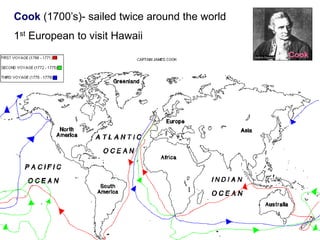
Cook (1700’s)- sailed twice around the world
1st European to visit Hawaii
Cook
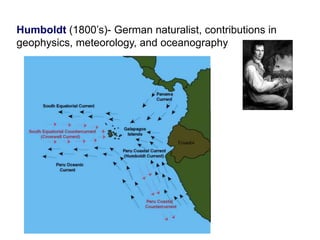
Humboldt (1800’s)- German naturalist, contributions in
geophysics, meteorology, and oceanography
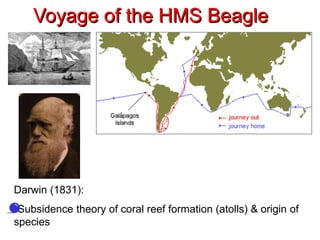
Voyage of the HMS Beagle
Darwin (1831):
•Subsidence theory of coral reef formation (atolls) & origin of
species
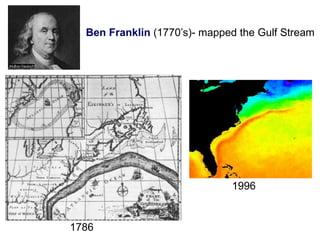
Ben Franklin (1770’s)- mapped the Gulf Stream
1996
1786
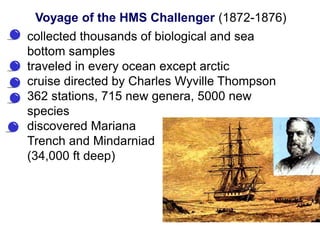
• collected thousands of biological and sea
bottom samples
• traveled in every ocean except arctic
• cruise directed by Charles Wyville Thompson
• 362 stations, 715 new genera, 5000 new
species
• discovered Mariana
Trench and Mindarniad
(34,000 ft deep)
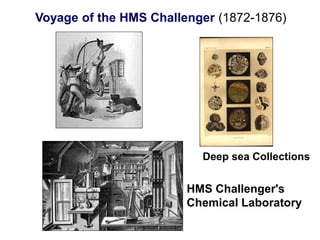
Voyage of the HMS Challenger (1872-1876)
HMS Challenger's
Chemical Laboratory
Deep sea Collections
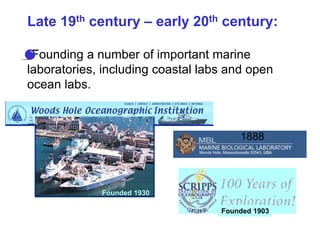
Late 19th century – early 20th century:
•Founding a number of important marine
laboratories, including coastal labs and open
ocean labs.
Founded 1903
Founded 1930
1888
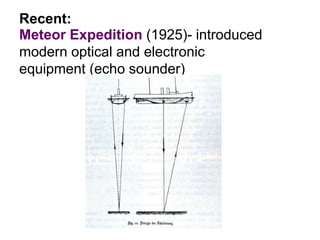
Meteor Expedition (1925)- introduced
modern optical and electronic
equipment (echo sounder)
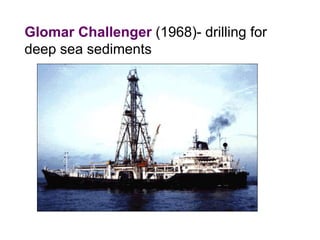
Recent:
Glomar Challenger (1968)- drilling for
deep sea sediments
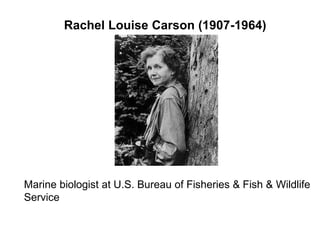
Rachel Louise Carson (1907-1964)
Marine biologist at U.S. Bureau of Fisheries & Fish & Wildlife
Service
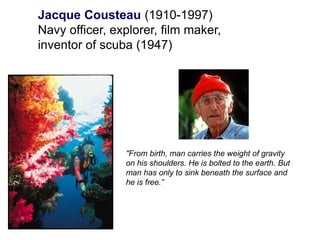
Jacque Cousteau (1910-1997)
Navy officer, explorer, film maker,
inventor of scuba (1947)
"From birth, man carries the weight of gravity
on his shoulders. He is bolted to the earth. But
man has only to sink beneath the surface and
he is free.”
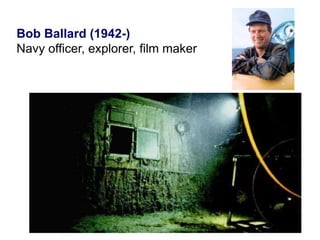
Bob Ballard (1942-)
Navy officer, explorer, film maker
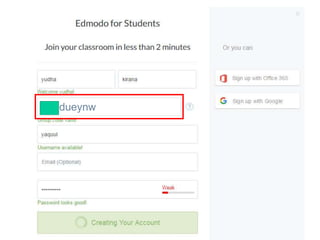
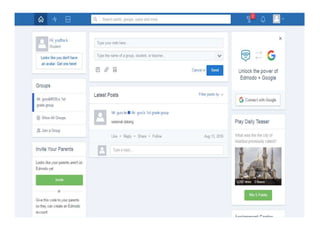
We’re in EDMODO NOW
• 1. Pada web browser (mozilla, Chrome, dll)
ketik www.edmodo.com
• 2. sign up sebagai student.
dueynw
Inquiry
1. The 4 major disciplines of oceanography
are _____.
2. The tallest mtn in the world is____.
3. The ave. depth of the ocean is ____.
4. What are modern and ancient ways to
navigate?
5. Who discovered the Marianas trench and
how was it done?
6. Who traveled to it’s depths?
7. What was Rachael Carson known for?

001 intro to oceanography