A good Scientist is an
Observant Scientist.
advertent, alive, attentive, bright,
  comprehending,   considering,
contemplating, deducing, detecting,
     discerning, discovering,
discriminating, eager, interested, keen,
 mindful, observant, on one's toes,
on the ball, perceptive, questioning,
     quick,searching, sharp,
    understanding, vigilant, wide-
              awake
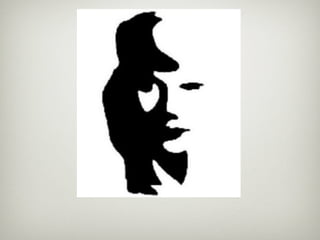
How Observant Are
      You??
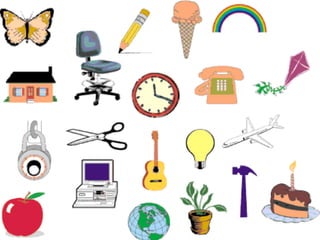
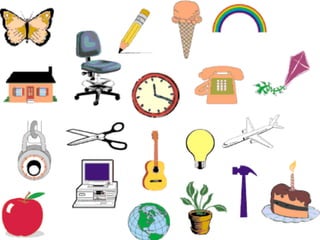
Write down all the
   objects you
    remember
Scientific Method
Scientific Method
• Problem/Question
Scientific Method
• Problem/Question
• The scientific method starts when you ask a
  question about something that you observe:
  How, What, When, Who, Which, Why, or
  Where?
  And, in order for the scientific method to
  answer the question it must be about something
  that you can measure, preferably with a
  number.
Scientific Method
Scientific Method

• Do Background Research:
Scientific Method

• Do Background Research:
• Rather than starting from scratch in putting
  together a plan for answering your question,
  you want to be a savvy scientist using library
  and Internet research to help you find the best
  way to do things and insure that you don't
  repeat mistakes from the past.
Scientific Method
Scientific Method
• Construct a Hypothesis:
Scientific Method
• Construct a Hypothesis:
• A hypothesis is an educated guess about how
  things work:
Scientific Method
• Construct a Hypothesis:
• A hypothesis is an educated guess about how
  things work:
• "If _____[I do this] _____, then _____[this]_____
  will happen."
  You must state your hypothesis in a way that
  you can easily measure, and of course, your
  hypothesis should be constructed in a way to
  help you answer your original question.
Scientific Method
Scientific Method
• Test Your Hypothesis with an Experiment:
Scientific Method
• Test Your Hypothesis with an Experiment:
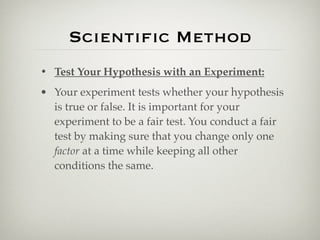
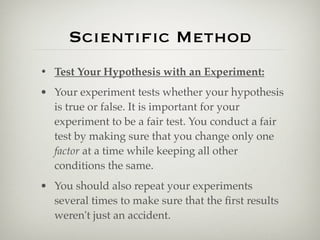
• Your experiment tests whether your hypothesis
  is true or false. It is important for your
  experiment to be a fair test. You conduct a fair
  test by making sure that you change only one
  factor at a time while keeping all other
  conditions the same.
Scientific Method
• Test Your Hypothesis with an Experiment:
• Your experiment tests whether your hypothesis
  is true or false. It is important for your
  experiment to be a fair test. You conduct a fair
  test by making sure that you change only one
  factor at a time while keeping all other
  conditions the same.
• You should also repeat your experiments
  several times to make sure that the first results
  weren't just an accident.
Scientific Method
Scientific Method

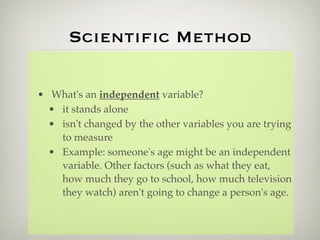
• What's an independent variable?
Scientific Method

• What's an independent variable?
  • it stands alone
Scientific Method

• What's an independent variable?
  • it stands alone
  • isn't changed by the other variables you are trying
    to measure
Scientific Method

• What's an independent variable?
  • it stands alone
  • isn't changed by the other variables you are trying
    to measure
  • Example: someone's age might be an independent
    variable. Other factors (such as what they eat,
    how much they go to school, how much television
    they watch) aren't going to change a person's age.
Scientific Method
Scientific Method
• What's a dependent variable?
Scientific Method
• What's a dependent variable?
• Something that depends on other factors
Scientific Method
• What's a dependent variable?
• Something that depends on other factors
• Example: a test score could be a dependent variable
  because it could change depending on several
  factors such as how much you studied, how much
  sleep you got the night before you took the test, or
  even how hungry you were when you took it.
Scientific Method
• What's a dependent variable?
• Something that depends on other factors
• Example: a test score could be a dependent variable
  because it could change depending on several
  factors such as how much you studied, how much
  sleep you got the night before you took the test, or
  even how hungry you were when you took it.
• Usually when you are looking for a relationship
  between two things you are trying to find out what
  makes the dependent variable change the way it
  does.
Scientific Method
Scientific Method
• Many people have trouble remembering which is
  the independent variable and which is the
  dependent variable.
Scientific Method
• Many people have trouble remembering which is
  the independent variable and which is the
  dependent variable.
• An easy way to remember is to insert the names of
  the two variables you are using in this sentence in
  they way that makes the most sense. Then you can
  figure out which is the independent variable and
  which is the dependent variable:
Scientific Method
• Many people have trouble remembering which is
  the independent variable and which is the
  dependent variable.
• An easy way to remember is to insert the names of
  the two variables you are using in this sentence in
  they way that makes the most sense. Then you can
  figure out which is the independent variable and
  which is the dependent variable:
• (Independent variable) causes a change in
  (Dependent Variable) and it isn't possible that
  (Dependent Variable) could cause a change
  in(Independent Variable).
Scientific Method
Scientific Method


• “Time Spent Studying” causes a change in “Test
  Score” and it isn't possible that “Test Score” could
  cause a change in “Time Spent Studying”.
Scientific Method


• “Time Spent Studying” causes a change in “Test
  Score” and it isn't possible that “Test Score” could
  cause a change in “Time Spent Studying”.
• "Time Spent Studying" - independent variable
Scientific Method


• “Time Spent Studying” causes a change in “Test
  Score” and it isn't possible that “Test Score” could
  cause a change in “Time Spent Studying”.
• "Time Spent Studying" - independent variable
• "Test Score" - dependent variable because the
Scientific Method
Scientific Method
• Controlled variables
Scientific Method
• Controlled variables
• Quantities that a scientist wants to remain constant, and he
  must observe them as carefully as the dependent variables.
Scientific Method
• Controlled variables
• Quantities that a scientist wants to remain constant, and he
  must observe them as carefully as the dependent variables.
• Example: if we want to measure how much water flow
  increases when we open a faucet, it is important to make sure
  that the water pressure (the controlled variable) is held
  constant. That's because both the water pressure and the
  opening of a faucet have an impact on how much water
  flows. If we change both of them at the same time, we can't
  be sure how much of the change in water flow is because of
  the faucet opening and how much because of the water
  pressure. In other words, it would not be a fair test.
Scientific Method
Scientific Method
• Analyze Your Data & Draw a Conclusion:
Scientific Method
• Analyze Your Data & Draw a Conclusion:
• Once your experiment is complete, you collect your
  measurements and analyze them to see if your
  hypothesis is true or false.
Scientific Method
• Analyze Your Data & Draw a Conclusion:
• Once your experiment is complete, you collect your
  measurements and analyze them to see if your
  hypothesis is true or false.
• Scientists often find that their hypothesis was
  false, and in such cases they will construct a new
  hypothesis starting the entire process of the
  scientific method over again. Even if they find that
  their hypothesis was true, they may want to test it
  again in a new way.
Scientific Method
Scientific Method


• Communicate Your Results:
Scientific Method


• Communicate Your Results:
• Scientists publish their final report in a scientific
  journal or by presenting their results on a poster
  at a scientific meeting.
http://glencoe.mcgraw-hill.com/sites/dl/free/0078617677/164155/00044686.html

Observation Skills & Scientific Method

  • 1.
    A good Scientistis an Observant Scientist.
  • 2.
    advertent, alive, attentive,bright, comprehending, considering, contemplating, deducing, detecting, discerning, discovering, discriminating, eager, interested, keen, mindful, observant, on one's toes, on the ball, perceptive, questioning, quick,searching, sharp, understanding, vigilant, wide- awake
  • 11.
  • 13.
    Write down allthe objects you remember
  • 18.
  • 19.
  • 20.
    Scientific Method • Problem/Question •The scientific method starts when you ask a question about something that you observe: How, What, When, Who, Which, Why, or Where? And, in order for the scientific method to answer the question it must be about something that you can measure, preferably with a number.
  • 21.
  • 22.
    Scientific Method • DoBackground Research:
  • 23.
    Scientific Method • DoBackground Research: • Rather than starting from scratch in putting together a plan for answering your question, you want to be a savvy scientist using library and Internet research to help you find the best way to do things and insure that you don't repeat mistakes from the past.
  • 24.
  • 25.
  • 26.
    Scientific Method • Constructa Hypothesis: • A hypothesis is an educated guess about how things work:
  • 27.
    Scientific Method • Constructa Hypothesis: • A hypothesis is an educated guess about how things work: • "If _____[I do this] _____, then _____[this]_____ will happen." You must state your hypothesis in a way that you can easily measure, and of course, your hypothesis should be constructed in a way to help you answer your original question.
  • 28.
  • 29.
    Scientific Method • TestYour Hypothesis with an Experiment:
  • 30.
    Scientific Method • TestYour Hypothesis with an Experiment: • Your experiment tests whether your hypothesis is true or false. It is important for your experiment to be a fair test. You conduct a fair test by making sure that you change only one factor at a time while keeping all other conditions the same.
  • 31.
    Scientific Method • TestYour Hypothesis with an Experiment: • Your experiment tests whether your hypothesis is true or false. It is important for your experiment to be a fair test. You conduct a fair test by making sure that you change only one factor at a time while keeping all other conditions the same. • You should also repeat your experiments several times to make sure that the first results weren't just an accident.
  • 32.
  • 33.
    Scientific Method • What'san independent variable?
  • 34.
    Scientific Method • What'san independent variable? • it stands alone
  • 35.
    Scientific Method • What'san independent variable? • it stands alone • isn't changed by the other variables you are trying to measure
  • 36.
    Scientific Method • What'san independent variable? • it stands alone • isn't changed by the other variables you are trying to measure • Example: someone's age might be an independent variable. Other factors (such as what they eat, how much they go to school, how much television they watch) aren't going to change a person's age.
  • 37.
  • 38.
    Scientific Method • What'sa dependent variable?
  • 39.
    Scientific Method • What'sa dependent variable? • Something that depends on other factors
  • 40.
    Scientific Method • What'sa dependent variable? • Something that depends on other factors • Example: a test score could be a dependent variable because it could change depending on several factors such as how much you studied, how much sleep you got the night before you took the test, or even how hungry you were when you took it.
  • 41.
    Scientific Method • What'sa dependent variable? • Something that depends on other factors • Example: a test score could be a dependent variable because it could change depending on several factors such as how much you studied, how much sleep you got the night before you took the test, or even how hungry you were when you took it. • Usually when you are looking for a relationship between two things you are trying to find out what makes the dependent variable change the way it does.
  • 42.
  • 43.
    Scientific Method • Manypeople have trouble remembering which is the independent variable and which is the dependent variable.
  • 44.
    Scientific Method • Manypeople have trouble remembering which is the independent variable and which is the dependent variable. • An easy way to remember is to insert the names of the two variables you are using in this sentence in they way that makes the most sense. Then you can figure out which is the independent variable and which is the dependent variable:
  • 45.
    Scientific Method • Manypeople have trouble remembering which is the independent variable and which is the dependent variable. • An easy way to remember is to insert the names of the two variables you are using in this sentence in they way that makes the most sense. Then you can figure out which is the independent variable and which is the dependent variable: • (Independent variable) causes a change in (Dependent Variable) and it isn't possible that (Dependent Variable) could cause a change in(Independent Variable).
  • 46.
  • 47.
    Scientific Method • “TimeSpent Studying” causes a change in “Test Score” and it isn't possible that “Test Score” could cause a change in “Time Spent Studying”.
  • 48.
    Scientific Method • “TimeSpent Studying” causes a change in “Test Score” and it isn't possible that “Test Score” could cause a change in “Time Spent Studying”. • "Time Spent Studying" - independent variable
  • 49.
    Scientific Method • “TimeSpent Studying” causes a change in “Test Score” and it isn't possible that “Test Score” could cause a change in “Time Spent Studying”. • "Time Spent Studying" - independent variable • "Test Score" - dependent variable because the
  • 50.
  • 51.
  • 52.
    Scientific Method • Controlledvariables • Quantities that a scientist wants to remain constant, and he must observe them as carefully as the dependent variables.
  • 53.
    Scientific Method • Controlledvariables • Quantities that a scientist wants to remain constant, and he must observe them as carefully as the dependent variables. • Example: if we want to measure how much water flow increases when we open a faucet, it is important to make sure that the water pressure (the controlled variable) is held constant. That's because both the water pressure and the opening of a faucet have an impact on how much water flows. If we change both of them at the same time, we can't be sure how much of the change in water flow is because of the faucet opening and how much because of the water pressure. In other words, it would not be a fair test.
  • 54.
  • 55.
    Scientific Method • AnalyzeYour Data & Draw a Conclusion:
  • 56.
    Scientific Method • AnalyzeYour Data & Draw a Conclusion: • Once your experiment is complete, you collect your measurements and analyze them to see if your hypothesis is true or false.
  • 57.
    Scientific Method • AnalyzeYour Data & Draw a Conclusion: • Once your experiment is complete, you collect your measurements and analyze them to see if your hypothesis is true or false. • Scientists often find that their hypothesis was false, and in such cases they will construct a new hypothesis starting the entire process of the scientific method over again. Even if they find that their hypothesis was true, they may want to test it again in a new way.
  • 58.
  • 59.
  • 60.
    Scientific Method • CommunicateYour Results: • Scientists publish their final report in a scientific journal or by presenting their results on a poster at a scientific meeting.
  • 61.