The Skin
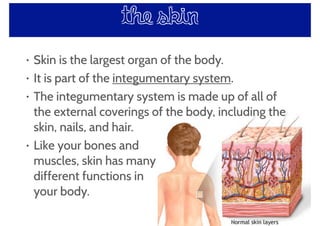
• Skin is the largest organ of the body.
• It is part of the integumentary system.
• The integumentary system is made up of all of
the external coverings of the body, including the
skin, nails, and hair.
• Like your bones and
muscles, skin has many
different functions in
your body.
the skin
Protection
• Skin covers your bones and muscles, protecting
them from the outside environment.
• Skin keeps your body from drying out in sunlight
and wind.
• Skin also protects the cells and tissues under the
skin from damage.
• Skin keeps dirt, bacteria, viruses, and other
substances from entering your body.
functions of the skin
Sensory Response
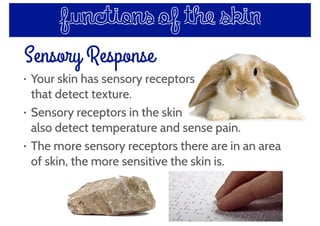
• Your skin has sensory receptors
that detect texture.
• Sensory receptors in the skin
also detect temperature and sense pain.
• The more sensory receptors there are in an area
of skin, the more sensitive the skin is.
functions of the skin
Temperature Regulation
• Skin helps control body temperature.
• Skin has tiny holes, or pores, on
its outer surface.
• When you exercise, sweat comes
from these pores. Sweating is one way
that skin maintains normal body temperature.
• As sweat evaporates, excess thermal energy
leaves the body and the skin cools.
functions of the skin
Temperature Regulation
• Another way the skin maintains body
temperature is by releasing thermal energy from
blood vessels.
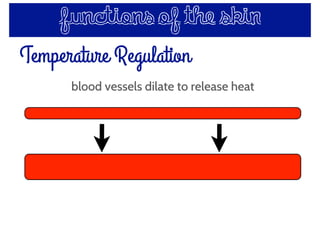
• When your body temperature begins to increase,
such as when you are exercising, blood vessels
near the skin’s surface dilate, or enlarge.
• This increases the surface area of the blood
vessels and releases more thermal energy.
functions of the skin
Temperature Regulation
functions of the skin
blood vessels dilate to release heat
Production of Vitamin D
• If your skin is exposed to sunlight, it can make
vitamin D.
• Your body needs vitamin D to help it absorb
calcium and phosphorus.
• Vitamin D also helps bones grow.
functions of the skin
Elimination
• Normal cellular processes produce waste
products.
• The skin helps eliminate, or get rid of,
some of these wastes.
• Water, salts, and other waste products are
removed through the pores of the skin.
• Elimination occurs all the time, but you probably
only notice it when you sweat.
functions of the skin
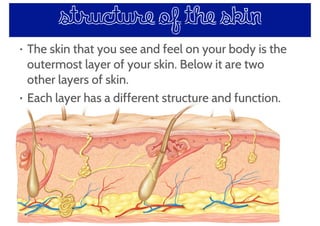
• The skin that you see and feel on your body is the
outermost layer of your skin. Below it are two
other layers of skin.
• Each layer has a different structure and function.
structure of the skin
Epidermis
structure of the skin
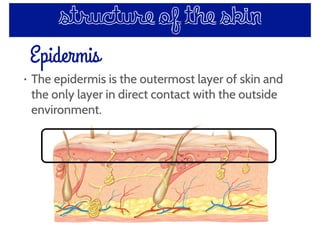
• The epidermis is the outermost layer of skin and
the only layer in direct contact with the outside
environment.
Epidermis
structure of the skin
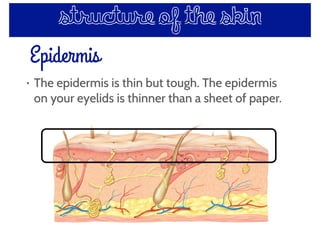
• The epidermis is thin but tough. The epidermis
on your eyelids is thinner than a sheet of paper.
Epidermis
structure of the skin
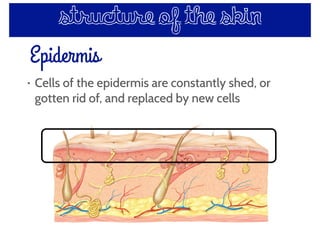
• Cells of the epidermis are constantly shed, or
gotten rid of, and replaced by new cells
Epidermis
structure of the skin
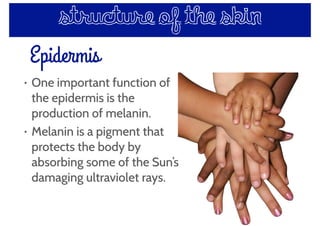
• One important function of
the epidermis is the
production of melanin.
• Melanin is a pigment that
protects the body by
absorbing some of the Sun’s
damaging ultraviolet rays.
Dermis
structure of the skin
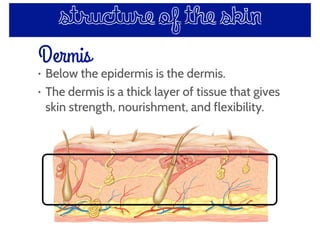
• Below the epidermis is the dermis.
• The dermis is a thick layer of tissue that gives
skin strength, nourishment, and flexibility.
Dermis
structure of the skin
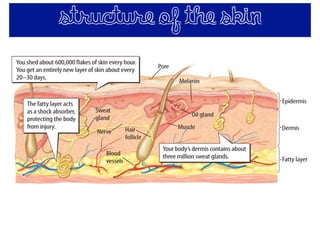
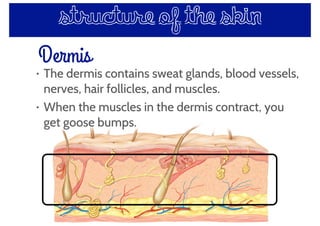
• The dermis contains sweat glands, blood vessels,
nerves, hair follicles, and muscles.
• When the muscles in the dermis contract, you
get goose bumps.
Fatty Layer
structure of the skin
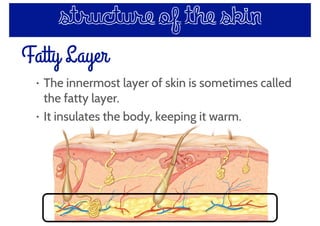
• The innermost layer of skin is sometimes called
the fatty layer.
• It insulates the body, keeping it warm.
skin injuries and repair
• Skin is often injured because it is exposed to the
outside environment. You might have injured
your skin by falling down or bruising it.
• Your body has different ways to repair skin. The
type of repair depends on the type of injury and
how serious it is.
skin injuries and repair
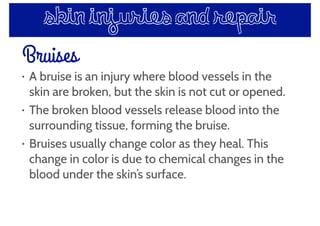
• A bruise is an injury where blood vessels in the
skin are broken, but the skin is not cut or opened.
• The broken blood vessels release blood into the
surrounding tissue, forming the bruise.
• Bruises usually change color as they heal. This
change in color is due to chemical changes in the
blood under the skin’s surface.
Bruises
skin injuries and repair
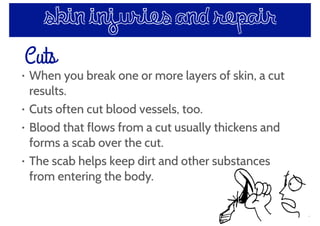
• When you break one or more layers of skin, a cut
results.
• Cuts often cut blood vessels, too.
• Blood that flows from a cut usually thickens and
forms a scab over the cut.
• The scab helps keep dirt and other substances
from entering the body.
Cuts
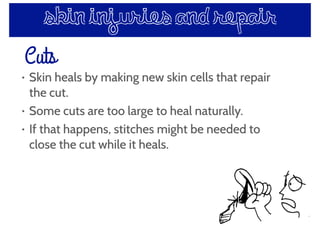
skin injuries and repair
• Skin heals by making new skin cells that repair
the cut.
• Some cuts are too large to heal naturally.
• If that happens, stitches might be needed to
close the cut while it heals.
Cuts
skin injuries and repair
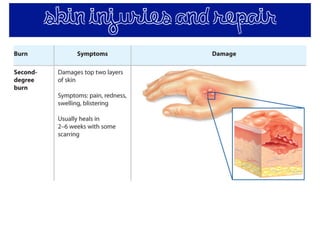
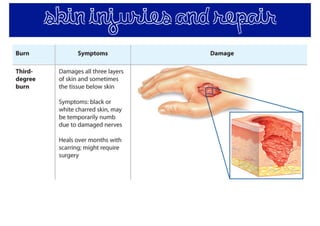
• A burn is an injury to your skin or tissues that can
be caused by touching hot objects.
• Touching extremely cold objects, chemicals,
electricity, radiation (such as sunlight), or friction
(rubbing) can also cause burns.
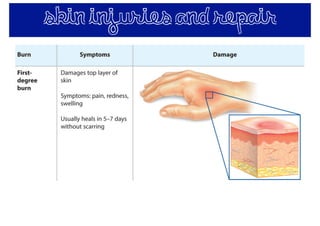
• There are three degrees, or levels, of burns.
Burns
skin injuries and repair
healthy skin
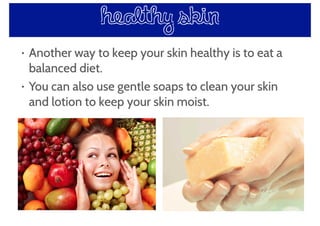
• Another way to keep your skin healthy is to eat a
balanced diet.
• You can also use gentle soaps to clean your skin
and lotion to keep your skin moist.
the skin and homeostasis
• You have read that the skin can make vitamin D
and that it protects the body from outside
substances.
• Both of these functions help regulate the body’s
internal environment.
the skin and homeostasis
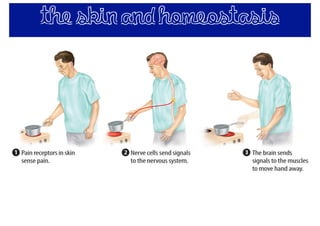
• The skin also works with other body systems to
maintain homeostasis.
• The skin and circulatory system help cool the
body when it becomes overheated.
• The skin also works with the nervous system and
muscular system to help the body react to
stimuli.
the skin and homeostasis

The Skin

  • 1.
  • 2.
    • Skin isthe largest organ of the body. • It is part of the integumentary system. • The integumentary system is made up of all of the external coverings of the body, including the skin, nails, and hair. • Like your bones and muscles, skin has many different functions in your body. the skin
  • 3.
    Protection • Skin coversyour bones and muscles, protecting them from the outside environment. • Skin keeps your body from drying out in sunlight and wind. • Skin also protects the cells and tissues under the skin from damage. • Skin keeps dirt, bacteria, viruses, and other substances from entering your body. functions of the skin
  • 4.
    Sensory Response • Yourskin has sensory receptors that detect texture. • Sensory receptors in the skin also detect temperature and sense pain. • The more sensory receptors there are in an area of skin, the more sensitive the skin is. functions of the skin
  • 5.
    Temperature Regulation • Skinhelps control body temperature. • Skin has tiny holes, or pores, on its outer surface. • When you exercise, sweat comes from these pores. Sweating is one way that skin maintains normal body temperature. • As sweat evaporates, excess thermal energy leaves the body and the skin cools. functions of the skin
  • 6.
    Temperature Regulation • Anotherway the skin maintains body temperature is by releasing thermal energy from blood vessels. • When your body temperature begins to increase, such as when you are exercising, blood vessels near the skin’s surface dilate, or enlarge. • This increases the surface area of the blood vessels and releases more thermal energy. functions of the skin
  • 7.
    Temperature Regulation functions ofthe skin blood vessels dilate to release heat
  • 8.
    Production of VitaminD • If your skin is exposed to sunlight, it can make vitamin D. • Your body needs vitamin D to help it absorb calcium and phosphorus. • Vitamin D also helps bones grow. functions of the skin
  • 9.
    Elimination • Normal cellularprocesses produce waste products. • The skin helps eliminate, or get rid of, some of these wastes. • Water, salts, and other waste products are removed through the pores of the skin. • Elimination occurs all the time, but you probably only notice it when you sweat. functions of the skin
  • 10.
    • The skinthat you see and feel on your body is the outermost layer of your skin. Below it are two other layers of skin. • Each layer has a different structure and function. structure of the skin
  • 11.
  • 12.
    Epidermis structure of theskin • The epidermis is the outermost layer of skin and the only layer in direct contact with the outside environment.
  • 13.
    Epidermis structure of theskin • The epidermis is thin but tough. The epidermis on your eyelids is thinner than a sheet of paper.
  • 14.
    Epidermis structure of theskin • Cells of the epidermis are constantly shed, or gotten rid of, and replaced by new cells
  • 15.
    Epidermis structure of theskin • One important function of the epidermis is the production of melanin. • Melanin is a pigment that protects the body by absorbing some of the Sun’s damaging ultraviolet rays.
  • 16.
    Dermis structure of theskin • Below the epidermis is the dermis. • The dermis is a thick layer of tissue that gives skin strength, nourishment, and flexibility.
  • 17.
    Dermis structure of theskin • The dermis contains sweat glands, blood vessels, nerves, hair follicles, and muscles. • When the muscles in the dermis contract, you get goose bumps.
  • 18.
    Fatty Layer structure ofthe skin • The innermost layer of skin is sometimes called the fatty layer. • It insulates the body, keeping it warm.
  • 19.
    skin injuries andrepair • Skin is often injured because it is exposed to the outside environment. You might have injured your skin by falling down or bruising it. • Your body has different ways to repair skin. The type of repair depends on the type of injury and how serious it is.
  • 20.
    skin injuries andrepair • A bruise is an injury where blood vessels in the skin are broken, but the skin is not cut or opened. • The broken blood vessels release blood into the surrounding tissue, forming the bruise. • Bruises usually change color as they heal. This change in color is due to chemical changes in the blood under the skin’s surface. Bruises
  • 21.
  • 22.
    skin injuries andrepair • When you break one or more layers of skin, a cut results. • Cuts often cut blood vessels, too. • Blood that flows from a cut usually thickens and forms a scab over the cut. • The scab helps keep dirt and other substances from entering the body. Cuts
  • 23.
    skin injuries andrepair • Skin heals by making new skin cells that repair the cut. • Some cuts are too large to heal naturally. • If that happens, stitches might be needed to close the cut while it heals. Cuts
  • 24.
    skin injuries andrepair • A burn is an injury to your skin or tissues that can be caused by touching hot objects. • Touching extremely cold objects, chemicals, electricity, radiation (such as sunlight), or friction (rubbing) can also cause burns. • There are three degrees, or levels, of burns. Burns
  • 25.
  • 26.
  • 27.
  • 28.
    healthy skin • Anotherway to keep your skin healthy is to eat a balanced diet. • You can also use gentle soaps to clean your skin and lotion to keep your skin moist.
  • 29.
    the skin andhomeostasis • You have read that the skin can make vitamin D and that it protects the body from outside substances. • Both of these functions help regulate the body’s internal environment.
  • 30.
    the skin andhomeostasis • The skin also works with other body systems to maintain homeostasis. • The skin and circulatory system help cool the body when it becomes overheated. • The skin also works with the nervous system and muscular system to help the body react to stimuli.
  • 31.
    the skin andhomeostasis