Cells and Energy
Cellular Respiration
CELLULAR RESPIRATION is a series of chemical reactions
that convert the energy in food into a usable form of
energy called ATP.
Cellular respiration takes place in the cytoplasm and in the
mitochondria of a cell.
Cellular Respiration
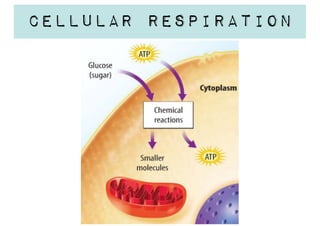
The first step of cellular respiration is called glycolysis. It
takes place in the cytoplasm of all cells.
GLYCOLYSIS is a process by which a sugar called glucose is
broken down into smaller molecules.
Glycolysis produces some ATP molecules. It also uses
energy from other ATP molecules.
More ATP is made during the second step of cellular
respiration than during glycolysis.
Cellular Respiration
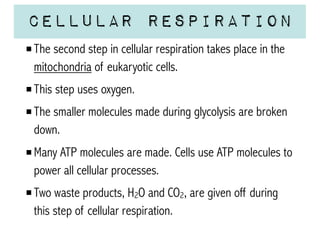
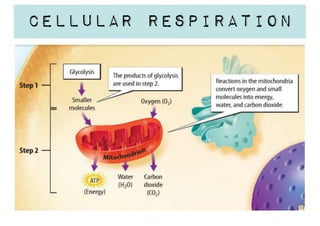
The second step in cellular respiration takes place in the
mitochondria of eukaryotic cells.
This step uses oxygen.
The smaller molecules made during glycolysis are broken
down.
Many ATP molecules are made. Cells use ATP molecules to
power all cellular processes.
Two waste products, H2O and CO2, are given off during
this step of cellular respiration.
Cellular Respiration
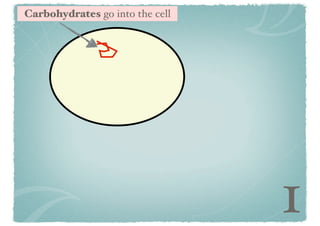
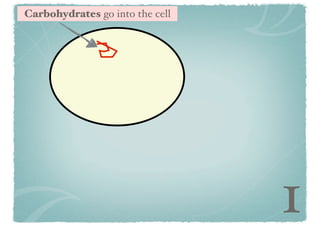
Carbohydrates go into the cell

1
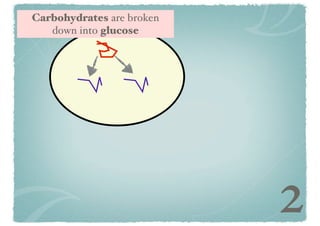
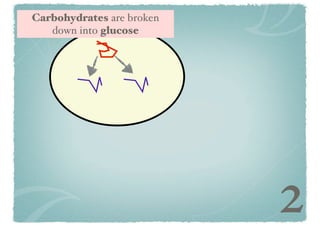
Carbohydrates are broken
down into glucose

2
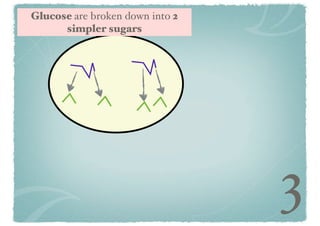
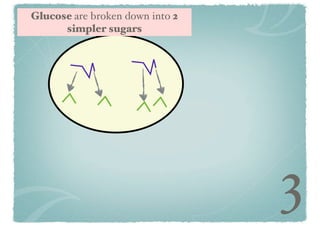
Glucose are broken down into 2
simpler sugars

3
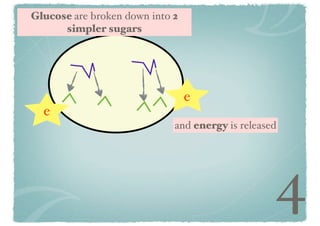
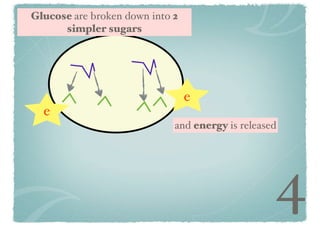
Glucose are broken down into 2
simpler sugars

e
e
and energy is released

4
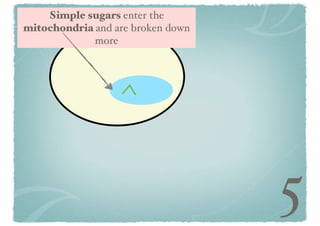
Simple sugars enter the
mitochondria and are broken down
more

5
Oxygen is used
Energy is released
Carbon dioxide and water are produced and released as wastes.

energy + CO2 + H2O

]

+ O2

wastes
products

6
Fermentation
FERMENTATION is a reaction that cells use to obtain energy
from food when oxygen levels are low.
Because no oxygen is used, fermentation makes less ATP
than cellular respiration does.
Fermentation takes place in a cell’s cytoplasm, not in
mitochondria.
Carbohydrates go into the cell

1
Carbohydrates are broken
down into glucose

2
Glucose are broken down into 2
simpler sugars

3
Glucose are broken down into 2
simpler sugars

e
e
and energy is released

4
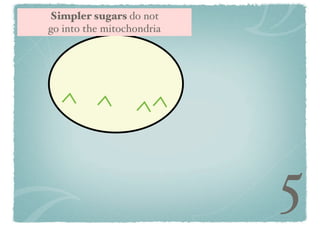
Simpler sugars do not
go into the mitochondria

5
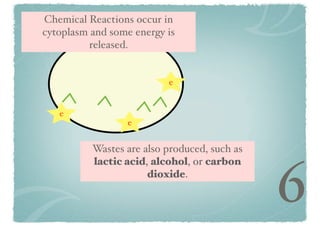
Chemical Reactions occur in
cytoplasm and some energy is
released.

e

e
e

Wastes are also produced, such as
lactic acid, alcohol, or carbon
dioxide.

6
Types of Fermentation
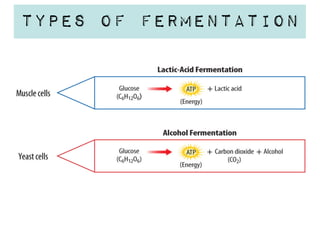
LACTIC ACID FERMENTATION
Some bacteria and fungi help produce cheese, yogurt,
and sour cream using lactic-acid fermentation.
The muscle cells in animals, including humans, can
release energy during exercise using lactic-acid
fermentation.
Types of Fermentation
ALCOHOL FERMENTATION
Some types of bacteria and yeast make ATP through a
process called alcohol fermentation.
Alcohol fermentation produces an alcohol, called ethanol,
and carbon dioxide.
Many types of bread are made using yeast. The carbon
dioxide produced by yeast during alcohol fermentation
makes bread dough rise.
Types of Fermentation
Photosynthesis
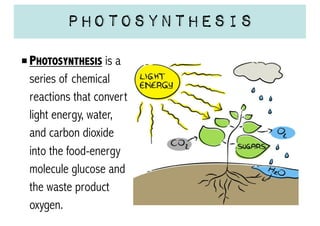
PHOTOSYNTHESIS is a
series of chemical
reactions that convert
light energy, water,
and carbon dioxide
into the food-energy
molecule glucose and
the waste product
oxygen.
Photosynthesis
Photosynthesis
LIGHT AND PIGMENT
Photosynthesis uses light energy, which is absorbed by
chlorophyll.
As chlorophyll absorbs light, it absorbs all the colors in it
except green. The green light is reflected as the green
color that you see in leaves and stems.
Plants might also contain pigments that reflect other
colors, such as red, yellow, or orange light.
Photosynthesis
REACTIONS IN CHLOROPLASTS
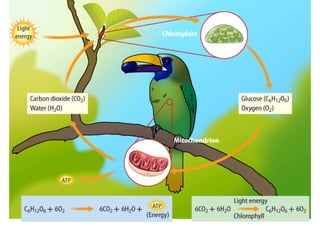
The chlorophyll that absorbs light energy for
photosynthesis is in chloroplasts.
Chloroplasts are organelles in plant cells that convert light
energy to chemical energy in food.
During photosynthesis, light energy, water, and carbon
dioxide combine and make sugars. Photosynthesis also
produces oxygen, which is released into the atmosphere.
Photosynthesis
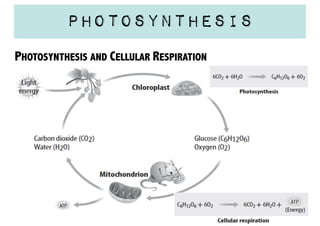
PHOTOSYNTHESIS AND CELLULAR RESPIRATION

Cells and Energy

  • 1.
  • 2.
    Cellular Respiration CELLULAR RESPIRATIONis a series of chemical reactions that convert the energy in food into a usable form of energy called ATP. Cellular respiration takes place in the cytoplasm and in the mitochondria of a cell.
  • 3.
    Cellular Respiration The firststep of cellular respiration is called glycolysis. It takes place in the cytoplasm of all cells. GLYCOLYSIS is a process by which a sugar called glucose is broken down into smaller molecules. Glycolysis produces some ATP molecules. It also uses energy from other ATP molecules. More ATP is made during the second step of cellular respiration than during glycolysis.
  • 4.
  • 5.
    Cellular Respiration The secondstep in cellular respiration takes place in the mitochondria of eukaryotic cells. This step uses oxygen. The smaller molecules made during glycolysis are broken down. Many ATP molecules are made. Cells use ATP molecules to power all cellular processes. Two waste products, H2O and CO2, are given off during this step of cellular respiration.
  • 6.
  • 7.
  • 8.
  • 9.
    Glucose are brokendown into 2 simpler sugars 3
  • 10.
    Glucose are brokendown into 2 simpler sugars e e and energy is released 4
  • 11.
    Simple sugars enterthe mitochondria and are broken down more 5
  • 12.
    Oxygen is used Energyis released Carbon dioxide and water are produced and released as wastes. energy + CO2 + H2O ] + O2 wastes products 6
  • 13.
    Fermentation FERMENTATION is areaction that cells use to obtain energy from food when oxygen levels are low. Because no oxygen is used, fermentation makes less ATP than cellular respiration does. Fermentation takes place in a cell’s cytoplasm, not in mitochondria.
  • 14.
  • 15.
  • 16.
    Glucose are brokendown into 2 simpler sugars 3
  • 17.
    Glucose are brokendown into 2 simpler sugars e e and energy is released 4
  • 18.
    Simpler sugars donot go into the mitochondria 5
  • 19.
    Chemical Reactions occurin cytoplasm and some energy is released. e e e Wastes are also produced, such as lactic acid, alcohol, or carbon dioxide. 6
  • 20.
    Types of Fermentation LACTICACID FERMENTATION Some bacteria and fungi help produce cheese, yogurt, and sour cream using lactic-acid fermentation. The muscle cells in animals, including humans, can release energy during exercise using lactic-acid fermentation.
  • 21.
    Types of Fermentation ALCOHOLFERMENTATION Some types of bacteria and yeast make ATP through a process called alcohol fermentation. Alcohol fermentation produces an alcohol, called ethanol, and carbon dioxide. Many types of bread are made using yeast. The carbon dioxide produced by yeast during alcohol fermentation makes bread dough rise.
  • 22.
  • 23.
    Photosynthesis PHOTOSYNTHESIS is a seriesof chemical reactions that convert light energy, water, and carbon dioxide into the food-energy molecule glucose and the waste product oxygen.
  • 24.
  • 25.
    Photosynthesis LIGHT AND PIGMENT Photosynthesisuses light energy, which is absorbed by chlorophyll. As chlorophyll absorbs light, it absorbs all the colors in it except green. The green light is reflected as the green color that you see in leaves and stems. Plants might also contain pigments that reflect other colors, such as red, yellow, or orange light.
  • 26.
    Photosynthesis REACTIONS IN CHLOROPLASTS Thechlorophyll that absorbs light energy for photosynthesis is in chloroplasts. Chloroplasts are organelles in plant cells that convert light energy to chemical energy in food. During photosynthesis, light energy, water, and carbon dioxide combine and make sugars. Photosynthesis also produces oxygen, which is released into the atmosphere.
  • 27.