Non-Aqueous Titration
AYESHA SHAFI
contents
1. What is non-aqueous titration.
2. Theory and role of solvents.
3. What is non-aqueous solvents it's types.
• Aprotic solvent
• Protogenic solvent
• Protophillic solvent
• Amphiprotic solvent.
4. Detection of end point.
5. Non-aqueous Indicators.
WHAT IS NON AQUEOUS Titration?
Non aqueous titration are those titration in which titration of weak
acidic or basic substance carried out using non aqueous substance.so
has to get end point .
Such titration can also be used for the titration of those substance
which are not soluble in aqueous solvent.
It provide a solvent in which organic compound are soluble.
 Non aqueous solvent are basically used for those acid or base
(1) Which don’t give sharp end point in titration.
(2) Which don’t soluble in water.
Hence non aqueous titration is a titration of substance which dissolve
in non aqueous solvent and it is suitable for weak acid and weak base.
Theoryandroleofsolvent
The role of solvent in making a substance and strongly weak acid
and strongly weak base.
Ex:-Like HCL in water is strong acidic.
HCL in water is weak acidic.
• Acetic acid in water is weakly acidic where as acetic acid in
ammonia is strongly acidic thus the acidic or basic character are
depend on the uses of appropriate solvent.
The non aqueous titration can be explained by the use of
Bronsted-Lowry theory. According to this theory an acid is a
proton donor and base is a proton acceptor.
Whatisnon-aqueoussolvent&it'stypes
Non aqueous solvent which are used in non aqueous titration are
called non aqueous solvent.
They are following types:-
1. Aprotic Solvent
2. Protogenic Solvent
3. Protophillic Solvent
4. Amphiprotic Solvent
1. Aproticsolvent
Aprotic solvent are most important solvent in this
titration. This solvent are chemically inert and they
work as a catalyst. Like this solvent are increase the
rate of speed in reaction and also decrease the rate of
speed in reaction during the chemical process or
reaction it will depend on condition.
The most important examples of aprotic solvent are
• Chloroform
• Benzene
2.Protogenicsolvent
Protogenic solvent are acidic in nature. And they
can donate the proton, and they enhance the
strength of weak bases.
Examples of Protogenic solvent are
• HCL
• H2so4
3.Protophillicsolvent
Protophillic solvent are basic in nature. Which possess a
high affinity for proton.
Examples:-Liquid ammonia, amines and ketone.
4.AmphiproticSolvent
Amphiprotic solvent are those solvent they work
as a both mean Protogenic or Protophillic. It
means Amphiprotic solvent are acidic and basic
in nature. And they are accept the proton and
donate the proton.
For examples:- Water, Alcohols and weak organic
acids
Detectionofendpoint
Visual indicator are formed to the most suitable for the detection of
end point in non-aqueous titration.
The important indicator used for non-aqueous titration are follow:-
1. Crystal voilet:- It is used as 0.5% solution in glacial acetic acid, it gives voilet
colour in basic medium and yellowish green in acidic medium.
• It is most widely use for the titration of pyridine with prechloride acid.
2. Oracet Blue B Indicator:- It is prepared o.5% glacial acetic acid. It gives blue
colour in basic medium while pink colour in acidic medium.
3. Quinaldine Red Indicator:- It is used 0.1% solution in
methanol/ethanol. Methanol is more stable.
It gives yellow colour in basic medium while almost colourless in acidic medium.
a
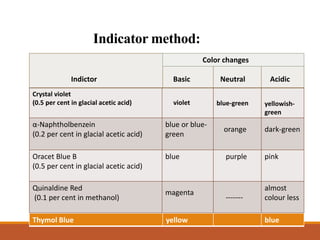
Indicator method:
Crystal violet
(0.5 per cent in glacial acetic acid) violet blue-green yellowish-
green
α-Naphtholbenzein
(0.2 per cent in glacial acetic acid)
blue or blue-
green
orange dark-green
Oracet Blue B
(0.5 per cent in glacial acetic acid)
blue purple pink
Quinaldine Red
(0.1 per cent in methanol)
magenta
-------
almost
colour less
Indictor Basic Neutral Acidic
Color changes
Thymol Blue yellow blue
ADVANTAGES OF NON AQUEOUS
TITRATIONS
1) Organic acids and bases that are insoluble in water are
soluble in non-aqueous solvent.
2) Organic acid, which is of comparable strength to water,
can be titrated easily in non-aqueous solvent. Bases also
follow the same rules.
3) A non-aqueous solvent may help two are more acids in
mixture. The individual acid can give separate end point in
different solvent.
4) By the proper choice of the solvents or indicator, the
biological ingredients of a substance whether acidic or basic
can be selectively titrated.
Non aqueous titration

Non aqueous titration

  • 1.
  • 2.
    contents 1. What isnon-aqueous titration. 2. Theory and role of solvents. 3. What is non-aqueous solvents it's types. • Aprotic solvent • Protogenic solvent • Protophillic solvent • Amphiprotic solvent. 4. Detection of end point. 5. Non-aqueous Indicators.
  • 3.
    WHAT IS NONAQUEOUS Titration? Non aqueous titration are those titration in which titration of weak acidic or basic substance carried out using non aqueous substance.so has to get end point . Such titration can also be used for the titration of those substance which are not soluble in aqueous solvent. It provide a solvent in which organic compound are soluble.  Non aqueous solvent are basically used for those acid or base (1) Which don’t give sharp end point in titration. (2) Which don’t soluble in water. Hence non aqueous titration is a titration of substance which dissolve in non aqueous solvent and it is suitable for weak acid and weak base.
  • 4.
    Theoryandroleofsolvent The role ofsolvent in making a substance and strongly weak acid and strongly weak base. Ex:-Like HCL in water is strong acidic. HCL in water is weak acidic. • Acetic acid in water is weakly acidic where as acetic acid in ammonia is strongly acidic thus the acidic or basic character are depend on the uses of appropriate solvent. The non aqueous titration can be explained by the use of Bronsted-Lowry theory. According to this theory an acid is a proton donor and base is a proton acceptor.
  • 5.
    Whatisnon-aqueoussolvent&it'stypes Non aqueous solventwhich are used in non aqueous titration are called non aqueous solvent. They are following types:- 1. Aprotic Solvent 2. Protogenic Solvent 3. Protophillic Solvent 4. Amphiprotic Solvent
  • 6.
    1. Aproticsolvent Aprotic solventare most important solvent in this titration. This solvent are chemically inert and they work as a catalyst. Like this solvent are increase the rate of speed in reaction and also decrease the rate of speed in reaction during the chemical process or reaction it will depend on condition. The most important examples of aprotic solvent are • Chloroform • Benzene
  • 7.
    2.Protogenicsolvent Protogenic solvent areacidic in nature. And they can donate the proton, and they enhance the strength of weak bases. Examples of Protogenic solvent are • HCL • H2so4
  • 8.
    3.Protophillicsolvent Protophillic solvent arebasic in nature. Which possess a high affinity for proton. Examples:-Liquid ammonia, amines and ketone.
  • 9.
    4.AmphiproticSolvent Amphiprotic solvent arethose solvent they work as a both mean Protogenic or Protophillic. It means Amphiprotic solvent are acidic and basic in nature. And they are accept the proton and donate the proton. For examples:- Water, Alcohols and weak organic acids
  • 10.
    Detectionofendpoint Visual indicator areformed to the most suitable for the detection of end point in non-aqueous titration. The important indicator used for non-aqueous titration are follow:- 1. Crystal voilet:- It is used as 0.5% solution in glacial acetic acid, it gives voilet colour in basic medium and yellowish green in acidic medium. • It is most widely use for the titration of pyridine with prechloride acid. 2. Oracet Blue B Indicator:- It is prepared o.5% glacial acetic acid. It gives blue colour in basic medium while pink colour in acidic medium. 3. Quinaldine Red Indicator:- It is used 0.1% solution in methanol/ethanol. Methanol is more stable. It gives yellow colour in basic medium while almost colourless in acidic medium. a
  • 11.
    Indicator method: Crystal violet (0.5per cent in glacial acetic acid) violet blue-green yellowish- green α-Naphtholbenzein (0.2 per cent in glacial acetic acid) blue or blue- green orange dark-green Oracet Blue B (0.5 per cent in glacial acetic acid) blue purple pink Quinaldine Red (0.1 per cent in methanol) magenta ------- almost colour less Indictor Basic Neutral Acidic Color changes Thymol Blue yellow blue
  • 12.
    ADVANTAGES OF NONAQUEOUS TITRATIONS 1) Organic acids and bases that are insoluble in water are soluble in non-aqueous solvent. 2) Organic acid, which is of comparable strength to water, can be titrated easily in non-aqueous solvent. Bases also follow the same rules. 3) A non-aqueous solvent may help two are more acids in mixture. The individual acid can give separate end point in different solvent. 4) By the proper choice of the solvents or indicator, the biological ingredients of a substance whether acidic or basic can be selectively titrated.