Lecture Notes: Pharmaceutical Biochemistry
DR. USMAN SALEEM 1
CHOLESTEROL BIOSYNTHESIS
OVER VIEW
Cholesterol is synthesized by a pathway that occurs in most cells of the body. Liver and intestine are major
sites of cholesterol synthesis.
The ultimate precursor of all the carbon atoms in cholesterol and in the other steroids that are derived
from cholesterol is the acetyl group of acetyl CoA. Acetyl-CoA can be obtained from several sources,
including the b-oxidation of fatty acids, the oxidation of ketogenic amino acids such as leucine and lysine,
and the pyruvate dehydrogenase reaction. The reducing power for cholesterol synthesis is supplied in the
form of NADPH.
LOCATION
Most de novo synthesis occurs in the liver and intestine where cholesterol is synthesized from acetyl CoA
in the cytosol.
STAGES OF CHOLESTEROL BIOSYNTHESIS
There are 5 stages in the biosynthesis of cholesterol.
Acetate  Mevalonate  [Isoprene]  Squalene  Lanosterol  Cholesterol
C2 C6 C5 C30 C30 C27
Lecture Notes: Pharmaceutical Biochemistry
DR. USMAN SALEEM 2
STAGE 1. SYNTHESIS OF MEVALONATE FROM ACETYL-CoA
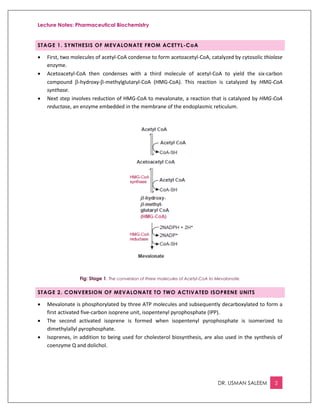
 First, two molecules of acetyl-CoA condense to form acetoacetyl-CoA, catalyzed by cytosolic thiolase
enzyme.
 Acetoacetyl-CoA then condenses with a third molecule of acetyl-CoA to yield the six-carbon
compound -hydroxy--methylglutaryl-CoA (HMG-CoA). This reaction is catalyzed by HMG-CoA
synthase.
 Next step involves reduction of HMG-CoA to mevalonate, a reaction that is catalyzed by HMG-CoA
reductase, an enzyme embedded in the membrane of the endoplasmic reticulum.
Fig: Stage 1. The conversion of three molecules of Acetyl-CoA to Mevalonate.
STAGE 2. CONVERSION OF MEVALONATE TO TWO ACTIVATED ISOPRENE UNITS
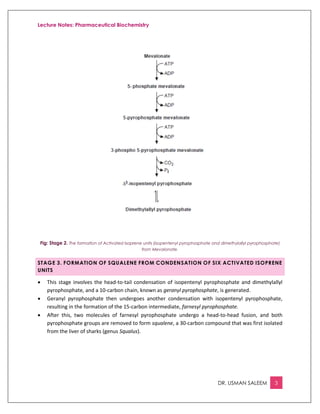
 Mevalonate is phosphorylated by three ATP molecules and subsequently decarboxylated to form a
first activated five-carbon isoprene unit, isopentenyl pyrophosphate (IPP).
 The second activated isoprene is formed when isopentenyl pyrophosphate is isomerized to
dimethylallyl pyrophosphate.
 Isoprenes, in addition to being used for cholesterol biosynthesis, are also used in the synthesis of
coenzyme Q and dolichol.
Lecture Notes: Pharmaceutical Biochemistry
DR. USMAN SALEEM 3
Fig: Stage 2. The formation of Activated Isoprene units (isopentenyl pyrophosphate and dimethylallyl pyrophosphate)
from Mevalonate.
STAGE 3. FORMATION OF SQUALENE FROM CONDENSATION OF SIX ACTIVATED ISOPRENE
UNITS
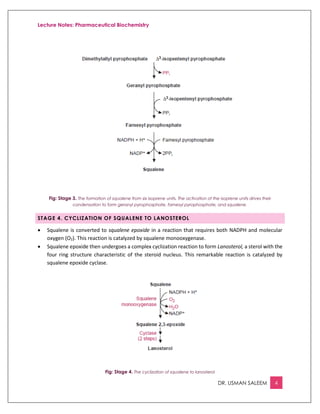
 This stage involves the head-to-tail condensation of isopentenyl pyrophosphate and dimethylallyl
pyrophosphate, and a 10-carbon chain, known as geranyl pyrophosphate, is generated.
 Geranyl pyrophosphate then undergoes another condensation with isopentenyl pyrophosphate,
resulting in the formation of the 15-carbon intermediate, farnesyl pyrophosphate.
 After this, two molecules of farnesyl pyrophosphate undergo a head-to-head fusion, and both
pyrophosphate groups are removed to form squalene, a 30-carbon compound that was first isolated
from the liver of sharks (genus Squalus).
Lecture Notes: Pharmaceutical Biochemistry
DR. USMAN SALEEM 4
Fig: Stage 3. The formation of squalene from six isoprene units. The activation of the isoprene units drives their
condensation to form geranyl pyrophosphate, farnesyl pyrophosphate, and squalene.
STAGE 4. CYCLIZATION OF SQUALENE TO LANOSTEROL
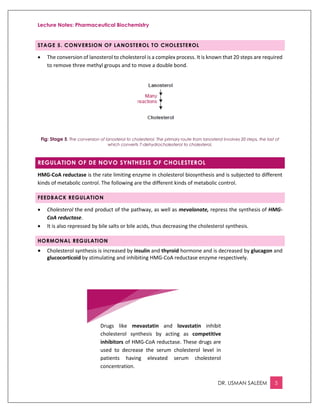
 Squalene is converted to squalene epoxide in a reaction that requires both NADPH and molecular
oxygen (O2). This reaction is catalyzed by squalene monooxygenase.
 Squalene epoxide then undergoes a complex cyclization reaction to form Lanosterol, a sterol with the
four ring structure characteristic of the steroid nucleus. This remarkable reaction is catalyzed by
squalene epoxide cyclase.
Fig: Stage 4. The cyclization of squalene to lanosterol
Lecture Notes: Pharmaceutical Biochemistry
DR. USMAN SALEEM 5
STAGE 5. CONVERSION OF LANOSTEROL TO CHOLESTEROL
 The conversion of lanosterol to cholesterol is a complex process. It is known that 20 steps are required
to remove three methyl groups and to move a double bond.
Fig: Stage 5. The conversion of lanosterol to cholesterol. The primary route from lanosterol involves 20 steps, the last of
which converts 7-dehydrocholesterol to cholesterol.
REGULATION OF DE NOVO SYNTHESIS OF CHOLESTEROL
HMG-CoA reductase is the rate limiting enzyme in cholesterol biosynthesis and is subjected to different
kinds of metabolic control. The following are the different kinds of metabolic control.
FEEDBACK REGULATION
 Cholesterol the end product of the pathway, as well as mevalonate, repress the synthesis of HMG-
CoA reductase.
 It is also repressed by bile salts or bile acids, thus decreasing the cholesterol synthesis.
HORMONAL REGULATION
 Cholesterol synthesis is increased by insulin and thyroid hormone and is decreased by glucagon and
glucocorticoid by stimulating and inhibiting HMG-CoA reductase enzyme respectively.
Drugs like mevastatin and lovastatin inhibit
cholesterol synthesis by acting as competitive
inhibitors of HMG-CoA reductase. These drugs are
used to decrease the serum cholesterol level in
patients having elevated serum cholesterol
concentration.

Cholesterol biosynthesis

  • 1.
    Lecture Notes: PharmaceuticalBiochemistry DR. USMAN SALEEM 1 CHOLESTEROL BIOSYNTHESIS OVER VIEW Cholesterol is synthesized by a pathway that occurs in most cells of the body. Liver and intestine are major sites of cholesterol synthesis. The ultimate precursor of all the carbon atoms in cholesterol and in the other steroids that are derived from cholesterol is the acetyl group of acetyl CoA. Acetyl-CoA can be obtained from several sources, including the b-oxidation of fatty acids, the oxidation of ketogenic amino acids such as leucine and lysine, and the pyruvate dehydrogenase reaction. The reducing power for cholesterol synthesis is supplied in the form of NADPH. LOCATION Most de novo synthesis occurs in the liver and intestine where cholesterol is synthesized from acetyl CoA in the cytosol. STAGES OF CHOLESTEROL BIOSYNTHESIS There are 5 stages in the biosynthesis of cholesterol. Acetate  Mevalonate  [Isoprene]  Squalene  Lanosterol  Cholesterol C2 C6 C5 C30 C30 C27
  • 2.
    Lecture Notes: PharmaceuticalBiochemistry DR. USMAN SALEEM 2 STAGE 1. SYNTHESIS OF MEVALONATE FROM ACETYL-CoA  First, two molecules of acetyl-CoA condense to form acetoacetyl-CoA, catalyzed by cytosolic thiolase enzyme.  Acetoacetyl-CoA then condenses with a third molecule of acetyl-CoA to yield the six-carbon compound -hydroxy--methylglutaryl-CoA (HMG-CoA). This reaction is catalyzed by HMG-CoA synthase.  Next step involves reduction of HMG-CoA to mevalonate, a reaction that is catalyzed by HMG-CoA reductase, an enzyme embedded in the membrane of the endoplasmic reticulum. Fig: Stage 1. The conversion of three molecules of Acetyl-CoA to Mevalonate. STAGE 2. CONVERSION OF MEVALONATE TO TWO ACTIVATED ISOPRENE UNITS  Mevalonate is phosphorylated by three ATP molecules and subsequently decarboxylated to form a first activated five-carbon isoprene unit, isopentenyl pyrophosphate (IPP).  The second activated isoprene is formed when isopentenyl pyrophosphate is isomerized to dimethylallyl pyrophosphate.  Isoprenes, in addition to being used for cholesterol biosynthesis, are also used in the synthesis of coenzyme Q and dolichol.
  • 3.
    Lecture Notes: PharmaceuticalBiochemistry DR. USMAN SALEEM 3 Fig: Stage 2. The formation of Activated Isoprene units (isopentenyl pyrophosphate and dimethylallyl pyrophosphate) from Mevalonate. STAGE 3. FORMATION OF SQUALENE FROM CONDENSATION OF SIX ACTIVATED ISOPRENE UNITS  This stage involves the head-to-tail condensation of isopentenyl pyrophosphate and dimethylallyl pyrophosphate, and a 10-carbon chain, known as geranyl pyrophosphate, is generated.  Geranyl pyrophosphate then undergoes another condensation with isopentenyl pyrophosphate, resulting in the formation of the 15-carbon intermediate, farnesyl pyrophosphate.  After this, two molecules of farnesyl pyrophosphate undergo a head-to-head fusion, and both pyrophosphate groups are removed to form squalene, a 30-carbon compound that was first isolated from the liver of sharks (genus Squalus).
  • 4.
    Lecture Notes: PharmaceuticalBiochemistry DR. USMAN SALEEM 4 Fig: Stage 3. The formation of squalene from six isoprene units. The activation of the isoprene units drives their condensation to form geranyl pyrophosphate, farnesyl pyrophosphate, and squalene. STAGE 4. CYCLIZATION OF SQUALENE TO LANOSTEROL  Squalene is converted to squalene epoxide in a reaction that requires both NADPH and molecular oxygen (O2). This reaction is catalyzed by squalene monooxygenase.  Squalene epoxide then undergoes a complex cyclization reaction to form Lanosterol, a sterol with the four ring structure characteristic of the steroid nucleus. This remarkable reaction is catalyzed by squalene epoxide cyclase. Fig: Stage 4. The cyclization of squalene to lanosterol
  • 5.
    Lecture Notes: PharmaceuticalBiochemistry DR. USMAN SALEEM 5 STAGE 5. CONVERSION OF LANOSTEROL TO CHOLESTEROL  The conversion of lanosterol to cholesterol is a complex process. It is known that 20 steps are required to remove three methyl groups and to move a double bond. Fig: Stage 5. The conversion of lanosterol to cholesterol. The primary route from lanosterol involves 20 steps, the last of which converts 7-dehydrocholesterol to cholesterol. REGULATION OF DE NOVO SYNTHESIS OF CHOLESTEROL HMG-CoA reductase is the rate limiting enzyme in cholesterol biosynthesis and is subjected to different kinds of metabolic control. The following are the different kinds of metabolic control. FEEDBACK REGULATION  Cholesterol the end product of the pathway, as well as mevalonate, repress the synthesis of HMG- CoA reductase.  It is also repressed by bile salts or bile acids, thus decreasing the cholesterol synthesis. HORMONAL REGULATION  Cholesterol synthesis is increased by insulin and thyroid hormone and is decreased by glucagon and glucocorticoid by stimulating and inhibiting HMG-CoA reductase enzyme respectively. Drugs like mevastatin and lovastatin inhibit cholesterol synthesis by acting as competitive inhibitors of HMG-CoA reductase. These drugs are used to decrease the serum cholesterol level in patients having elevated serum cholesterol concentration.