


Network  Security& Cryptography  by D.Swathi(07631A0557) M.Tejaswi(07631A0558 )
Computer security is the process of preventing and detecting unauthorized use of your computer Prevention help to stop unauthorized users from accessing any part of your computer system. Detection helps you to determine whether or not someone attempted to break into your system.
 
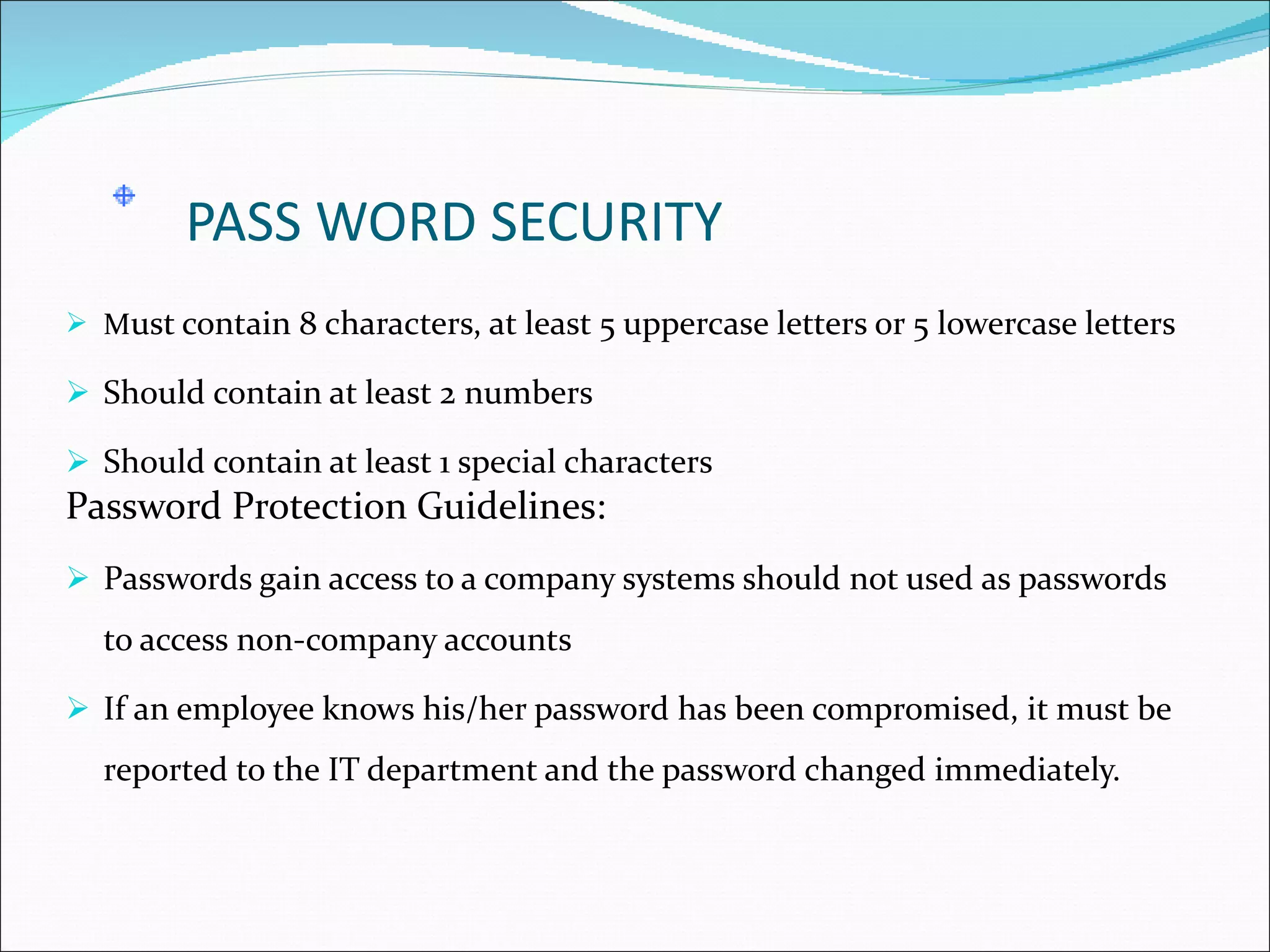
PASS WORD SECURITY M ust contain 8 characters, at least 5 uppercase letters or 5 lowercase letters Should contain at least 2 numbers Should contain at least 1 special characters Password Protection Guidelines: Passwords gain access to a company systems should not used as passwords to access non-company accounts If an employee knows his/her password has been compromised, it must be reported to the IT department and the password changed immediately.
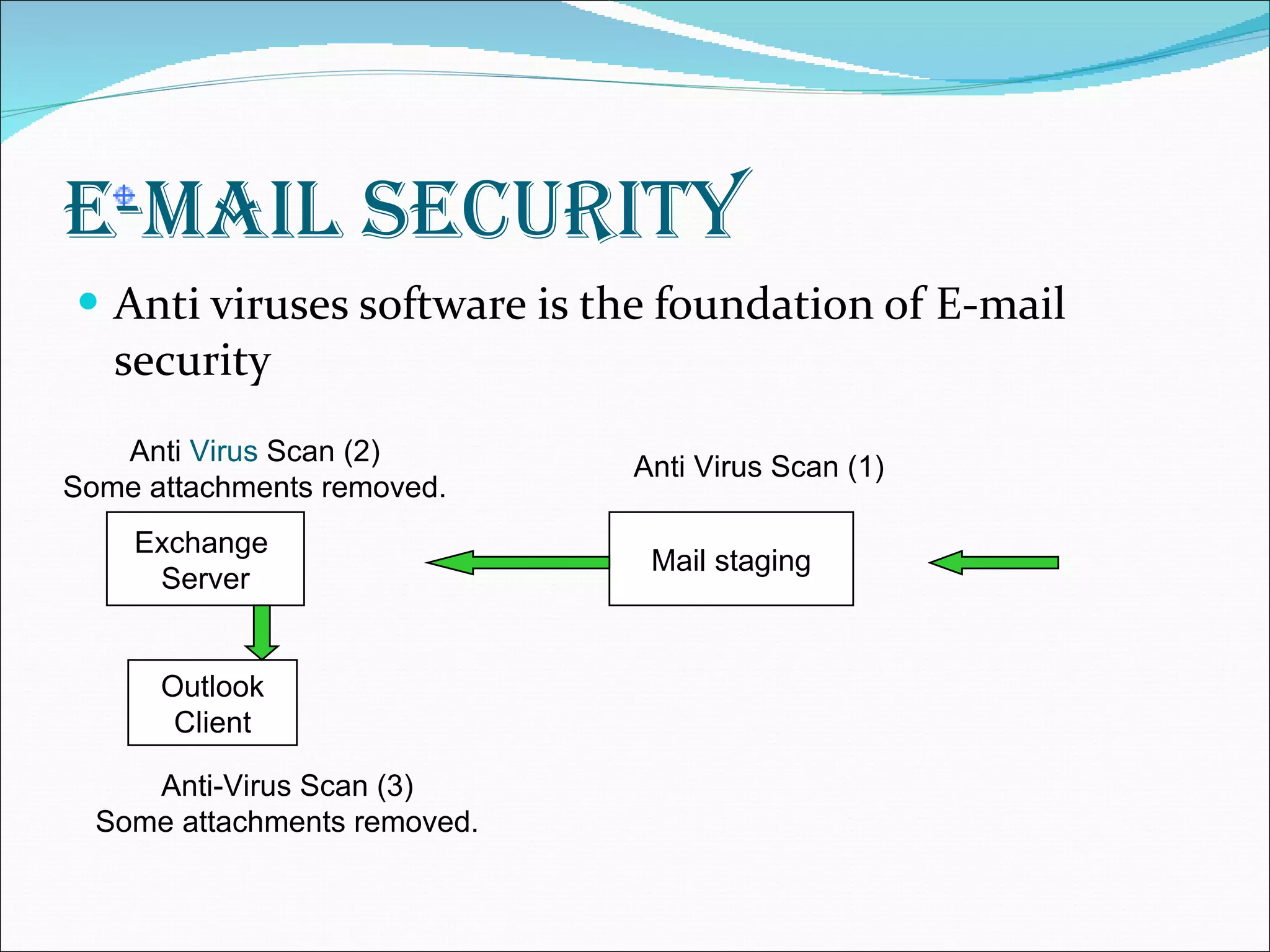
E-mail Security Anti viruses software is the foundation of E-mail security Exchange  Server Mail staging Anti Virus Scan (1) Anti   Virus   Scan (2) Some attachments removed . Outlook Client Anti-Virus Scan (3) Some attachments removed .
E-mail Protection E-mail “spoofing”  :Is when an email message appears to have originated from one source when it actually was sent from another source If you suspect that you may have received a spoofed email ,you should contact your service provider’s E-mail borne viruses : Viruses and other types malicious code are often spread as attachments to email messages
Evolving Threat Environment Blended Threats : Blended threats are increasingly design to get past point-solution security and target multiple vulnerabilities in clients and corporate networks. Phasing attacks : The recent attacks of phasing attacks on banks and their online customers have opened both consumer and corporate eyes to the increasing dangers of corporate identity theft.
Cryptography Cryptography is a science of using mathematics to encrypt and decrypt the data. Crptanalysis is the science of analyzing and breaking secure communication. Both Cryptography and Cryptanalysis comes under Cryptology. The security of encrypted data is entirely dependent on two things: the strength of the cryptographic algorithm and the secrecy of the key.
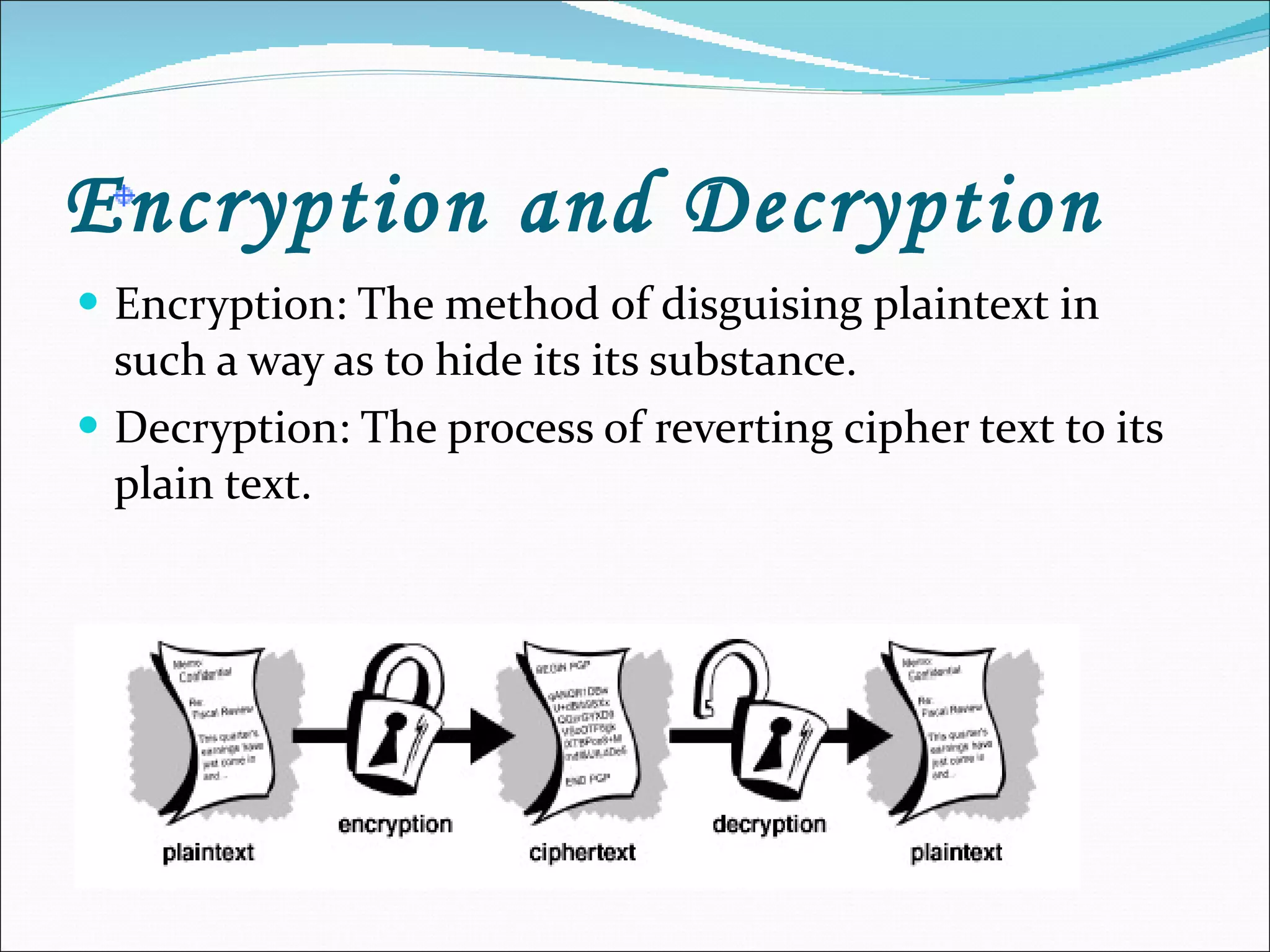
Encryption and Decryption Encryption: The method of disguising plaintext in such a way as to hide its its substance. Decryption: The process of reverting cipher text to its plain text.
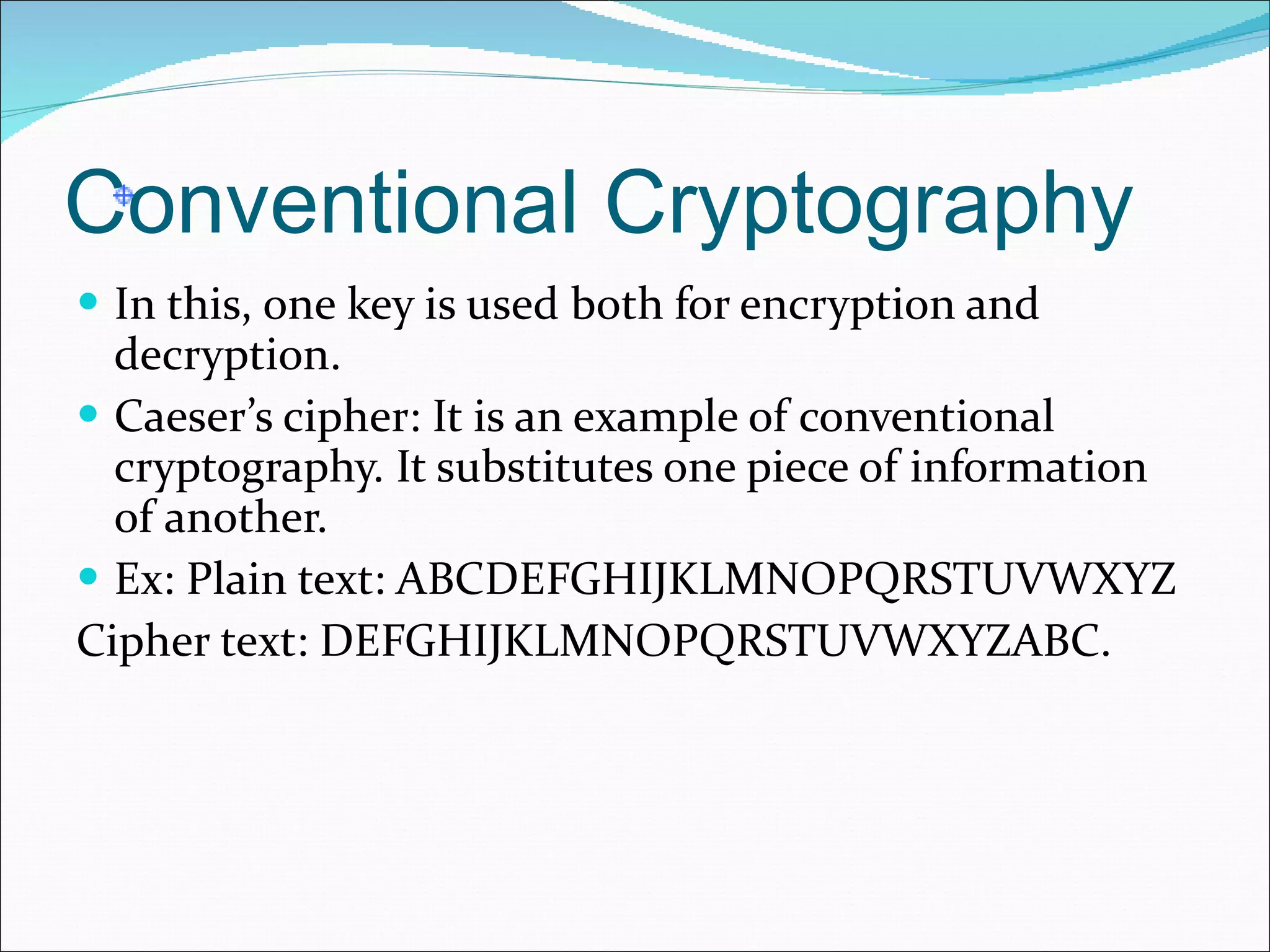
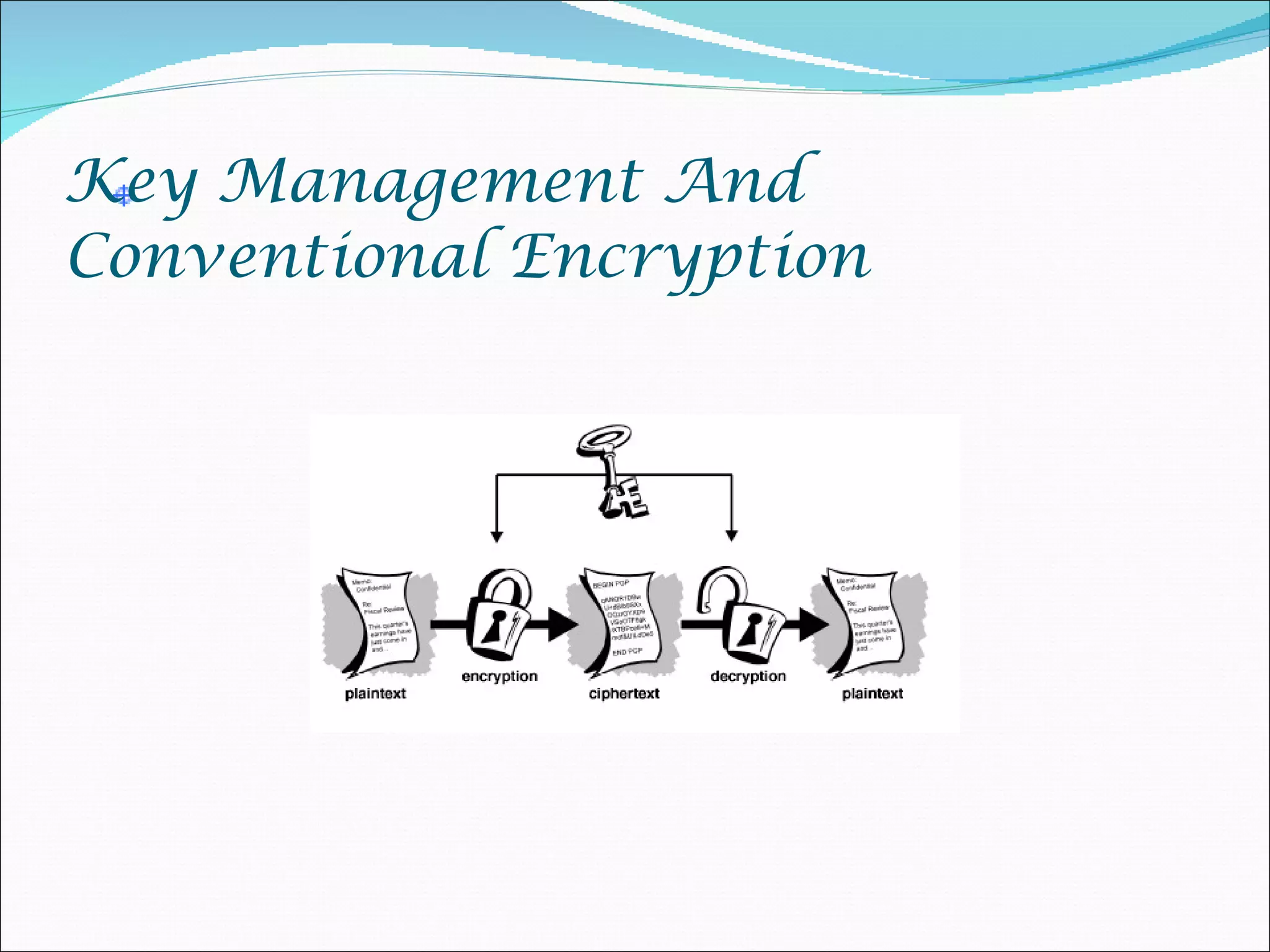
Conventional Cryptography In this, one key is used both for encryption and decryption. Caeser’s cipher: It is an example of conventional cryptography. It substitutes one piece of information of another. Ex: Plain text: ABCDEFGHIJKLMNOPQRSTUVWXYZ Cipher text: DEFGHIJKLMNOPQRSTUVWXYZABC.
Key Management And Conventional Encryption
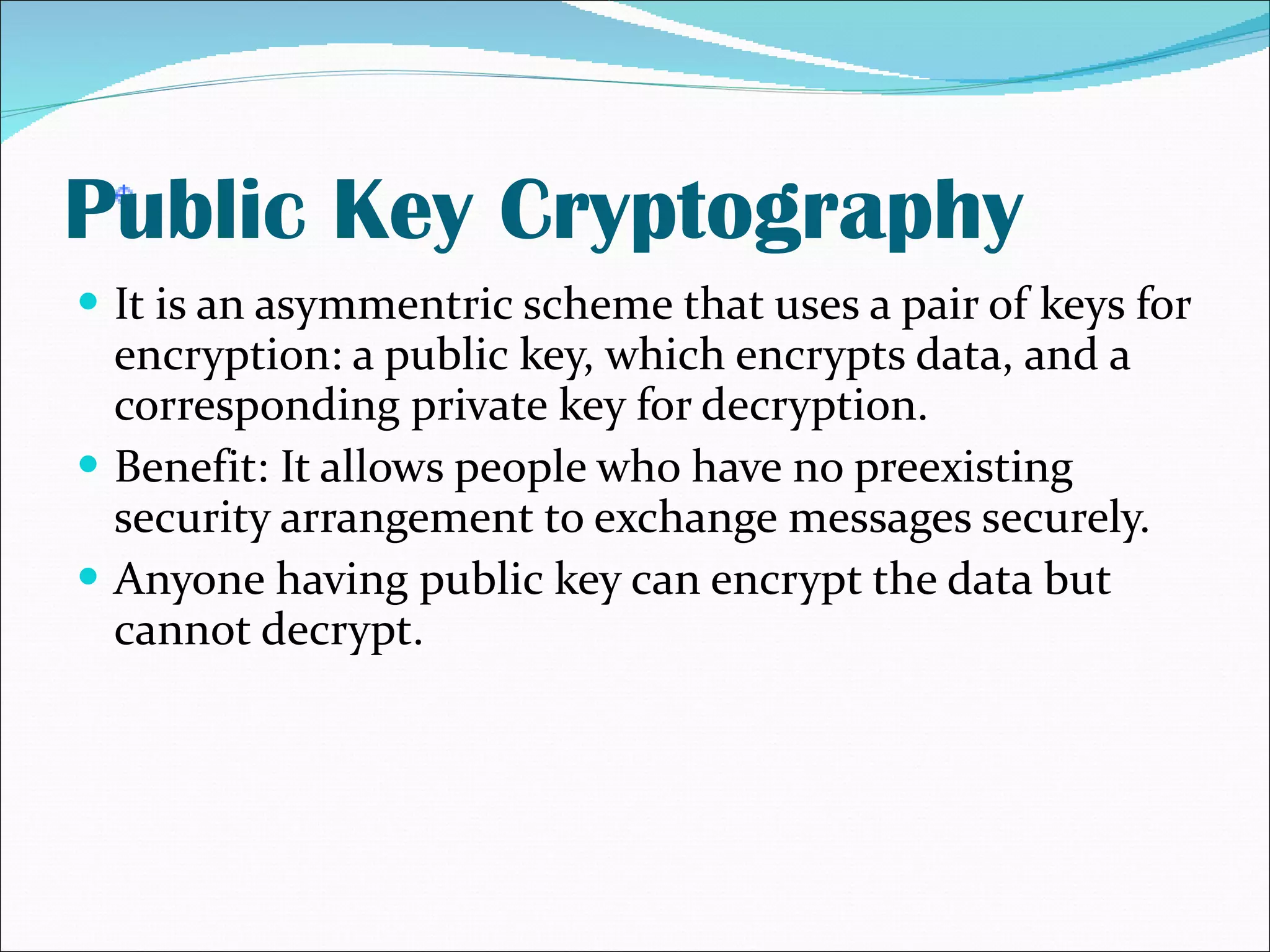
Public Key Cryptography It is an asymmentric scheme that uses a pair of keys for encryption: a public key, which encrypts data, and a corresponding private key for decryption. Benefit: It allows people who have no preexisting security arrangement to exchange messages securely. Anyone having public key can encrypt the data but cannot decrypt.
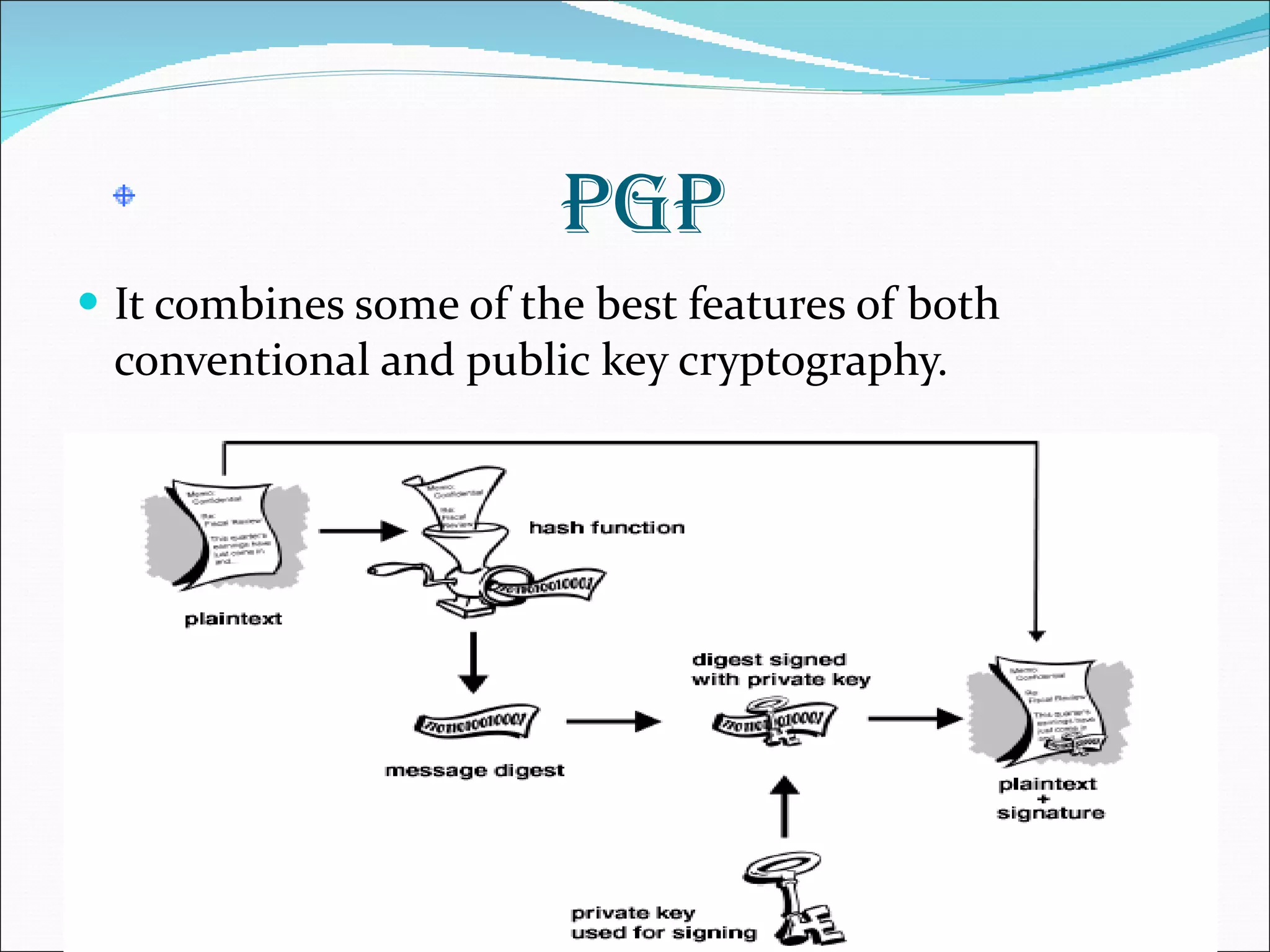
PGP It combines some of the best features of both conventional and public key cryptography.
Conclusion Security is every bodies business and only with everyone’s cooperation,an intelligent policy and consistent practices, will it be achievable. References: www.google.com www.microsoft.com J.N.T.U website Digit magazine
Thank  you..
Queries ..?

Networksecurity&cryptography

  • 1.
    Network Security&Cryptography by D.Swathi(07631A0557) M.Tejaswi(07631A0558 )
  • 2.
    Computer security isthe process of preventing and detecting unauthorized use of your computer Prevention help to stop unauthorized users from accessing any part of your computer system. Detection helps you to determine whether or not someone attempted to break into your system.
  • 3.
  • 4.
    PASS WORD SECURITYM ust contain 8 characters, at least 5 uppercase letters or 5 lowercase letters Should contain at least 2 numbers Should contain at least 1 special characters Password Protection Guidelines: Passwords gain access to a company systems should not used as passwords to access non-company accounts If an employee knows his/her password has been compromised, it must be reported to the IT department and the password changed immediately.
  • 5.
    E-mail Security Antiviruses software is the foundation of E-mail security Exchange Server Mail staging Anti Virus Scan (1) Anti Virus Scan (2) Some attachments removed . Outlook Client Anti-Virus Scan (3) Some attachments removed .
  • 6.
    E-mail Protection E-mail“spoofing” :Is when an email message appears to have originated from one source when it actually was sent from another source If you suspect that you may have received a spoofed email ,you should contact your service provider’s E-mail borne viruses : Viruses and other types malicious code are often spread as attachments to email messages
  • 7.
    Evolving Threat EnvironmentBlended Threats : Blended threats are increasingly design to get past point-solution security and target multiple vulnerabilities in clients and corporate networks. Phasing attacks : The recent attacks of phasing attacks on banks and their online customers have opened both consumer and corporate eyes to the increasing dangers of corporate identity theft.
  • 8.
    Cryptography Cryptography isa science of using mathematics to encrypt and decrypt the data. Crptanalysis is the science of analyzing and breaking secure communication. Both Cryptography and Cryptanalysis comes under Cryptology. The security of encrypted data is entirely dependent on two things: the strength of the cryptographic algorithm and the secrecy of the key.
  • 9.
    Encryption and DecryptionEncryption: The method of disguising plaintext in such a way as to hide its its substance. Decryption: The process of reverting cipher text to its plain text.
  • 10.
    Conventional Cryptography Inthis, one key is used both for encryption and decryption. Caeser’s cipher: It is an example of conventional cryptography. It substitutes one piece of information of another. Ex: Plain text: ABCDEFGHIJKLMNOPQRSTUVWXYZ Cipher text: DEFGHIJKLMNOPQRSTUVWXYZABC.
  • 11.
    Key Management AndConventional Encryption
  • 12.
    Public Key CryptographyIt is an asymmentric scheme that uses a pair of keys for encryption: a public key, which encrypts data, and a corresponding private key for decryption. Benefit: It allows people who have no preexisting security arrangement to exchange messages securely. Anyone having public key can encrypt the data but cannot decrypt.
  • 13.
    PGP It combinessome of the best features of both conventional and public key cryptography.
  • 14.
    Conclusion Security isevery bodies business and only with everyone’s cooperation,an intelligent policy and consistent practices, will it be achievable. References: www.google.com www.microsoft.com J.N.T.U website Digit magazine
  • 15.
  • 16.