Cryptography and Network SecurityAn OverviewNagendra U Mnamahesh@cisco.com
AgendaIntroduction
Security Trends
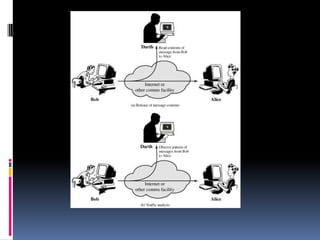
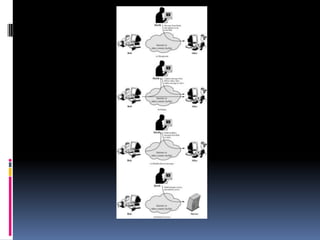
ASM: Attacks, Services, Mechanisms
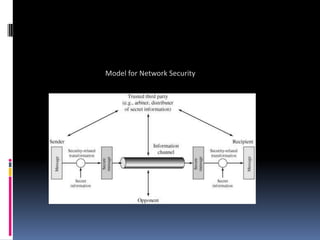
A Network Security Model
Private-Key Cryptography / Symmetric Ciphers
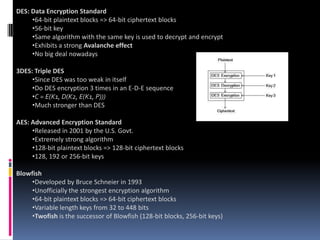
DES, 3DES, AES
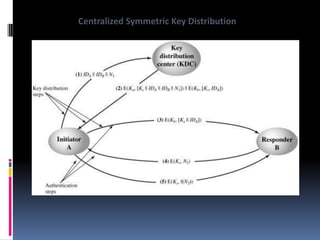
Private Key Distribution
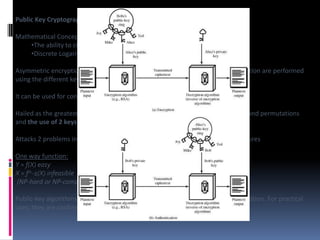
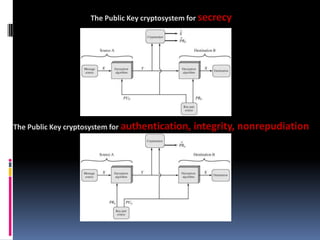
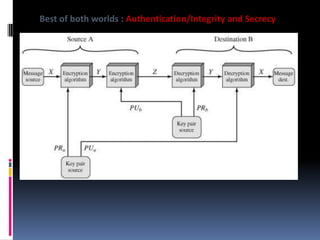
Public-Key Cryptography
Mathematical Concepts
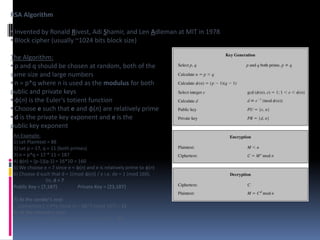
The RSA Algorithm
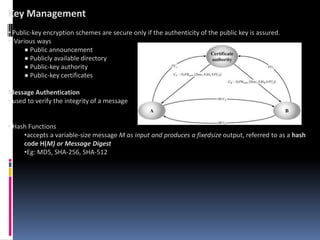
Key Management
Hashing Algorithms
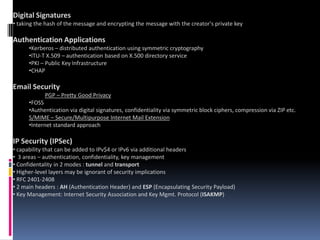
Digital Signatures
Authentication Protocols
Network Security
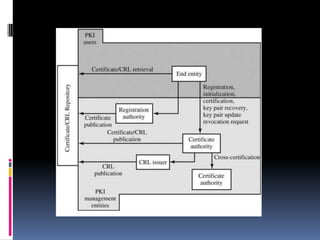
X.509, Public Key Infrastructure (PKI)
PGP, S/MIME
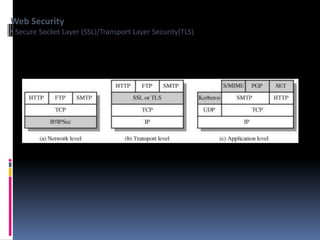
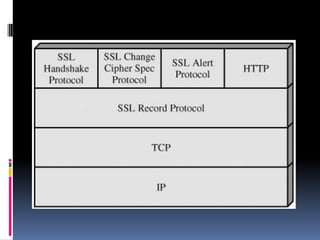
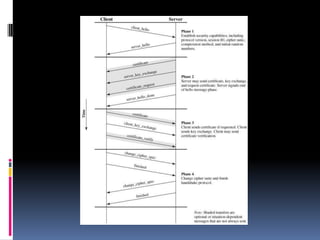
SSL/TLS
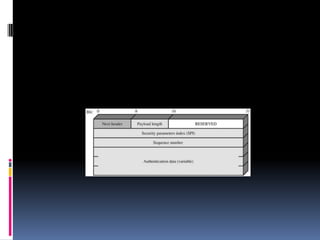
IPSec
Model for Network Security
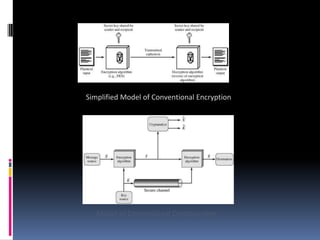
Simplified Model of Conventional EncryptionModel of Conventional Cryptosystem
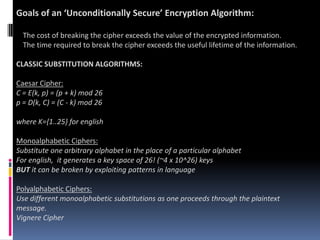
Goals of an ‘Unconditionally Secure’ Encryption Algorithm:● The cost of breaking the cipher exceeds the value of the encrypted information.● The time required to break the cipher exceeds the useful lifetime of the information.CLASSIC SUBSTITUTION ALGORITHMS:Caesar Cipher:C = E(k, p) = (p + k) mod 26p = D(k, C) = (C - k) mod 26where K={1..25} for englishMonoalphabetic Ciphers:Substitute one arbitrary alphabet in the place of a particular alphabetFor english,  it generates a key space of 26! (~4 x 10^26) keysBUT it can be broken by exploiting patterns in languagePolyalphabetic Ciphers:Use different monoalphabetic substitutions as one proceeds through the plaintext message.Vignere Cipher
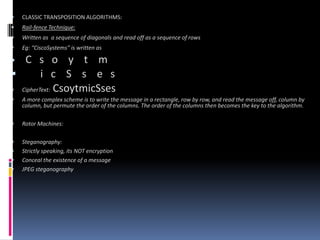
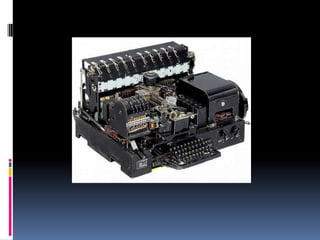
CLASSIC TRANSPOSITION ALGORITHMS:Rail-fence Technique:Written as  a sequence of diagonals and read off as a sequence of rowsEg: “CiscoSystems” is written asC   s   o    y    t    mi   c    S    s    e   sCipherText:CsoytmicSsesA more complex scheme is to write the message in a rectangle, row by row, and read the message off, column by column, but permute the order of the columns. The order of the columns then becomes the key to the algorithm.Rotor Machines:Steganography:Strictly speaking, its NOT encryptionConceal the existence of a messageJPEG steganography

Cryptography and network security