Coordination and
         response
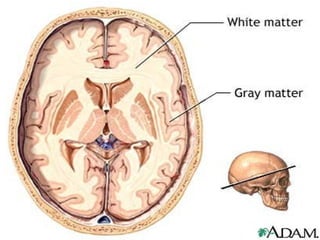
White vs grey matter in spinal
cord and brain
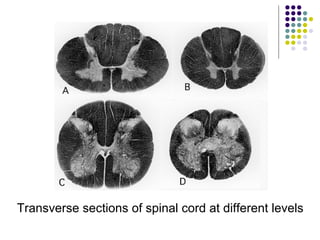
Transverse sections of spinal cord at different levels
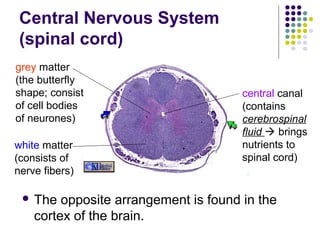
Central Nervous System
 (spinal cord)
grey matter
(the butterfly
shape; consist                         central canal
of cell bodies                         (contains
of neurones)                           cerebrospinal
                                       fluid  brings
white matter                           nutrients to
(consists of                           spinal cord)
nerve fibers)

  The   opposite arrangement is found in the
    cortex of the brain.
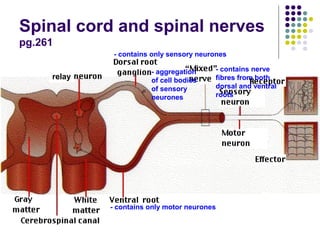
Spinal cord and spinal nerves
pg.261
              - contains only sensory neurones

                        - aggregation     - contains nerve
     relay              of cell bodies    fibres from both
                        of sensory        dorsal and ventral
                        neurones          roots


             - contains only motor neurones
Reflex actions
 An 1immediate response to a 2specific
  stimulus 3without conscious control
 e.g. knee jerk, withdrawal of hand from hot
  object
 Simplest form of response

 Classified under

  – spinal reflex actions (controlled by spinal
  cord)
  - cranial reflexes (controlled by brain but not
  will; in head region)
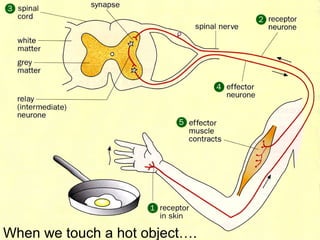
When we touch a hot object….
Reflex arc
Consists of
1. Receptor or sense organ

2. Sensory neurone

3. Reflex centre (spinal cord or brain)

4. Motor neurone

5. Effector (muscle/gland)
Conditioned reflex
 a reflex action acquired from past
 experiences or learning with a stimulus
 which is originally ineffective in
 producing the response

 e.g Pavlov’s experiment
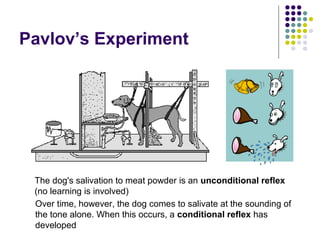
Pavlov’s Experiment


 The dog's salivation to meat powder is an unconditional reflex
 (no learning is involved)
 Over time, however, the dog comes to salivate at the sounding of
 the tone alone. When this occurs, a conditional reflex has
 developed
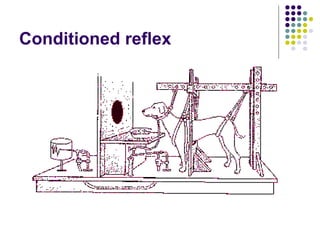
Conditioned reflex
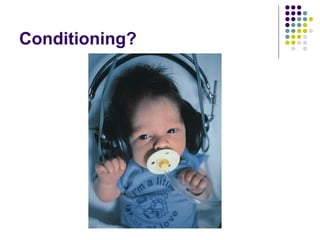
Conditioning?
The Nervous
System in Mammals

     Quiz
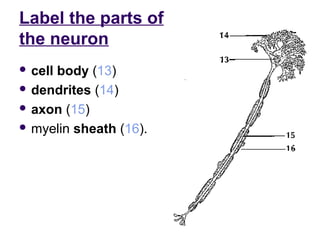
Label the parts of
the neuron
 cell
     body (13)
 dendrites (14)

 axon (15)

 myelin sheath (16).

Chapter 14: The Nervous System Part 3 - Reflex Actions

  • 1.
    Coordination and response White vs grey matter in spinal cord and brain
  • 2.
    Transverse sections ofspinal cord at different levels
  • 3.
    Central Nervous System (spinal cord) grey matter (the butterfly shape; consist central canal of cell bodies (contains of neurones) cerebrospinal fluid  brings white matter nutrients to (consists of spinal cord) nerve fibers)  The opposite arrangement is found in the cortex of the brain.
  • 5.
    Spinal cord andspinal nerves pg.261 - contains only sensory neurones - aggregation - contains nerve relay of cell bodies fibres from both of sensory dorsal and ventral neurones roots - contains only motor neurones
  • 6.
    Reflex actions  An1immediate response to a 2specific stimulus 3without conscious control  e.g. knee jerk, withdrawal of hand from hot object  Simplest form of response  Classified under – spinal reflex actions (controlled by spinal cord) - cranial reflexes (controlled by brain but not will; in head region)
  • 7.
    When we toucha hot object….
  • 8.
    Reflex arc Consists of 1.Receptor or sense organ 2. Sensory neurone 3. Reflex centre (spinal cord or brain) 4. Motor neurone 5. Effector (muscle/gland)
  • 9.
    Conditioned reflex areflex action acquired from past experiences or learning with a stimulus which is originally ineffective in producing the response e.g Pavlov’s experiment
  • 10.
    Pavlov’s Experiment Thedog's salivation to meat powder is an unconditional reflex (no learning is involved) Over time, however, the dog comes to salivate at the sounding of the tone alone. When this occurs, a conditional reflex has developed
  • 11.
  • 12.
  • 13.
  • 14.
    Label the partsof the neuron  cell body (13)  dendrites (14)  axon (15)  myelin sheath (16).