Chapter 20 Molecular Genetics Lesson 1 - Structure of DNA
This document provides an overview of molecular genetics content including:
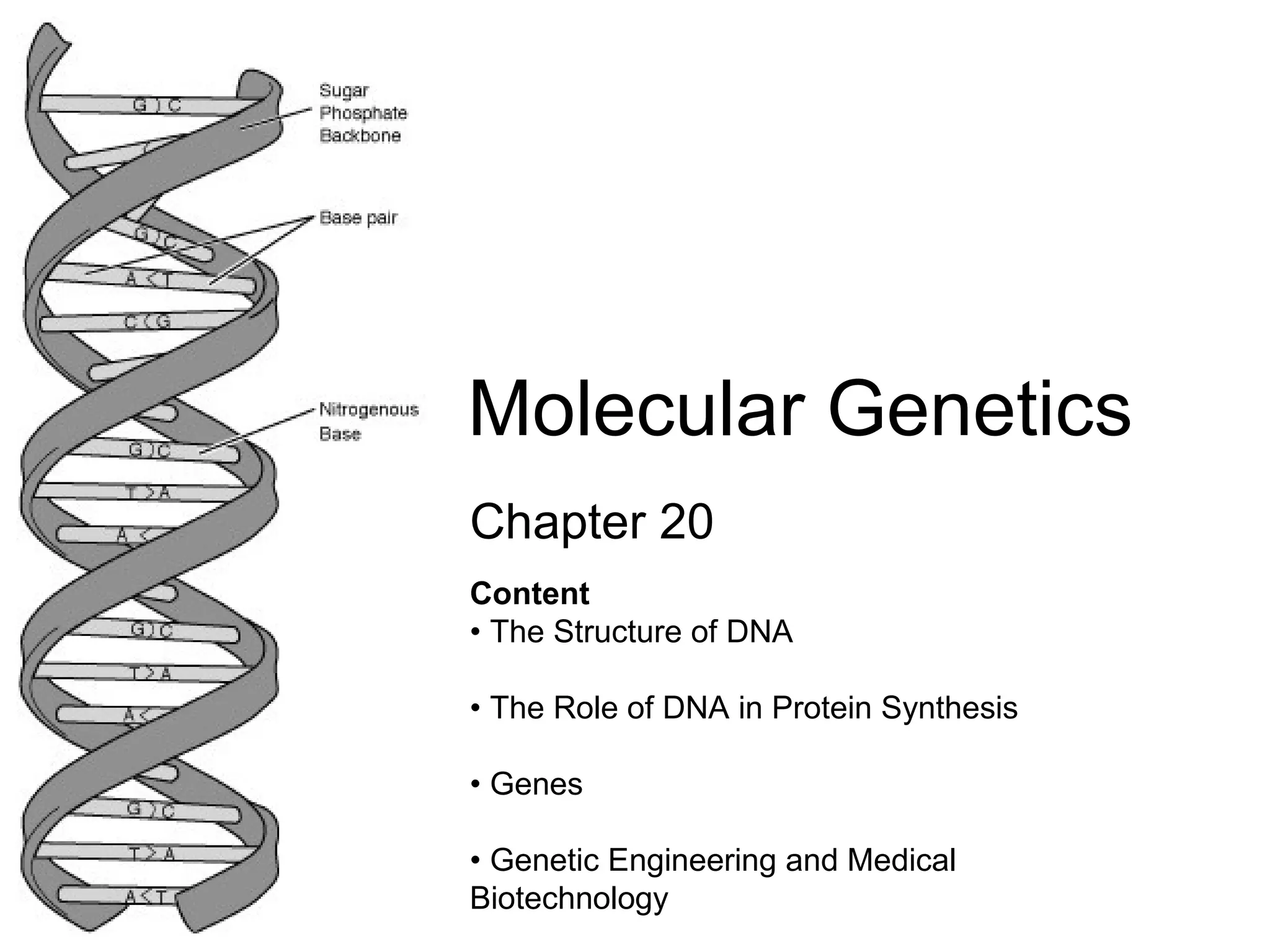
(1) The structure of DNA and how it is organized in cells, with DNA made up of nucleotides containing bases, sugar, and phosphate that form two parallel strands twisted into a double helix.
(2) How genes and DNA are related, with each gene made up of a sequence of nucleotides that can vary, leading to different genes, and DNA containing the genetic information for cellular functions.
(3) The rules of complementary base pairing between nucleotides, with adenine binding thymine and cytosine binding guanine.
Chapter 20 Molecular Genetics Lesson 1 - Structure of DNA
1.
Chapter 20 MolecularGenetics Content • The Structure of DNA • The Role of DNA in Protein Synthesis • Genes • Genetic Engineering and Medical Biotechnology
2.
Lesson Objectives Atthe end of this lesson, you should be able to: (a) outline the relationship between DNA, genes and chromosomes (b) state the structure of DNA in terms of the bases, sugar and phosphate groups found in each of their nucleotides (c) state the rule of complementary base pairing
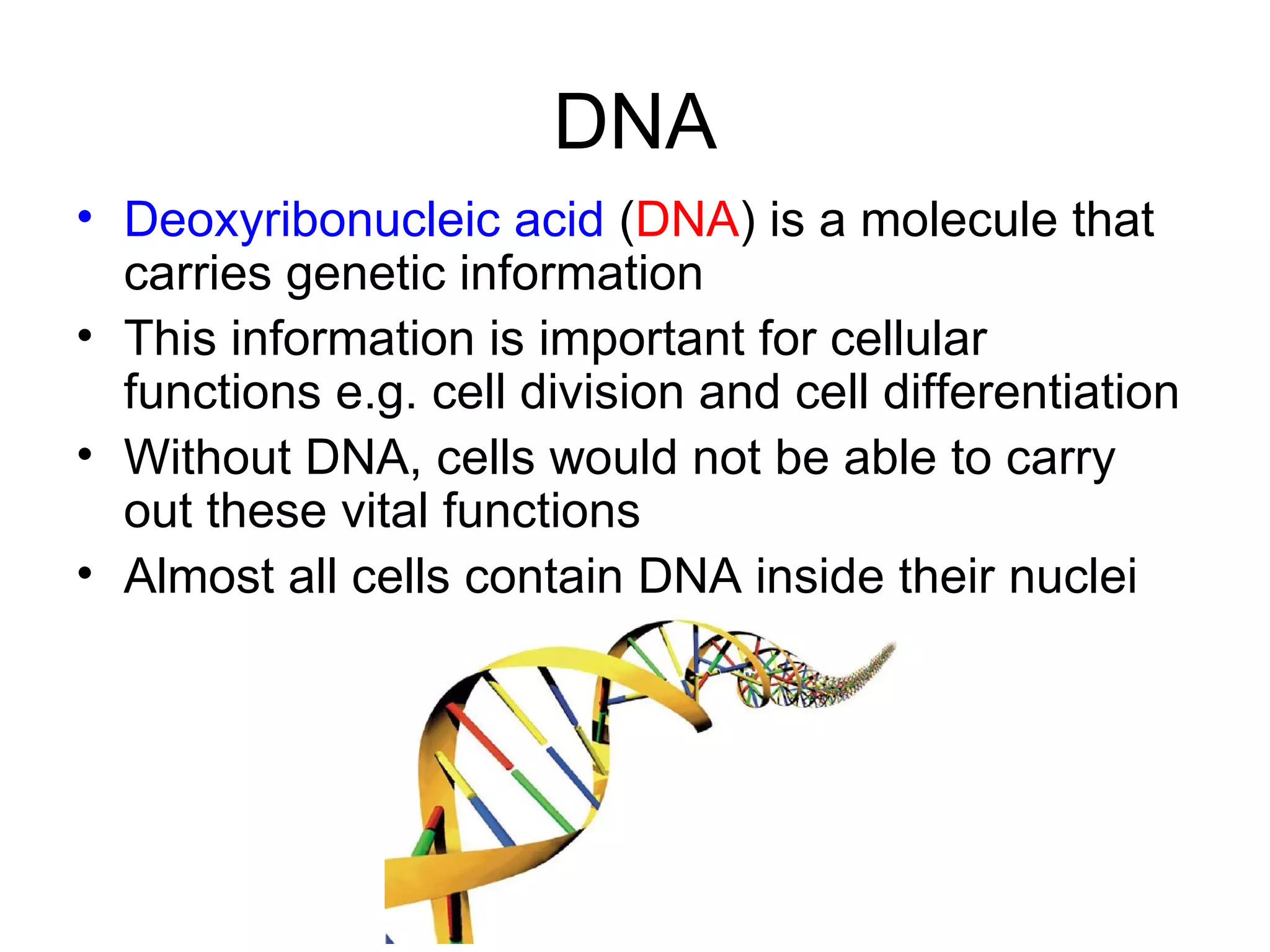
DNA Deoxyribonucleic acid ( DNA ) is a molecule that carries genetic information This information is important for cellular functions e.g. cell division and cell differentiation Without DNA, cells would not be able to carry out these vital functions Almost all cells contain DNA inside their nuclei
5.
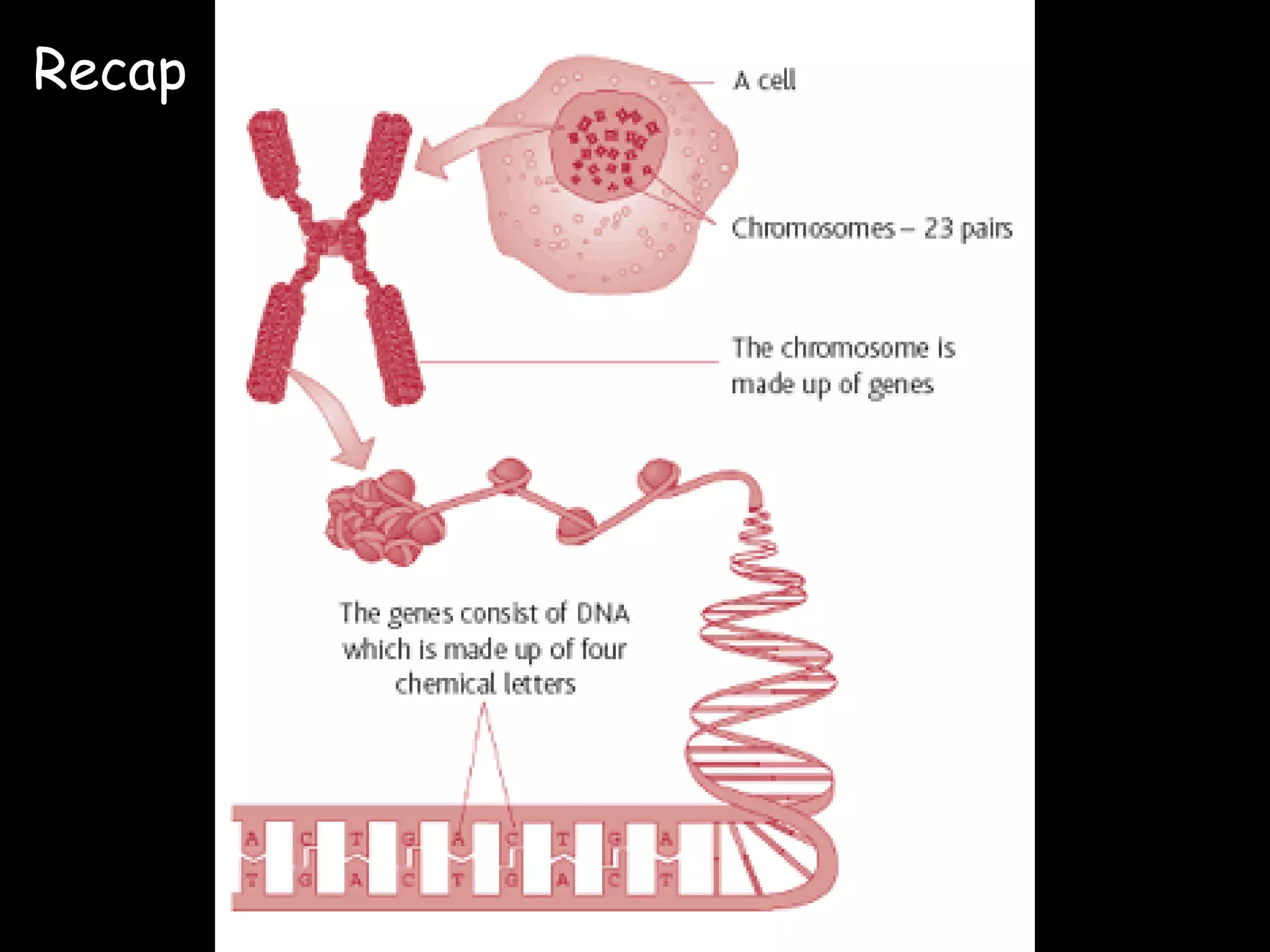
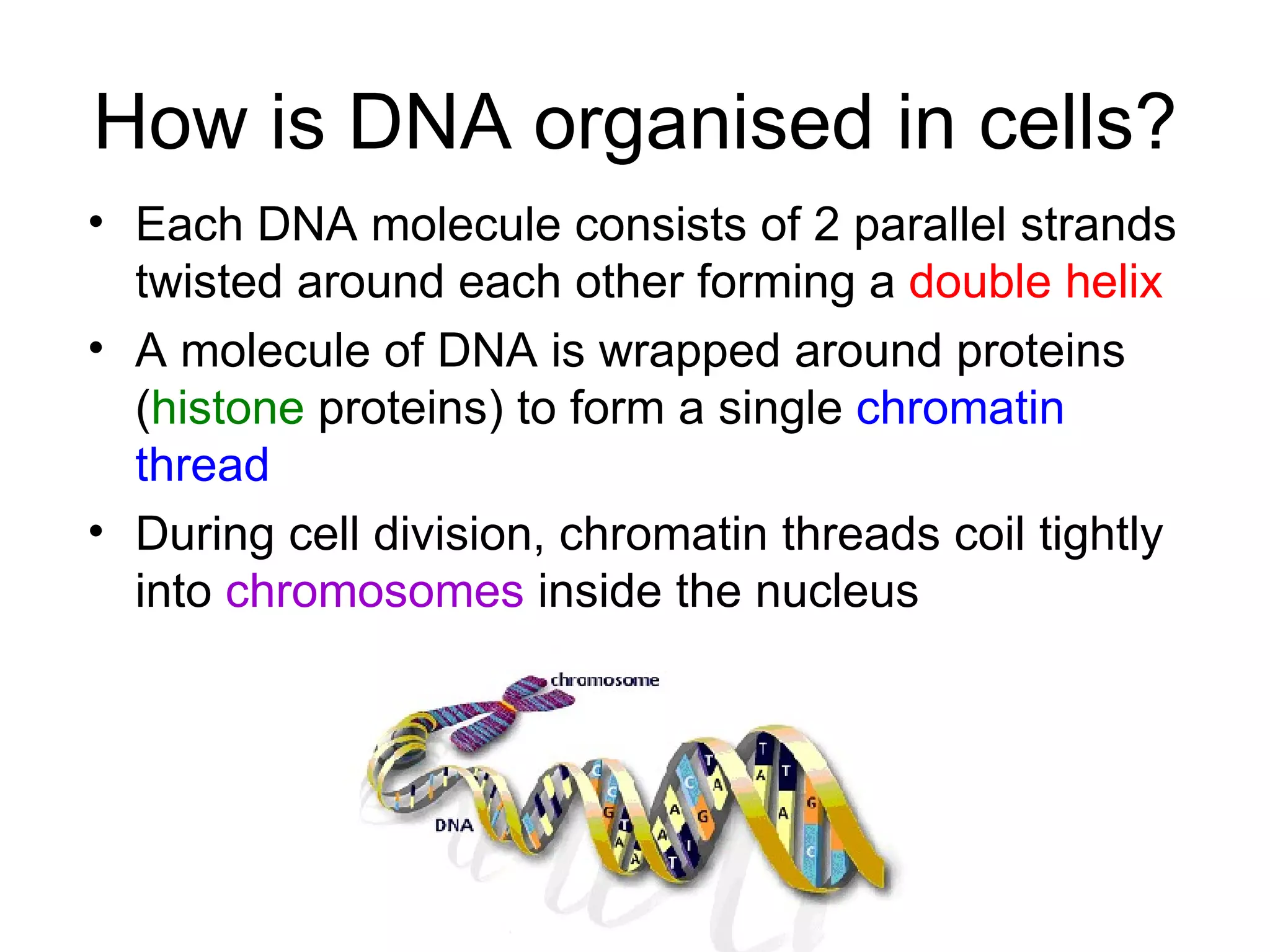
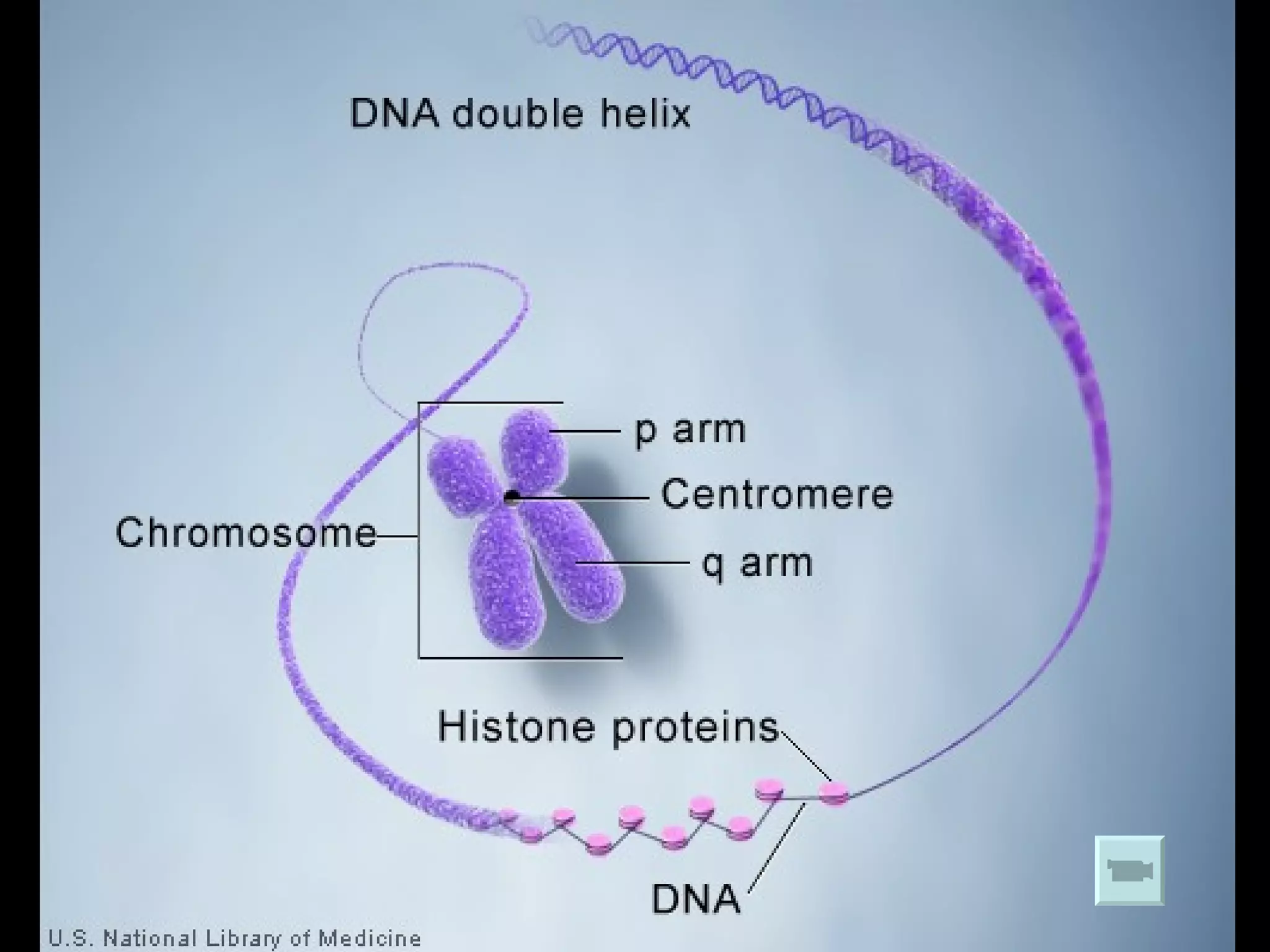
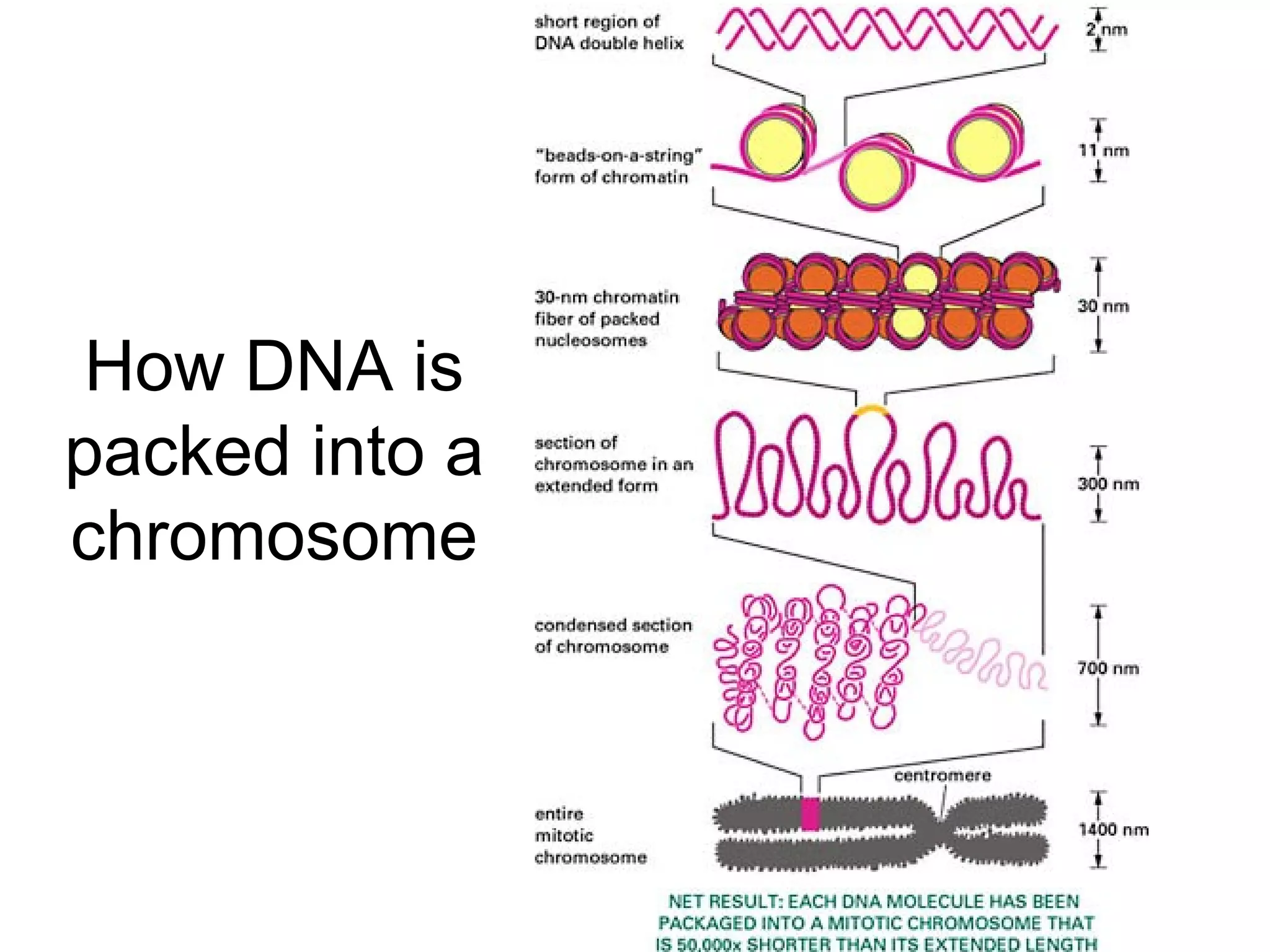
How is DNAorganised in cells? Each DNA molecule consists of 2 parallel strands twisted around each other forming a double helix A molecule of DNA is wrapped around proteins ( histone proteins) to form a single chromatin thread During cell division, chromatin threads coil tightly into chromosomes inside the nucleus
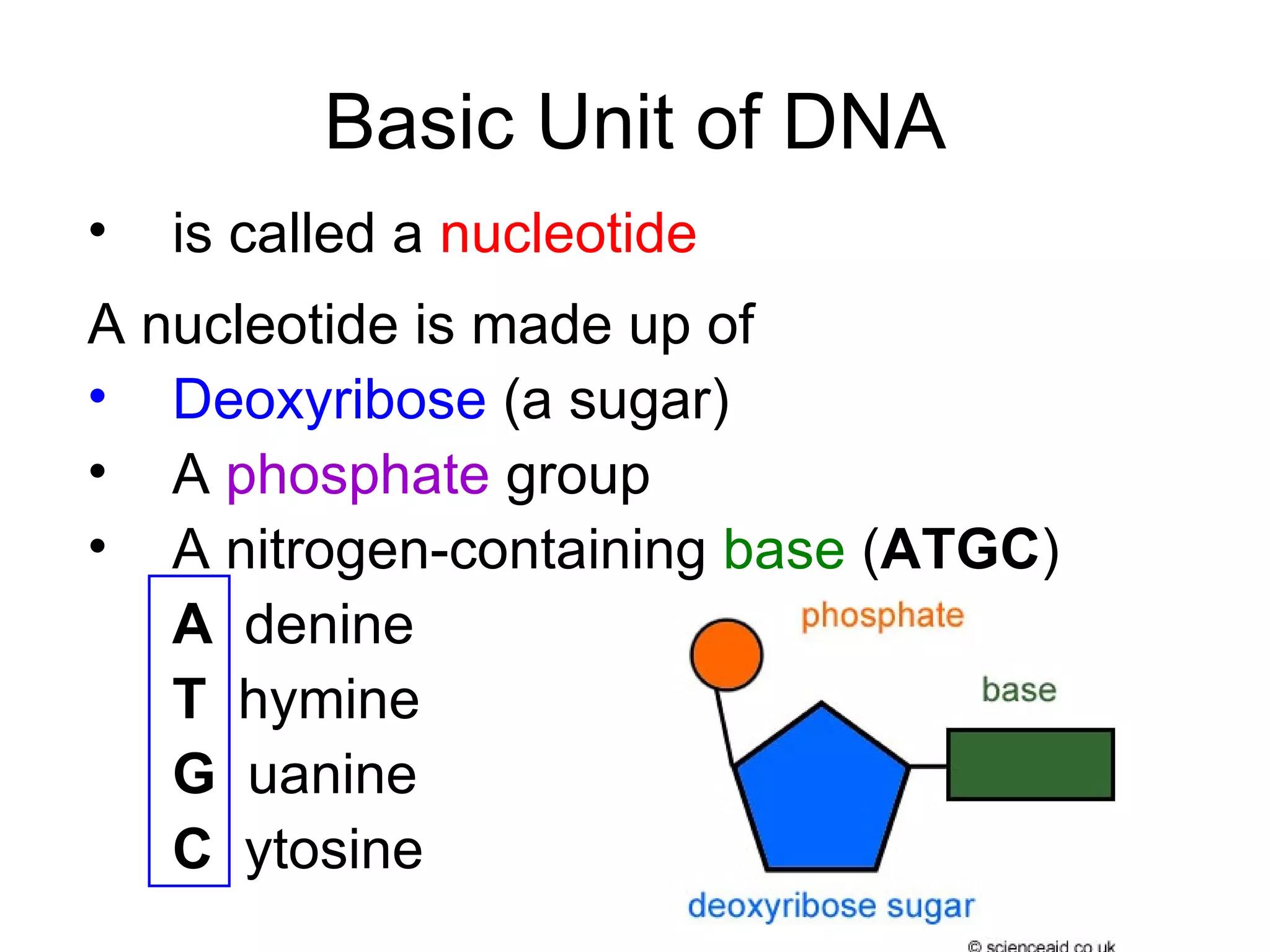
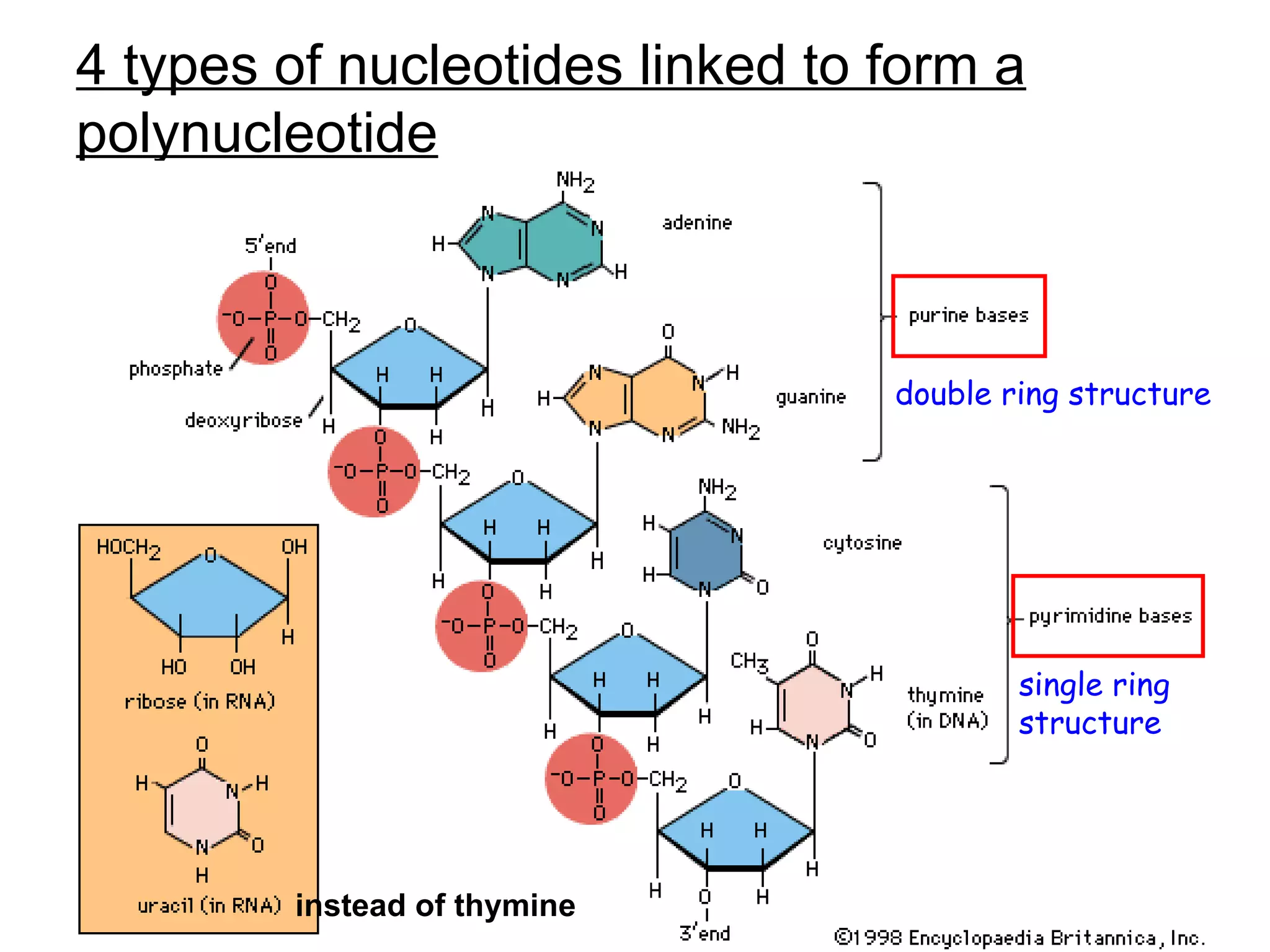
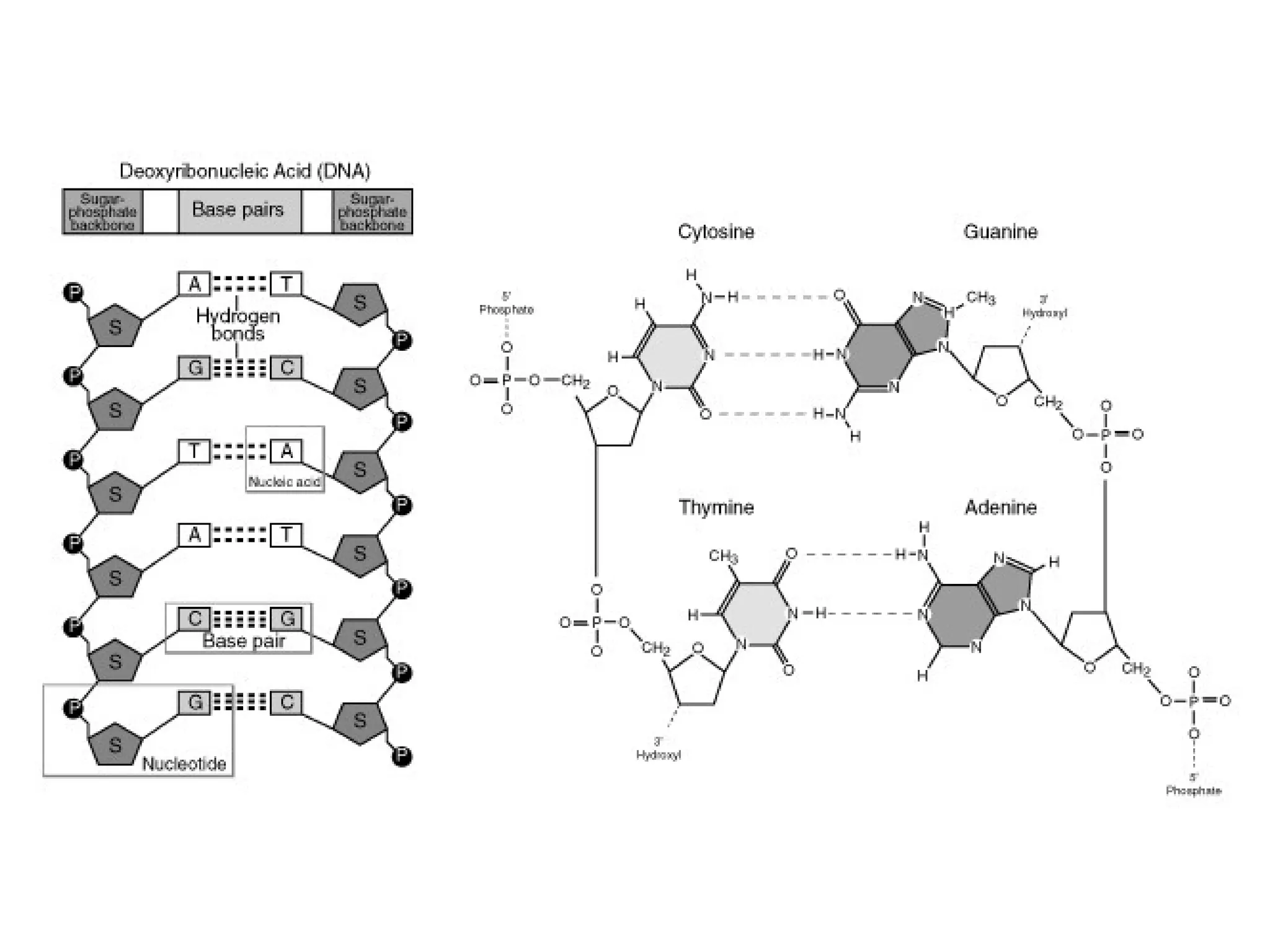
Basic Unit ofDNA is called a nucleotide A nucleotide is made up of Deoxyribose (a sugar) A phosphate group A nitrogen-containing base ( ATGC ) A denine T hymine G uanine C ytosine
9.
4 types ofnucleotides linked to form a polynucleotide instead of thymine double ring structure single ring structure
10.
Nucleotides are thebuilding blocks of DNA Each gene is made up of a sequence of nucleotides The sequence of nucleotides can vary This results in many different genes Since there are 4 different bases and hence 4 different nucleotides, for a gene made up of n nucleotides, there are 4 n different combinations of nucleotides
11.
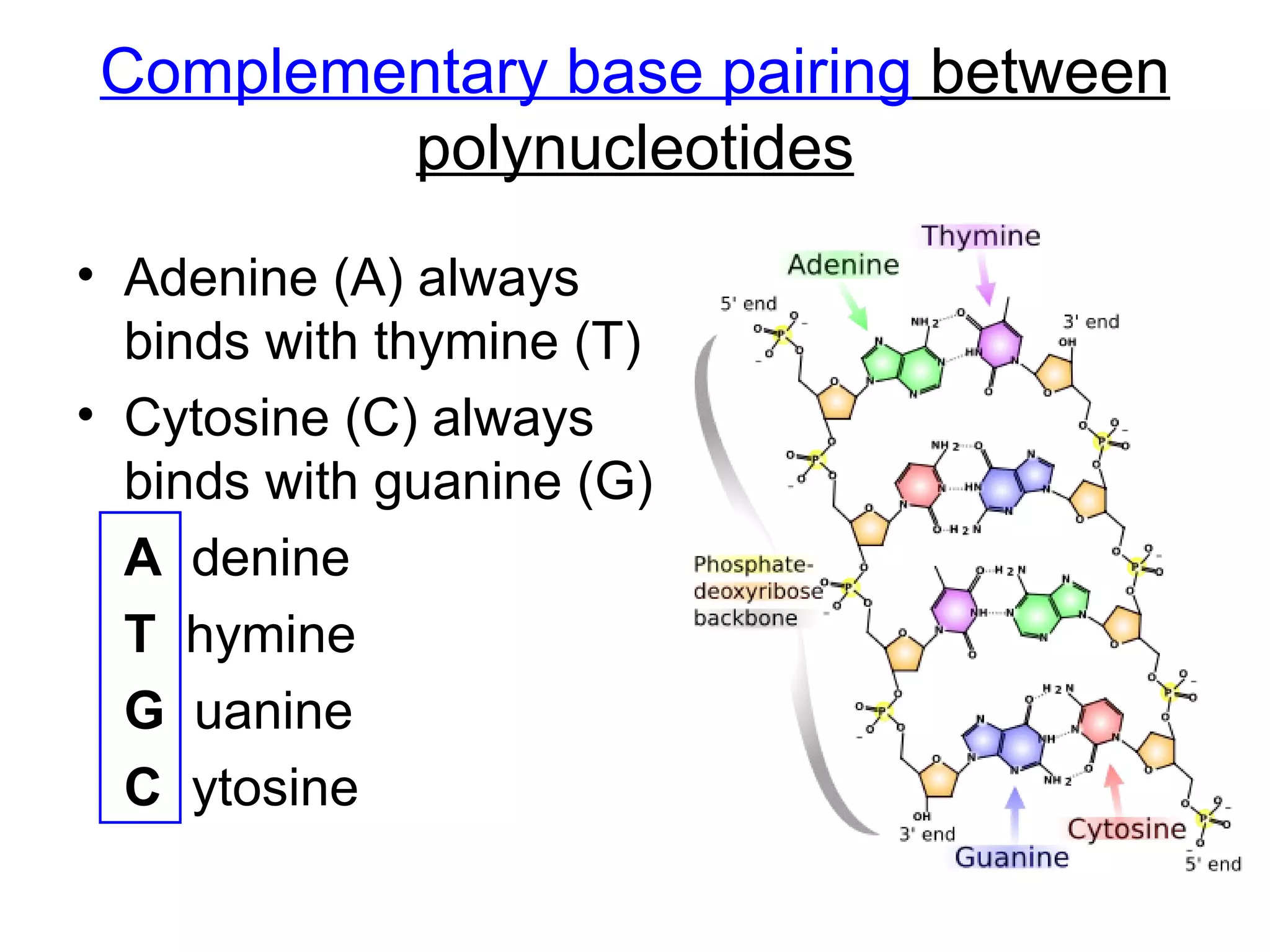
Complementary base pairing between polynucleotides Adenine (A) always binds with thymine (T) Cytosine (C) always binds with guanine (G) A denine T hymine G uanine C ytosine
12.
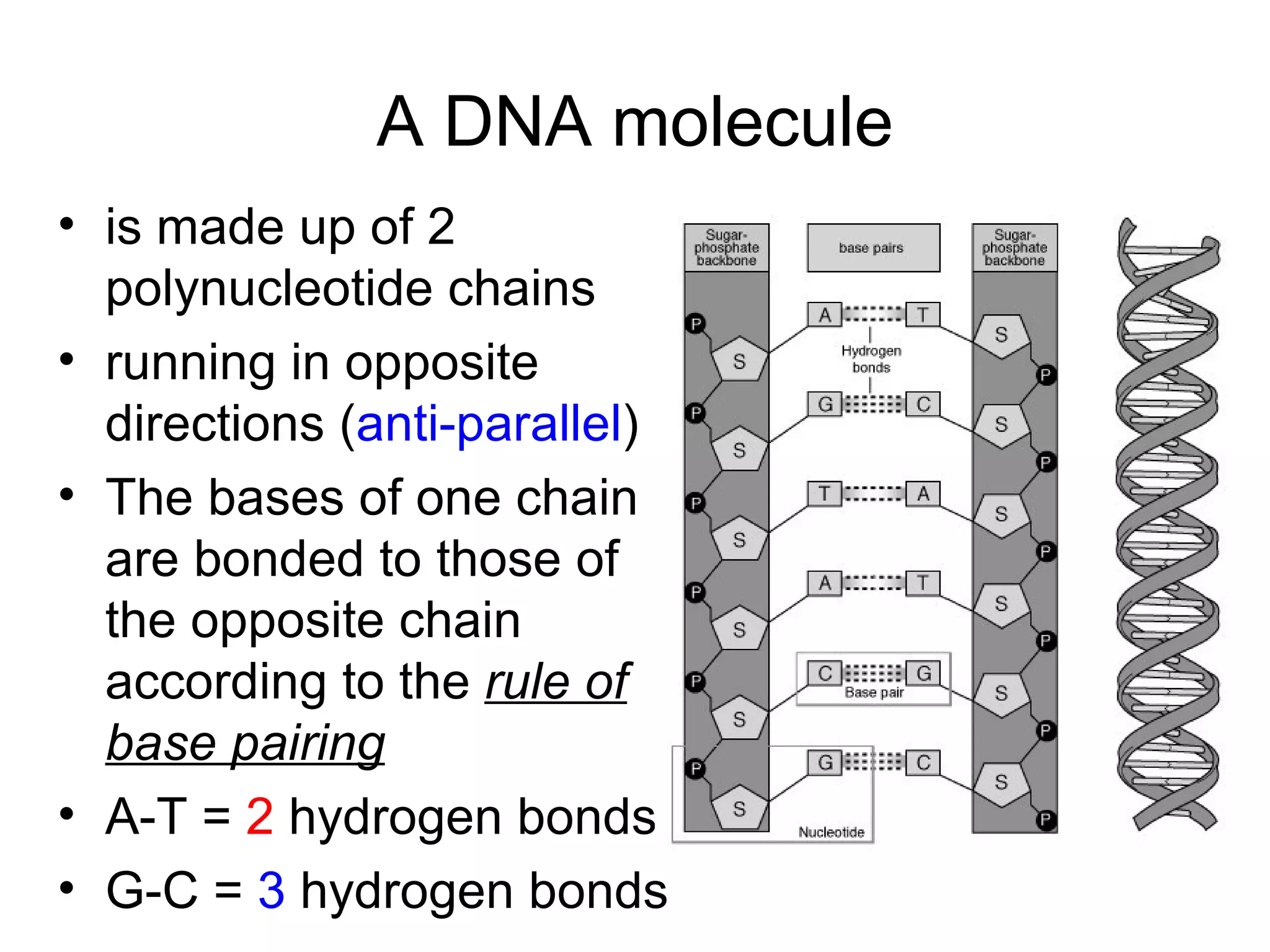
A DNA moleculeis made up of 2 polynucleotide chains running in opposite directions ( anti-parallel ) The bases of one chain are bonded to those of the opposite chain according to the rule of base pairing A-T = 2 hydrogen bonds G-C = 3 hydrogen bonds