




CONTROL &
COORDINATION-VI
SPINAL CORD, REFLEX ACTION, AUTONOMOUS NERVOUS
SYSTEM
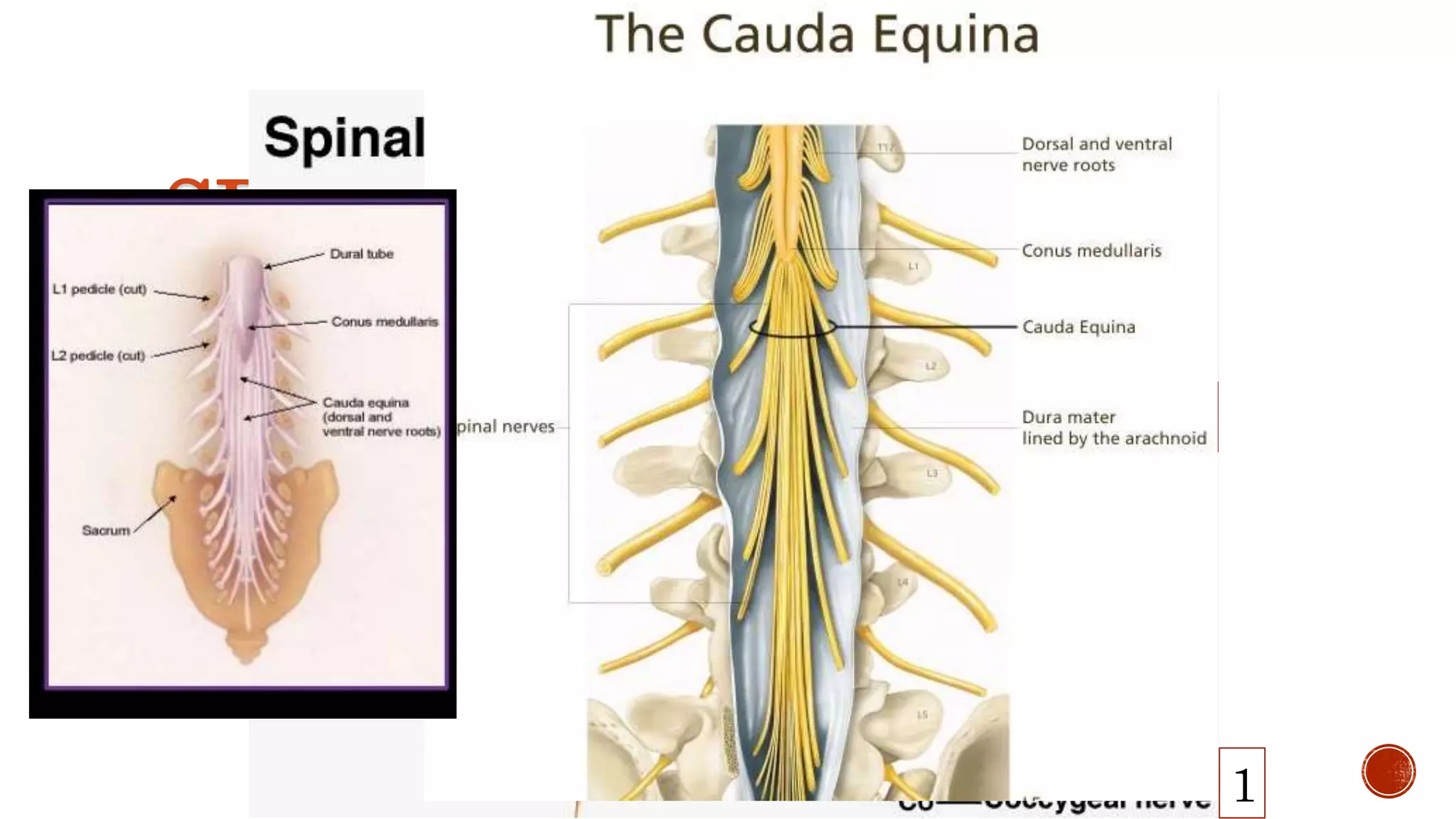
SPINAL
CORD
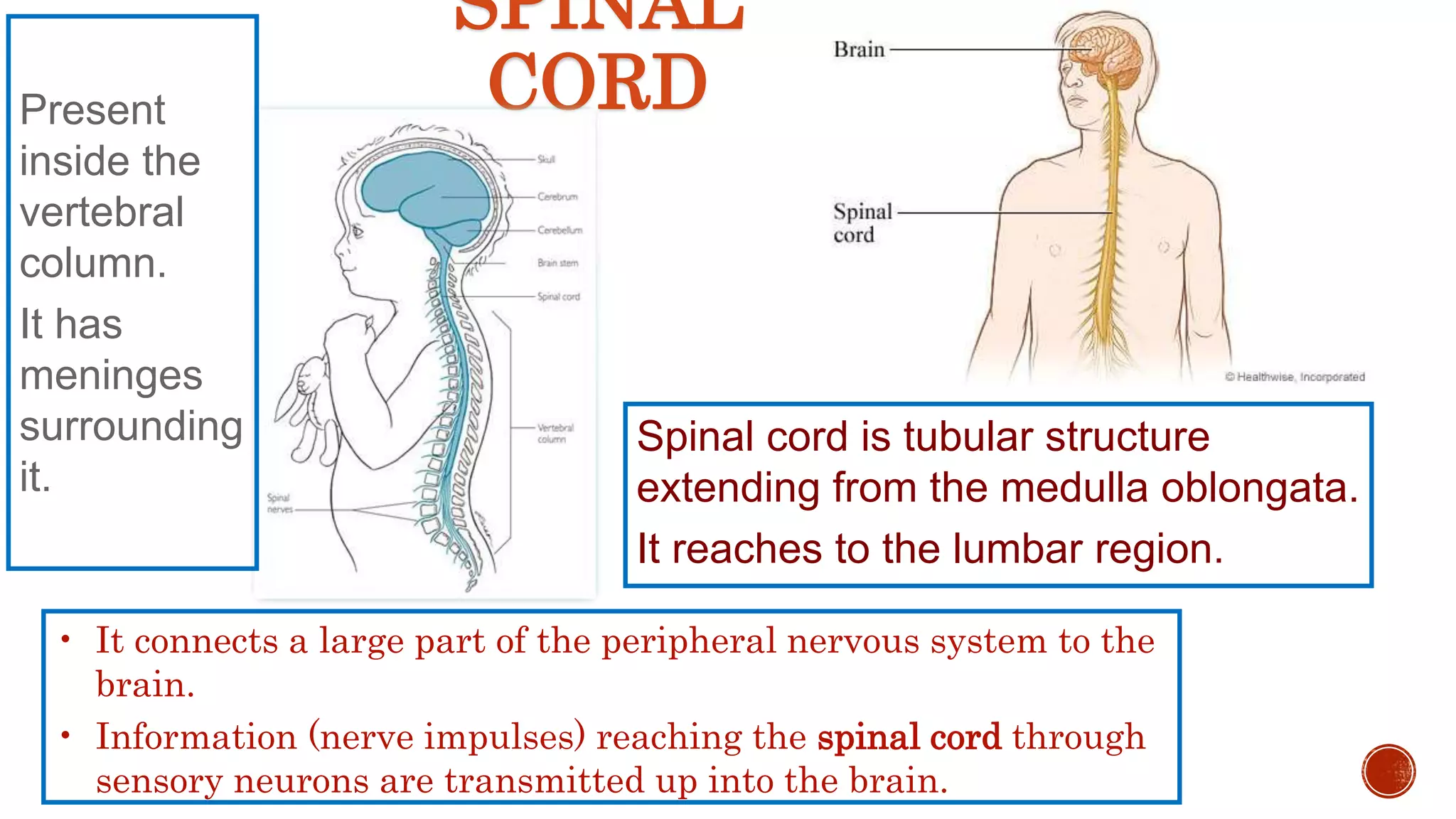
Spinal cord is tubular structure
extending from the medulla oblongata.
It reaches to the lumbar region.
Present
inside the
vertebral
column.
It has
meninges
surrounding
it.
• It connects a large part of the peripheral nervous system to the
brain.
• Information (nerve impulses) reaching the spinal cord through
sensory neurons are transmitted up into the brain.
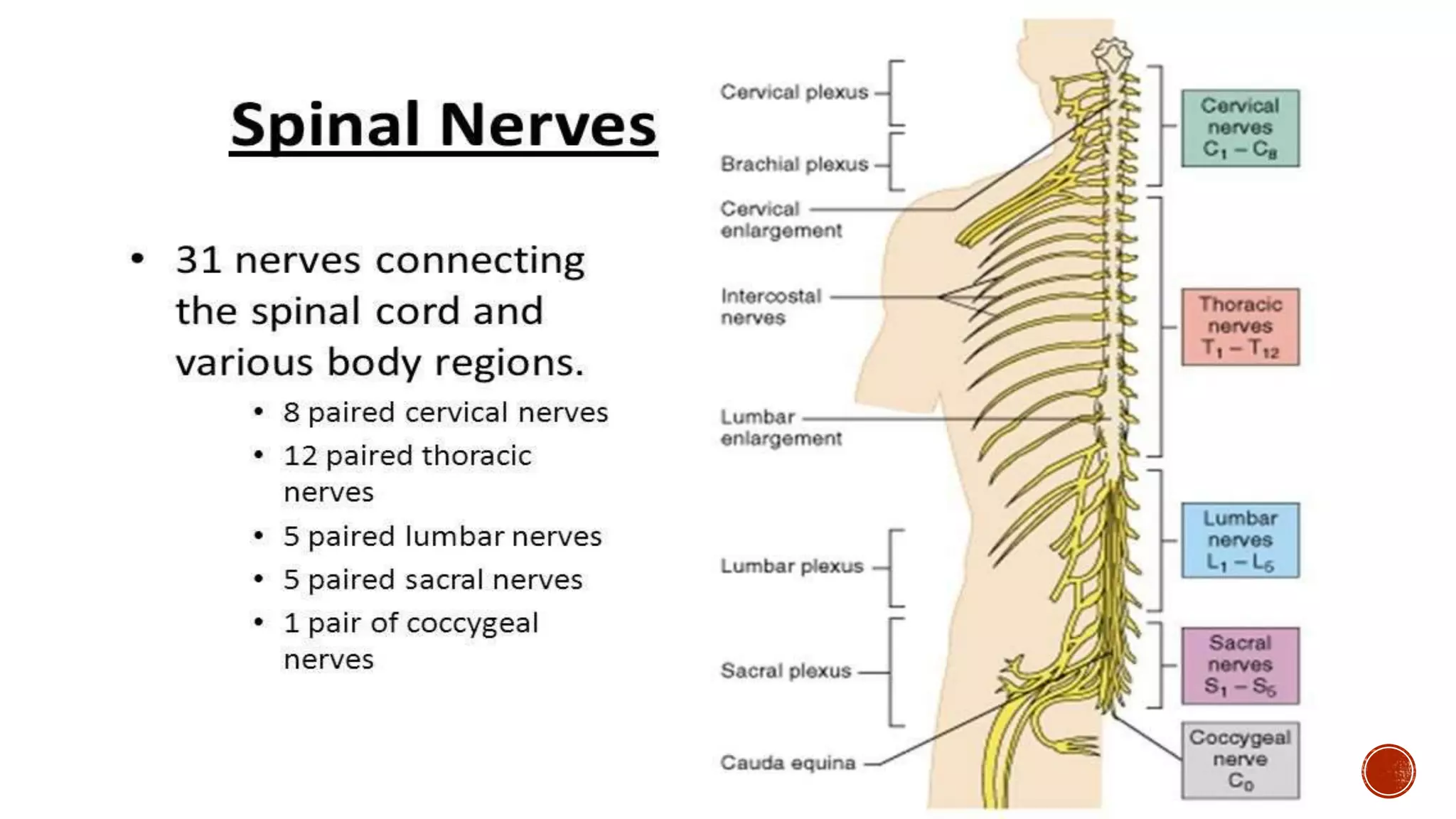
SPIN
AL
NERV
ES: 31
PAIRS
8
12
5
5
1
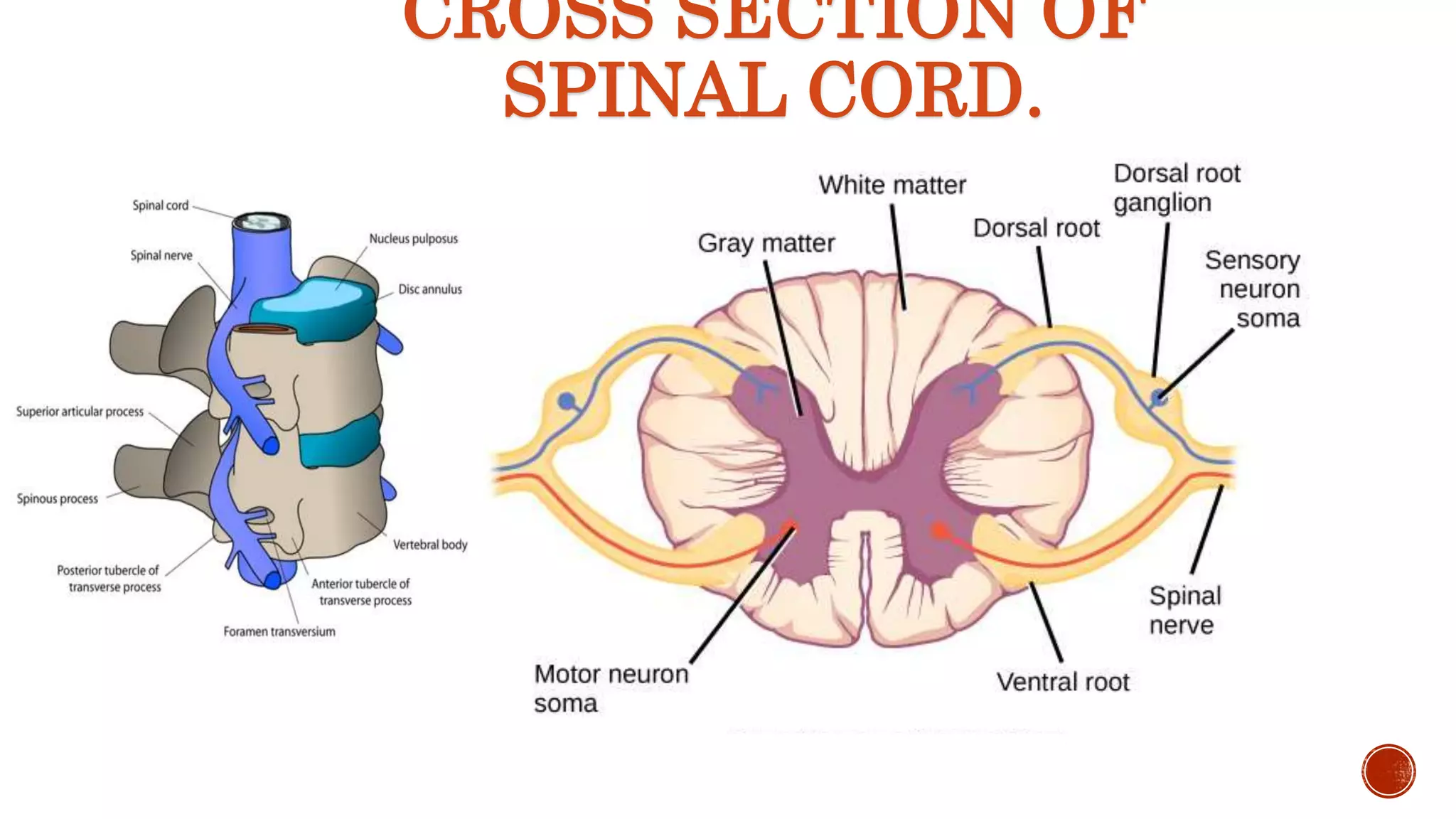
CROSS SECTION OF
SPINAL CORD.
SPINAL CORD
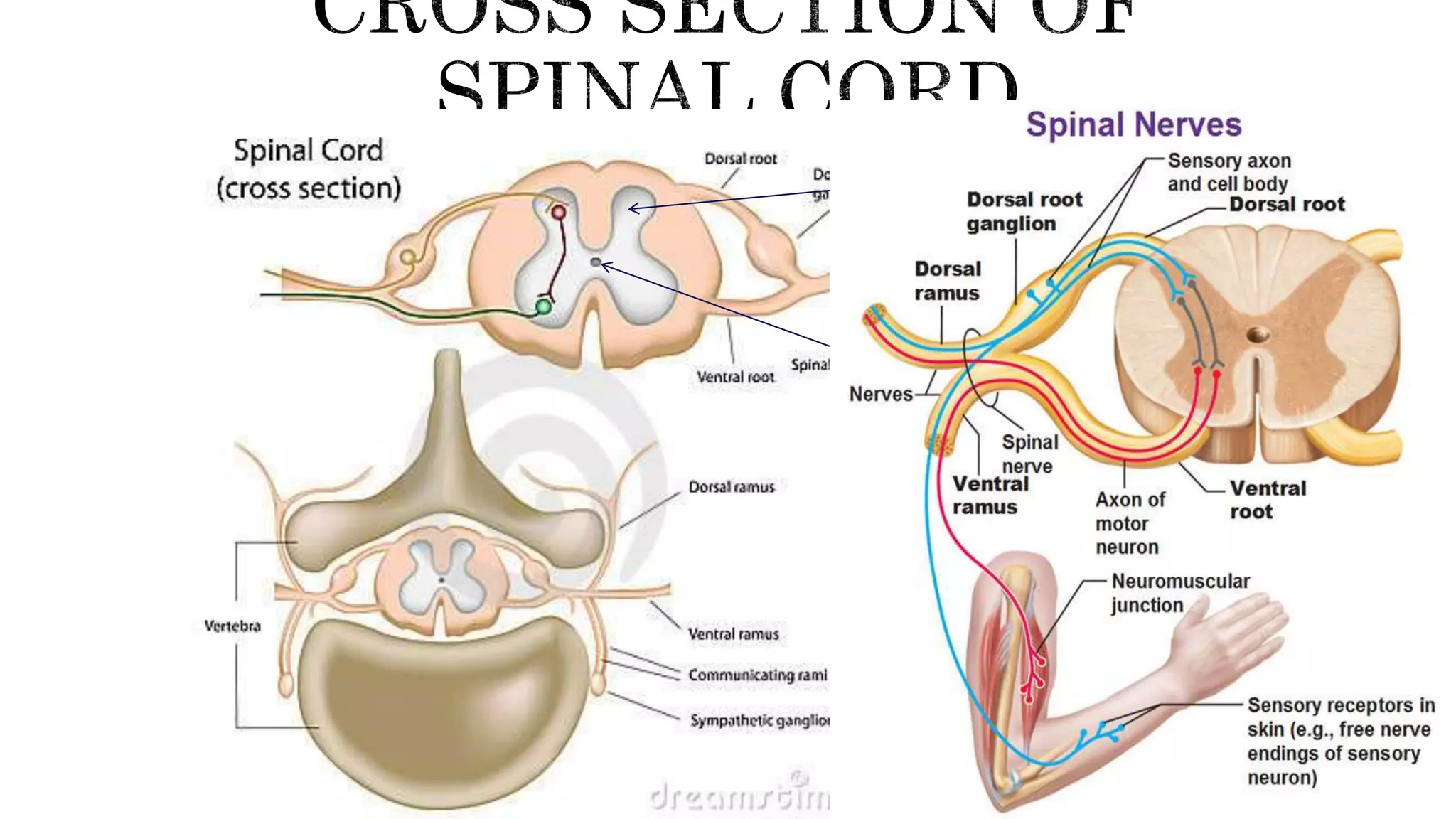
On each side of spinal cord are two horns, the
dorsal horn and the ventral horn.
A nerve joined to the dorsal horn picks up the
sensations from the various organs
It is called the sensory nerve.
From the ventral horn arises the motor nerve
which takes the message from the spinal cord
to the organs concerned.
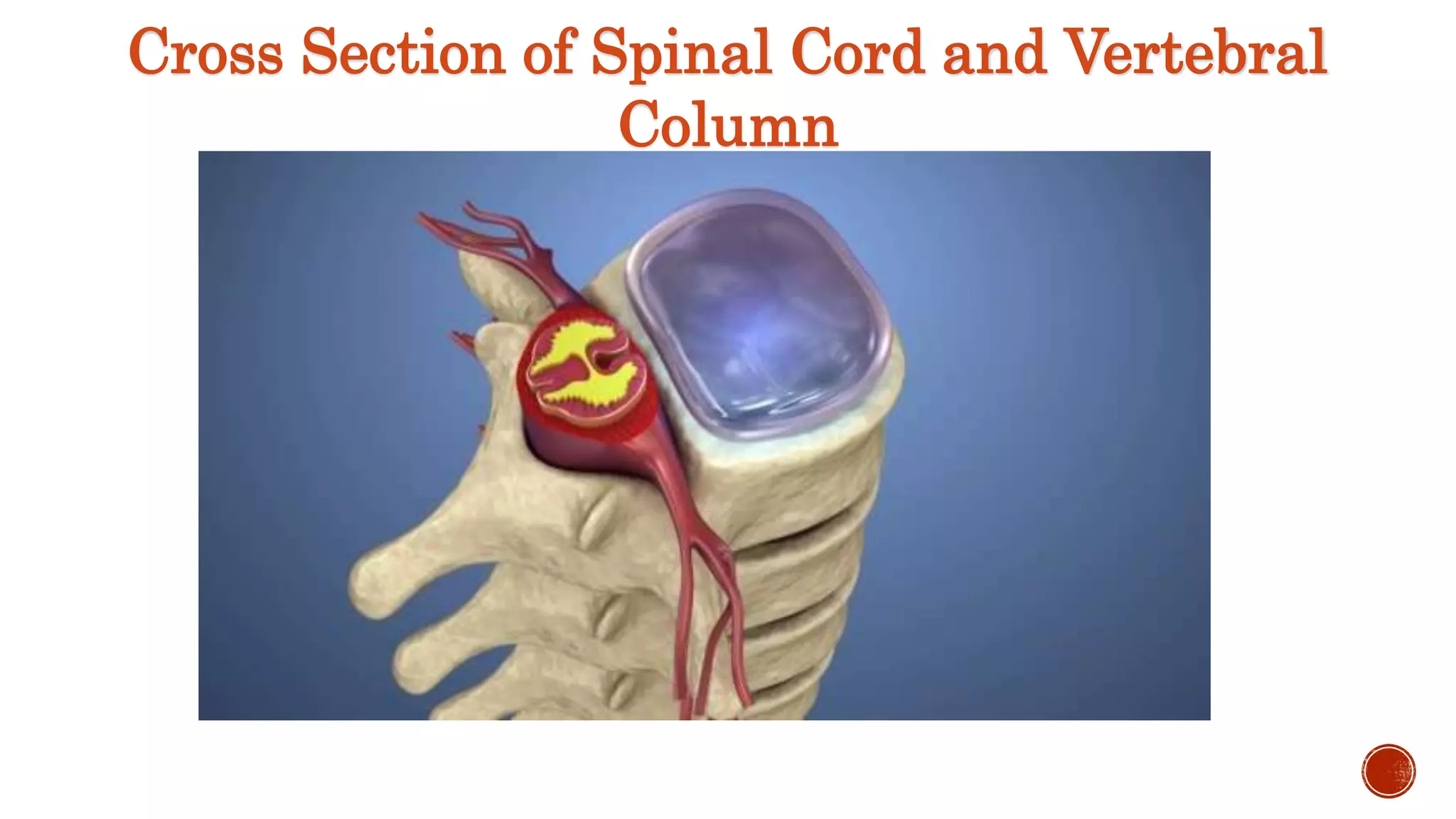
Cross Section of Spinal Cord and Vertebral
Column
Central canal-
filled with CSF
H- shaped grey
matter.
It is located inside
the neural canal
of the vertebral
column
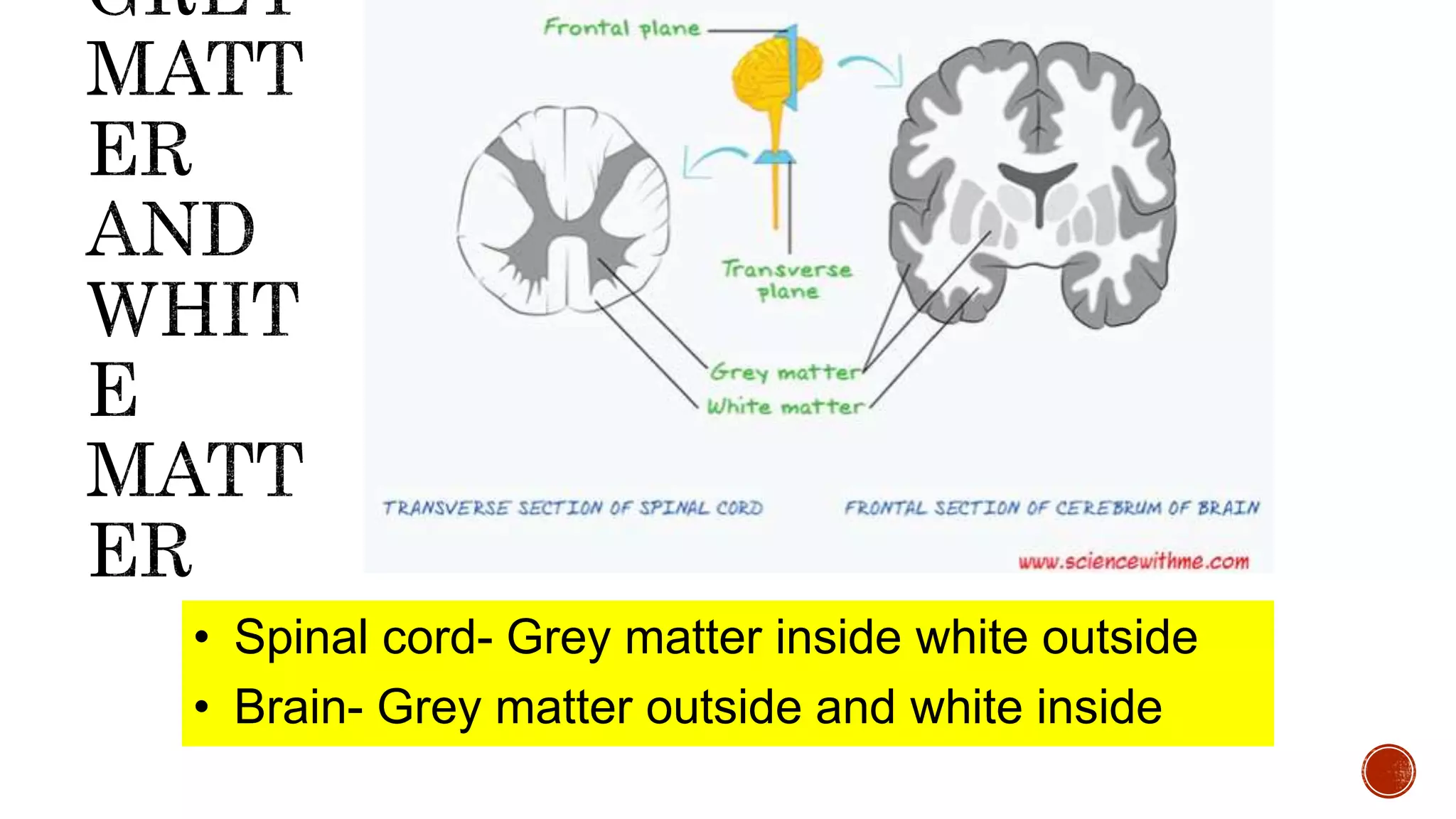
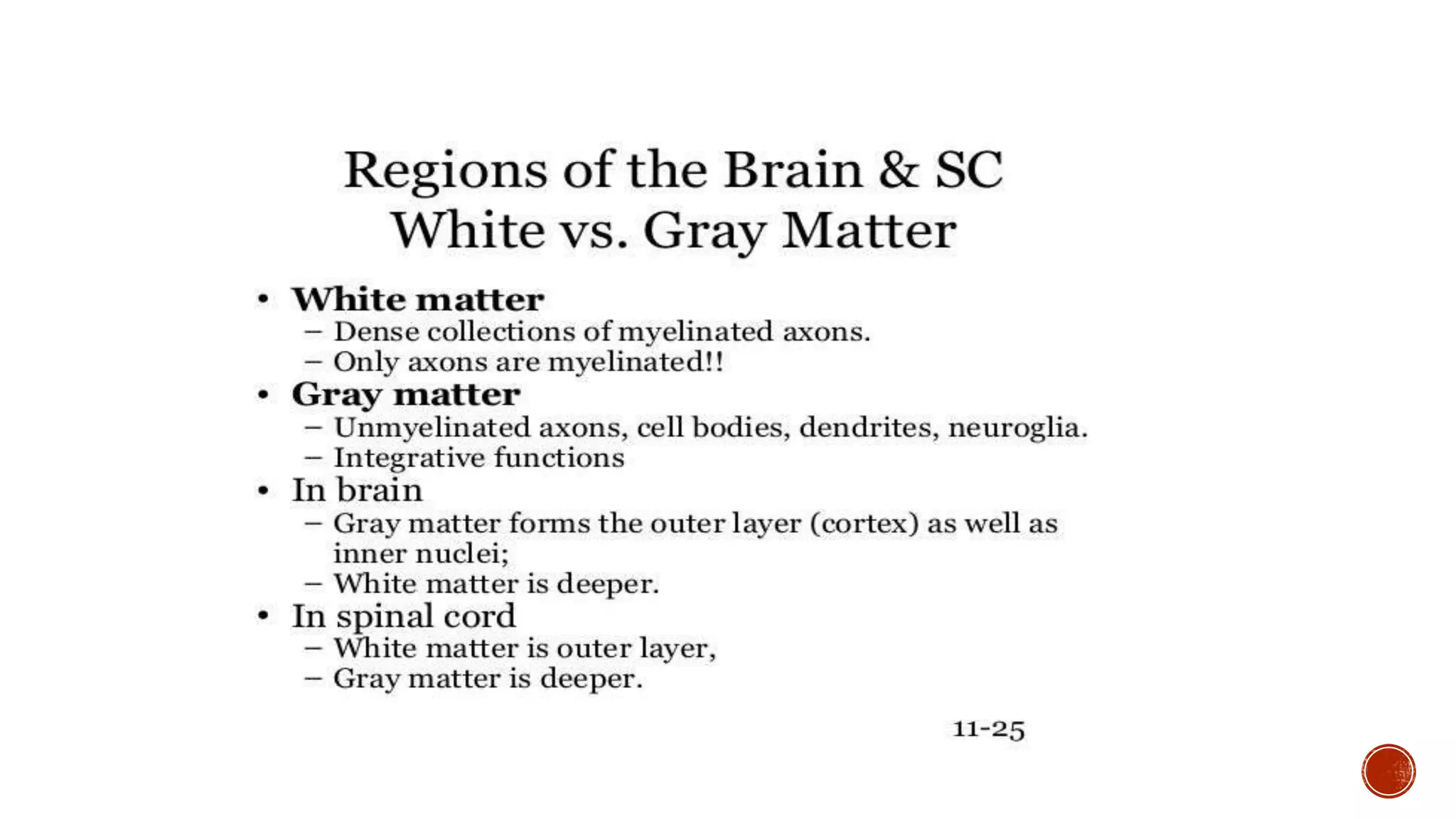
• Spinal cord- Grey matter inside white outside
• Brain- Grey matter outside and white inside
REFLEX ARC AND REFLEX
ACTION
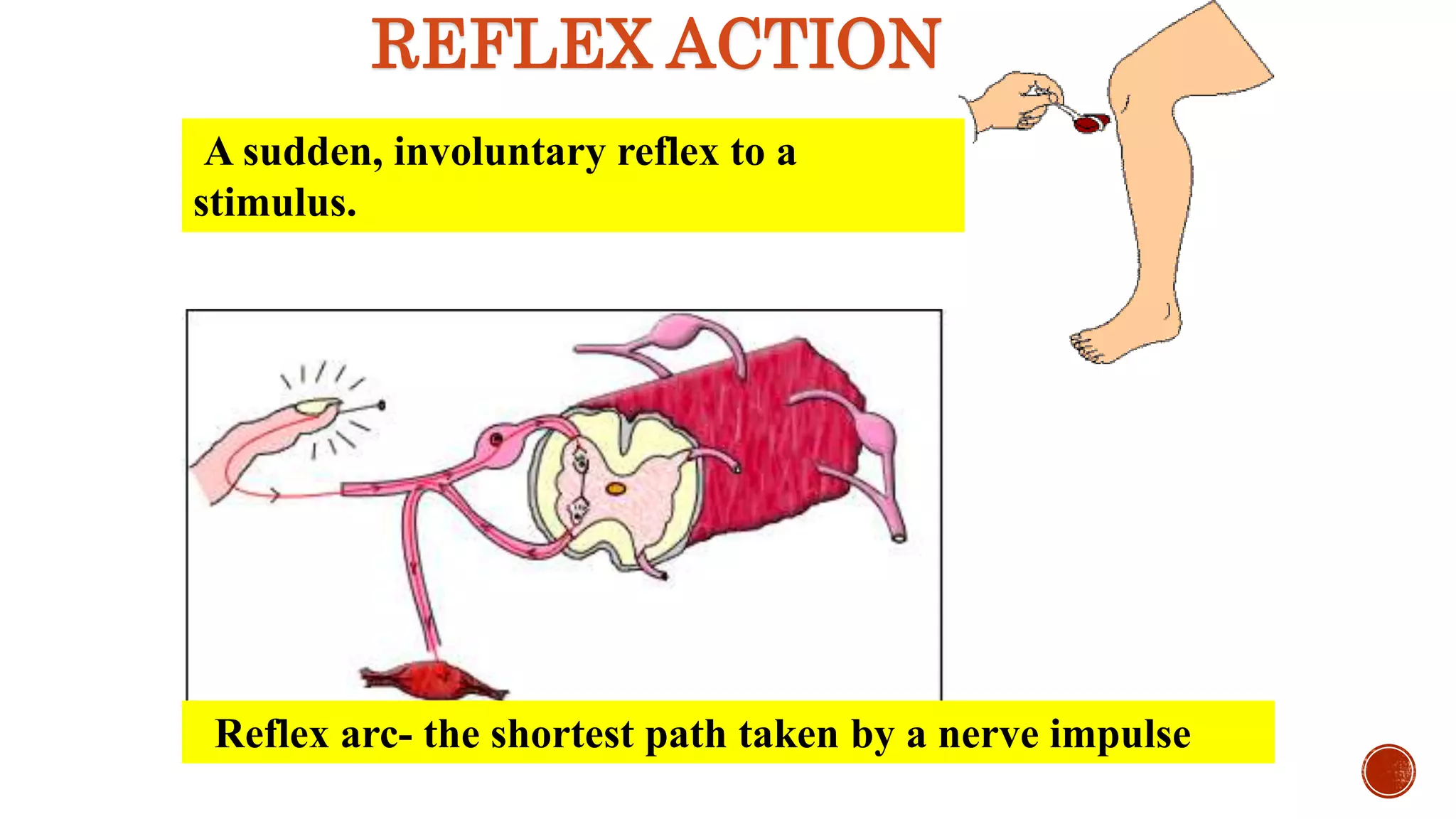
There are certain body responses which are immediate and do
not require any processing by the brain these responses or actions
are controlled by Spinal cord.
These are called reflex actions.
REFLEX ACTION
Reflex arc- the shortest path taken by a nerve impulse
A sudden, involuntary reflex to a
stimulus.
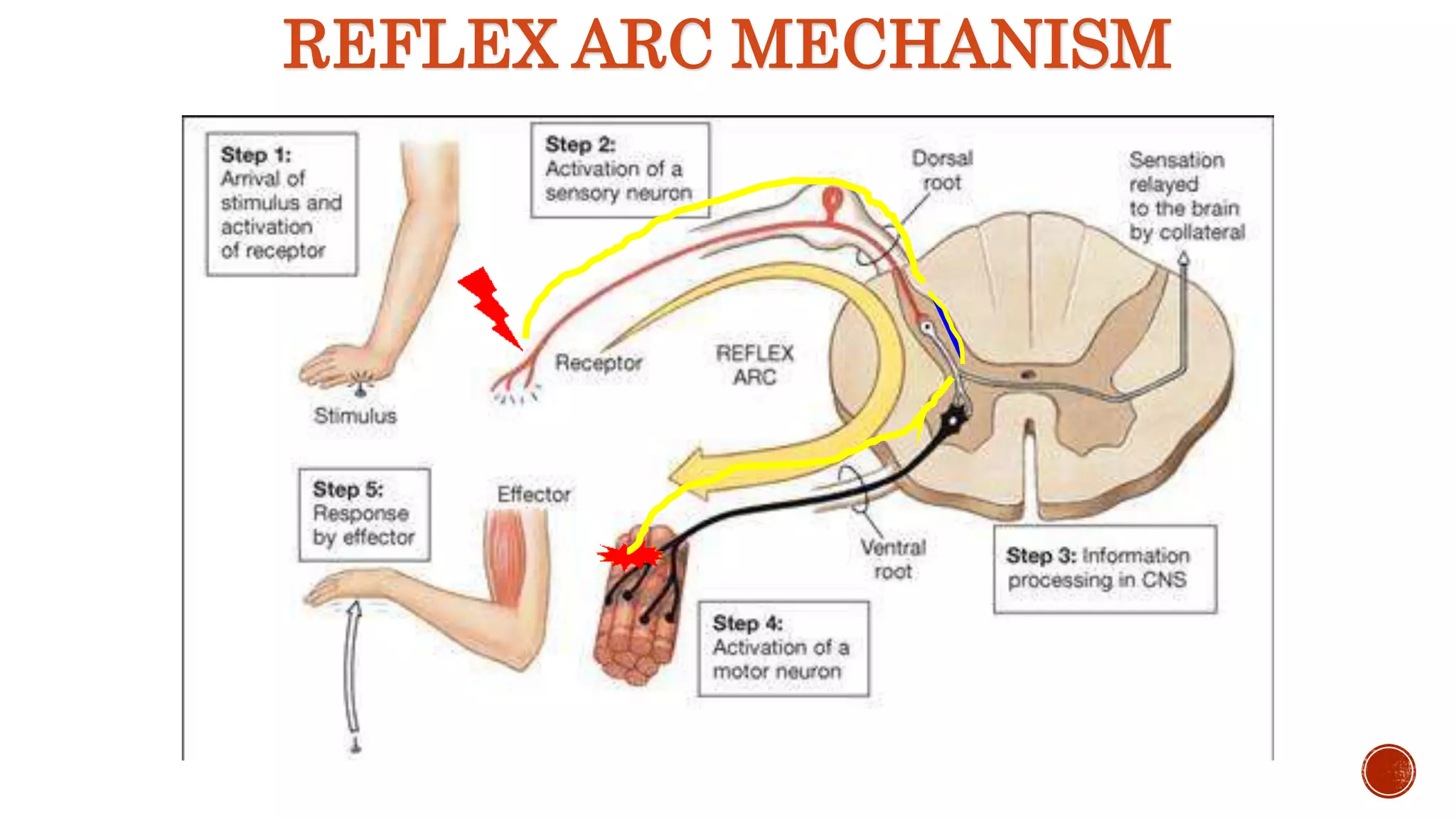
REFLEX ARC MECHANISM
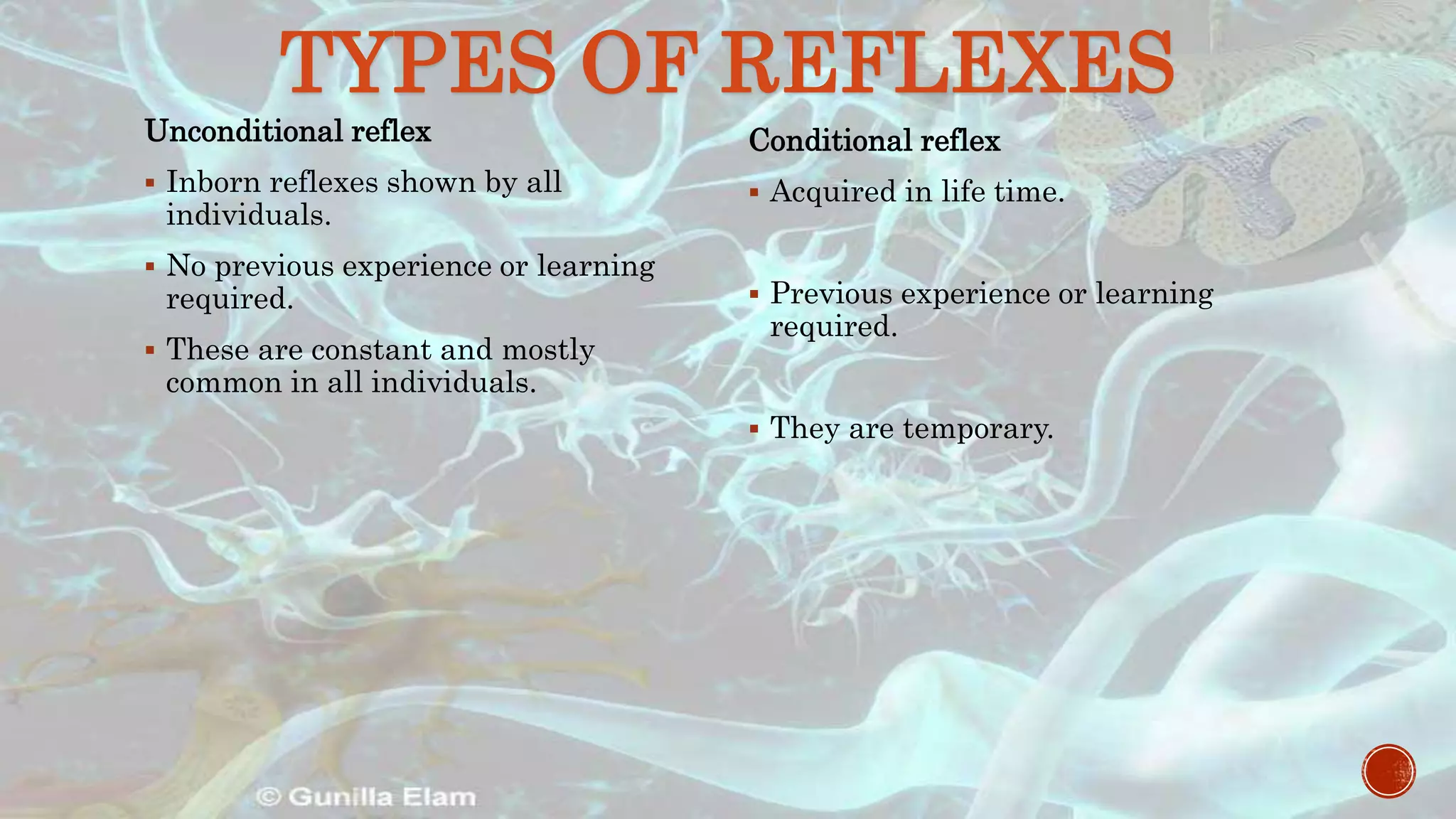
TYPES OF REFLEXES
There Are two types of reflexes
1.SIMPLE OR NATURAL REFLEX &
2.CONDITIONED OR ACQUIRED
REFLEX
TYPES OF REFLEXES
Unconditional reflex
 Inborn reflexes shown by all
individuals.
 No previous experience or learning
required.
 These are constant and mostly
common in all individuals.
Conditional reflex
 Acquired in life time.
 Previous experience or learning
required.
 They are temporary.
EXAMPLES OF SIMPLE
REFLEX
1. Blinking of eyelids in response to foreign particles
2. Closing eyelids in response to strong beam of light
flashed on the eyes
3. Withdrawal of leg on suddenly stepping on nail
4. Immediate withdrawal of hand if a person touches a
hot object unknowingly
CONDITIONED
REFLEXESAre those which develop due to some previous experience.
E.g.
1.Watering of mouth (salivation) at the sight of tasty
food
2.Typing on the keyboard or a computer
3.Playing a musical instrument
4.Surfing the channels while watching TV
TYPES OF ACTIONS
Voluntary action
 Action performed conciously
 Action initiated by a willing thought
 Actions that are under our control
 Ex- picking up a fruit and eating it,
Involuntary action (reflex)
 Performed unconciously
 Actions initiated by a stimulus
 Actions not under our control
 Ex. Taking hand away when you touch a
hot object.
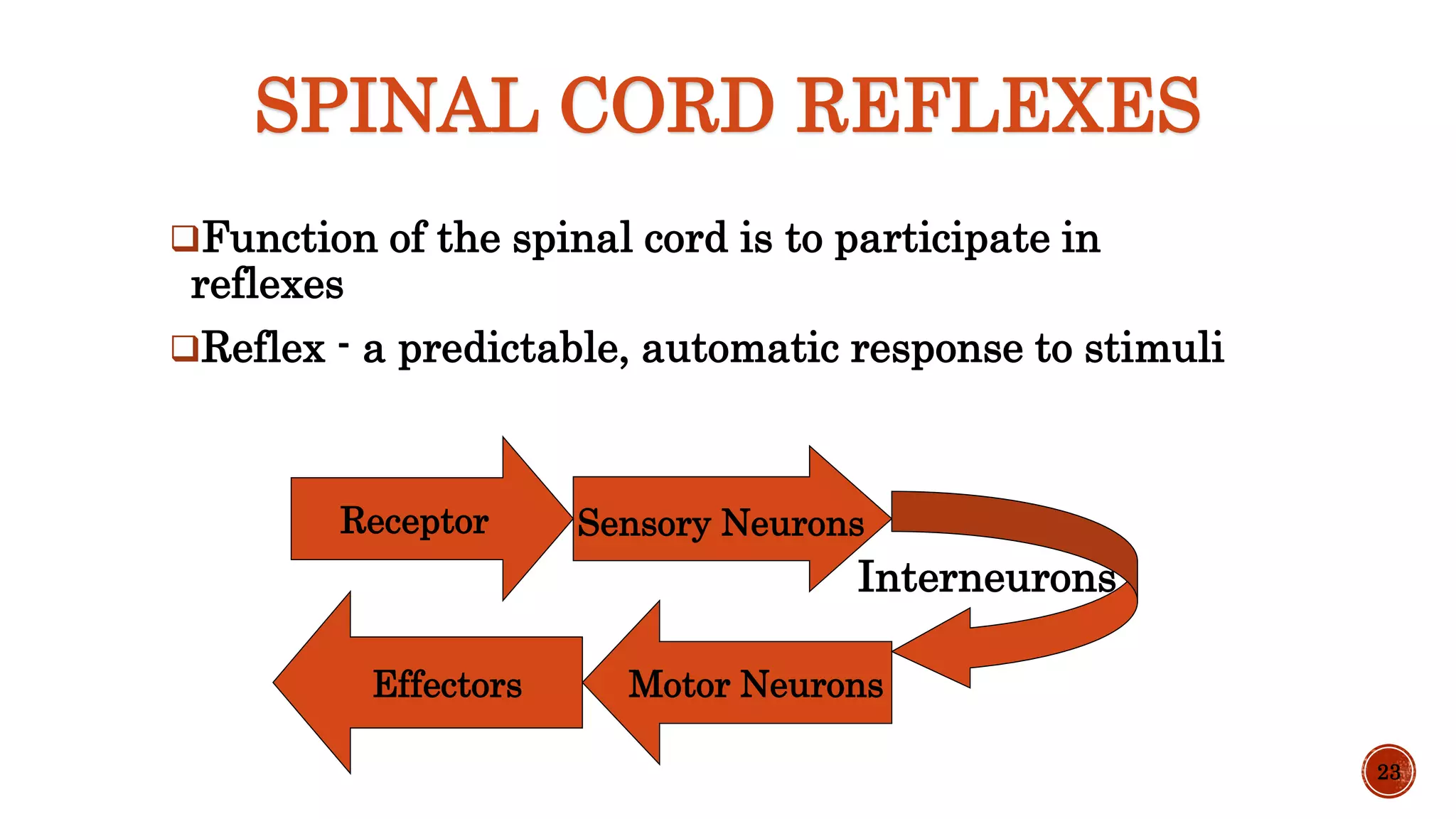
SPINAL CORD REFLEXES
Function of the spinal cord is to participate in
reflexes
Reflex - a predictable, automatic response to stimuli
23
Receptor Sensory Neurons
Effectors Motor Neurons
Interneurons
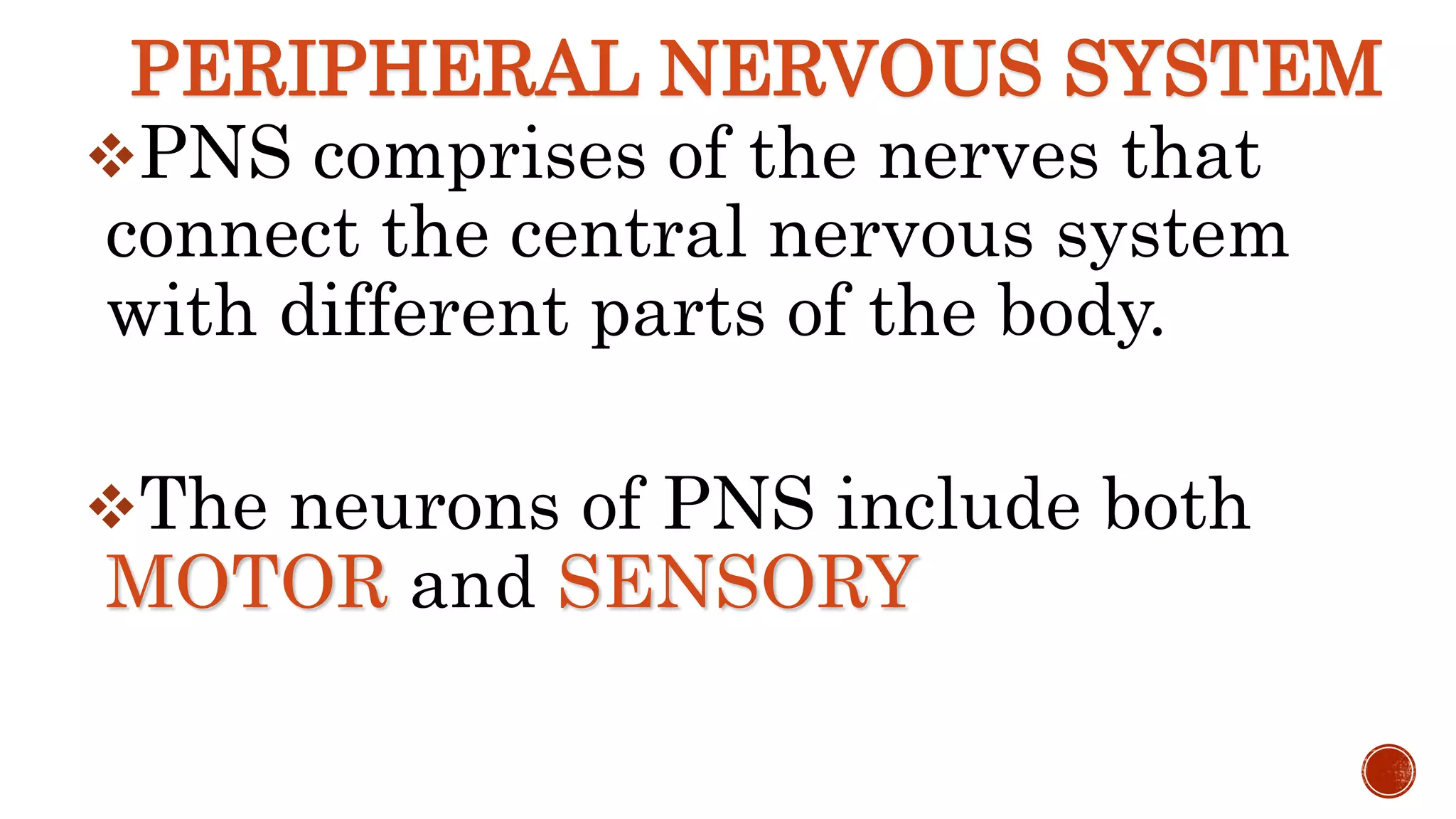
PERIPHERAL NERVOUS SYSTEM
PNS comprises of the nerves that
connect the central nervous system
with different parts of the body.
The neurons of PNS include both
MOTOR and SENSORY
PERIPHERAL NERVOUS SYSTEM
The fibres of motor and sensory
neurons are bundled into nerves
which are of two types.
1.CRANIAL NERVES &
2.SPINAL NERVES
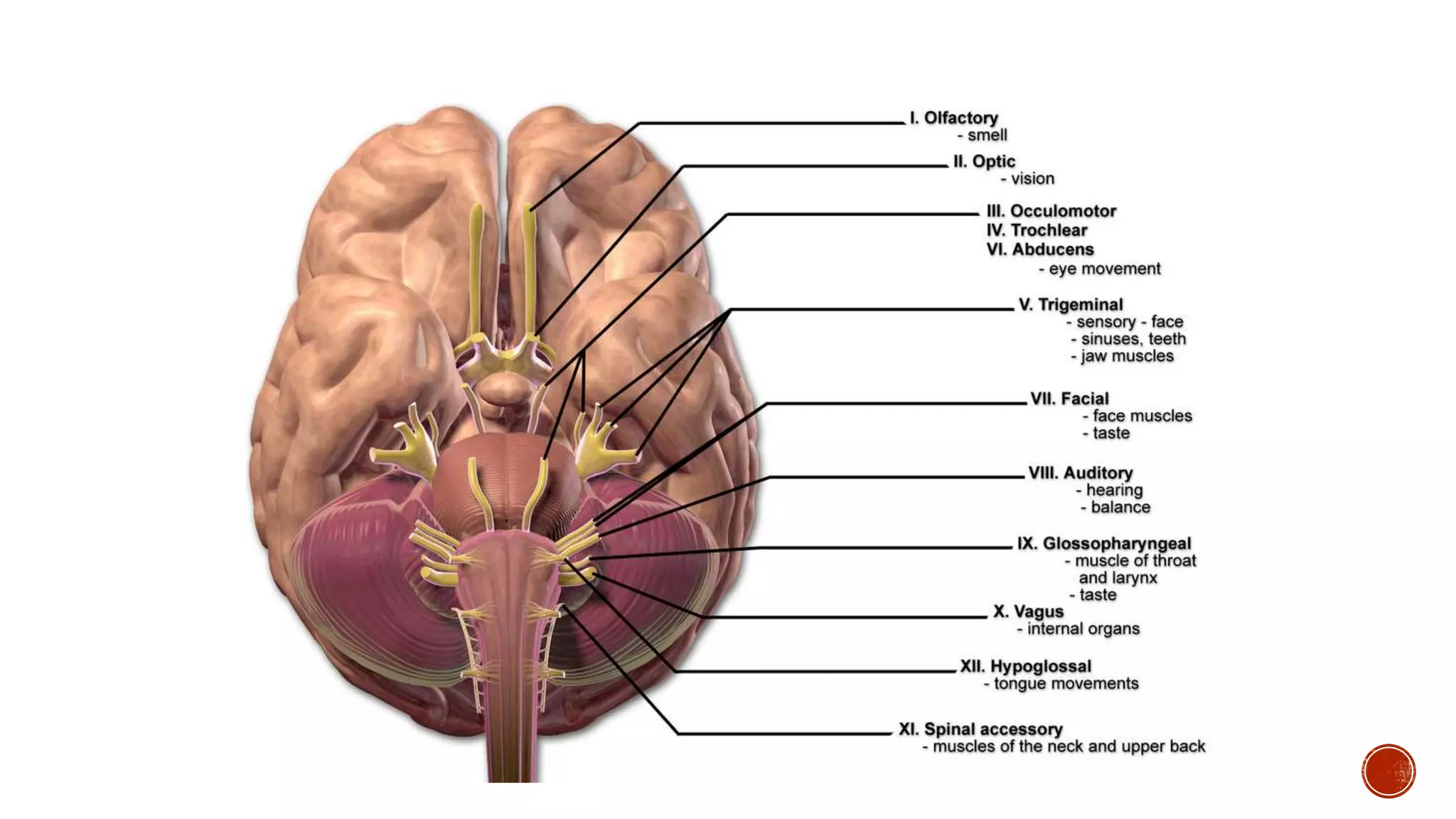
Connected directly to the brain such
as the optic nerve (for eye), auditory
nerve (Ear), mixed nerves going and
coming from the face
12 pairs of cranial nerves
CRANIAL NERVES
CRANIAL NERVES
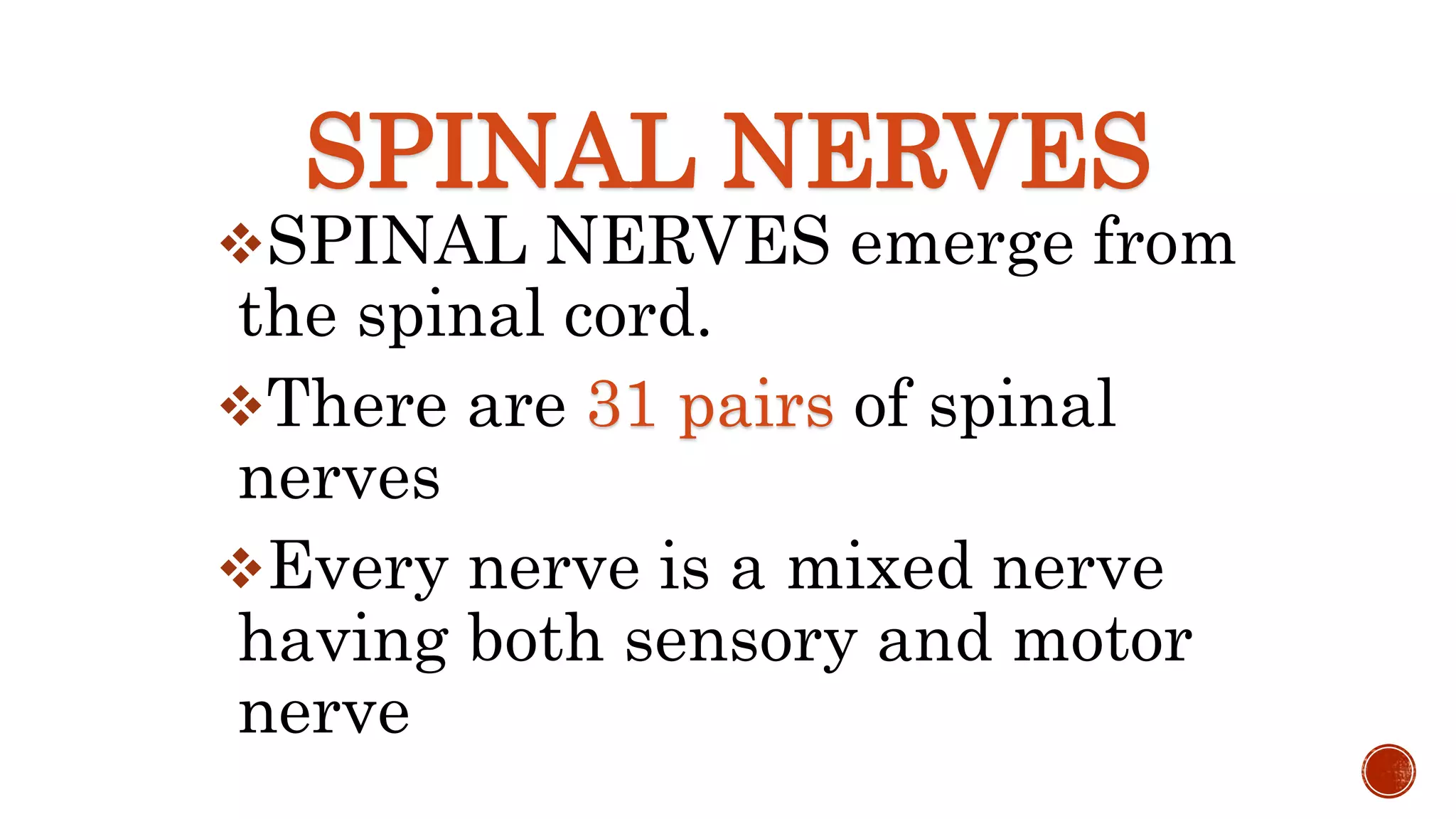
SPINAL NERVES
SPINAL NERVES emerge from
the spinal cord.
There are 31 pairs of spinal
nerves
Every nerve is a mixed nerve
having both sensory and motor
nerve
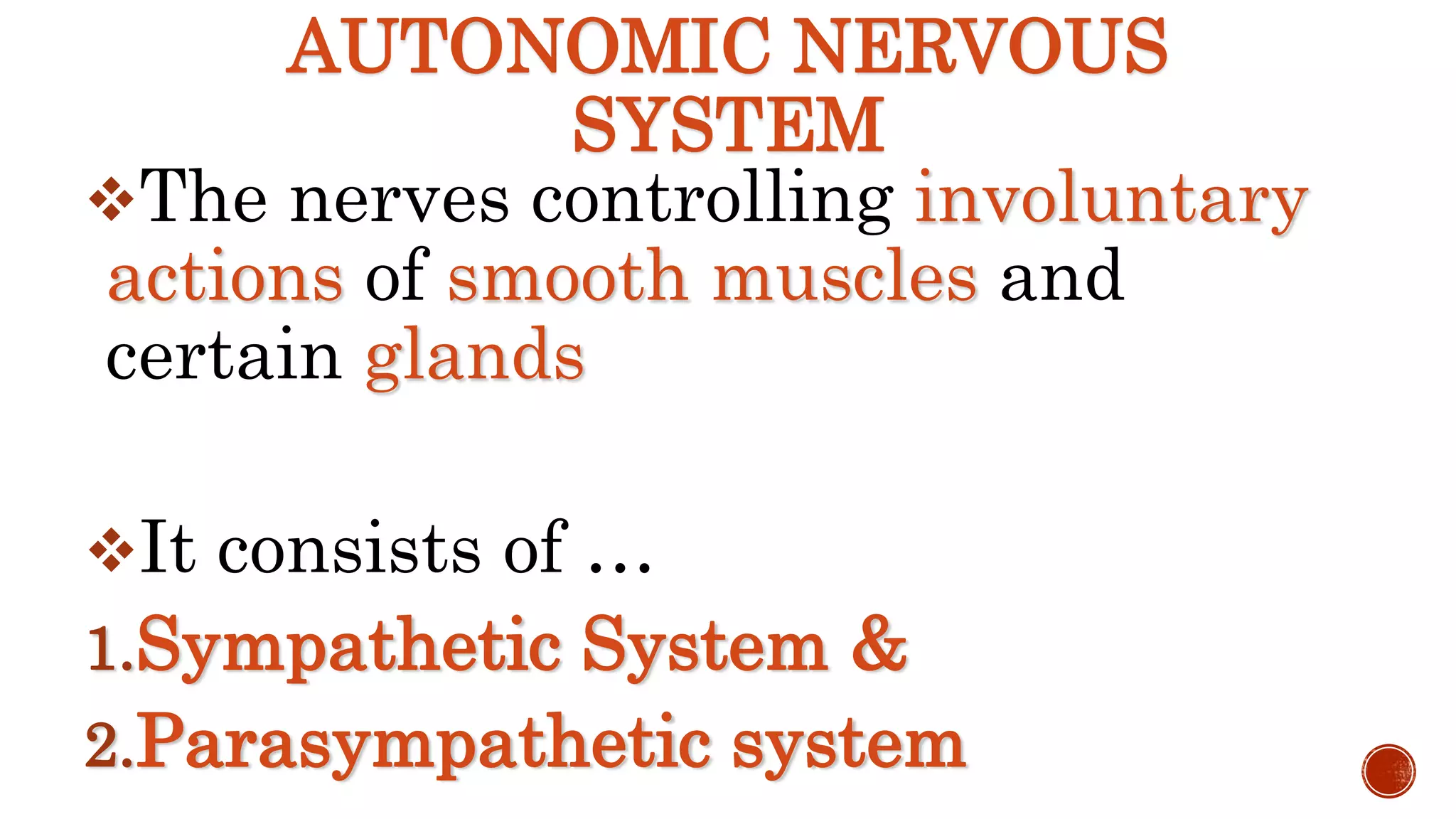
AUTONOMIC NERVOUS
SYSTEM
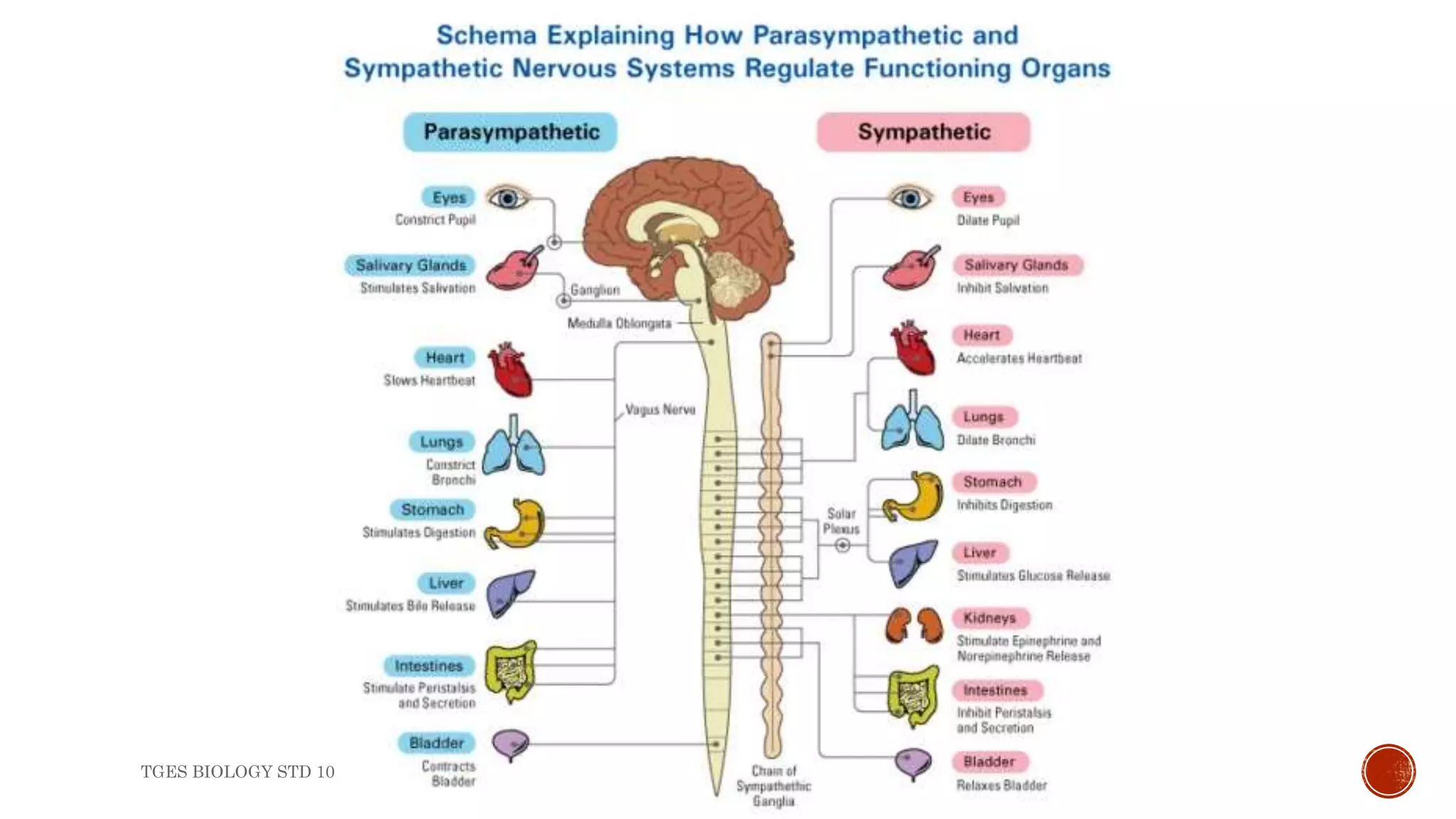
The nerves controlling involuntary
actions of smooth muscles and
certain glands
It consists of …
1.Sympathetic System &
2.Parasympathetic system
SYMPATHETIC SYSTEM
The sympathetic nerves originate
from Thoraco-lumbar region of the
spinal cord
It accelerates the release of
adrenaline and nor-adrenaline
SYMPATHETIC SYSTEM
Functions
1.Dilation of pupil
2.Decreasing secretion of salivary
glands
3.Speeding up the heart beat
4.Increase respiration
PARASYMPATHETIC SYSTEM
The parasympathetic nerves
originate from the cranial and
sacral region of the spinal cord and
their nerve endings release
acetylcholine (ACh)
PARASYMPATHETIC
SYSTEM
Functions
1.Constriction of pupil
2.Increased secretion of salivary
glands
3.Slowing heart beats
4.Decreased respiration
A
U
T
O
N
O
M
I
C
N
E
R
V
O
U
S
S
Y
S
T
E
M
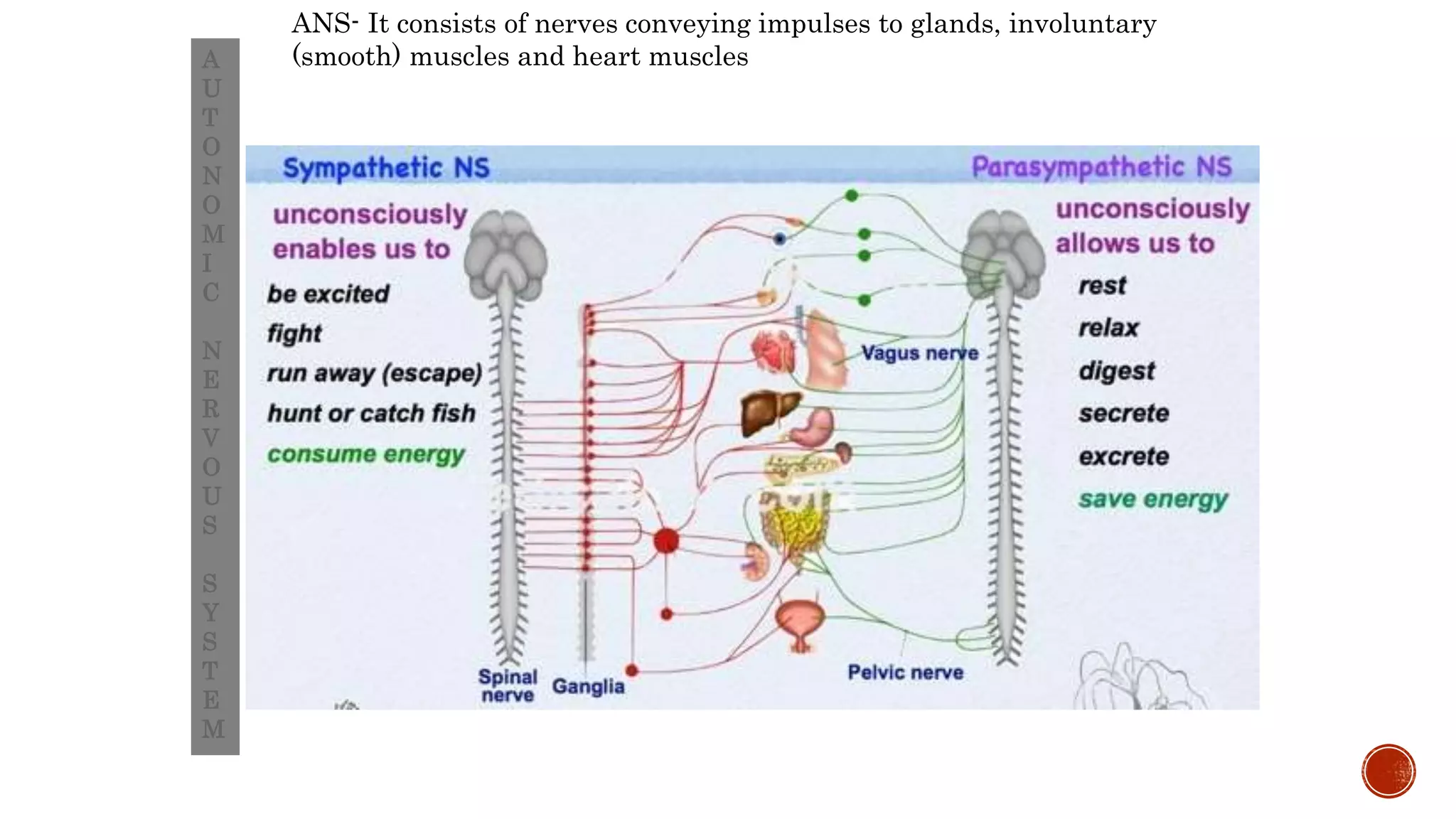
ANS- It consists of nerves conveying impulses to glands, involuntary
(smooth) muscles and heart muscles
TGES BIOLOGY STD 10
DISORDERS OF THE NERVOUS SYSTEM
1. Meningitis- inflammation of the linings of the brain and spinal
cord
2. Encephalitis- inflammation of the brain
3. Epilepsy – Injury/Abnormality to the brain - (muscles tighten up,
joints get affected etc.)
4. Cerebral palsy- Injury/Abnormality to the brain - disturbance in
voluntary muscular action
5. Parkinson’s – decreased neurotransmitter
6. MS (multiple sclerosis) – Damage to myelin sheath - autoimmune
disease – Difficulty solving, thinking, loss of balance, muscular
spasms, etc.
THANK
YOU

Control & coordination VI

  • 1.
    CONTROL & COORDINATION-VI SPINAL CORD,REFLEX ACTION, AUTONOMOUS NERVOUS SYSTEM
  • 3.
    SPINAL CORD Spinal cord istubular structure extending from the medulla oblongata. It reaches to the lumbar region. Present inside the vertebral column. It has meninges surrounding it. • It connects a large part of the peripheral nervous system to the brain. • Information (nerve impulses) reaching the spinal cord through sensory neurons are transmitted up into the brain.
  • 6.
  • 7.
  • 9.
    SPINAL CORD On eachside of spinal cord are two horns, the dorsal horn and the ventral horn. A nerve joined to the dorsal horn picks up the sensations from the various organs It is called the sensory nerve. From the ventral horn arises the motor nerve which takes the message from the spinal cord to the organs concerned.
  • 10.
    Cross Section ofSpinal Cord and Vertebral Column
  • 11.
    Central canal- filled withCSF H- shaped grey matter. It is located inside the neural canal of the vertebral column
  • 12.
    • Spinal cord-Grey matter inside white outside • Brain- Grey matter outside and white inside
  • 14.
    REFLEX ARC ANDREFLEX ACTION There are certain body responses which are immediate and do not require any processing by the brain these responses or actions are controlled by Spinal cord. These are called reflex actions.
  • 15.
    REFLEX ACTION Reflex arc-the shortest path taken by a nerve impulse A sudden, involuntary reflex to a stimulus.
  • 16.
  • 18.
    TYPES OF REFLEXES ThereAre two types of reflexes 1.SIMPLE OR NATURAL REFLEX & 2.CONDITIONED OR ACQUIRED REFLEX
  • 19.
    TYPES OF REFLEXES Unconditionalreflex  Inborn reflexes shown by all individuals.  No previous experience or learning required.  These are constant and mostly common in all individuals. Conditional reflex  Acquired in life time.  Previous experience or learning required.  They are temporary.
  • 20.
    EXAMPLES OF SIMPLE REFLEX 1.Blinking of eyelids in response to foreign particles 2. Closing eyelids in response to strong beam of light flashed on the eyes 3. Withdrawal of leg on suddenly stepping on nail 4. Immediate withdrawal of hand if a person touches a hot object unknowingly
  • 21.
    CONDITIONED REFLEXESAre those whichdevelop due to some previous experience. E.g. 1.Watering of mouth (salivation) at the sight of tasty food 2.Typing on the keyboard or a computer 3.Playing a musical instrument 4.Surfing the channels while watching TV
  • 22.
    TYPES OF ACTIONS Voluntaryaction  Action performed conciously  Action initiated by a willing thought  Actions that are under our control  Ex- picking up a fruit and eating it, Involuntary action (reflex)  Performed unconciously  Actions initiated by a stimulus  Actions not under our control  Ex. Taking hand away when you touch a hot object.
  • 23.
    SPINAL CORD REFLEXES Functionof the spinal cord is to participate in reflexes Reflex - a predictable, automatic response to stimuli 23 Receptor Sensory Neurons Effectors Motor Neurons Interneurons
  • 26.
    PERIPHERAL NERVOUS SYSTEM PNScomprises of the nerves that connect the central nervous system with different parts of the body. The neurons of PNS include both MOTOR and SENSORY
  • 27.
    PERIPHERAL NERVOUS SYSTEM Thefibres of motor and sensory neurons are bundled into nerves which are of two types. 1.CRANIAL NERVES & 2.SPINAL NERVES
  • 29.
    Connected directly tothe brain such as the optic nerve (for eye), auditory nerve (Ear), mixed nerves going and coming from the face 12 pairs of cranial nerves CRANIAL NERVES
  • 30.
  • 32.
    SPINAL NERVES SPINAL NERVESemerge from the spinal cord. There are 31 pairs of spinal nerves Every nerve is a mixed nerve having both sensory and motor nerve
  • 35.
    AUTONOMIC NERVOUS SYSTEM The nervescontrolling involuntary actions of smooth muscles and certain glands It consists of … 1.Sympathetic System & 2.Parasympathetic system
  • 37.
    SYMPATHETIC SYSTEM The sympatheticnerves originate from Thoraco-lumbar region of the spinal cord It accelerates the release of adrenaline and nor-adrenaline
  • 38.
    SYMPATHETIC SYSTEM Functions 1.Dilation ofpupil 2.Decreasing secretion of salivary glands 3.Speeding up the heart beat 4.Increase respiration
  • 40.
    PARASYMPATHETIC SYSTEM The parasympatheticnerves originate from the cranial and sacral region of the spinal cord and their nerve endings release acetylcholine (ACh)
  • 41.
    PARASYMPATHETIC SYSTEM Functions 1.Constriction of pupil 2.Increasedsecretion of salivary glands 3.Slowing heart beats 4.Decreased respiration
  • 42.
    A U T O N O M I C N E R V O U S S Y S T E M ANS- It consistsof nerves conveying impulses to glands, involuntary (smooth) muscles and heart muscles
  • 43.
  • 44.
    DISORDERS OF THENERVOUS SYSTEM 1. Meningitis- inflammation of the linings of the brain and spinal cord 2. Encephalitis- inflammation of the brain 3. Epilepsy – Injury/Abnormality to the brain - (muscles tighten up, joints get affected etc.) 4. Cerebral palsy- Injury/Abnormality to the brain - disturbance in voluntary muscular action 5. Parkinson’s – decreased neurotransmitter 6. MS (multiple sclerosis) – Damage to myelin sheath - autoimmune disease – Difficulty solving, thinking, loss of balance, muscular spasms, etc.
  • 45.