Sarita Sharma
Assistant professor
Department of pharmacology
Mumbai
 The nose is the organ responsible for the sense of
smell.
 The cavity of the nose is lined with mucous
membranes that have smell receptors connected to the
olfactory nerve.
 The smells themselves consist of vapors of various
substances. The smell receptors interact with the
molecules of these vapors and transmit the sensations
to the brain.
 The sense of smell is sometimes temporarily lost when
a person has a cold.
 Dogs have a sense of smell that is many times more
sensitive than man's.
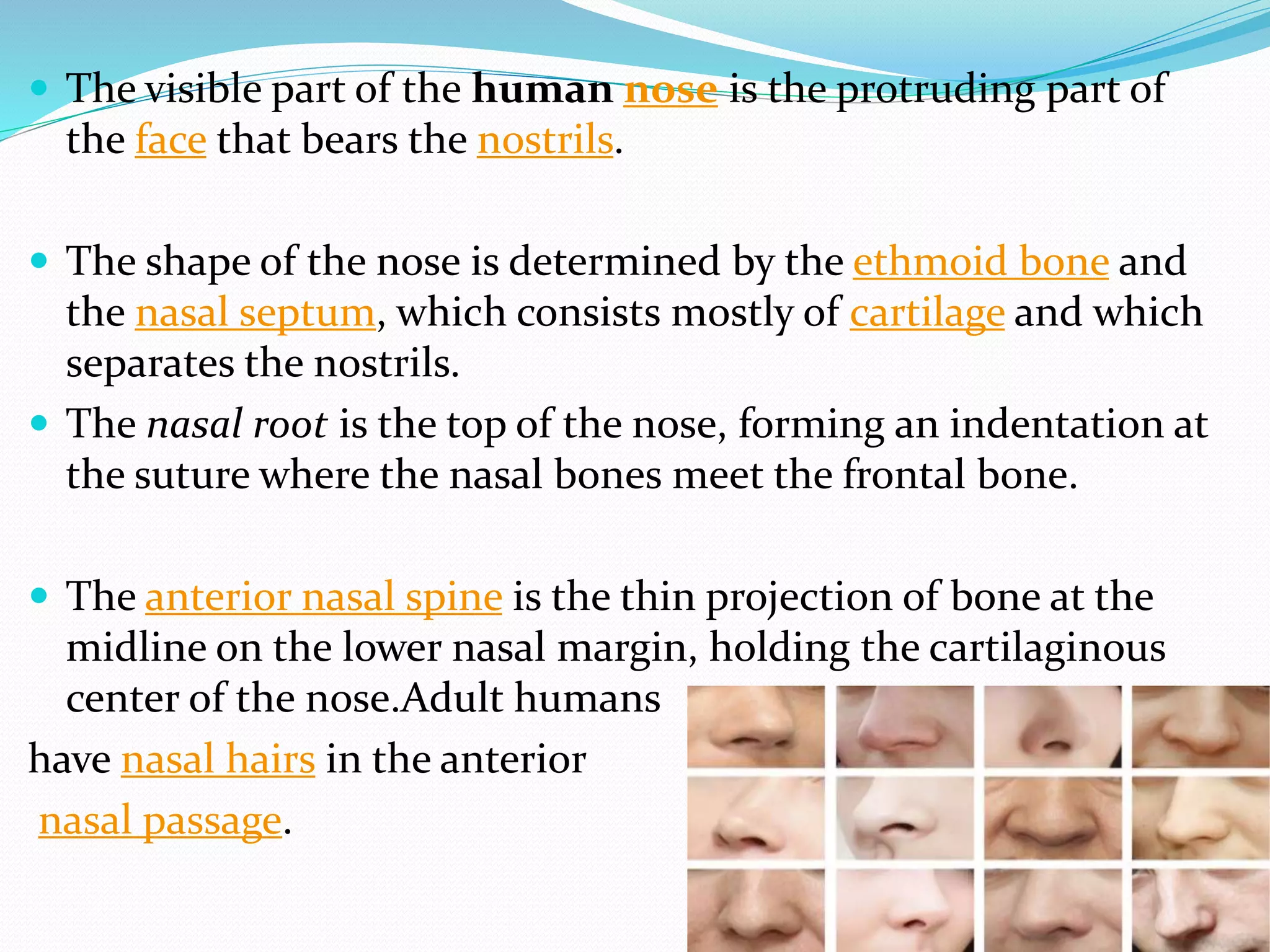
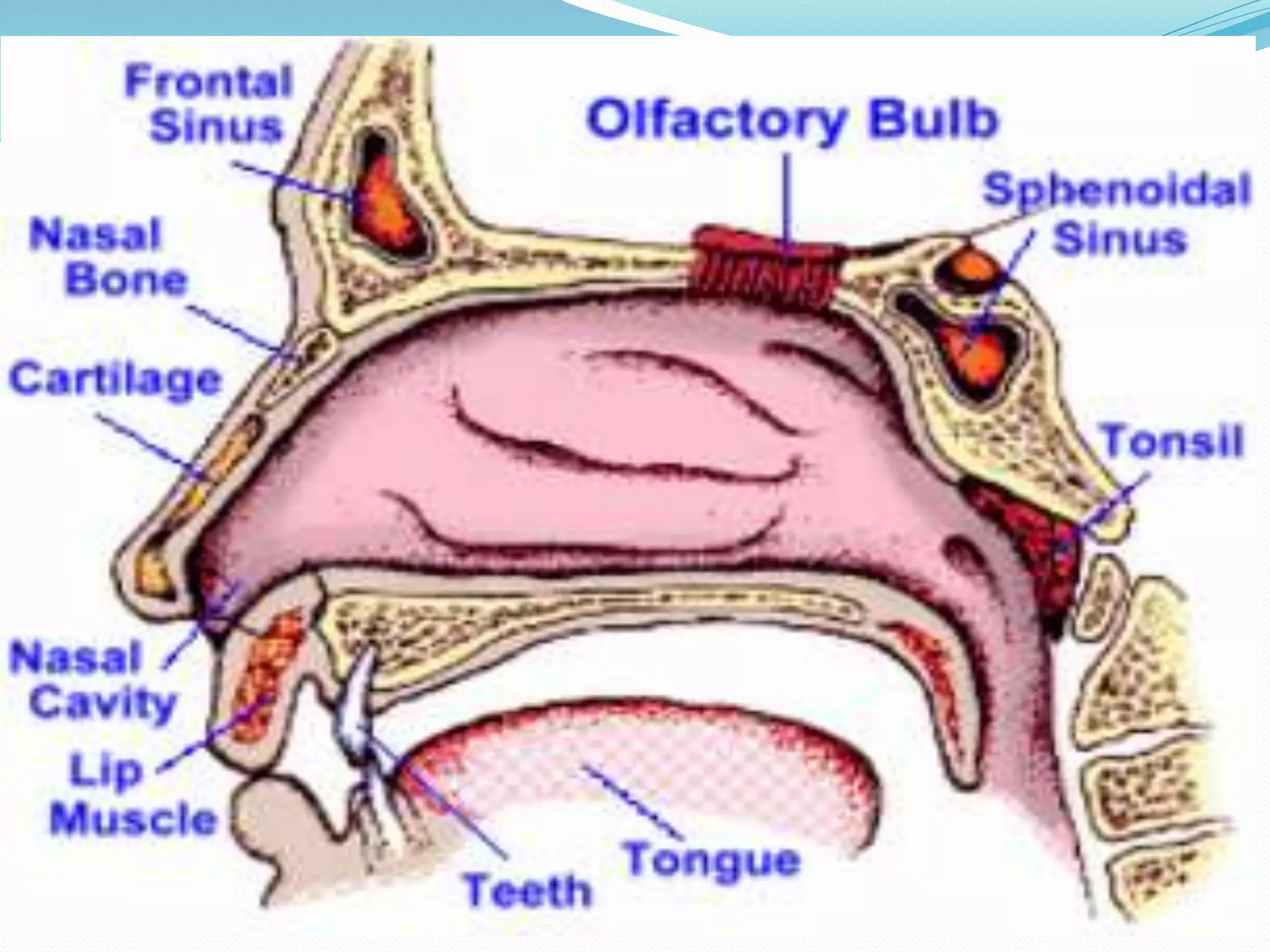
 The visible part of the human nose is the protruding part of
the face that bears the nostrils.
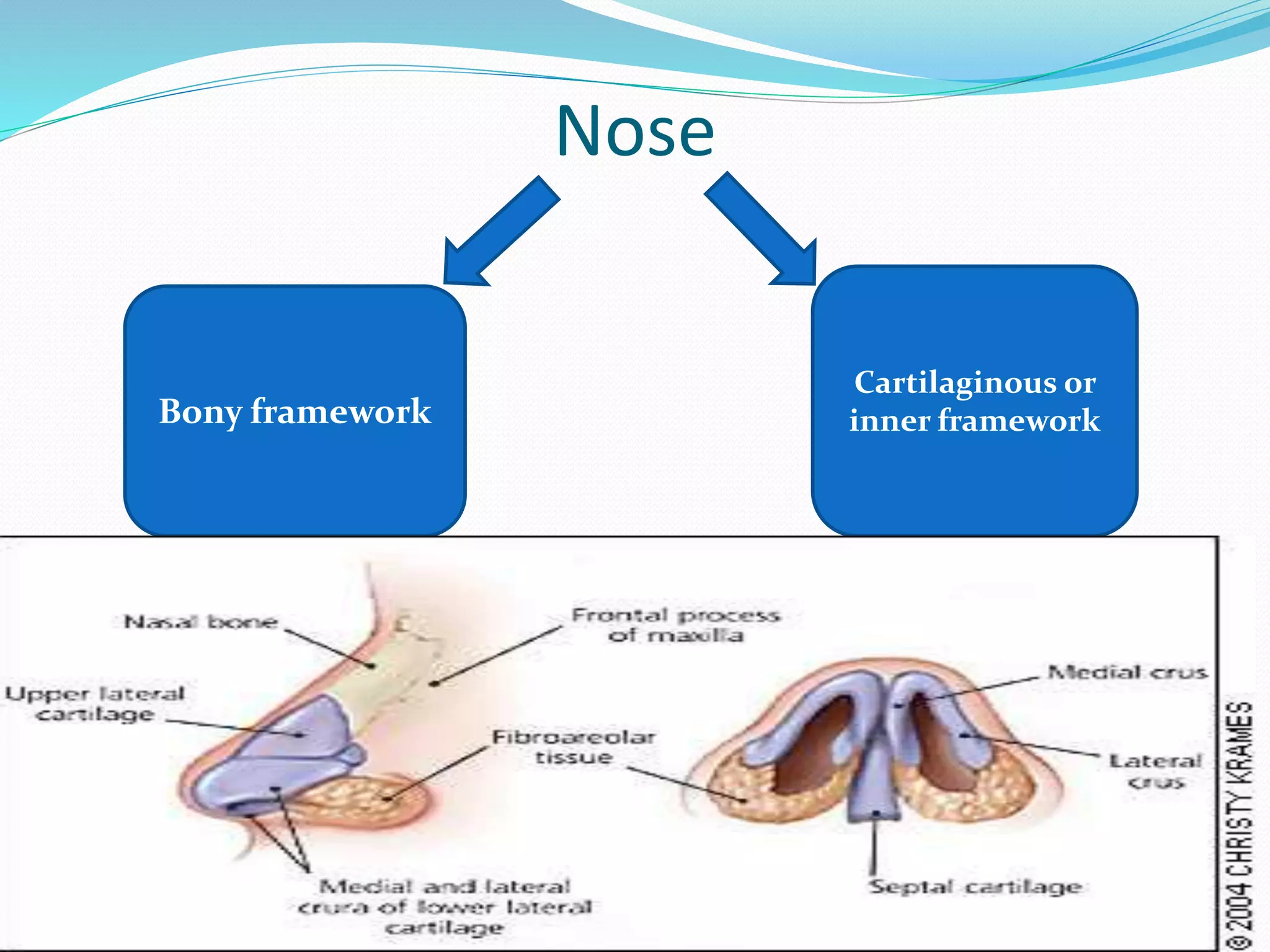
 The shape of the nose is determined by the ethmoid bone and
the nasal septum, which consists mostly of cartilage and which
separates the nostrils.
 The nasal root is the top of the nose, forming an indentation at
the suture where the nasal bones meet the frontal bone.
 The anterior nasal spine is the thin projection of bone at the
midline on the lower nasal margin, holding the cartilaginous
center of the nose.Adult humans
have nasal hairs in the anterior
nasal passage.
Nose
Bony framework
Cartilaginous or
inner framework
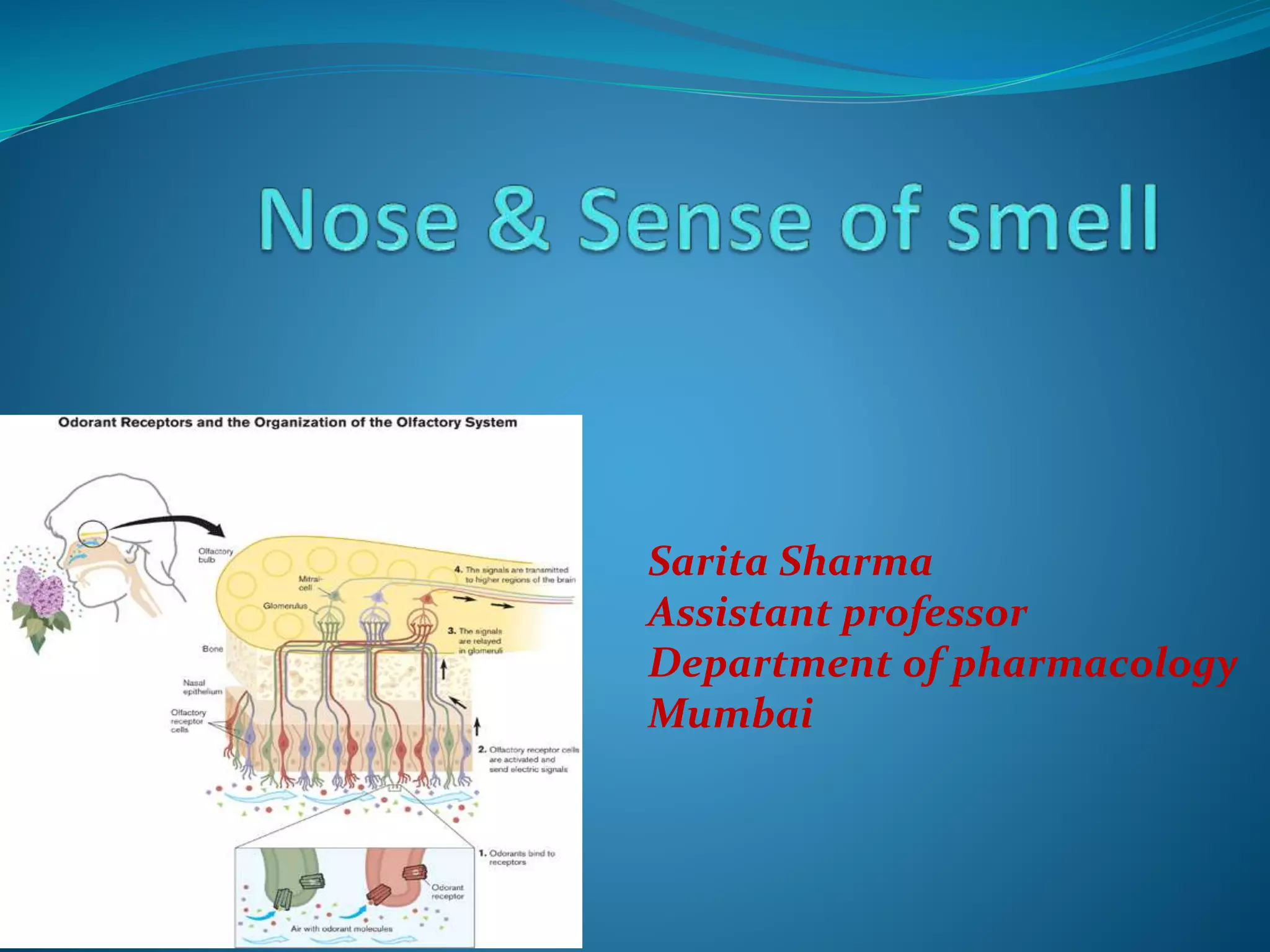
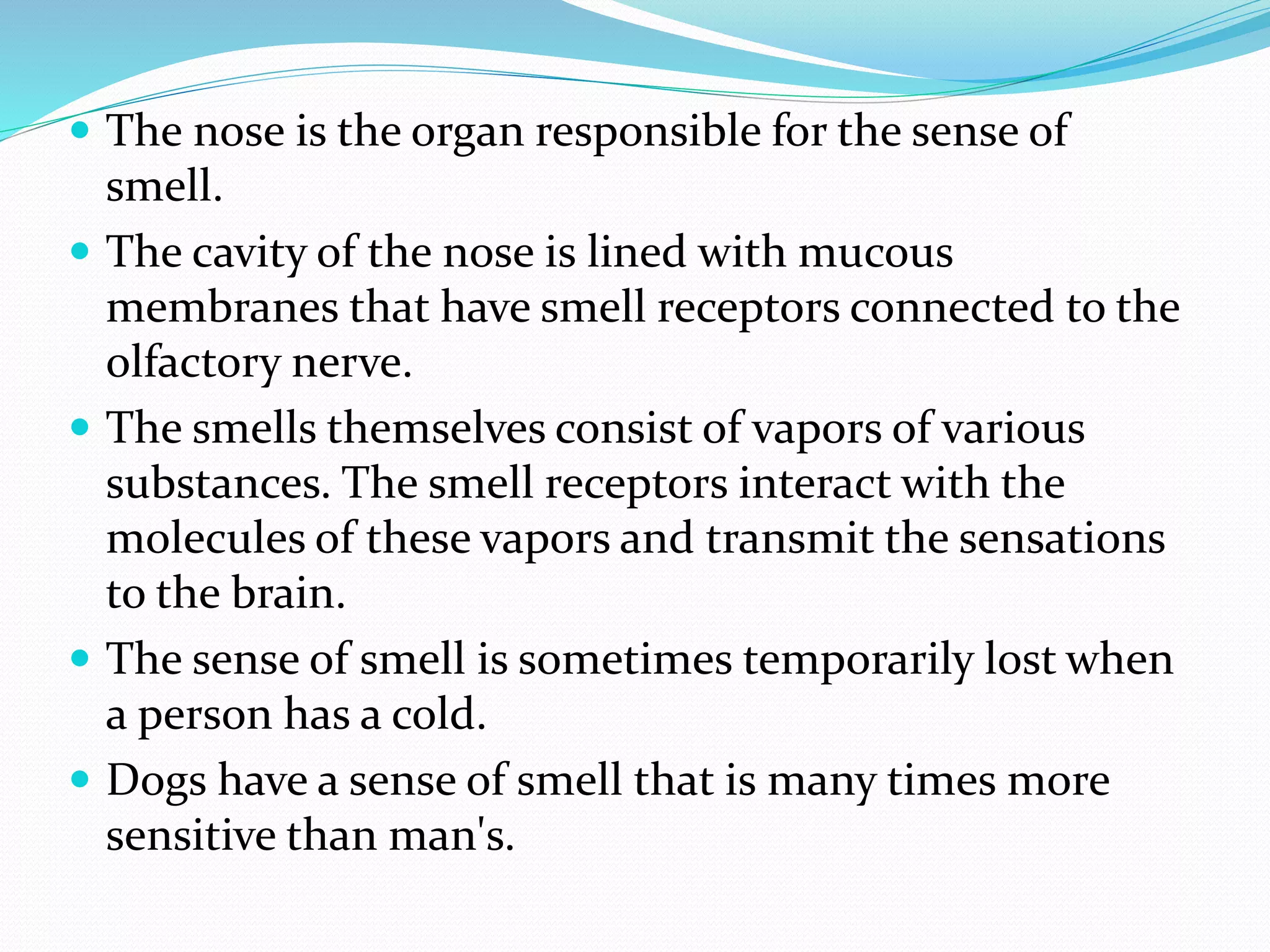
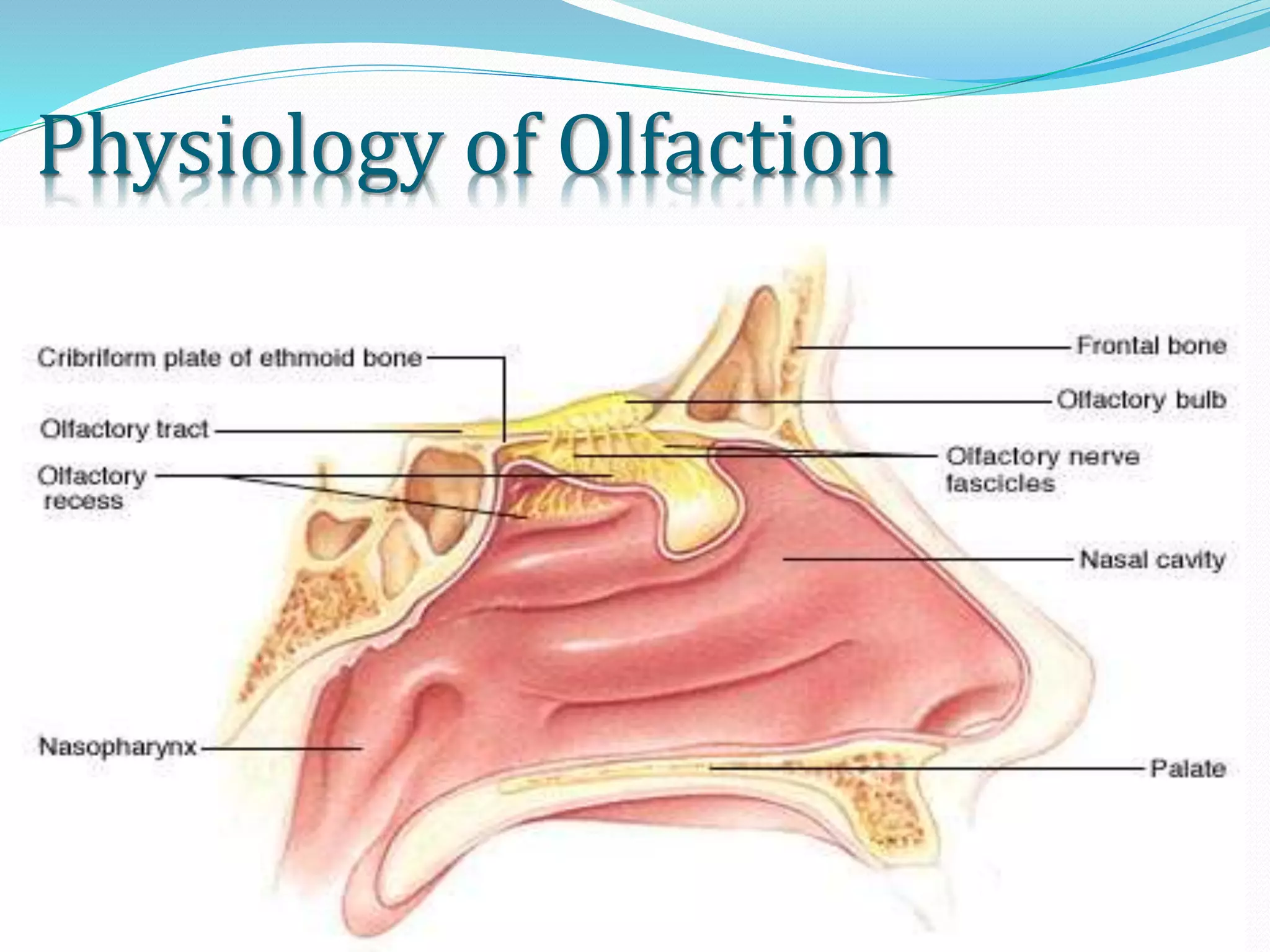
Physiology of Olfaction
Olfactory mucus Membrane
lies in the superior part of each nostril
In each nostril, the olfactory membrane has a surface
area of about 2.4 square cm
Olfactory Cells – The Olfactory receptor cells for the
smell sensation - bipolar nerve cells derived originally
from the CNS
 --10 to 20 million receptor cells
 -Each olfactory receptor is a neuron
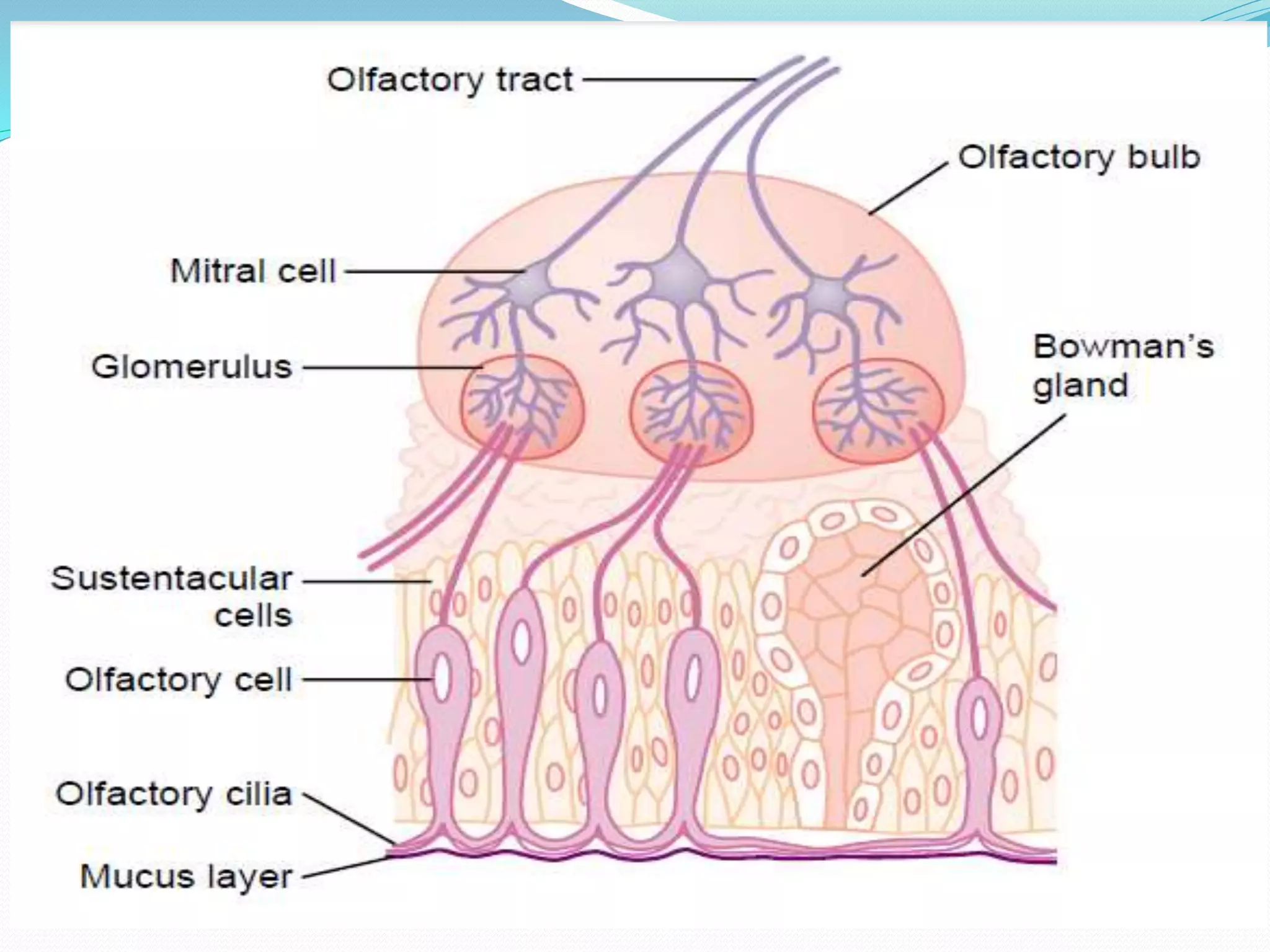
Composition of Olfactory epithelium
 Each neuron has a thick
dendrite with an
expanded end called
olfactory rod
 -From rods cilia project
to the mucous surface
 -Each receptor neuron
has 10-20 cilia
 -Axons of olfactory
receptor neurons pierce
cribriform plate of
ethmoid bone and enter
olfactory bulbs
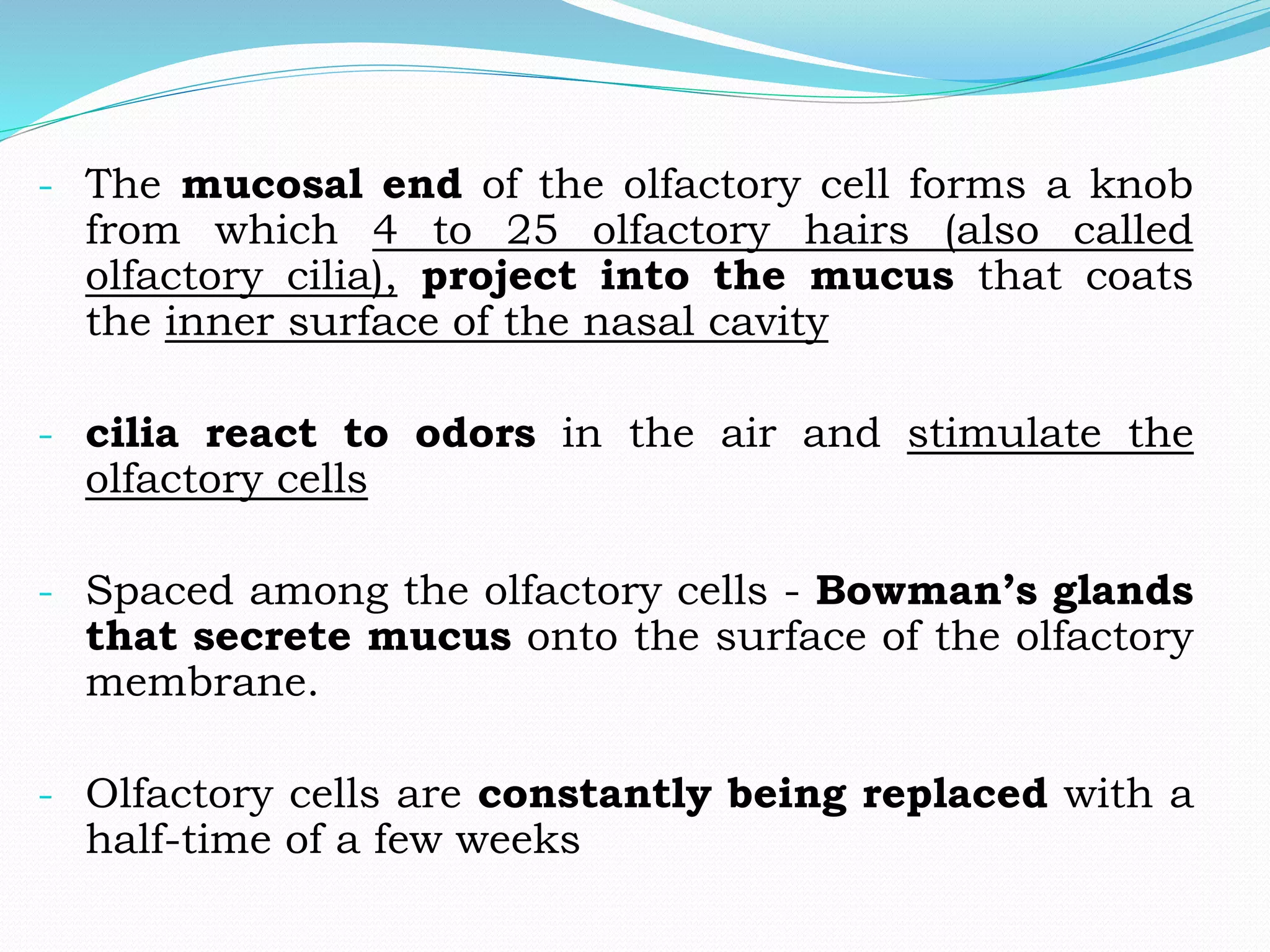
- The mucosal end of the olfactory cell forms a knob
from which 4 to 25 olfactory hairs (also called
olfactory cilia), project into the mucus that coats
the inner surface of the nasal cavity
- cilia react to odors in the air and stimulate the
olfactory cells
- Spaced among the olfactory cells - Bowman’s glands
that secrete mucus onto the surface of the olfactory
membrane.
- Olfactory cells are constantly being replaced with a
half-time of a few weeks
Mucus producing Glands
 Olfactory mucous
membrane is constantly
covered by mucus
 -Mucus is produced by
Bowman’s glands,
placed just under the
basal lamina of the
membrane
Olfactory Bulbs
 Axons of receptors contact
the primary dendrites of
mitral cells.
 -Forming complex globular
synapses called olfactory
glomeruli.
Mitral cells are neurons that are the
part of oflactory system. Located
into oflactory bulb.
The receives the information from
axons of oflactory receptors neurons
and transfer it to brain.
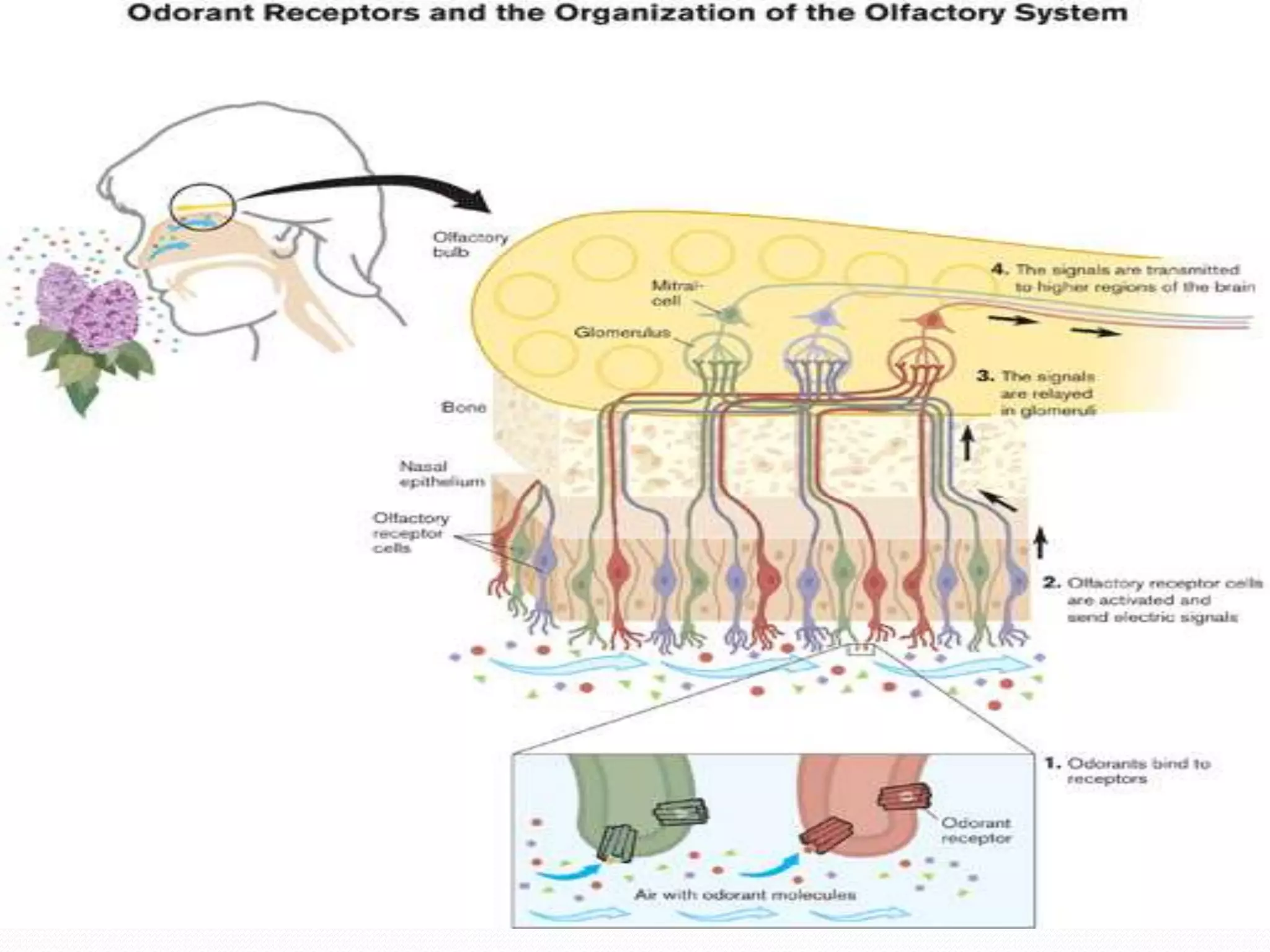
How It All Works/physiology of smell
 Like the sense of taste, it's a chemical sense. They are
called chemical senses because they detect chemicals in
the environment,:

1. Vaporized odor molecules (chemicals) floating in the
air reach the nostrils and dissolve in the mucus (which is
on the roof of each nostril).
2. Underneath the mucus, in the olfactory epithelium,
specialized receptor cells called olfactory receptor neurons
detect the odor. These neurons are capable of detecting
thousands of different odors.
3. The olfactory receptor neurons transmit the information
to the olfactory bulbs, which are located at the back of the
nose.
4. from the olfactory bulbs, the sensations are carried
through olfactory tract to olfactory area in the temporal lobe
of cerebral cortex.
 5. These brain centers perceive odors and access memories
to remind us about people, places, or events associated
with these olfactory sensations.
Functions of nose
1. breathing
2. Air conditioning of inspired air
3. Protection of lower airway
4. Ventilation and drainage of p.n.s.
5. Olfaction
6. Nasal resistance
Abnormalities
 Anosmia – absence of sense of smell
 Hyposmia – diminished olfactory sensitivity
 Dysosmia – misleading/false sense of smell
 More than 75% of humans over the age of 80 have
an impaired ability to identify smells

Nose & sense of smell

  • 1.
  • 2.
     The noseis the organ responsible for the sense of smell.  The cavity of the nose is lined with mucous membranes that have smell receptors connected to the olfactory nerve.  The smells themselves consist of vapors of various substances. The smell receptors interact with the molecules of these vapors and transmit the sensations to the brain.  The sense of smell is sometimes temporarily lost when a person has a cold.  Dogs have a sense of smell that is many times more sensitive than man's.
  • 3.
     The visiblepart of the human nose is the protruding part of the face that bears the nostrils.  The shape of the nose is determined by the ethmoid bone and the nasal septum, which consists mostly of cartilage and which separates the nostrils.  The nasal root is the top of the nose, forming an indentation at the suture where the nasal bones meet the frontal bone.  The anterior nasal spine is the thin projection of bone at the midline on the lower nasal margin, holding the cartilaginous center of the nose.Adult humans have nasal hairs in the anterior nasal passage.
  • 4.
  • 6.
  • 7.
    Olfactory mucus Membrane liesin the superior part of each nostril In each nostril, the olfactory membrane has a surface area of about 2.4 square cm Olfactory Cells – The Olfactory receptor cells for the smell sensation - bipolar nerve cells derived originally from the CNS  --10 to 20 million receptor cells  -Each olfactory receptor is a neuron
  • 8.
    Composition of Olfactoryepithelium  Each neuron has a thick dendrite with an expanded end called olfactory rod  -From rods cilia project to the mucous surface  -Each receptor neuron has 10-20 cilia  -Axons of olfactory receptor neurons pierce cribriform plate of ethmoid bone and enter olfactory bulbs
  • 9.
    - The mucosalend of the olfactory cell forms a knob from which 4 to 25 olfactory hairs (also called olfactory cilia), project into the mucus that coats the inner surface of the nasal cavity - cilia react to odors in the air and stimulate the olfactory cells - Spaced among the olfactory cells - Bowman’s glands that secrete mucus onto the surface of the olfactory membrane. - Olfactory cells are constantly being replaced with a half-time of a few weeks
  • 10.
    Mucus producing Glands Olfactory mucous membrane is constantly covered by mucus  -Mucus is produced by Bowman’s glands, placed just under the basal lamina of the membrane
  • 11.
    Olfactory Bulbs  Axonsof receptors contact the primary dendrites of mitral cells.  -Forming complex globular synapses called olfactory glomeruli. Mitral cells are neurons that are the part of oflactory system. Located into oflactory bulb. The receives the information from axons of oflactory receptors neurons and transfer it to brain.
  • 13.
    How It AllWorks/physiology of smell  Like the sense of taste, it's a chemical sense. They are called chemical senses because they detect chemicals in the environment,:  1. Vaporized odor molecules (chemicals) floating in the air reach the nostrils and dissolve in the mucus (which is on the roof of each nostril). 2. Underneath the mucus, in the olfactory epithelium, specialized receptor cells called olfactory receptor neurons detect the odor. These neurons are capable of detecting thousands of different odors.
  • 14.
    3. The olfactoryreceptor neurons transmit the information to the olfactory bulbs, which are located at the back of the nose. 4. from the olfactory bulbs, the sensations are carried through olfactory tract to olfactory area in the temporal lobe of cerebral cortex.  5. These brain centers perceive odors and access memories to remind us about people, places, or events associated with these olfactory sensations.
  • 16.
    Functions of nose 1.breathing 2. Air conditioning of inspired air 3. Protection of lower airway 4. Ventilation and drainage of p.n.s. 5. Olfaction 6. Nasal resistance
  • 17.
    Abnormalities  Anosmia –absence of sense of smell  Hyposmia – diminished olfactory sensitivity  Dysosmia – misleading/false sense of smell  More than 75% of humans over the age of 80 have an impaired ability to identify smells