Tissue Introduction  &  Epithelial Tissue Physiology
Cells to Tissues As human body develops from single to multicellular, cells specialize. Body is interdependent system, malfunction of one group of cells is catastrophic. Cells specialize into types of tissues, then interspersed into organs.
Tissues = groups of cells that are similar in structure and function. Epithelium Coverings Linings of surfaces Connective Support Bone, ligaments, fat Muscle Movement Nervous Control Brain, nerves, spinal cord
Function of Epithelial Tissue Protection  Skin protects from sunlight & bacteria & physical damage. Absorption Lining of small intestine, absorbing nutrients into blood Filtration Lining of Kidney tubules filtering wastes from blood plasma Secretion Different glands produce perspiration, oil, digestive enzymes and mucus
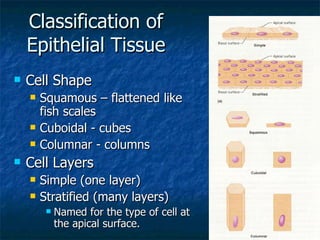
Characteristics of Epithelial Tissue Form continuous sheets (fit like tiles) Apical Surface All epithelial cells have a top surface that borders an open space – known as a  lumen Basement Membrane  Underside of  all  epithelial cells which anchors them to connective tissue Avascularity (a = without) Lacks blood vessels Nourished by connective tissue Regenerate & repair quickly
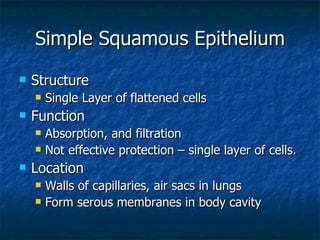
Classification of Epithelial Tissue Cell Shape Squamous – flattened like fish scales Cuboidal - cubes Columnar - columns Cell Layers Simple (one layer) Stratified (many layers) Named for the type of cell at the apical surface.
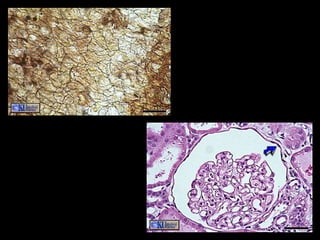
Simple Squamous Epithelium Structure Single Layer of flattened cells Function Absorption, and filtration Not effective protection – single layer of cells. Location Walls of capillaries, air sacs in lungs Form serous membranes in body cavity
 
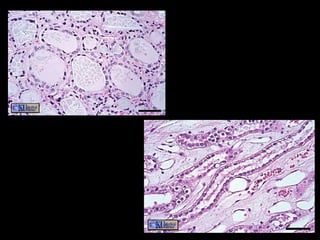
Simple Cuboidal Epithelium Structure Single layer of cube shaped cells Function Secretion and transportation in glands, filtration in kidneys Location Glands and ducts (pancreas & salivary), kidney tubules, covers ovaries
 
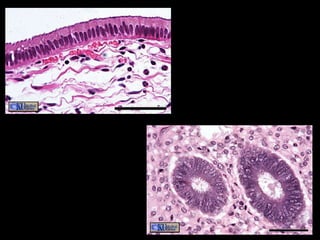
Simple Columnar Epithelium Structure Elongated layer of cells with nuclei at same level Function Absorption, Protection & Secretion When open to body cavities – called mucous membranes Special Features Microvill i, bumpy extension of apical surface, increase surface area and absorption rate. Goblet cells , single cell glands, produce protective mucus. Location Linings of entire digestive tract
 
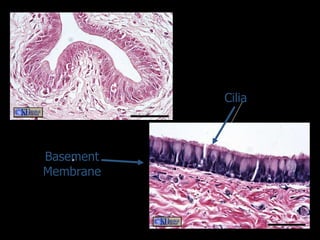
Pseudostratified Epithelium Structure Irregularly shaped cells with nuclei at different levels – appear stratified, but aren’t. All cells reach basement membrane Function Absorption and Secretion Goblet cells produce mucus Cilia (larger than microvilli) sweep mucus  Location Respiratory Linings & Reproductive tract
Cilia Basement Membrane
Stratified Squamous Epithelium Structure Many layers (usually cubodial/columnar at bottom and squamous at top) Function Protection Keratin (protein) is accumulated in older cells near the surface – waterproofs and toughens skin. Location Skin (keratinized), mouth & throat
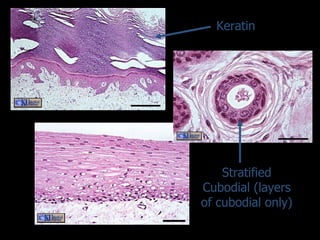
Keratin Stratified Cubodial (layers of cubodial only)
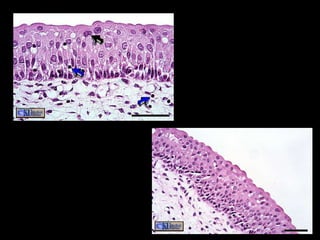
Transitional Epithelium  Structure Many layers Very specialized – cells at base are cuboidal or columnar, at surface will vary. Change between stratified & simple as tissue is stretched out. Function Allows stretching (change size) Location Urinary bladder, ureters & urethra
 
Glands One or more cells that make and secrete a product. Secretion = protein in aqueous solution: hormones, acids, oils. Endocrine glands No duct, release secretion into blood vessels  Often hormones Thyroid, adrenal and pituitary glands Exocrine glands Contain ducts, empty onto epithelial surface Sweat, Oil glands, Salivary glands, Mammary glands.
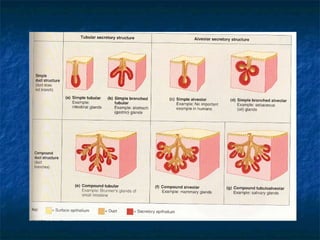
Shapes of Exocrine glands Branching Simple – single, unbranched duct Compound – branched. Shape: tubular or alveolar Tubular – shaped like a tube Alveolar – shaped like flasks or sacs Tubuloalveolar – has both tubes and sacs in gland
 
Modes of Secretion (How the gland’s product is released) Merocrine Just released by exocytosis without altering the gland at all. Ex: Sweat glands and salivary glands Holocrine The gland ruptures and releases secretion and dead cells as well. Sebaceous (oil glands on the face) only example

Epithelial tissue

  • 1.
    Tissue Introduction & Epithelial Tissue Physiology
  • 2.
    Cells to TissuesAs human body develops from single to multicellular, cells specialize. Body is interdependent system, malfunction of one group of cells is catastrophic. Cells specialize into types of tissues, then interspersed into organs.
  • 3.
    Tissues = groupsof cells that are similar in structure and function. Epithelium Coverings Linings of surfaces Connective Support Bone, ligaments, fat Muscle Movement Nervous Control Brain, nerves, spinal cord
  • 4.
    Function of EpithelialTissue Protection Skin protects from sunlight & bacteria & physical damage. Absorption Lining of small intestine, absorbing nutrients into blood Filtration Lining of Kidney tubules filtering wastes from blood plasma Secretion Different glands produce perspiration, oil, digestive enzymes and mucus
  • 5.
    Characteristics of EpithelialTissue Form continuous sheets (fit like tiles) Apical Surface All epithelial cells have a top surface that borders an open space – known as a lumen Basement Membrane Underside of all epithelial cells which anchors them to connective tissue Avascularity (a = without) Lacks blood vessels Nourished by connective tissue Regenerate & repair quickly
  • 6.
    Classification of EpithelialTissue Cell Shape Squamous – flattened like fish scales Cuboidal - cubes Columnar - columns Cell Layers Simple (one layer) Stratified (many layers) Named for the type of cell at the apical surface.
  • 7.
    Simple Squamous EpitheliumStructure Single Layer of flattened cells Function Absorption, and filtration Not effective protection – single layer of cells. Location Walls of capillaries, air sacs in lungs Form serous membranes in body cavity
  • 8.
  • 9.
    Simple Cuboidal EpitheliumStructure Single layer of cube shaped cells Function Secretion and transportation in glands, filtration in kidneys Location Glands and ducts (pancreas & salivary), kidney tubules, covers ovaries
  • 10.
  • 11.
    Simple Columnar EpitheliumStructure Elongated layer of cells with nuclei at same level Function Absorption, Protection & Secretion When open to body cavities – called mucous membranes Special Features Microvill i, bumpy extension of apical surface, increase surface area and absorption rate. Goblet cells , single cell glands, produce protective mucus. Location Linings of entire digestive tract
  • 12.
  • 13.
    Pseudostratified Epithelium StructureIrregularly shaped cells with nuclei at different levels – appear stratified, but aren’t. All cells reach basement membrane Function Absorption and Secretion Goblet cells produce mucus Cilia (larger than microvilli) sweep mucus Location Respiratory Linings & Reproductive tract
  • 14.
  • 15.
    Stratified Squamous EpitheliumStructure Many layers (usually cubodial/columnar at bottom and squamous at top) Function Protection Keratin (protein) is accumulated in older cells near the surface – waterproofs and toughens skin. Location Skin (keratinized), mouth & throat
  • 16.
    Keratin Stratified Cubodial(layers of cubodial only)
  • 17.
    Transitional Epithelium Structure Many layers Very specialized – cells at base are cuboidal or columnar, at surface will vary. Change between stratified & simple as tissue is stretched out. Function Allows stretching (change size) Location Urinary bladder, ureters & urethra
  • 18.
  • 19.
    Glands One ormore cells that make and secrete a product. Secretion = protein in aqueous solution: hormones, acids, oils. Endocrine glands No duct, release secretion into blood vessels Often hormones Thyroid, adrenal and pituitary glands Exocrine glands Contain ducts, empty onto epithelial surface Sweat, Oil glands, Salivary glands, Mammary glands.
  • 20.
    Shapes of Exocrineglands Branching Simple – single, unbranched duct Compound – branched. Shape: tubular or alveolar Tubular – shaped like a tube Alveolar – shaped like flasks or sacs Tubuloalveolar – has both tubes and sacs in gland
  • 21.
  • 22.
    Modes of Secretion(How the gland’s product is released) Merocrine Just released by exocytosis without altering the gland at all. Ex: Sweat glands and salivary glands Holocrine The gland ruptures and releases secretion and dead cells as well. Sebaceous (oil glands on the face) only example