By- Mr. ASHOK BISHNOI
Lecturer, JINR
 Nervous system is the chief
controlling & co-ordinating system of
the body.
 It adjust the body both voluntary &
involuntary
Introduction:-
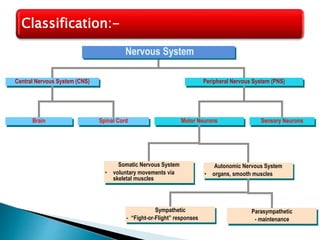
Central Nervous System (CNS)
Brain Spinal Cord
Peripheral Nervous System (PNS)
Sensory NeuronsMotor Neurons
Somatic Nervous System
• voluntary movements via
skeletal muscles
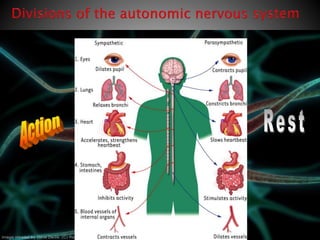
Autonomic Nervous System
• organs, smooth muscles
Sympathetic
- “Fight-or-Flight” responses
Parasympathetic
- maintenance
Nervous System
Classification:-
Functions of CNS:-
1. Sensory input – gathering information
 To monitor changes occurring inside and outside the
body (changes = stimuli)
2. Integration –
 To process and interpret sensory input and decide if
action is needed.
3. Motor output
 A response to integrated stimuli
 The response activates muscles or glands
 Two main kind of cell are present in
NS.
 Neurones (The basic structural and functional unit of the
nervous system)
 Neuroglia (support/maintain neurons)
Neurones:-
 Is the basic functional unit of NS.
 It is a cell that receive, intimate & transmits the
information
 Communicate with other neurons through
chemical signals.
 Approx. 100 billion located in the CNS
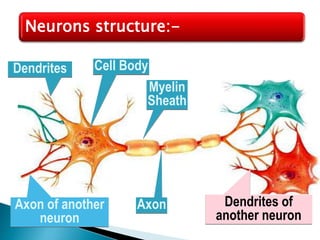
Neurons structure:-
Axon of another
neuron
Cell BodyDendrites
Axon
Myelin
Sheath
Dendrites of
another neuron
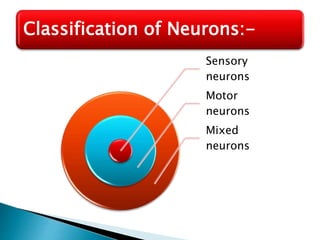
Sensory
neurons
Motor
neurons
Mixed
neurons
Classification of Neurons:-
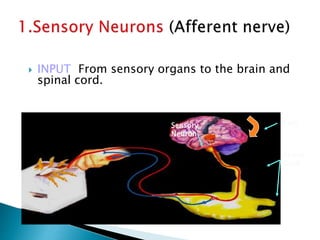
Spinal
Cord
BrainSensory
Neuron
 INPUT From sensory organs to the brain and
spinal cord.
Spinal
Cord
BrainSensory
Neuron
Motor
Neuron
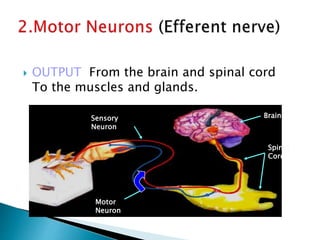
 OUTPUT From the brain and spinal cord
To the muscles and glands.
Spinal
Cord
BrainSensory
Neuron
Motor
Neuron
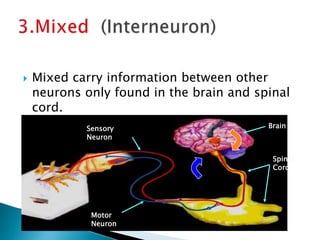
 Mixed carry information between other
neurons only found in the brain and spinal
cord.
Neurotransmitter:-in the brain & spinal cord
 Neurotransmitters are chemicals that
convey information to the target cells.
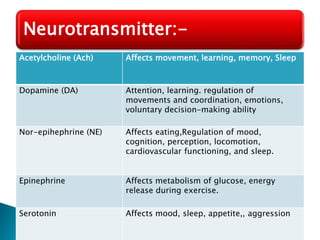
Acetylcholine (Ach) Affects movement, learning, memory, Sleep
Dopamine (DA) Attention, learning. regulation of
movements and coordination, emotions,
voluntary decision-making ability
Nor-epihephrine (NE) Affects eating,Regulation of mood,
cognition, perception, locomotion,
cardiovascular functioning, and sleep.
Epinephrine Affects metabolism of glucose, energy
release during exercise.
Serotonin Affects mood, sleep, appetite,, aggression
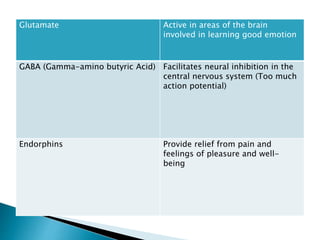
Neurotransmitter:-
Glutamate Active in areas of the brain
involved in learning good emotion
GABA (Gamma-amino butyric Acid) Facilitates neural inhibition in the
central nervous system (Too much
action potential)
Endorphins Provide relief from pain and
feelings of pleasure and well-
being

PPT on Nervous System

  • 1.
    By- Mr. ASHOKBISHNOI Lecturer, JINR
  • 2.
     Nervous systemis the chief controlling & co-ordinating system of the body.  It adjust the body both voluntary & involuntary Introduction:-
  • 3.
    Central Nervous System(CNS) Brain Spinal Cord Peripheral Nervous System (PNS) Sensory NeuronsMotor Neurons Somatic Nervous System • voluntary movements via skeletal muscles Autonomic Nervous System • organs, smooth muscles Sympathetic - “Fight-or-Flight” responses Parasympathetic - maintenance Nervous System Classification:-
  • 4.
    Functions of CNS:- 1.Sensory input – gathering information  To monitor changes occurring inside and outside the body (changes = stimuli) 2. Integration –  To process and interpret sensory input and decide if action is needed. 3. Motor output  A response to integrated stimuli  The response activates muscles or glands
  • 5.
     Two mainkind of cell are present in NS.  Neurones (The basic structural and functional unit of the nervous system)  Neuroglia (support/maintain neurons)
  • 7.
    Neurones:-  Is thebasic functional unit of NS.  It is a cell that receive, intimate & transmits the information  Communicate with other neurons through chemical signals.  Approx. 100 billion located in the CNS
  • 8.
    Neurons structure:- Axon ofanother neuron Cell BodyDendrites Axon Myelin Sheath Dendrites of another neuron
  • 10.
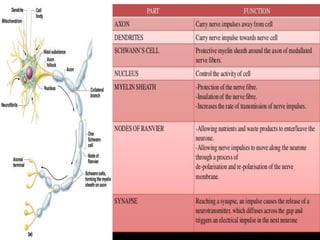
  • 11.
    Spinal Cord BrainSensory Neuron  INPUT Fromsensory organs to the brain and spinal cord.
  • 12.
    Spinal Cord BrainSensory Neuron Motor Neuron  OUTPUT Fromthe brain and spinal cord To the muscles and glands.
  • 13.
    Spinal Cord BrainSensory Neuron Motor Neuron  Mixed carryinformation between other neurons only found in the brain and spinal cord.
  • 14.
    Neurotransmitter:-in the brain& spinal cord  Neurotransmitters are chemicals that convey information to the target cells.
  • 15.
    Acetylcholine (Ach) Affectsmovement, learning, memory, Sleep Dopamine (DA) Attention, learning. regulation of movements and coordination, emotions, voluntary decision-making ability Nor-epihephrine (NE) Affects eating,Regulation of mood, cognition, perception, locomotion, cardiovascular functioning, and sleep. Epinephrine Affects metabolism of glucose, energy release during exercise. Serotonin Affects mood, sleep, appetite,, aggression Neurotransmitter:-
  • 16.
    Glutamate Active inareas of the brain involved in learning good emotion GABA (Gamma-amino butyric Acid) Facilitates neural inhibition in the central nervous system (Too much action potential) Endorphins Provide relief from pain and feelings of pleasure and well- being