Aquatic Ecology 101
Outline Types of aquatic ecosystems Hydrology of lakes and ponds Lake zones and processes Aquatic food web Lake trophic states Concept of limiting nutrient
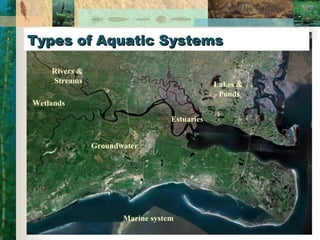
Types of Aquatic Systems Lakes &  Ponds Rivers &  Streams Wetlands Estuaries Marine system Groundwater
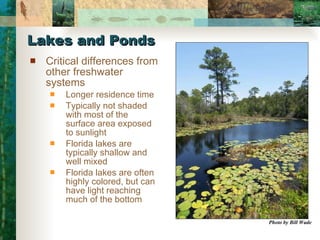
Lakes and Ponds Critical differences from other freshwater systems Longer residence time Typically not shaded with most of the surface area exposed to sunlight Florida lakes are typically shallow and well mixed Florida lakes are often highly colored, but can have light reaching much of the bottom Photo by Bill Wade
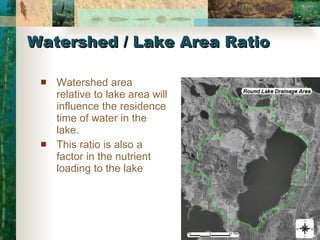
Watershed / Lake Area Ratio Watershed area relative to lake area will influence the residence time of water in the lake.  This ratio is also a factor in the nutrient loading to the lake
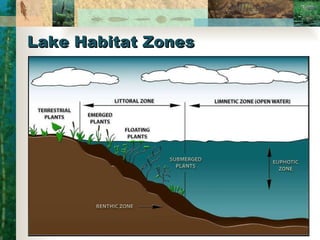
Lake Habitat Zones
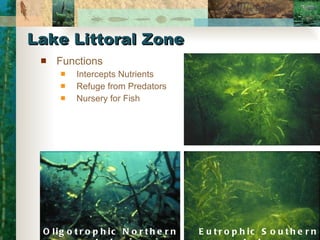
Lake Littoral Zone Functions Intercepts Nutrients Refuge from Predators Nursery for Fish Oligotrophic Northern Lake Eutrophic Southern Lake
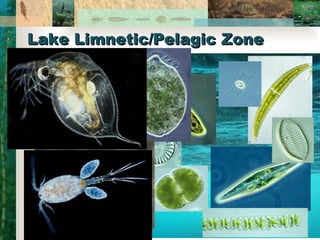
Lake Limnetic/Pelagic Zone Functions Plankton Zooplankton
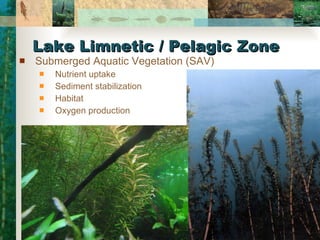
Submerged Aquatic Vegetation (SAV) Nutrient uptake Sediment stabilization Habitat Oxygen production Lake Limnetic / Pelagic Zone
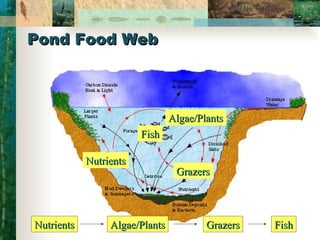
Pond Food Web Nutrients Algae/Plants Grazers Fish Nutrients Algae/Plants Grazers Fish
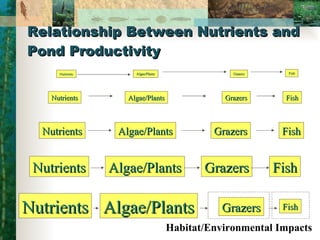
Relationship Between Nutrients and Pond Productivity Nutrients Algae/Plants Grazers Fish Nutrients Nutrients Nutrients Nutrients Habitat/Environmental Impacts Algae/Plants Grazers Fish Algae/Plants Grazers Fish Algae/Plants Grazers Fish Algae/Plants Grazers Fish
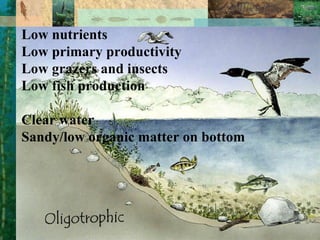
Low nutrients Low primary productivity Low grazers and insects Low fish production Clear water Sandy/low organic matter on bottom
TROPHIC STATE Moderate nutrients Increased primary productivity More grazers and insects More fish production Moderate water clarity  More aquatic plants Some organic sediment accumulation
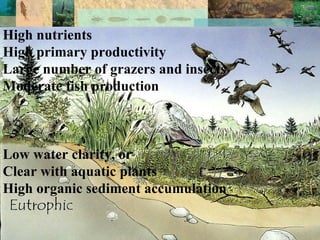
TROPHIC STATE High nutrients High primary productivity Large number of grazers and insects Moderate fish production Low water clarity, or  Clear with aquatic plants High organic sediment accumulation
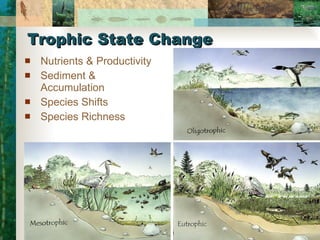
Trophic State Change Nutrients & Productivity Sediment & Accumulation Species Shifts Species Richness
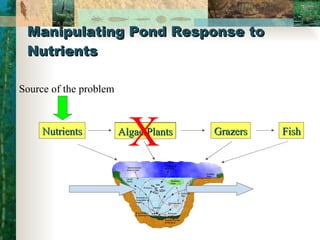
Manipulating Pond Response to Nutrients Fish Grazers Nutrients Algae/Plants Grazers Fish X Algae/Plants X Source of the problem
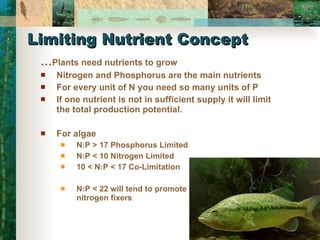
Limiting Nutrient Concept … Plants need nutrients to grow Nitrogen and Phosphorus are the main nutrients For every unit of N you need so many units of P If one nutrient is not in sufficient supply it will limit the total production potential. For algae N:P > 17 Phosphorus Limited N:P < 10 Nitrogen Limited 10 < N:P < 17 Co-Limitation N:P < 22 will tend to promote Cyanobacteria which are nitrogen fixers
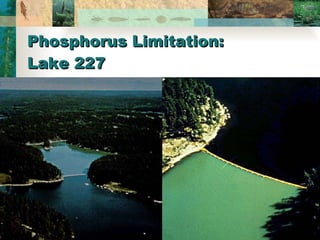
Phosphorus Limitation:  Lake 227
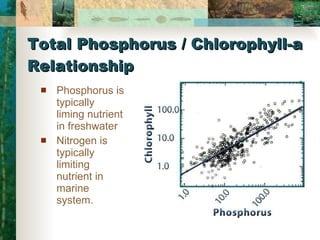
Total Phosphorus / Chlorophyll-a Relationship Phosphorus is typically liming nutrient in freshwater Nitrogen is typically limiting nutrient in marine system.
Summary Lakes have longer residence time and more light than other freshwater systems Littoral Zone, Pelagic Zone, Submerged Aquatic Vegetation Nutrients regulate algae > grazers > fish Removing algae doesn’t remove nutrient regulator Phosphorus is typical nutrient limiting nutrients depending on N:P ratio Stormwater ponds respond just like lakes do to nutrients
Questions?

Aquatic ecology 101

  • 1.
  • 2.
    Outline Types ofaquatic ecosystems Hydrology of lakes and ponds Lake zones and processes Aquatic food web Lake trophic states Concept of limiting nutrient
  • 3.
    Types of AquaticSystems Lakes & Ponds Rivers & Streams Wetlands Estuaries Marine system Groundwater
  • 4.
    Lakes and PondsCritical differences from other freshwater systems Longer residence time Typically not shaded with most of the surface area exposed to sunlight Florida lakes are typically shallow and well mixed Florida lakes are often highly colored, but can have light reaching much of the bottom Photo by Bill Wade
  • 5.
    Watershed / LakeArea Ratio Watershed area relative to lake area will influence the residence time of water in the lake. This ratio is also a factor in the nutrient loading to the lake
  • 6.
  • 7.
    Lake Littoral ZoneFunctions Intercepts Nutrients Refuge from Predators Nursery for Fish Oligotrophic Northern Lake Eutrophic Southern Lake
  • 8.
    Lake Limnetic/Pelagic ZoneFunctions Plankton Zooplankton
  • 9.
    Submerged Aquatic Vegetation(SAV) Nutrient uptake Sediment stabilization Habitat Oxygen production Lake Limnetic / Pelagic Zone
  • 10.
    Pond Food WebNutrients Algae/Plants Grazers Fish Nutrients Algae/Plants Grazers Fish
  • 11.
    Relationship Between Nutrientsand Pond Productivity Nutrients Algae/Plants Grazers Fish Nutrients Nutrients Nutrients Nutrients Habitat/Environmental Impacts Algae/Plants Grazers Fish Algae/Plants Grazers Fish Algae/Plants Grazers Fish Algae/Plants Grazers Fish
  • 12.
    Low nutrients Lowprimary productivity Low grazers and insects Low fish production Clear water Sandy/low organic matter on bottom
  • 13.
    TROPHIC STATE Moderatenutrients Increased primary productivity More grazers and insects More fish production Moderate water clarity More aquatic plants Some organic sediment accumulation
  • 14.
    TROPHIC STATE Highnutrients High primary productivity Large number of grazers and insects Moderate fish production Low water clarity, or Clear with aquatic plants High organic sediment accumulation
  • 15.
    Trophic State ChangeNutrients & Productivity Sediment & Accumulation Species Shifts Species Richness
  • 16.
    Manipulating Pond Responseto Nutrients Fish Grazers Nutrients Algae/Plants Grazers Fish X Algae/Plants X Source of the problem
  • 17.
    Limiting Nutrient Concept… Plants need nutrients to grow Nitrogen and Phosphorus are the main nutrients For every unit of N you need so many units of P If one nutrient is not in sufficient supply it will limit the total production potential. For algae N:P > 17 Phosphorus Limited N:P < 10 Nitrogen Limited 10 < N:P < 17 Co-Limitation N:P < 22 will tend to promote Cyanobacteria which are nitrogen fixers
  • 18.
  • 19.
    Total Phosphorus /Chlorophyll-a Relationship Phosphorus is typically liming nutrient in freshwater Nitrogen is typically limiting nutrient in marine system.
  • 20.
    Summary Lakes havelonger residence time and more light than other freshwater systems Littoral Zone, Pelagic Zone, Submerged Aquatic Vegetation Nutrients regulate algae > grazers > fish Removing algae doesn’t remove nutrient regulator Phosphorus is typical nutrient limiting nutrients depending on N:P ratio Stormwater ponds respond just like lakes do to nutrients
  • 21.