Lesson 1 Marine Ecosystems
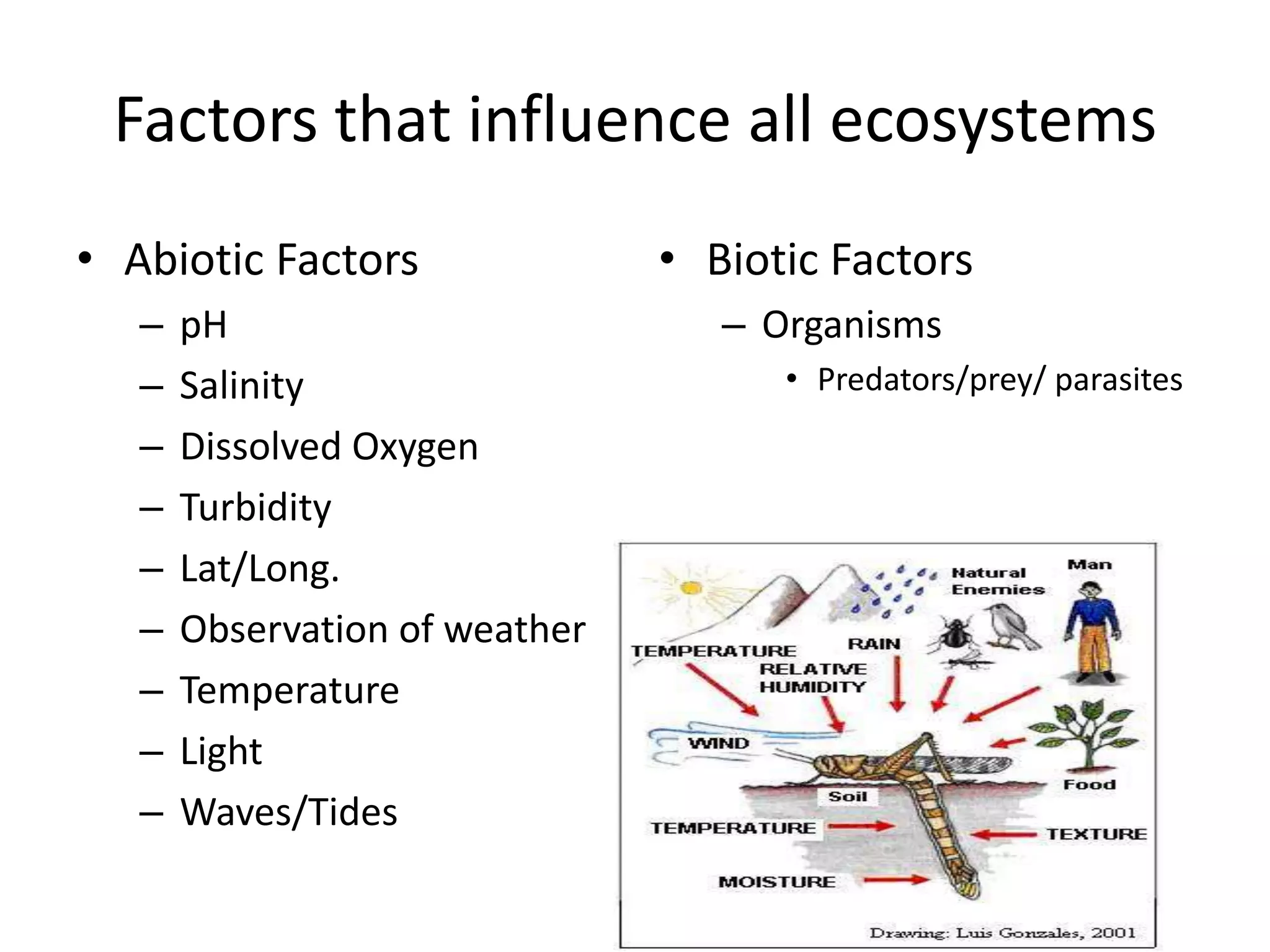
Factors that influence all ecosystems
• Abiotic Factors               • Biotic Factors
   –   pH                          – Organisms
   –   Salinity                       • Predators/prey/ parasites
   –   Dissolved Oxygen
   –   Turbidity
   –   Lat/Long.
   –   Observation of weather
   –   Temperature
   –   Light
   –   Waves/Tides
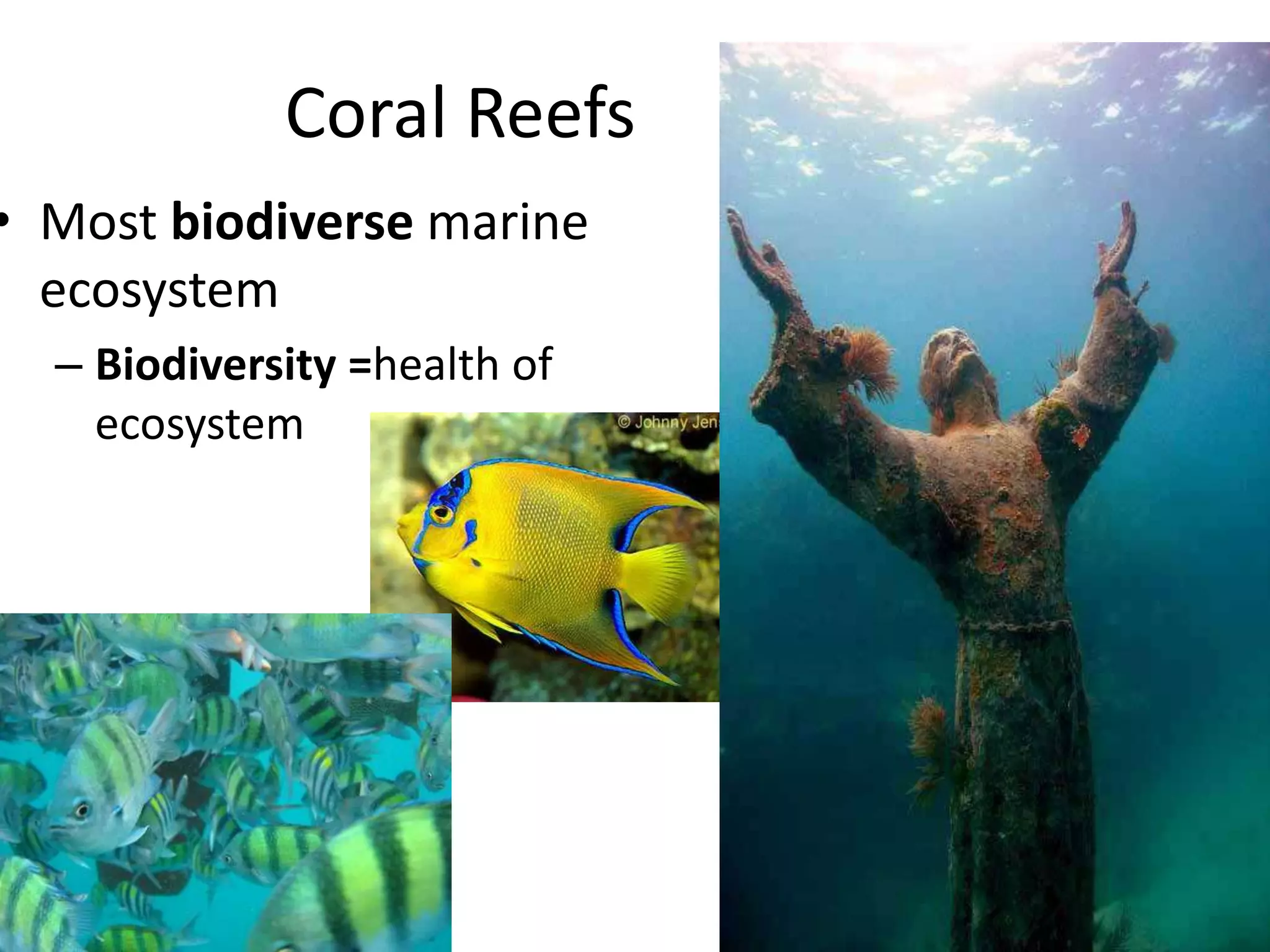
Coral Reefs
• Most biodiverse marine
  ecosystem
  – Biodiversity =health of
    ecosystem
Abiotic Factors

• Abiotic factors
  – Temperature: Tropical
  – Shallow waters: Availability of light
  – Wave action
  – Nutrient poor: why water is pretty blue in color=
    lacks nutrients
• So why is it the most biodiverse ecosystem
  when there are so few nutrients available?
  – Symbiosis!!!! What is definition?
Biotic Factors
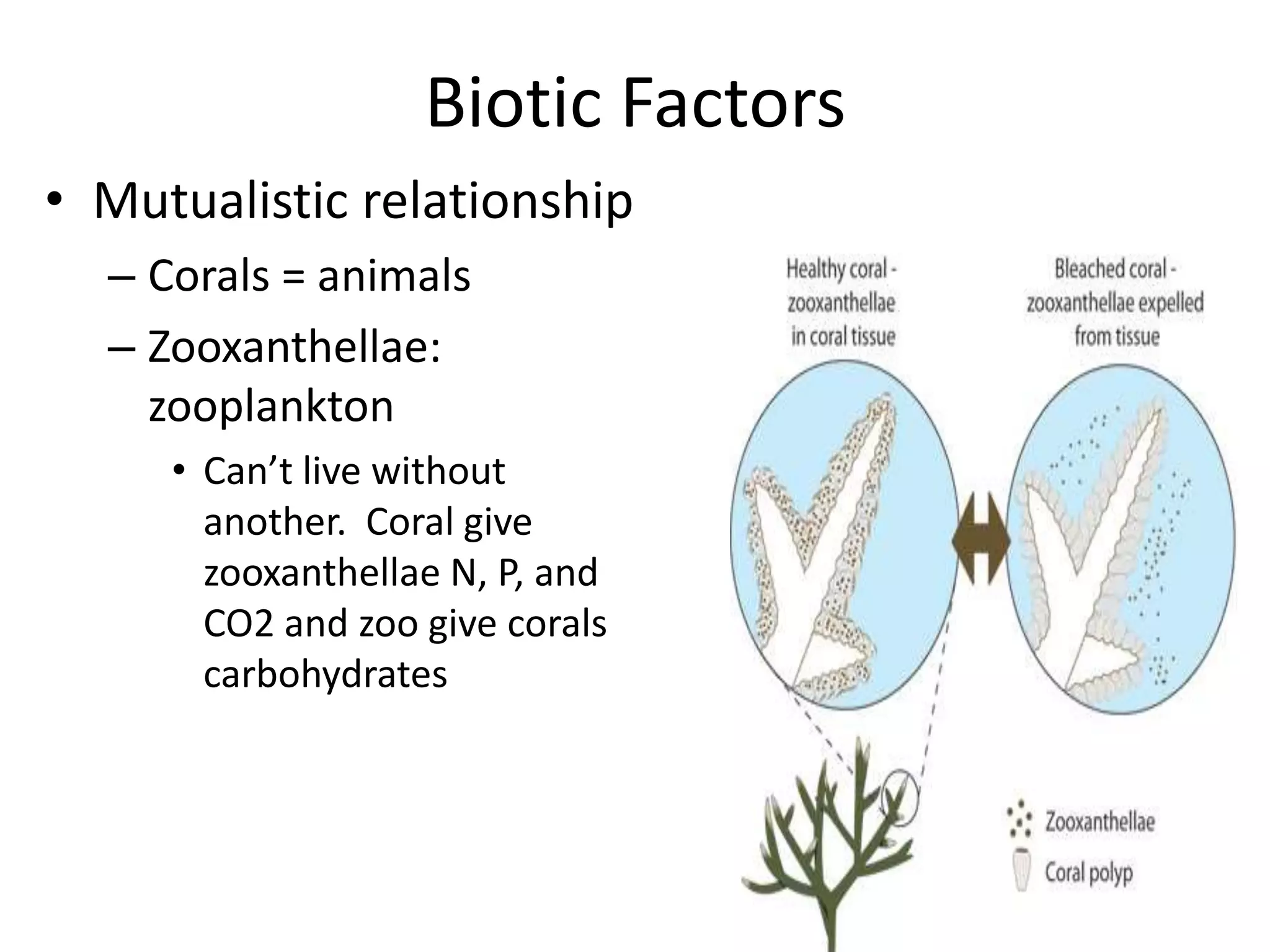
• Mutualistic relationship
  – Corals = animals
  – Zooxanthellae:
    zooplankton
     • Can’t live without
       another. Coral give
       zooxanthellae N, P, and
       CO2 and zoo give corals
       carbohydrates
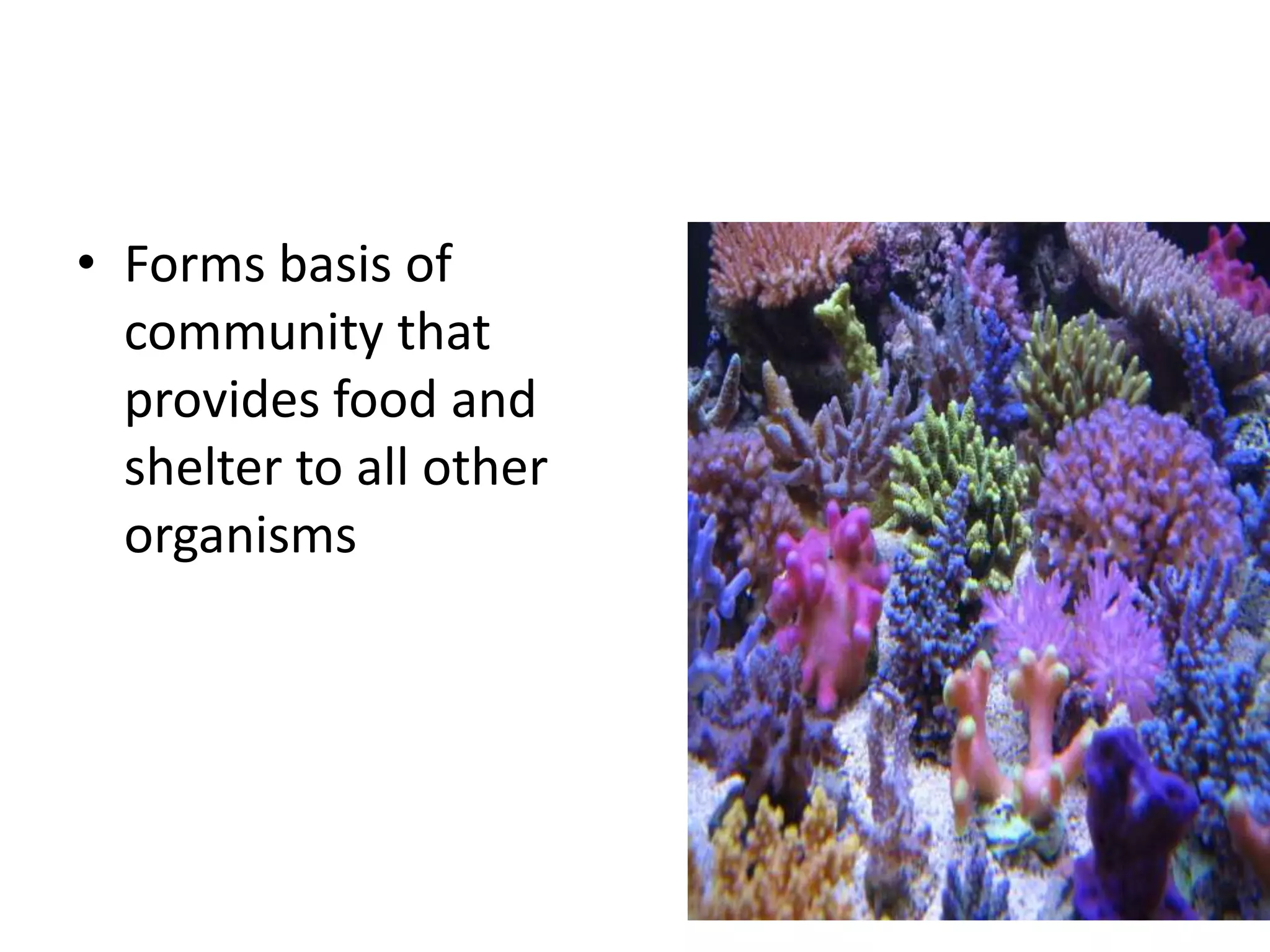
• Forms basis of
  community that
  provides food and
  shelter to all other
  organisms
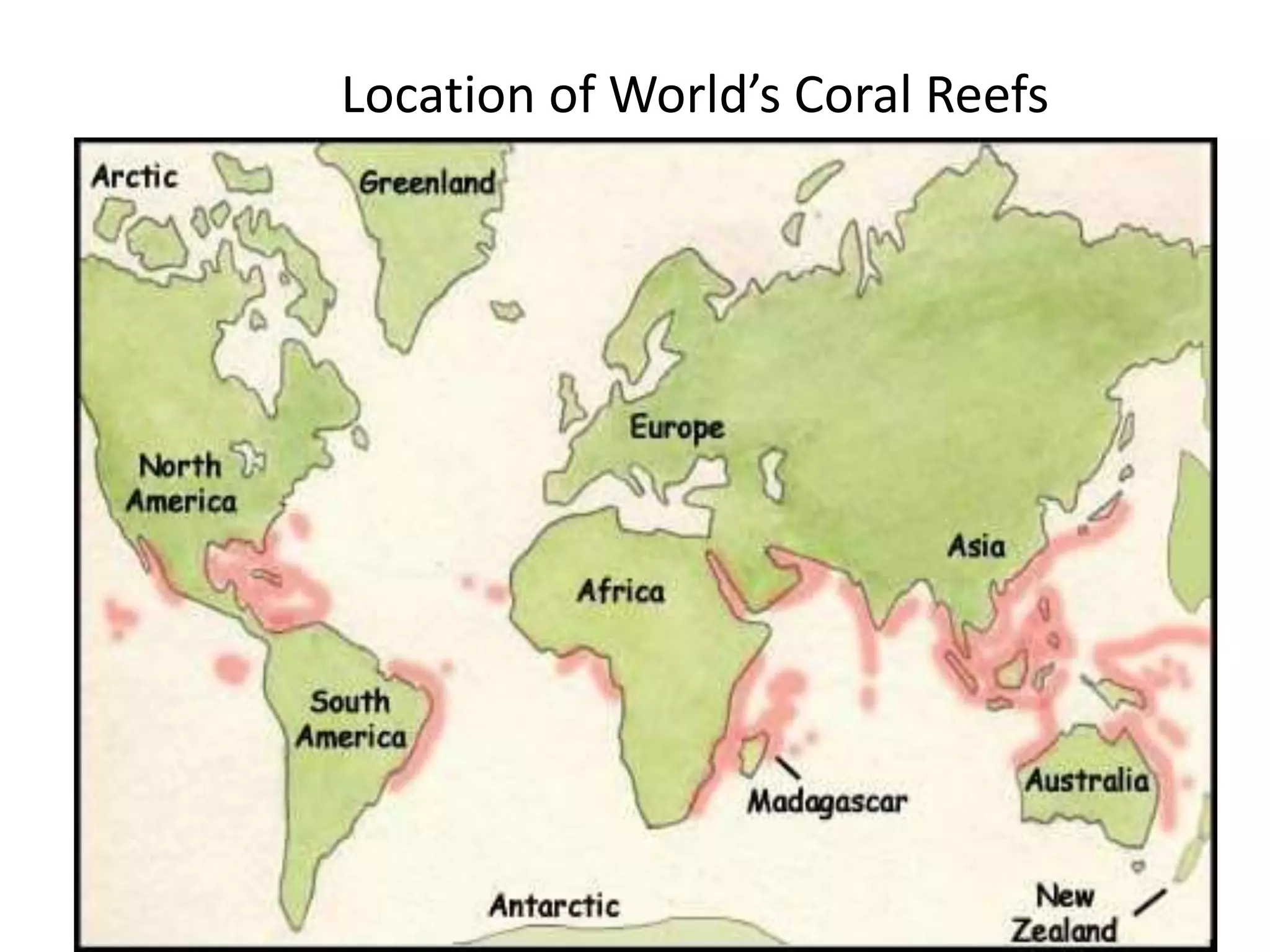
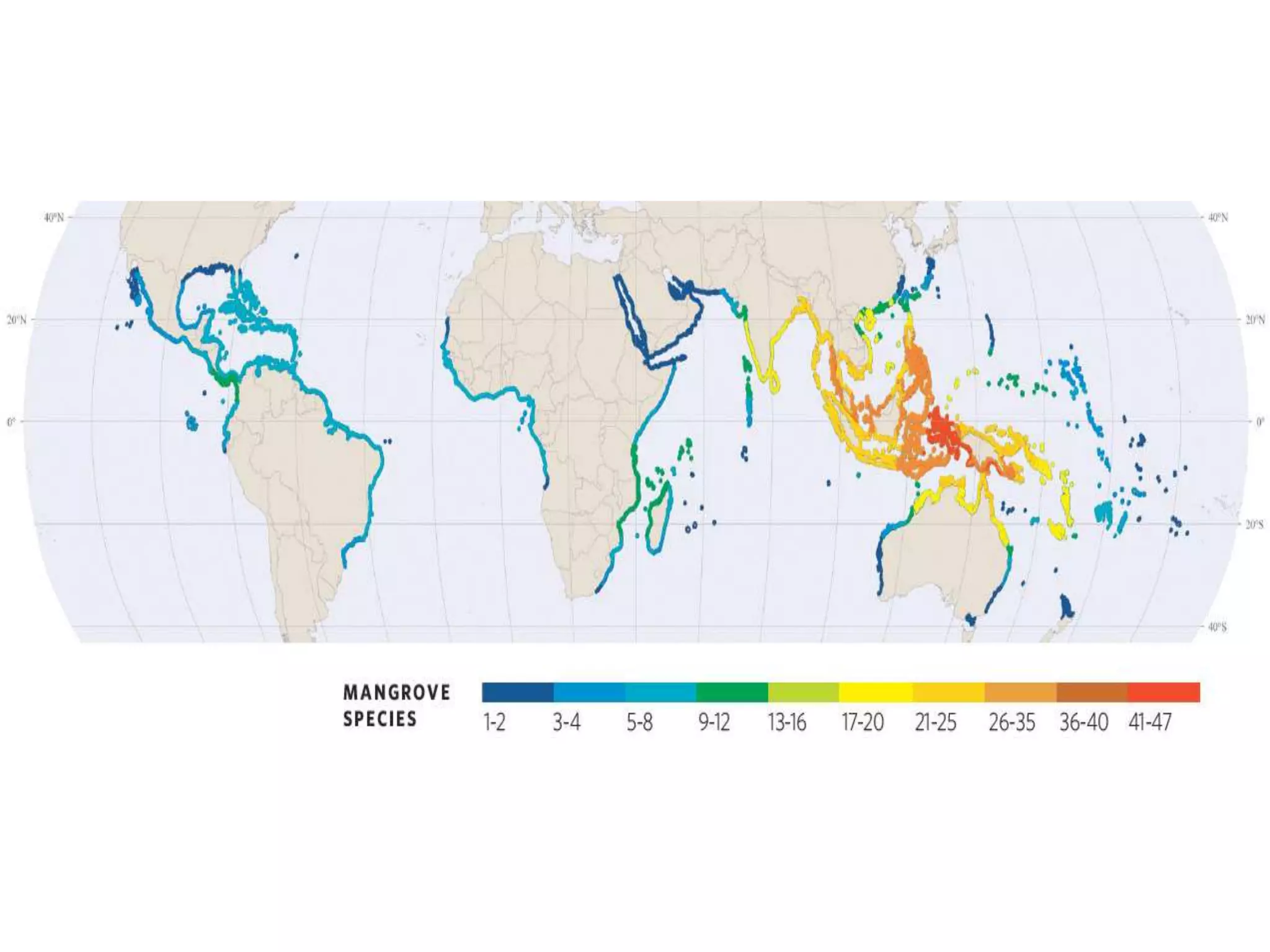
Location of World’s Coral Reefs
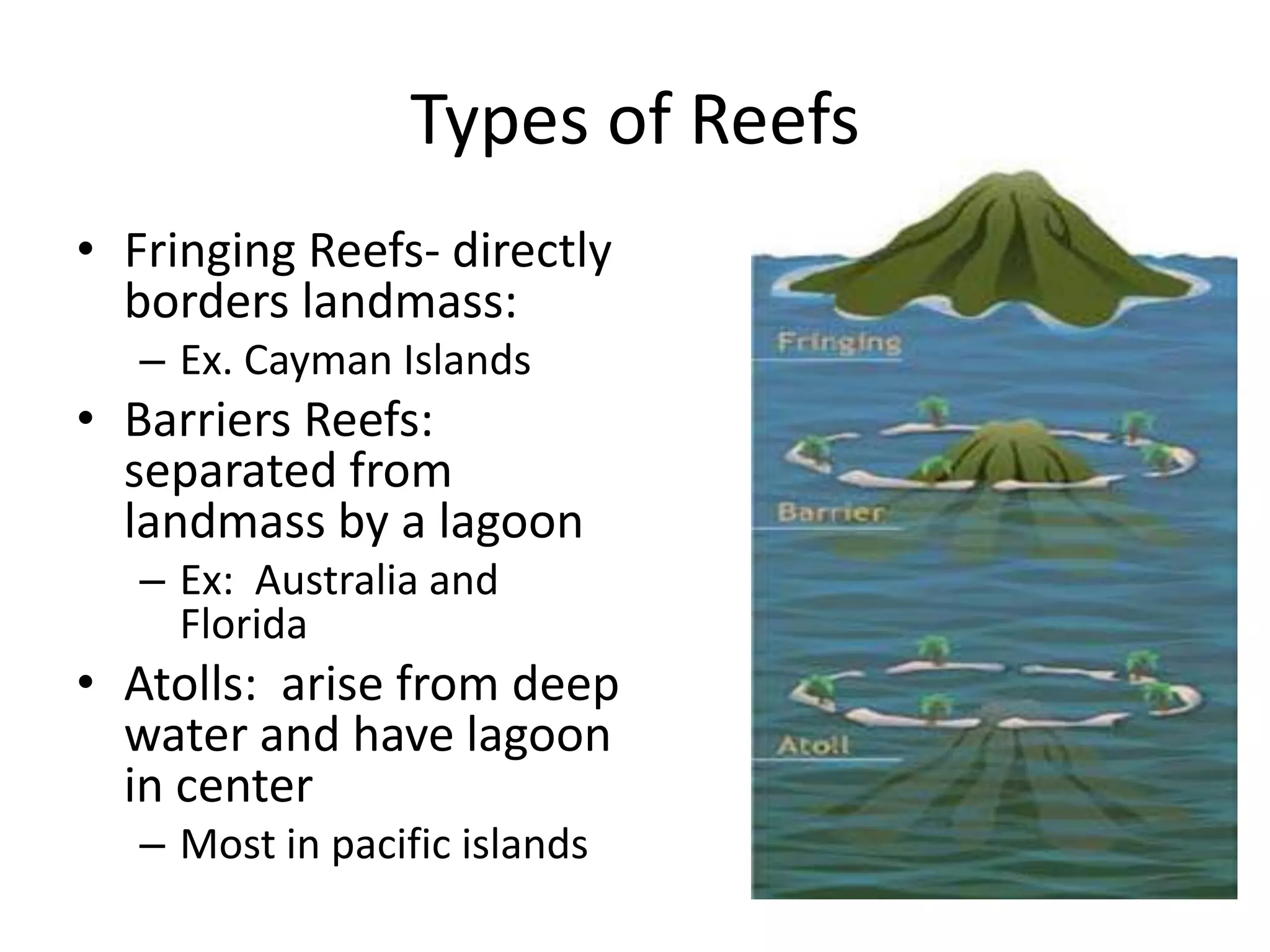
Types of Reefs
• Fringing Reefs- directly
  borders landmass:
   – Ex. Cayman Islands
• Barriers Reefs:
  separated from
  landmass by a lagoon
   – Ex: Australia and
     Florida
• Atolls: arise from deep
  water and have lagoon
  in center
   – Most in pacific islands
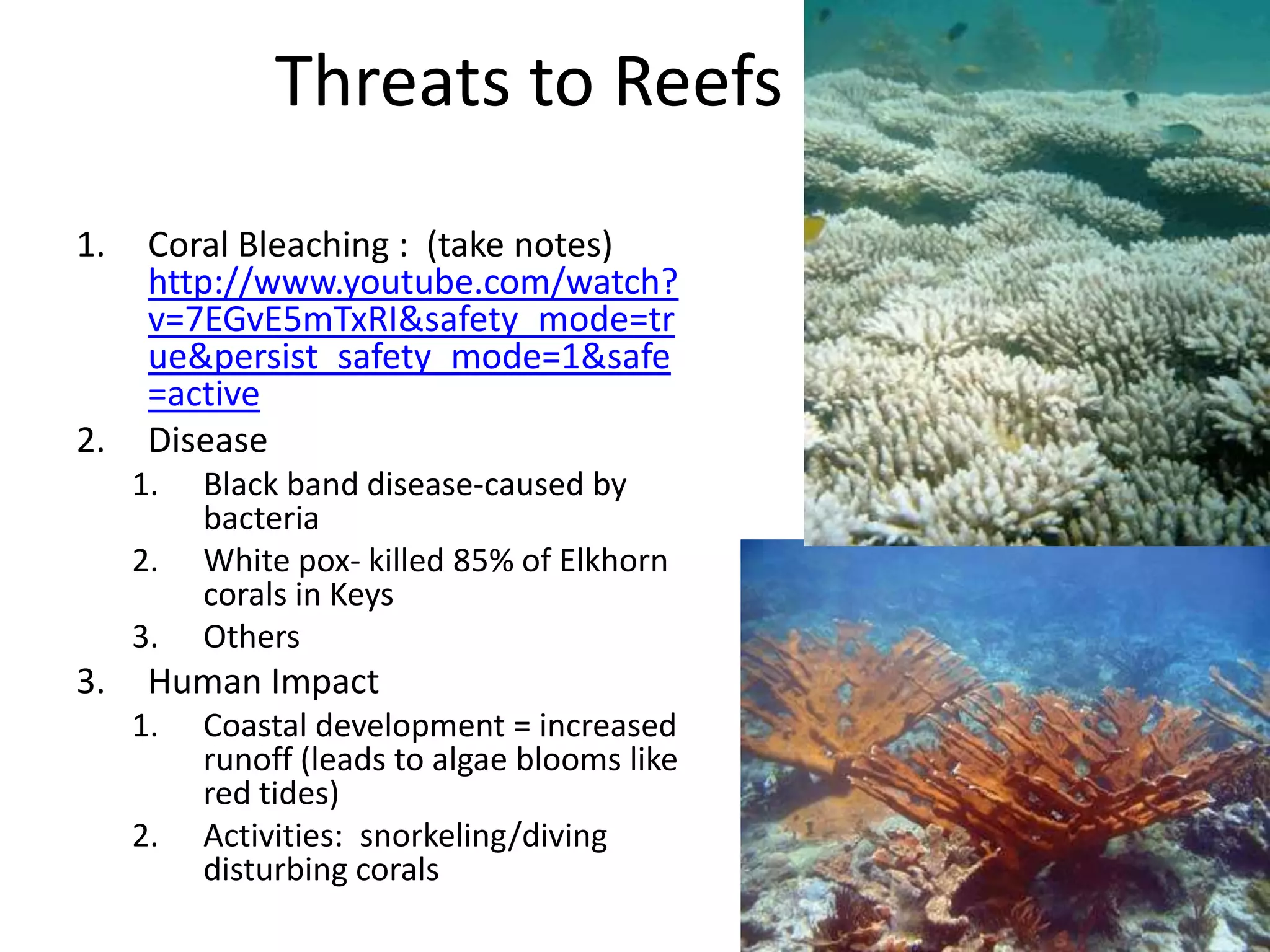
Threats to Reefs
1.    Coral Bleaching : (take notes)
      http://www.youtube.com/watch?
      v=7EGvE5mTxRI&safety_mode=tr
      ue&persist_safety_mode=1&safe
      =active
2.    Disease
     1.   Black band disease-caused by
          bacteria
     2.   White pox- killed 85% of Elkhorn
          corals in Keys
     3.   Others
3.    Human Impact
     1.   Coastal development = increased
          runoff (leads to algae blooms like
          red tides)
     2.   Activities: snorkeling/diving
          disturbing corals
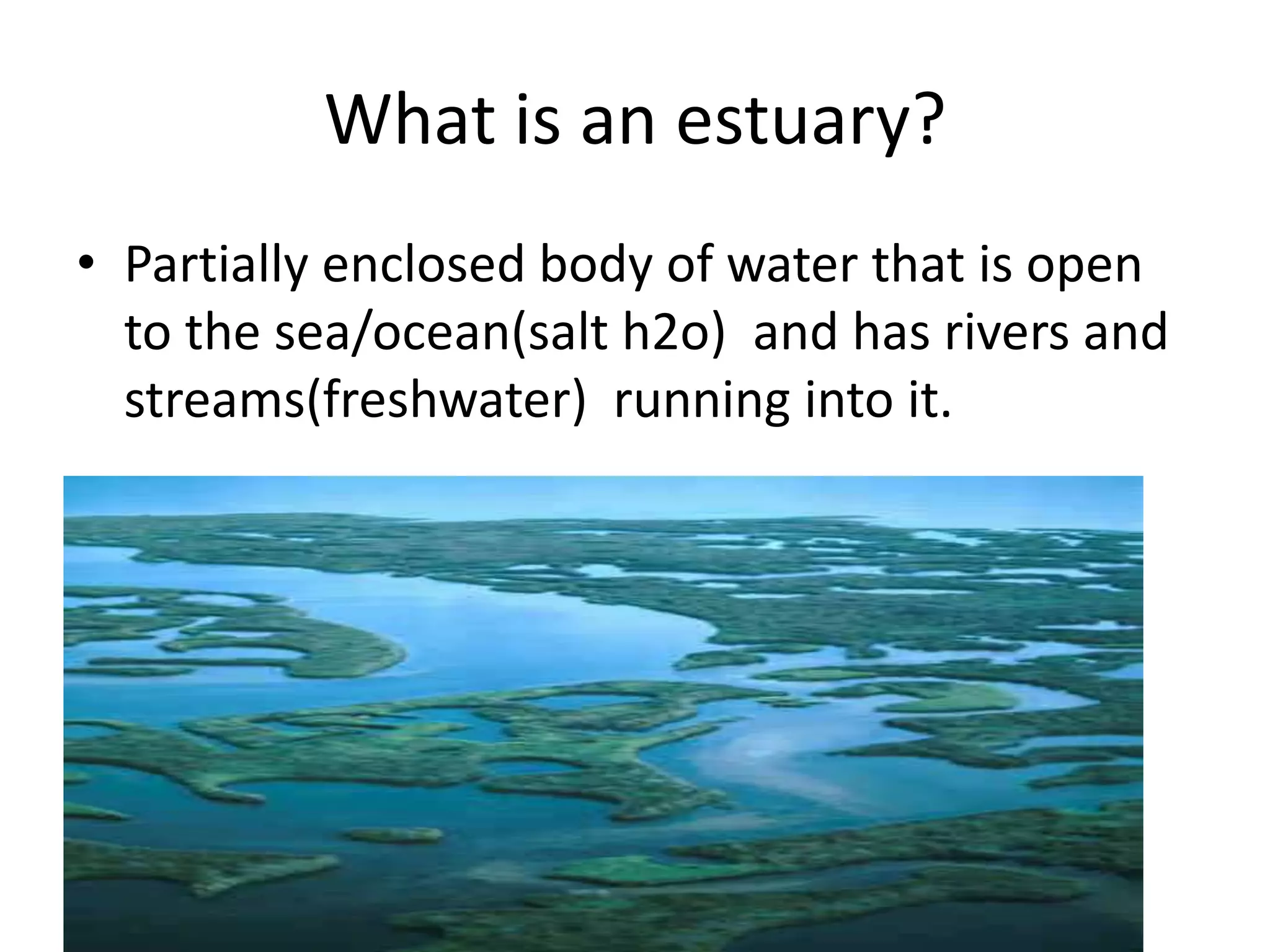
What is an estuary?
• Partially enclosed body of water that is open
  to the sea/ocean(salt h2o) and has rivers and
  streams(freshwater) running into it.
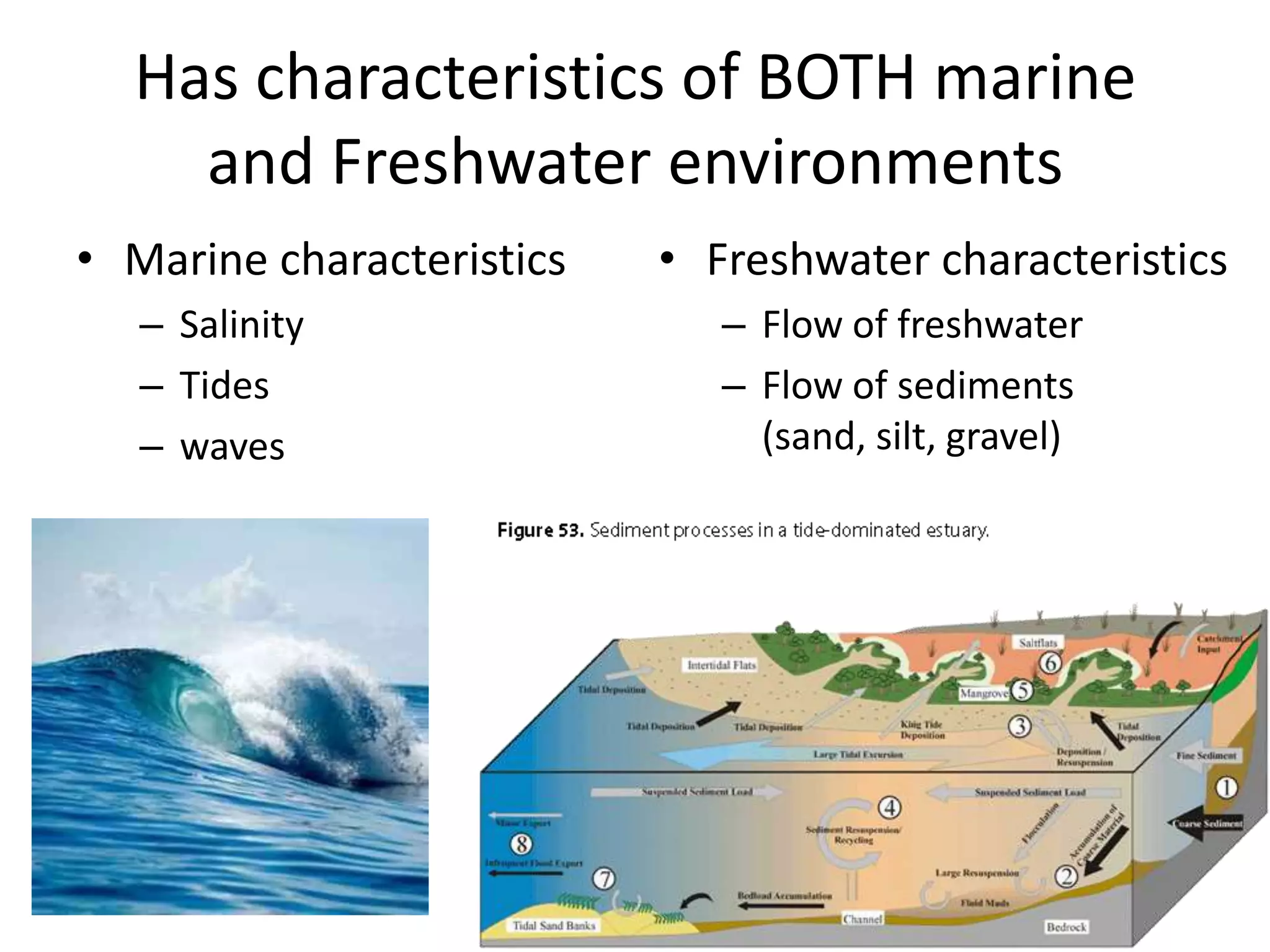
Has characteristics of BOTH marine
    and Freshwater environments
• Marine characteristics   • Freshwater characteristics
   – Salinity                 – Flow of freshwater
   – Tides                    – Flow of sediments
   – waves                      (sand, silt, gravel)
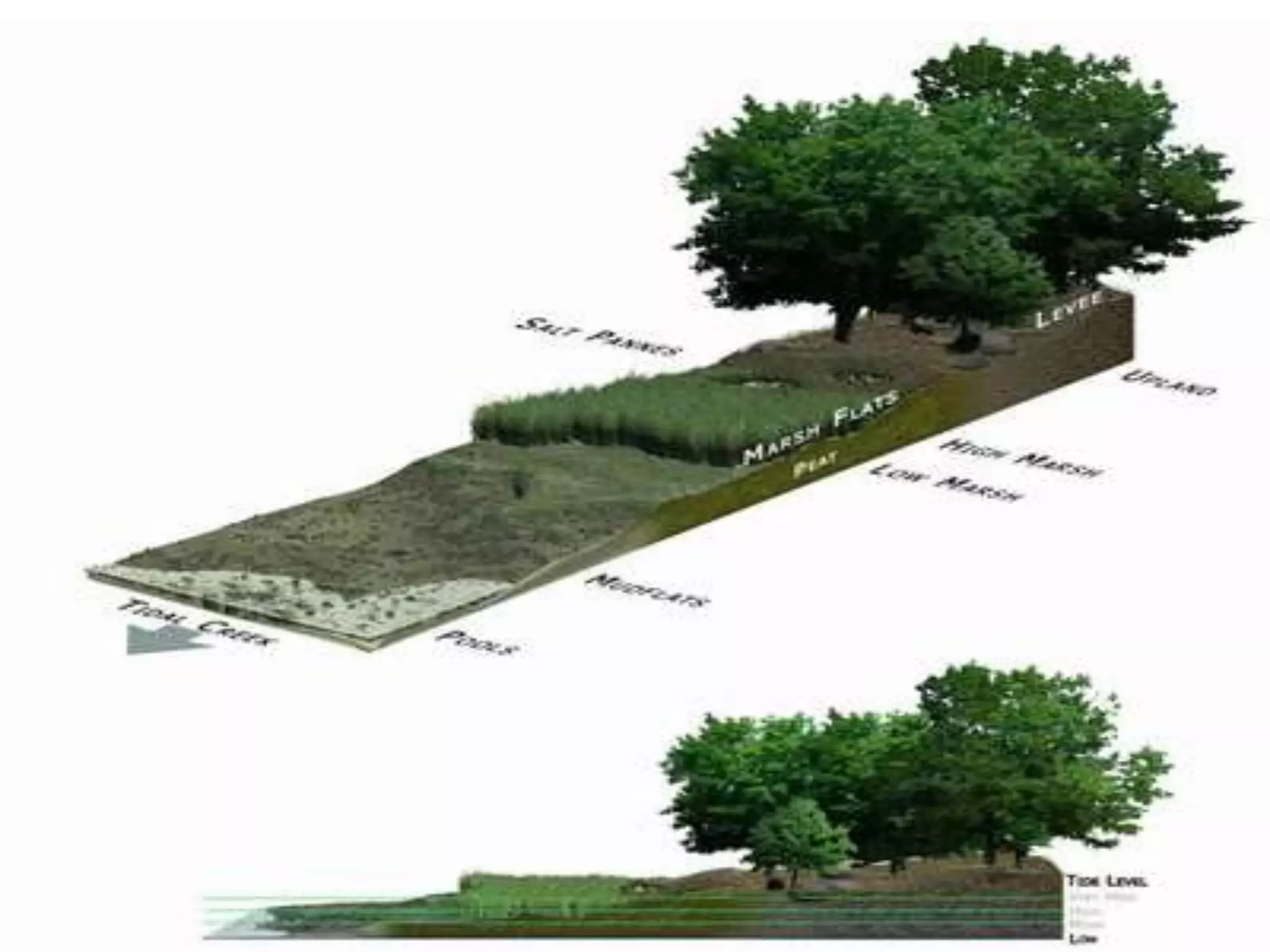
What is a salt marsh?
• Type of estuary
  – Located in the intertidal zone between land and
    salt/brackish water
  – Dominated by salt tolerant plants
  – Important for environment
     •   to the food web and export nutrients to water
     •   Provide habitats for birds and other land animals
     •   Serve as nurseries for juvenile fish
     •   Protect coast from erosion from hurricanes
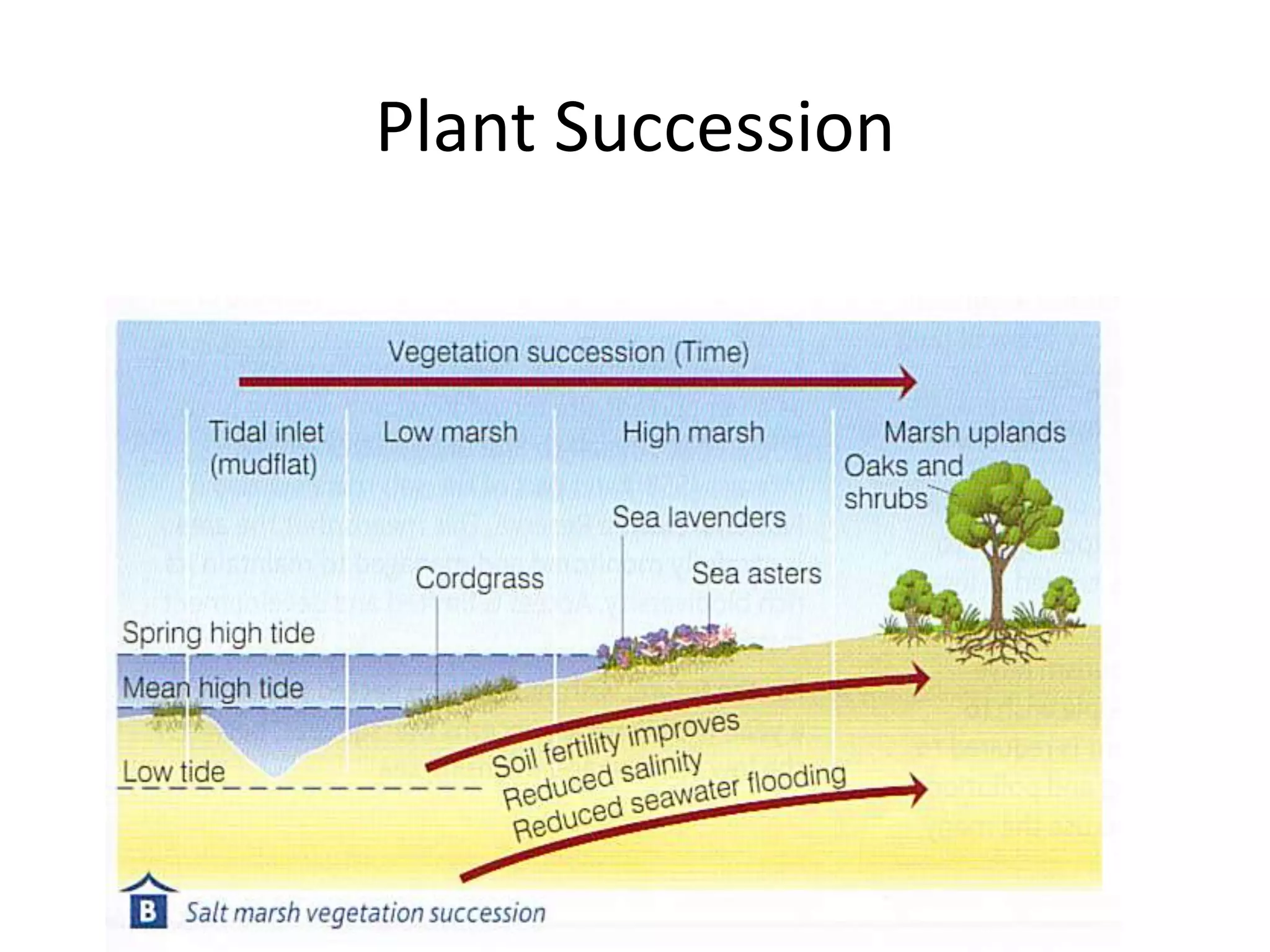
Plant Succession
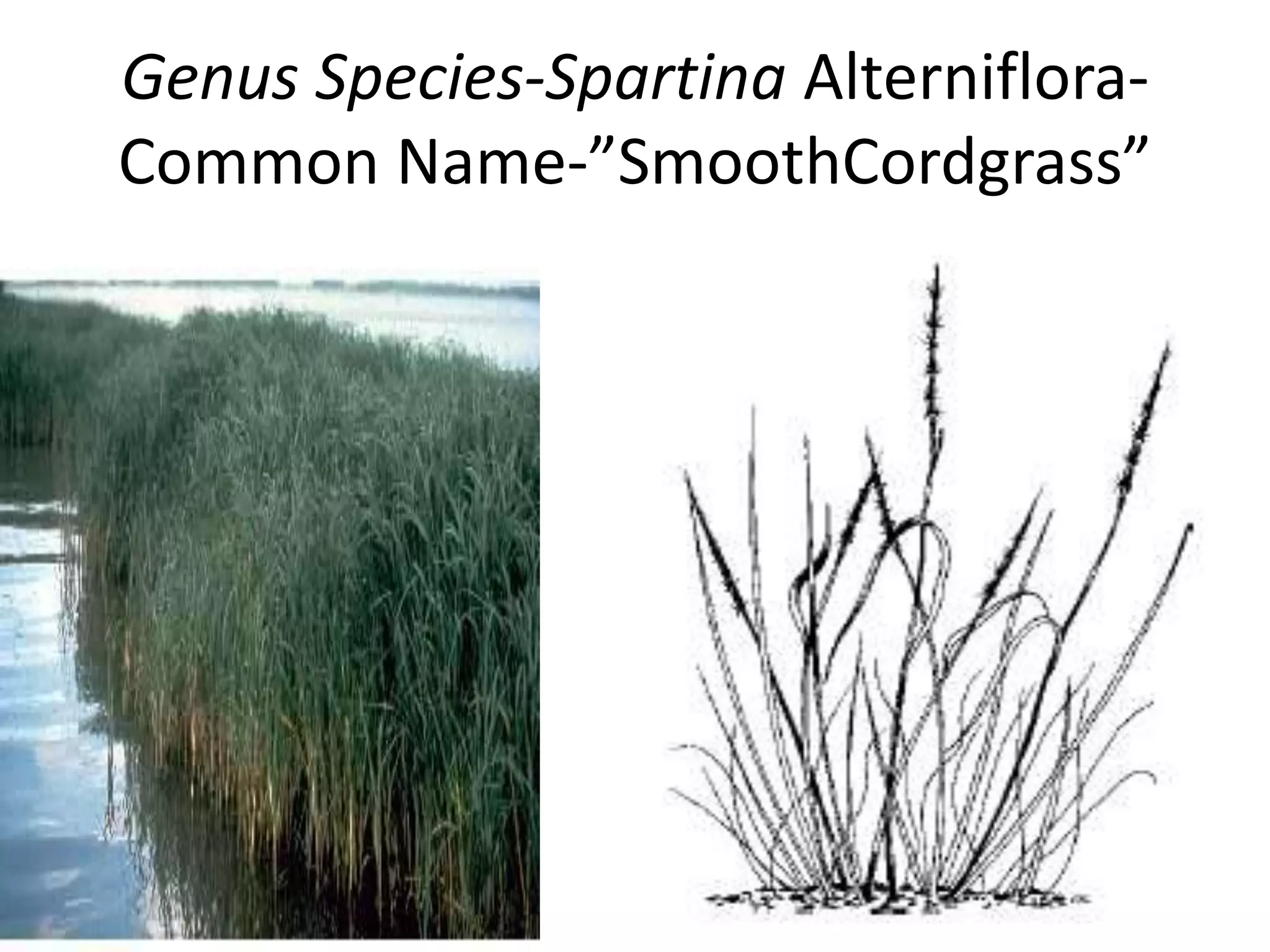
Genus Species-Spartina Alterniflora-
Common Name-”SmoothCordgrass”
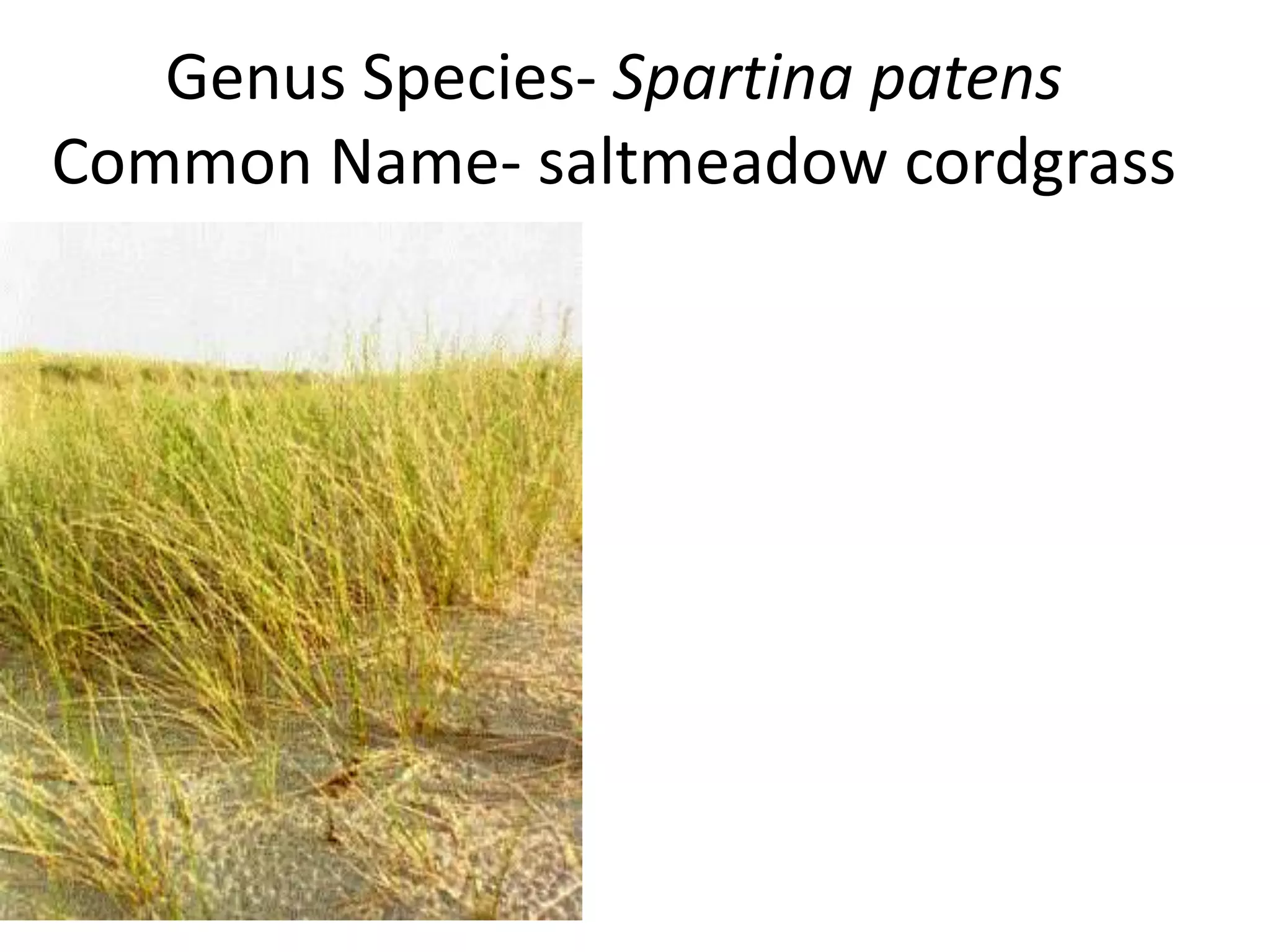
Genus Species- Spartina patens
Common Name- saltmeadow cordgrass
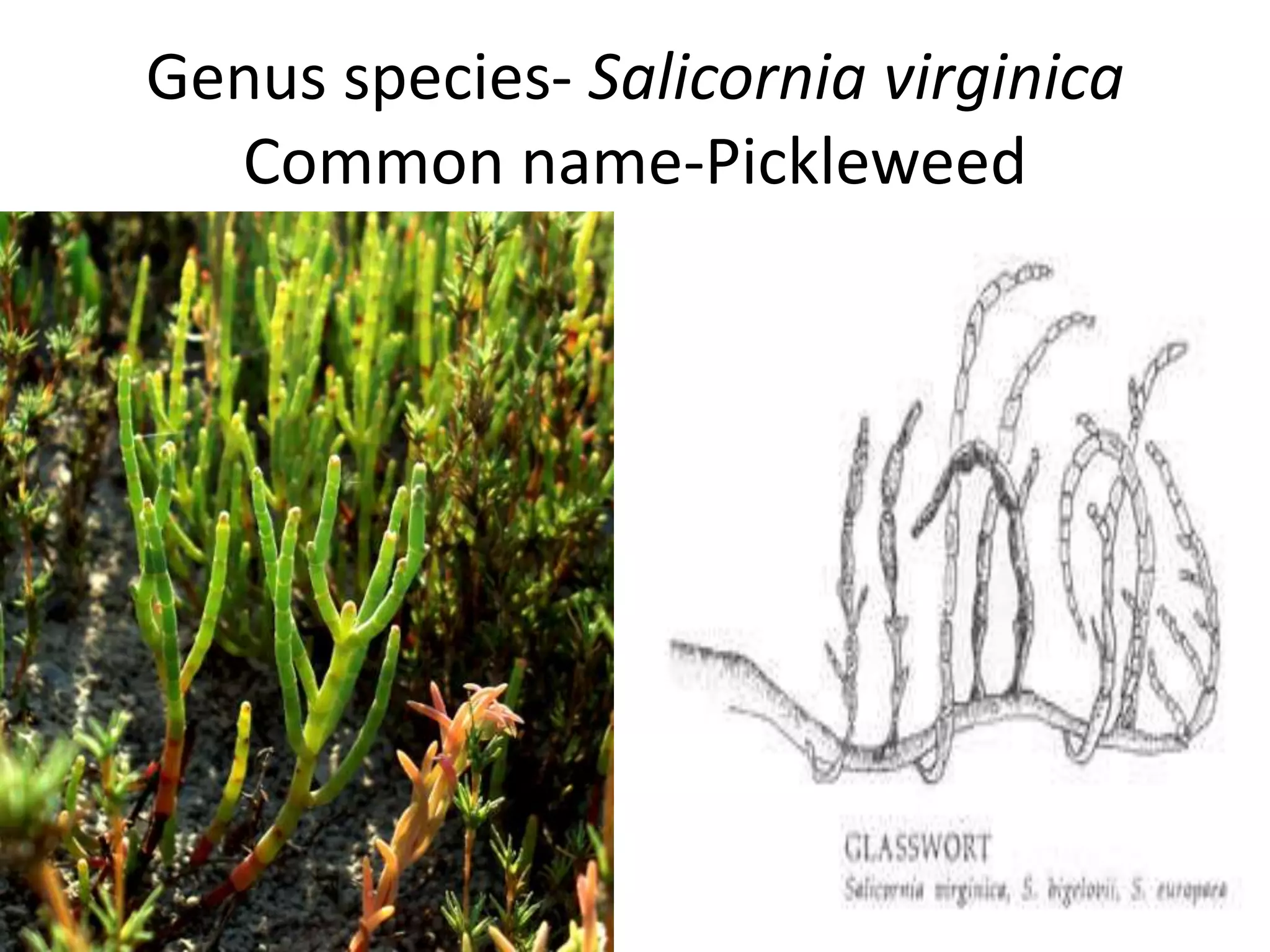
Genus species- Salicornia virginica
  Common name-Pickleweed
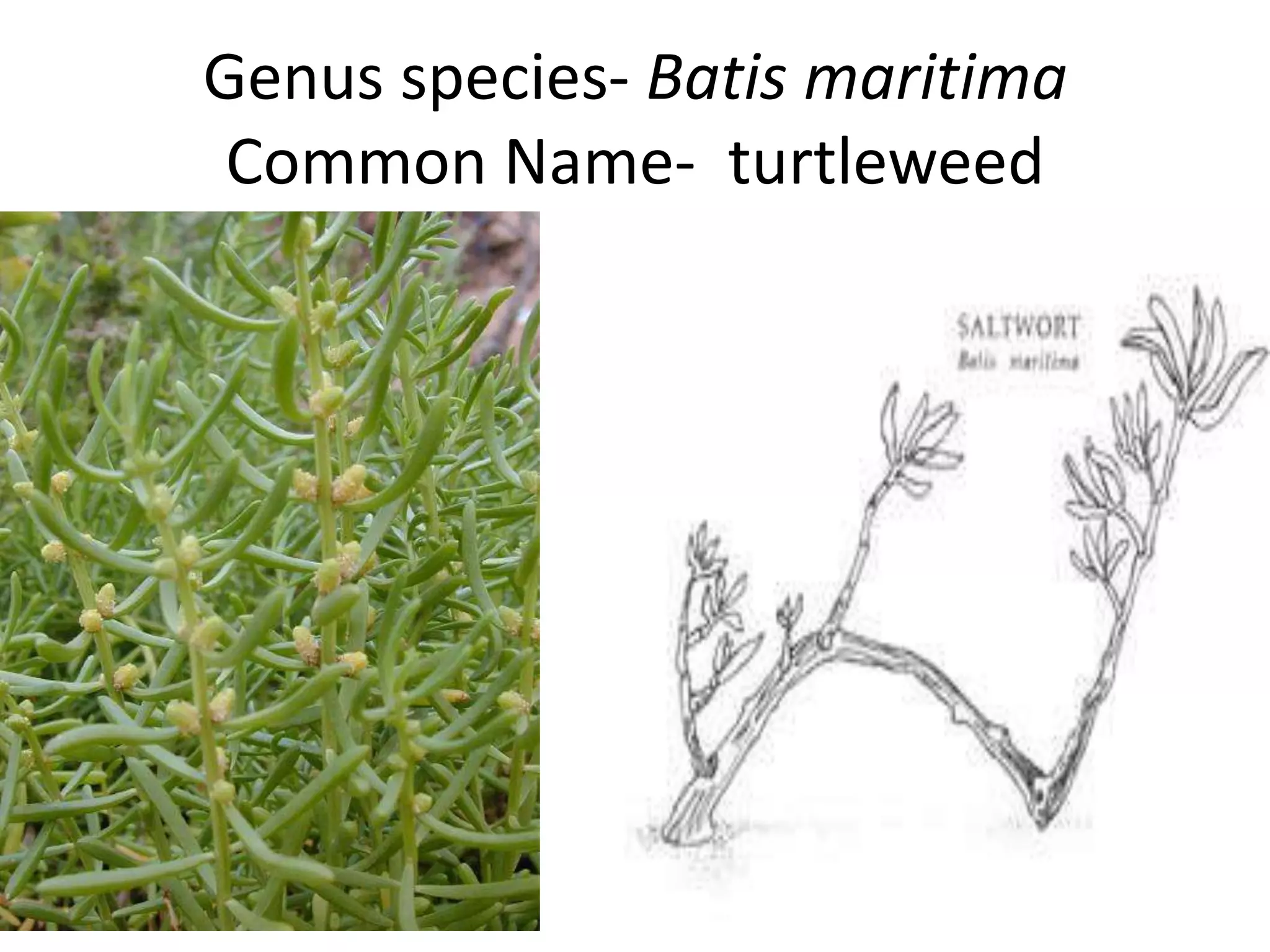
Genus species- Batis maritima
 Common Name- turtleweed
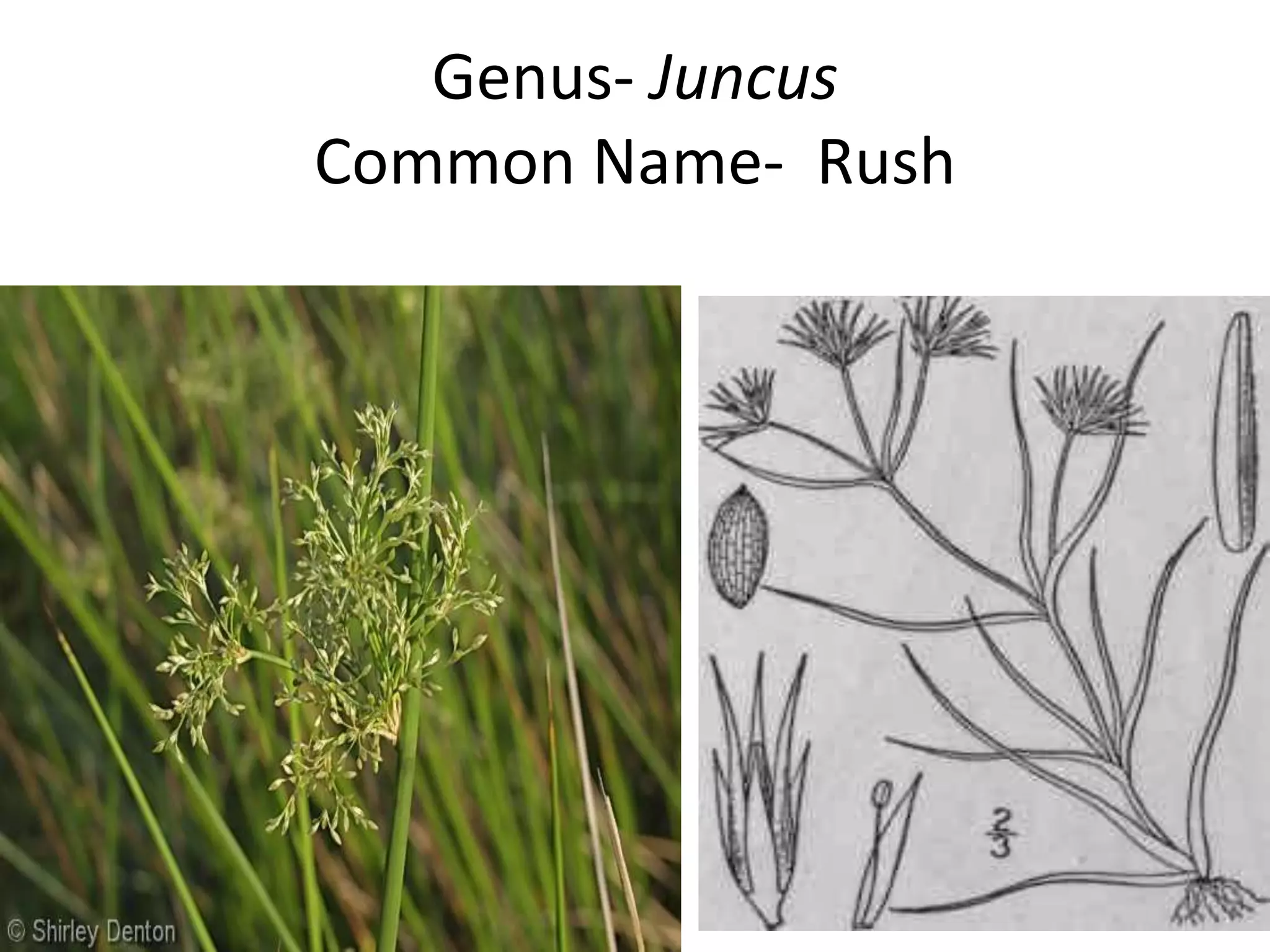
Genus- Juncus
Common Name- Rush
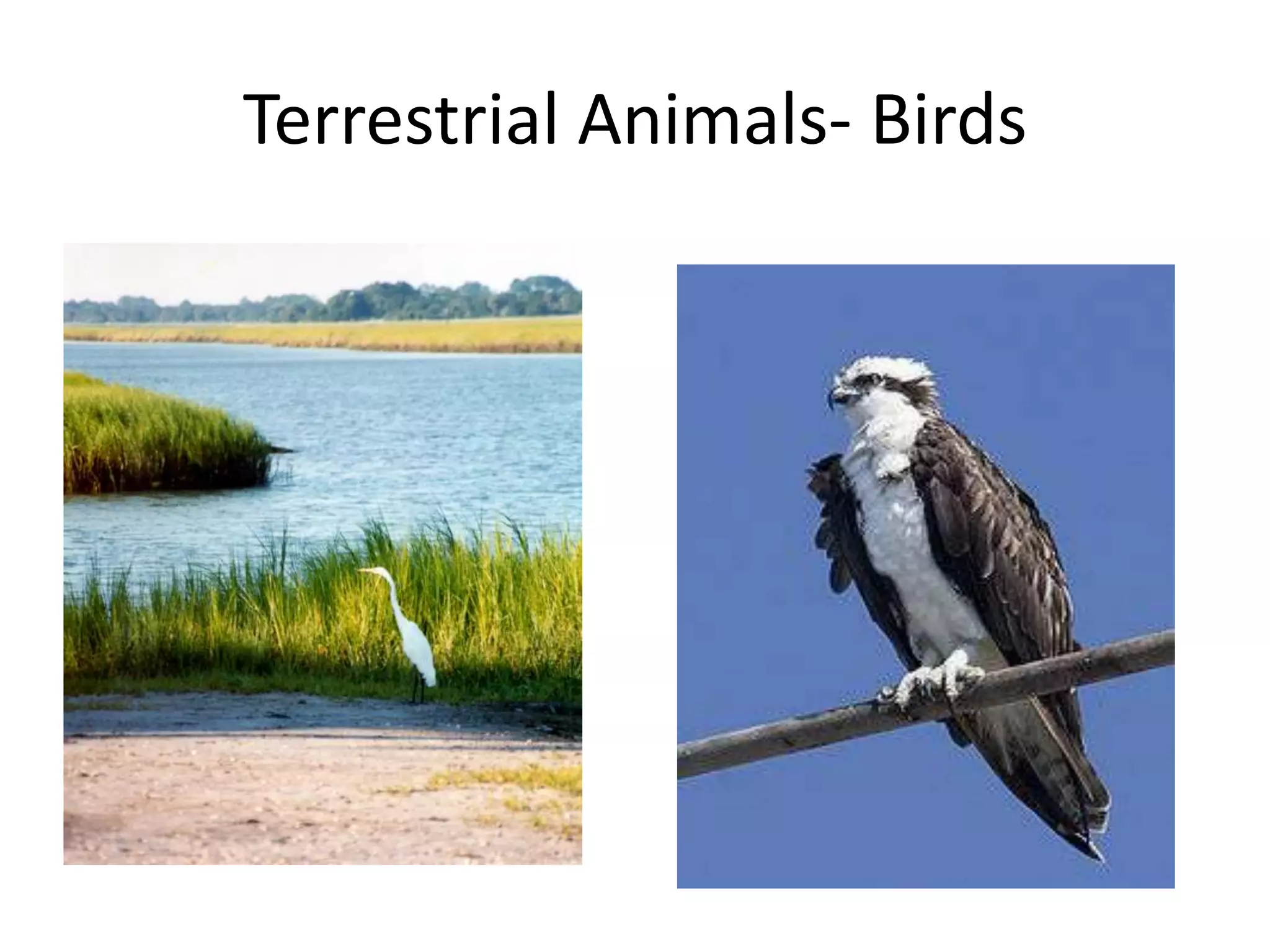
Terrestrial Animals- Birds
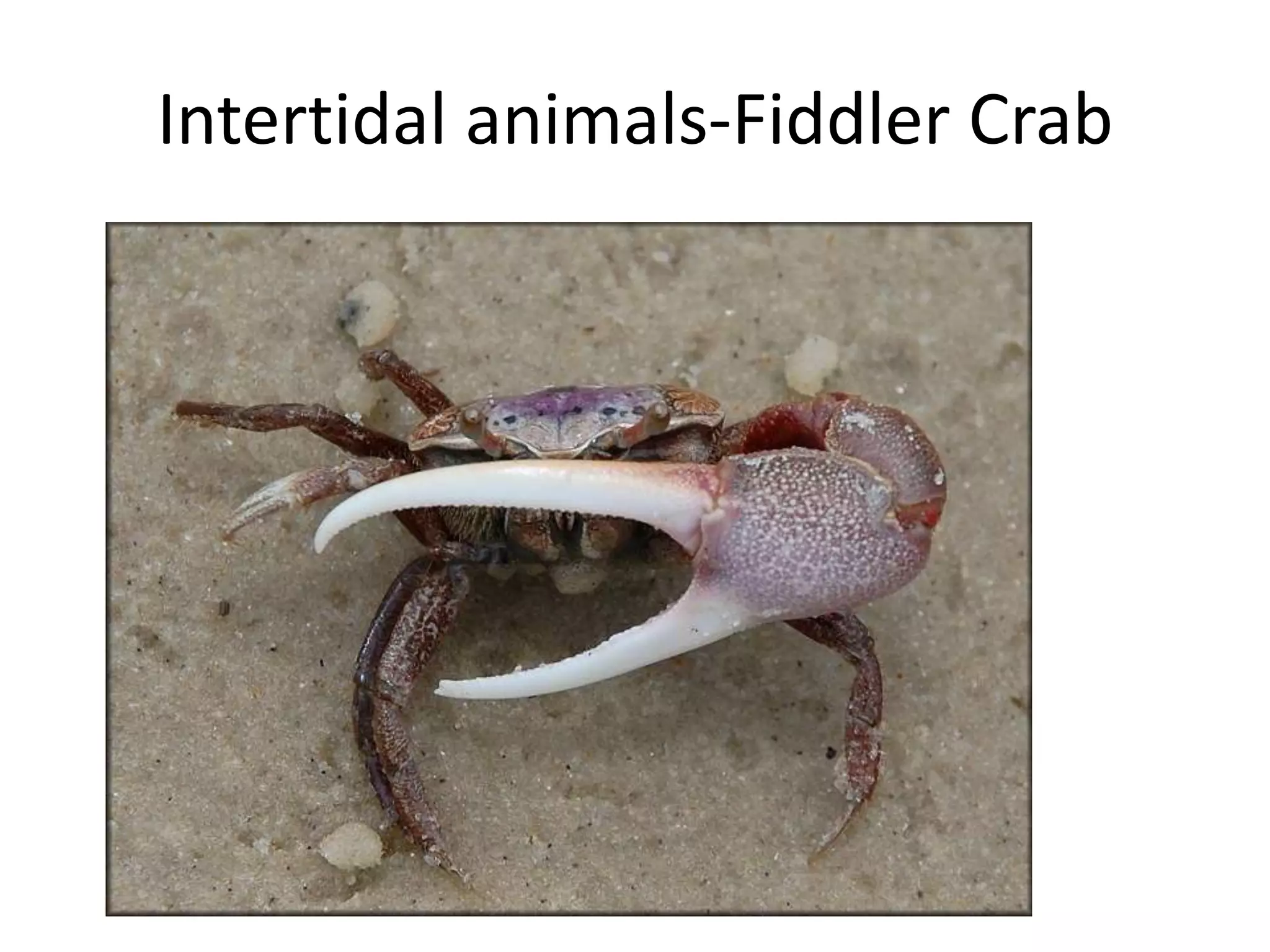
Intertidal animals-Fiddler Crab
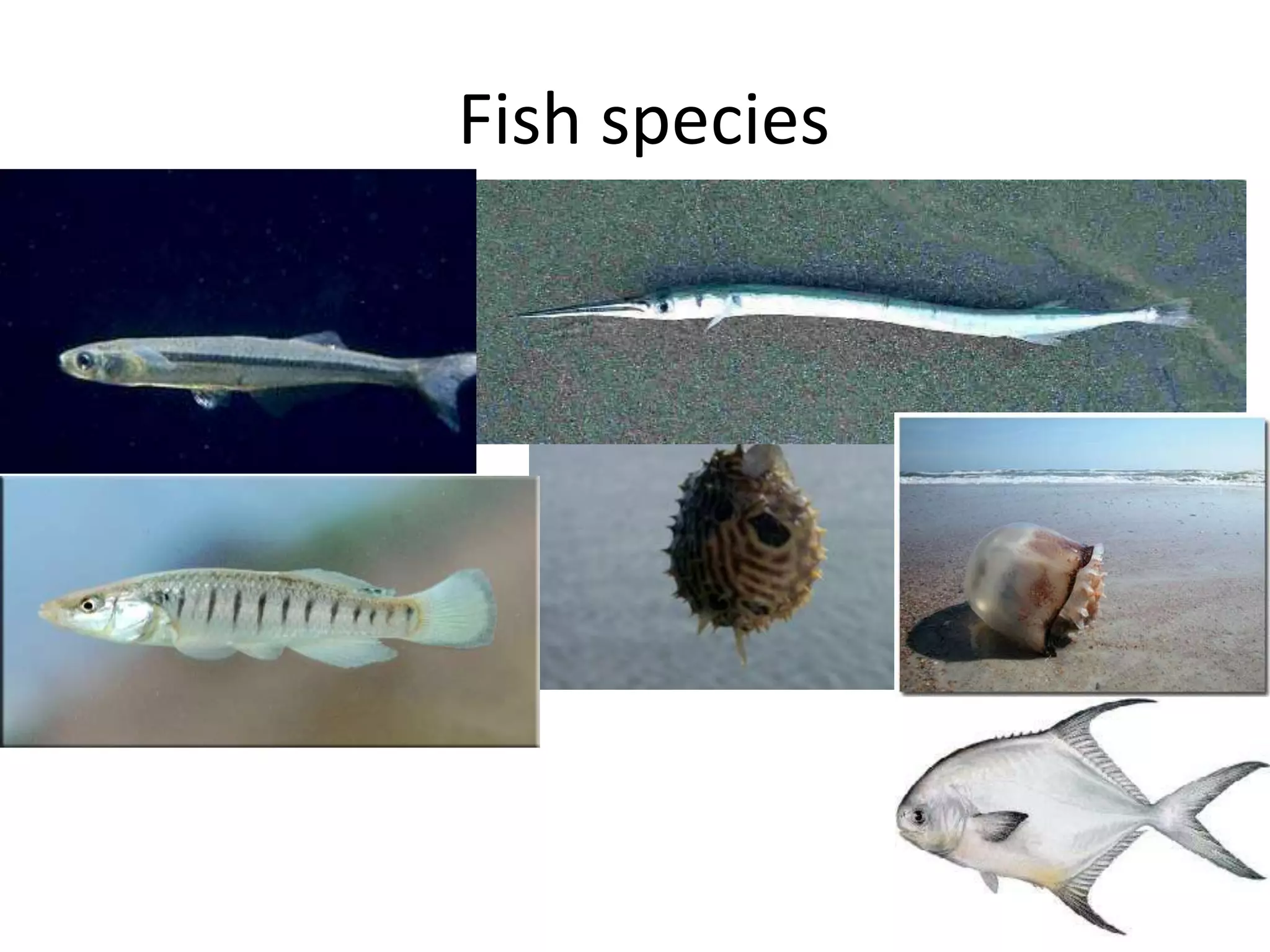
Fish species
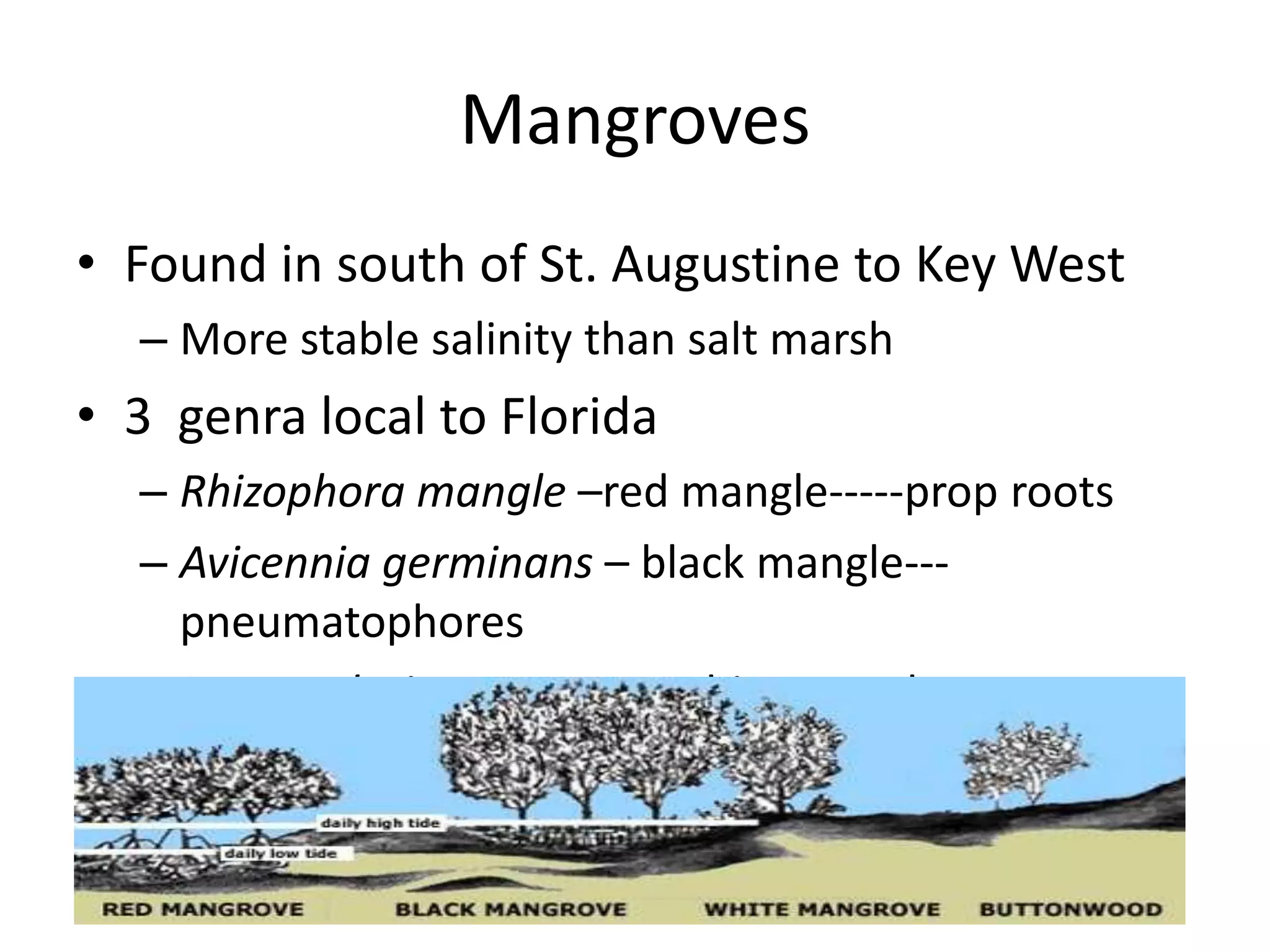
Mangroves
• Found in south of St. Augustine to Key West
  – More stable salinity than salt marsh
• 3 genra local to Florida
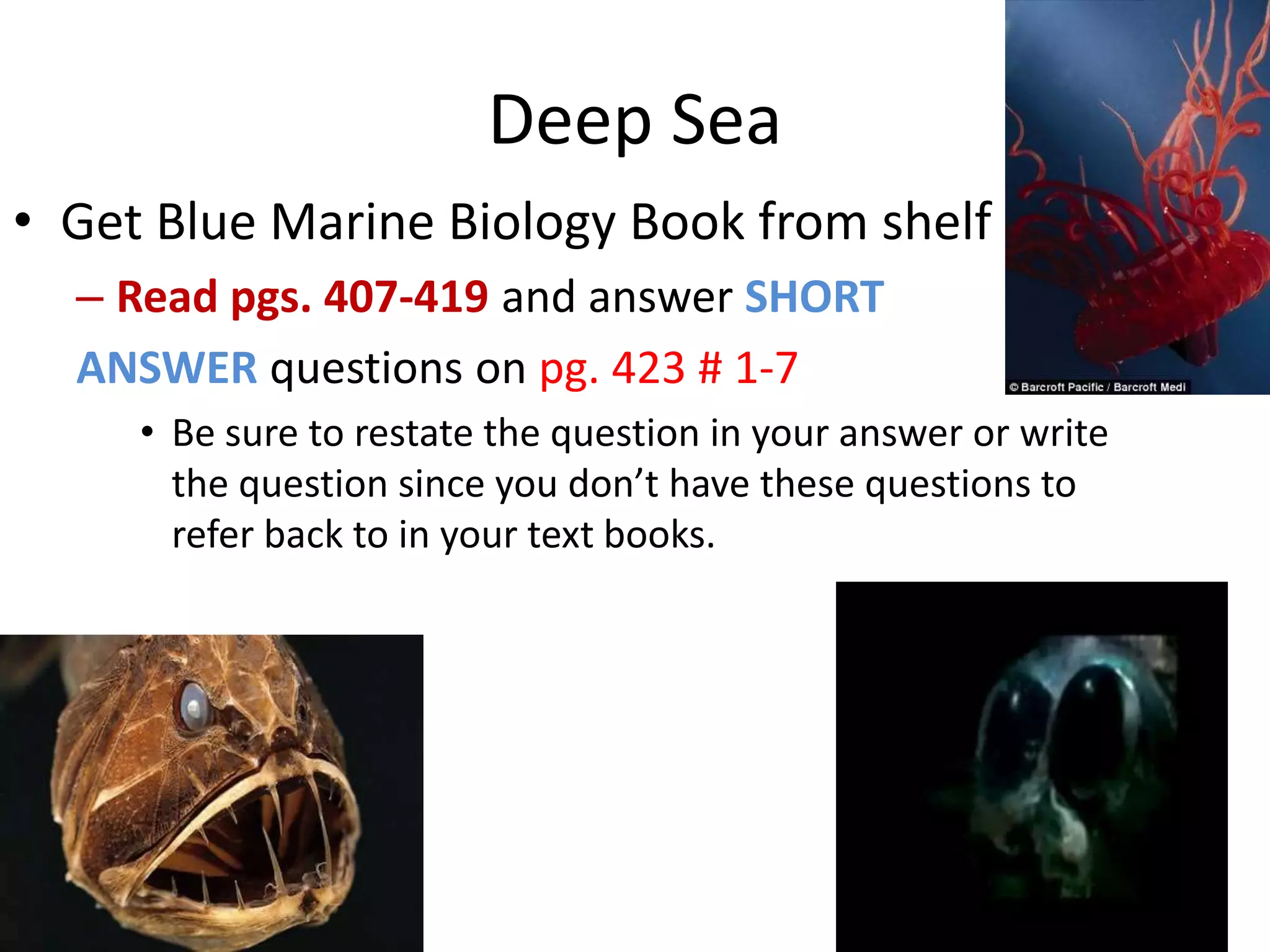
  – Rhizophora mangle –red mangle-----prop roots
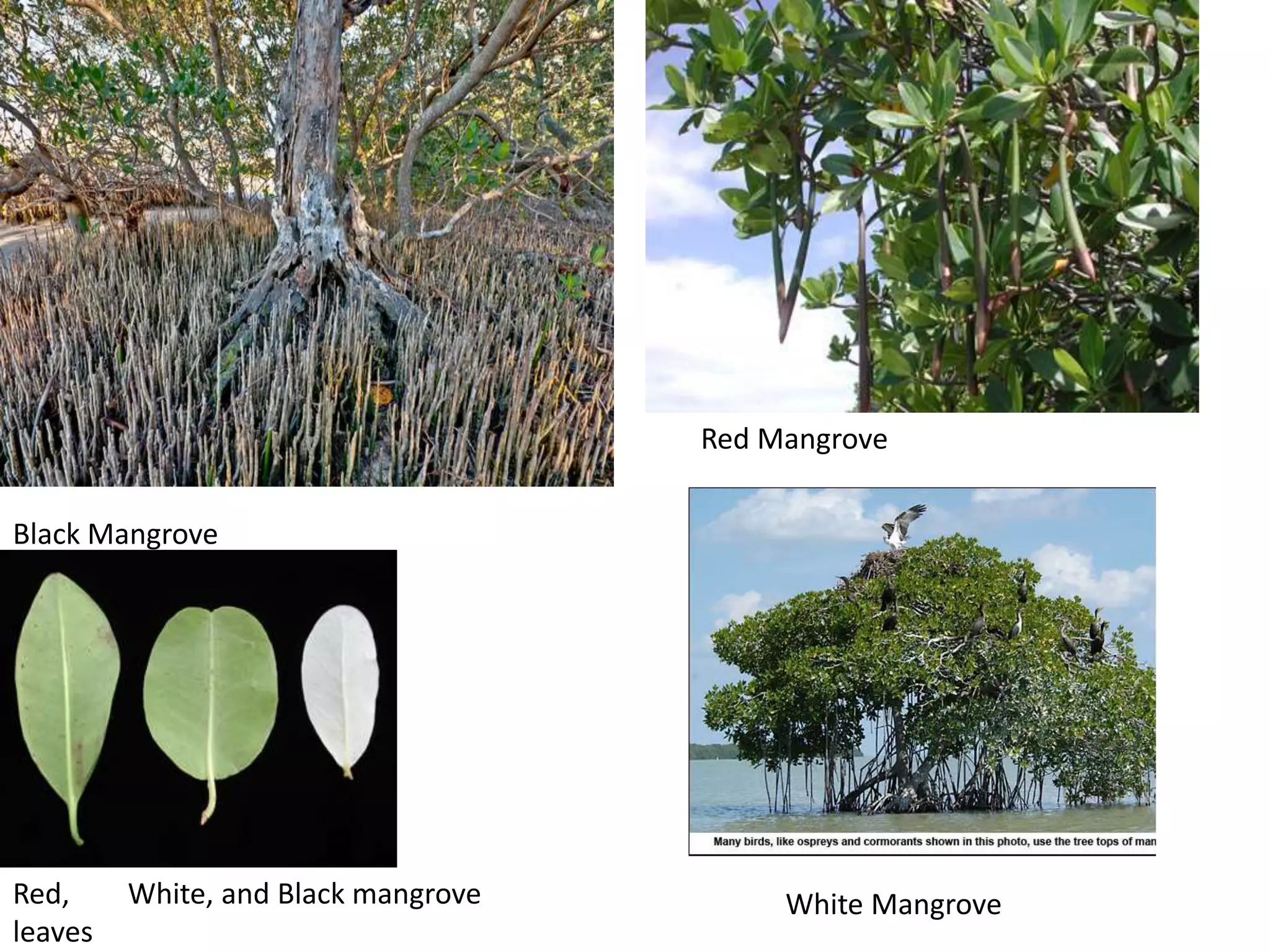
  – Avicennia germinans – black mangle---
    pneumatophores
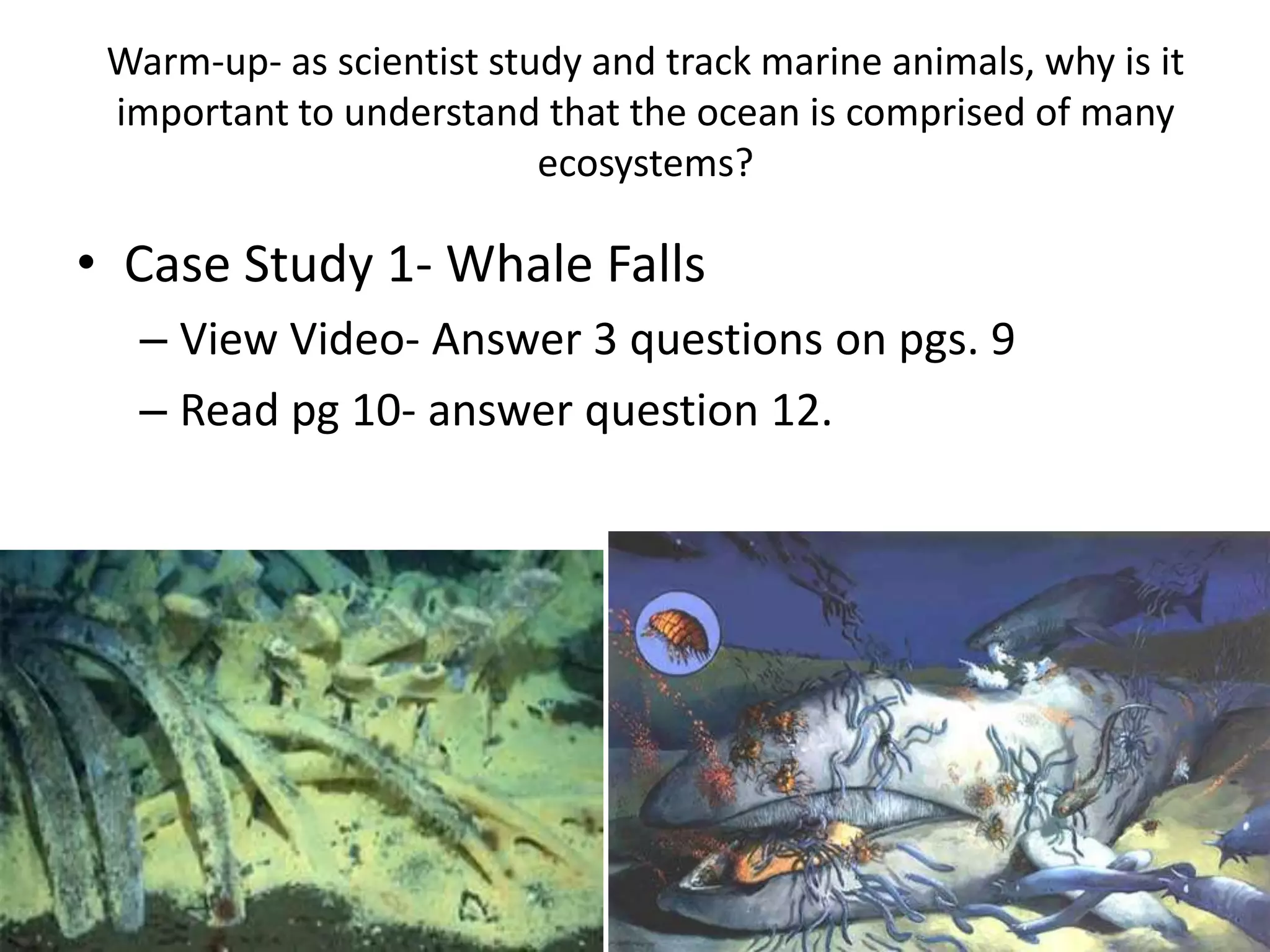
  – Laguncularia racemosa- white mangle
• Distinctive by their root system and pods
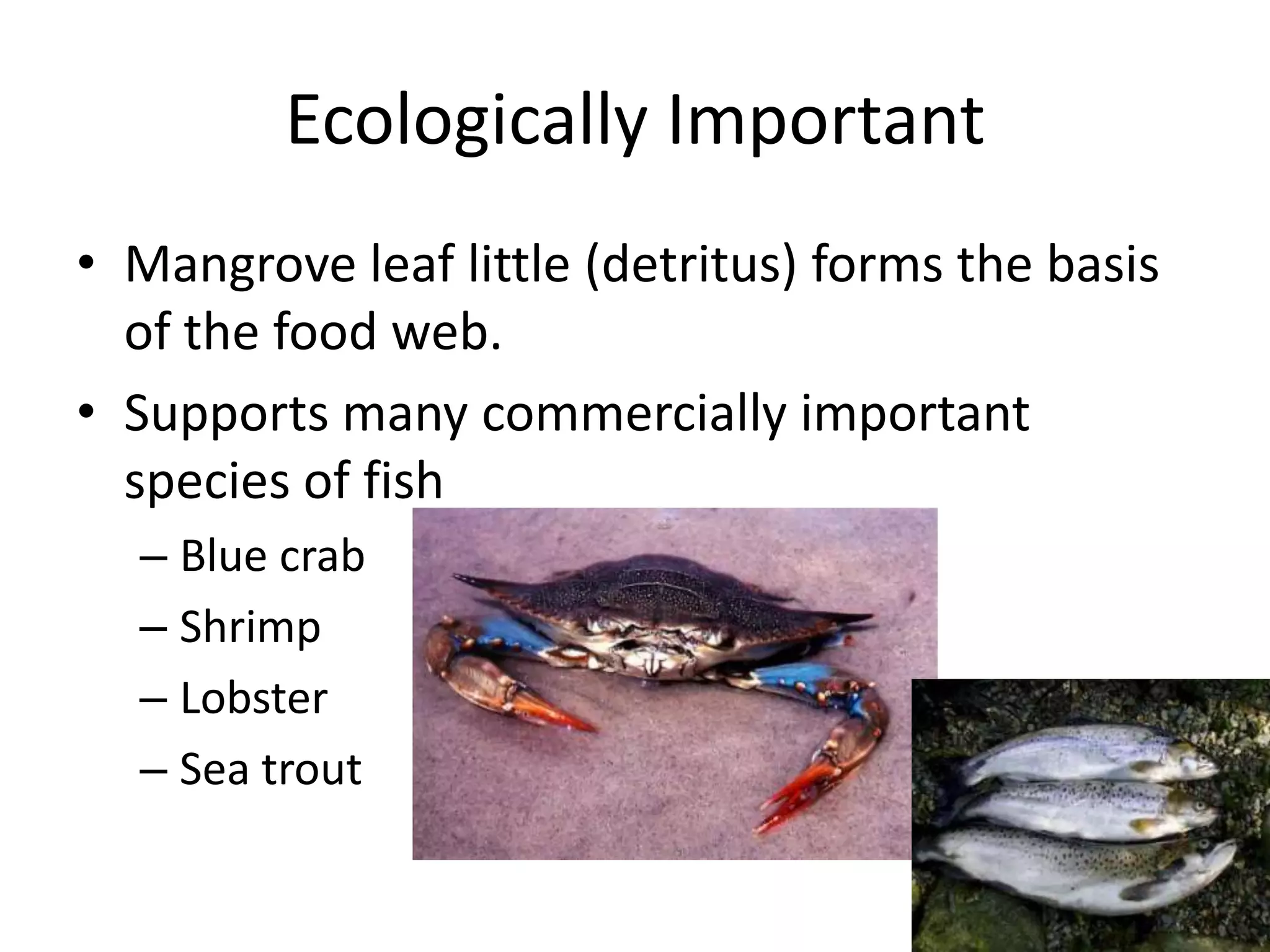
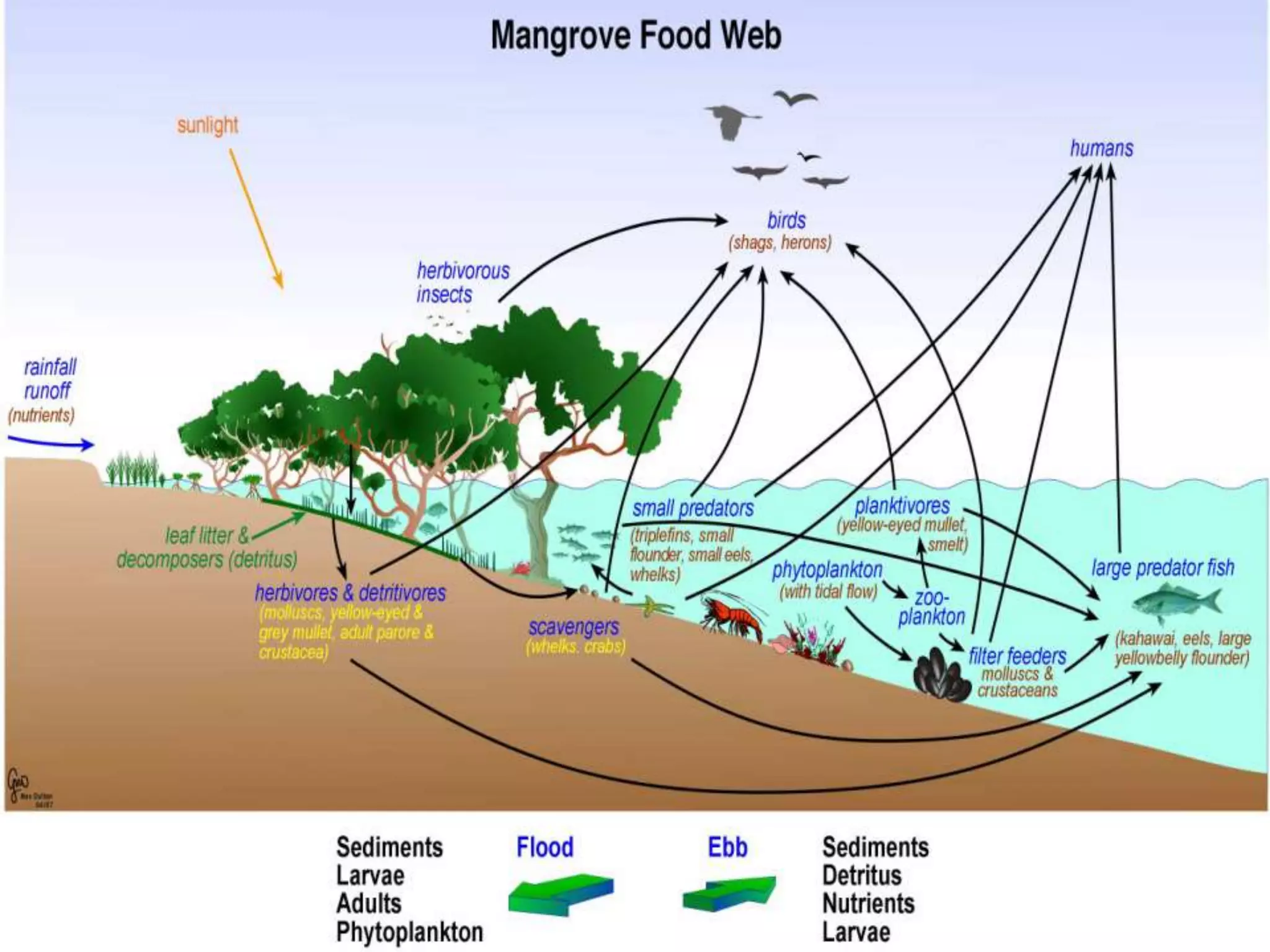
Ecologically Important
• Mangrove leaf little (detritus) forms the basis
  of the food web.
• Supports many commercially important
  species of fish
  – Blue crab
  – Shrimp
  – Lobster
  – Sea trout
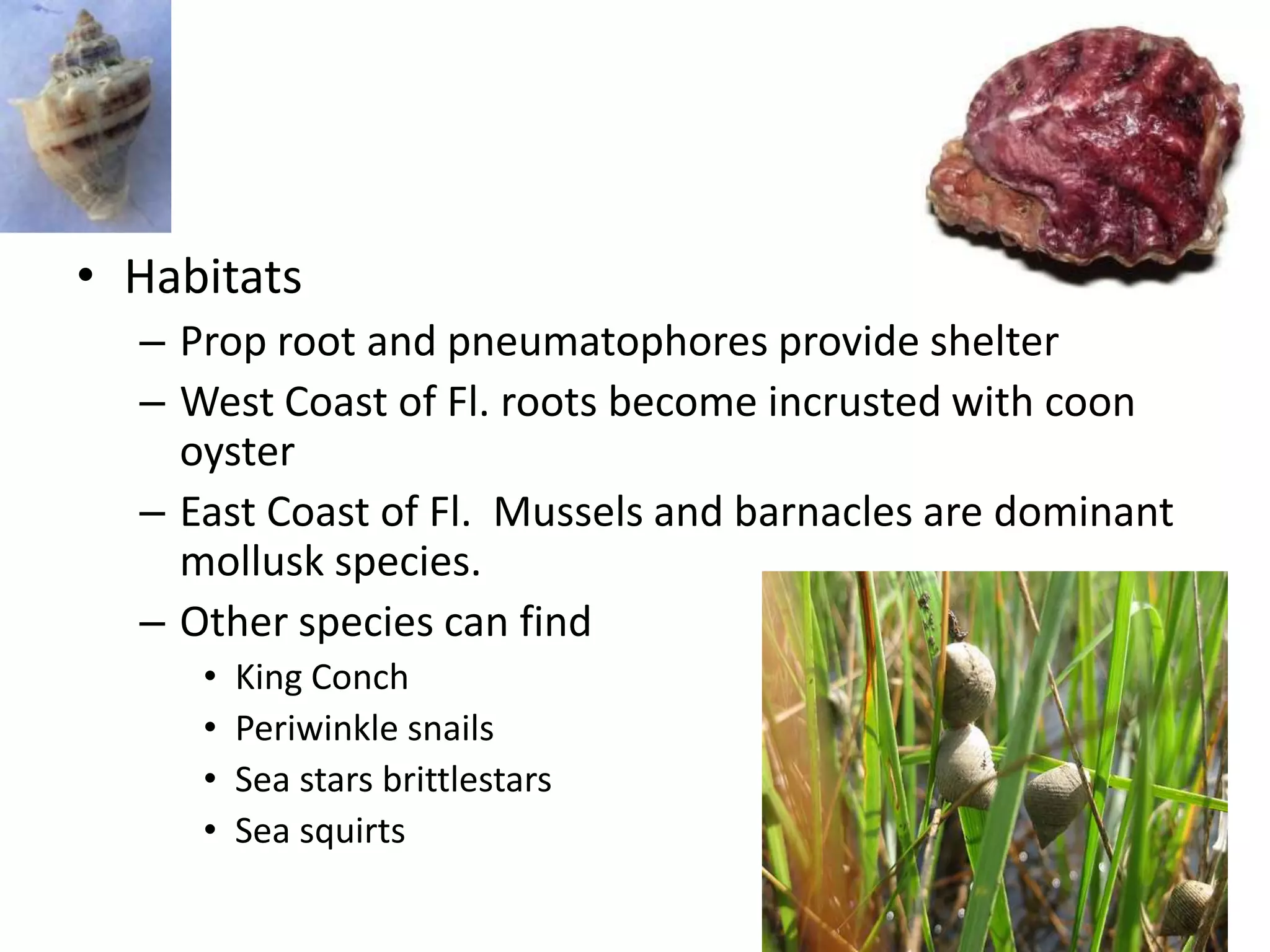
• Habitats
  – Prop root and pneumatophores provide shelter
  – West Coast of Fl. roots become incrusted with coon
    oyster
  – East Coast of Fl. Mussels and barnacles are dominant
    mollusk species.
  – Other species can find
     •   King Conch
     •   Periwinkle snails
     •   Sea stars brittlestars
     •   Sea squirts
Red Mangrove


Black Mangrove


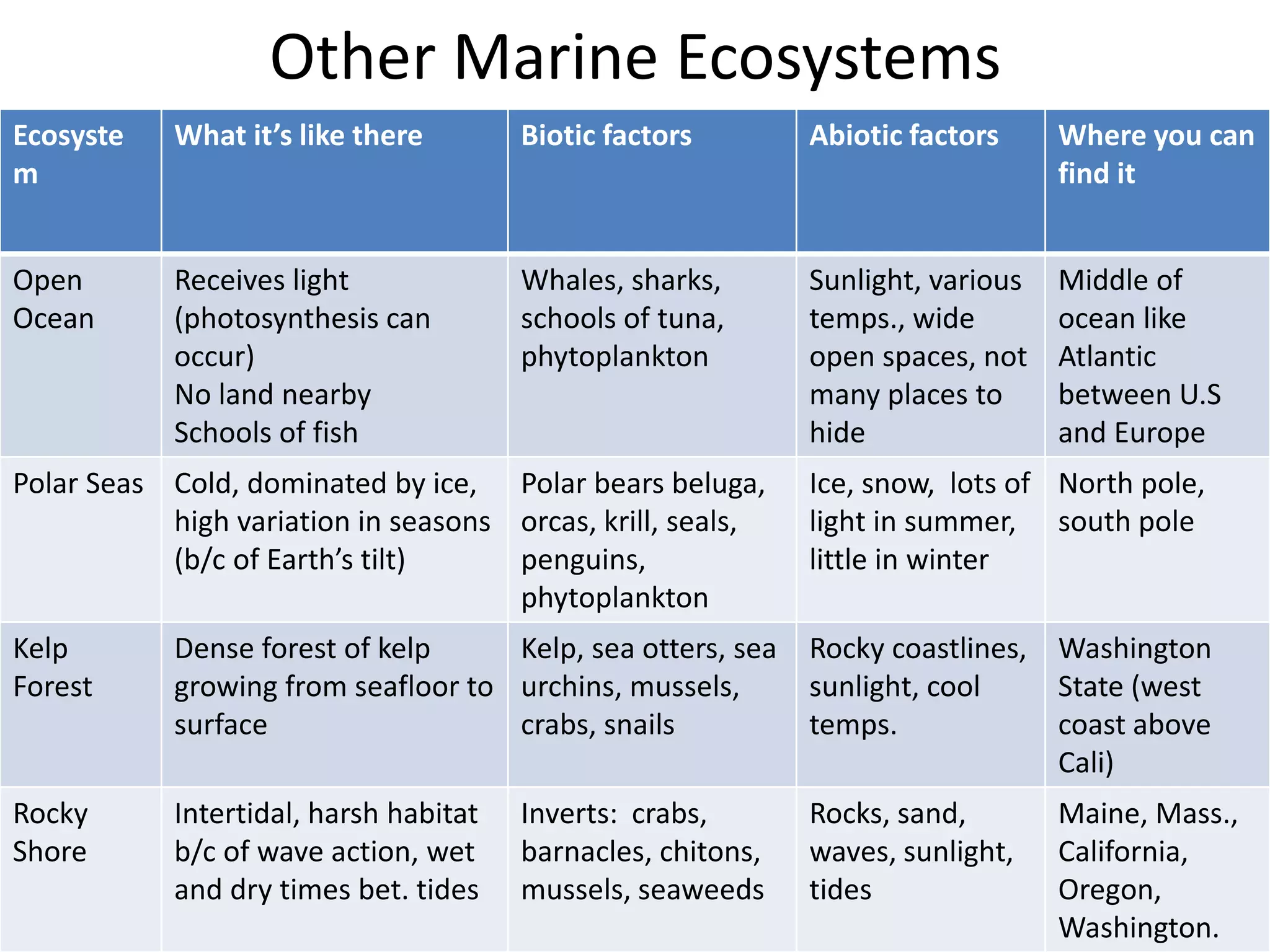
Red,     White, and Black mangrove        White Mangrove
leaves
Deep Sea
• Get Blue Marine Biology Book from shelf
  – Read pgs. 407-419 and answer SHORT
  ANSWER questions on pg. 423 # 1-7
     • Be sure to restate the question in your answer or write
       the question since you don’t have these questions to
       refer back to in your text books.
Other Marine Ecosystems
Ecosyste    What it’s like there        Biotic factors        Abiotic factors     Where you can
m                                                                                 find it


Open        Receives light              Whales, sharks,       Sunlight, various   Middle of
Ocean       (photosynthesis can         schools of tuna,      temps., wide        ocean like
            occur)                      phytoplankton         open spaces, not    Atlantic
            No land nearby                                    many places to      between U.S
            Schools of fish                                   hide                and Europe
Polar Seas Cold, dominated by ice, Polar bears beluga,        Ice, snow, lots of North pole,
           high variation in seasons orcas, krill, seals,     light in summer, south pole
           (b/c of Earth’s tilt)     penguins,                little in winter
                                     phytoplankton
Kelp        Dense forest of kelp     Kelp, sea otters, sea    Rocky coastlines, Washington
Forest      growing from seafloor to urchins, mussels,        sunlight, cool    State (west
            surface                  crabs, snails            temps.            coast above
                                                                                Cali)
Rocky       Intertidal, harsh habitat   Inverts: crabs,       Rocks, sand,        Maine, Mass.,
Shore       b/c of wave action, wet     barnacles, chitons,   waves, sunlight,    California,
            and dry times bet. tides    mussels, seaweeds     tides               Oregon,
                                                                                  Washington.
Warm-up- as scientist study and track marine animals, why is it
 important to understand that the ocean is comprised of many
                          ecosystems?

• Case Study 1- Whale Falls
  – View Video- Answer 3 questions on pgs. 9
  – Read pg 10- answer question 12.
Read pgs. 14-16 Marine Sanctuaries
   and Florida’s Marine Sanctuary
• Answer Following:
  #17 on pg. 15
  And
  Why will it never be possible for a President to
    “okay” drilling for Oil in the Florida Key’s. Give 2
    reasons or examples of why.

Lesson 1 marine ecosystems

  • 1.
    Lesson 1 MarineEcosystems
  • 2.
    Factors that influenceall ecosystems • Abiotic Factors • Biotic Factors – pH – Organisms – Salinity • Predators/prey/ parasites – Dissolved Oxygen – Turbidity – Lat/Long. – Observation of weather – Temperature – Light – Waves/Tides
  • 3.
    Coral Reefs • Mostbiodiverse marine ecosystem – Biodiversity =health of ecosystem
  • 4.
    Abiotic Factors • Abioticfactors – Temperature: Tropical – Shallow waters: Availability of light – Wave action – Nutrient poor: why water is pretty blue in color= lacks nutrients • So why is it the most biodiverse ecosystem when there are so few nutrients available? – Symbiosis!!!! What is definition?
  • 5.
    Biotic Factors • Mutualisticrelationship – Corals = animals – Zooxanthellae: zooplankton • Can’t live without another. Coral give zooxanthellae N, P, and CO2 and zoo give corals carbohydrates
  • 6.
    • Forms basisof community that provides food and shelter to all other organisms
  • 7.
  • 8.
    Types of Reefs •Fringing Reefs- directly borders landmass: – Ex. Cayman Islands • Barriers Reefs: separated from landmass by a lagoon – Ex: Australia and Florida • Atolls: arise from deep water and have lagoon in center – Most in pacific islands
  • 9.
    Threats to Reefs 1. Coral Bleaching : (take notes) http://www.youtube.com/watch? v=7EGvE5mTxRI&safety_mode=tr ue&persist_safety_mode=1&safe =active 2. Disease 1. Black band disease-caused by bacteria 2. White pox- killed 85% of Elkhorn corals in Keys 3. Others 3. Human Impact 1. Coastal development = increased runoff (leads to algae blooms like red tides) 2. Activities: snorkeling/diving disturbing corals
  • 10.
    What is anestuary? • Partially enclosed body of water that is open to the sea/ocean(salt h2o) and has rivers and streams(freshwater) running into it.
  • 11.
    Has characteristics ofBOTH marine and Freshwater environments • Marine characteristics • Freshwater characteristics – Salinity – Flow of freshwater – Tides – Flow of sediments – waves (sand, silt, gravel)
  • 13.
    What is asalt marsh? • Type of estuary – Located in the intertidal zone between land and salt/brackish water – Dominated by salt tolerant plants – Important for environment • to the food web and export nutrients to water • Provide habitats for birds and other land animals • Serve as nurseries for juvenile fish • Protect coast from erosion from hurricanes
  • 15.
  • 16.
  • 17.
    Genus Species- Spartinapatens Common Name- saltmeadow cordgrass
  • 18.
    Genus species- Salicorniavirginica Common name-Pickleweed
  • 19.
    Genus species- Batismaritima Common Name- turtleweed
  • 20.
  • 21.
  • 22.
  • 23.
  • 24.
    Mangroves • Found insouth of St. Augustine to Key West – More stable salinity than salt marsh • 3 genra local to Florida – Rhizophora mangle –red mangle-----prop roots – Avicennia germinans – black mangle--- pneumatophores – Laguncularia racemosa- white mangle • Distinctive by their root system and pods
  • 26.
    Ecologically Important • Mangroveleaf little (detritus) forms the basis of the food web. • Supports many commercially important species of fish – Blue crab – Shrimp – Lobster – Sea trout
  • 27.
    • Habitats – Prop root and pneumatophores provide shelter – West Coast of Fl. roots become incrusted with coon oyster – East Coast of Fl. Mussels and barnacles are dominant mollusk species. – Other species can find • King Conch • Periwinkle snails • Sea stars brittlestars • Sea squirts
  • 29.
    Red Mangrove Black Mangrove Red, White, and Black mangrove White Mangrove leaves
  • 30.
    Deep Sea • GetBlue Marine Biology Book from shelf – Read pgs. 407-419 and answer SHORT ANSWER questions on pg. 423 # 1-7 • Be sure to restate the question in your answer or write the question since you don’t have these questions to refer back to in your text books.
  • 31.
    Other Marine Ecosystems Ecosyste What it’s like there Biotic factors Abiotic factors Where you can m find it Open Receives light Whales, sharks, Sunlight, various Middle of Ocean (photosynthesis can schools of tuna, temps., wide ocean like occur) phytoplankton open spaces, not Atlantic No land nearby many places to between U.S Schools of fish hide and Europe Polar Seas Cold, dominated by ice, Polar bears beluga, Ice, snow, lots of North pole, high variation in seasons orcas, krill, seals, light in summer, south pole (b/c of Earth’s tilt) penguins, little in winter phytoplankton Kelp Dense forest of kelp Kelp, sea otters, sea Rocky coastlines, Washington Forest growing from seafloor to urchins, mussels, sunlight, cool State (west surface crabs, snails temps. coast above Cali) Rocky Intertidal, harsh habitat Inverts: crabs, Rocks, sand, Maine, Mass., Shore b/c of wave action, wet barnacles, chitons, waves, sunlight, California, and dry times bet. tides mussels, seaweeds tides Oregon, Washington.
  • 32.
    Warm-up- as scientiststudy and track marine animals, why is it important to understand that the ocean is comprised of many ecosystems? • Case Study 1- Whale Falls – View Video- Answer 3 questions on pgs. 9 – Read pg 10- answer question 12.
  • 33.
    Read pgs. 14-16Marine Sanctuaries and Florida’s Marine Sanctuary • Answer Following: #17 on pg. 15 And Why will it never be possible for a President to “okay” drilling for Oil in the Florida Key’s. Give 2 reasons or examples of why.