SAMPLING THE BENTHOS
Sampling the Benthos Used to determine: diversity biomass distribution of life historical data
Sampling the Benthos Must assume that a small amount of material is representative of the larger area Therefore, must take as many samples as time and money allow
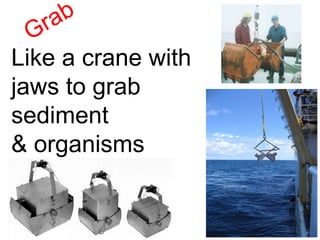
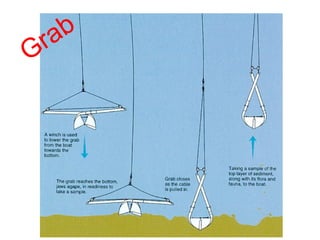
Grab Like a crane with jaws to grab sediment  & organisms
Grab
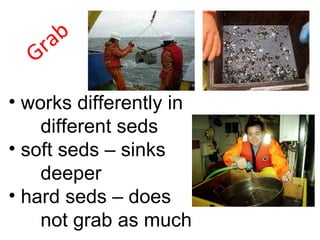
Grab works differently in different seds soft seds – sinks deeper hard seds – does not grab as much
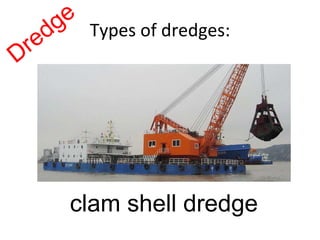
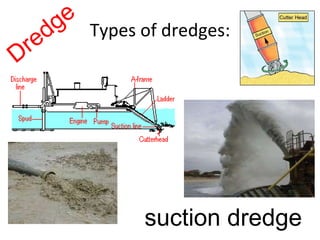
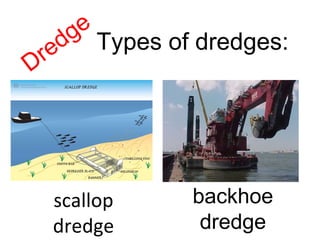
Dredge - Collects materials from  benthic zone Often used to clear channels for navigation - Sometimes to collect organisms
Types of dredges: Dredge clam shell dredge
Types of dredges: Dredge suction dredge
scallop dredge backhoe dredge Types of dredges: Dredge
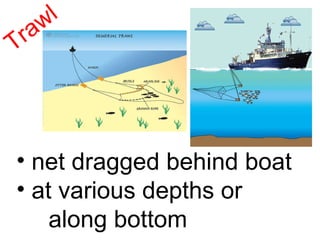
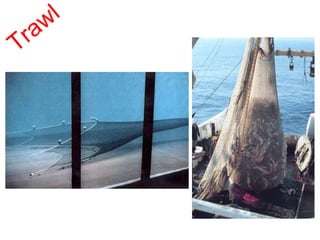
Trawl net dragged behind boat at various depths or along bottom
Trawl
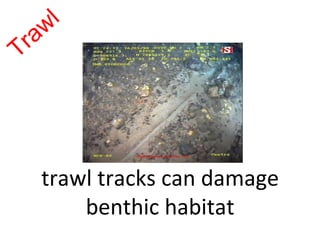
trawl tracks can damage benthic habitat Trawl
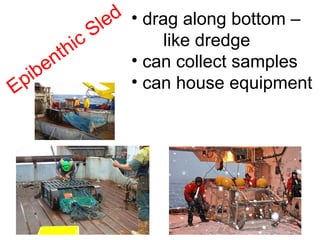
Epibenthic Sled drag along bottom –  like dredge can collect samples can house equipment
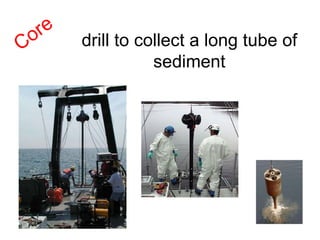
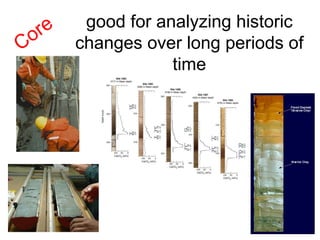
Core drill to collect a long tube of sediment
Core good for analyzing historic changes over long periods of time
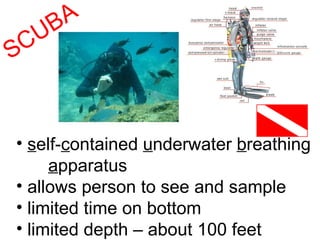
SCUBA s elf- c ontained  u nderwater  b reathing a pparatus allows person to see and sample limited time on bottom limited depth – about 100 feet
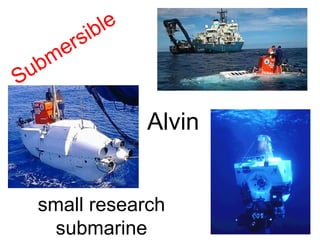
Submersible Alvin small research submarine
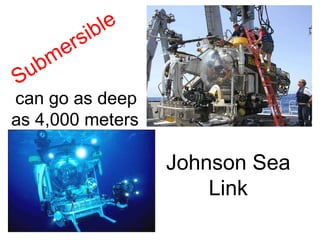
Submersible Johnson Sea Link can go as deep as 4,000 meters
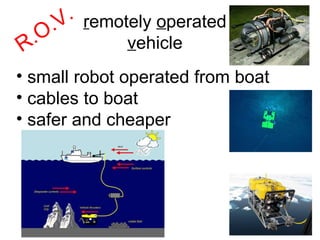
R.O.V. r emotely  o perated v ehicle small robot operated from boat cables to boat safer and cheaper
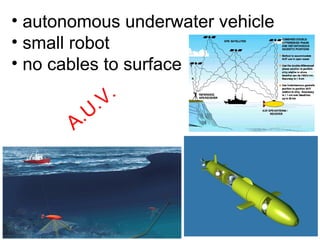
A.U.V. autonomous underwater vehicle small robot no cables to surface
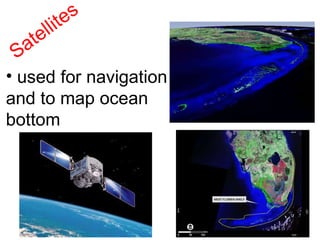
Satellites used for navigation and to map ocean bottom
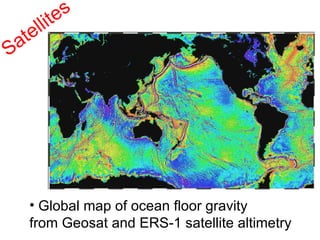
Satellites Global map of ocean floor gravity from Geosat and ERS-1 satellite altimetry
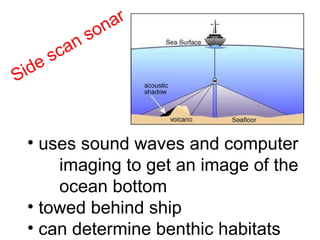
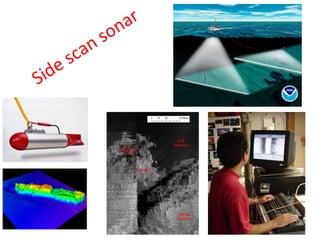
Side scan sonar uses sound waves and computer imaging to get an image of the ocean bottom towed behind ship can determine benthic habitats
Side scan sonar

Sampling The Benthos