Fish Morphology
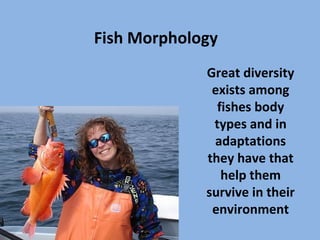
Great diversity
exists among
fishes body
types and in
adaptations
they have that
help them
survive in their
environment
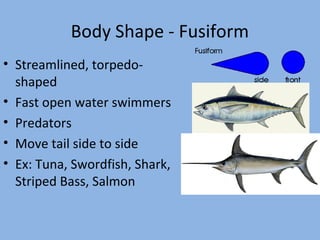
Body Shape - Fusiform
• Streamlined, torpedo-
shaped
• Fast open water swimmers
• Predators
• Move tail side to side
• Ex: Tuna, Swordfish, Shark,
Striped Bass, Salmon
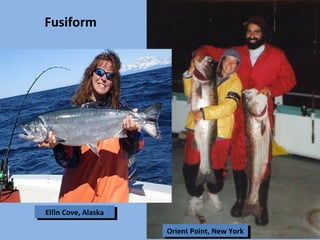
Fusiform
Elfin Cove, AlaskaElfin Cove, Alaska
Orient Point, New YorkOrient Point, New York
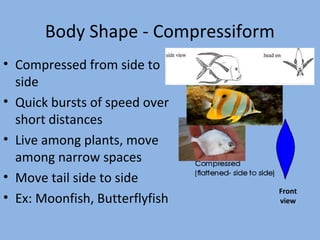
Body Shape - Compressiform
• Compressed from side to
side
• Quick bursts of speed over
short distances
• Live among plants, move
among narrow spaces
• Move tail side to side
• Ex: Moonfish, Butterflyfish
Front
view
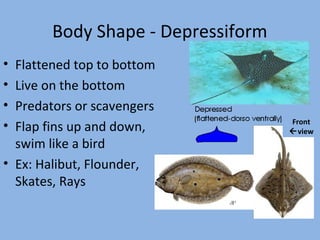
Body Shape - Depressiform
• Flattened top to bottom
• Live on the bottom
• Predators or scavengers
• Flap fins up and down,
swim like a bird
• Ex: Halibut, Flounder,
Skates, Rays
Front
view
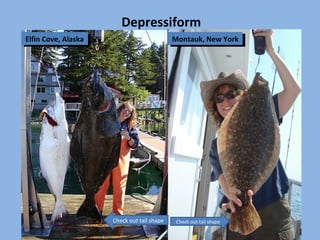
Elfin Cove, AlaskaElfin Cove, Alaska Montauk, New YorkMontauk, New York
Check out tail shape Check out tail shape
Depressiform
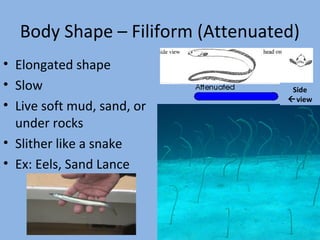
Body Shape – Filiform (Attenuated)
• Elongated shape
• Slow
• Live soft mud, sand, or
under rocks
• Slither like a snake
• Ex: Eels, Sand Lance
Side
view
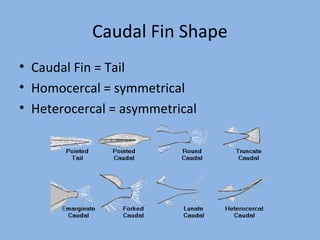
Caudal Fin Shape
• Caudal Fin = Tail
• Homocercal = symmetrical
• Heterocercal = asymmetrical
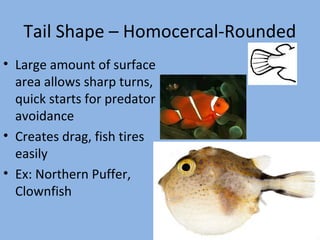
Tail Shape – Homocercal-Rounded
• Large amount of surface
area allows sharp turns,
quick starts for predator
avoidance
• Creates drag, fish tires
easily
• Ex: Northern Puffer,
Clownfish
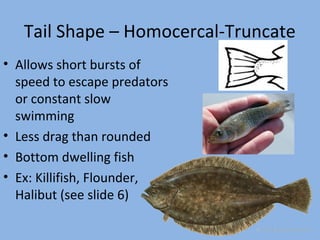
Tail Shape – Homocercal-Truncate
• Allows short bursts of
speed to escape predators
or constant slow
swimming
• Less drag than rounded
• Bottom dwelling fish
• Ex: Killifish, Flounder,
Halibut (see slide 6)
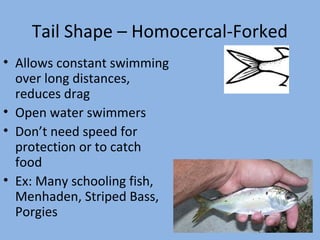
Tail Shape – Homocercal-Forked
• Allows constant swimming
over long distances,
reduces drag
• Open water swimmers
• Don’t need speed for
protection or to catch
food
• Ex: Many schooling fish,
Menhaden, Striped Bass,
Porgies
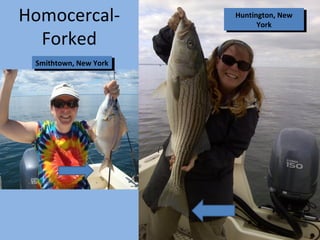
Huntington, New
York
Huntington, New
York
Smithtown, New YorkSmithtown, New York
Homocercal-
Forked
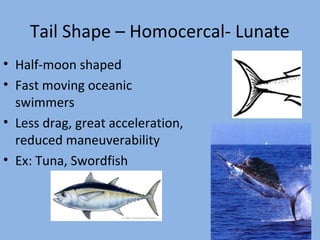
Tail Shape – Homocercal- Lunate
• Half-moon shaped
• Fast moving oceanic
swimmers
• Less drag, great acceleration,
reduced maneuverability
• Ex: Tuna, Swordfish
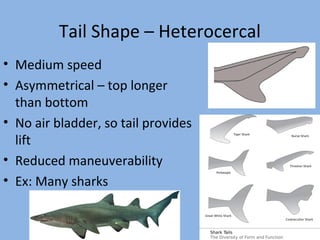
Tail Shape – Heterocercal
• Medium speed
• Asymmetrical – top longer
than bottom
• No air bladder, so tail provides
lift
• Reduced maneuverability
• Ex: Many sharks

Fish morphology

  • 1.
    Fish Morphology Great diversity existsamong fishes body types and in adaptations they have that help them survive in their environment
  • 2.
    Body Shape -Fusiform • Streamlined, torpedo- shaped • Fast open water swimmers • Predators • Move tail side to side • Ex: Tuna, Swordfish, Shark, Striped Bass, Salmon
  • 3.
    Fusiform Elfin Cove, AlaskaElfinCove, Alaska Orient Point, New YorkOrient Point, New York
  • 4.
    Body Shape -Compressiform • Compressed from side to side • Quick bursts of speed over short distances • Live among plants, move among narrow spaces • Move tail side to side • Ex: Moonfish, Butterflyfish Front view
  • 5.
    Body Shape -Depressiform • Flattened top to bottom • Live on the bottom • Predators or scavengers • Flap fins up and down, swim like a bird • Ex: Halibut, Flounder, Skates, Rays Front view
  • 6.
    Elfin Cove, AlaskaElfinCove, Alaska Montauk, New YorkMontauk, New York Check out tail shape Check out tail shape Depressiform
  • 7.
    Body Shape –Filiform (Attenuated) • Elongated shape • Slow • Live soft mud, sand, or under rocks • Slither like a snake • Ex: Eels, Sand Lance Side view
  • 8.
    Caudal Fin Shape •Caudal Fin = Tail • Homocercal = symmetrical • Heterocercal = asymmetrical
  • 9.
    Tail Shape –Homocercal-Rounded • Large amount of surface area allows sharp turns, quick starts for predator avoidance • Creates drag, fish tires easily • Ex: Northern Puffer, Clownfish
  • 10.
    Tail Shape –Homocercal-Truncate • Allows short bursts of speed to escape predators or constant slow swimming • Less drag than rounded • Bottom dwelling fish • Ex: Killifish, Flounder, Halibut (see slide 6)
  • 11.
    Tail Shape –Homocercal-Forked • Allows constant swimming over long distances, reduces drag • Open water swimmers • Don’t need speed for protection or to catch food • Ex: Many schooling fish, Menhaden, Striped Bass, Porgies
  • 12.
    Huntington, New York Huntington, New York Smithtown,New YorkSmithtown, New York Homocercal- Forked
  • 13.
    Tail Shape –Homocercal- Lunate • Half-moon shaped • Fast moving oceanic swimmers • Less drag, great acceleration, reduced maneuverability • Ex: Tuna, Swordfish
  • 14.
    Tail Shape –Heterocercal • Medium speed • Asymmetrical – top longer than bottom • No air bladder, so tail provides lift • Reduced maneuverability • Ex: Many sharks