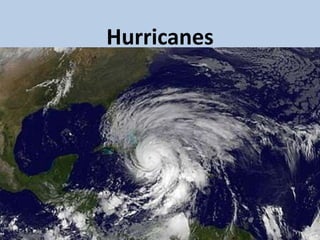
Hurricanes
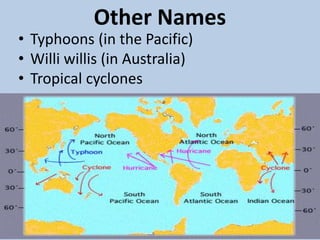
Other Names
• Typhoons (in the Pacific)
• Willi willis (in Australia)
• Tropical cyclones
Hurricane Formation
• Hurricanes tend to form at 15 - 20⁰ N or S of
equator (Not at equator since Coriolis is weak
there)
• Require warm, humid air
• Are low pressure cells (tropical depressions)
• Strengthen and speed up as they travel from origin
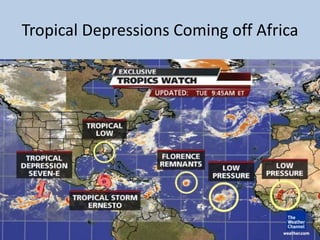
Tropical Depressions Coming off Africa
Hurricane Formation cont.
• Low pressure cell moves in
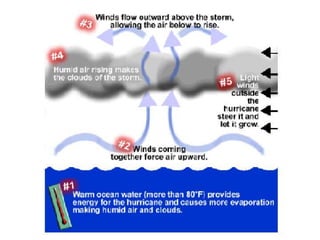
• Air warmed up by the warm ocean
• Water evaporates
• Warm air rises & spirals due to Coriolis
• A column of warm air forms & rises
Hurricane Formation cont.
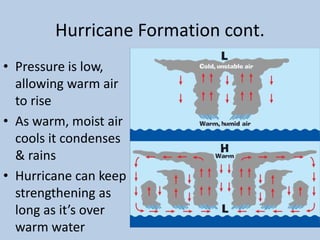
• Pressure is low,
allowing warm air
to rise
• As warm, moist air
cools it condenses
& rains
• Hurricane can keep
strengthening as
long as it’s over
warm water
Hurricane Structure
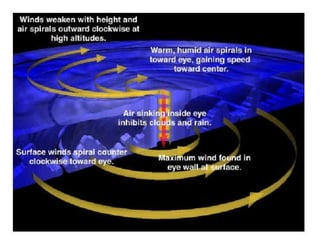
• Donut shaped clouds with a hole (the eye) in
the middle
• Can be a few hundred miles in diameter &
nine miles high
• Eye – can be up to 20 miles wide
Calm
Warm air rises due to low pressure
Cold dry air sinking prevents rain
• Warm air exits top & spirals out due to Coriolis
Hurricane Structure cont.
• Northern Hemisphere – spiral counterclockwise
• Southern Hemisphere – spiral clockwise
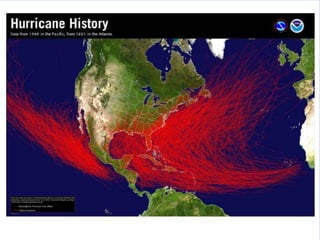
• Blown across ocean by Tradewinds, but affected by
Coriolis, so move North and South at 3-25 mph
-In the Atlantic,
they move up from
the Caribbean
Hurricane Strength
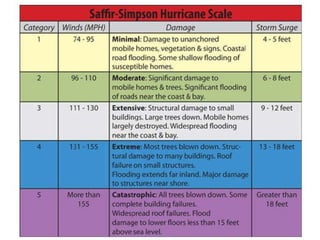
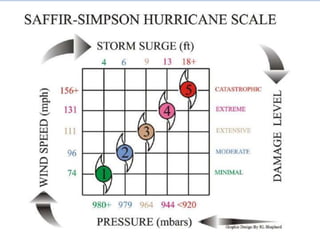
• Tropical Depression – winds > 38 mph
• Tropical Storm – winds between 39 – 73 mph
• Hurricane Winds - >74 mph
The Demise of the Hurricane
• If upper level winds are strong they can sheer off
the top of the hurricane & cause it to break up
• Hurricanes over cool water can’t sustain themselves
• Hurricanes over land can’t sustain themselves (but
can lead to the development of tornadoes inland)
• Atlantic hurricane season is June – December (but
they can rarely occur at other times)
The Power of Hurricanes
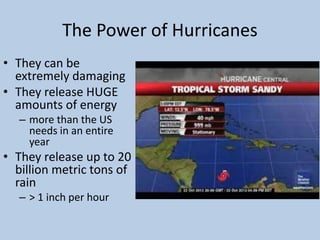
• They can be
extremely damaging
• They release HUGE
amounts of energy
– more than the US
needs in an entire
year
• They release up to 20
billion metric tons of
rain
– > 1 inch per hour
Types of Damage Typical of Hurricanes
• Wind damage
• Flooding from all that rain
• Storm surge damage, especially if it hits during high
tide and/or spring tide
– Ex: Bangladesh (1970) had a 40 foot storm surge
– Ex Massapequa (2012) had a 15 foot storm surge
• (5 feet above my in-laws basement and into the 1st floor)

Hurricanes

  • 1.
  • 2.
    Other Names • Typhoons(in the Pacific) • Willi willis (in Australia) • Tropical cyclones
  • 3.
    Hurricane Formation • Hurricanestend to form at 15 - 20⁰ N or S of equator (Not at equator since Coriolis is weak there) • Require warm, humid air • Are low pressure cells (tropical depressions) • Strengthen and speed up as they travel from origin
  • 4.
  • 5.
    Hurricane Formation cont. •Low pressure cell moves in • Air warmed up by the warm ocean • Water evaporates • Warm air rises & spirals due to Coriolis • A column of warm air forms & rises
  • 6.
    Hurricane Formation cont. •Pressure is low, allowing warm air to rise • As warm, moist air cools it condenses & rains • Hurricane can keep strengthening as long as it’s over warm water
  • 9.
    Hurricane Structure • Donutshaped clouds with a hole (the eye) in the middle • Can be a few hundred miles in diameter & nine miles high • Eye – can be up to 20 miles wide Calm Warm air rises due to low pressure Cold dry air sinking prevents rain • Warm air exits top & spirals out due to Coriolis
  • 10.
    Hurricane Structure cont. •Northern Hemisphere – spiral counterclockwise • Southern Hemisphere – spiral clockwise • Blown across ocean by Tradewinds, but affected by Coriolis, so move North and South at 3-25 mph -In the Atlantic, they move up from the Caribbean
  • 12.
    Hurricane Strength • TropicalDepression – winds > 38 mph • Tropical Storm – winds between 39 – 73 mph • Hurricane Winds - >74 mph
  • 15.
    The Demise ofthe Hurricane • If upper level winds are strong they can sheer off the top of the hurricane & cause it to break up • Hurricanes over cool water can’t sustain themselves • Hurricanes over land can’t sustain themselves (but can lead to the development of tornadoes inland) • Atlantic hurricane season is June – December (but they can rarely occur at other times)
  • 16.
    The Power ofHurricanes • They can be extremely damaging • They release HUGE amounts of energy – more than the US needs in an entire year • They release up to 20 billion metric tons of rain – > 1 inch per hour
  • 17.
    Types of DamageTypical of Hurricanes • Wind damage • Flooding from all that rain • Storm surge damage, especially if it hits during high tide and/or spring tide – Ex: Bangladesh (1970) had a 40 foot storm surge – Ex Massapequa (2012) had a 15 foot storm surge • (5 feet above my in-laws basement and into the 1st floor)