CHAPTER 2 Differential Equation
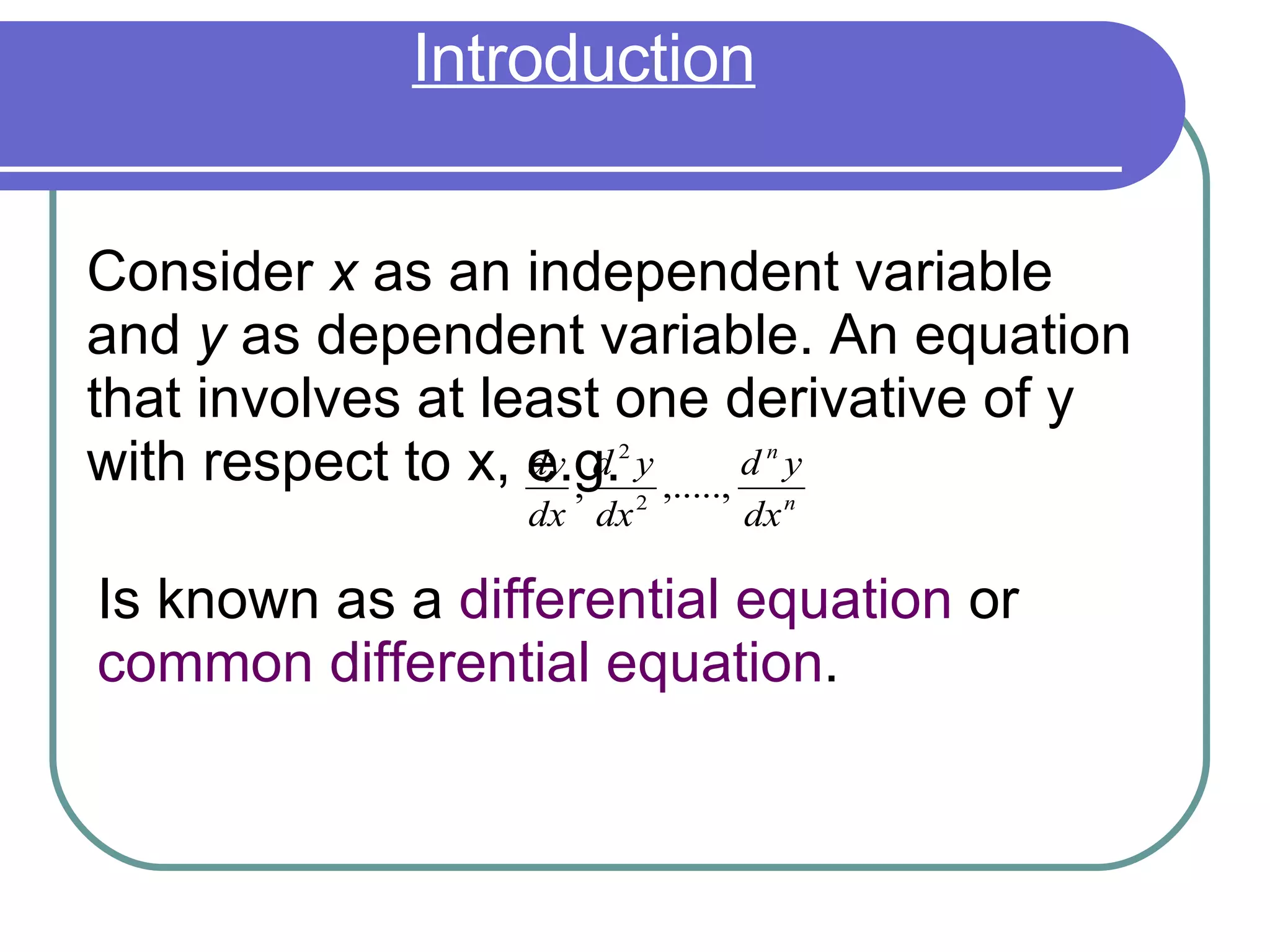
Introduction Consider  x  as an independent variable and  y  as dependent variable. An equation that involves at least one derivative of y with respect to x, e.g.  Is known as a  differential equation  or  common differential equation .
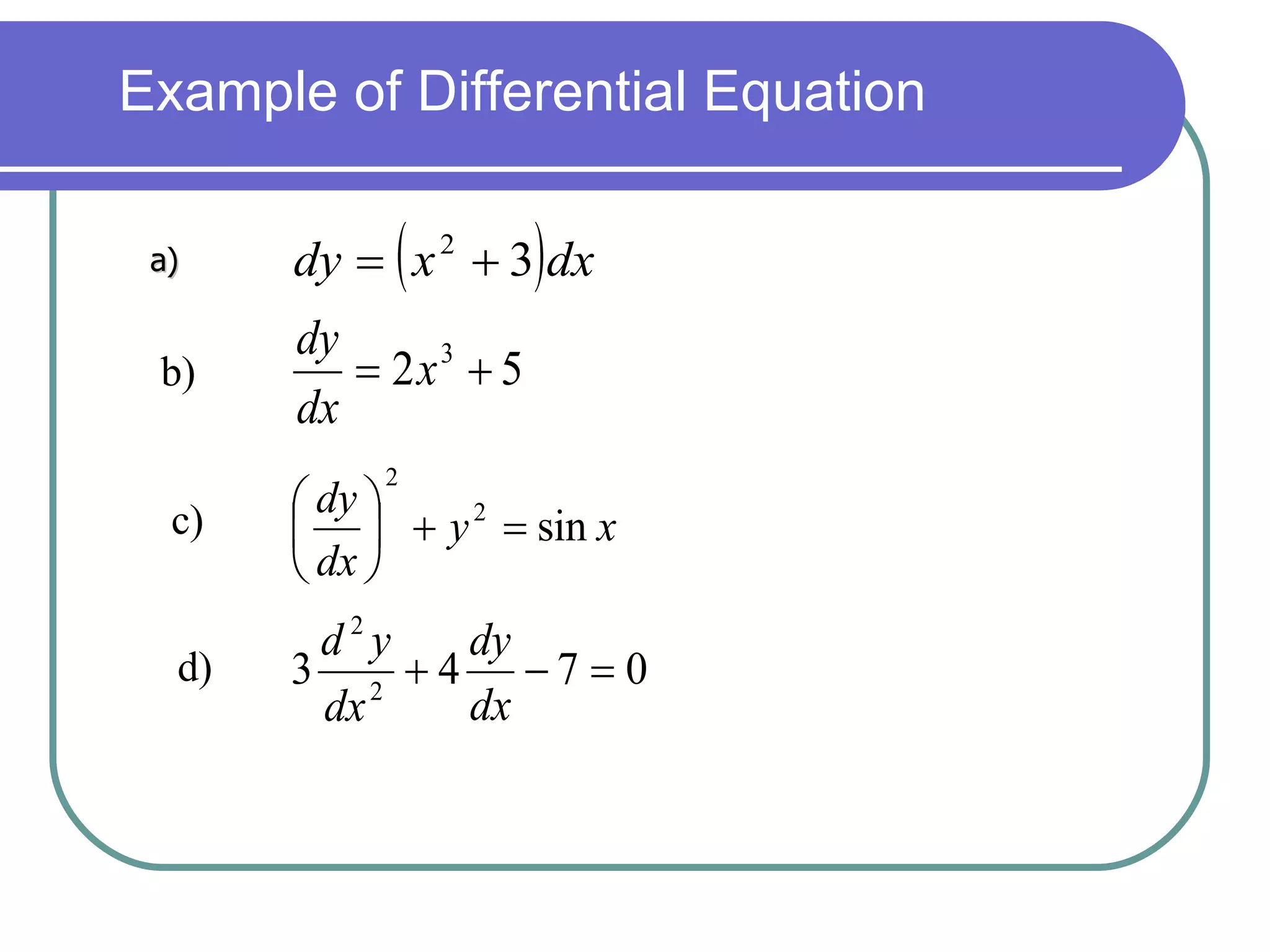
b) c) d) a) Example of Differential Equation
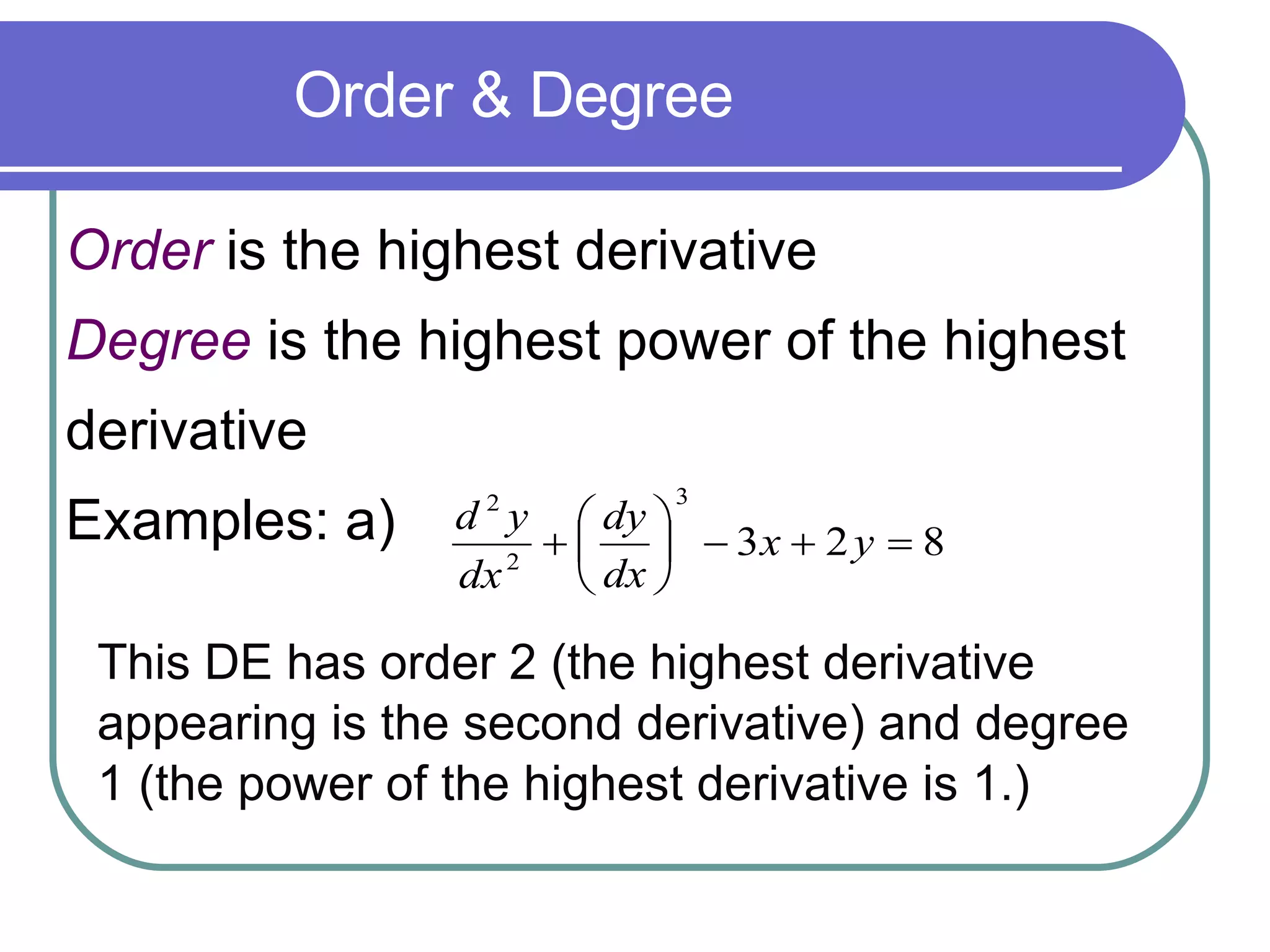
Order  is the highest derivative Degree  is the highest power of the highest  derivative  Examples: a) This   DE has order 2 (the highest derivative appearing is the second derivative) and degree 1 (the power of the highest derivative is 1.) Order & Degree
In this chapter we only deal with first order,  first degree differential equations. A solution for a differential equation is a  function whose elements and derivatives may be  substituted into the differential equation. There  are two types of solution for differential equations
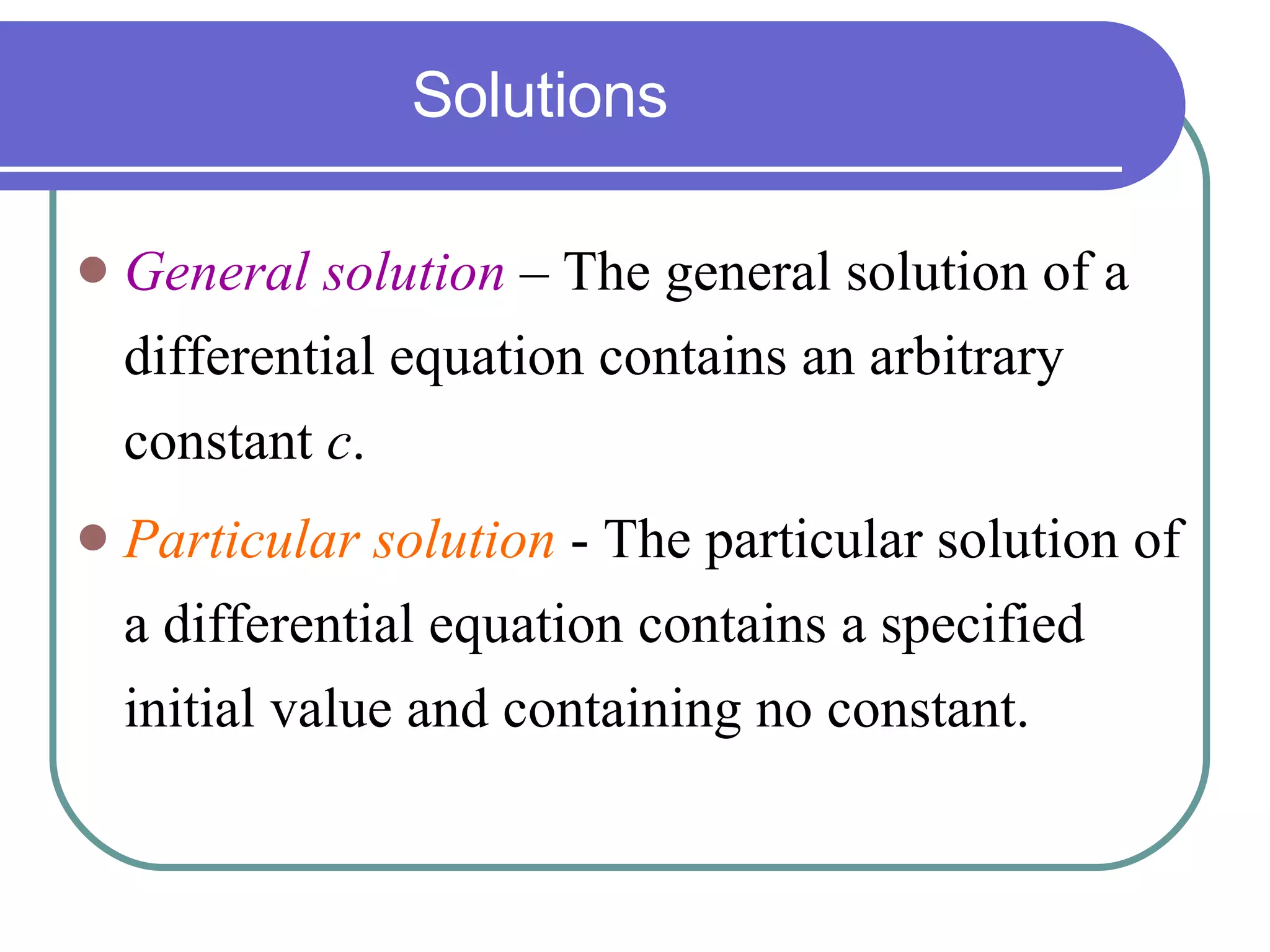
General solution  – The general solution of a differential equation contains an arbitrary constant  c . Particular solution  - The particular solution of a differential equation contains a specified initial value and containing no constant. Solutions
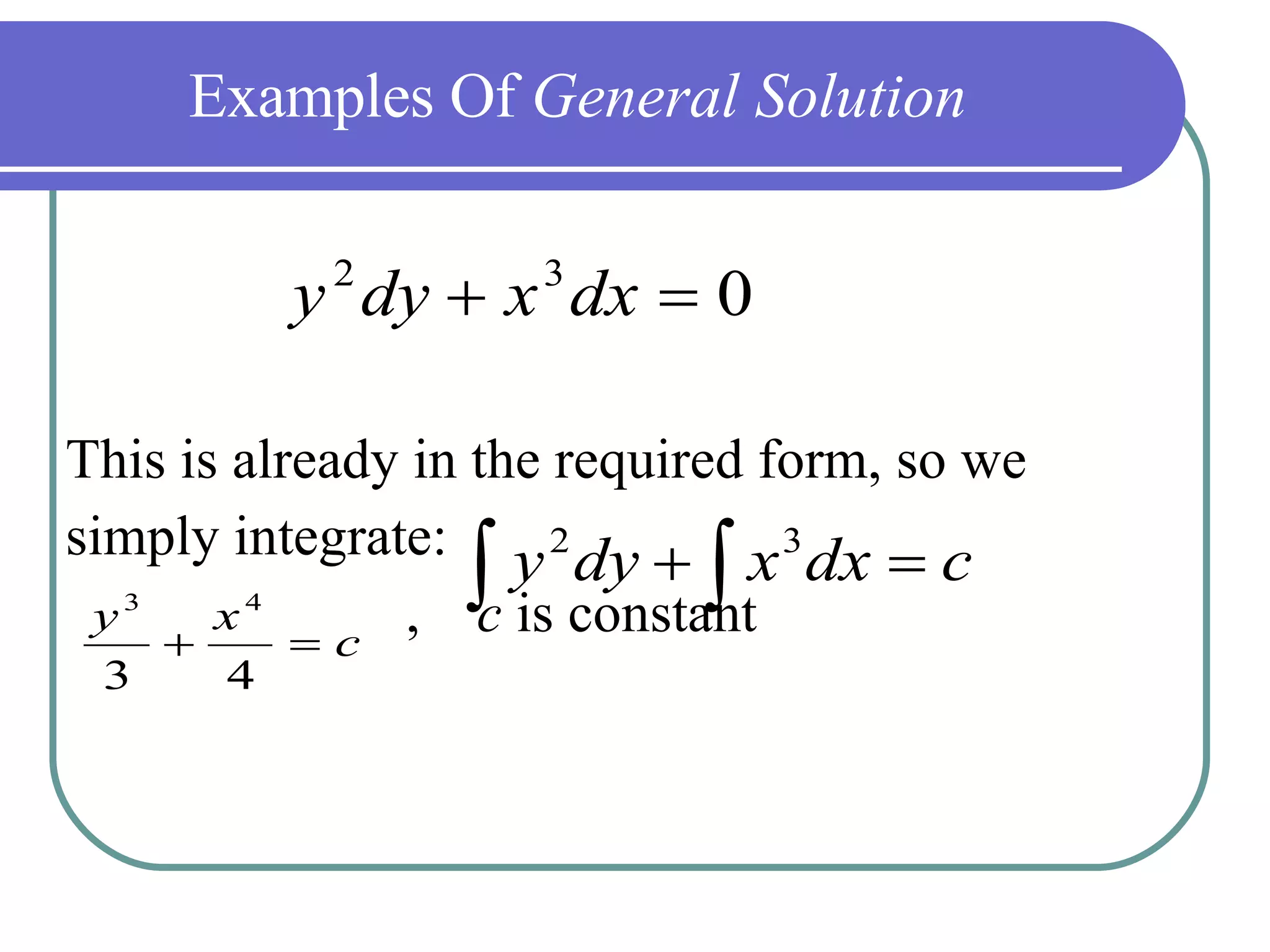
Examples Of  General Solution   This is already in the required form, so we  simply integrate: ,  c  is constant
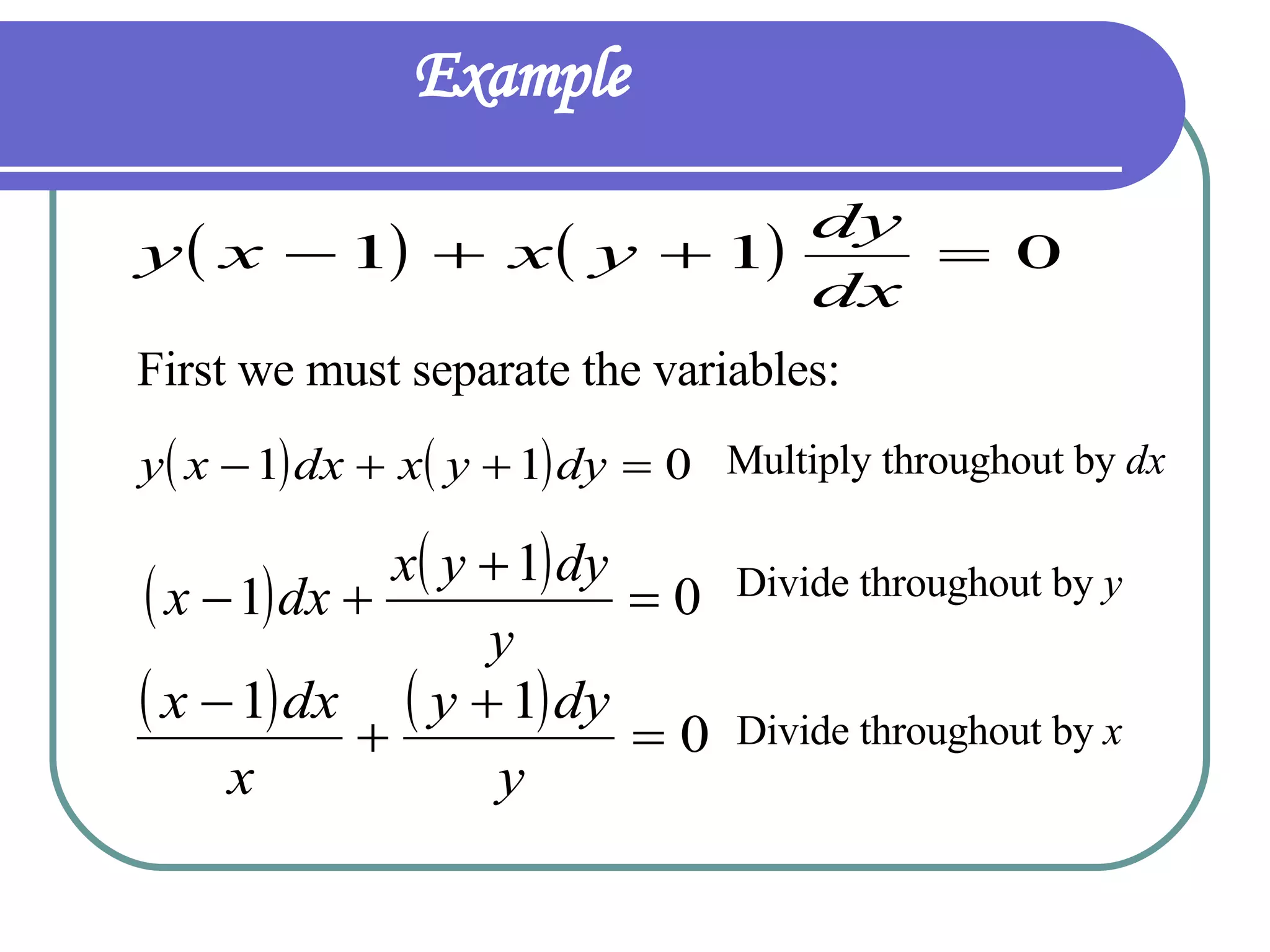
Example   First we must separate the variables: Multiply throughout by  dx   Divide throughout by  y Divide throughout by  x
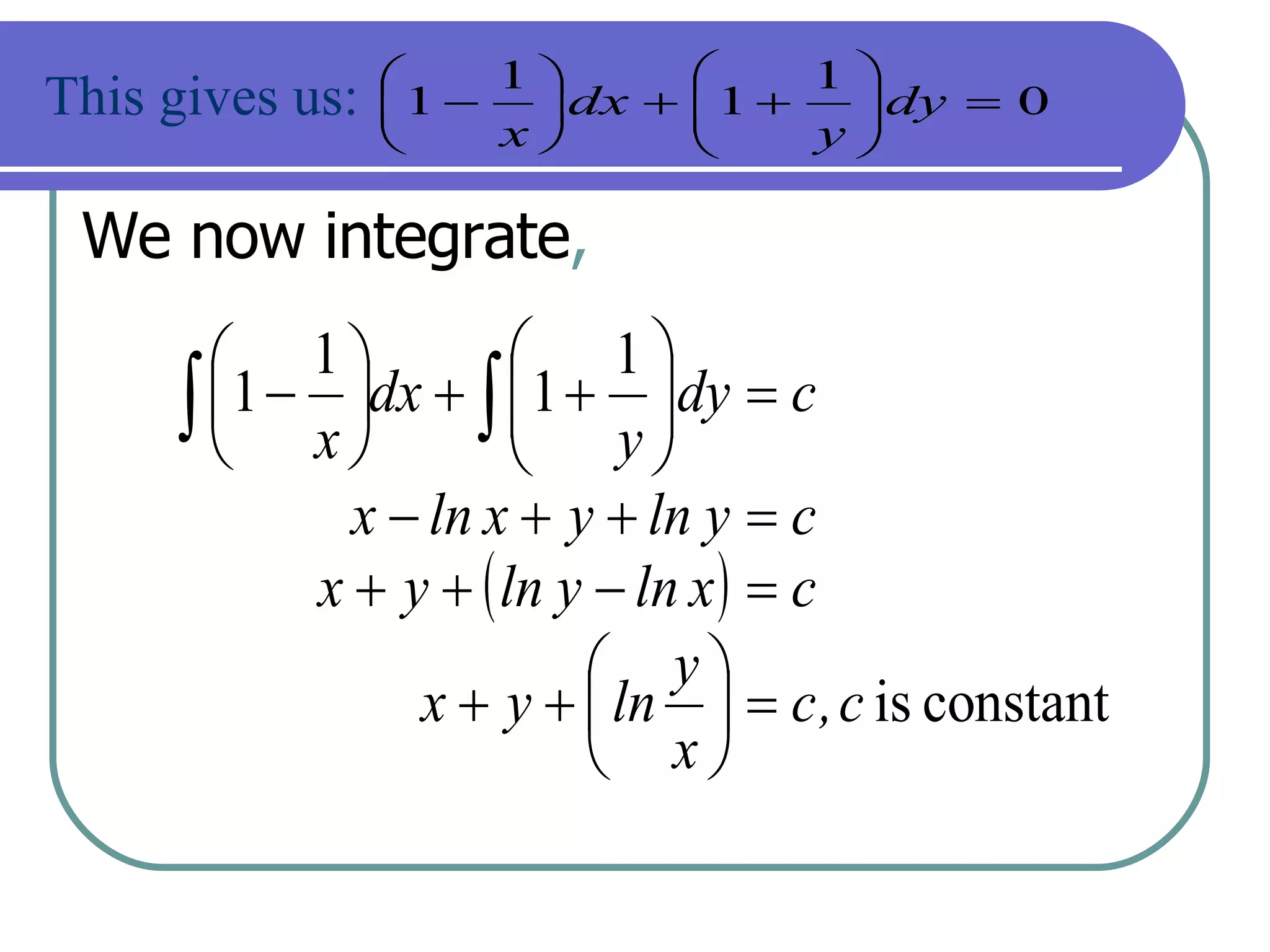
This gives us: We now integrate ,
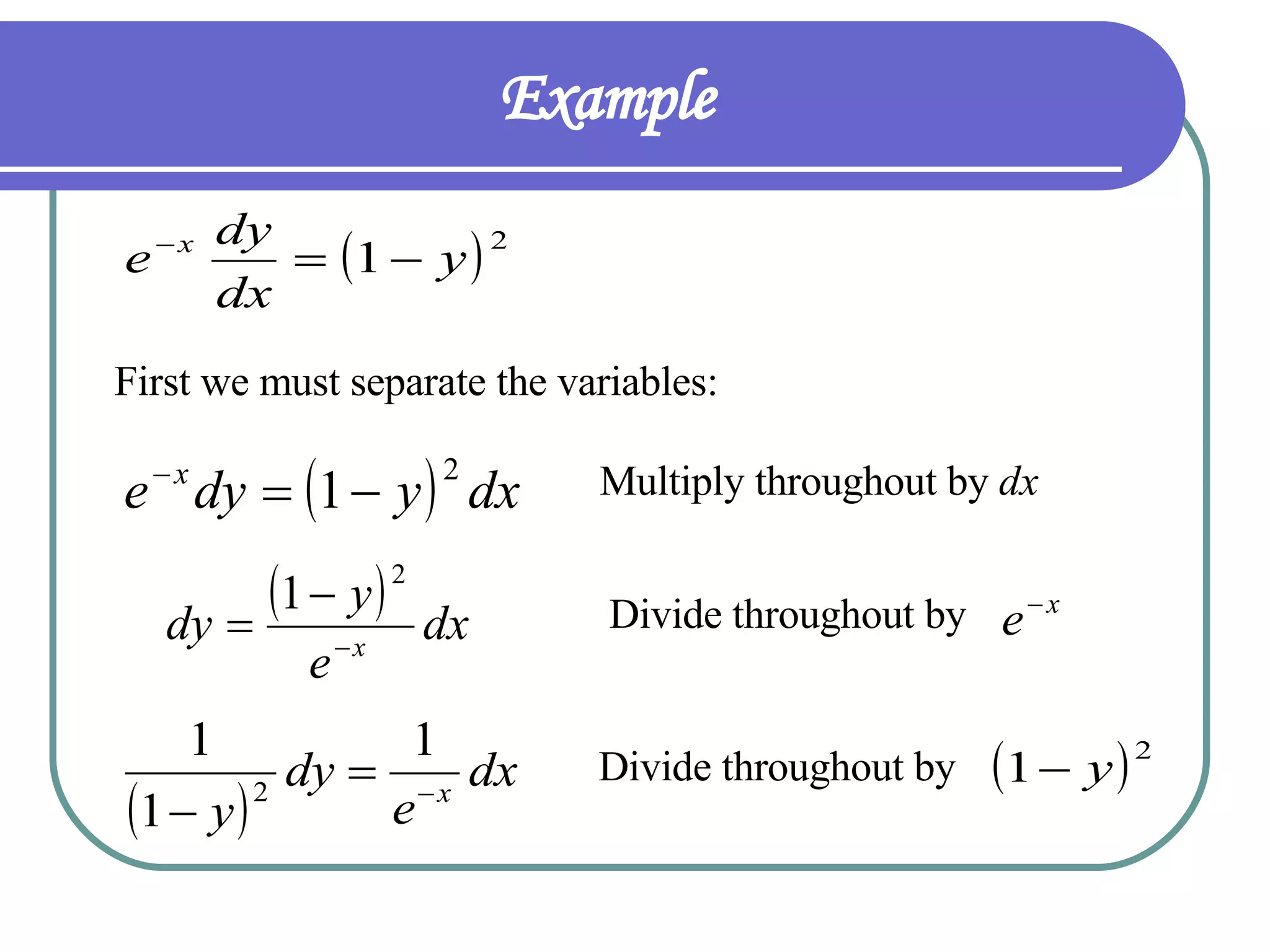
Example  First we must separate the variables: Multiply throughout by  dx   Divide throughout by   Divide throughout by
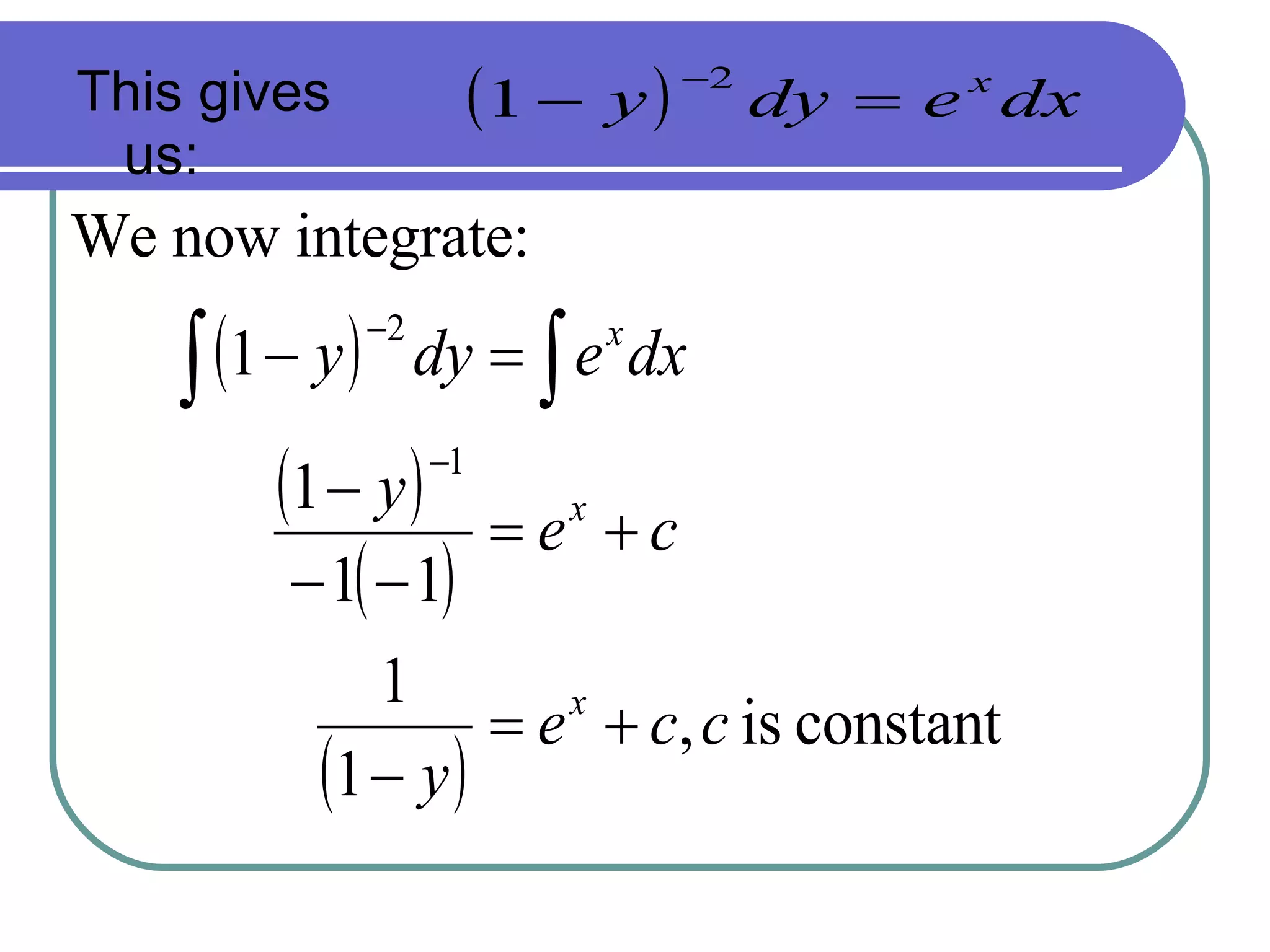
This gives us: We now integrate:
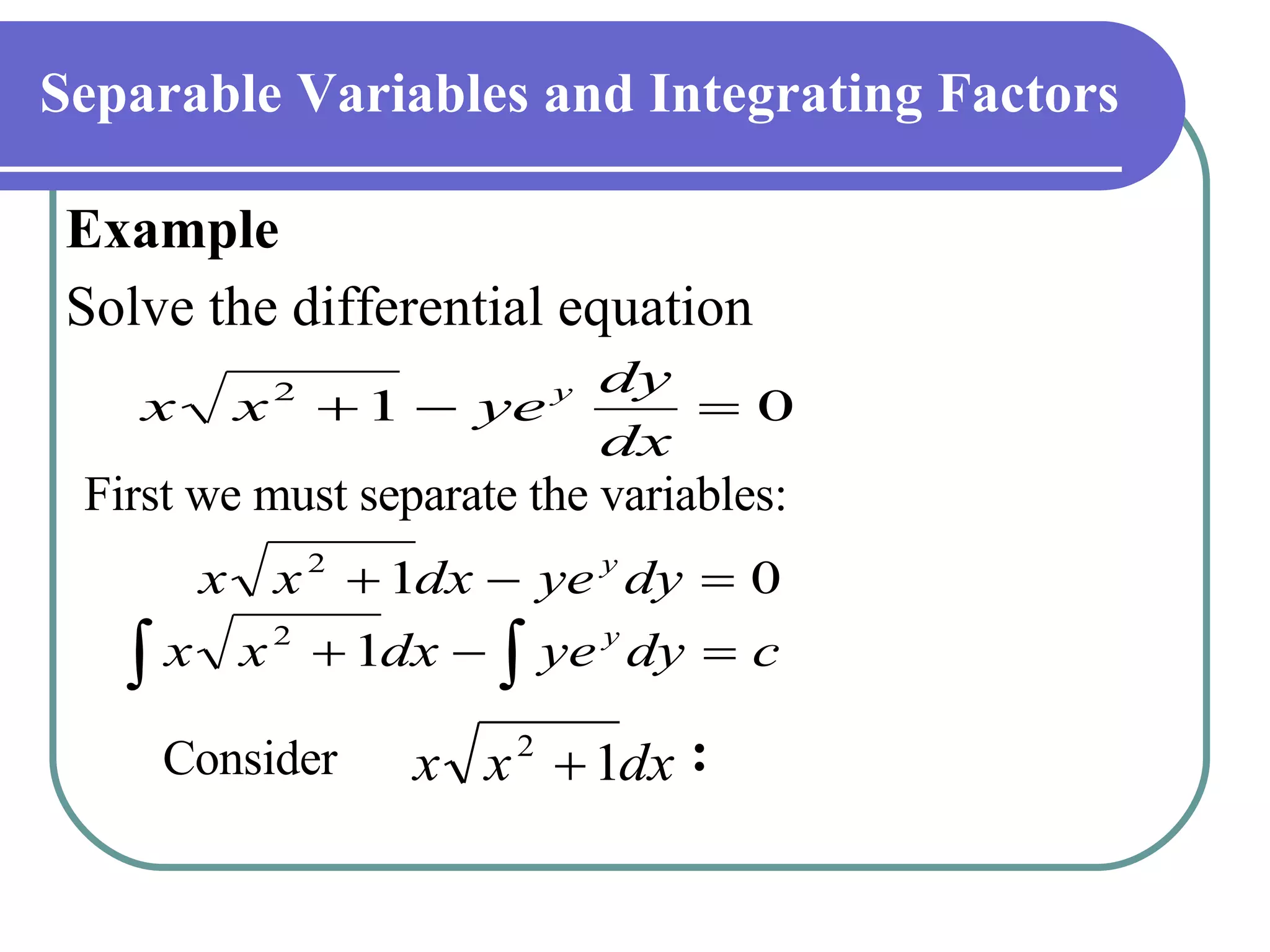
Separable Variables and Integrating Factors   Example Solve the differential equation   First we must separate the variables: Consider   :
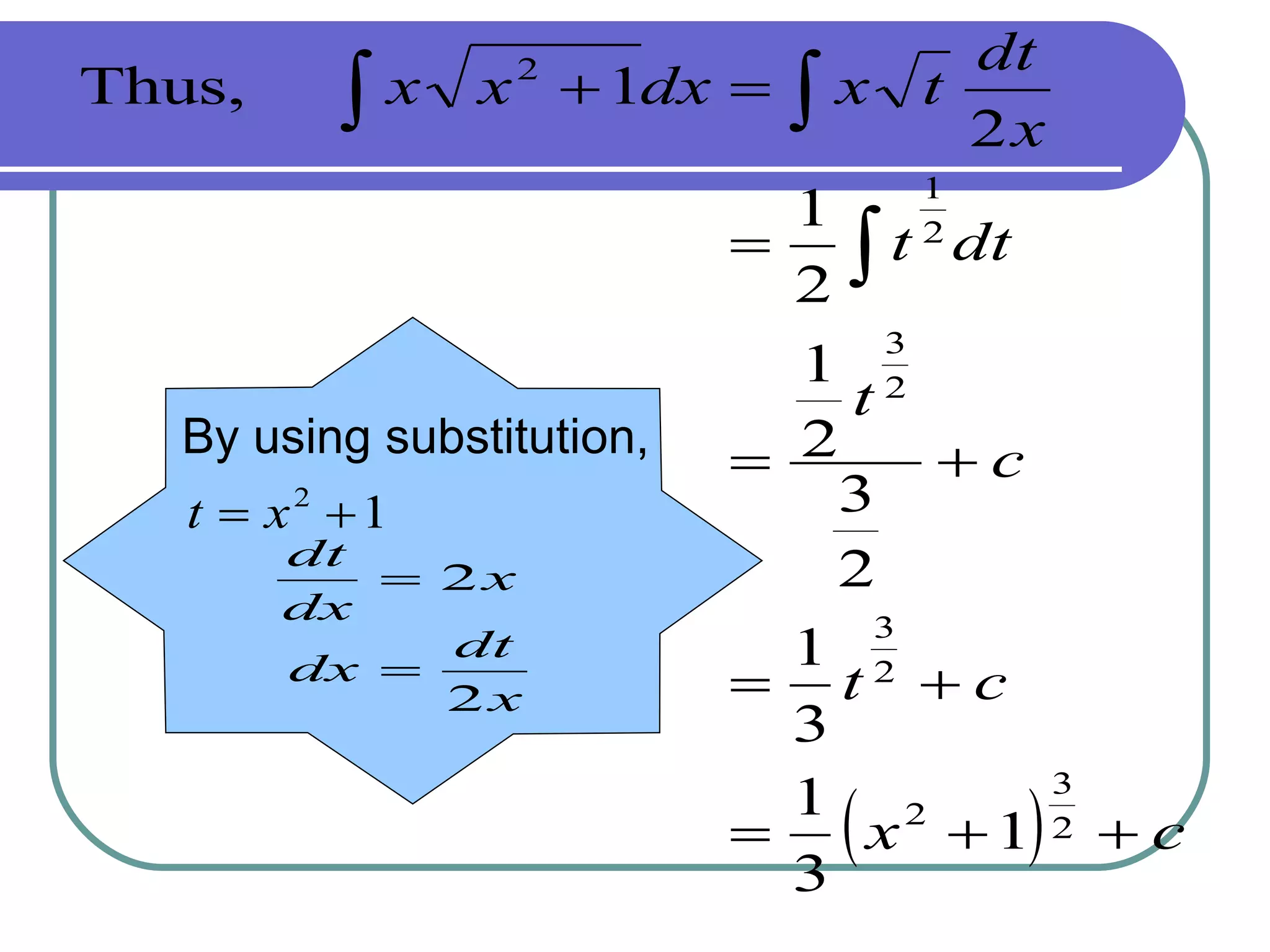
By using substitution,
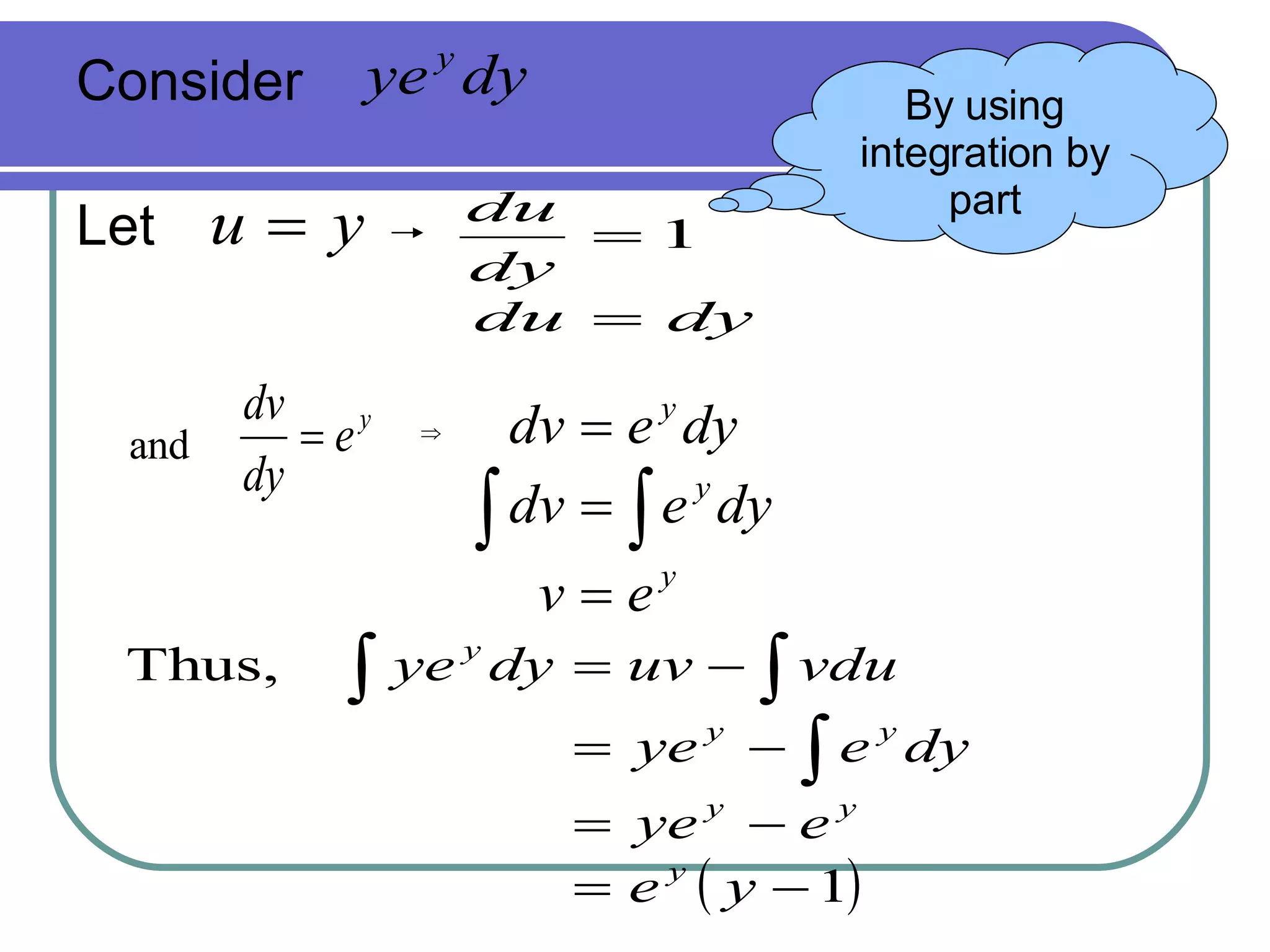
Consider  Let   and By using integration by part
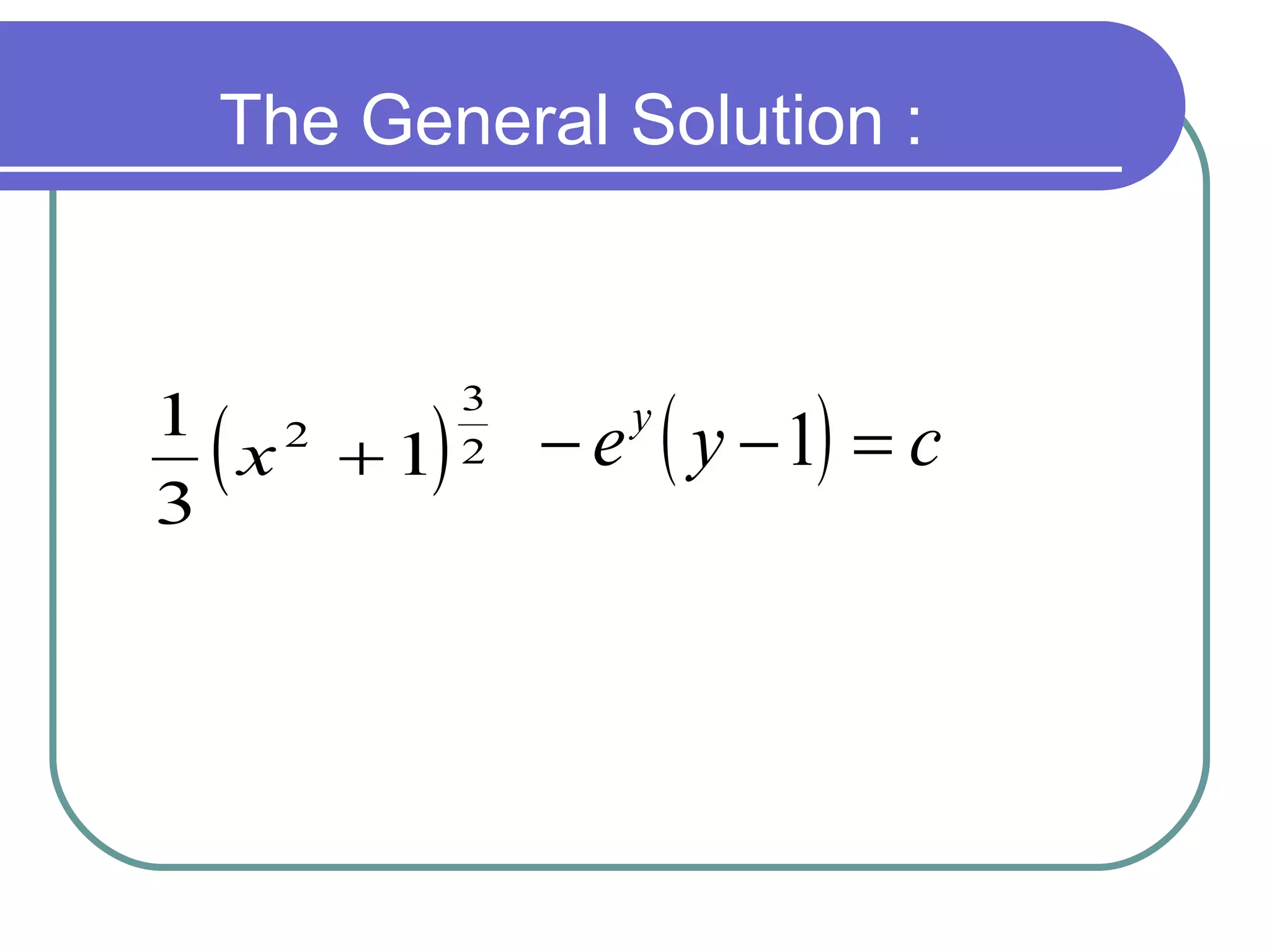
The General Solution :
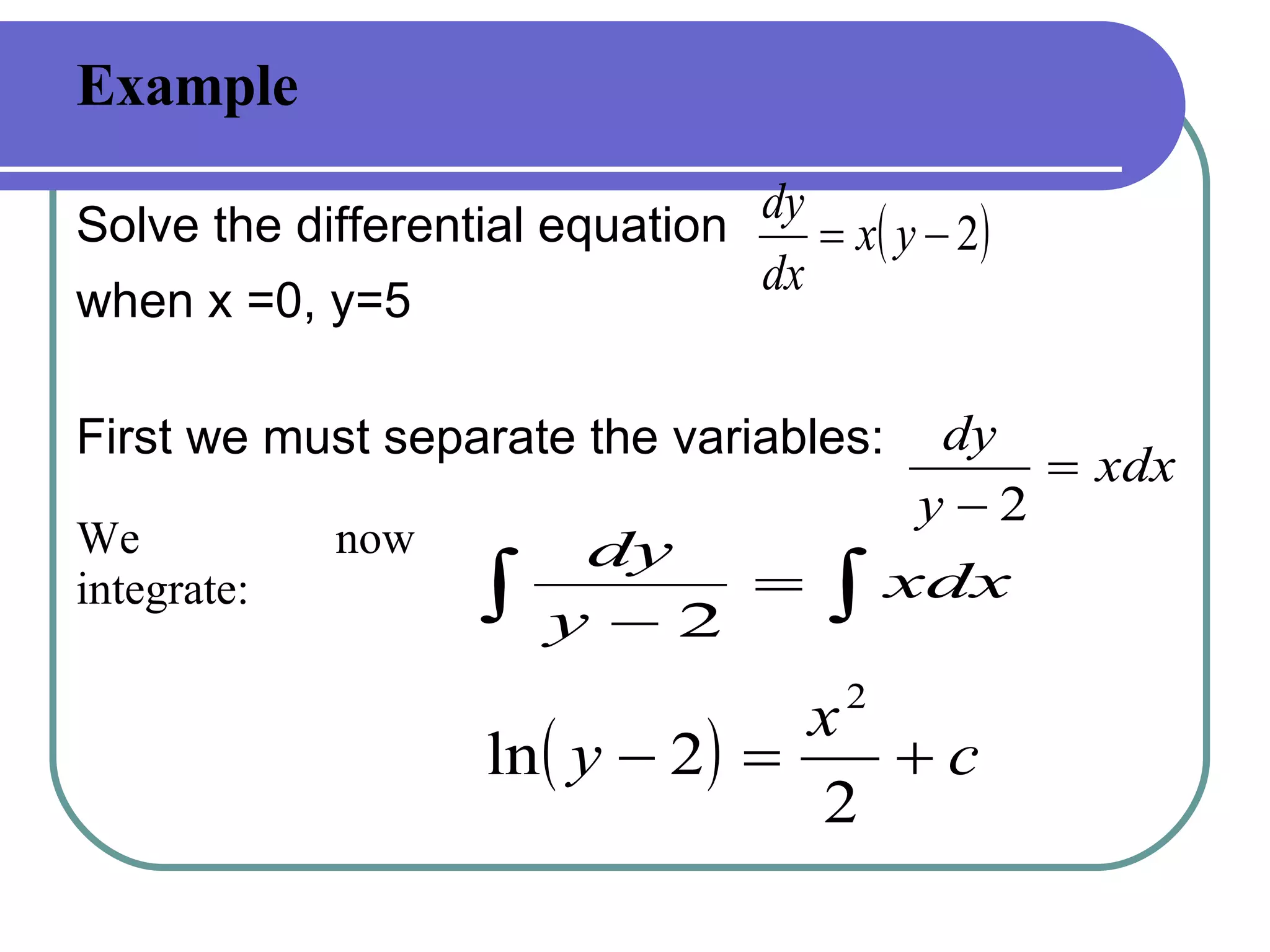
Example  Solve the differential equation  when x =0, y=5 First we must separate the variables: We now integrate:
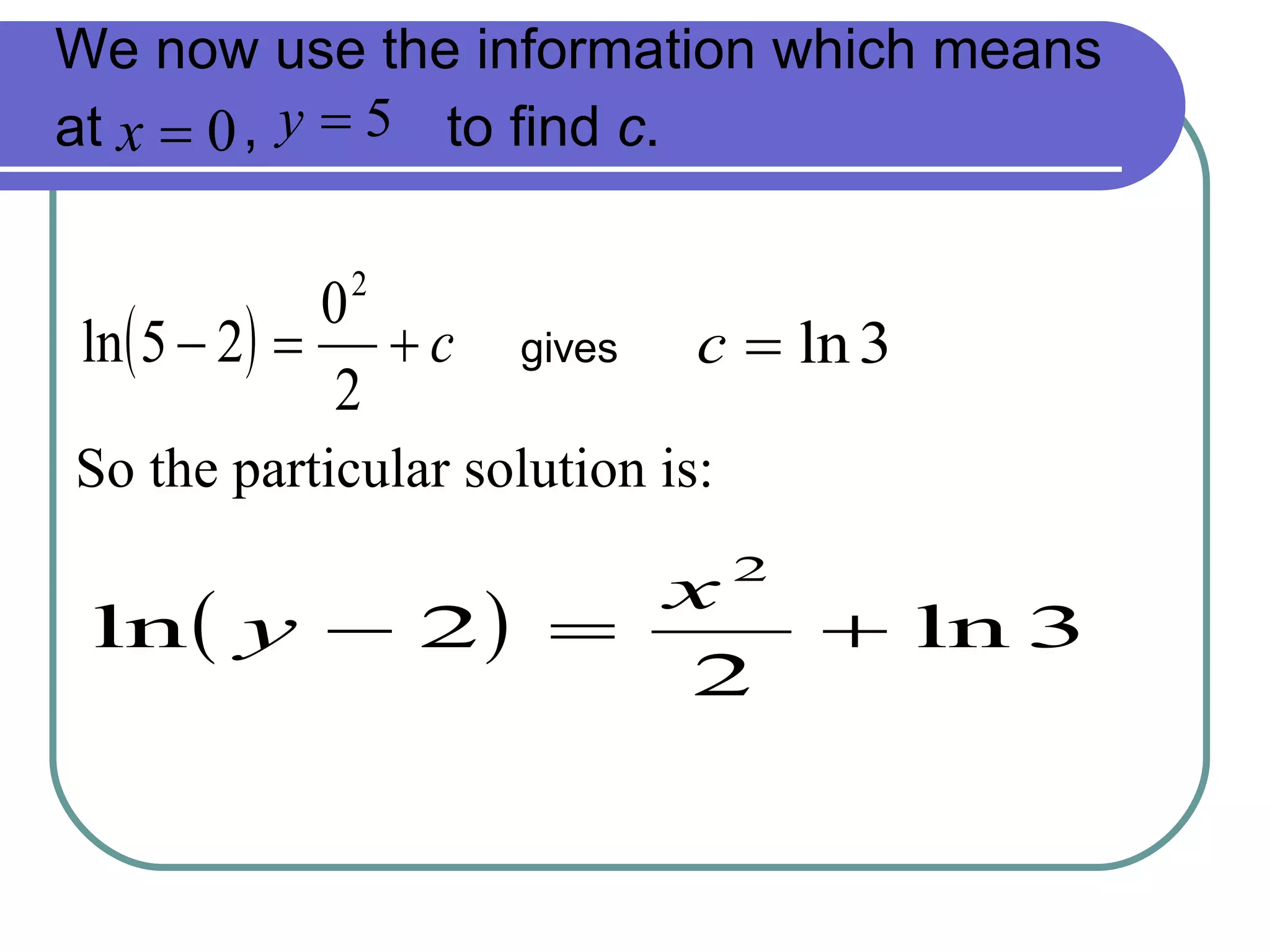
We now use the information which means at  ,  to find  c . So the particular solution is:   gives
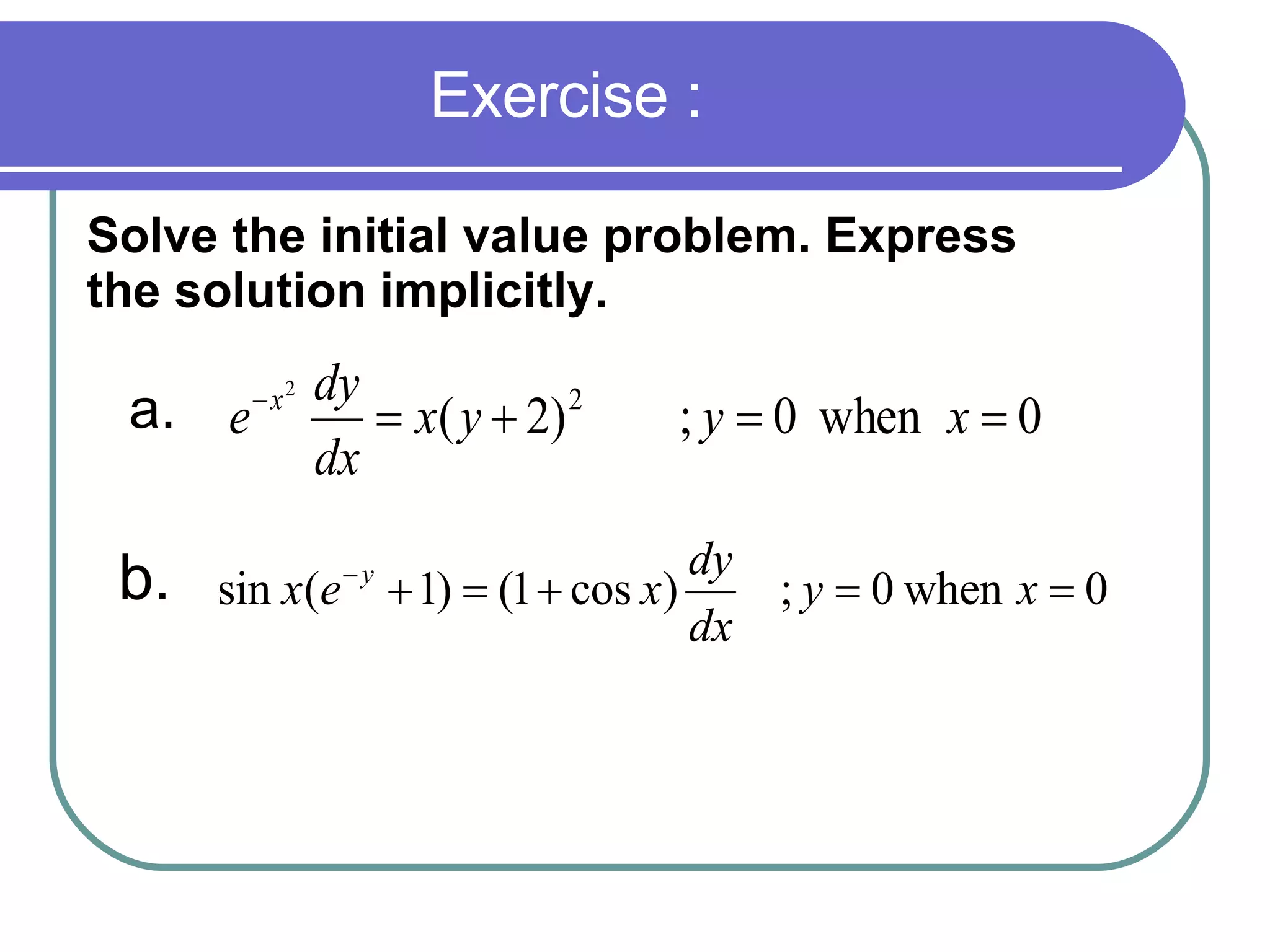
Exercise : Solve the initial value problem. Express the solution implicitly. a. b.

Lecture 1

  • 1.
  • 2.
    Introduction Consider x as an independent variable and y as dependent variable. An equation that involves at least one derivative of y with respect to x, e.g. Is known as a differential equation or common differential equation .
  • 3.
    b) c) d)a) Example of Differential Equation
  • 4.
    Order isthe highest derivative Degree is the highest power of the highest derivative Examples: a) This DE has order 2 (the highest derivative appearing is the second derivative) and degree 1 (the power of the highest derivative is 1.) Order & Degree
  • 5.
    In this chapterwe only deal with first order, first degree differential equations. A solution for a differential equation is a function whose elements and derivatives may be substituted into the differential equation. There are two types of solution for differential equations
  • 6.
    General solution – The general solution of a differential equation contains an arbitrary constant c . Particular solution - The particular solution of a differential equation contains a specified initial value and containing no constant. Solutions
  • 7.
    Examples Of General Solution This is already in the required form, so we simply integrate: , c is constant
  • 8.
    Example First we must separate the variables: Multiply throughout by dx Divide throughout by y Divide throughout by x
  • 9.
    This gives us:We now integrate ,
  • 10.
    Example Firstwe must separate the variables: Multiply throughout by dx Divide throughout by Divide throughout by
  • 11.
    This gives us:We now integrate:
  • 12.
    Separable Variables andIntegrating Factors Example Solve the differential equation First we must separate the variables: Consider :
  • 13.
  • 14.
    Consider Let and By using integration by part
  • 15.
  • 16.
    Example Solvethe differential equation when x =0, y=5 First we must separate the variables: We now integrate:
  • 17.
    We now usethe information which means at , to find c . So the particular solution is: gives
  • 18.
    Exercise : Solvethe initial value problem. Express the solution implicitly. a. b.