JIT/Lean Production
• Just-in-time

(JIT): A highly coordinated

processing system in which goods move
through the system, and services are
performed, just as they are needed
•

Highly Coordinated, Repetitive manufacturing
designed to produce high volumes with fewer
resources.

•

Developed by Taiichi Ohno
JIT
Produce and deliver goods just in time to be sold,
Subassemblies just in time to be assembled into
FP and purchase material just in time to be
transformed into fabricated parts.
• A production system to produce the kind of units
needed at the time needed and in the quantities
needed.
•
Goal of JIT
The ultimate goal of JIT is a balanced
system.
Achieves a smooth, rapid flow of materials
through the system
Pursue a system with min. inventories,
space, waste and min. transactions
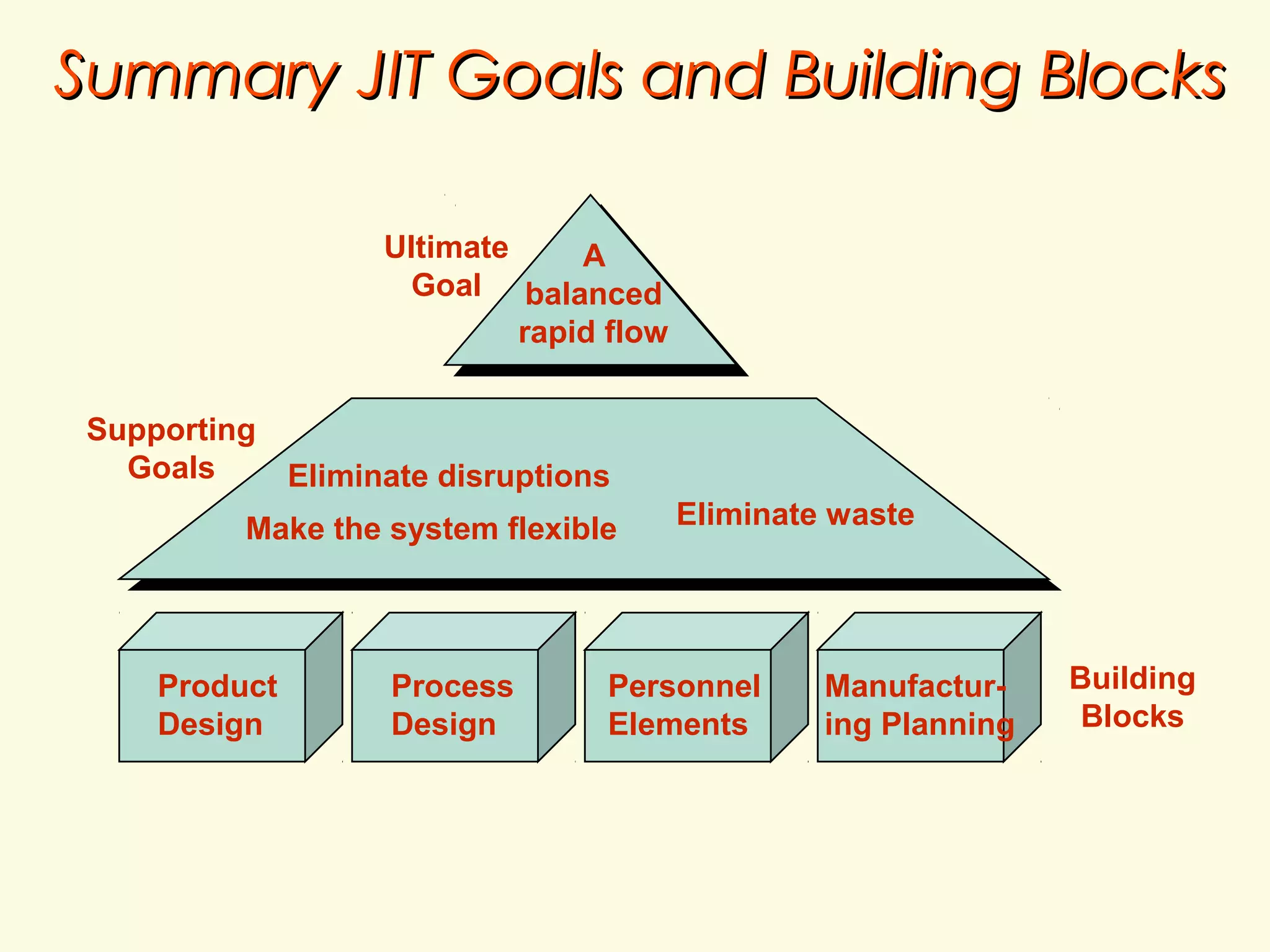
Summary JIT Goals and Building Blocks
Ultimate
A
Goal balanced
rapid flow
Supporting
Goals
Eliminate disruptions
Make the system flexible

Product
Design

Process
Design

Eliminate waste

Personnel
Elements

Manufacturing Planning

Building
Blocks
Supporting Goals
•

Eliminate disruptions

•

Make system flexible

•

Eliminate waste, especially excess
inventory
Sources of Waste
•

Overproduction

•

Waiting time

•

Unnecessary transportation

•

Processing waste

•

Inefficient work methods

•

Product defects
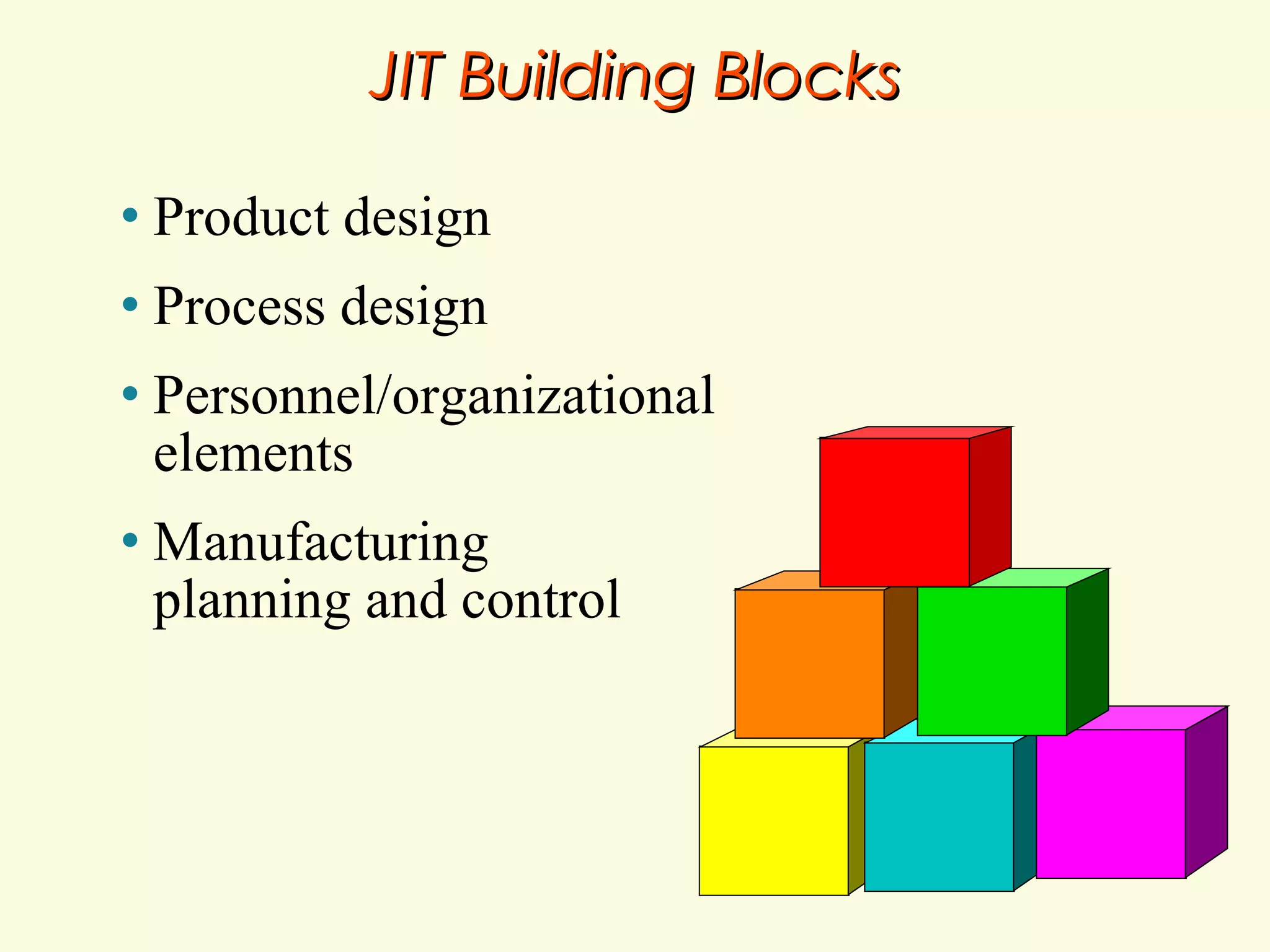
JIT Building Blocks
•

Product design

•

Process design

•

Personnel/organizational
elements

•

Manufacturing
planning and control
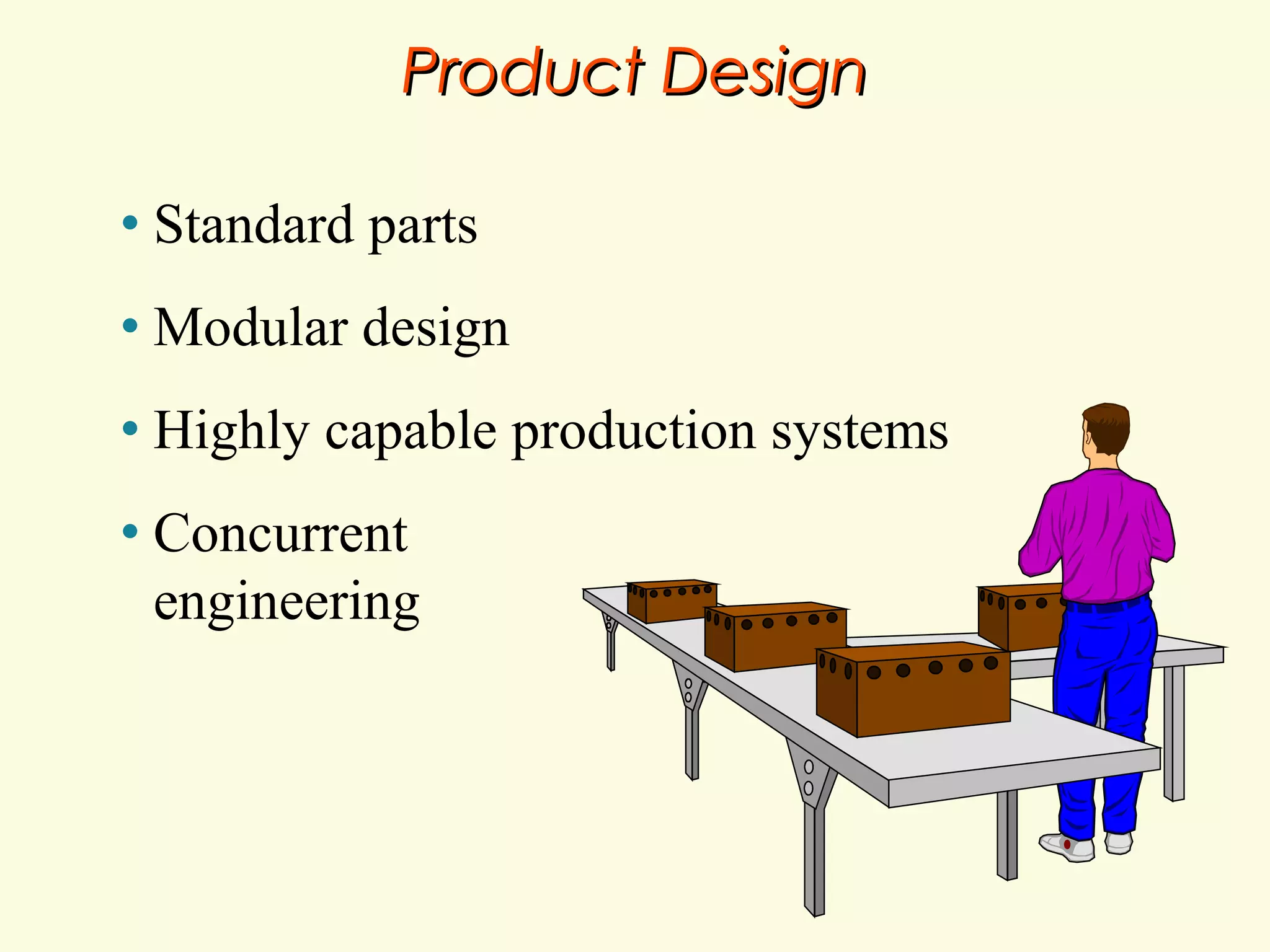
Product Design
•

Standard parts

•

Modular design

•

Highly capable production systems

•

Concurrent
engineering
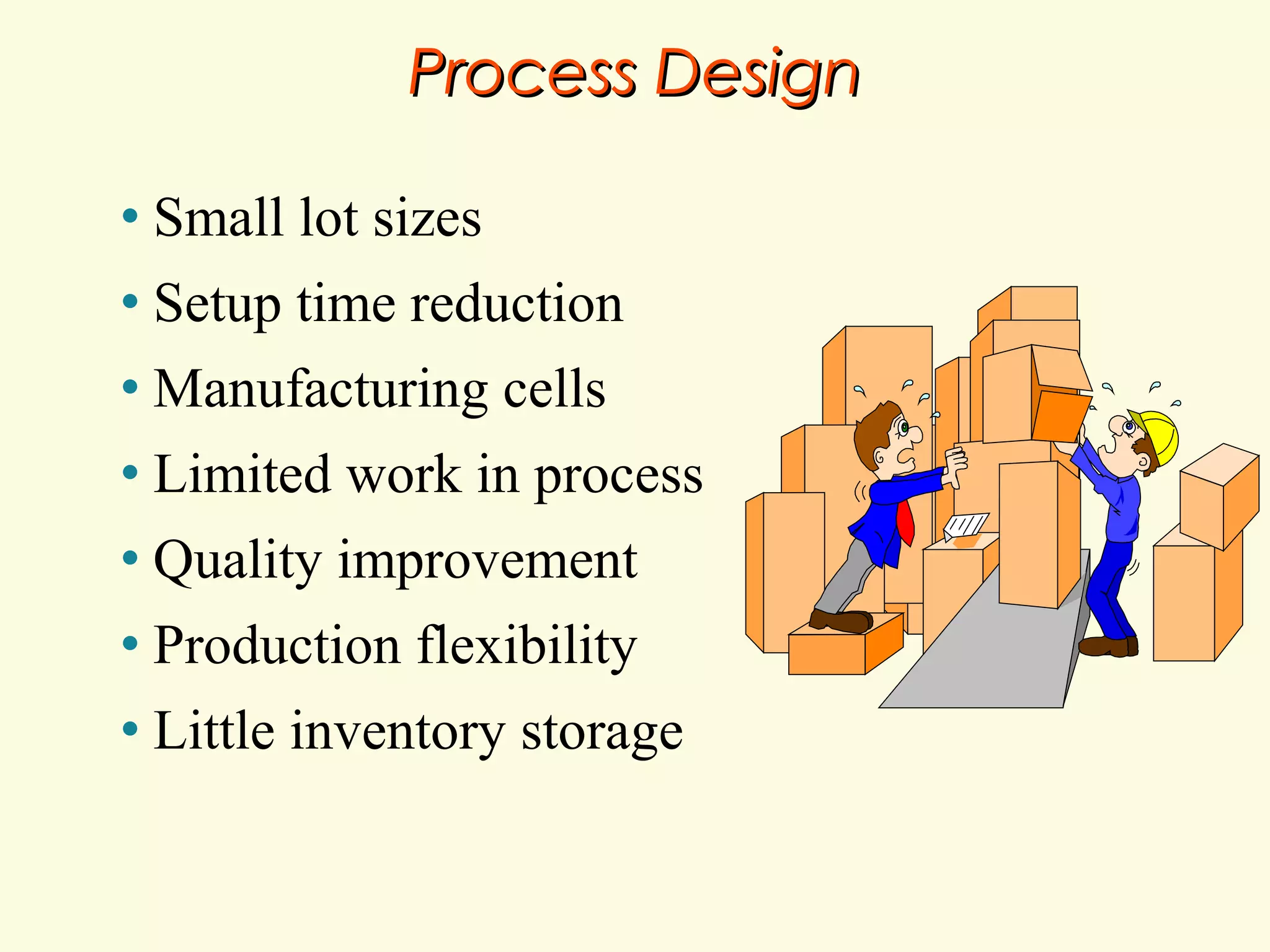
Process Design
•

Small lot sizes

•

Setup time reduction

•

Manufacturing cells

•

Limited work in process

•

Quality improvement

•

Production flexibility

•

Little inventory storage
Benefits of Small Lot Sizes
Reduces inventory
Less rework
Less storage space
Problems are more apparent
Increases product flexibility
Easier to balance operations
Production Flexibility
•

Reduce downtime by reducing
changeover time

•

Use preventive maintenance to reduce
breakdowns

•

Cross-train workers to help clear
bottlenecks
Production Flexibility (cont’d)
Use many small units of capacity
• Use off-line buffers
• Reserve capacity for important customers
•
Quality Improvement

•

Autonomation
•

Automatic detection of defects during
production
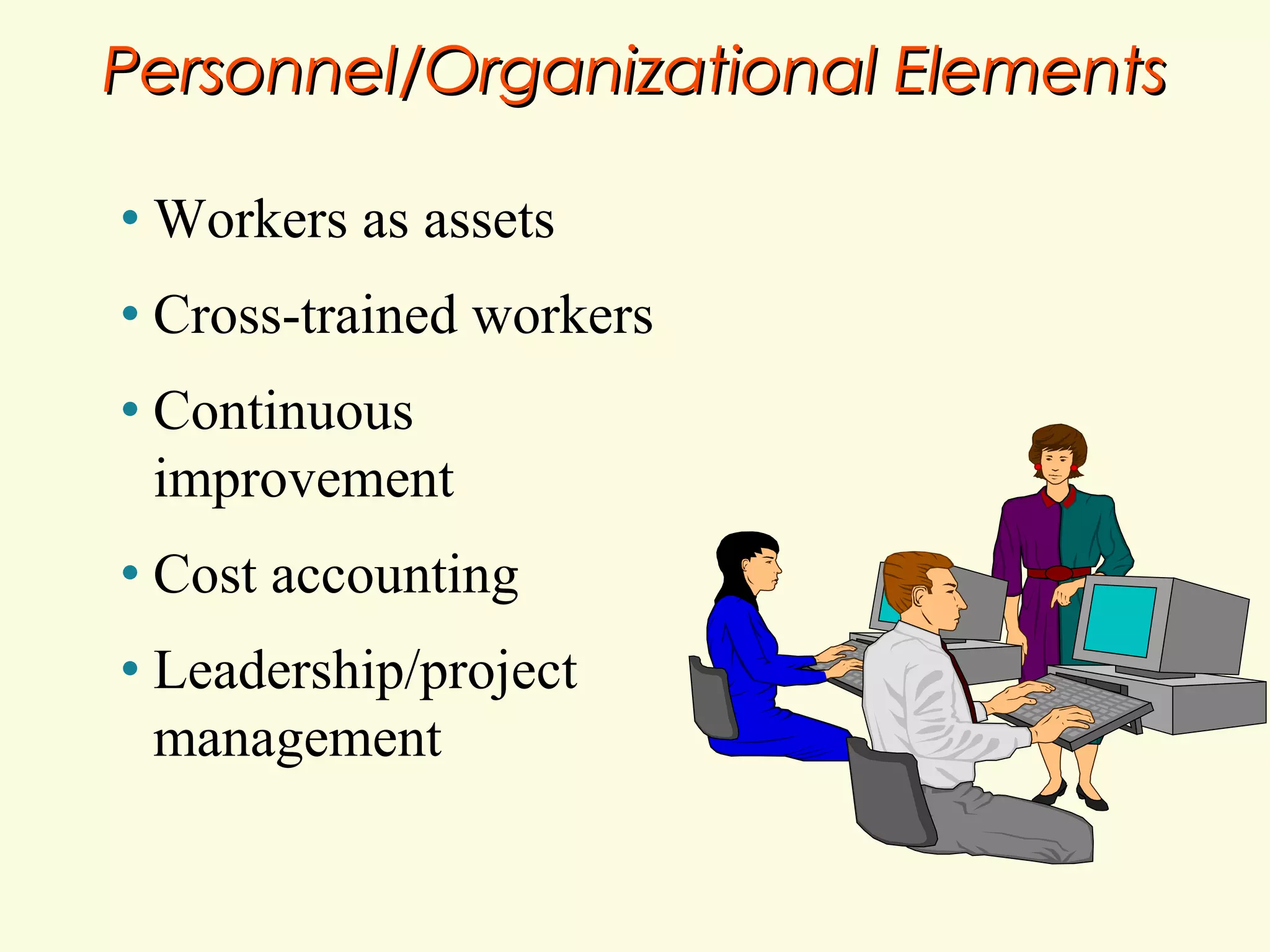
Personnel/Organizational Elements
•

Workers as assets

•

Cross-trained workers

•

Continuous
improvement

•

Cost accounting

•

Leadership/project
management
Manufacturing Planning and Control
•

Pull systems

•

Visual systems

•

Close vendor relationships

•

Reduced transaction
processing

•

Preventive maintenance
Pull/Push Systems
•

Pull system: System for moving work where
a workstation pulls output from the preceding
station as needed. (e.g. Kanban)

•

Push system: System for moving work where
output is pushed to the next station as it is
completed
Kanban Production Control System
•

Kanban: Card or other device that
communicates demand for work or materials
from the preceding station

•

Kanban is the Japanese word meaning
“signal” or “visible record”

•

Paperless production control system

•

Authority to pull, or produce comes
from a downstream process.
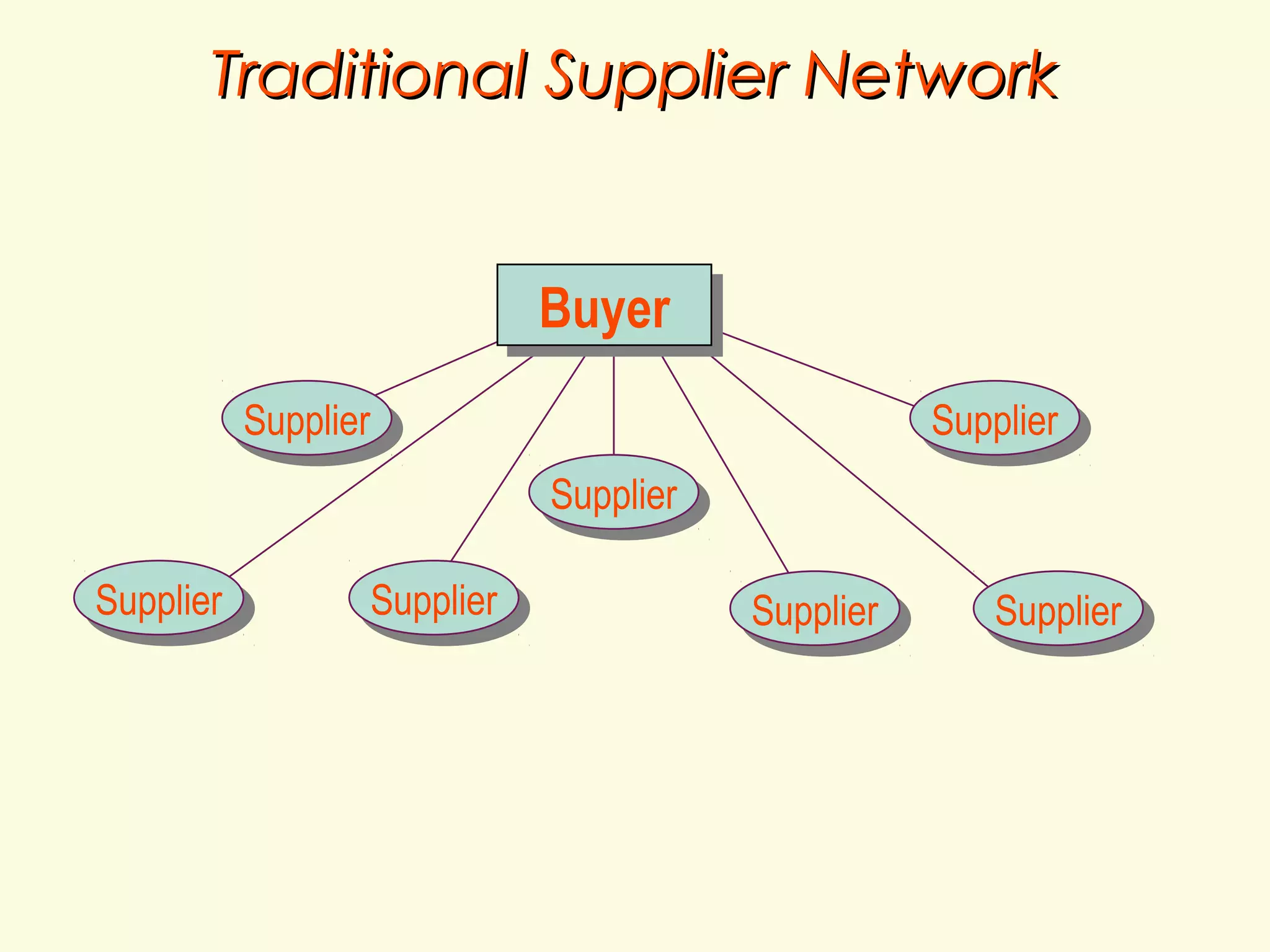
Traditional Supplier Network

Buyer
Buyer
Supplier
Supplier

Supplier
Supplier
Supplier
Supplier

Supplier
Supplier

Supplier
Supplier

Supplier
Supplier

Supplier
Supplier
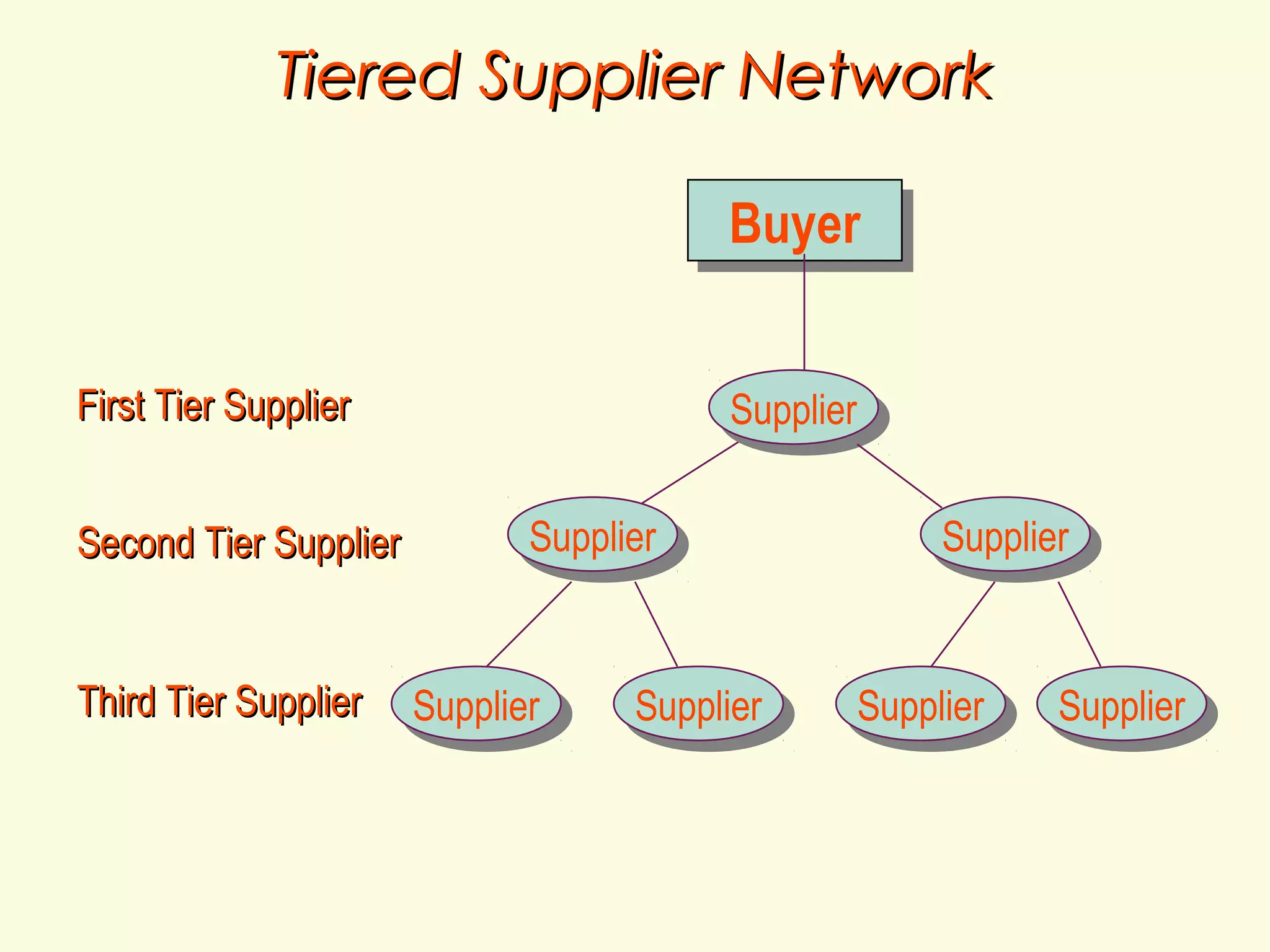
Tiered Supplier Network
Buyer
Buyer
First Tier Supplier
Second Tier Supplier

Third Tier Supplier

Supplier
Supplier
Supplier
Supplier

Supplier
Supplier

Supplier
Supplier

Supplier
Supplier

Supplier
Supplier

Supplier
Supplier
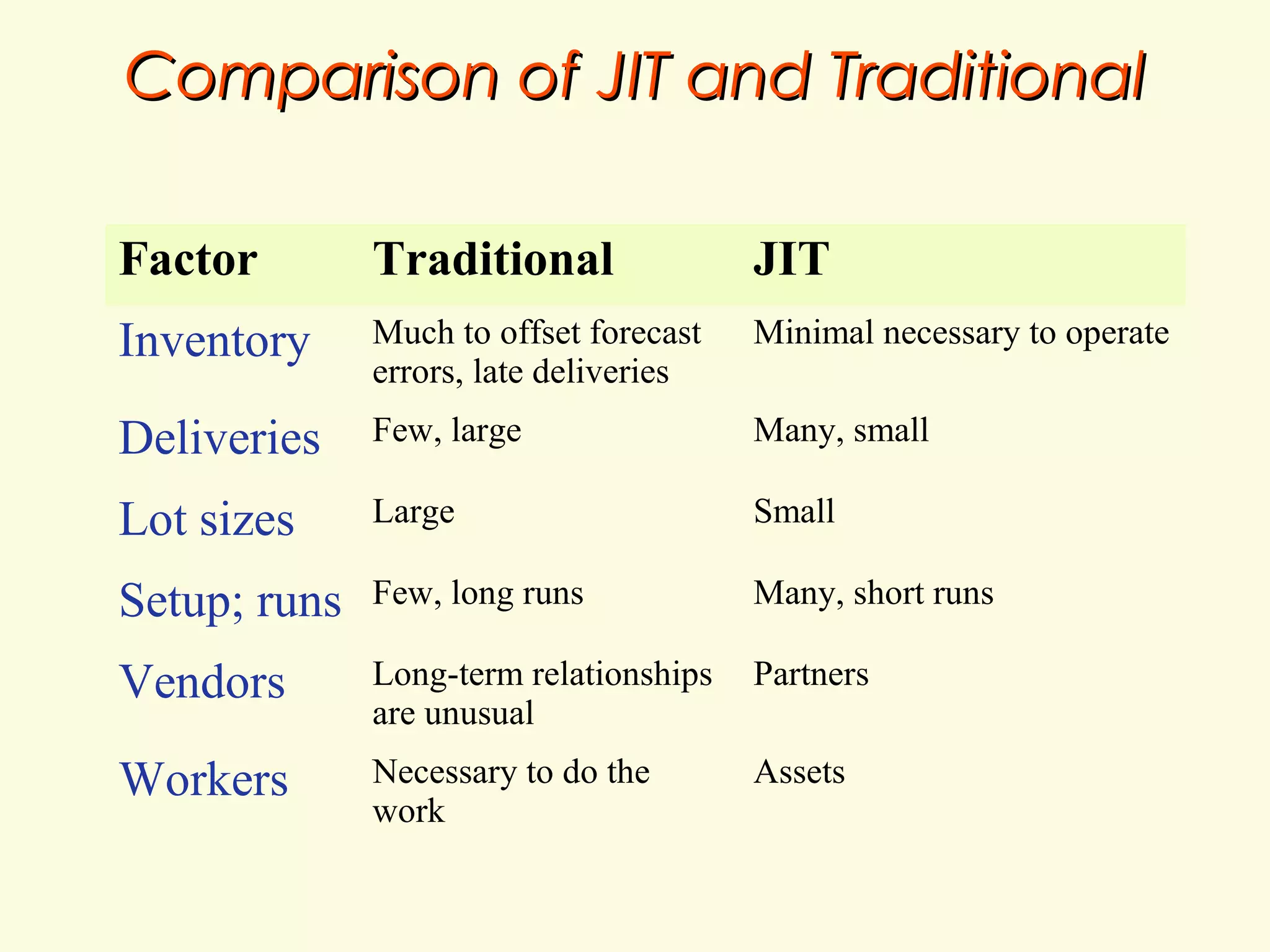
Comparison of JIT and Traditional
Factor

Traditional

JIT

Inventory

Much to offset forecast
errors, late deliveries

Minimal necessary to operate

Deliveries

Few, large

Many, small

Lot sizes

Large

Small

Setup; runs

Few, long runs

Many, short runs

Vendors

Long-term relationships
are unusual

Partners

Workers

Necessary to do the
work

Assets
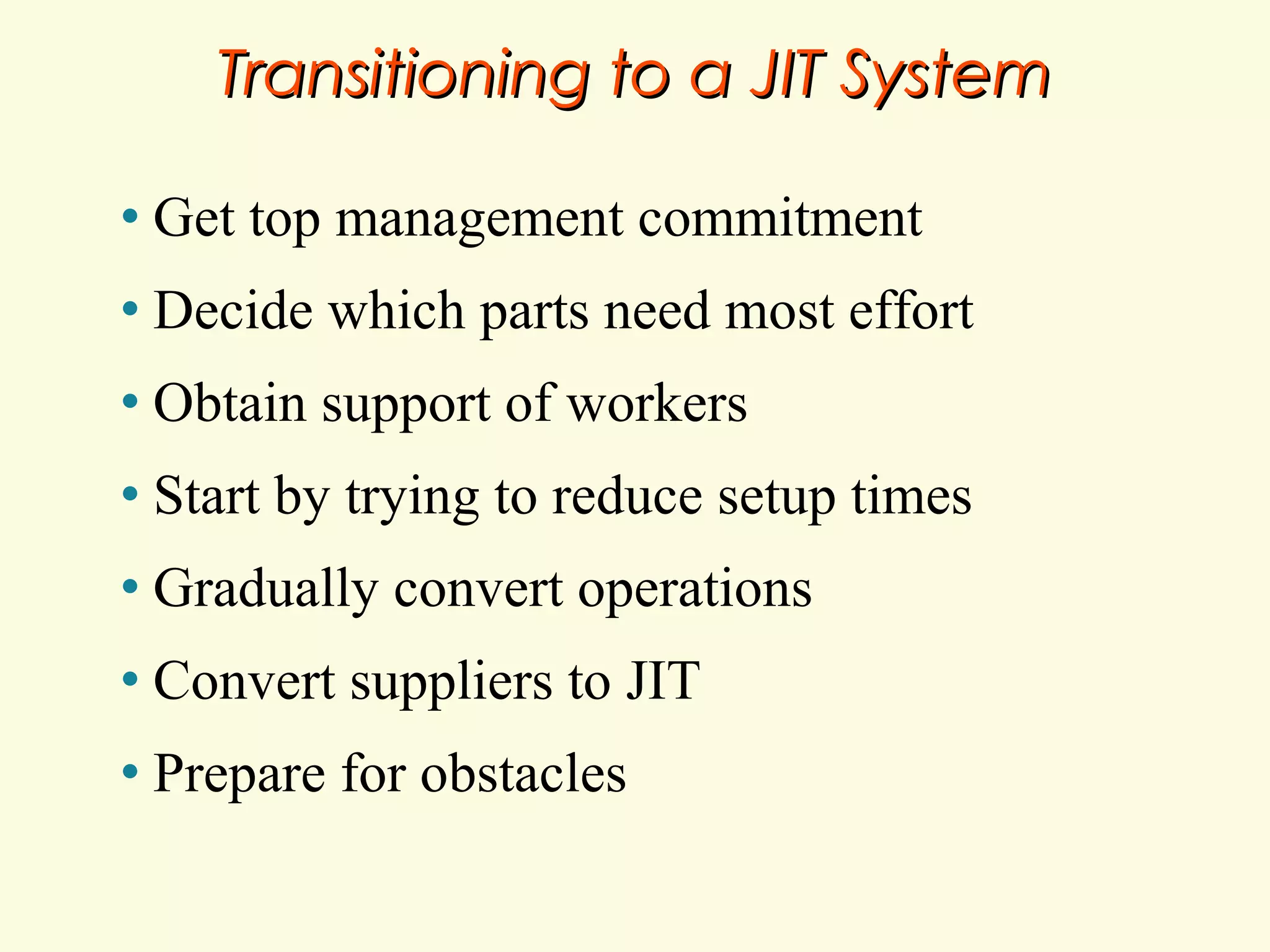
Transitioning to a JIT System
•

Get top management commitment

•

Decide which parts need most effort

•

Obtain support of workers

•

Start by trying to reduce setup times

•

Gradually convert operations

•

Convert suppliers to JIT

•

Prepare for obstacles
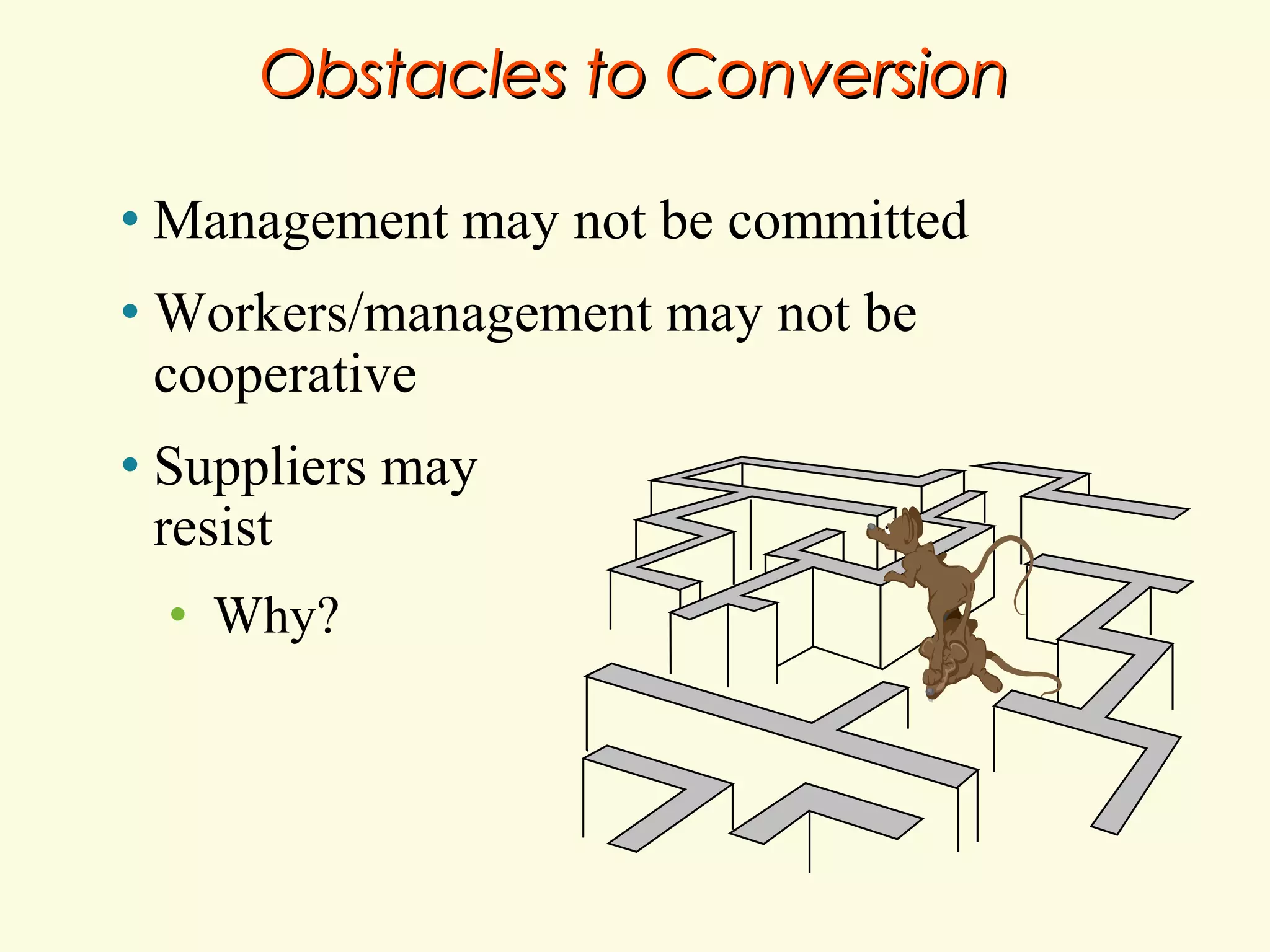
Obstacles to Conversion
•

Management may not be committed

•

Workers/management may not be
cooperative

•

Suppliers may
resist
•

Why?
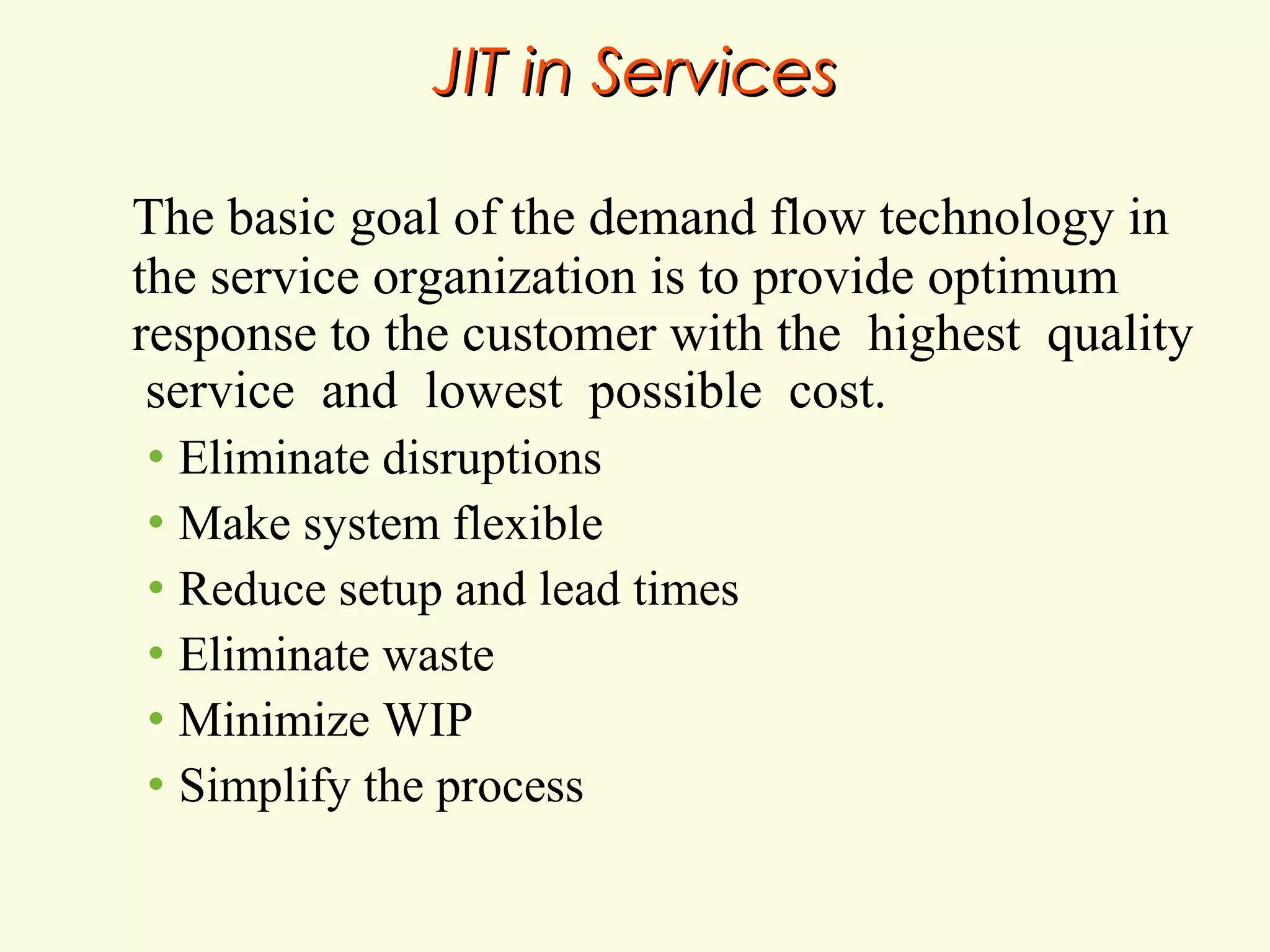
JIT in Services
The basic goal of the demand flow technology in
the service organization is to provide optimum
response to the customer with the highest quality
service and lowest possible cost.
Eliminate disruptions
• Make system flexible
• Reduce setup and lead times
• Eliminate waste
• Minimize WIP
• Simplify the process
•
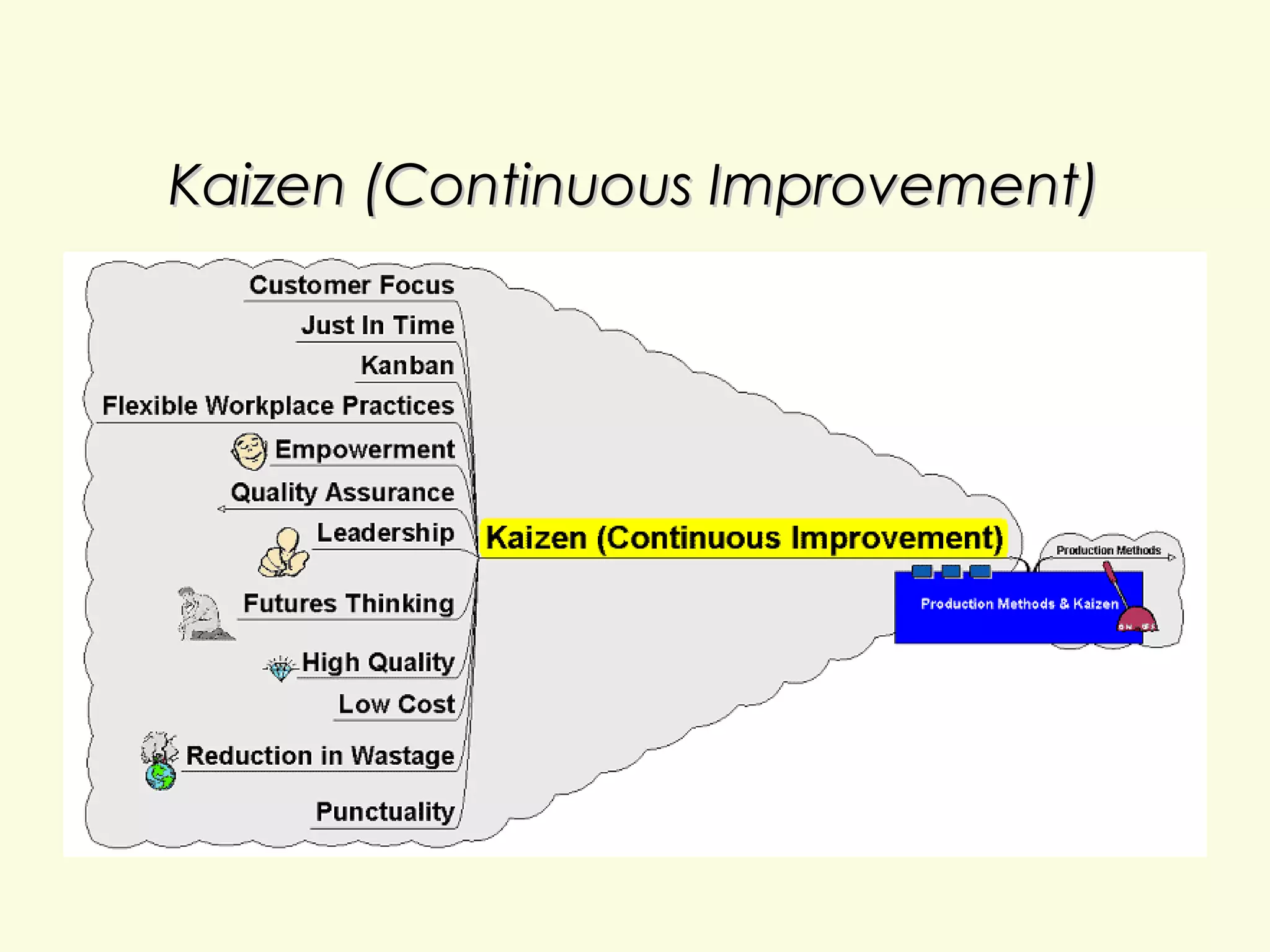
Kaizen (Continuous Improvement)
•
•
•
•

Japanese concept –
Focus on gradual and continuous improvement
A whole business philosophy
Importance of EVERYONE buying into the concept and
the vision
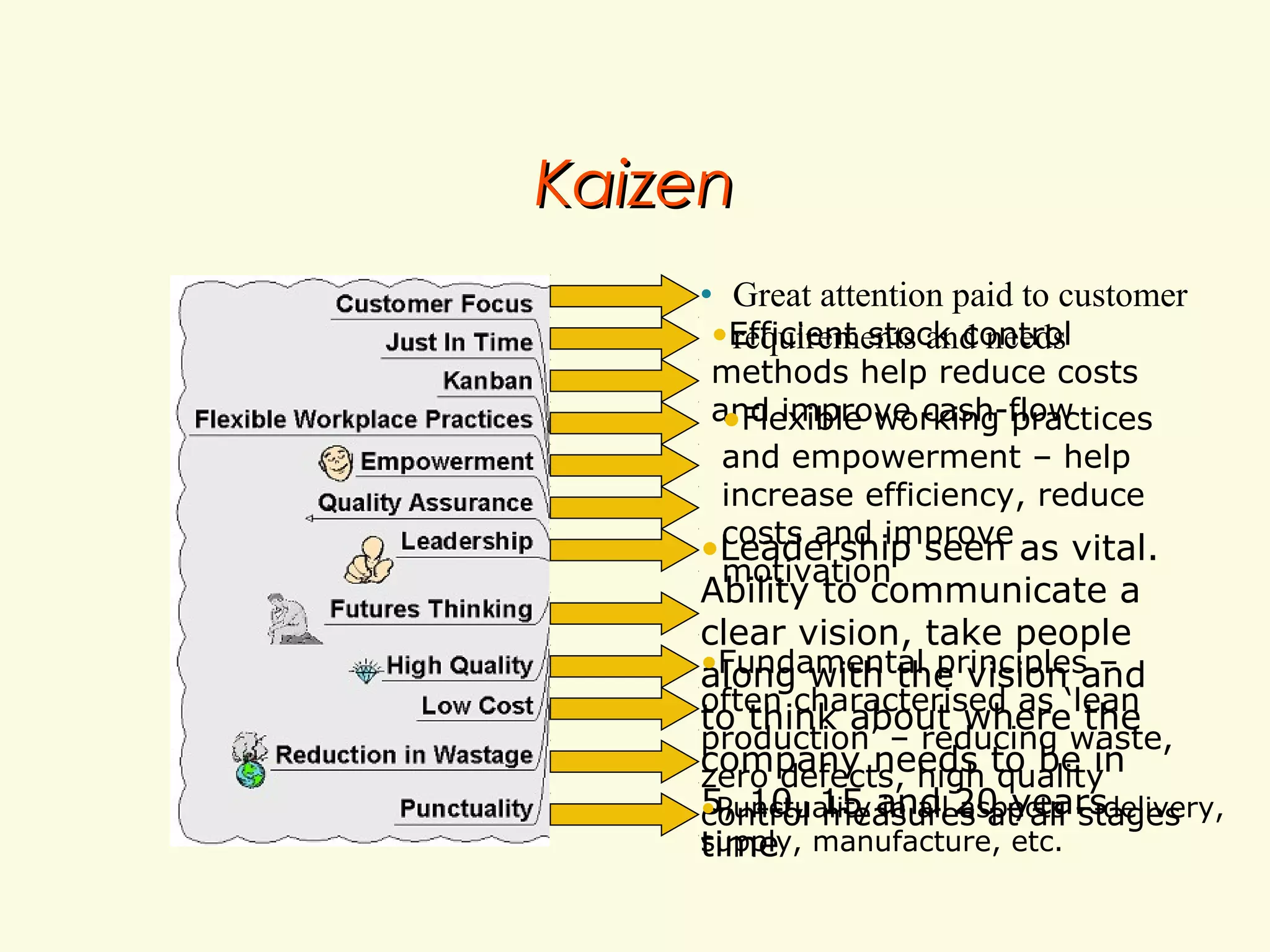
Kaizen
Great attention paid to customer
•Efficient stock control
requirements and needs

•

methods help reduce costs
and improve cash-flow
•Flexible working practices
and empowerment – help
increase efficiency, reduce
costs and improve
•Leadership seen as vital.
motivation

Ability to communicate a
clear vision, take people
•Fundamental principles –
along with the vision and
often characterised as ‘lean
to think about where the
production’ – reducing waste,
company needs to be in
zero defects, high quality
5, 10, 15 and 20 yearsdelivery,
•Punctuality in all aspects –
control measures at all stages
supply,
time manufacture, etc.
5 S of Kaizen
Sort - the first step in making things
cleaned up and organized
• Set In Order - organize, identify and
arrange everything in a work area
• Shine - regular cleaning and maintenance
• Standardize - make it easy to maintain simplify and standardize
• Sustain -maintaining what has been
accomplished
•
Benefits of JIT Systems
•

Reduced inventory levels

•

High quality

•

Flexibility

•

Reduced lead times

•

Increased productivity
Benefits of JIT Systems (cont’d)
•

Increased equipment utilization

•

Reduced scrap and rework

•

Reduced space requirements

•

Pressure for good vendor relationships

•

Reduced need for indirect labor
Elements of JIT
Smooth flow of work (the ultimate goal)
• Elimination of waste
• Continuous improvement
• Eliminating anything that does not add
value
• Simple systems that are easy to manage
• Use of product layouts to minimize moving
materials and parts
• Quality at the source
•
Elements of JIT (cont’d)
Poka-yoke – fail safe tools and methods
• Preventative maintenance
• Good housekeeping
• Set-up time reduction
•

•

Cross-trained employees

•

A pull system

Jit and lean operations

  • 1.
    JIT/Lean Production • Just-in-time (JIT):A highly coordinated processing system in which goods move through the system, and services are performed, just as they are needed • Highly Coordinated, Repetitive manufacturing designed to produce high volumes with fewer resources. • Developed by Taiichi Ohno
  • 2.
    JIT Produce and delivergoods just in time to be sold, Subassemblies just in time to be assembled into FP and purchase material just in time to be transformed into fabricated parts. • A production system to produce the kind of units needed at the time needed and in the quantities needed. •
  • 3.
    Goal of JIT Theultimate goal of JIT is a balanced system. Achieves a smooth, rapid flow of materials through the system Pursue a system with min. inventories, space, waste and min. transactions
  • 4.
    Summary JIT Goalsand Building Blocks Ultimate A Goal balanced rapid flow Supporting Goals Eliminate disruptions Make the system flexible Product Design Process Design Eliminate waste Personnel Elements Manufacturing Planning Building Blocks
  • 5.
    Supporting Goals • Eliminate disruptions • Makesystem flexible • Eliminate waste, especially excess inventory
  • 6.
    Sources of Waste • Overproduction • Waitingtime • Unnecessary transportation • Processing waste • Inefficient work methods • Product defects
  • 7.
    JIT Building Blocks • Productdesign • Process design • Personnel/organizational elements • Manufacturing planning and control
  • 8.
    Product Design • Standard parts • Modulardesign • Highly capable production systems • Concurrent engineering
  • 9.
    Process Design • Small lotsizes • Setup time reduction • Manufacturing cells • Limited work in process • Quality improvement • Production flexibility • Little inventory storage
  • 10.
    Benefits of SmallLot Sizes Reduces inventory Less rework Less storage space Problems are more apparent Increases product flexibility Easier to balance operations
  • 11.
    Production Flexibility • Reduce downtimeby reducing changeover time • Use preventive maintenance to reduce breakdowns • Cross-train workers to help clear bottlenecks
  • 12.
    Production Flexibility (cont’d) Usemany small units of capacity • Use off-line buffers • Reserve capacity for important customers •
  • 13.
  • 14.
    Personnel/Organizational Elements • Workers asassets • Cross-trained workers • Continuous improvement • Cost accounting • Leadership/project management
  • 15.
    Manufacturing Planning andControl • Pull systems • Visual systems • Close vendor relationships • Reduced transaction processing • Preventive maintenance
  • 17.
    Pull/Push Systems • Pull system:System for moving work where a workstation pulls output from the preceding station as needed. (e.g. Kanban) • Push system: System for moving work where output is pushed to the next station as it is completed
  • 18.
    Kanban Production ControlSystem • Kanban: Card or other device that communicates demand for work or materials from the preceding station • Kanban is the Japanese word meaning “signal” or “visible record” • Paperless production control system • Authority to pull, or produce comes from a downstream process.
  • 19.
  • 20.
    Tiered Supplier Network Buyer Buyer FirstTier Supplier Second Tier Supplier Third Tier Supplier Supplier Supplier Supplier Supplier Supplier Supplier Supplier Supplier Supplier Supplier Supplier Supplier Supplier Supplier
  • 21.
    Comparison of JITand Traditional Factor Traditional JIT Inventory Much to offset forecast errors, late deliveries Minimal necessary to operate Deliveries Few, large Many, small Lot sizes Large Small Setup; runs Few, long runs Many, short runs Vendors Long-term relationships are unusual Partners Workers Necessary to do the work Assets
  • 22.
    Transitioning to aJIT System • Get top management commitment • Decide which parts need most effort • Obtain support of workers • Start by trying to reduce setup times • Gradually convert operations • Convert suppliers to JIT • Prepare for obstacles
  • 23.
    Obstacles to Conversion • Managementmay not be committed • Workers/management may not be cooperative • Suppliers may resist • Why?
  • 24.
    JIT in Services Thebasic goal of the demand flow technology in the service organization is to provide optimum response to the customer with the highest quality service and lowest possible cost. Eliminate disruptions • Make system flexible • Reduce setup and lead times • Eliminate waste • Minimize WIP • Simplify the process •
  • 25.
  • 26.
    Kaizen (Continuous Improvement) • • • • Japaneseconcept – Focus on gradual and continuous improvement A whole business philosophy Importance of EVERYONE buying into the concept and the vision
  • 27.
    Kaizen Great attention paidto customer •Efficient stock control requirements and needs • methods help reduce costs and improve cash-flow •Flexible working practices and empowerment – help increase efficiency, reduce costs and improve •Leadership seen as vital. motivation Ability to communicate a clear vision, take people •Fundamental principles – along with the vision and often characterised as ‘lean to think about where the production’ – reducing waste, company needs to be in zero defects, high quality 5, 10, 15 and 20 yearsdelivery, •Punctuality in all aspects – control measures at all stages supply, time manufacture, etc.
  • 28.
    5 S ofKaizen Sort - the first step in making things cleaned up and organized • Set In Order - organize, identify and arrange everything in a work area • Shine - regular cleaning and maintenance • Standardize - make it easy to maintain simplify and standardize • Sustain -maintaining what has been accomplished •
  • 29.
    Benefits of JITSystems • Reduced inventory levels • High quality • Flexibility • Reduced lead times • Increased productivity
  • 30.
    Benefits of JITSystems (cont’d) • Increased equipment utilization • Reduced scrap and rework • Reduced space requirements • Pressure for good vendor relationships • Reduced need for indirect labor
  • 31.
    Elements of JIT Smoothflow of work (the ultimate goal) • Elimination of waste • Continuous improvement • Eliminating anything that does not add value • Simple systems that are easy to manage • Use of product layouts to minimize moving materials and parts • Quality at the source •
  • 32.
    Elements of JIT(cont’d) Poka-yoke – fail safe tools and methods • Preventative maintenance • Good housekeeping • Set-up time reduction • • Cross-trained employees • A pull system