Process Design
Design:
  “To design” refers to the process of originating
  and developing a plan for a product, service or
  process.

Process:
  Is any part of an organization which takes a set
  of input resources which are then used to
  transform something into outputs of products
  or services.
Process Design


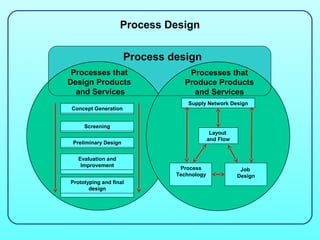
                      Process design
 Processes that                   Processes that
Design Products                  Produce Products
  and Services                     and Services
                                   Supply Network Design
Concept Generation


     Screening
                                             Layout
                                            and Flow
 Preliminary Design


   Evaluation and
    Improvement
                                Process                 Job
                               Technology              Design
Prototyping and final
       design
Nature of the design activity:
1) Design is inevitable – products, services and the
   processes which produce them all have to be
   designed.
2) Product design influences process design –
   decisions taken during the design of a product or
   service will have an impact on the decisions taken
   during the design of the process which produces
   those products or services and vice versa.
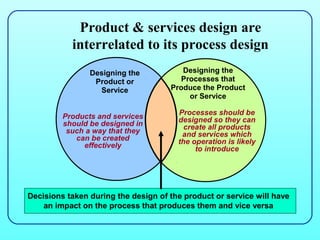
Product & services design are
           interrelated to its process design
                Designing the           Designing the
                 Product or             Processes that
                  Service            Produce the Product
                                          or Service

                                       Processes should be
         Products and services         designed so they can
         should be designed in           create all products
          such a way that they          and services which
            can be created             the operation is likely
              effectively                   to introduce


Decisions taken during the design of the product or service will have
    an impact on the process that produces them and vice versa
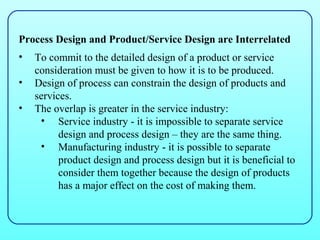
Process Design and Product/Service Design are Interrelated
•   To commit to the detailed design of a product or service
    consideration must be given to how it is to be produced.
•   Design of process can constrain the design of products and
    services.
•   The overlap is greater in the service industry:
     • Service industry - it is impossible to separate service
          design and process design – they are the same thing.
     • Manufacturing industry - it is possible to separate
          product design and process design but it is beneficial to
          consider them together because the design of products
          has a major effect on the cost of making them.
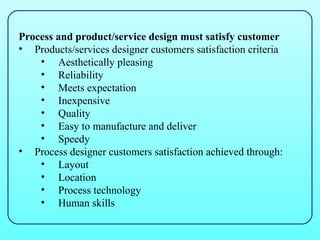
Process and product/service design must satisfy customer
• Products/services designer customers satisfaction criteria
    • Aesthetically pleasing
    • Reliability
    • Meets expectation
    • Inexpensive
    • Quality
    • Easy to manufacture and deliver
    • Speedy
• Process designer customers satisfaction achieved through:
    • Layout
    • Location
    • Process technology
    • Human skills
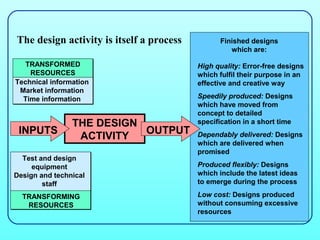
The design activity is itself a process         Finished designs
                                                   which are:

  TRANSFORMED                             High quality: Error-free designs
    RESOURCES                             which fulfil their purpose in an
Technical information                     effective and creative way
 Market information
  Time information                        Speedily produced: Designs
                                          which have moved from
                                          concept to detailed
                THE DESIGN                specification in a short time
 INPUTS                    OUTPUT
                 ACTIVITY                 Dependably delivered: Designs
                                          which are delivered when
                                          promised
  Test and design
     equipment                            Produced flexibly: Designs
Design and technical                      which include the latest ideas
        staff                             to emerge during the process

  TRANSFORMING                            Low cost: Designs produced
   RESOURCES                              without consuming excessive
                                          resources
Designing processes
•   Process mapping
•   Process mapping symbols
•   Improving processes
•   Process performance
•   Throughput, cycle time & work in process
Process mapping
•   Used to identify different types of activities.
•   Shows the flow of material, people or
    information.
•   Critical analysis of process maps can improve
    the process.
Process performance
•   Process performance can be judge against the
    five key performance objective:
        Quality
        Speed
        Dependability
        Flexibility
        Cost
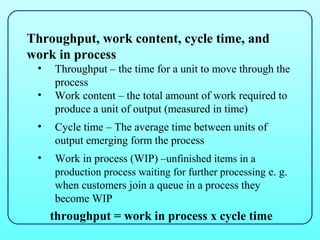
Throughput, work content, cycle time, and
work in process
 •   Throughput – the time for a unit to move through the
     process
 •   Work content – the total amount of work required to
     produce a unit of output (measured in time)
 •   Cycle time – The average time between units of
     output emerging form the process
 •   Work in process (WIP) –unfinished items in a
     production process waiting for further processing e. g.
     when customers join a queue in a process they
     become WIP
     throughput = work in process x cycle time
Process Types
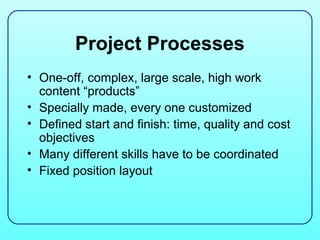
Project Processes
• One-off, complex, large scale, high work
  content “products”
• Specially made, every one customized
• Defined start and finish: time, quality and cost
  objectives
• Many different skills have to be coordinated
• Fixed position layout
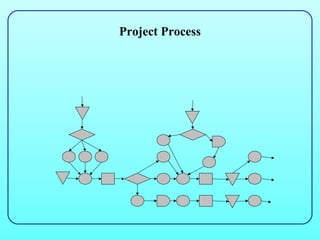
Project Process
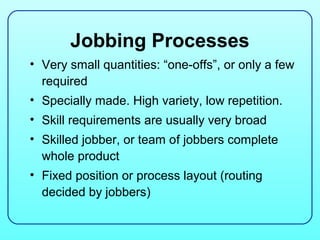
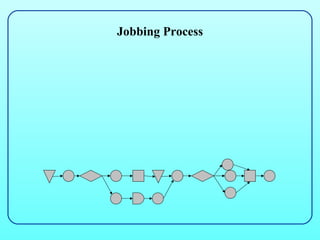
Jobbing Processes
• Very small quantities: “one-offs”, or only a few
  required
• Specially made. High variety, low repetition.
• Skill requirements are usually very broad
• Skilled jobber, or team of jobbers complete
  whole product
• Fixed position or process layout (routing
  decided by jobbers)
Jobbing Process
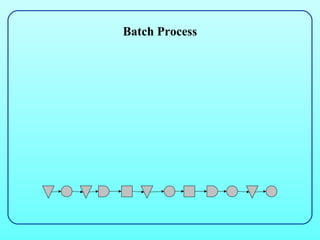
Batch Processes
• Higher volumes and lower variety than for
  jobbing
• Standard products, repeating demand. But
  can make specials
• Specialized, narrower skills
• Set-ups (changeovers) at each stage of
  production
• Process or cellular layout
Batch Process
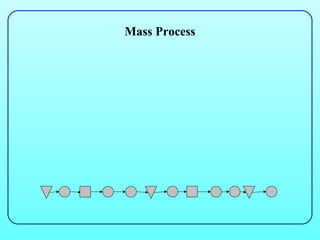
Mass (Line) Processes
•   Higher volumes than Batch
•   Standard, repeat products
•   Low and/or narrow skills
•   No set-ups, or almost instantaneous ones
•   Cell or product layout
Mass Process
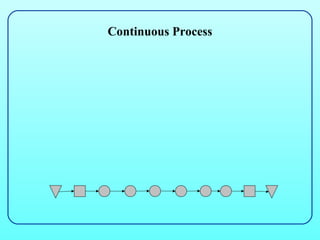
Continuous Process
• Extremely high volumes and low variety: often
  single product
• Standard, repeat products
• Highly capital-intensive and automated
• Few changeovers required
• Difficult and expensive to start and stop the
  process
• Product layout: usually flow along conveyors
  or pipes
Continuous Process
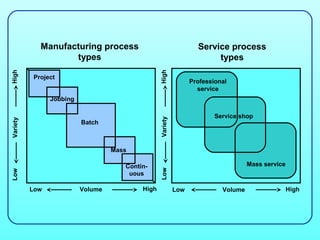
Manufacturing process                                   Service process
                   types                                                 types
High


                                                  High
          Project
                                                                  Professional
                                                                    service
                Jobbing

                                                                          Service shop


                                                  Variety
Variety


                          Batch


                                   Mass

                                      Contin-     Low                                Mass service
Low


                                       uous

          Low             Volume           High             Low             Volume                  High

Process design

  • 1.
  • 2.
    Design: “Todesign” refers to the process of originating and developing a plan for a product, service or process. Process: Is any part of an organization which takes a set of input resources which are then used to transform something into outputs of products or services.
  • 3.
    Process Design Process design Processes that Processes that Design Products Produce Products and Services and Services Supply Network Design Concept Generation Screening Layout and Flow Preliminary Design Evaluation and Improvement Process Job Technology Design Prototyping and final design
  • 4.
    Nature of thedesign activity: 1) Design is inevitable – products, services and the processes which produce them all have to be designed. 2) Product design influences process design – decisions taken during the design of a product or service will have an impact on the decisions taken during the design of the process which produces those products or services and vice versa.
  • 5.
    Product & servicesdesign are interrelated to its process design Designing the Designing the Product or Processes that Service Produce the Product or Service Processes should be Products and services designed so they can should be designed in create all products such a way that they and services which can be created the operation is likely effectively to introduce Decisions taken during the design of the product or service will have an impact on the process that produces them and vice versa
  • 6.
    Process Design andProduct/Service Design are Interrelated • To commit to the detailed design of a product or service consideration must be given to how it is to be produced. • Design of process can constrain the design of products and services. • The overlap is greater in the service industry: • Service industry - it is impossible to separate service design and process design – they are the same thing. • Manufacturing industry - it is possible to separate product design and process design but it is beneficial to consider them together because the design of products has a major effect on the cost of making them.
  • 7.
    Process and product/servicedesign must satisfy customer • Products/services designer customers satisfaction criteria • Aesthetically pleasing • Reliability • Meets expectation • Inexpensive • Quality • Easy to manufacture and deliver • Speedy • Process designer customers satisfaction achieved through: • Layout • Location • Process technology • Human skills
  • 8.
    The design activityis itself a process Finished designs which are: TRANSFORMED High quality: Error-free designs RESOURCES which fulfil their purpose in an Technical information effective and creative way Market information Time information Speedily produced: Designs which have moved from concept to detailed THE DESIGN specification in a short time INPUTS OUTPUT ACTIVITY Dependably delivered: Designs which are delivered when promised Test and design equipment Produced flexibly: Designs Design and technical which include the latest ideas staff to emerge during the process TRANSFORMING Low cost: Designs produced RESOURCES without consuming excessive resources
  • 9.
    Designing processes • Process mapping • Process mapping symbols • Improving processes • Process performance • Throughput, cycle time & work in process
  • 10.
    Process mapping • Used to identify different types of activities. • Shows the flow of material, people or information. • Critical analysis of process maps can improve the process.
  • 11.
    Process performance • Process performance can be judge against the five key performance objective:  Quality  Speed  Dependability  Flexibility  Cost
  • 12.
    Throughput, work content,cycle time, and work in process • Throughput – the time for a unit to move through the process • Work content – the total amount of work required to produce a unit of output (measured in time) • Cycle time – The average time between units of output emerging form the process • Work in process (WIP) –unfinished items in a production process waiting for further processing e. g. when customers join a queue in a process they become WIP throughput = work in process x cycle time
  • 13.
  • 14.
    Project Processes • One-off,complex, large scale, high work content “products” • Specially made, every one customized • Defined start and finish: time, quality and cost objectives • Many different skills have to be coordinated • Fixed position layout
  • 15.
  • 16.
    Jobbing Processes • Verysmall quantities: “one-offs”, or only a few required • Specially made. High variety, low repetition. • Skill requirements are usually very broad • Skilled jobber, or team of jobbers complete whole product • Fixed position or process layout (routing decided by jobbers)
  • 17.
  • 18.
    Batch Processes • Highervolumes and lower variety than for jobbing • Standard products, repeating demand. But can make specials • Specialized, narrower skills • Set-ups (changeovers) at each stage of production • Process or cellular layout
  • 19.
  • 20.
    Mass (Line) Processes • Higher volumes than Batch • Standard, repeat products • Low and/or narrow skills • No set-ups, or almost instantaneous ones • Cell or product layout
  • 21.
  • 22.
    Continuous Process • Extremelyhigh volumes and low variety: often single product • Standard, repeat products • Highly capital-intensive and automated • Few changeovers required • Difficult and expensive to start and stop the process • Product layout: usually flow along conveyors or pipes
  • 23.
  • 24.
    Manufacturing process Service process types types High High Project Professional service Jobbing Service shop Variety Variety Batch Mass Contin- Low Mass service Low uous Low Volume High Low Volume High