SHOAIB ZAHEER
MRP(Material requirements planning) is
designed to assist manufacturers in
inventory and production management.
“Material requirements planning (MRP) is
a production planning, scheduling,
and inventory control system used
to manage manufacturing processes”.
MRP is designed to answer three Questions.
 What is needed
 How much is needed
 When is it needed.
Following are some of its benefits:
 Improved customer services
 Improved productivity
 Reduced purchasing cost
 Reduced inventory levels
 Reduce manufacturing cost
 Higher quality products
 Increased efficiency.
Following are some of its limitations:
 Need to have an expensive computer
system
 Need accurate and up-to-date inputs
 The reporting requirements are excessive
 Resistance from inside company.
The main theme of MRP is
“getting the right materials to the right place at the
right time”.
 Ensure materials are available for production
 Maintain the lowest possible material and
product levels in store
 Plan manufacturing activities, delivery
schedules and purchasing activities.
Following are its inputs:
 Product Structure File
 Master Production Schedule
 Inventory Master File
Bill of Materials:
List of parts & components that are
required to build a product.
 Schedule of Finished Products
 Represents Production, not Demand
 Combination of Customer Orders and
 Demand Forecasts
 What Needs to be Produced
 On-Hand Quantities
 On-Order Quantities
 Lot Sizes (orders multiples of quantity)
 Safety Stock
 Lead Time
 Past-Usage Figures
 Manufacturing Orders
 Purchasing Orders
 Various Reports
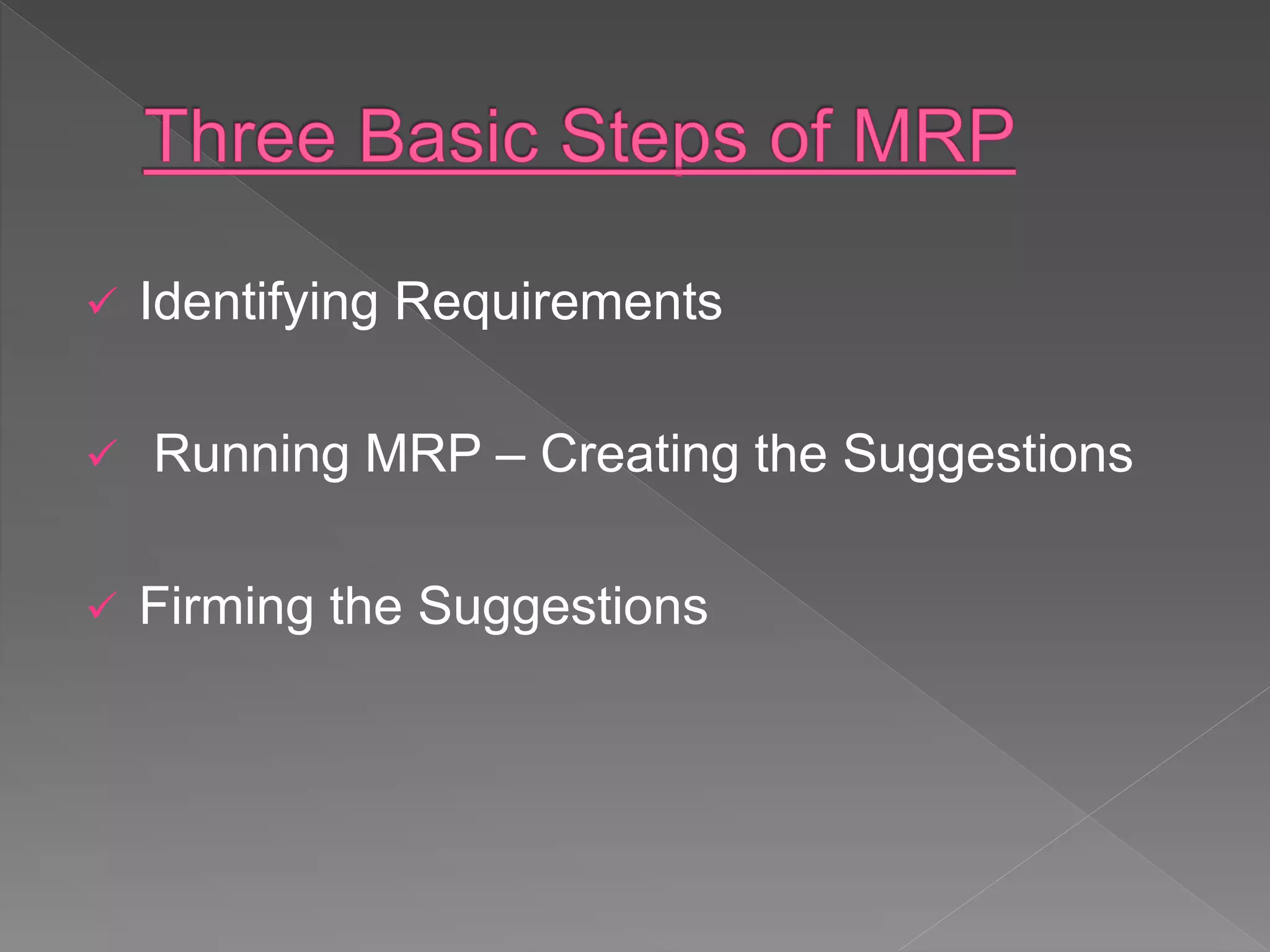
 Identifying Requirements
 Running MRP – Creating the Suggestions
 Firming the Suggestions
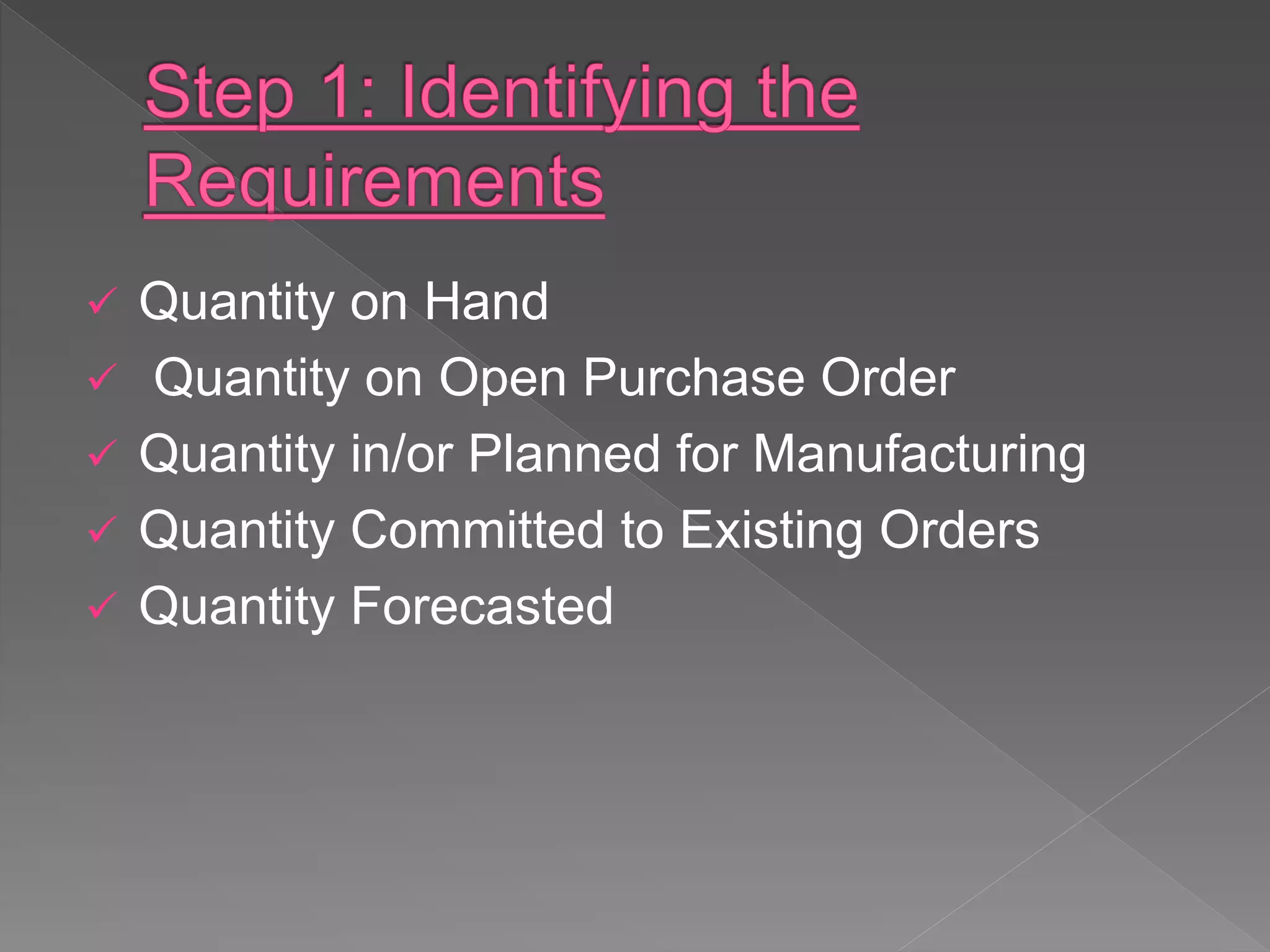
 Quantity on Hand
 Quantity on Open Purchase Order
 Quantity in/or Planned for Manufacturing
 Quantity Committed to Existing Orders
 Quantity Forecasted
 Company Sensitive
 Location Sensitive
 Date Sensitive
 Critical Items:
Items of immediate importance
 Expedite Items:
Items that need to be sped up
 Delay Items:
Items that are not of vital importance and
can be delayed.
 Manufacturing Orders
 Purchasing Orders
 Various Reports
 Manufactures Industrial Lighting Products
 Good-Quality Products
 Poor at Meeting Due Dates
 Work is Specialized for Each Customer
 Job Shop Environment
 Complex Products
Before MRP
Implementation
 Less than 75% of
orders completed on
time.
After MRP
Implementation
 97% of orders
completed on time.
 2% of orders
completed with 1 to 2
days after due date.

Material requirement planning, MRP.

  • 2.
  • 3.
    MRP(Material requirements planning)is designed to assist manufacturers in inventory and production management.
  • 4.
    “Material requirements planning(MRP) is a production planning, scheduling, and inventory control system used to manage manufacturing processes”.
  • 5.
    MRP is designedto answer three Questions.  What is needed  How much is needed  When is it needed.
  • 6.
    Following are someof its benefits:  Improved customer services  Improved productivity  Reduced purchasing cost  Reduced inventory levels  Reduce manufacturing cost  Higher quality products  Increased efficiency.
  • 7.
    Following are someof its limitations:  Need to have an expensive computer system  Need accurate and up-to-date inputs  The reporting requirements are excessive  Resistance from inside company.
  • 8.
    The main themeof MRP is “getting the right materials to the right place at the right time”.  Ensure materials are available for production  Maintain the lowest possible material and product levels in store  Plan manufacturing activities, delivery schedules and purchasing activities.
  • 9.
    Following are itsinputs:  Product Structure File  Master Production Schedule  Inventory Master File
  • 10.
    Bill of Materials: Listof parts & components that are required to build a product.
  • 11.
     Schedule ofFinished Products  Represents Production, not Demand  Combination of Customer Orders and  Demand Forecasts  What Needs to be Produced
  • 12.
     On-Hand Quantities On-Order Quantities  Lot Sizes (orders multiples of quantity)  Safety Stock  Lead Time  Past-Usage Figures
  • 13.
     Manufacturing Orders Purchasing Orders  Various Reports
  • 14.
     Identifying Requirements Running MRP – Creating the Suggestions  Firming the Suggestions
  • 15.
     Quantity onHand  Quantity on Open Purchase Order  Quantity in/or Planned for Manufacturing  Quantity Committed to Existing Orders  Quantity Forecasted
  • 16.
     Company Sensitive Location Sensitive  Date Sensitive
  • 17.
     Critical Items: Itemsof immediate importance  Expedite Items: Items that need to be sped up  Delay Items: Items that are not of vital importance and can be delayed.
  • 18.
     Manufacturing Orders Purchasing Orders  Various Reports
  • 19.
     Manufactures IndustrialLighting Products  Good-Quality Products  Poor at Meeting Due Dates  Work is Specialized for Each Customer  Job Shop Environment  Complex Products
  • 20.
    Before MRP Implementation  Lessthan 75% of orders completed on time. After MRP Implementation  97% of orders completed on time.  2% of orders completed with 1 to 2 days after due date.