 Epigenetics is the study of heritable changes in
gene expression cellular phenotype, caused by
mechanisms other than changes in the underlying
DNA sequence of heritable changes .
 Irelevant modifications to the genome
 Eg DNA methylation and histone modification.
 Epigenetics can modifly the activation of genes but
not the sequnce of the DNA.
 Chromatin proteins may be activated or scilenced.
 Changes are preserved when the cells divde.
Specific epigenetic processes include paramutation,
bookmarking, imprinting, gene silencing, X
chromosomeinactivation, position effect,
reprogramming, transvection, maternal effects, the
progress of carcinogenesis,many effects of
teratogens, regulation of histone modifications and
heterochromatin, and technical limitations affecting
parthenogenesis and cloning.
 Chromatin remodeling is accomplished through two main
mechanisms:
 1. The first way is post translational modification of the
amino acids that make up histone proteins. Histone
proteins are made up of long chains of amino acids. If the
amino acids that are in the chain are changed, the shape
of the histone sphere might be modified.
 DNA is not completely unwound during replication. It is
possible,then, that the modified histones may be carried
into each new copy of the DNA. Once there, these
histones may act as templates, initiating the surrounding
new histones to be shaped in the new manner.
 By altering the shape of the histones around it, these
modified histoneswould ensure that a differentiated cell
would stay differentiated, and not convert back into being a
stem cell
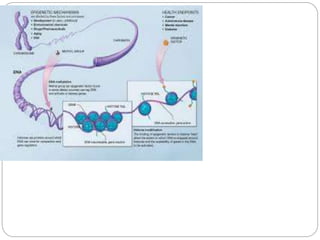
 The second way is the addition of methyl groups
to the DNA, mostly at CpG sites, to convert
cytosine to 5-methylcytosine. 5-Methylcytosine
performs much like a regular cytosine, pairing up
with a guanine.
 However, some areas of the genome are
methylated more heavily than others, and highly
methylated areas tend to be less transcriptionally
active, through a mechanism not fully understood.
Methylation of cytosines can also persist from the
germ line of one of the parents into the zygote,
marking the chromosome as being inherited from
this parent (genetic imprinting).
 Somatic epigenetic inheritance through epigenetic modifications, particularly through
DNA methylation and chromatin remodeling, is very important in the development of
multicellular eukaryotic organisms.
 The genome sequence is static (with some notable exceptions), but cells differentiate
into many different types, which perform different functions, and respond differently to
the environment and intercellular signalling. Thus, as individuals develop, morphogens
activate or silence genes in an epigenetically heritable fashion, giving cells a memory".
 In mammals, most cells terminally differentiate, with only stem cells retaining the ability
to differentiate into several cell types ("totipotency" and "multipotency").
 In mammals, some stem cells continue producing new differentiated cells throughout
life, but mammals are not able to respond to loss of some tissues, for example, the
inability to regenerate limbs, which some other animals are capable of. Unlike animals,
plant cells do not terminally differentiate, remaining totipotent with the ability to give
rise to a new individual plant.
 While plants do utilise many of the same epigenetic mechanisms as animals, such as
chromatin remodeling, it has been hypothesised that some kinds of plant cells do not
use or require "cellular memories", resetting their gene expression patterns using
positional information from the environment and surrounding cells to determine their
fate.
MEDICINE
 Epigenetics has many and varied potential
medical applications as it tends to be
multidimensional in nature.
 Congenital genetic disease is well understood,
and it is also clear that epigenetics can play a
role, for example, in the case of Angelman
syndrome and Prader-Willi syndrome. These are
normal genetic diseases caused by gene
deletions or inactivation of the genes, but are
unusually common because individuals are
essentially hemizygous because of genomic
imprinting, and therefore a single gene knock out
is sufficient to cause the disease, where most
DNA methylation in cancer
DNA methylation is an important regulator of gene
transcription and a large body of evidence has
demonstrated that aberrant DNA methylation is
associated with unscheduled gene silencing, and the
genes with high levels of 5-methylcytosine in their
promoter region are transcriptionally silent.
DNA methylation is essential during embryonic
development, and in somatic cells, patterns of DNA
methylation are in general transmitted to daughter
cells with a high fidelity compared to normal tissue.
Hypermethylation is one of the major epigenetic
modifications that repress transcription via promoter
region of tumour suppressor genes. Hypermethylation
typically occurs at CpG islands in the promoter region
and is associated with gene inactivation. Global
hypomethylation has also been implicated in the
development and progression of cancer through
different mechanisms
Cancer treatment
 Current research has shown that epigenetic
pharmaceuticals could be a putative replacement or
adjuvant therapy for currently accepted treatment methods
such as radiation and chemotherapy, or could enhance the
effects of these current treatments.
 It has been shown that the epigenetic control of the proto-
onco regions and the tumor suppressor sequences by
conformational changes in histones directly affects the
formation andprogression of cancer. Epigenetics also has
the factor of reversibility, a characteristic that other
cancertreatments do not offerDrug development has
focused mainly on histone acetyltransferase (HAT) and
histone deacetylase (HDAC), and has included the
introduction to the market of the new pharmaceutical
vorinostat, an HDAC inhibitor.
 HDAC has been shown to play an integral role in the
progression of oral squamous cancer.
Epigenetics

Epigenetics

  • 3.
     Epigenetics isthe study of heritable changes in gene expression cellular phenotype, caused by mechanisms other than changes in the underlying DNA sequence of heritable changes .  Irelevant modifications to the genome  Eg DNA methylation and histone modification.
  • 4.
     Epigenetics canmodifly the activation of genes but not the sequnce of the DNA.  Chromatin proteins may be activated or scilenced.  Changes are preserved when the cells divde. Specific epigenetic processes include paramutation, bookmarking, imprinting, gene silencing, X chromosomeinactivation, position effect, reprogramming, transvection, maternal effects, the progress of carcinogenesis,many effects of teratogens, regulation of histone modifications and heterochromatin, and technical limitations affecting parthenogenesis and cloning.
  • 5.
     Chromatin remodelingis accomplished through two main mechanisms:  1. The first way is post translational modification of the amino acids that make up histone proteins. Histone proteins are made up of long chains of amino acids. If the amino acids that are in the chain are changed, the shape of the histone sphere might be modified.  DNA is not completely unwound during replication. It is possible,then, that the modified histones may be carried into each new copy of the DNA. Once there, these histones may act as templates, initiating the surrounding new histones to be shaped in the new manner.  By altering the shape of the histones around it, these modified histoneswould ensure that a differentiated cell would stay differentiated, and not convert back into being a stem cell
  • 6.
     The secondway is the addition of methyl groups to the DNA, mostly at CpG sites, to convert cytosine to 5-methylcytosine. 5-Methylcytosine performs much like a regular cytosine, pairing up with a guanine.  However, some areas of the genome are methylated more heavily than others, and highly methylated areas tend to be less transcriptionally active, through a mechanism not fully understood. Methylation of cytosines can also persist from the germ line of one of the parents into the zygote, marking the chromosome as being inherited from this parent (genetic imprinting).
  • 7.
     Somatic epigeneticinheritance through epigenetic modifications, particularly through DNA methylation and chromatin remodeling, is very important in the development of multicellular eukaryotic organisms.  The genome sequence is static (with some notable exceptions), but cells differentiate into many different types, which perform different functions, and respond differently to the environment and intercellular signalling. Thus, as individuals develop, morphogens activate or silence genes in an epigenetically heritable fashion, giving cells a memory".  In mammals, most cells terminally differentiate, with only stem cells retaining the ability to differentiate into several cell types ("totipotency" and "multipotency").  In mammals, some stem cells continue producing new differentiated cells throughout life, but mammals are not able to respond to loss of some tissues, for example, the inability to regenerate limbs, which some other animals are capable of. Unlike animals, plant cells do not terminally differentiate, remaining totipotent with the ability to give rise to a new individual plant.  While plants do utilise many of the same epigenetic mechanisms as animals, such as chromatin remodeling, it has been hypothesised that some kinds of plant cells do not use or require "cellular memories", resetting their gene expression patterns using positional information from the environment and surrounding cells to determine their fate.
  • 8.
    MEDICINE  Epigenetics hasmany and varied potential medical applications as it tends to be multidimensional in nature.  Congenital genetic disease is well understood, and it is also clear that epigenetics can play a role, for example, in the case of Angelman syndrome and Prader-Willi syndrome. These are normal genetic diseases caused by gene deletions or inactivation of the genes, but are unusually common because individuals are essentially hemizygous because of genomic imprinting, and therefore a single gene knock out is sufficient to cause the disease, where most
  • 9.
    DNA methylation incancer DNA methylation is an important regulator of gene transcription and a large body of evidence has demonstrated that aberrant DNA methylation is associated with unscheduled gene silencing, and the genes with high levels of 5-methylcytosine in their promoter region are transcriptionally silent. DNA methylation is essential during embryonic development, and in somatic cells, patterns of DNA methylation are in general transmitted to daughter cells with a high fidelity compared to normal tissue. Hypermethylation is one of the major epigenetic modifications that repress transcription via promoter region of tumour suppressor genes. Hypermethylation typically occurs at CpG islands in the promoter region and is associated with gene inactivation. Global hypomethylation has also been implicated in the development and progression of cancer through different mechanisms
  • 10.
    Cancer treatment  Currentresearch has shown that epigenetic pharmaceuticals could be a putative replacement or adjuvant therapy for currently accepted treatment methods such as radiation and chemotherapy, or could enhance the effects of these current treatments.  It has been shown that the epigenetic control of the proto- onco regions and the tumor suppressor sequences by conformational changes in histones directly affects the formation andprogression of cancer. Epigenetics also has the factor of reversibility, a characteristic that other cancertreatments do not offerDrug development has focused mainly on histone acetyltransferase (HAT) and histone deacetylase (HDAC), and has included the introduction to the market of the new pharmaceutical vorinostat, an HDAC inhibitor.  HDAC has been shown to play an integral role in the progression of oral squamous cancer.