
PREPARED BY:-
Karm Balar
ASST. Prof.
S.S.A.S.I.T.
S.S.A.S.I.T G.T.U
SHREE SWAMI ATMANAND SARASWATI
INSTITUTE OF TECHNOLOGY, SURAT
INTRODUCTION TO ENVIRONMENT & ITS STUDIES
Environmental studies
Definition…..
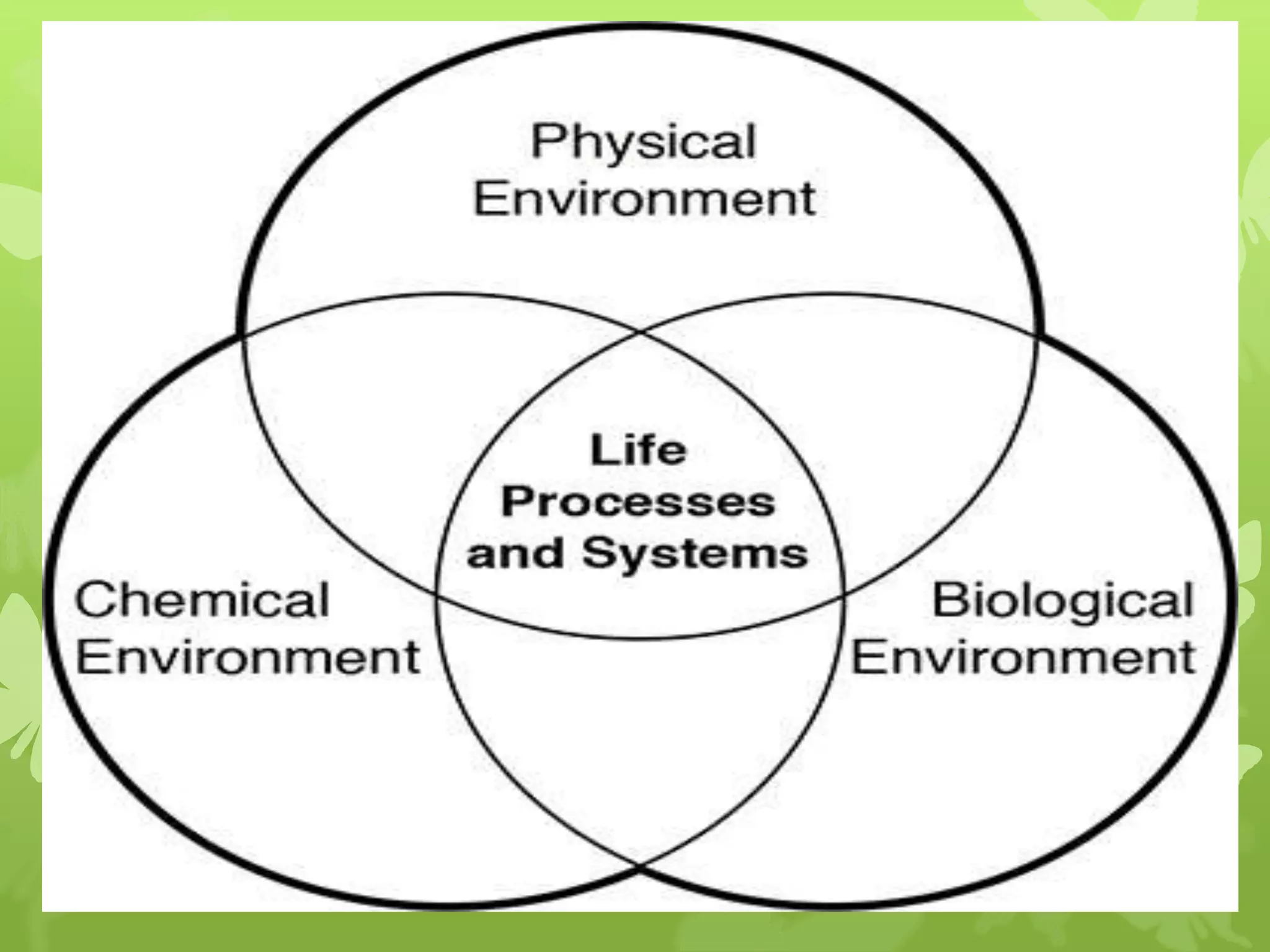
o The environment “is the sum of the total of the elements, factors
and conditions in the surroundings which may have
an impact on the development, action or survival of an organism
or group of organisms, such as, we human beings.”
OR
o It can also be defined as “ external surroundings and conditions
which directly or indirectly affects the living organism”
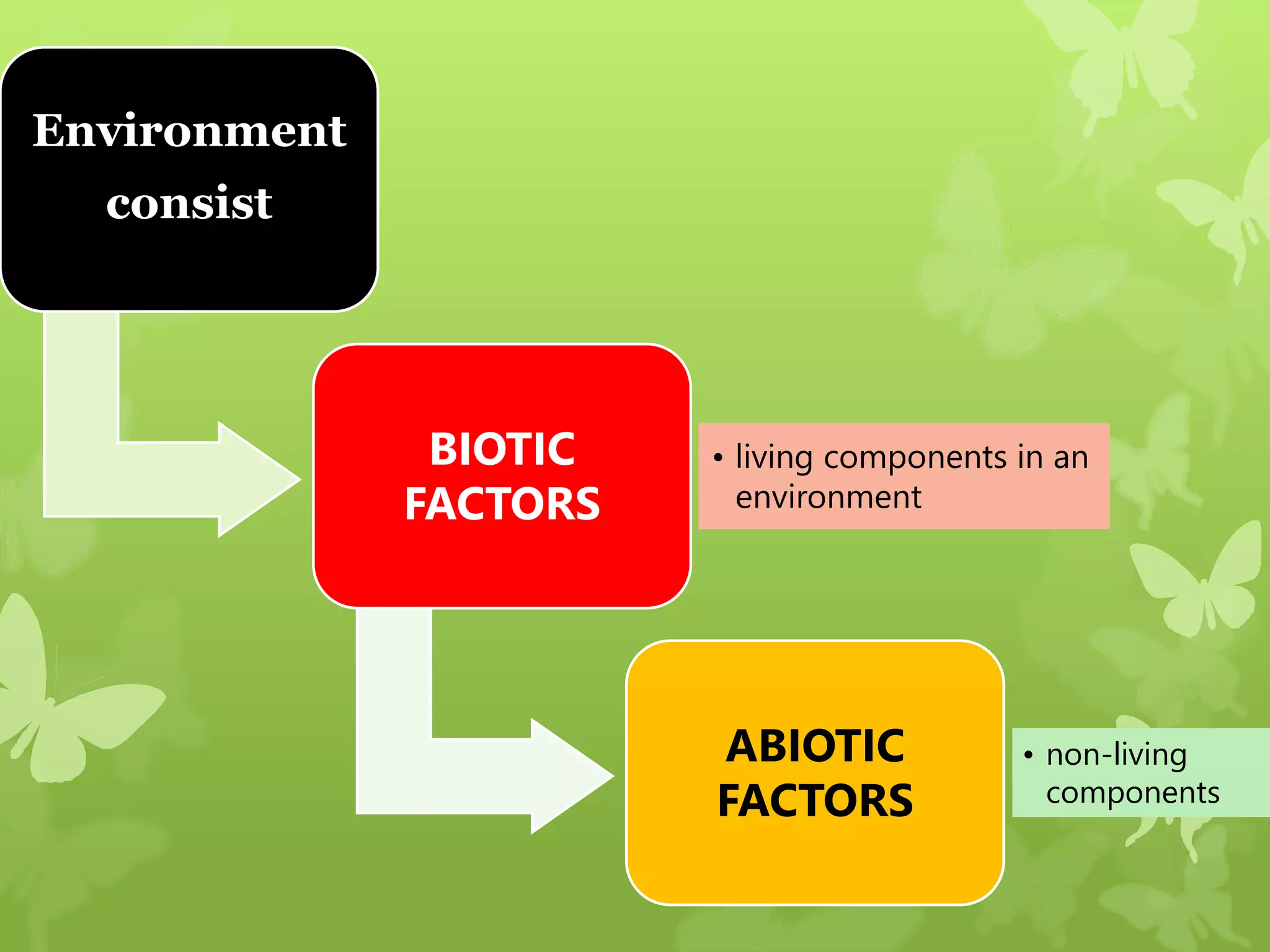
Environment
consist
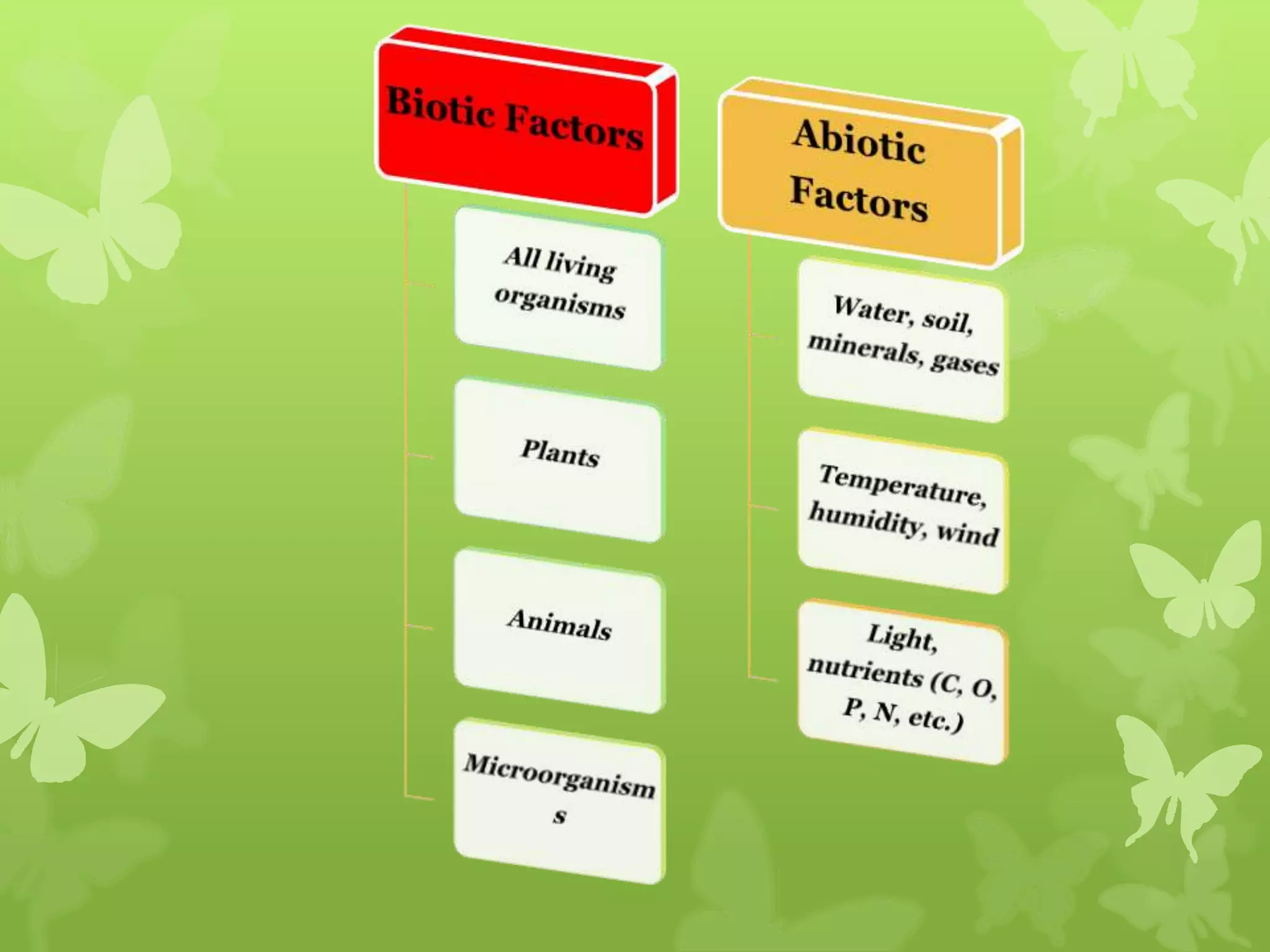
BIOTIC
FACTORS
• living components in an
environment
ABIOTIC
FACTORS
• non-living
components
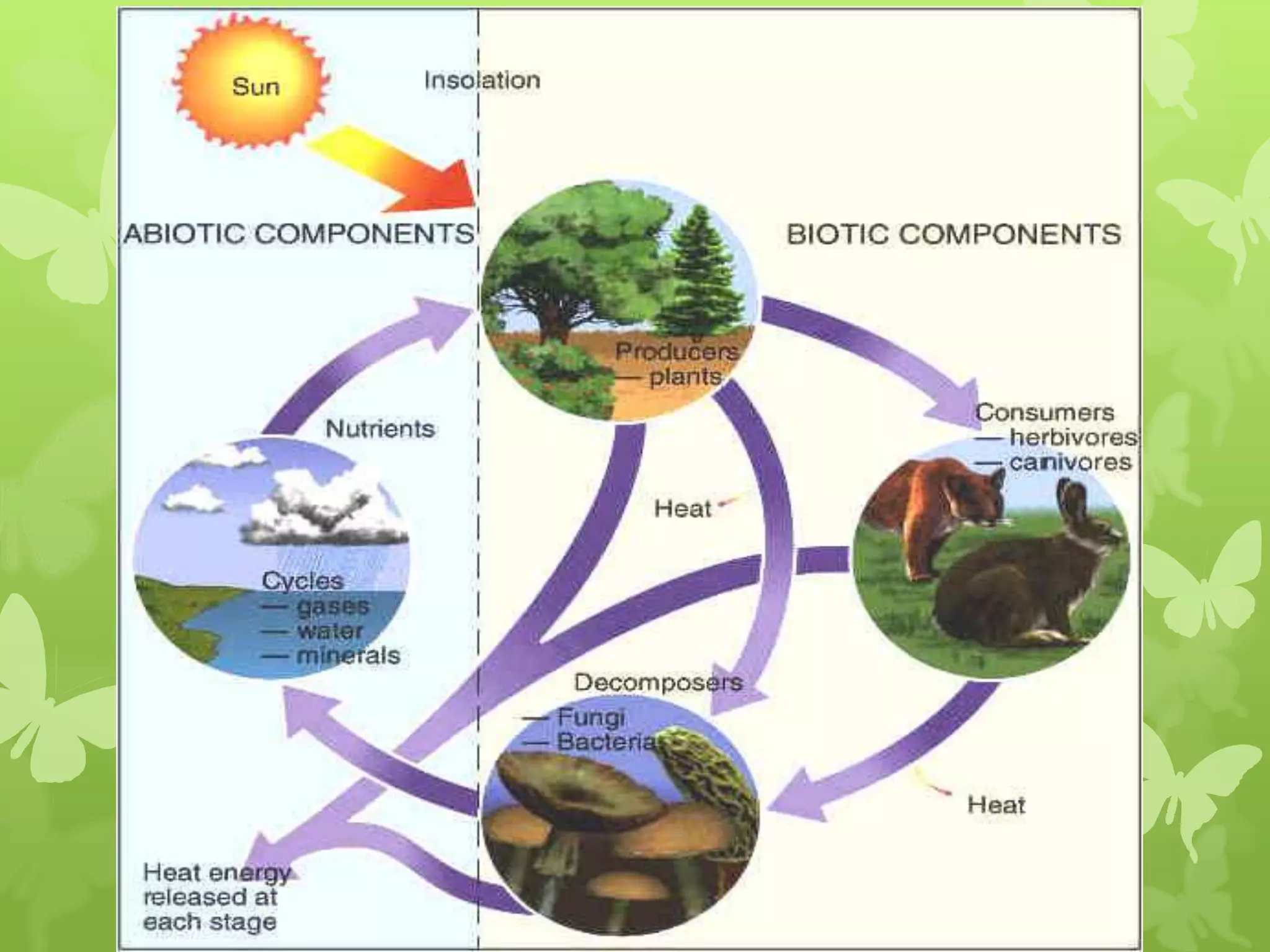
Biotic factors and Abiotic factors that surround us and with
which we interact.
These biotic and abiotic components are in dynamic state; they
constantly affect each other and cannot be isolated from each
other.
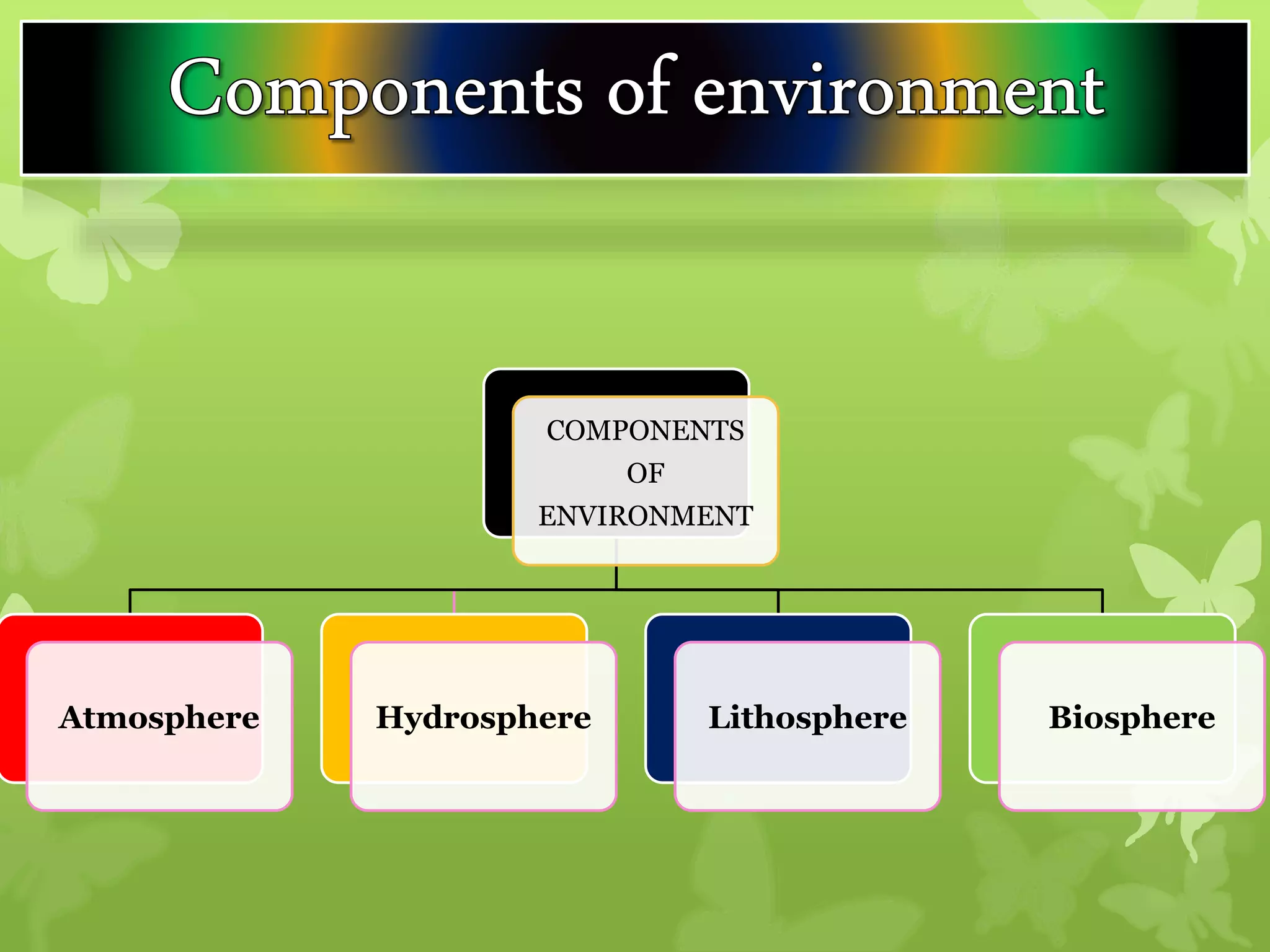
COMPONENTS
OF
ENVIRONMENT
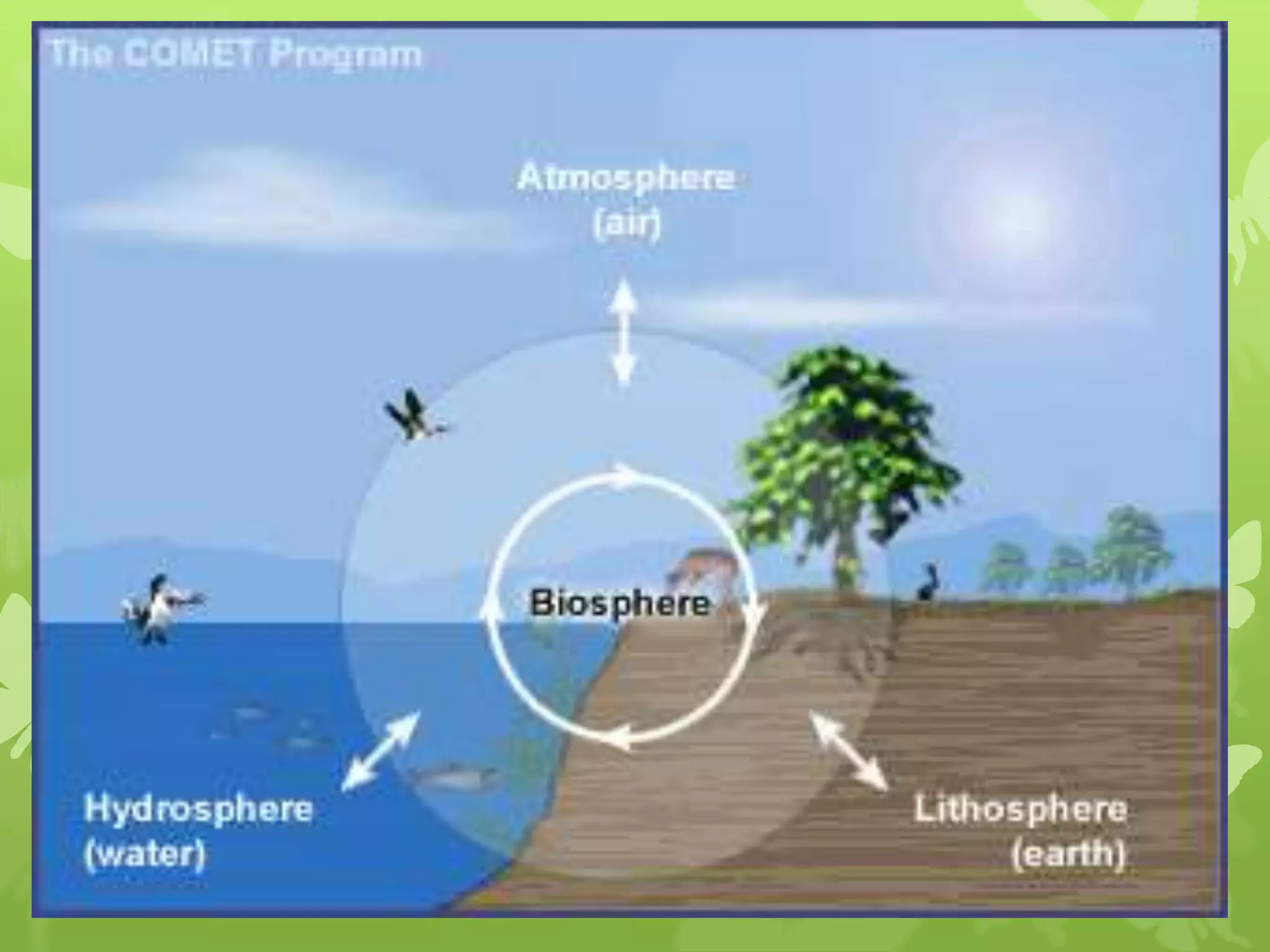
Atmosphere Hydrosphere Lithosphere Biosphere
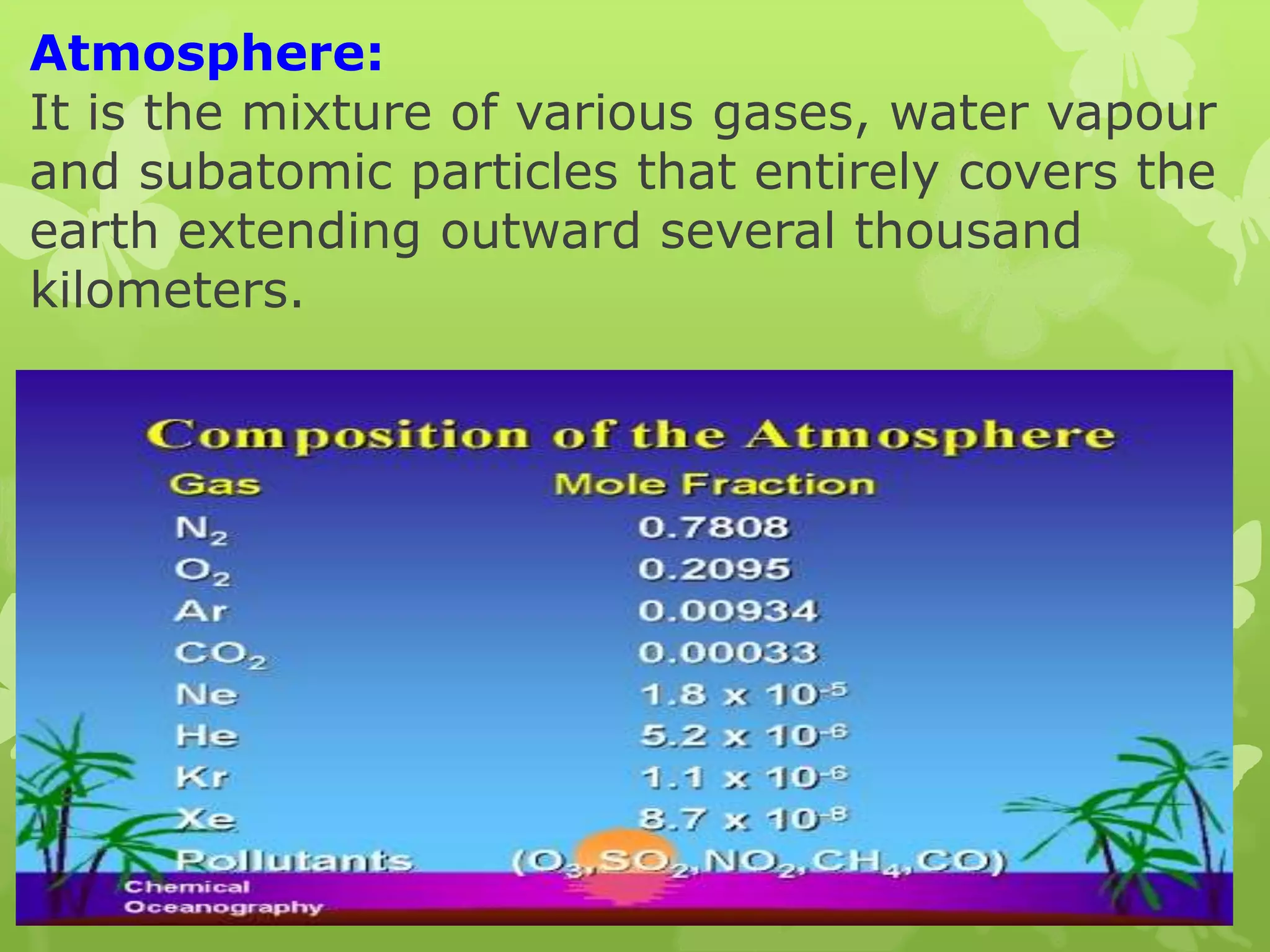
Atmosphere:
It is the mixture of various gases, water vapour
and subatomic particles that entirely covers the
earth extending outward several thousand
kilometers.
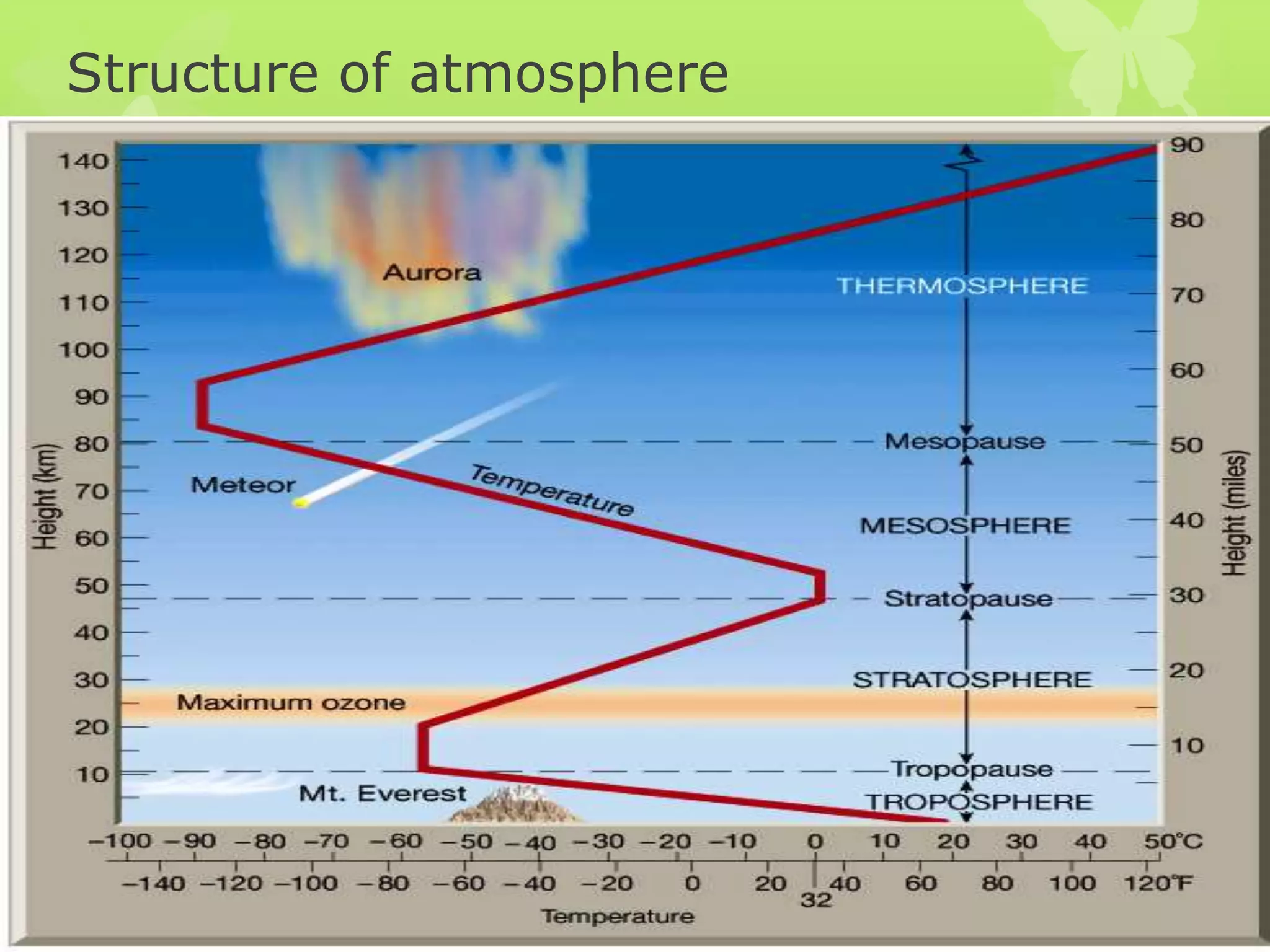
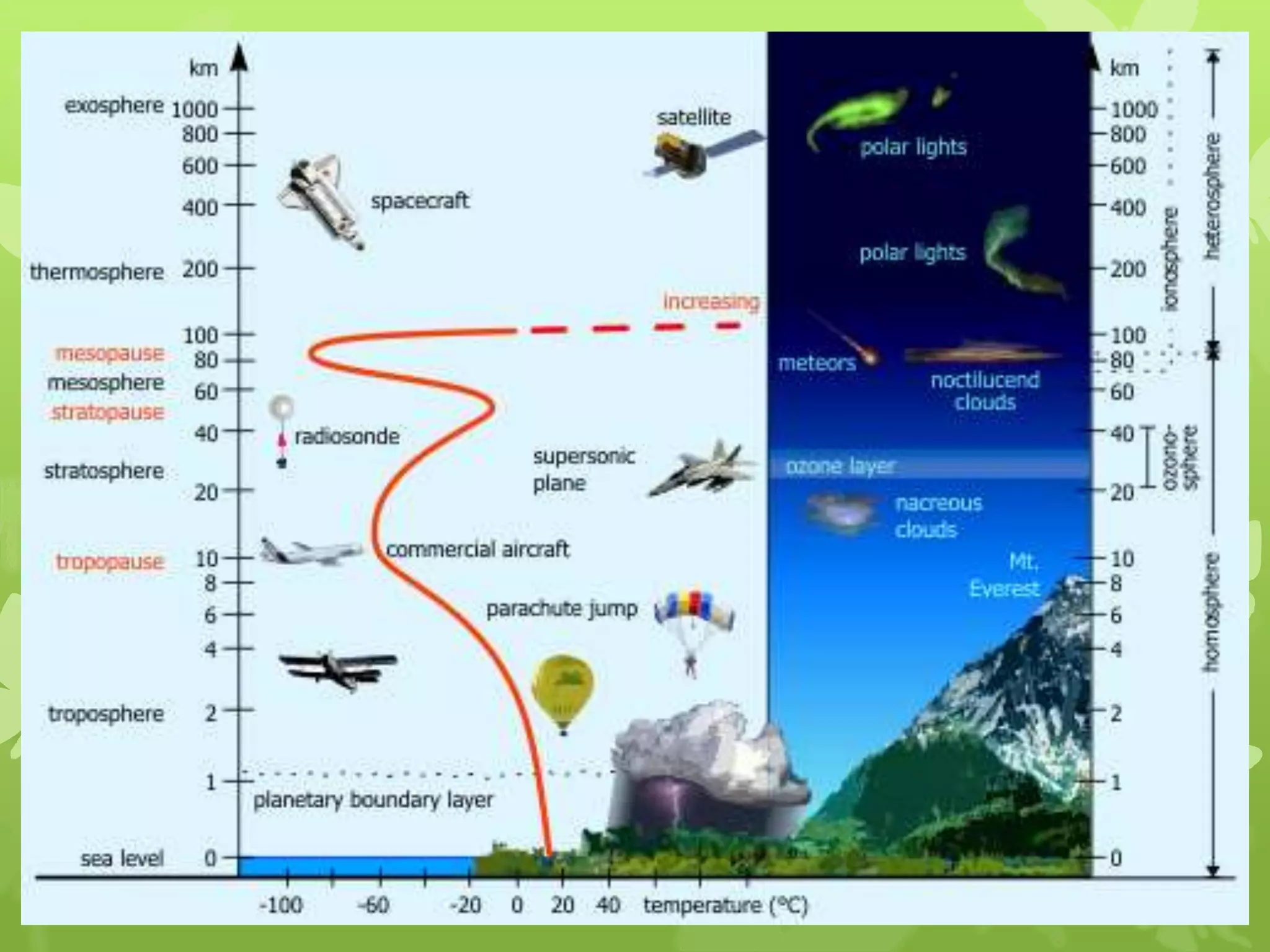
Structure of atmosphere
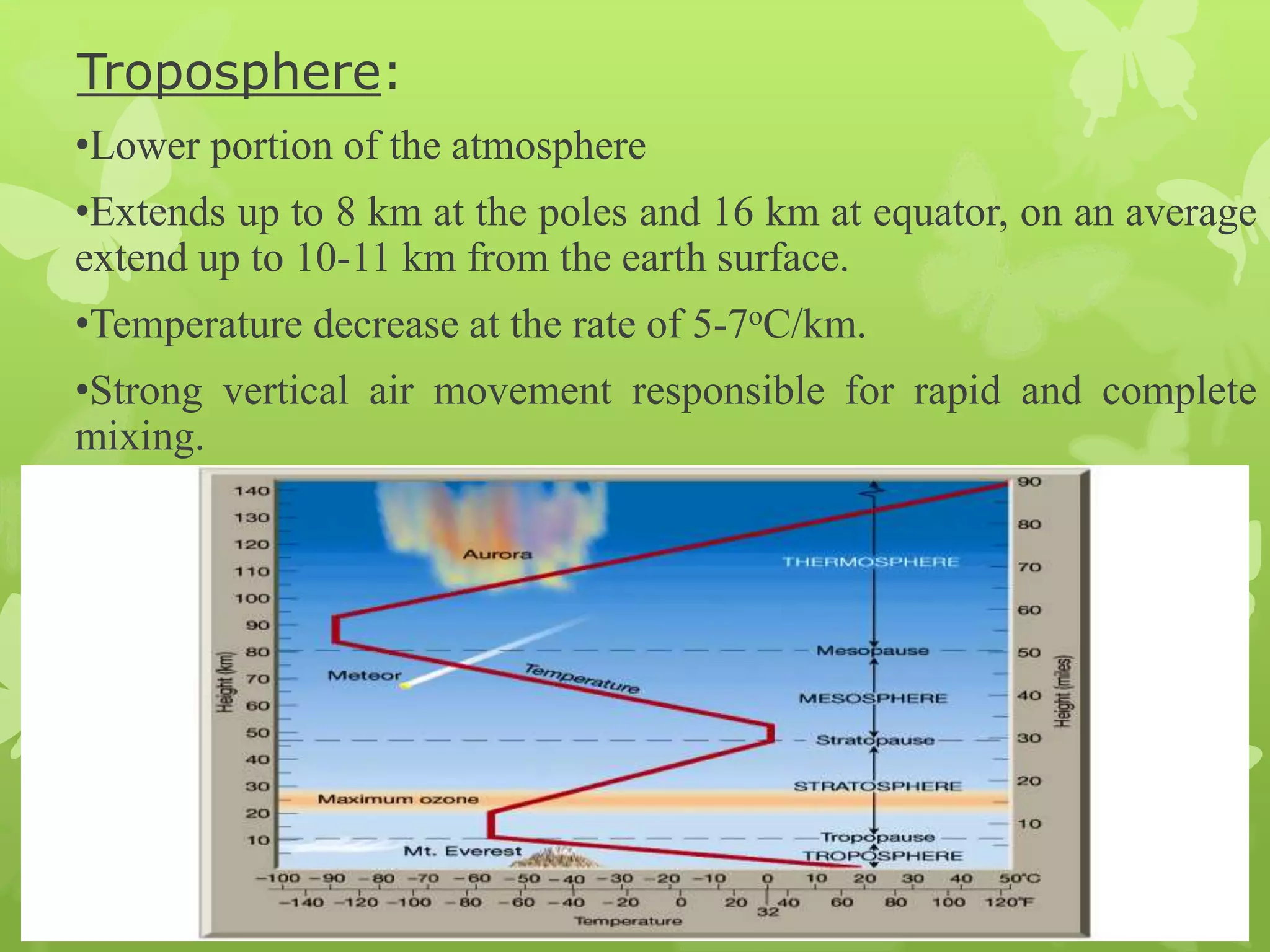
Troposphere:
•Lower portion of the atmosphere
•Extends up to 8 km at the poles and 16 km at equator, on an average
extend up to 10-11 km from the earth surface.
•Temperature decrease at the rate of 5-7oC/km.
•Strong vertical air movement responsible for rapid and complete
mixing.
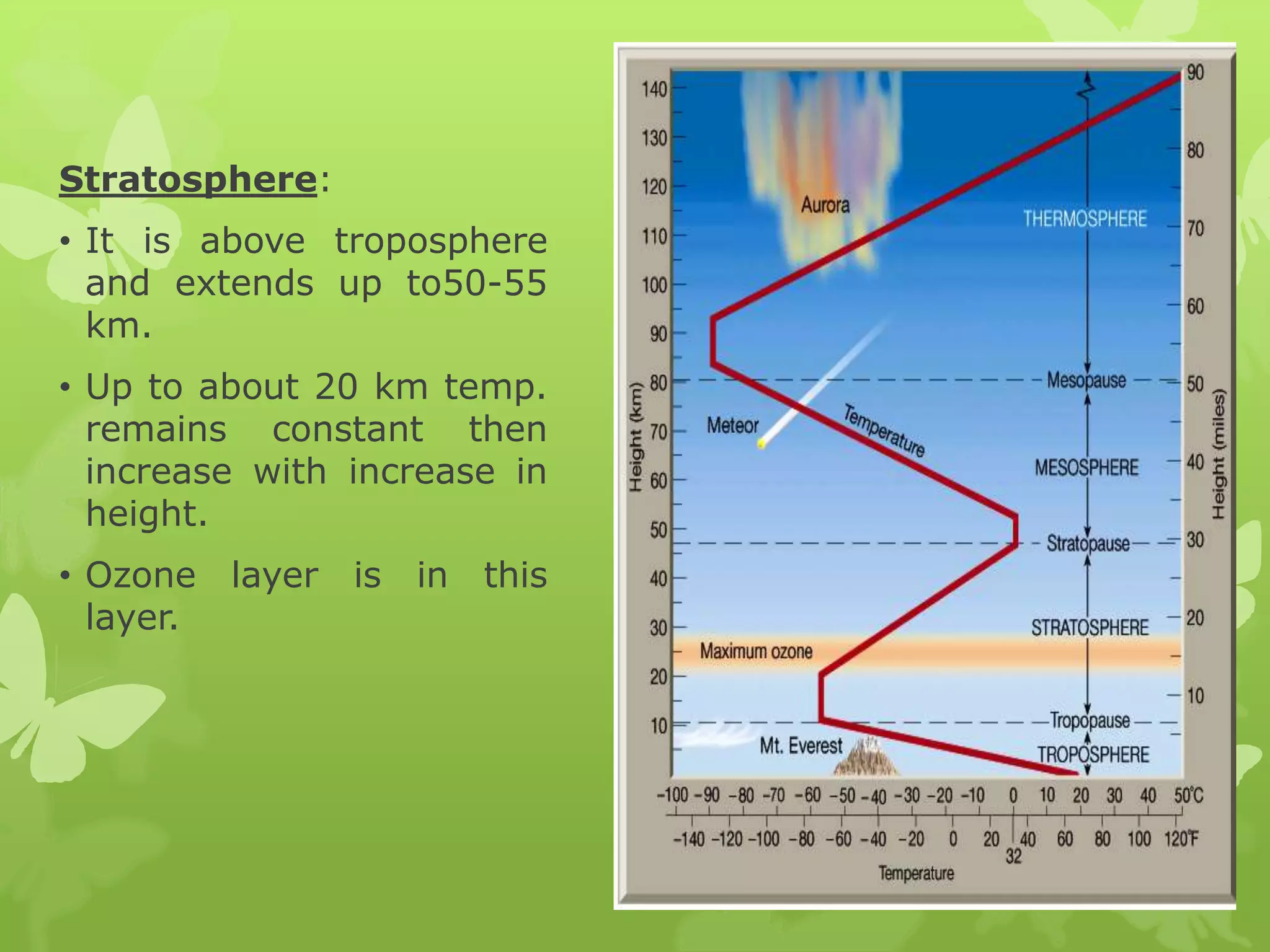
Stratosphere:
• It is above troposphere
and extends up to50-55
km.
• Up to about 20 km temp.
remains constant then
increase with increase in
height.
• Ozone layer is in this
layer.
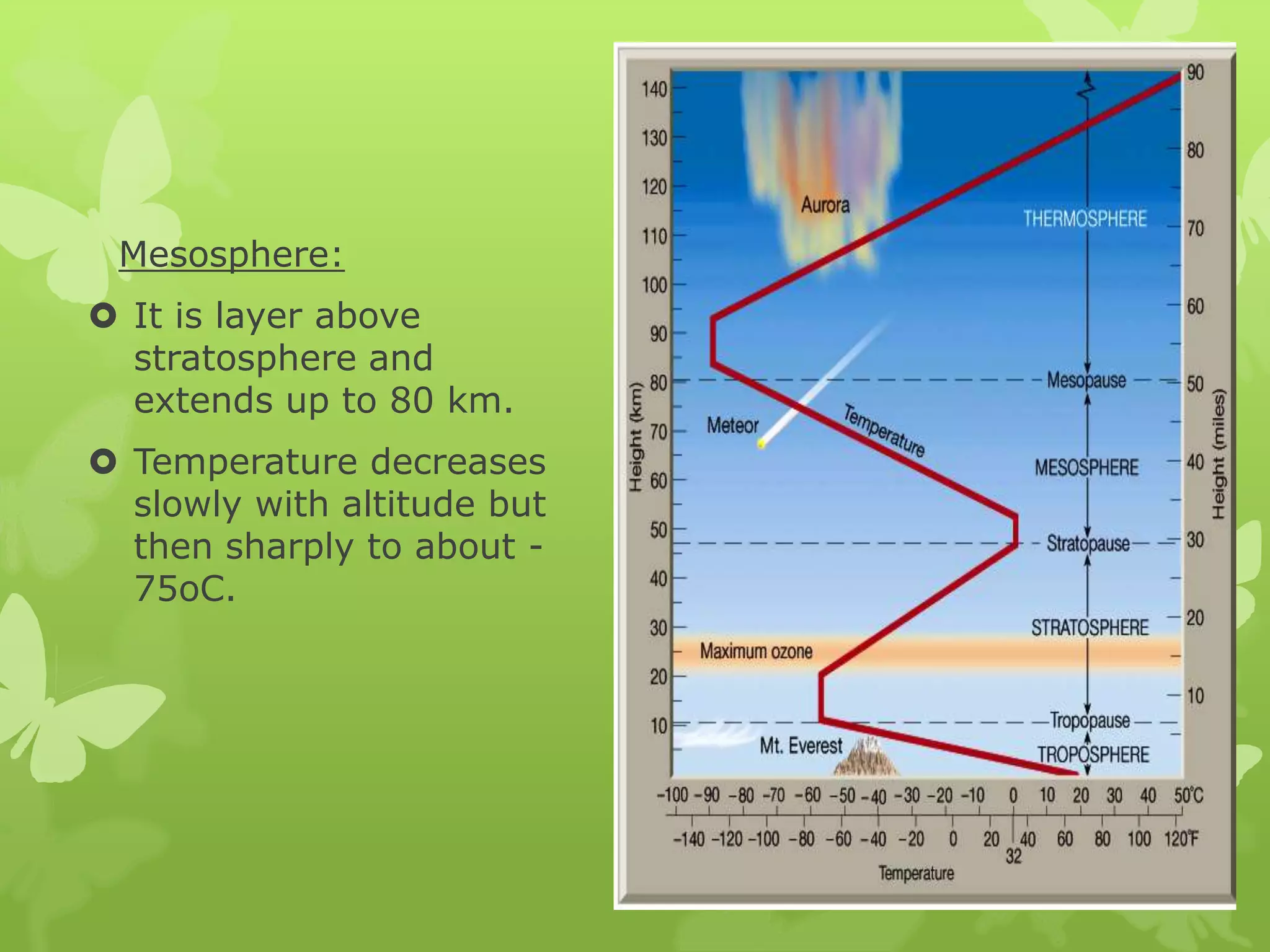
Mesosphere:
 It is layer above
stratosphere and
extends up to 80 km.
 Temperature decreases
slowly with altitude but
then sharply to about -
75oC.
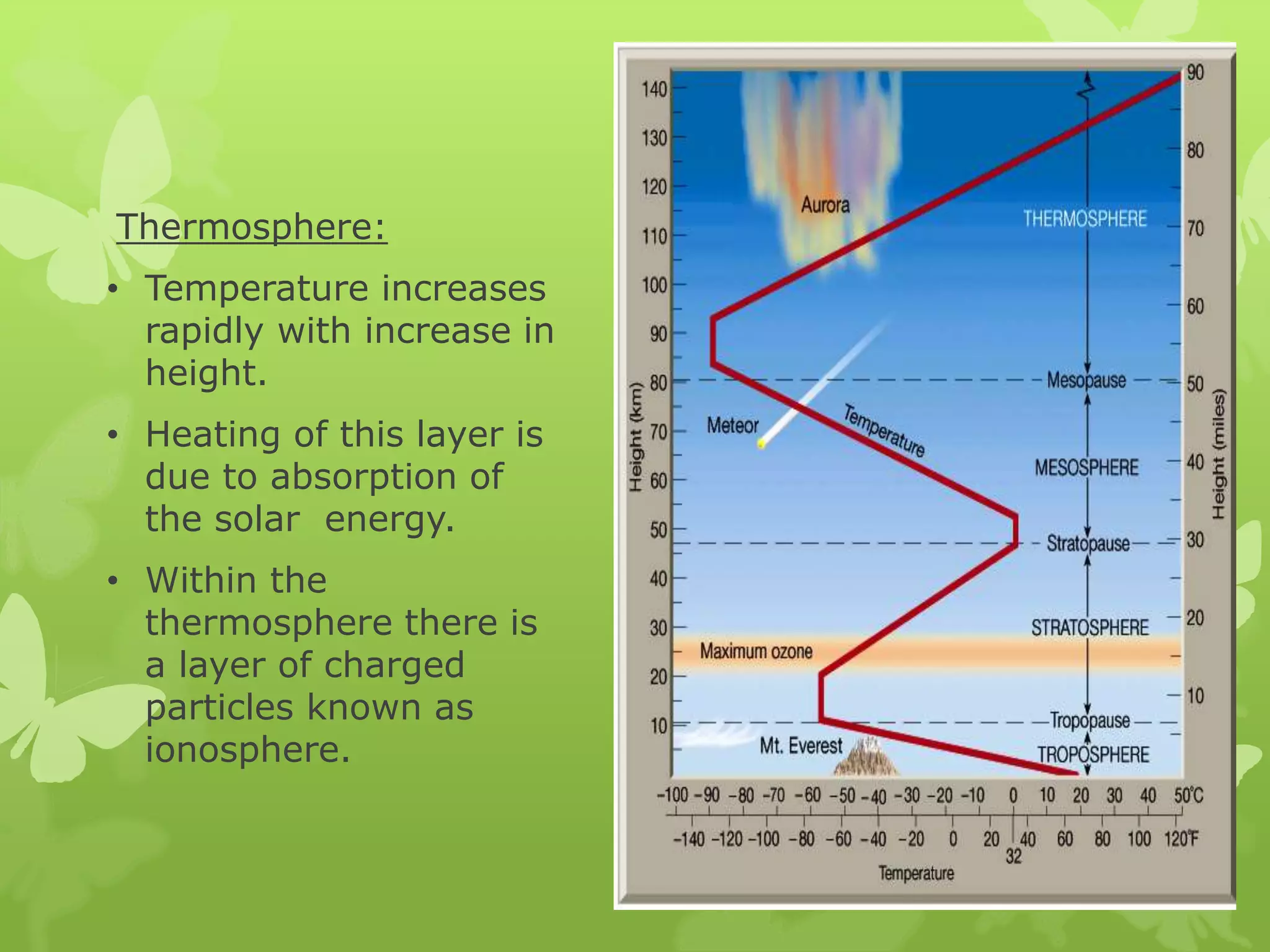
Thermosphere:
• Temperature increases
rapidly with increase in
height.
• Heating of this layer is
due to absorption of
the solar energy.
• Within the
thermosphere there is
a layer of charged
particles known as
ionosphere.
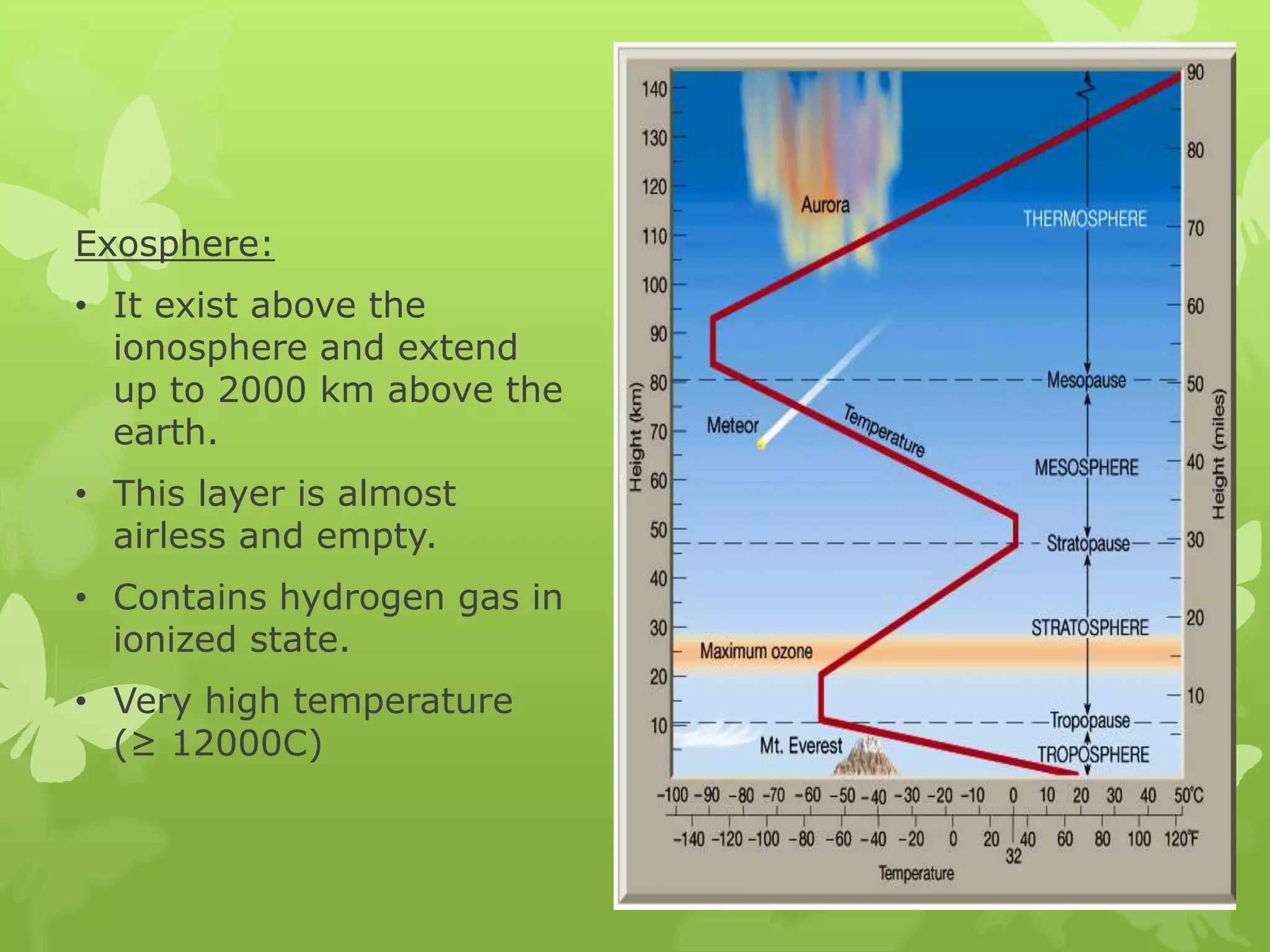
Exosphere:
• It exist above the
ionosphere and extend
up to 2000 km above the
earth.
• This layer is almost
airless and empty.
• Contains hydrogen gas in
ionized state.
• Very high temperature
(≥ 12000C)
• About 70% of earth is covered by water.
• Water is available in seas, oceans, lakes, river, glaciers etc.
• 97% is in the oceans and seas, 2% in glaciers & ice caps, 1% is
fresh water available for human consumption.
 Outer soil crust of the earth is lithosphere
 Living organisms, plant vegetation are supported by the
lithosphere.
 It contains resources like minerals, organic and inorganic matter,
some extent air and water.
 Role of lithosphere:
- Produces food for human beings and animals.
- Soil is the site of decomposition of organic
wastes.
 Thin outer crust of the earth which includes all the living organisms
and their environment.
 It extends from the lowest sea bed level to about 24 km of the
atmosphere.
 Life supporting resources are available from the biosphere.
 It is that part of earth where living(biotic) organism exist and
interact with each other and also with non-living (abiotic)
components.
 The living organisms interacting with each other in biosphere and sustain
their life.
 The waste products in gaseous, liquid and solid form are discharged in
biosphere.
 The sustaining and assimilative capacity of the biosphere is tremendous but
not infinite.
 The system is in operation for millions of years but now showing stress due
to impact of human on environment.
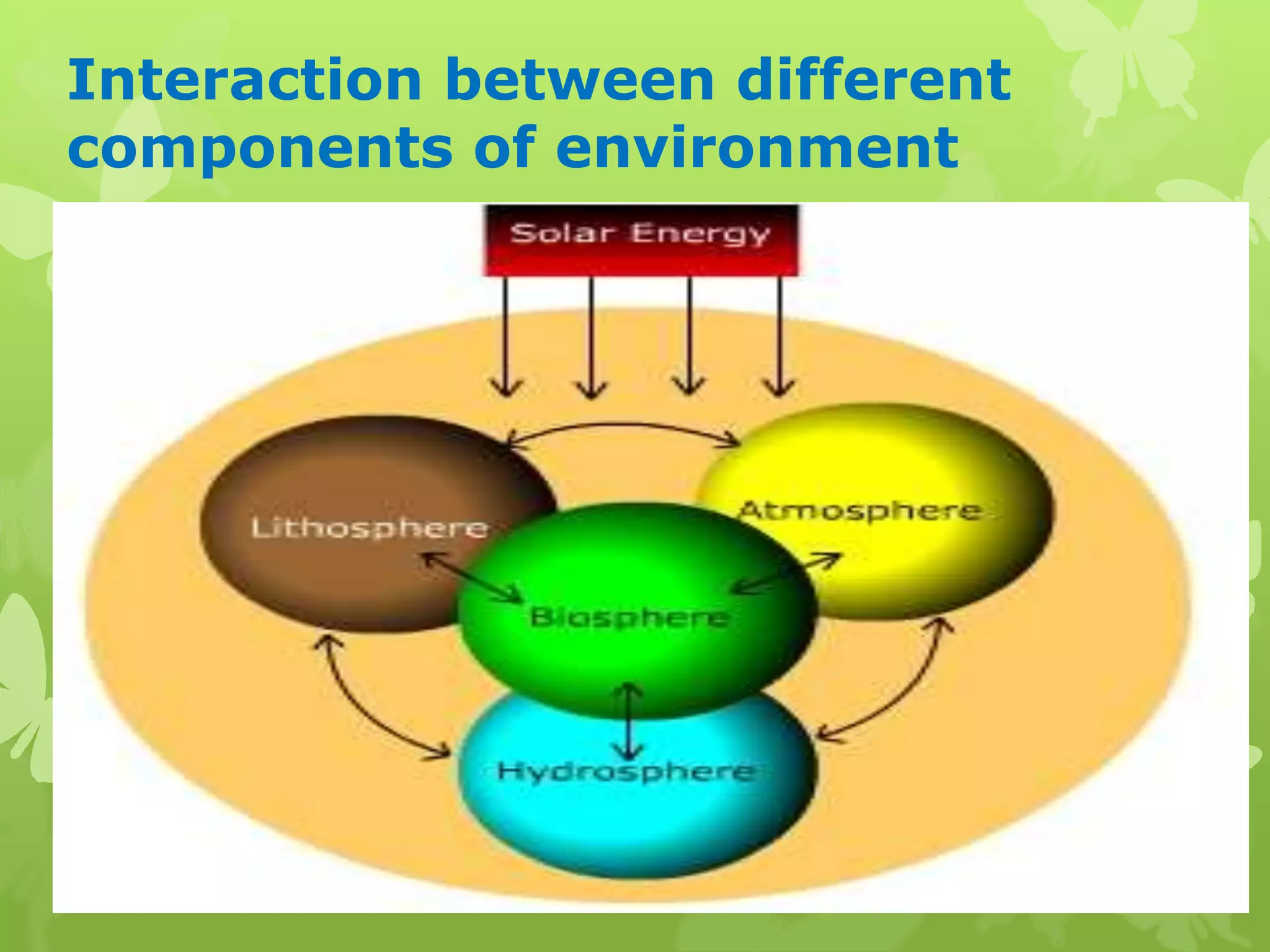
Interaction between different
components of environment
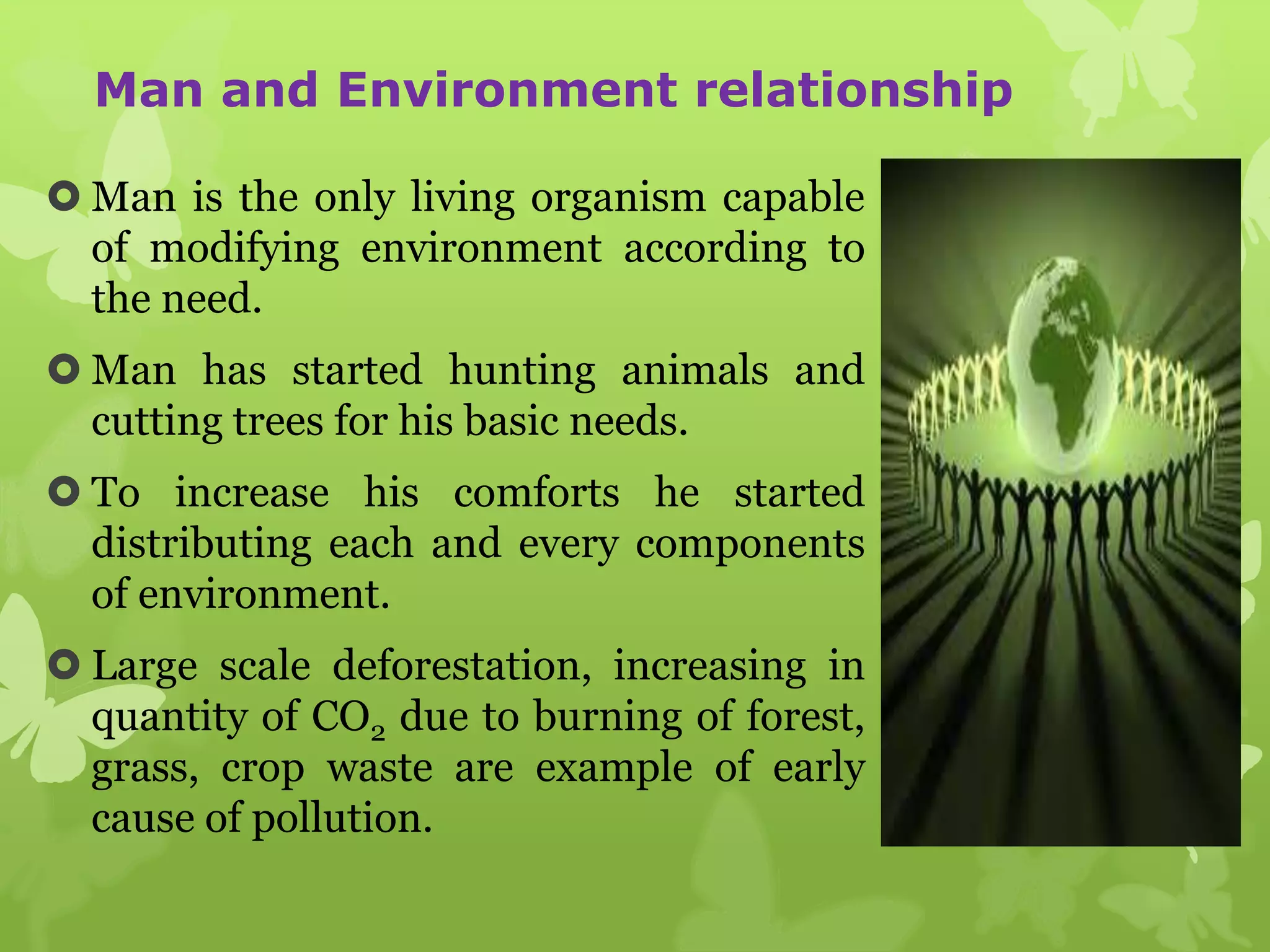
Man and Environment relationship
 Man is the only living organism capable
of modifying environment according to
the need.
 Man has started hunting animals and
cutting trees for his basic needs.
 To increase his comforts he started
distributing each and every components
of environment.
 Large scale deforestation, increasing in
quantity of CO2 due to burning of forest,
grass, crop waste are example of early
cause of pollution.
Positive Impact
Negative Impact
Direct Impact & Indirect Impact
 Positive Impact
 Waste treatment plants to reduce the pollution.
 Electricity generation options
 Uses of bio-fuels
 Water treatment plants help us to reuse of dirty water.
 Wind turbines help to reduce the needs for coal, electric and other natural
resources.
 To improve life style & safety of human life, as well as improve the
environment of this planet for the future.
 The science of sewage treatment is probably the greatest environmental
achievement of mankind
Impact of Technology on Environment (Cont…)
 Negative Impacts: Negative effects are further divided into
direct and indirect effects.
 Direct effect:
Accidents in various industries
Nuclear pollution
 Indirect effect
Uses of fossil fuels causes air pollution
Green house effects
Acid rain
Global warming
 a) Direct Effect:
 It includes accidents , release of pollutants affecting human health,
exhaustion of resources and changes in landscapes.
 b) Indirect Effects:
 These effects interfere with the vital services supplied to humanity by
natural ecological systems.
Environmental Degradation
 Definition: The overall lowering of environmental qualities due
to the damages caused by both natural events and human
activities in the basic structure of the environment at local,
regional and global levels adversely affecting all living
organisms including man.
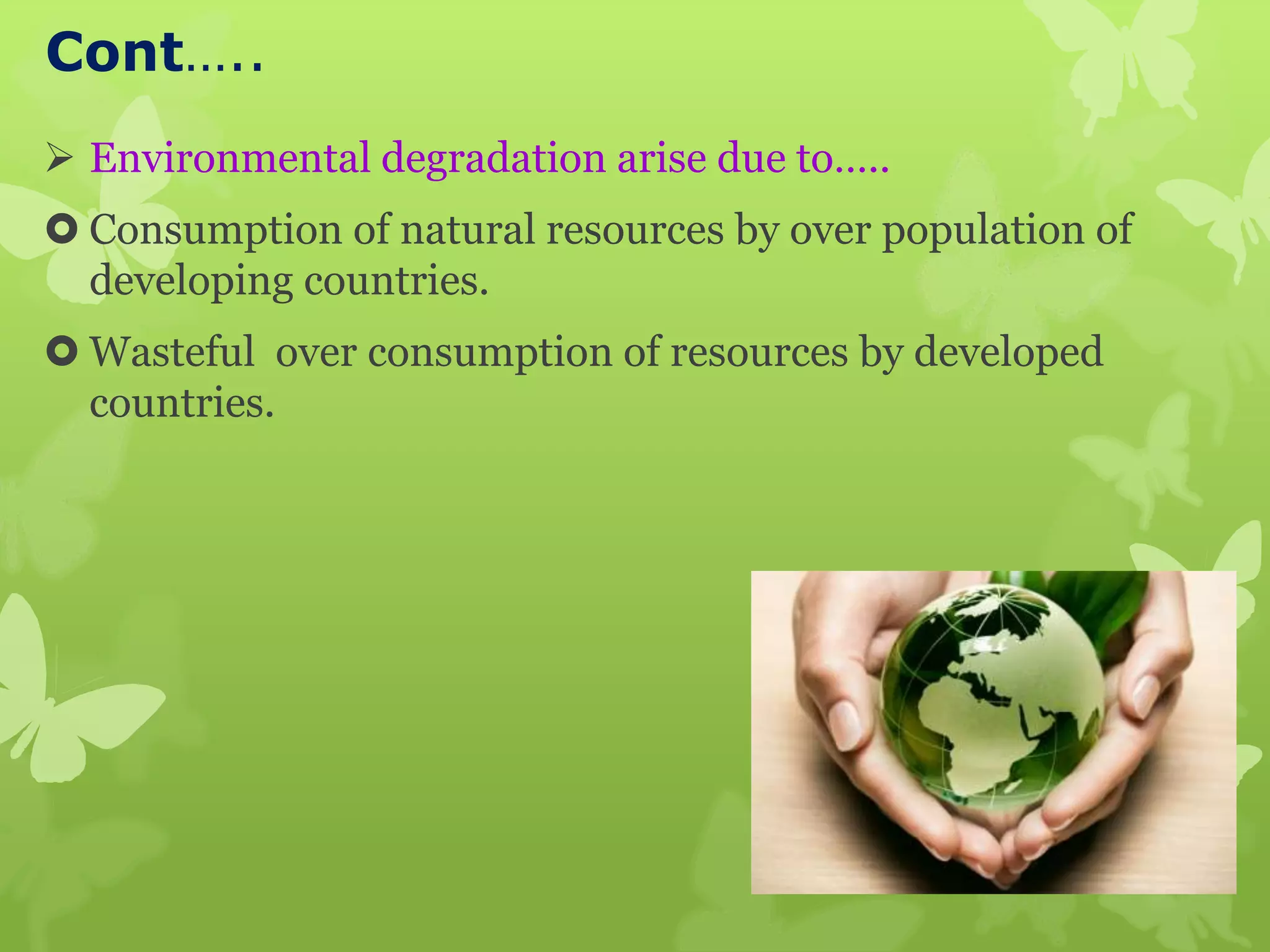
Cont…..
 Environmental degradation arise due to…..
 Consumption of natural resources by over population of
developing countries.
 Wasteful over consumption of resources by developed
countries.
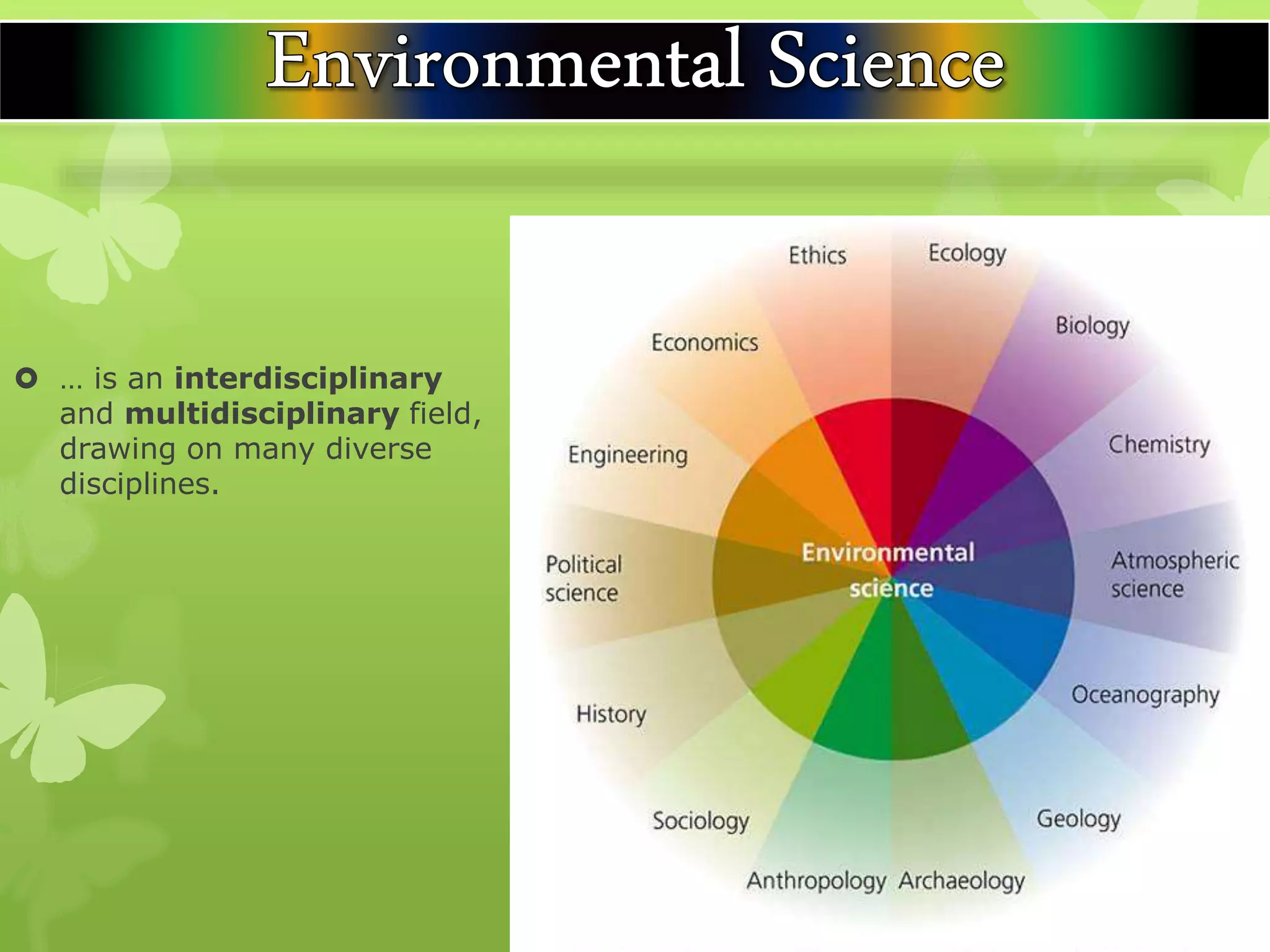
 … is an interdisciplinary
and multidisciplinary field,
drawing on many diverse
disciplines.
Multidisciplinary nature of the Environment studies
 “Environmental studies” is the scientific study of our
environment and our place in it.
 Definition: “Environmental studies” is the study of
environmental issues.
 It has broader coverage than environmental science
and includes social aspects of environment also.
 It deals with science where necessary and also
include the study of physical and biological
environment and also cultural and social factors and
their impact on environment.
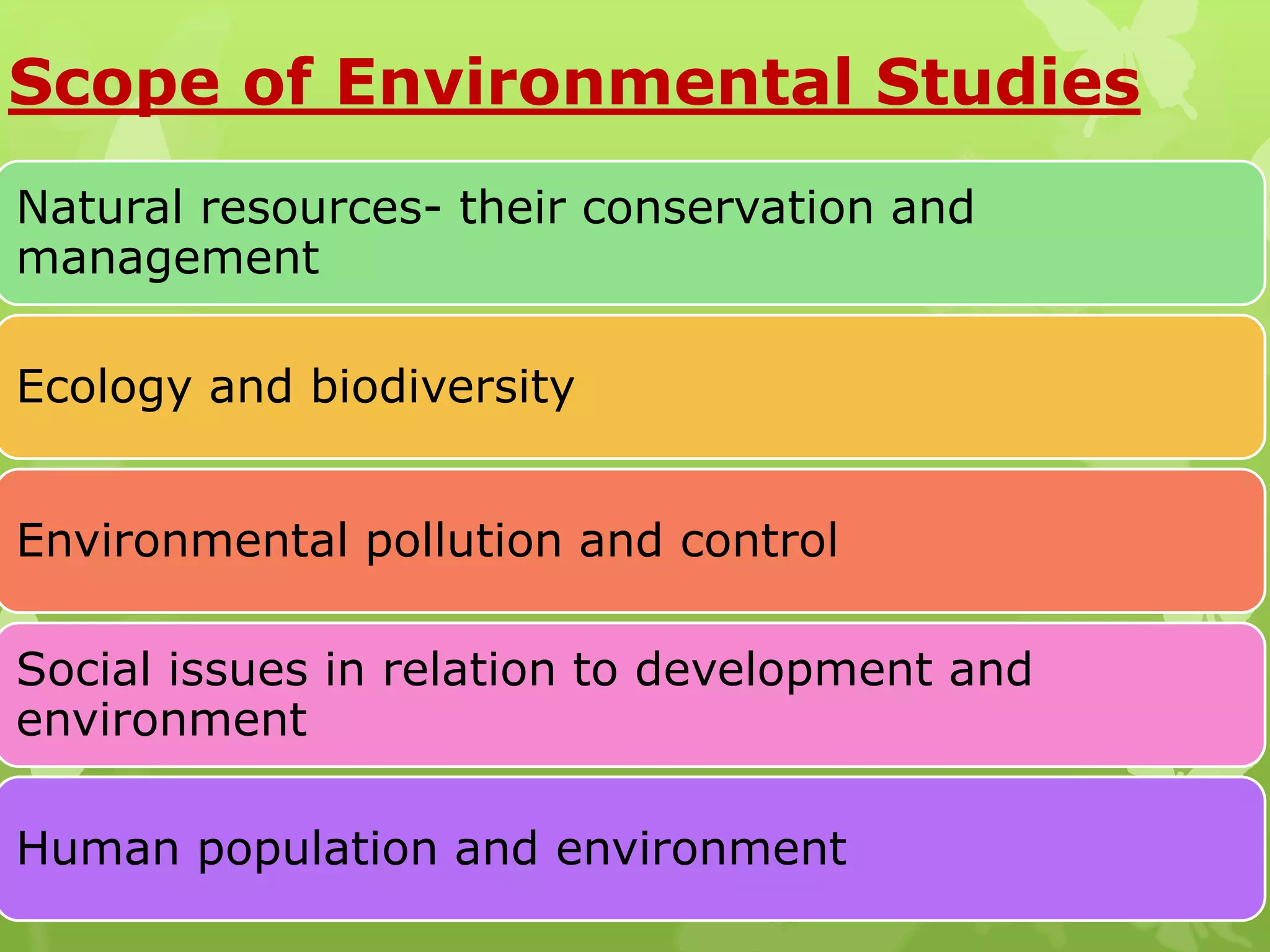
Scope of Environmental Studies
Natural resources- their conservation and
management
Ecology and biodiversity
Environmental pollution and control
Social issues in relation to development and
environment
Human population and environment
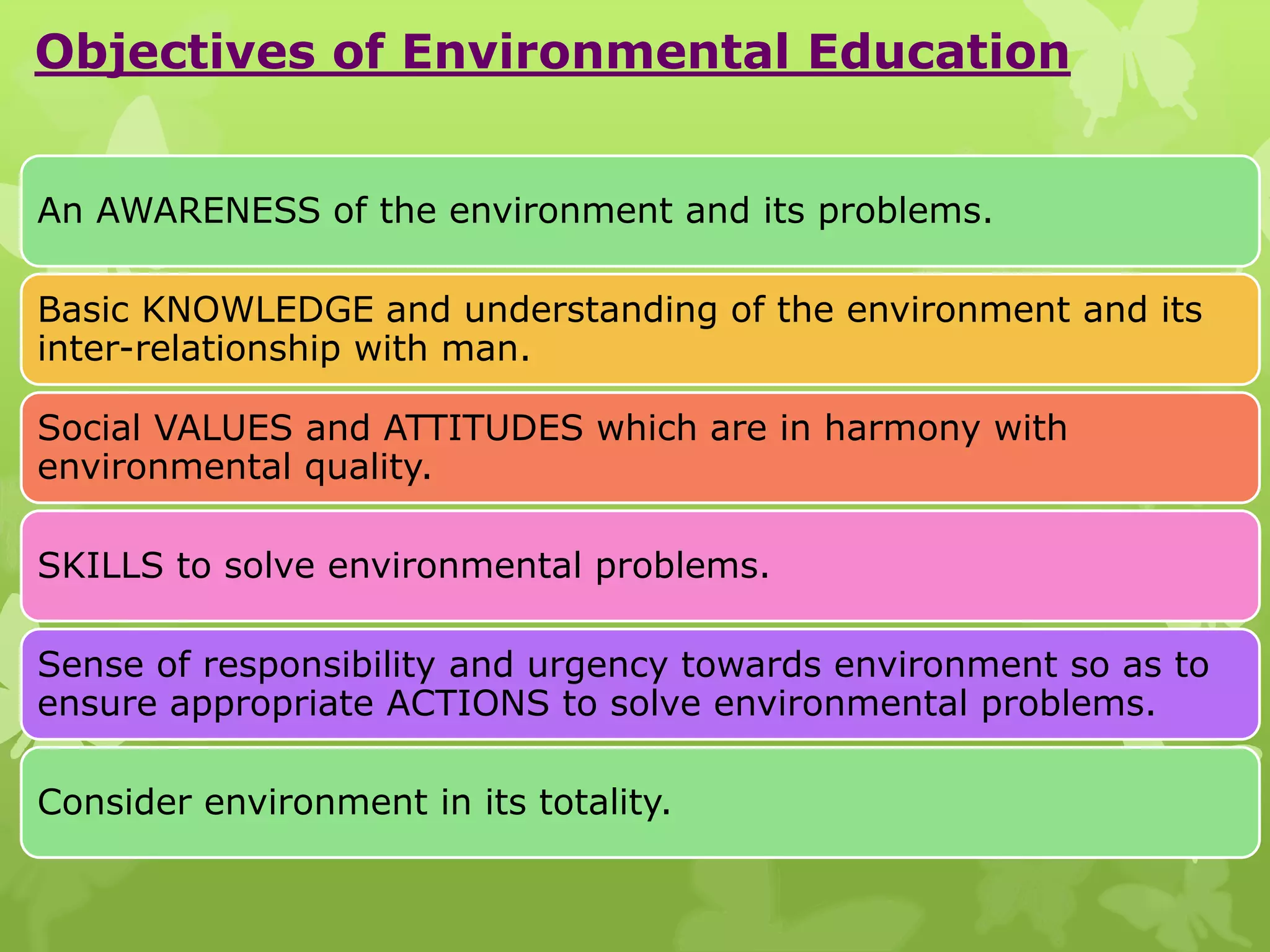
Objectives of Environmental Education
An AWARENESS of the environment and its problems.
Basic KNOWLEDGE and understanding of the environment and its
inter-relationship with man.
Social VALUES and ATTITUDES which are in harmony with
environmental quality.
SKILLS to solve environmental problems.
Sense of responsibility and urgency towards environment so as to
ensure appropriate ACTIONS to solve environmental problems.
Consider environment in its totality.
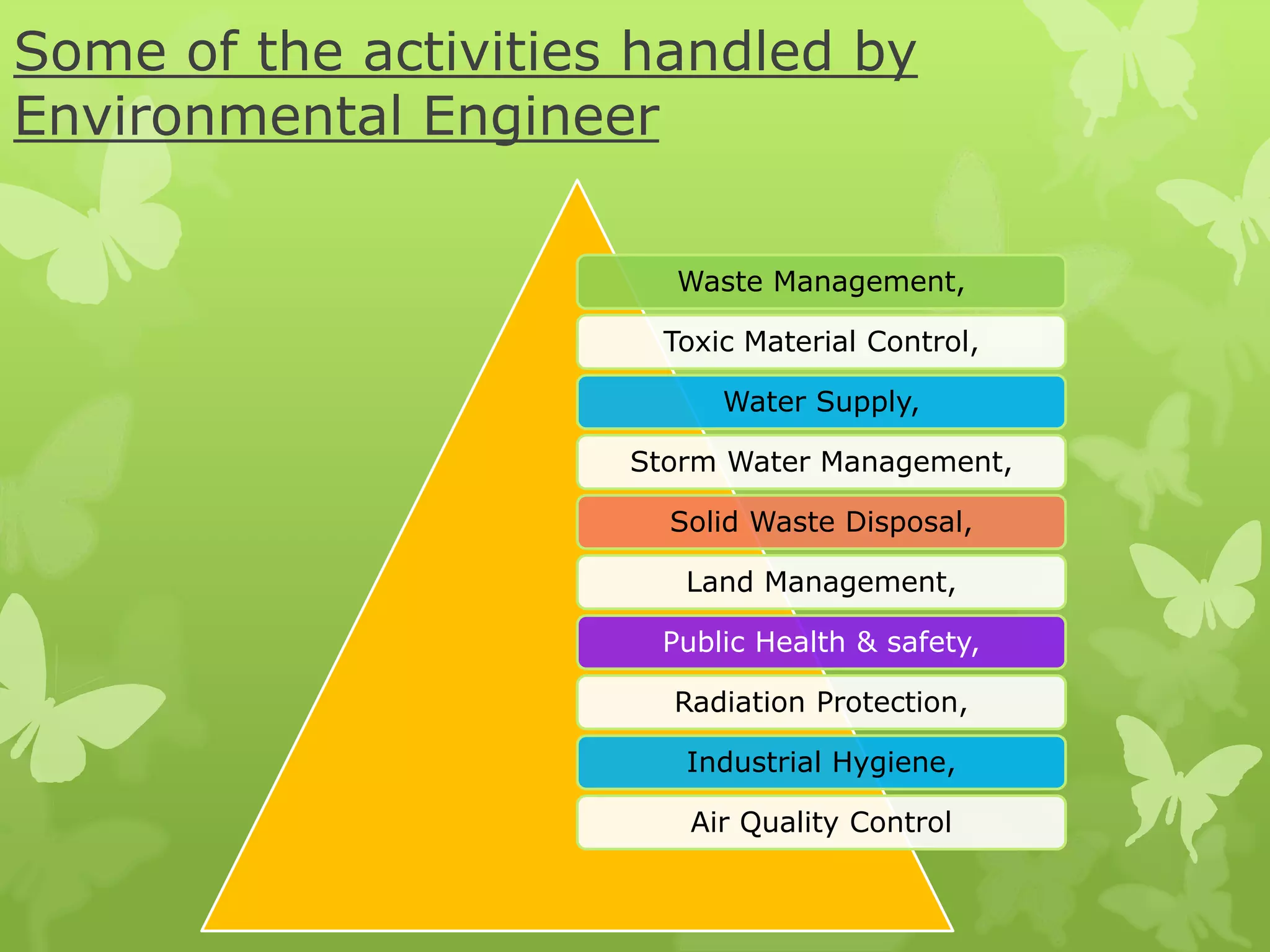
Some of the activities handled by
Environmental Engineer
Waste Management,
Toxic Material Control,
Water Supply,
Storm Water Management,
Solid Waste Disposal,
Land Management,
Public Health & safety,
Radiation Protection,
Industrial Hygiene,
Air Quality Control
Introduction to environment and environmental studies

Introduction to environment and environmental studies

  • 1.
    PREPARED BY:- Karm Balar ASST.Prof. S.S.A.S.I.T. S.S.A.S.I.T G.T.U SHREE SWAMI ATMANAND SARASWATI INSTITUTE OF TECHNOLOGY, SURAT INTRODUCTION TO ENVIRONMENT & ITS STUDIES Environmental studies
  • 2.
    Definition….. o The environment“is the sum of the total of the elements, factors and conditions in the surroundings which may have an impact on the development, action or survival of an organism or group of organisms, such as, we human beings.” OR o It can also be defined as “ external surroundings and conditions which directly or indirectly affects the living organism”
  • 3.
    Environment consist BIOTIC FACTORS • living componentsin an environment ABIOTIC FACTORS • non-living components
  • 4.
    Biotic factors andAbiotic factors that surround us and with which we interact. These biotic and abiotic components are in dynamic state; they constantly affect each other and cannot be isolated from each other.
  • 7.
  • 8.
    Atmosphere: It is themixture of various gases, water vapour and subatomic particles that entirely covers the earth extending outward several thousand kilometers.
  • 9.
  • 10.
    Troposphere: •Lower portion ofthe atmosphere •Extends up to 8 km at the poles and 16 km at equator, on an average extend up to 10-11 km from the earth surface. •Temperature decrease at the rate of 5-7oC/km. •Strong vertical air movement responsible for rapid and complete mixing.
  • 11.
    Stratosphere: • It isabove troposphere and extends up to50-55 km. • Up to about 20 km temp. remains constant then increase with increase in height. • Ozone layer is in this layer.
  • 12.
    Mesosphere:  It islayer above stratosphere and extends up to 80 km.  Temperature decreases slowly with altitude but then sharply to about - 75oC.
  • 13.
    Thermosphere: • Temperature increases rapidlywith increase in height. • Heating of this layer is due to absorption of the solar energy. • Within the thermosphere there is a layer of charged particles known as ionosphere.
  • 14.
    Exosphere: • It existabove the ionosphere and extend up to 2000 km above the earth. • This layer is almost airless and empty. • Contains hydrogen gas in ionized state. • Very high temperature (≥ 12000C)
  • 16.
    • About 70%of earth is covered by water. • Water is available in seas, oceans, lakes, river, glaciers etc. • 97% is in the oceans and seas, 2% in glaciers & ice caps, 1% is fresh water available for human consumption.
  • 17.
     Outer soilcrust of the earth is lithosphere  Living organisms, plant vegetation are supported by the lithosphere.  It contains resources like minerals, organic and inorganic matter, some extent air and water.  Role of lithosphere: - Produces food for human beings and animals. - Soil is the site of decomposition of organic wastes.
  • 18.
     Thin outercrust of the earth which includes all the living organisms and their environment.  It extends from the lowest sea bed level to about 24 km of the atmosphere.  Life supporting resources are available from the biosphere.  It is that part of earth where living(biotic) organism exist and interact with each other and also with non-living (abiotic) components.
  • 19.
     The livingorganisms interacting with each other in biosphere and sustain their life.  The waste products in gaseous, liquid and solid form are discharged in biosphere.  The sustaining and assimilative capacity of the biosphere is tremendous but not infinite.  The system is in operation for millions of years but now showing stress due to impact of human on environment.
  • 21.
  • 23.
    Man and Environmentrelationship  Man is the only living organism capable of modifying environment according to the need.  Man has started hunting animals and cutting trees for his basic needs.  To increase his comforts he started distributing each and every components of environment.  Large scale deforestation, increasing in quantity of CO2 due to burning of forest, grass, crop waste are example of early cause of pollution.
  • 24.
    Positive Impact Negative Impact DirectImpact & Indirect Impact  Positive Impact  Waste treatment plants to reduce the pollution.  Electricity generation options  Uses of bio-fuels
  • 25.
     Water treatmentplants help us to reuse of dirty water.  Wind turbines help to reduce the needs for coal, electric and other natural resources.  To improve life style & safety of human life, as well as improve the environment of this planet for the future.  The science of sewage treatment is probably the greatest environmental achievement of mankind
  • 26.
    Impact of Technologyon Environment (Cont…)  Negative Impacts: Negative effects are further divided into direct and indirect effects.  Direct effect: Accidents in various industries Nuclear pollution  Indirect effect Uses of fossil fuels causes air pollution Green house effects Acid rain Global warming
  • 27.
     a) DirectEffect:  It includes accidents , release of pollutants affecting human health, exhaustion of resources and changes in landscapes.  b) Indirect Effects:  These effects interfere with the vital services supplied to humanity by natural ecological systems.
  • 28.
    Environmental Degradation  Definition:The overall lowering of environmental qualities due to the damages caused by both natural events and human activities in the basic structure of the environment at local, regional and global levels adversely affecting all living organisms including man.
  • 29.
    Cont…..  Environmental degradationarise due to…..  Consumption of natural resources by over population of developing countries.  Wasteful over consumption of resources by developed countries.
  • 30.
     … isan interdisciplinary and multidisciplinary field, drawing on many diverse disciplines.
  • 31.
    Multidisciplinary nature ofthe Environment studies  “Environmental studies” is the scientific study of our environment and our place in it.  Definition: “Environmental studies” is the study of environmental issues.  It has broader coverage than environmental science and includes social aspects of environment also.  It deals with science where necessary and also include the study of physical and biological environment and also cultural and social factors and their impact on environment.
  • 32.
    Scope of EnvironmentalStudies Natural resources- their conservation and management Ecology and biodiversity Environmental pollution and control Social issues in relation to development and environment Human population and environment
  • 33.
    Objectives of EnvironmentalEducation An AWARENESS of the environment and its problems. Basic KNOWLEDGE and understanding of the environment and its inter-relationship with man. Social VALUES and ATTITUDES which are in harmony with environmental quality. SKILLS to solve environmental problems. Sense of responsibility and urgency towards environment so as to ensure appropriate ACTIONS to solve environmental problems. Consider environment in its totality.
  • 34.
    Some of theactivities handled by Environmental Engineer Waste Management, Toxic Material Control, Water Supply, Storm Water Management, Solid Waste Disposal, Land Management, Public Health & safety, Radiation Protection, Industrial Hygiene, Air Quality Control

Editor's Notes